ADHD and Math: How to Help Kids in 2026
reviewed by Camille Ira B. Mendoza
Updated on September 15, 2026

Key Points:
- According to a March 2026 article by the Attention Deficit Disorder Association, ADHD and math are connected through the effect produced on working memory, executive function, attention, and impulse control — the cognitive tools kids need to learn.
- ADHD is not the same as dyscalculia, as ADHD is a neurodevelopmental condition that affects focus and memory, while dyscalculia is a specific learning disability that affects the ability to process numbers.
- Multisensory and hands-on strategies — such as using manipulatives, visual color-coding, and short breaks — are among the most evidence-supported approaches for improving math outcomes in ADHD children.
- Hiring a math tutor for an ADHD student ensures that a child receives undivided attention and professional guidance while learning math.
Your child keeps getting the wrong answer on problems they understood yesterday? For kids with ADHD, math isn’t just difficult — it’s often confusing in ways that feel invisible. Find out why ADHD and math are a difficult combination and what strategies you can apply to help your child.
Why Is Math Hard for ADHD Kids?
Math is hard for children with ADHD (attention deficit hyperactivity disorder) because, according to a March 2026 article by the Attention Deficit Disorder Association, it significantly affects the child’s working memory, executive function, attention, and impulse control. All of these are cognitive tools the brain uses to remember and manipulate information, including numbers. This is why kids with ADHD often struggle to solve math problems or can’t remember a formula they learned yesterday.
- Working memory: Kids struggle to hold numbers in memory while solving a problem.
- Executive function: Kids struggle to plan, organize, and sequence multi-step problems.
- Attention/inattention: Kids miss signs, skip steps, and lose focus mid-problem.
- Impulse control: Kids rush through problems, making careless mistakes.
*According to ADHD statistics, 7 million children in the U.S are diagnosed with this condition.
Although ADHD negatively affects all of these cognitive functions, its effect on working memory might be the biggest issue for learning math. A 2023 study by the Florida State University proves this statement, claiming that math difficulties in children, including kids with ADHD, are the result of struggles with working memory rather than with hyperactivity or inattention. The research says: “Math difficulties in children with ADHD and clinically evaluated children without ADHD are associated, in large part, with their neurocognitive vulnerabilities in working/short-term memory and, to a lesser extent, overt ADHD symptoms”.
Apart from that, the ADDitude research, updated in April of 2022, reveals another issue with how ADHD influences math learning, claiming that children with vision problems were nearly two times more likely to have ADHD. This means the kids with ADHD also frequently struggle with poor sight, which can create more obstacles on their way to mastering math.
Jesse Willingham, an optometric physician and founder of Brighter Outlook Vision, acknowledges this challenge, explaining how important vision is for understanding and processing information, including in math:
“Children struggling with math could have a vision problem, making it physically difficult for them to understand and process the information.”
- If a child develops an eye-tracking problem, they may reread the same words repeatedly or skip around the page, which can lead to poor comprehension.
- If the child’s eyes don’t work together, their brain can suppress the vision in one eye.
- In severe conditions, a child can experience problems on a processing level, becoming unable to understand the spatial notions that numbers and math concepts represent.



Choose inclusive learning at Brighterly!
Child-oriented schedules, an attentive approach and interactive lessons are the basics here 

Explore Brighterly Learning Experience
Learn exactly how Brighterly helps students thrive through expert sessions, online tools, and proven feedback from thousands of satisfied parents
Does ADHD Affect Math Skills?
Yes, ADHD does affect math skills in children, making them struggle to retain attention and perform complex tasks, like problem-solving or organizing. Looking for ways to manage ADHD and math struggles, some families even consider guided medical treatment options, such as a Same day Adderall Prescription.
Note: Consult a doctor before taking any ADHD medication.
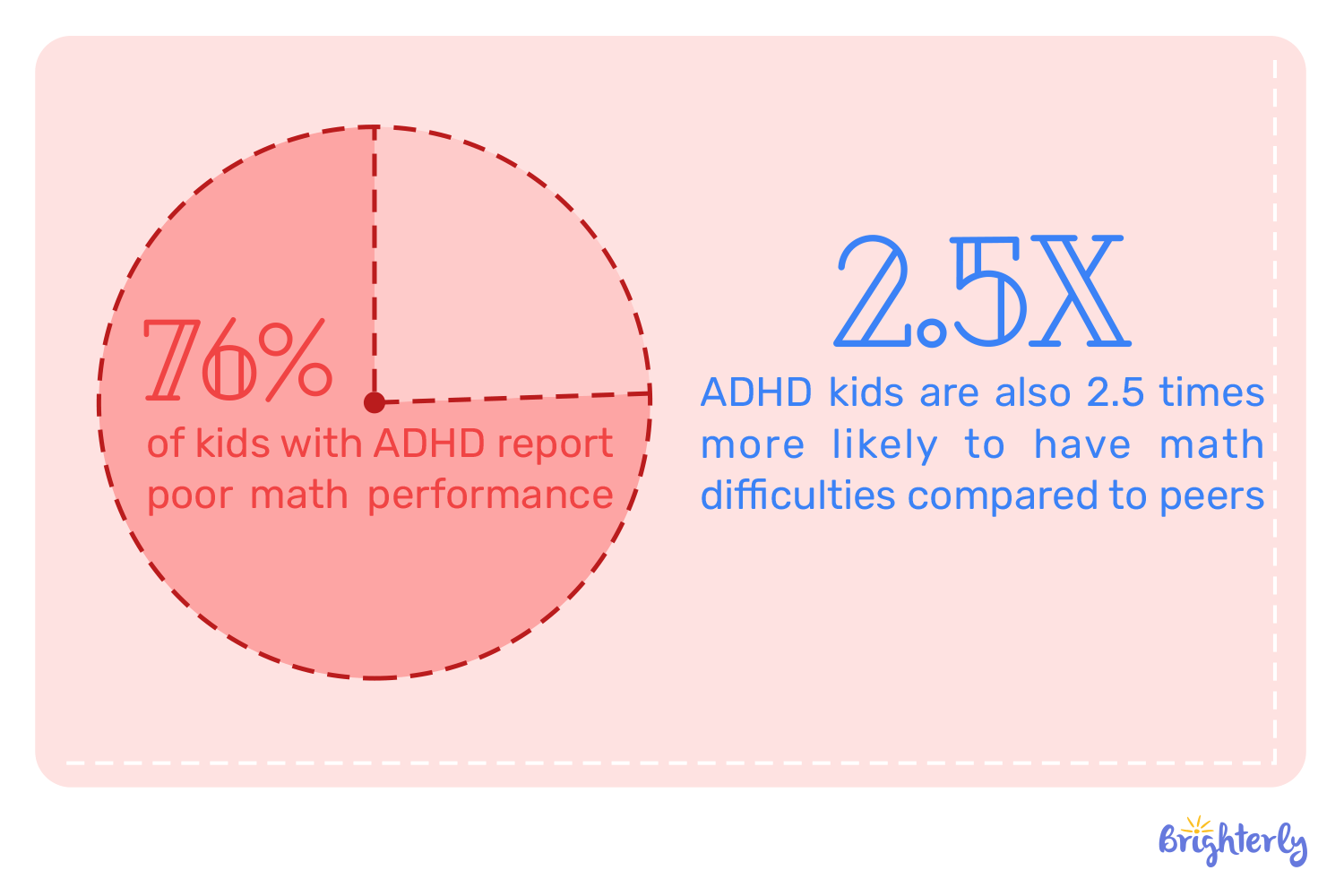
ADHD and Math Difficulties: Common Challenges
The most common math challenges ADHD can cause include difficulties with concentration, trouble remembering facts and formulas, making careless mistakes, difficulty staying organized, and taking too long to complete math assignments.
It’s important to remember that these challenges are not the kids’ bad habits, but rather the differences in their learning style, which call for more attention and patience on your side.
- Difficulties concentrating on math problems: When trying to solve problems they cannot easily understand, ADHD kids tend to switch attention to something more familiar, losing concentration.
- Trouble remembering math facts and formulas: Some formulas and facts may be too complex or too similar for ADHD kids to remember without mixing them up.
- Making careless mistakes: Tasks that require concentration on positions of numbers or positive and negative numerical values can be hard for ADHD kids due to attention-related issues.
- Difficulty staying organized. It can be hard for ADHD kids to stay organized while solving several math problems in one sitting without getting distracted.
- Taking longer to complete math assignments. ADHD kids may need more time to do a particular math task than other children.
Connie McReynolds, Ph.D., licensed psychologist, also shares that ADHD kids might experience these difficulties due to challenges with auditory and visual processing:
“Children with ADHD may experience auditory and visual processing problems that affect their ability to effectively concentrate, focus, and remember, leading to difficulties in learning math specifically.”

What Research Says About ADHD and Math Performance
A thesis by Southern Illinois University Carbondale, published in December of 2024, suggests that strengthening working memory can help a kid with ADHD to improve their math performance only if the reason for poor performance is inattention, not hyperactivity:
“Working memory moderated the relationship between inattention and basic math performance, but not the relationship between hyperactivity/impulsivity and basic math performance.”
Research published in the Journal of Attention Disorders in November of 2023 states that children with ADHD perform worse in math because they process information more slowly, which puts too much pressure on their working memory:
“Cognitive PS had direct and indirect effects via WM on MF, suggesting PS deficit might be the primary cause of MF difficulties in ADHD”.
Overall, both the SIU Carbondale 2024 thesis and the Journal of Attention Disorders 2023 study stress the importance of working memory as a cognitive function that has a huge impact on ADHD math problems in kids, although inattention and or hyperactivity also greatly influence how children perform.
ADHD vs. Dyscalculia: What’s the Difference?
Dyscalculia is a specific learning disability that affects number processing, while ADHD is a neurodevelopmental condition that affects focus and memory. In other words, kids with dyscalculia struggle to understand numbers and number concepts, while children with ADHD struggle with staying focused and remembering how to solve a math problem.
Proving that dyscalculia and ADHD are different, research published in Human Neuroscience in October of 2022, states that people with ADHD struggle with math for different reasons than people with dyscalculia:
“Results indicate a different etiology underlying the arithmetic difficulties encountered in dyscalculia and those encountered by individuals with ADHD”.
However, despite being different, dyscalculia and ADHD can often go together. Research by Psychological Science, published in March 2025, found that children with ADHD (compared to those without) were twice as likely to have dyscalculia.
As the two often overlap, so do strategies you can use to help a child with dyscalculia or ADHD, like using manipulatives to make math tangible.
Math Anxiety and ADHD
Math for ADHD children is often the cause of anxiety due to struggles with memorization and focusing. Because of these struggles, they can’t remember math facts or how to solve math problems, tend to make errors due to inattention, and have difficulty with basic math skills. These challenges affect the kids’ confidence and cause math anxiety.
Note: One of the major steps you can use to help your kid get over math anxiety is to create a supportive environment where they would feel safe.
Does ADHD Make You Bad at Math? Myths vs. Reality
ADHD can create cognitive obstacles that make math more challenging to learn, but no, it does not necessarily make you bad at math. In fact, the idea that ADHD equals poor math performance is one of the most popular myths in education. Other widespread misconceptions are that ADHD math challenges mean low intelligence and that all difficulties with math come from ADHD.
| Myth | Reality |
| People with ADHD can’t do math | People can be great mathematicians with ADHD |
| ADHD math challenges = low intelligence | ADHD is primarily a working memory and attention problem, not an intelligence problem. |
| Difficulties with math come from ADHD | Difficulties with math can come from other conditions or learning disabilities, like dyscalculia. |
Can Someone with ADHD Be Good at Math?
Yes, someone with ADHD can be good at math. In fact, many people with this condition are strong mathematicians. So, if your child is naturally interested in STEM learning, they may end up showing great results in math. But even if your kid is not into hard sciences, they still can succeed in them if you provide the right support.
You should also account for these natural inclinations:
- People with ADHD often excel at problem-solving, including in math. For example, Space Physics research, published in August of 2023, mentions that: “Many famous physicists, astronomers, and inventors have exhibited traits suggestive of neurological differences such as ADHD, autism, dyslexia, or some combination of those. These include Marie Curie and Albert Einstein, Thomas Edison, Isaac Newton, Paul Dirac, and Henry Cavendish, and many more”.
- While some ADHD students find it difficult to follow a rigid logical flow, others enjoy it.
- Some children with ADHD may have a natural interest in STEM, but may lose that spark if teachers or parents push too hard.
How to Help a Child with ADHD Learn Math: 8 Strategies
Break the Information into Small Chunks
When teaching math to ADHD students, don’t try to give them all the information at once. Break each topic into smaller parts so that the kid has the time to grasp each concept, formula, or step before moving on to another.
Focus on Understanding, Not Memorizing
Focus on explaining every math concept, formula, etc., to a child with ADHD. When they understand the logic behind everything, it will be much easier for them to remember things compared to when they just try to memorize stuff blindly.
Use Hands-On and Multisensory Learning
Math for ADHD kids should be palpable, tangible, and engaging. To make it so, you can use interactive content, such as counters, blocks, or even pictures to represent concepts. Writing and drawing also help to solidify the knowledge.
Using math worksheets is another excellent idea. Typically, these sheets include colorful content that helps children stay focused. For example, we have loads of math worksheets available for free on our website.
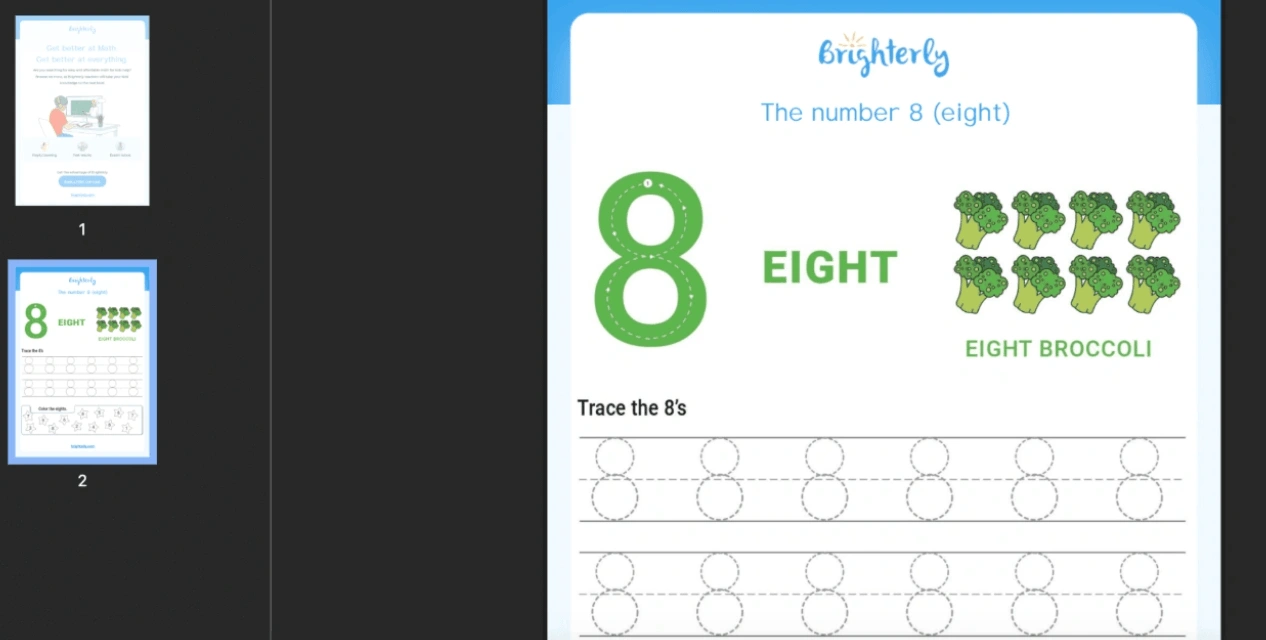
As for multisensory methods, they involve tricks that make the child engage more than one sense at a time. For math, this means not just telling kids how to do something (which involves the auditory part) but also showing an image (by creating visuals) and letting them physically manipulate objects (kinesthetic part).
Speaking on the effectiveness of these methods, Ray Christner, Doctor of psychology, says:
“Children with ADHD often benefit from interactive and hands-on learning experiences.”

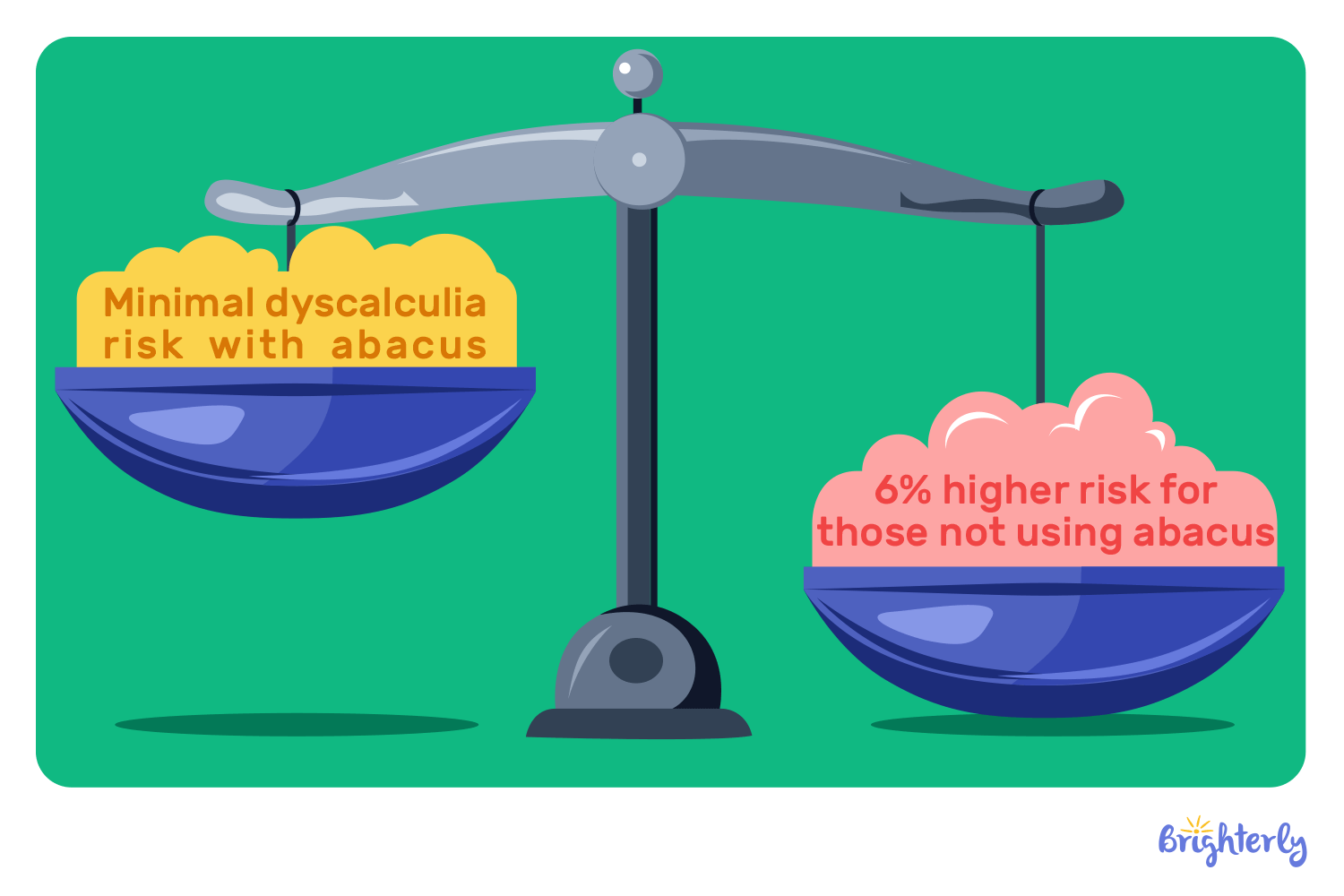
Dr. Christner refers to the study called “Can an abacus course eradicate developmental dyscalculia?” by Psychology in the Schools, published in 2020, to underpin his claim. The results of this research have shown that no children in the classes using an abacus course were diagnosed with developmental dyscalculia, whereas approximately 6% of students in the control class (not using the abacus course) received a diagnosis.
*This Psychology in the Schools 2020 research remains one of the few controlled studies on abacus learning and dyscalculia to date.
Use Visual Aids
Everyday objects like bottles of water, flowers, or pens are simple yet effective visual aids for teaching math for kids with ADHD. You can ask the child to count some routine objects, use them to teach shapes, or demonstrate simple addition and subtraction.
You can also use colors to boost the kids’ focus. For example, before they start work on math problems, ask them to color key operations: use green for addition signs, pink for multiplication, orange for negative numbers, and so on.
Another option is to use specific mobile game-based apps for learning math. Simon Bacher, the CEO and co-founder of Ling, shares thoughts on the effectiveness of such apps:
“According to Technium Science, audiovisual stimuli facilitate information processing and memorization, which makes smartphone applications an effective learning tool for children with ADHD.”

Build in Short Breaks and Movement
Since a child with ADHD is experiencing severe difficulties with concentration, regular breaks mean better focus in the long run. If you don’t do it, the kid will get distracted after 10-15 minutes. For example, allow them to spin, use a fidget spinner, or engage in any other activity they enjoy. This way, you turn their restlessness to your advantage.
Incorporating controlled movements can be a good solution for that in a learning environment. For example, you can use fidget toys, chair bands, or any other object that allows them to safely release energy.
Create a Dedicated Study Space
Minimize distractions by maintaining a clutter-free environment to ease math for your ADHD student. Let your kid have their own table for studying. For their studying space, think about implementing other tools like wobble cushions, standing desks, or small fidget tools (like a squishy ball). It will bring movement into their learning process, which is also a huge plus.
Use Positive Reinforcement
ADHD kids need appraisal more than anyone else. So, always celebrate their positive actions and achievements, big or small! It will keep them motivated and engaged. Plus, good motivation releases dopamine and creates a positive connection. That way, when they think about math, they will associate it with a great time and the rewards that you’ve given to them.
Consider a 1:1 Math Tutor
Addressing a math tutor for ADHD students has one huge benefit: they work closely with your child, analyzing their needs and addressing their exact weak points. Without a doubt, children with ADHD have special requirements, which teachers will reflect in their schedules.
At Brighterly, we offer one-on-one math tutoring for kids with ADHD online. Our professionals devote all their attention to your child and take note of any mood swings or other changes.

Whether you’re looking for a linear algebra tutor or professional geometry help for your child, all our educators will deliver a strong program. But first, they take a diagnostic test to determine the kid’s current math level and adjust the curriculum accordingly.
Accessible and high-quality math learning for ADHD?
Try Brighterly’s website for personalized learning schedules created by top tutors!
Conclusion
Kids with ADHD can not only learn math but also excel in it. The challenge is not their intelligence, but their learning differences. All they need is the right environment, tools, and support. Start with study strategies like shorter study sessions, visual aids, movement, and positive reinforcement. If your kid is still struggling, a 1:1 ADHD math tutor can make a big difference. You don’t have to figure this out alone.
Frequently Asked Questions
Is ADHD the Same as Dyscalculia?
No. ADHD is a neurodivergent condition that has an impact on attention, impulse control, and working memory. Dyscalculia is a specific learning disability that impairs number processing and mathematical reasoning. So, one is a condition, while the other is a learning disability.
The two can co-occur in the same child, but that’s not always the case. Only a professional can determine the real cause of the child’s math difficulties.
Does ADHD Medication Help with Math?
Yes, medication for ADHD can help improve focus, reduce impulsivity, and make it easier to stay on task, which can indirectly make learning math easier for ADHD students. However, medication does not teach or substitute math skills. Academic support, structured learning, and effective study strategies are still essential alongside any medical treatment.
*Consult a doctor before starting or adjusting any ADHD medication.
What Age Does ADHD Most Affect Math Performance?
ADHD can start affecting math performance as early as kindergarten, when kids learn number sense and basic operations. This effect often becomes most visible in grades 3 – 6, when math shifts to abstract concepts and multi-step problem-solving.



Your child’s 6th grade was quite challenging, right? For many, tackling those ratios and arithmetic operations required much attention. But now, as they move into 7th class, you both will deal with more challenging topics. In this article, you’ll discover what kind of math your child will learn in 7th grade. Let’s dive in together! […]
Apr 17, 2024

Teaching subtraction in 1st grade can become a real challenge for most parents. And sure, you want to help your child take initial steps in understanding subtraction. You are in the right place to find the answers you need. In this article, you will explore effective and creative strategies to make subtraction for grade 1 […]
May 01, 2024
Math & reading from 1st to 12th grade
Looking for homework support for your child?

Choose kid's grade

Math & Reading for Grades 1–12
Build real confidence for your child with a Brighterly math or reading tutor.