10 Common Writing Mistakes Kids Make and How Parents Can Help
reviewed by Laila A. Lico
Updated on December 19, 2025

Writing in any language can feel like wandering a maze. It’s easy to get lost. There, common writing mistakes, like a misplaced comma or a run-on sentence, become wrong turns. The good news is that the errors follow patterns. It means that you, a parent, can help kids navigate this maze.
Read on to spot 10 common slip-ups K-12 students make and find ways to help them fix each one.
Key points
- The most common writing mistakes among K-12 students include spelling and apostrophe errors, the use of confusing words, grammar mix-ups, and a lack of capitalization.
- Kids also fail to keep sentence structure and punctuation in order, resulting in run-ons, sentence fragments, and confusion.
- If children practice through reading, journaling, and proofreading, they learn to notice and fix mistakes on their own.
- Personalized tutoring and worksheets are practical ways that help avoid the common writing errors.
What are some common mistakes to avoid in writing?
- Spelling slip-ups
- Awkward sentence structure
- Run-on sentences
- Writing fragments, not sentences
- Punctuation problems
- Grammar mix-ups
- Apostrophe mistakes
- Weak essay structure and organization
- Use of confusing words
- Capitalization
Note: We often focus on the kids’ message rather than the mechanics. Yet, the most consistent way to improve writing is via professional tutoring.
For instance, the Brighterly math and reading platform offers personalized 1:1 lessons and adjusts its programs to the specific needs and grade levels of children.


Check the basics behind this term
Take our quick quiz to discover the perfect learning solution based on your child’s needs.
Misspelling
Misspelling is for sure among the most common writing mistakes that children make in English. How so? Well, there are several reasons why kids would write ‘frend’ instead of ‘friend’, or ‘definatly’ instead of ‘definitely’.
- First, they get it wrong when to double a consonant.
- Secondly, they often confuse common homophones.
- Thirdly, some prefixes and suffixes can be difficult to grasp and spell.
- Lastly, children may mix up vowel teams and diphthongs, or just forget to account for silent letters.
Sentence structure and order mistakes
Beyond spelling errors, what are some common mistakes in writing?
In elementary schools, sentence structure slip-ups are pretty common, leading to run-on sentences and sentence fragments.
Let’s look at an example of sentence errors:
“I love riding a bike. is a lot of fun. My brothers go riding with me. We always great time.”
One of the sentences is missing “it,” while another has no verb, as “have” is missing.
- The first case shows there’s no subject, indicating who/what is doing something.
- The second case implies there’s no predicate, an element that tells what subject is doing.
Why would they repeat these types of common writing errors? Because they want to express their ideas quickly, fearing they might forget them.
Simultaneously, a kid may use a subject and a predicate but still make the sentence sound awkward. One may write “Went to the store my brother”. This sentence is confusing, as it breaks a standard subject-verb-object order.
Run-on sentences
One of the effects of writing fast and not thinking of structure is a run-on sentence. It happens when a kid connects multiple independent clauses in one sentence, but uses no punctuation or conjunctions.
Here’s a good example: “I am about to share a story about my walk to the lake it was so fun and we saw many trees and animals there was a squirrel on a tree…”
This is a common mistake in writing for kids in grades 2 to 7. They occur because kids want to express ideas and turn them into a breathless sentence that is hard to understand.
Sentence fragments
This mistake represents the opposite side of run-ons. In particular, they are incomplete sentences that miss a subject, a verb, or a complete thought.
- For instance, a child may write the following sentences: “Mark and went to see Dereck” and “My cat to jump on the table”.
These fragments clearly illustrate issues with sentence structure.
- In contrast, a child may write the following fragment: “Running through the park on a sunny day.”
In that case, it also has no subject and verb, but feels like it is a vital part of a different sentence.

As a result, the common writing errors examples show that kids create sentences when they fail to follow a sentence structure or forget to connect an important detail to the previous sentence.
Common punctuation mistakes in writing
Now, let’s look at another writing mistake, punctuation misuse. Yes, it can completely change the meaning of a sentence, bringing confusion. Let’s compare these two sentences:
- Would you like to bake Grandpa?
- Would you like to bake, Grandpa?
The first one is pretty alarming, right? That’s the power of a comma.
Conversely, using too many commas, creating comma splices, not using question marks, or overusing exclamation points are also common punctuation mistakes in writing.
Other common grammar mistakes in writing
Except for punctuation, there are other grammar mistakes. They refer to subject-verb agreement, misuse of pronouns, tense confusion, or use of double negatives.
In this regard, let’s look at some common writing mistakes examples:
- If a kid writes “He eat an apple”, it would be a subject-verb agreement, as “eats” would be the right form of verb.
- “Me and my sister ran” instead of “My sister and I ran” is a case of misusing a pronoun.
- When a kid writes “I don’t have no toy”, it’s an example of a double negative.
- Also, a kid can switch tenses during their writing.
In the end, it’s about defining relationships between parts of sentences that come with practice for kids.
Apostrophes
In elementary school, kids may find it hard to understand how to use apostrophes. There, the common writing errors are concerned with:
- Using possessive nouns to show belonging to something. Kids would forget to use an apostrophe or even the letter ‘s’ for singular and plural nouns.
- Using contractions. They may mix ‘its’ with ‘it’s’, or omit the wrong letter when forming a contraction.
- Incorrectly forming plural nouns. Also, kids mistakenly think they should use ‘s to form the plural of nouns.
Poor structure of the essay
In middle school, kids start writing longer texts. And what are the common mistakes in writing an essay? Poor structure, no transitions, and a lack of flow or specific components. The same goes for kids in middle and high school.
When children don’t have an outline to follow, the vital elements may simply slip up. It’s hard for them to keep in mind all the ideas.
The common writing errors examples in this case are:
- Having no clear opening, middle, or end in the story or essay.
- Jumping from one idea to another in one paragraph.
- Harsh transitions and not using such words as first, then, finally.
Note: Learning to plan and organize ideas before starting to write is one of the strategies on how to get better at writing.
Confusing words
Children may mean one word, but write a different one in their essays. It can happen, for instance, because of the misuse of homophones. That’s a type of common writing mistakes to avoid, not only by kids but also by adults.
The wrong word completely changes the idea behind what you wrote. The only difference is that for adults, such a mix-up can make the situation embarrassing, not just hilarious.
In this regard, the common writing mistakes examples include words like to/too/two, affect/effect, desert/dessert, our/are, wear/where, bear/bare, dye/die.
You may wonder what can go wrong. Well, look at the sentences below and tell which one is more confusing:
“My sister walks in a garden with her bear feet.” or “My mum hates that flowers can dye in the room after summer holidays.”
Capitalization
Lastly, capitalization of letters it’s not as popular among kids as the other types. However, children often fail to capitalize proper nouns.
If we look at the mistakes around capitalization, we can classify them into the following:
- No capitalization of the first letter of a sentence.
- No capitalization of names of people, cities, or days of the week.
- Using capital letters randomly in the middle of words.
- Using no capital letters for the “I” pronoun.
How to avoid common mistakes in writing?
- Work with a tutor
- Use worksheets and writing apps
- Make sure kids read
- Teach proofreading
- Encourage daily journaling
Note: If you’re wondering, “How do I avoid common writing mistakes?”, the answer is pretty simple: combine the methods and make targeted interventions based on the repeating mistakes.
Avoid kids’ common errors in writing with a tutor’s help
Working with a tutor is often the most effective way for a child to improve their writing skills. Why? A professional expert knows how to approach the root of mistakes and use the intervention strategies.
They can approach any mistake, whether it’s a sentence structure misuse, grammar, or confusion of double negatives. Moreover, tutors can boost kids’ confidence, which is vital for breaking wrong writing practices and creating new ones.
How does the Brighterly teaching approach stand out?
Brighterly writing and reading program is a great example of how tutors help kids avoid any common mistake in writing, offering a consistent and personalized 1-on-1 approach.
Firstly, its writing and reading tutors tailor lesson plans to the kids’ needs or grades and find fun and interactive ways to cope with mistakes. They focus on reading, storytelling, and grammar to cover the most common mistakes in writing, yet leave room for interventions of specific writing challenges.
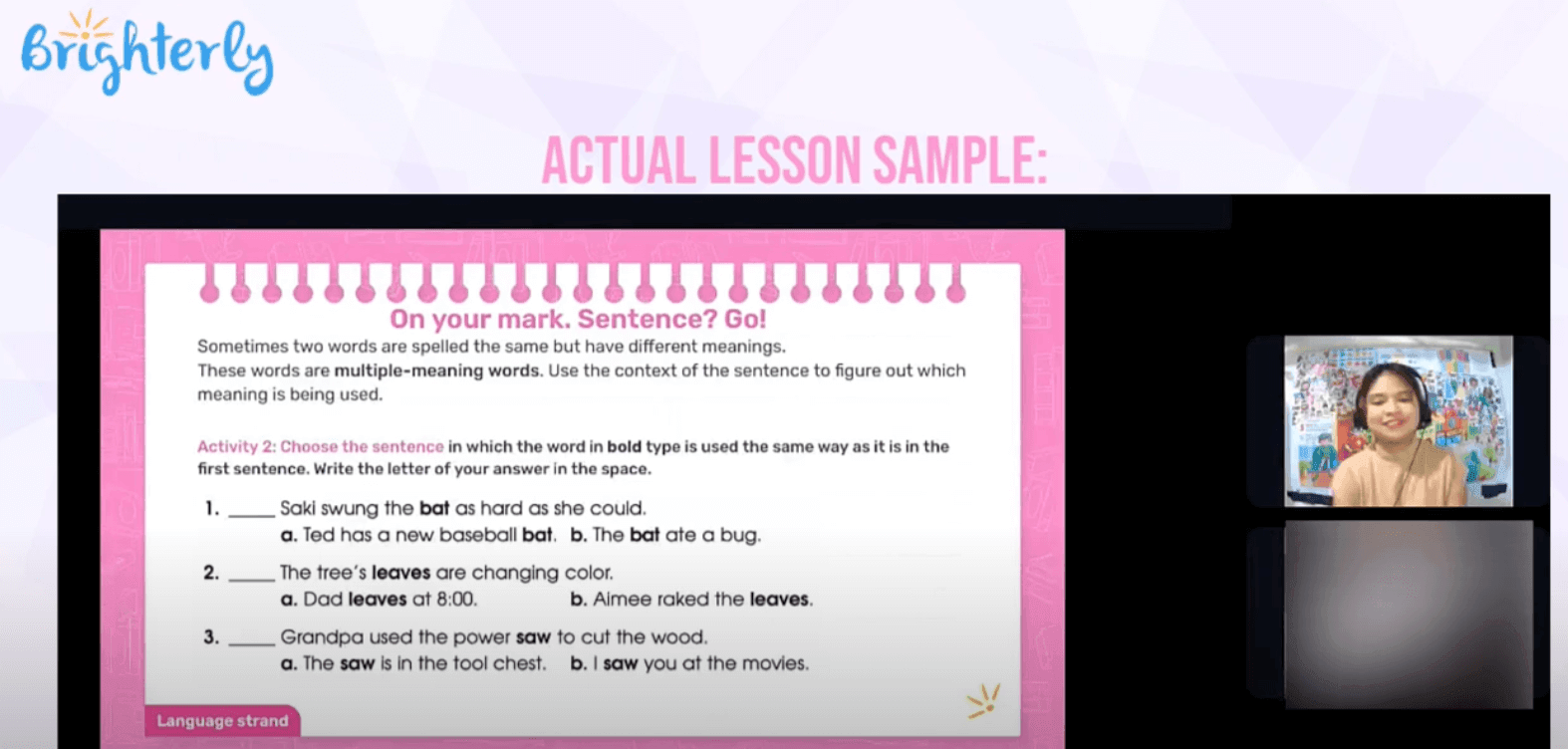
Besides, building the confidence of students is a priority for every tutor. Thus, they focus on feedback and ways to inspire students. In the long run, kids learn to overcome writing mistakes on their own.
Check the basics behind this term
Take our quick quiz to discover the perfect learning solution based on your child’s needs.
Using worksheets to deal with common writing mistakes
How do kids make mistakes disappear? They practice and revise the parts they made mistakes in. In this case, worksheets are a tried-and-true method to apply.
- Their structured format allows kids to concentrate on certain types of mistakes and analyze examples.
- Besides, kids can do worksheet drills right after class or practice later at home.
- There are tons of worksheets that target common writing mistakes, from spelling and subject-verb identification to capitalization.
They can have exercises to differentiate words like their/there, fix sentence fragments, circle others’ mistakes, or work on punctuation.
Using Brighterly worksheets for extra practice
One of the great tips is to incorporate a short “worksheet time” in the kids’ routine for extra practice.
There, a variety of worksheets can help your children. And Brighterly offers a library of free reading worksheets, from handwriting practice for younger kids to story elements for middle schoolers.
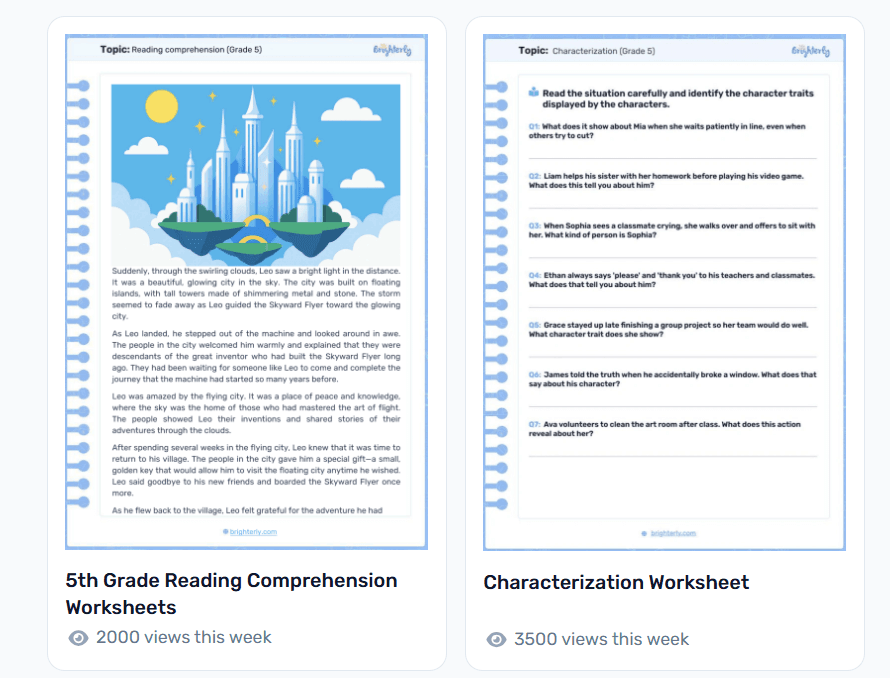
To get the most out of worksheets, consider the following:
- Dedicate a separate day or time for a kid to do exercises in them.
- Use them to reinforce what kids learn at school.
- Combine worksheets on different topics with online games and writing apps for kids.
Note: After a tedious worksheet practice, reward a kid with games like “Spelling bee” and “Hangman” or games around storytelling.
Encourage reading to prevent common writing mistakes in the future
This strategy may seem obvious, doesn’t it? However, many parents ignore it. Reading regularly exposes kids to grammatical constructions, diverse vocabulary, and different sentence structures.
To leverage this strategy, you can:
- Encourage kids to read together storybooks, fiction, magazines, news articles, or even comics.
- Discuss readings and the use of sentences in them to master grammar.
- Play a word of the day upon reading news articles.
That way, you can help prevent kids from making common writing mistakes in the future by showing them real examples of correct spelling, sentence flow, and choice of words in context.
Teach kids proofreading skills to avoid writing errors
Another important method lies in mastering the art of proofreading. No matter the answer to “What are common mistakes people make in writing?”, proofreading helps them disappear. Especially for experienced writers.
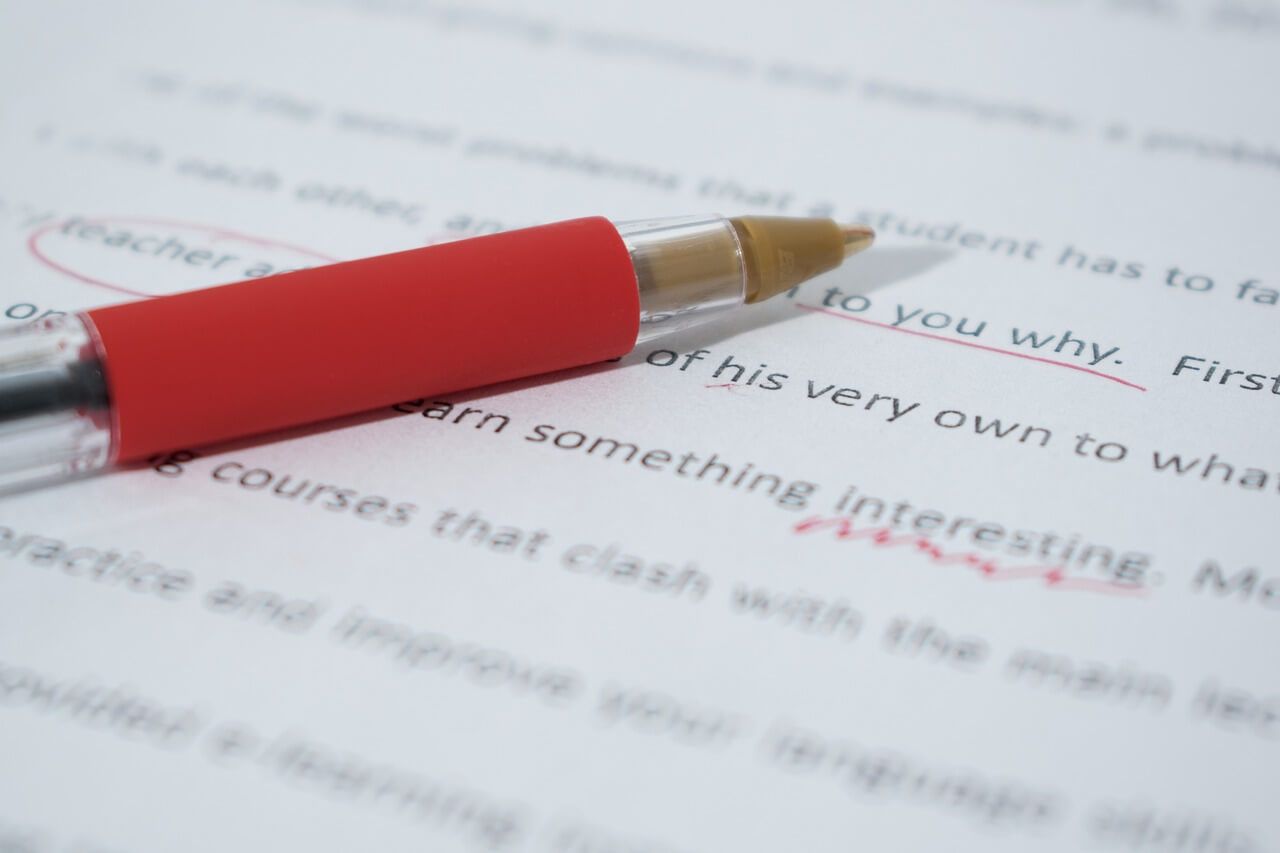
Thus, parents can teach the proofreading and editing skills to kids step by step. In this regard, you can use different strategies for youngsters, middle schoolers, and high schoolers:
- Make kids work with examples containing errors, circling mistakes they encounter, or playing the “Punctuation Police” game.
- Turn reading their work aloud into a habit to identify confusing parts and sentence fragments.
- Support them with reference materials, checklists, or guidelines with questions to ask on each of the types of common writing errors.
- Teach proofreading methods like the COPS checklist, where kids learn to check capitalization, organization, punctuation, and spelling.
Encourage journaling to practice writing
Lastly, another solid way to combat common mistakes in writing is journaling. When kids write about their day or a specific topic in a journaling exercise, the pressure on them is low. Such an environment allows them to practice how to think, organize thoughts, and develop an inner sense of the flow.
Children learn to hear their own sentences and are not in a rush to tell a story. So, journaling is a good way to get rid of the habit of writing run-on sentences and awkward sentence structure.
What is the most common mistake in writing?
The most common mistake in writing is pretty hard to identify, with spelling errors and misuse of apostrophes being at the top of the list. Spelling errors are frequent issues for writers and middle schoolers. They simply make mistakes in words with complicated phonetic patterns.
Regarding apostrophes, it’s hard to imagine how many people make mistakes when making plurals or confusing it’s with its.
So, again, what is the most common mistake in writing? It’s either wrong spelling or misuse of apostrophes.
What are quick tips to avoid these common writing errors?
- Use games and rhymes to remember words
- Encourage using spell-check as a tool
- Read writing aloud
- Keep a list of commonly misspelled words
- Make kids focus on mastering high-frequency words.
- Teach how to check what an apostrophe indicates: possession or contraction.
Conclusion: Common writing mistakes and how to fix them
Everyone makes writing errors. Kids are no exception.
For them, what are common mistakes to avoid in writing? They refer to spelling, run-on sentences, awkward sentence structure, grammar, apostrophes, and punctuation, not to mention essay structure and use of confusing words.
Yet, parents can still help kids turn mistakes into powerful writing and become confident writers. The great methods refer to tutoring, using worksheets, reading, journaling, and mastering proofreading.
Want to help your child overcome writing mistakes faster? Book free lesson with Brighterly writing tutors.


Many parents choose Study.com without initially realizing its cost and the value it can bring for the money. As someone who has been in the teaching industry for years, I know that the balance between the two matters most. So, how much is Study.com, and should you commit? This guide will give you the complete […]

Dec 17, 2025

I get sometimes asked about Best Brains cost and what you actually get for your money. From my experience helping kids in math and reading, I can explain how the program works and what parents share. Plus, how it compares to personalized and 1:1 online tutoring. Read on for the most transparent and honest insights. […]

Dec 19, 2025
Math & reading from 1st to 9th grade
Looking for homework support for your child?

Choose kid's grade

Math & Reading for Grades 1–9
Build real confidence for your child with a Brighterly math or reading tutor.