Does Dyslexia Affect Math? Causes, Symptoms & Proven Solutions for Your Child
reviewed by Rachelle Bencio Yu
Updated on December 19, 2025
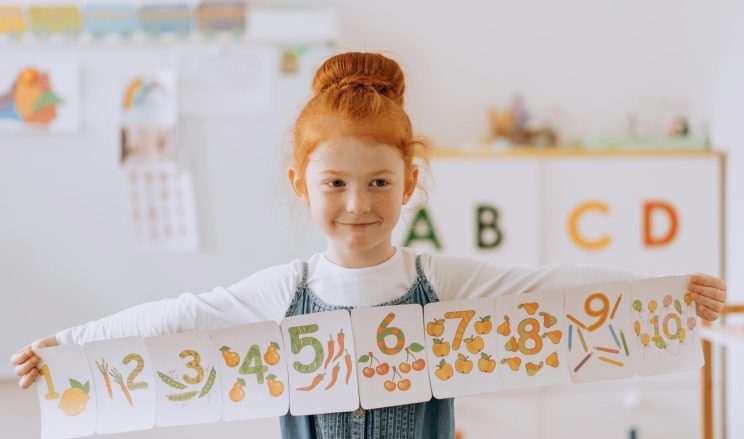
“Does dyslexia affect math?” — it’s a common question from parents surprised that their first-graders “can’t do numbers.” My answer: Yes. However, not in the way you expect.
As a teacher with proven experience, I’ve prepared this guide to walk you through proven methods to overcome dyslexic math challenges.
Key points:
- Parents may think math struggles come from difficulty with numbers. However, dyslexia and math challenges often have roots in language, not digits.
- Kids may misread instructions, mix up math symbols, or struggle with sequencing, working memory, and vocabulary. The problem is hard to fix without professional assistance.
- Math dyslexic children can thrive with the right and timely support provided by the Brighterly math and reading platform.
What is math dyslexia?
Math dyslexia is a learning disability that makes it hard for children to understand numbers, sequences, symbols, and spatial relationships. These challenges aren’t “laziness”, but learning specifics that require the right support and teaching approach.
When parents worry about dyslexia with math, they often mean one of two things:
- Dyscalculia, a specific learning disability that may affect the understanding of numbers.
- Dyslexia in math, where underdeveloped language skills make math harder, even if number sense is generally fine.
This article focuses on the second problem.
So, when it comes to dyslexia and math problems, parents often notice that kids read math terms slowly, misunderstand instructions, or mix up visually similar symbols, such as + and × or > and <.
Simultaneously, they may know the math concepts, and sometimes perfectly! Some people with dyslexia even have a Bachelor’s Degree in mathematics, which literally means that the problem has a solution (spoiler: the help of good math tutors can make a difference). However, many kids get stuck. Why? Because their reading, naming, and memory skills work differently.
According to the British Dyslexia Association (BDA), 60% of learners with dyslexia face difficulties with math learning, including problems with number sequences, confusion with symbols and vocabulary, and challenges with multiplication facts.
So again, can dyslexia affect math? Absolutely! And the cause often lies in the language difficulties, which can be divided into four types.
What are the four types of dyslexia in math?
- Language-based math dyslexia
- Visual-symbol confusion
- Sequencing and working memory difficulties
- Verbal-reasoning and conceptual naming difficulties
Type 1: Language-based math dyslexia
Children experience difficulty with reading specialized math vocabulary. This includes instructions and basic terms, such as “before/after,” “greater/less,” or “difference.”
As soon as a student with language-based dyslexia sees a text problem or multi-step instruction, their processing speed slows. They may know how to do addition, subtraction, multiplication, and division, but they can’t grasp the meaning fast enough.
This often leads parents to wonder, “Are dyslexics good at math?” The truth is, they usually are. However, the reading barrier gets in the way.
Type 2: Visual-symbol confusion is one of the dyslexia math symptoms
This pattern, which parents describe as “dyslexia for math,” is actually rooted in a visual-linguistic issue. That’s because children often confuse symbols, shapes, or numbers that are too similar. For example, the plus sign all of a sudden “turns into” a multiplication sign in their heads.
They may also confuse < with >, or even write numbers in the wrong order (e.g., 71 instead of 17), or write 2 as it would appear in a mirror. It may look funny to classmates, but not at all amusing to the student, whose self-esteem suffers a lot.

Type 3: Sequencing and working memory difficulties
This type affects step-by-step tasks, remembering math facts, and understanding multi-stage procedures. For example, children may have difficulty understanding and using money, reading clocks, and performing calculations with time.
Math dyslexia symptoms may include children understanding the concept, but losing pieces of the process along the way. Long algorithms, multi-step problem solving, and remembering sequences (e.g., long division) become draining. However, parents shouldn’t think their kids have low intelligence. Their working memory and processing just need some boosting.
Type 4: Verbal-reasoning and conceptual naming difficulties
Children may struggle to retrieve math terms or express their reasoning. In this case, the child understands the concepts, but when they try to explain them, the right words don’t come out.
This type of dyslexia math challenge especially affects reasoning, explaining strategies, and solving word problems.
How to teach dyslexic math? 5 proven methods
- Practice with an experienced tutor
- Make learning interactive
- Simplify and “translate” math language
- Create consistent routines and math anchors
- Pre-teach math vocabulary in small steps
Teaching math to a dyslexic child with an experienced tutor
Children dyslexic for math need patient teaching. The problem is that traditional schools teach to the masses. At the same time, individual lessons with an experienced tutor who understands both language and math difficulties can take learning to the next level.
Working with a specialist addresses:
- symbol confusion (+, ×, <, >)
- slow decoding of math terms
- working memory overload during multi-step tasks
- difficulty retrieving math facts
- hesitation and low confidence
- any other math-related problems a kid faces
Moreover, a well-structured math program breaks down multi-stage procedures and provides strategies that bypass dyslexic disabilities.
Why address Brighterly math tutors
I’ve seen incredible progress among the students who joined the Brighterly math and reading platform — the service designed to teach math and reading through personalized 1:1 lessons, fully aligned with U.S. state standards.
I personally appreciate how Brighterly math tutors work. They unpack problems patiently, being aware of all aspects of the difficulties the child faces, and never ask any questions of the “How can you be dyslexic in math?” kind.
Instead of long text, they use visuals, such as:
- math worksheets
- color-coded examples
- visual aids
- hands-on exercises.
The math classes are built on a step-based approach, helping each child remove frustration and strengthen confidence. From my experience, when a tutor works with a child with dyslexia and math facts difficulties, they’re never focusing on speed, but on clarity.


Check the basics behind this term
Take our quick quiz to discover the perfect learning solution based on your child’s needs.
Make math interactive
A lesson feels alive when dyslexia and math strategies are applied appropriately. In order to reinforce skills and sense-making, you should first check and diagnose the problem. These math tests fit perfectly with the objective. That’s because they check your kid’s skills according to a specific level, while including fun images, which makes testing seem more like a game.
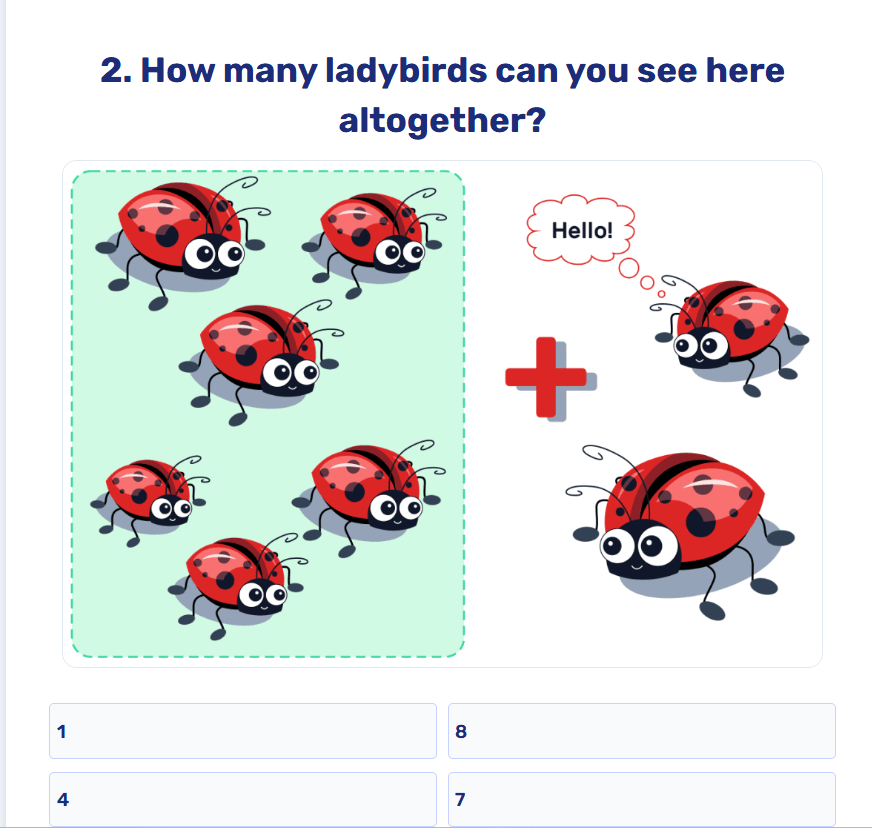
Children with orthographic dyslexia and math challenges learn best when they see, hear, and touch the idea before moving to symbols. So, I recommend you begin with a multisensory approach: objects, movement, diagrams, games, drawing, manipulatives, number lines, and simple stories that show how math ideas work in real life.
You can practice this at home:
- Use color-coding for addition, subtraction, multiplication, and division signs
- Create simple visuals from short instructions your child can follow step-by-step.
- Build number problems with blocks or beads before writing them on paper.
Note: For a deeper look at multisensory strategies that support math, explore Brighterly’s Best reading program for dyslexia guide.
Use worksheets for interactivity
One tool I constantly rely on is math worksheets, but not the dry, text-heavy kind! I prefer visual worksheets with:
- Icons
- Shapes
- Diagrams
- Steps broken into small parts.
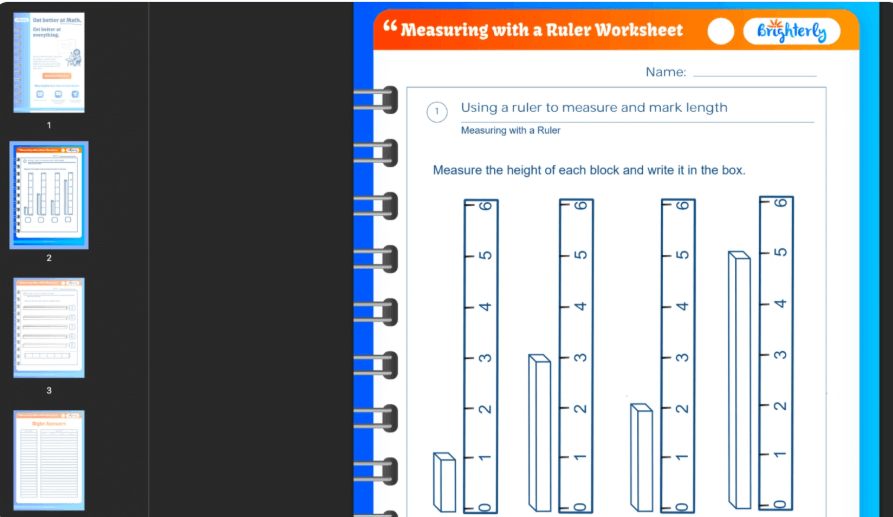
The ones I often recommend come from Brighterly — they are colorful and designed to be inclusive, and so help overcome dyslexia and math difficulties. Plus, they are printable, so you can use them at home for free.
Simplify and “translate” math language
Many children with math dyslexia struggle to decode math terms too slowly to keep up. Actually, they’re staring at math words and can’t understand their meaning. A working tool in this case is the structured word-problem routine. This technique alone can double a child’s problem-solving success.
What teachers and parents can do in this case is give the child more mental space for critical thinking and reasoning. This includes such techniques as:
- daily 2–3 minute symbol review (+, −, ×, ÷, <, >)
- color-coding similar-looking symbols
- teaching math vocabulary as a mini-subject
- using sketches or bar models for understanding word problems
- letting the child talk through the meaning before solving.
This method also helps break long instructions into stages for a math dyslexic child. For example, instead of saying, “Find the total cost of 3 pencils, 2 erasers, and 1 notebook,” read it one part at a time: “How many pencils? How many erasers? How many notebooks?” Let your child highlight important words or numbers, such as ‘total’, ‘more than’, or ‘less than’.
Additionally, you can let your child highlight important words or numbers, such as ‘total’, ‘more than’, or ‘less than’.
When pictures, charts, or real-life examples are used during lessons, it works well too. For example:
- Draw coins or bills to solve a money problem
- Use blocks or beads for counting and multiplication
- Sketch a bar model to show parts of a word problem.
Note: For extra practice ideas, please check the guide called How to solve math word problems.
With a little practice, these techniques make math easier to understand and even a bit fun!
Check the basics behind this term
Take our quick quiz to discover the perfect learning solution based on your child’s needs.
Create consistent routines and math anchors
Predictable routines are a must for children with math dyslexia. One of my first-grade students often forgot what came next in multi-step exercises and would get frustrated halfway through a problem. To help this boy, I introduced a repeatable routine, which you can copy and use at home:
- Check the numbers and ask your child if they read and understood them correctly
- Identify the operation: addition, subtraction, multiplication, or division
- Solve step 1: complete the first part of the problem
- Solve step 2: move to the next step without rushing
- Double-check the work before finishing.
I also added so-called “math anchors”: small, visual reference tools children could see while studying. These included:
- a mini sheet of symbols,
- key formulas,
- step reminders,
- a simple checklist taped to the desk.
This really helps children focus, remember sequences, and reduce anxiety, because they always know what comes next. Besides, routines and anchors strengthen independence, and students begin to follow steps automatically, making complex problems more manageable.
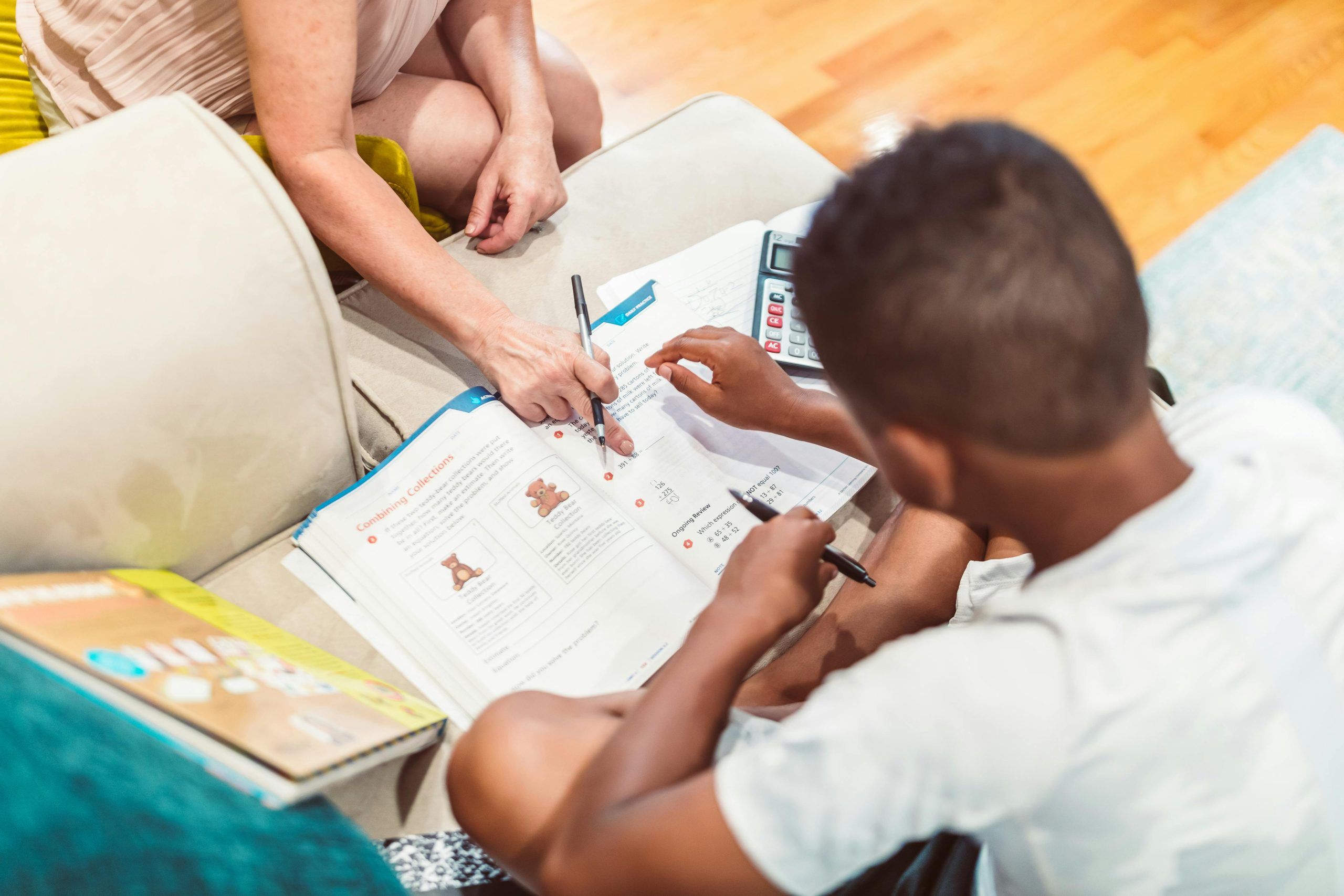
In addition, it will be useful to ask your child to say each step out loud. You’ll be surprised how it strengthens memory, keeps attention on the process, and makes math less intimidating. And when you ask, “Do dyslexics struggle with math?”, the answer will be: no, they enjoy it!
Pre-teach math vocabulary in small steps
Pre-teaching math vocabulary for kids with math dyslexia can become a real game-changer. One of my second-graders could solve number problems beautifully, but the moment she saw the word “difference”, she froze. Not because she couldn’t subtract, but because the term confused her.
So we slowed down and created a tiny “pre-lesson routine” you can easily copy at home: before any exercise with a math dyslexic child, preview 2–3 key terms. Instead of jumping into the worksheet, spend one gentle minute defining the words together.
For example, if the lesson involved difference, equal groups, or product, talk about what each term means and create an association:
- “Difference” = “How far apart are the numbers?”
- “Product” = “The total after you multiply groups.”
- “Equal groups” = “Same-size groups we count or multiply.”
Then, use real-life examples:
- “What’s the difference between 6 cookies and 3 cookies?”
- “If we have 2 bags with 4 apples, what’s the product?”
The practice takes less than a minute, but it changed everything, because the vocabulary stops being a mystery.
I also keep a small vocabulary card on the desk when working with students with dyslexia in math. Nothing fancy, just a handwritten note. The moment the child sees the term during classwork, they look at the card, smile, and keep going without any freezing.
Over time, children begin to expect that they’ll understand math words, and this alone improves their processing, focus, and willingness to try harder problems. It’s one of the simplest methods showing 100 percent effectiveness.
How does dyslexia affect math?
Many children with dyslexia and math problems face difficulties because math requires reading, sequencing, memory, visual processing, and attention to symbols. Recent studies have been eye-opening:
- In a 2023 study of 86 children with reading disability (RD), 43% had co-occurring math disability (MD), and another 22% showed “possible vulnerability” in math.
- The same study found that children with both RD + MD had significantly worse working memory and processing speed, as well as reduced brain activation in visuospatial working-memory tasks. This means that math difficulties often come from processing and memory differences, not a lack of intelligence.
- A recent review notes that estimates for co-occurrence of reading and mathematical difficulties vary widely, from about 17% up to 64% depending on the sample and criteria used. This shows that math difficulties in dyslexic kids are often hidden and misunderstood.
- Among children with reading difficulties, many also show a deficit in math, especially in areas like fact retrieval, number processing, and spatial reasoning.
- More broadly, large genetic studies suggest that reading ability and mathematics ability are correlated, with a substantial shared genetic component. For some children, it means that the risk for difficulties in math and dyslexia often shares underlying biological roots, so struggles in one area can naturally affect the other.
So, can dyslexia affect numbers? Definitely. And here are the symptoms for parents to detect and take measures as early as possible.
Math dyslexia symptoms explained
Here are the most common math dyslexia symptoms I encountered during my practice:
- Mixing up numbers
- Slow processing speed
- Trouble with the memory of the steps
- Difficulty naming math terms
- Misunderstanding spatial organization
- Confusion between similar symbols
- Struggling with multi-step directions
- Avoiding problem-solving altogether
- Getting lost in long instructions.
These symptoms don’t mean a child lacks potential. They just learn differently, and with the effective strategy adjusted to the kid’s pace, they finally start making real progress.
Conclusion
If you’ve been worried about your dyslexic child and wondering, “Does dyslexia affect numbers?”, I hope this gave you clarity. Children with dyslexia usually have strong ideas, creativity, intuition, and reasoning. Their cognitive difficulty is often rooted in the language that wraps around math.
So, with the right support, such kids can make extraordinary progress. I’ve seen so many students rediscover confidence this way. Why not give it a try right now?
And if you have any doubts, book free math lesson with a Brighterly tutor for a personalized approach, and, no doubt, your child can succeed!


I get sometimes asked about Best Brains cost and what you actually get for your money. From my experience helping kids in math and reading, I can explain how the program works and what parents share. Plus, how it compares to personalized and 1:1 online tutoring. Read on for the most transparent and honest insights. […]

Dec 19, 2025

What is creative writing for kids? A way to use imagination, express feelings, and just have fun? Often, it’s all at once. Read on to discover more about its benefits for kids and learn how to improve creative writing skills at home. Key points Creative writing helps children build imagination, confidence, and language and communication […]

Dec 21, 2025
Math & reading from 1st to 9th grade
Looking for homework support for your child?

Choose kid's grade

Math & Reading for Grades 1–9
Build real confidence for your child with a Brighterly math or reading tutor.