Persuasive Writing for Kids: Simple Strategies to Build Strong Writing Skills
reviewed by Jessica Kaminski
Updated on February 2, 2026

Kids try to persuade us every day, don’t they? They ask for extra screen time, convince us they need a pet, etc. Learning persuasive writing for kids helps them organize their thoughts and give real reasons. This guide explains why it’s important and how you can help your kid learn it.
Key points
- Mastering persuasive writing teaches kids to organize their natural instincts into logical and clear communication.
- The ‘Mentor Texts’ strategy is for 3-8-year-olds and uses favorite picture books to show how characters use words to get what they want.
- The ‘OREO method’ (for ages 8-11) is a ‘delicious’ way to remember the layers of a paragraph.
- A dual system – POW + TREE – is recommended for use at the age of 11-18.
- Personalized expert support at Brighterly fits kids of all ages and levels who need real-time feedback and guidance.
What is persuasive writing for kids?
Persuasive writing is a way for children to share personal opinions with the aim to convince readers to agree with them or take action. It shows kids how they can explain their thoughts clearly through language.
Key elements of persuasive texts for kids
Hook |
The introduction and very first sentence aimed to spark interest through a surprising fact or an exciting statement. |
Opinion |
The ‘big idea’, which should clearly state the writer’s point of view. |
Reasons |
The supporting facts which distictly explain why the opinion makes sense. |
Counter-argument |
A ‘look ahead’ at what someone else might say. It’s meant to acknowledge a different view, yet oppose it and explain why the writer’s idea is still better. |
Call to action |
The final request, which usually includes imperative verbs. It’s the call to change one’s mind about the topic or take action. |
Concluding statement |
The wrap-up, which reminds the reader of the main goal. |
What is the purpose of persuasive writing?
The primary purpose of persuasive writing is to convince a reader to adopt a specific point of view or to take a particular action. It allows a writer to share their personal beliefs using logic, emotion, and facts to influence someone else’s thinking. For children, it’s also a powerful tool for self-expression.
Why is persuasive writing important?
Persuasive writing for kids is important because it empowers them to find their voice and advocate for their ideas. It transforms them from passive observers into active communicators who can influence the world around them.
Learning to organize their thoughts, use evidence, and consider different viewpoints helps develop confidence and critical thinking skills.
Here are some other clear-cut benefits you can achieve by practicing persuasive writing:
- Teaches logical thinking. When a child wants something (like a new puppy or a trip to the zoo), they usually start with a lot of feeling. Persuasive writing teaches them to take those big feelings and back them up with descriptive logic and facts.
- Builds empathy and social skills. In persuasive writing it is important to think about the person you’re talking to. Your child has to ask themselves: ‘What does Mom care about?’ or ‘What would make my teacher say yes?’ It’ll help kids understand that other people have different needs and perspectives.
- Boosts academic success. In particular, it helps children master organization (following the ‘OREO’ method – Opinion, Reason, Example, Opinion), vocabulary to make their writing flow, and research.
How to teach persuasive writing to kids?
Persuasive writing practice at Brighterly’s individualized lessons
Best for: 6-15-year-old students in grades 1-9 who need to master the logic behind a strong argument.
At the Brighterly math and reading platform, the focus is on a ‘why before what’ approach. It means that instead of just following a template, your child learns the reasoning that makes an argument work. Through structured and one-on-one sessions, the learning is entirely personalized to your child’s current level. It applies to any level, be it starting with simple opinions or dealing with complex middle-school essays.
In particular, your kid will get:
- Individual skill check
- Tutor-led practice
- Live feedback
- Confidence growth.
Here’s how it’ll work for you and your kid in more detail 👇
Certified & caring tutors
At Brighterly, reading tutors are certified professionals who truly love working with kids. They are as good at persuasive writing techniques for kids as at meeting your child exactly where they are. First and foremost, they focus on building a real connection. Patient and encouraging, they make your child feel comfortable taking risks with their writing. Brighterly’s tutors are, in fact, supportive coaches who help your kid believe in their own voice.
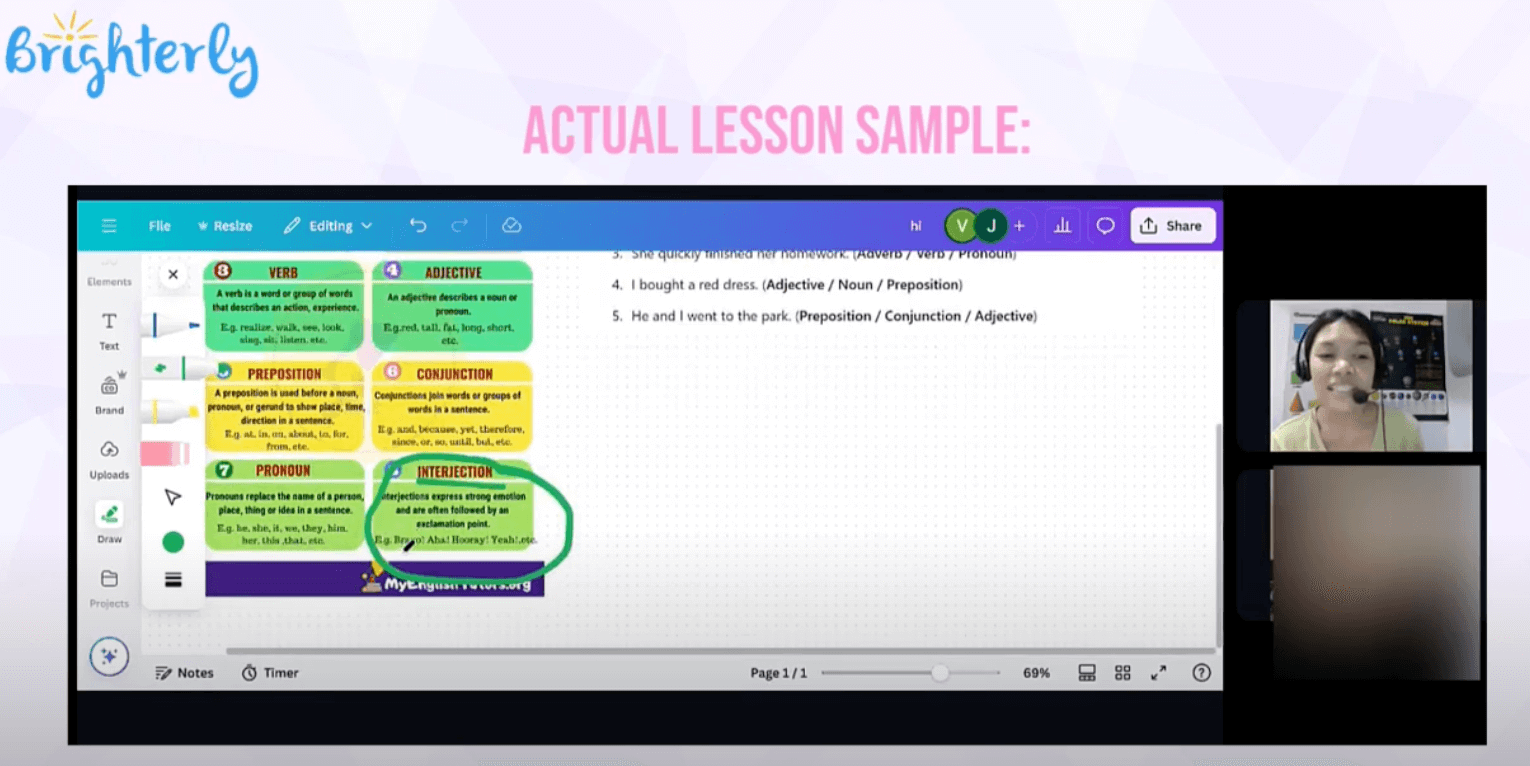
Writing classes & reading worksheets
Brighterly’s online writing classes are a combination of live learning and hands-on practice. Kids engage in interactive 1-on-1 sessions where they learn to build original characters and expand their vocabulary. Most importantly, they master persuasive writing through games and stories.
Apart from lessons, Brighterly provides a huge library of free printable reading worksheets for kids.
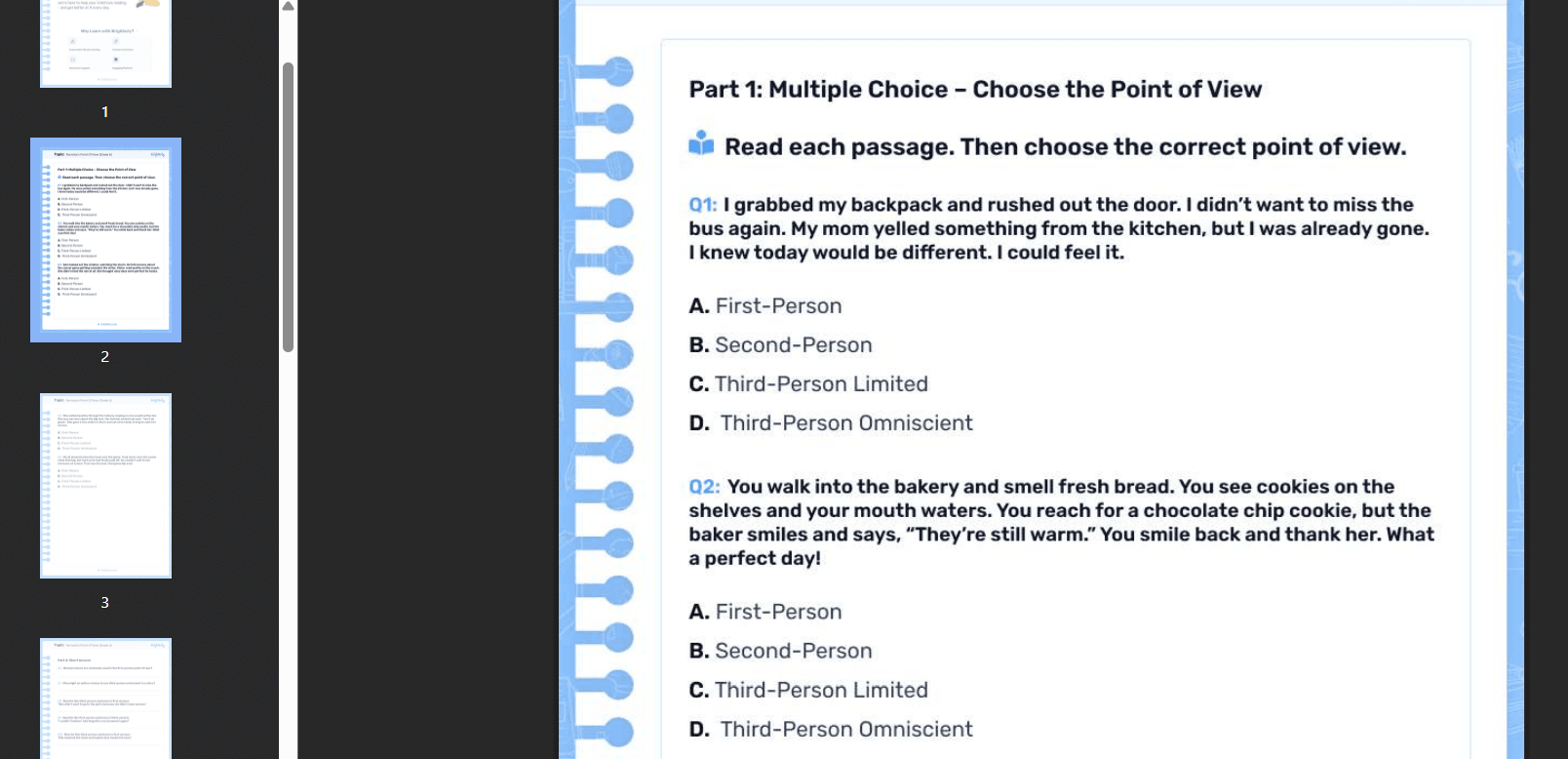
These expert-designed resources cover multiple topics for all ages. That could be phonics or sight words for the little ones. Middle schoolers, on the other hand, could engage in a more advanced story analysis.


Check the basics behind this term
Take our quick quiz to discover the perfect learning solution based on your child’s needs.
Persuasive writing technique of mentor texts
Best for: Preschool – 2nd grade (ages 3-8). It fits kids who are just beginning to understand that words have the power to change minds, but aren’t quite ready for complex essay structures.
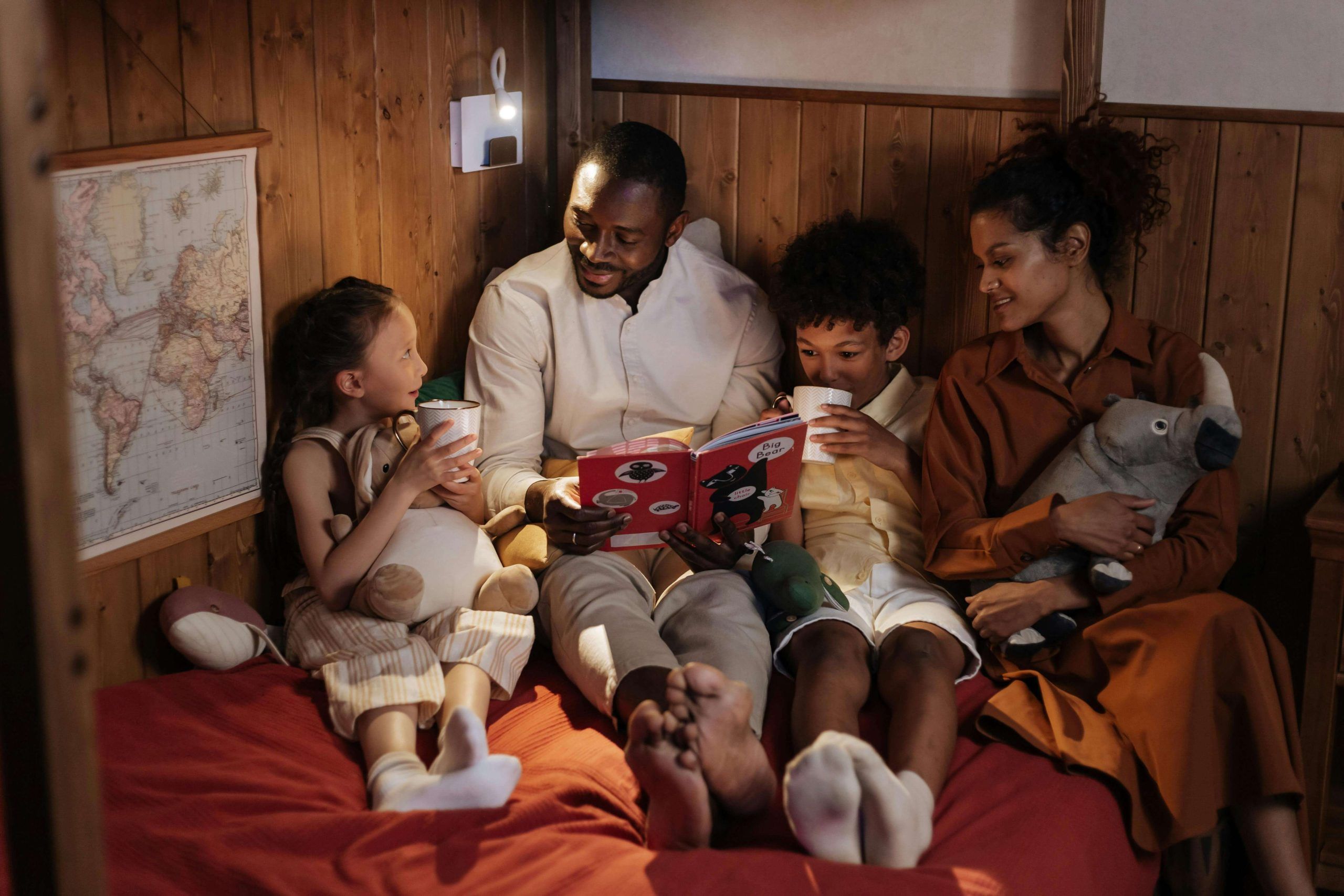
This method entails reading high-quality picture books together to see how characters use logic, emotion, and persistence to get what they want.
How to practice mentor texts at home
Simply read them and analyze how those texts can encourage and persuade readers. You can use these samples to start:
- I Wanna Iguana. A boy tries to convince her that he’s responsible enough for a pet.
- The Day the Crayons Quit. Each crayon explains why they are unhappy and what needs to change.
- Don’t Let the Pigeon Drive the Bus! This book shows the different ways a character tries to ‘beg’ or negotiate.
Why it works for little learners?
Choosing to read books as one of the persuasive writing strategies is effective because you can utilize them to ask prompt questions, like ‘How did the pigeon try to trick us?’ or ‘Why did the boy want the iguana?’
It helps kids identify the core elements of an argument, such as a clear request and supporting reasons. Once familiar with these elements, they can use them in daily communication.
Note: You can find ‘mentor texts’ in everyday life, too. Even a usual cereal box or a toy commercial can be suitable for this! You can point to these objects and ask: ‘How are they trying to convince us to buy this?’
How to teach persuasive writing using the OREO method
Best for: 3-5 grades (ages 8-11). It’s good for elementary students who are ready to start building organized and multi-sentence paragraphs.
The OREO method is one of the most popular tools used in American classrooms because it gives kids a clear (and ‘delicious’ 😊) structure to follow. At this age, children often have great ideas yet struggle to put them in a logical order.

How to use the OREO method at home
Explain to your child that in a strong paragraph – just like in a double-stuffed cookie – you need every layer to make it work:
- O – Opinion. Start by clearly stating how you feel. (e.g., ‘I believe we should have a family game night every Friday.’)
- R – Reasons. Give a ‘why’ for your opinion. (e.g., ‘It helps us spend time together without our phones.’)
- E – Evidence/Examples. Back up your reason with a fact or a specific detail. (e.g., ‘Last time we played cards, we laughed for an hour.’)
- O – Opinion. Restate your main point in a new and exciting way to remind them of what you want.
Why it works for elementary students?
This method is effective because it teaches kids that a valid opinion requires support. By the time they finish the ‘E’ layer, they have created a competitive and convincing example of persuasive writing for kids.
Besides, the OREO method changes how a child perceives communication altogether because it…
- Prevents ‘circular arguments’ with restating opinions like, ‘I want it because I want it’.
- Teaches ‘strong openings’ and ‘strong closings’ – the fundamentals of all good writing.
- Increases independence because the acronym is so easy to remember, and kids can ‘self-check’ their work.
Note: In school, 4th and 5th graders are often asked to provide two sets of reasons and evidence. Once your child masters the basic version, encourage them to ‘double-stuff’ their argument with an extra layer of facts.
If your child wants a specific treat or activity, have them verbally ‘speak’ an OREO paragraph to you. If they hit all four layers, they’ve successfully persuaded you!
Check the basics behind this term
Take our quick quiz to discover the perfect learning solution based on your child’s needs.
Teaching persuasive writing middle school with POW + TREE
Best for: Middle and high school students (ages 11-18). This strategy is designed for older kids who need a system to organize complex essays, research papers, and school reports.
As children enter their teen years, school assignments get longer, and expectations rise. The POW + TREE method is a specialized strategy that helps students manage the ‘mental heavy lifting’ of a full essay. It breaks the writing process into two phases – getting started and staying organized.

How to use the POW + TREE method at home
Part 1. POW (the writing process)
P – Pick an idea. Decide on the topic and the main goal.
O – Organize notes. Do brainstorming of thoughts before writing a single sentence.
W – Write and say more. Draft the essay and then go back to add details.
Part 2. TREE (the essay structure)
T – Topic sentence. What do I believe?
R – Reasons. Why do I believe this? (At this age, aim for at least three).
E – Explain. Give a ‘because’ for every reason with evidence or data.
E – Ending. Wrap up the argument and restate the main point.
Why it works for tweens and teens?
POW gives a starting plan. TREE ensures they don’t forget the evidence. Together, it’s super-effective and focuses on Self-Regulated Strategy Development (SRSD). Ultimately, kids become more independent and ready to handle high school/college-level work and academic competition.
Note: For high schoolers, the second ‘E’ in TREE is the most important. Teachers give extra focus to how a student explains their facts.
What are some good persuasive topics for kids?
No ideas yet? Ask your child: ‘What is one thing at home or school that you think is unfair?’ Usually, that one question is enough to get a 10-minute speech (or a great persuasive essay) started! Otherwise, here you go.
Persuasive writing ideas for kids aged 3-8
At this age, the best topics are about their immediate world. I.e., things they see and do every day.
- The best pet. Should every family have a dog or a cat?
- Bedtime rules. Should kids be allowed to stay up late on Fridays?
- Dessert first. Why we should eat our cookies before our broccoli.
- Recess time. Should schools have two recesses instead of one?
- The best superhero. Who is the strongest hero and why?
Persuasive writing prompts for kids aged 8-11
These students are ready to think about school rules and community habits. They can handle topics that require a bit more logic.
- School uniforms. Should students have to wear the same clothes every day?
- Homework limits. Is homework actually helpful for learning?
- Zoo ethics. Should animals be kept in zoos or stay in the wild?
- Screen time. How many hours of video games is ‘fair’ for a Saturday?
Note: You can also check the other 50 story prompts for kids to spark their imagination.
Persuasive writing topics for kids in middle and high school
For tweens and teens aged 11-18, topics should challenge them to think about society, technology, etc.
- Cell phones in class. Should students be allowed to use phones for research during school?
- The grading system. Are letter grades (A, B, C) the best way to measure what we know?
- Driving age. Should the legal age to get a license be lowered or raised?
- Social media. Does social media do more harm or good for friendships?
- College vs. trade school. Is a four-year degree necessary for a successful career?
What are persuasive writing examples for kids?
Persuasive writing examples for kids in preschool through 2nd grade
Keep it short and focus on one big ‘because.’
“I think we should have a pet goldfish. I will be very responsible and feed it every morning. Also, a goldfish is quiet, so it won’t wake you up while you are sleeping!”
As you can see, the idea is to get a goldfish. And the reasons are the kid’s responsibility for it and the fish’s quietness.
Examples of persuasive writing for kids in 3rd-5th grades
This is how elementary students can apply the OREO method.
“I believe our school should have a longer recess. One reason is that kids need exercise to stay healthy. For example, when we run around on the playground, we get our heart rates up and feel more energized. When we’re healthy and active, we can focus much better on our math and reading lessons. That’s why extending recess is a great idea for our school.”
So, the idea lies in a longer recess. The reason implies that exercise helps kids focus and stay healthy. Plus, the text includes the example – running on the playground leads to better focus in class.

For tweens and teens in middle and high school
This is how 11-18-year-olds can apply the POW + TREE strategy to build a convincing argument with clear ‘explain’ layers.
“I believe our school should require handwritten notes in core subjects like Math and Science. First, handwriting actually helps us remember what we learn much better than typing does. Research shows that moving a pen ‘wakes up’ the parts of our brain responsible for memory. When we type, we often just ‘zone out’ and copy words, but when we write by hand, we have to process the information. By switching back to paper and pen, we could spend less time cramming for tests and more time actually understanding the material. That’s why handwriting is a tool every student needs for success.”
Conclusion
The fact is, kids are naturally persuasive! Be it negotiating for five more minutes of playtime or explaining why they need a specific snack, they are already using these skills. Writing it down simply helps them organize those natural instincts into a logical format that works in school and in life.
Book free lesson and let Brighterly help your child feel heard and get prepared for the bigger academic challenges ahead.


Going through other parents’ Saxon Math reviews is one of the best ways to understand if the curriculum is the right choice for your child. I am a professional math tutor with Brighterly, and today, I will help you explore the pros, cons, and key features of Saxon Math so you can make your own […]

Jan 30, 2026
If you’re exploring learning platforms for your child, you may be looking at options like Cuemath vs Mathnasium. As a highly qualified tutor in math, I understand how important this decision is and what makes a good educational service for your child. To help you make your decision, I am going to be comparing the […]

Jan 30, 2026
Math & reading from 1st to 9th grade
Looking for homework support for your child?

Choose kid's grade

Math & Reading for Grades 1–9
Build real confidence for your child with a Brighterly math or reading tutor.