Transition Words for Kids: How to Improve Writing Flow and Clarity
reviewed by Laila A. Lico
Updated on February 1, 2026
Have you ever imagined not using transition words at all? I know, seems impossible. They are like a glue that sticks our sentences and thoughts together. If you expressed your ideas without them, you would immediately feel like you make no sense. But using these words is not as easy for kids as adults may think. But don’t worry, having years of experience as a tutor and teaching transition words for kids, I know what to do.
Key points
- Transition words link sentences and ideas so that they make sense.
- They make your writing smooth and your information organized.
- Kids can start using transition words in kindergarten, but it becomes even more important as they move up the educational ladder.
- Brighterly tutors teach transition words by using worksheets, reading together, and including fun activities into the learning process.
What are transition words?
Transition words definition is basically “bridge words”, connecting devices that a writer uses to tie the sentences together so that a reader can move from one idea to another smoothly. Picture a bridge connecting two sides of a river. That’s what these words do for your writing, getting you from the start to the end. You see them all the time: “first”, “but”, “because”, etc.
Don’t use them and writing starts to feel like a bunch of random facts or a to-do list. There’s no longer any flow, rhythm, or narrative. But when you show students how to weave these words into a story, you notice a huge difference. With transition words, kids can now create real, readable stories, not just random sentences.
Butwhat are transition words for kids? They’re basically just hints that help kids understand or describe what’s happening and what’s coming next when they read or write. Doesn’t matter if it’s about a trip to the park or some scientific explanation. Without these words, anything can get confusing.
What is the purpose of transition words?
Transition words are important because they help people get what you’re saying or writing. They show how things are related and keep you from getting lost in the story. Same with kids. When they use these words, their sentences just flow. It doesn’t feel weird or confusing.
No wonder using transition words also helps a child read and write better. There is even research proving that students who are good at using connecting words are also better in understanding what they are reading.
What do transition words do besides that? They allow people to follow your train of thought. For example, when you use a word like “but”, it tells a reader that a change is coming. Being able to guide readers like that is what makes a good writer stand out.
Transition words also help build critical thinking skills. When kids start learning transition words in elementary school, they’re also learning that using them makes planning stories simpler. If you look closely at these words, you can kind of guess where the story’s going and what’s going to happen. Once kids start noticing this while reading, they can then start using it in their own writing.
How to teach transition words: 10 methods to try
- Address a tutor
- Use worksheets
- Use “sentence strips”
- Create a word wall
- Highlight
- Try “And then” challenge
- Make a story from pictures
- Use a fan
- Tell a story
- Let peers edit
Getting a tutor’s help
A good tutor doesn’t just see where your kid is having problems. They jump in with examples that truly resonate. Kids often use certain words when they’re talking, but those same words can disappear when it’s time to write. That’s where a mentor steps in. They encourage kids to write how they talk, while slowly adding in better phrases so it sounds natural. For example, Brighterly reading tutors have a bunch of methods fit for all types of learning styles.
How Brighterly tutors help kids learn transition words
Tutors on Brighterly math and reading platform understand that reading and writing are super important. And knowing transition words helps with both. To make sure kids are not bored while learning them, teachers make transition words for kids writing feel more like a game than a chore. Whether your child is working on a fun story or a serious report, teachers in the Brighterly reading program make sure they get the attention and feedback they need. The professionals explain why the exact word is used in a sentence, so kids start using the same words confidently in their own way.
Check the basics behind this term
Take our quick quiz to discover the perfect learning solution based on your child’s needs.
Brighterly doesn’t just use reading tests. They also use reading tests and fun projects to keep kids interested. They know everyone learns in their own way, so tutors change their teaching to fit each kid’s speed and style. With the best tools for kids’ creative writing, they make each lesson a positive experience. Because of this one-on-one help, every student learns to write while having a good time.
Practicing with worksheets
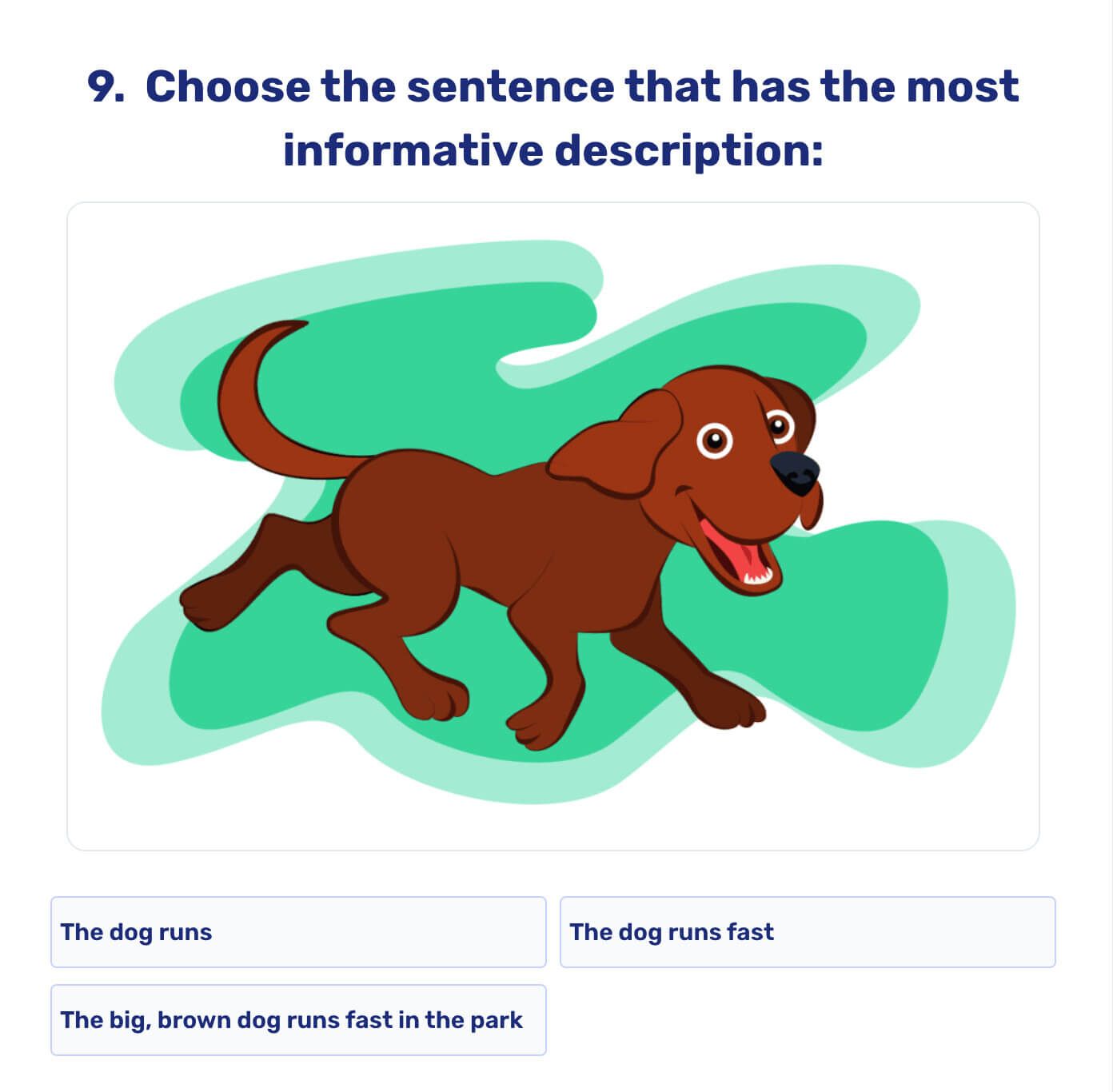
Worksheets are still around because they’re useful. Why? They’re a engaging, easy, interactive, fun, yet effective way to practice reading, writing, or math. Organized structure helps kids to concentrate, visual help turn it into a game, and repetitions help to solidify knowledge.
You can start with Brighterly reading worksheets to see how it all works. It can be a transition word activity that helps them learn how ideas unfold, how events connect, and why an author picked a certain word. After a while, these things stick, and kids start using transition words without even thinking about it when they write.
Using “sentence strips”
Try this: choose a short story, cut it up into sentences, and have your kid put it back together. They can use words like “First”, “Next”, or “Then” to link the sentences. It’s like assembling a puzzle, but the final result has to be a story instead of a picture. Since kids usually love puzzles, this method is lots of fun for them and doesn’t feel like more school.
This transition words activity is great if your kid struggles with language rules. When they physically put a transition word between two sentences, the change it makes becomes visible and obvious. They can move words around to see which one sounds right. That helps them to get how stories work in practice, and not just because it’s a language rule. Let them try and make mistakes. Don’t expect them to get the right word immediately.
Creating a word wall
That is as simple as it sounds. Just take a big piece of paper and make a word wall with short transition words for kids to see. Put the words into groups, like “Adding info”, “Showing a difference”, or “Ending a story”. It might seem too basic and easy, but it’s very helpful.
When kids are writing and get stuck, they can look up and find the word they need. After some time, they’ll check the wall without even thinking, which makes the whole process way less stressful. Plus, they’ll start using different words instead of going after the same ones all the time.
The best part? This wall of transitional words for kids works outside writing too. Since it’s always in the background, if kids are spacing out while doing homework or waiting for something, their eyes will fall on those words involuntarily. Eventually, they’ll learn to spell and sort transitions without even trying. To make it even more efficient, you can ask a kid to add new words to it every time they learn one. That way, the wall will also allow them to see how far they’ve come.
Color-coding transition words
Want to combine reading and learning transition words? Try giving a kid highlighters and have them mark these words in different colors. This way, they’ll start to see how authors link everything and keep things flowing. You can start with yellow for sequence words and blue for cause and effect transition words. The colors don’t matter. Choose the ones your child likes. The point is that they need to be different.
There’s more to it, though. This can really help your kid understand what they’re reading. Spotting a word like “However” clues them in that a twist is coming. It turns reading into a fun mystery, where they’re finding the hints that tie the story together.
Doing “And then” challenge
We’ve all heard a story where every sentence starts with “And then”. Unexpectedly, it can be of service in learning transitions. How? Try and tell such story to your kid and ask them how it sounds. Most likely, they’ll find it boring and notice something’s off. That is when you propose them to team up and swap out those repetitive starts with some narrative writing transition words like “Suddenly”, “Meanwhile”, or “Afterward”.
This helps them see how varied language can be and how many options they have to say the same thing. Also, by playing around with transition words for narrative writing, they can hear how awkward a story sounds with bad transitions. This will get them to use better linking phrases in their own stories.
This challenge is also a chance to add fun to the learning process. You can make the “And then” story ridiculous or silly on purpose, which usually gets a laugh and captures the kid’s attention.
Picturing a sequence of a story
Want to help your kid become a great storyteller? Try this: grab several pictures that tell a story, like from a family trip. Then, have your child lay them out in the order things happened and tell you what’s going on, using sequence transition words.
This gets them thinking about the sequential nature of storytelling. Once they get a hold of how transitions help describe the way one event follows another in a certain order, they’ll use those words in their writing confidently.
This is also a great training for your kids’ speaking skills as they need to be able to tell a story out loud before writing one. Using pictures helps them avoid feeling stuck looking at a blank page, so they can just focus on connecting the dots. It’s a simple step but it makes using transition words for informational writing and speaking much easier later.
Making a fan with transition words
Another creative method is to make a fan with transition phrases and words on each blade. If your kid is struggling with a sentence, they can fan out the choices and pick a good transition that works. This is perfect for children who find themselves blocked or feel overwhelmed by tons of choices. By giving them some simple transition words to pick from, writing becomes less scary.
You can also sort the fans by mood, topic, or purpose. For example, a “Mystery” fan could have words like “Suddenly” and “Unexpectedly”. Or, a “Science” fan could have words like “As a result”. This way, kids can match certain transitions to what they’re writing.
Telling and discussing a story
The explanation of transition words can also be done through a simple chat. Have your kid tell you a story, and then jump in with questions like “Wait, how did we get from the park to the house?”. This will kinda force them to use transitional phrases and words when they’re talking, and that can help their writing too. If they can use these words out loud, writing them will be a piece of cake later.
Another benefit of this method is that it also gives you a chance to show them how it’s done. If they say, “We went to the park and got ice cream”, you can say, “Oh, so after the park, you got ice cream? Sweet!”. It’s a simple way for them to pick things up without feeling like they’re in trouble.
Letting the peers edit a story
When kids work together on writing, a cool trick is to have them exchange drafts and see if they can find the words that link ideas. If there aren’t many, they can point out spots where it’s better to add a connecting word to make things clearer. Doing this lets them think about how a reader would see their writing. If they notice that missing those words makes a story confusing, they’ll be more careful with their own writing later.
Also, when kids edit each other’s work, they get better at working with others and understanding feelings. They figure out how to give good advice and take it too, all while being nice. It’s a fun way to build a writing team where everyone helps each other get better. Seeing how their friends use transition words in 3rd grade and later can even give them new ideas for their own writing.
List of transition words for kids to introduce today
Not all transitional words for kids are the same. Depending on the age and grade your kid is at, you should introduce different types of connecting phrases. It’s important to use words that are easy for them to understand. If it’s too hard, they might get frustrated. So, here are the lists of words you can use depending on where your child is on the educational journey.
Transition words for kindergarten
- And
- But
- Then
- First
- Last
- Next
- So
- Now
- Wait
Transition words for elementary students
- Also
- Because
- For example
- In addition
- However
- Therefore
- Meanwhile
- Finally
- In the beginning
- Soon
- Suddenly
- Instead
- During
- Following
Transition words for middle school
- Consequently
- Furthermore
- Nevertheless
- Simultaneously
- In conclusion
- On the other hand
- Alternatively
- Specifically
- In summary
- In contrast
- Moreover
- Accordingly
- Subsequently
Check the basics behind this term
Take our quick quiz to discover the perfect learning solution based on your child’s needs.
Conclusion
It’s beyond doubt that teaching transition words for kids is a big deal for how they talk and write. These words shouldn’t be underestimated or seen as just space fillers. They help others follow a kid’s line of thinking and understand what they’re trying to say. With reading tests, games, and fun activities, we can help kids move from basic sentences to more complex and smooth writing. After all, writing is like a trip, and transitions are like the signs that keep you going the right way.
If you want your kid to get better at reading and writing, learn transition words and how to use them with ease, try Brighterly. Book free reading lesson today and see how it works!


Looking for something more than Brilliant.org in 2026? While Brilliant is great for self-paced learning, many kids need a more personalized and interactive approach. In this article, I, as a teacher and educational platform reviewer, share top 10 Brilliant alternatives that can help your child achieve high learning results. There’s something here for everyone, so […]

Feb 01, 2026

ADHD and spelling challenges co-occur. If parents and teachers only knew how often! Then they wouldn’t ask why a bright, curious child still struggles to write words correctly. This article is my attempt to explain why spelling can be so hard for children with ADHD and help them thrive. This isn’t advice that is too […]

Feb 01, 2026
Math & reading from 1st to 9th grade
Looking for homework support for your child?
Choose kid's grade

Math & Reading for Grades 1–9
Build real confidence for your child with a Brighterly math or reading tutor.