What is Close Reading & How to Help Your Kid Master the Skill
reviewed by Laila A. Lico
Updated on January 14, 2026
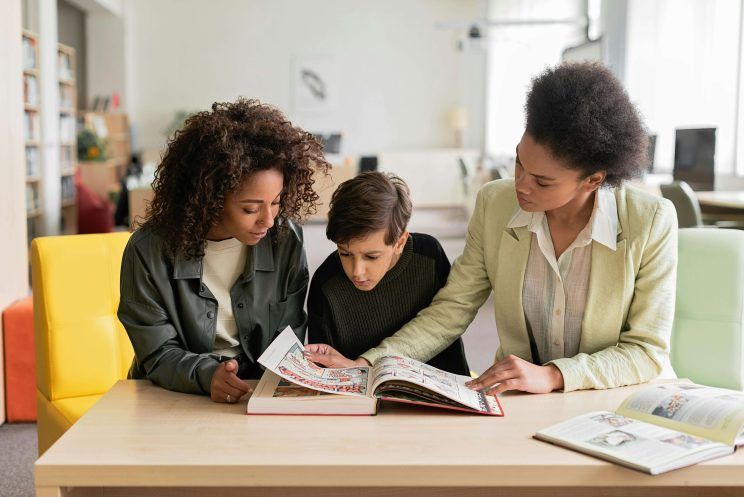
Many parents don’t get what is close reading and what their kids need to do to improve it, no matter how often teachers and educators point out its importance. As a tutor myself, I’ll explain it to you. In this guide, you’ll find why it matters and what exactly you need to do to help your kid nail their next reading at school.
Key points:
- Working on close reading skills is important for academic success and independent thinking.
- The 5-step close reading flow is designed to dive deeper into the text to find more textual evidence for cohesive argument development.
- The top strategies for close reading include visualization and open question tools to fuel curiosity and add more fun to the reading process.
- Services like Brighterly tutoring platform offer help to kids who struggle with close reading and many other reading-related problems.
What is close reading?
The simplest close reading definition is reading until you catch the main idea and the meaning of the text. For this, kids are offered to read short texts several times, notice as much as they can, and follow their curiosity by asking questions about what they just read.
This way, they steadily learn to think critically and interpret more complex texts, concepts, and ideas.
Close reading skills are foundational in the set of US state standards. Although the learning process for close reading may look different for younger and older students, its goal remains the same: to help readers focus on the meaning and important details of the text.
It may look non-obvious at first, but with more practice, kids get used to citing specific evidence to support their arguments, noticing details while reading, and unpuzzling meaning.
Why do educators use close reading techniques?
Close reading techniques maintain focus and improve cognitive abilities in today’s world of fast social media scrolling. Many reading tutors admit that kids now get bored faster and need a constant shift in activities during the lesson to remain focused. Yet, close reading is still the most effective method for teaching kids to think independently beyond surface-level understanding.
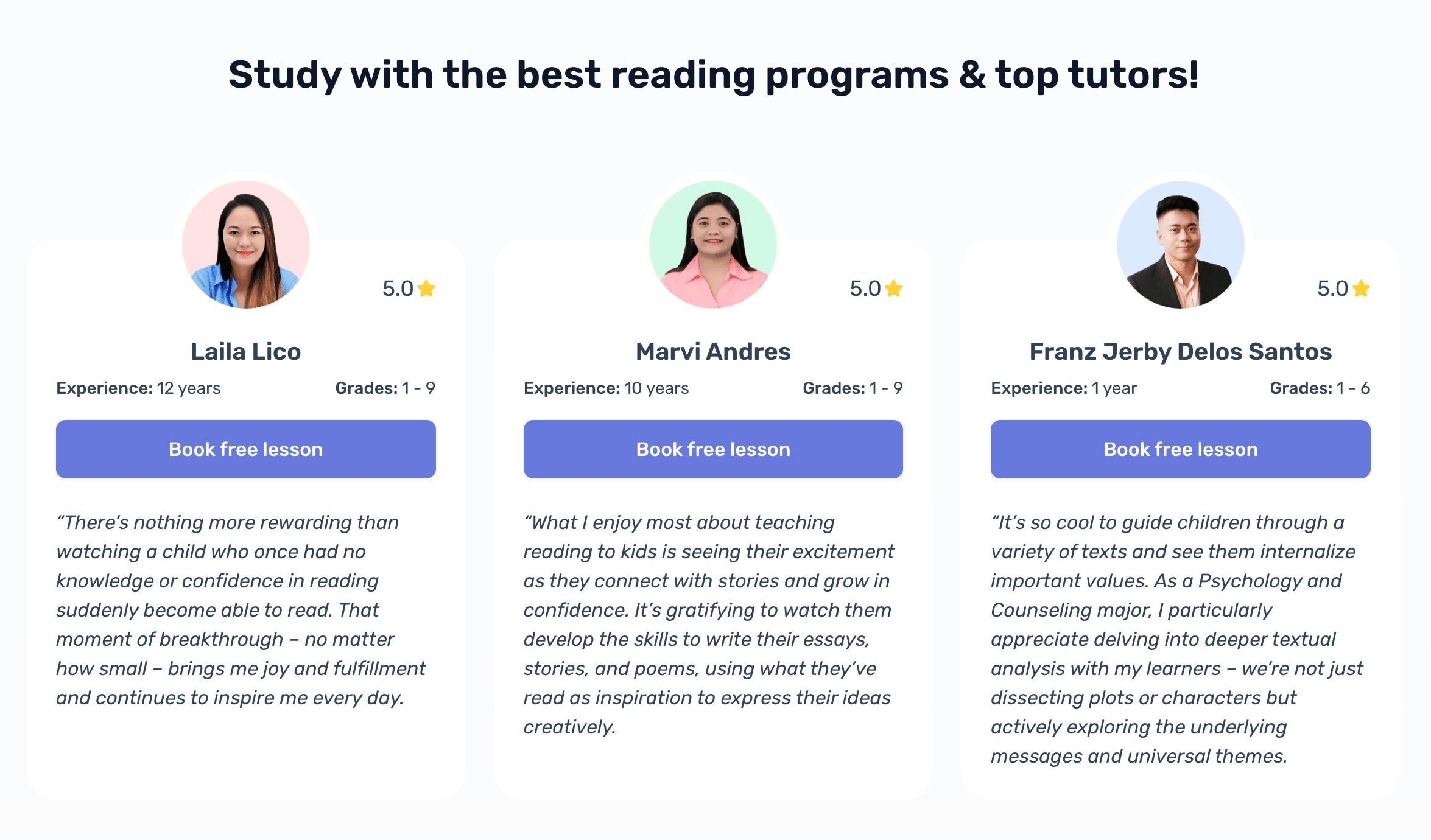
And the truth is, if educators themselves are excited about uncovering layers of meaning in a seemingly boring passage, children are highly likely to follow them. That’s how the passion and enthusiasm of professional teachers on the Brighterly math and reading platform help kids get interested in reading.
Here is how Brighterly reading tutors work to improve reading skills:
- Apply gamified and interactive methods to make classes interesting to kids
- Adjust the teaching style to the pacing and needs of each learner
- Design a customized learning plan that is aligned with the U.S. state standards
- Have well-developed soft skills to build a genuine rapport with students
- Tackle core reading skills, like phonemic awareness, reading comprehension, and critical analysis
How to teach close reading?
Teaching close reading requires a careful textual analysis, focusing on making observations, noticing textual evidence, and reflecting on it. That’s why it needs an undivided attention to the text and curiosity from a learner.
On a surface level, it will look like sitting over a short passage of text and endlessly rereading it. But in reality, building an effective close reading strategy is like a quest for treasure — as long as you can see it and guide your kid there.
But let’s face it: while some kids have the internal motivation and discipline to read books or solve reading worksheets for hours, most of our kids need a mentor, a partner, or an entertainer to get them interested. That’s why I recommend paying attention to platforms like Brighterly. Their experts can find the right approach to your kid and design a personalized learning plan where they can improve their core reading skills comprehensively.
Check the basics behind this term
Take our quick quiz to discover the perfect learning solution based on your child’s needs.
Here are the essential tools for teaching close reading:
- Short passage of text: Find something relevant for their age in advance.
- Annotation materials: Prepare color pencils, sticky notes, and coding rules.
- Graphic organizers: At the beginning, it can be a sheet of paper where you write down all your ideas. Alternatively, you can try a mind mapping app to give those ideas structure.
- Discussion phrases: Prepare some questions and sentence structures to help your kid (like “The fact that … shows that… ).
Once get everything, you’re ready to see what are the 5 steps of close reading:
- Read the text for the first time: Don’t overthink it at this stage — just notice together initial reactions, feelings, and understandings. Discuss them together.
- Scan the text for facts: The second read should be very slow and with annotation materials. Help your kid mark facts, quotes, and descriptions that matter for the meaning of the text.
- Interpret your observations: Now, work with the annotated materials and the sheet of paper to explain in your own words the text’s meaning. Encourage your kids to use their background knowledge and ask as many questions that go beyond written words as possible.
- Come back to the text for extra details: After coming up with extra questions, return to the written text and try to find the answers together. It’s great if your kid notices something new to mark and think about at this stage.
- Finalize with your verdict on the text: You can reread and reinterpret the text several times until you read the ultimate result of a close reading process, which is building a comprehensive text summary with an independent cohesive argument on top of it.
Note that the ultimate close reading purpose is not to get the truest version of somebody’s text, paraphrased in your own words. The real goal is to encourage curiosity and critical thinking in students, helping students rely on their own observations, draw logical conclusions, and ground their arguments on facts.
Close reading strategies
- Reread short text passages together
- Think aloud as you read
- Ask open questions about the text
- Practice techniques of notemaking
- Create your system of text marking
- Talk about feelings and motives
Reread short text passages together
Best for: supporting your kid in doing a repetitive and seemingly boring thing for their future progress.
Rereading is the key aspect in close reading, and you cannot master the skill without it. If your kid struggles with rereading or finds it boring, try using some games or getting them time to rest before coming back to the task.

How to make the key aspects of close reading more fun:
- Add more interactivity by asking your child to predict what comes next in a text or playing a text detective to find clues to the facts.
- Change the text to some story they genuinely like.
- Give them more freedom to choose the pacing and reading material next time.
Think aloud as you read the text
Best for: making the close reading process more interactive.
Generally, reading and thinking aloud help with word memorization and recognition. Based on the BBC report, while reading aloud, kids tend to remember more than those reading silently. Thus, it’s also a great method to help with close reading struggles.
How to think aloud with your close reader:
- Offer your kid to try first- or second-time rereading aloud to relieve the pressure.
- Make reading aloud a little more theatrical by letting your kid pick a role. This way, they will read aloud and feel entertained in the process.
- Add other gamification elements, like cue cards with words they should find in the text.
Ask open questions about the text
Best for: fueling curiosity and deeper understanding.
Open questions encourage kids to ask deeper questions about the text. Unlike quiz-style questions, they focus on exploration rather than correct answers, which is perfect for the close reading method. Feel free to use prompts or create your own open questions on the go.
Open questions you can ask:
- “Why might the author choose this word here?”
- “How does this detail relate to the overall tone?”
- “What does this part change about the meaning of this text?”
Practice making notes
Best for: improving your kid’s observation skills.
Notemaking is the basic skill of close readers, and it’s worth practicing separately. It encourages active reading and constant dialogue with the text, helping kids identify all the key information, questions, and reactions. In the future, they can develop more sophisticated literary analysis systems that include character development and literary devices.
How to include notemaking reading activities in a close reading practice:
- Encourage your kid to write in margins
- Buy or create for them a reading journal with templates and open questions for note-taking
- Always have sticky notes nearby, and don’t let any idea pass without writing it down
Create your own system of text marking
Best for: visualizing thoughts in a map or as a system to reuse and rely on.
Being one of the reading comprehension strategies, the individual guide to text marking is an excellent way to systematize all the notes and observations made along the way. To systematize the process, you can start by designing your own color code and a labeling system: for example, circles for main ideas, stars for emotional moments, and the color blue for additional details. Over time, this system can turn into a personal close reading guide to work with information.
How to create an effective text marking system:
- Start simple before making your system complex — at first, 2-3 symbols are enough.
- Find your kid a reading journal, create a separate space for the marking legend, and encourage your kid to bring it anytime they need to reread the text.
- Add more symbols to the legend as the reading comprehension and complexity improve.
Talk more about feelings and motives
Best for: situations when your kid is stuck with interpreting the logic of a character’s behavior
Quite frequently, it’s hard to capture the close reading meaning with logic only, especially when we work with figurative language and associative writing. Asking your kid to rely on their feelings and recall their motives in similar situations can be the way to capture the deepest meaning of the text. These conversations can help your child learn to read between the lines, understanding how specific word choice decisions shape the text atmosphere.
What to ask to start talking about emotions in close reading:
- “In your opinion, how does the character feel? What words show that?”
- “What feeling does the text create? Why?”
- “If you were the protagonist, would you do the same? Why or why not?”
Close reading: Essay example
For most learners, mastering essay writing is the answer to the question, “What is the point of a close reading?” Given that the result of a close reading is a text summary supported by your kid’s own ideas, the essay is the mirror of how well your kid has mastered the skill.
Here is a short example of how the close reading technique works for developing an essay paragraph.
I took the text passage from Edgar Allan Poe’s “The Fall of the House of Usher.”
“During the whole of a dull, dark, and soundless day in the autumn of the year, when the clouds hung oppressively low in the heavens, had been passing alone, on horseback, through a singularly dreary tract of country; and at length found myself, within view of the melancholy House of Usher.”
After rereading the text four times, I’ve completed my observations:
- Facts (textual evidence): The picture is dark because of the “dull, and soundless day”; “clouds hung oppressively low”; “singularly dreary tract”; “melancholy house.” My reader response is suspicion of something bad about to happen.
- Patterns/hooks: Point at negativity with colors and lack of sound to depict a melancholic atmosphere.
- Implicit ideas: The lonely narrator passes on the horse amid the highly oppressive setting, like one of the Four Horsemen of the Apocalypse. He notices only negative things around, so that we can feel how depressed he is. He’s not happy to visit the house.
The essay part based on these close reading examples can be something like this:
“In “The Fall of the House of Usher,” Poe uses dull and melancholic descriptions to create a fatalistic atmosphere of decay. The negativity of the narrator’s perception, concentrated in a single sentence, feels totally devastating. The author reveals mastery in putting the reader into a death-like atmosphere with just a couple of lines.”
Conclusion
In this guide, my goal was to show you what is close reading strategy, how it contributes to reading comprehension, and what to do to help your kid build it. Now, you can practice the close reading step-by-step approach with the instructional strategies to support your kid, or book free reading lesson at Brighterly to ask a tutor to help you.
No matter which way you choose, don’t forget to have fun and enjoy the process!


Kahoot! reviews say the platform is fun and exciting. But does it really help people learn? I looked at what parents and students and teachers have to say about it. This will help you figure out if Kahoot! is good for your child or your classroom in 2026. Kahoot! is something that a lot of […]

Jan 07, 2026
This article is dedicated to ADHD writing tools that help kids focus, organize ideas, and get words on the page, even when writing seems like herding cats. Let me share apps, programs, and simple hacks designed to make the learning process of your very special child easier. Key points: ADHD writing tools separate planning, organizing, […]

Jan 14, 2026
Math & reading from 1st to 9th grade
Looking for homework support for your child?

Choose kid's grade

Math & Reading for Grades 1–9
Build real confidence for your child with a Brighterly math or reading tutor.