Circle Theorems: Definition, Formulas, and Examples
reviewed by Jo-ann Caballes
Updated on August 11, 2026
Circle theorems are a set of rules that explain how angles, chords, tangents, and radii relate inside and around a circle. They let you calculate unknown angles without a protractor. There are eight main circle theorems, and this guide covers each one with a diagram, the key formulas, and worked examples. They are also an important part of understanding geometry as a whole, alongside topics such as angles, shapes, transformations, and coordinate geometry.
Circle Theorems: Definition
Circle theorems are geometry rules that describe the angle properties created by chords, tangents, and radii within a circle. Each theorem states a fixed relationship — for instance, that an angle in a semicircle is always 90° — which you can use to find missing angles from the information you already have.
Expert Math Tutors for Every Level
Connect with professional and certified educators who provide specialized support for every grade level, from elementary school basics to advanced algebra
The 8 Circle Theorems
There are eight main circle theorems, each describing a different angle rule. Together, they cover angles at the center and circumference, angles in the same segment, cyclic quadrilaterals, semicircles, tangents, chords, and intersecting chords.
1. Angle at the Center Theorem
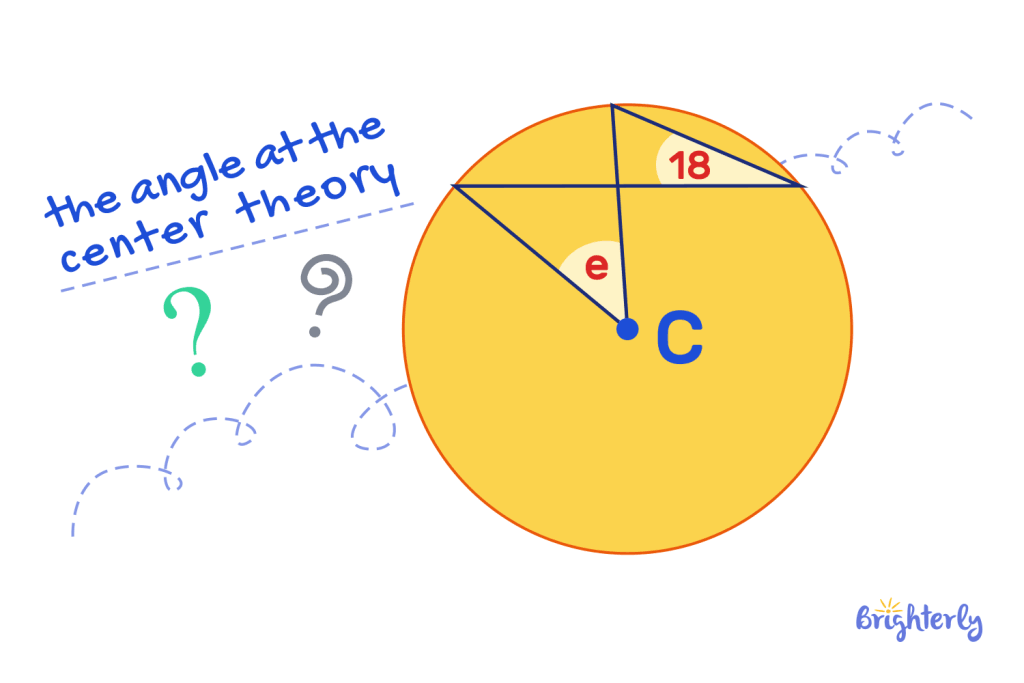
The angle at the center of a circle is twice the angle at the circumference when both are subtended by the same arc. For this to work, a chord must connect two points on the circumference to the points forming each angle.
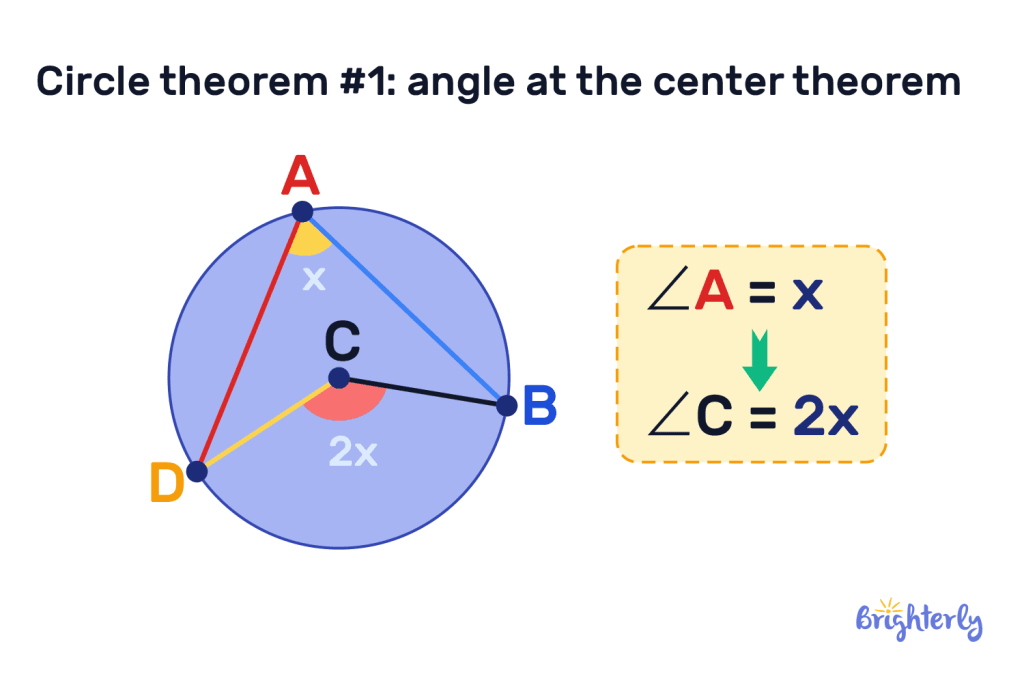
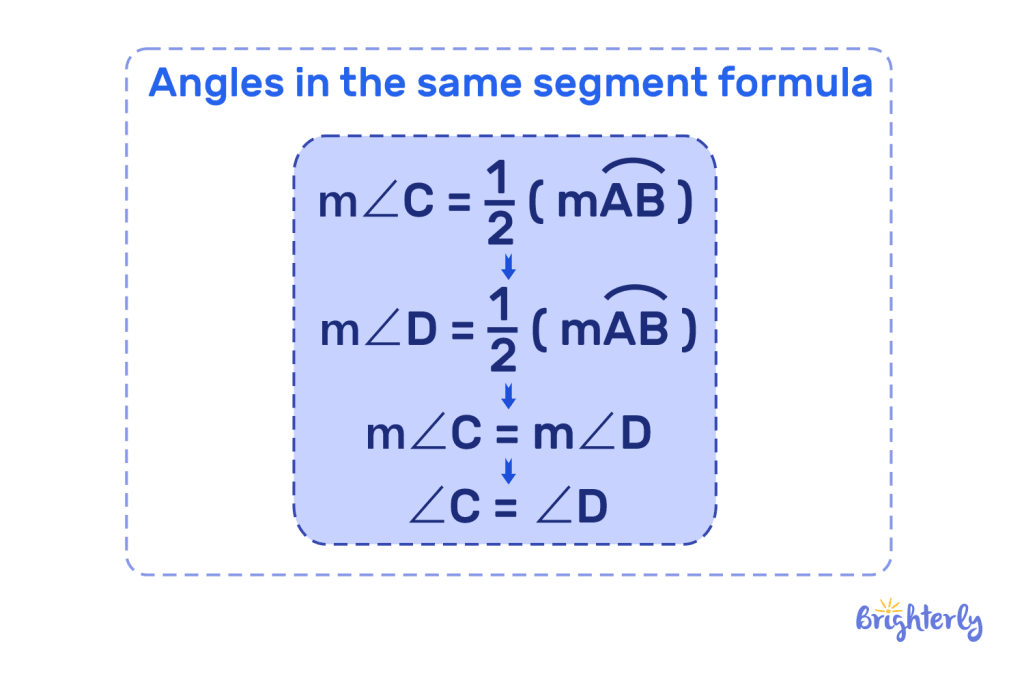
2. Angles in the Same Segment
Angles at the circumference subtended by the same arc, in the same segment, are equal to one another. Any angles drawn in the major segment from the same chord will match; angles in the minor segment will match each other but differ from those in the major segment.
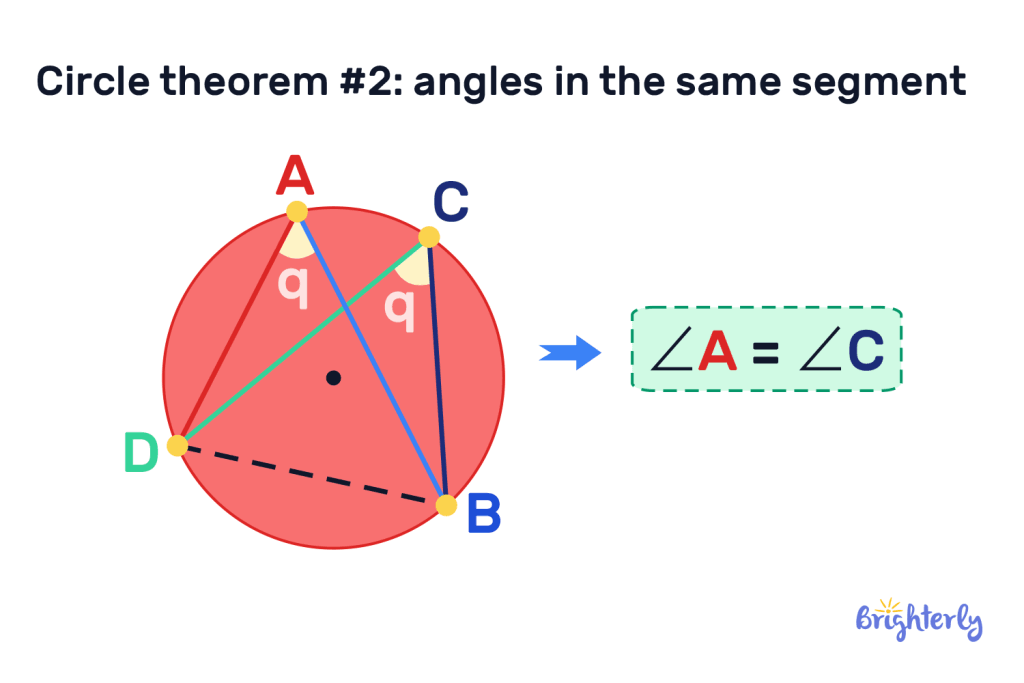
3. Cyclic Quadrilateral
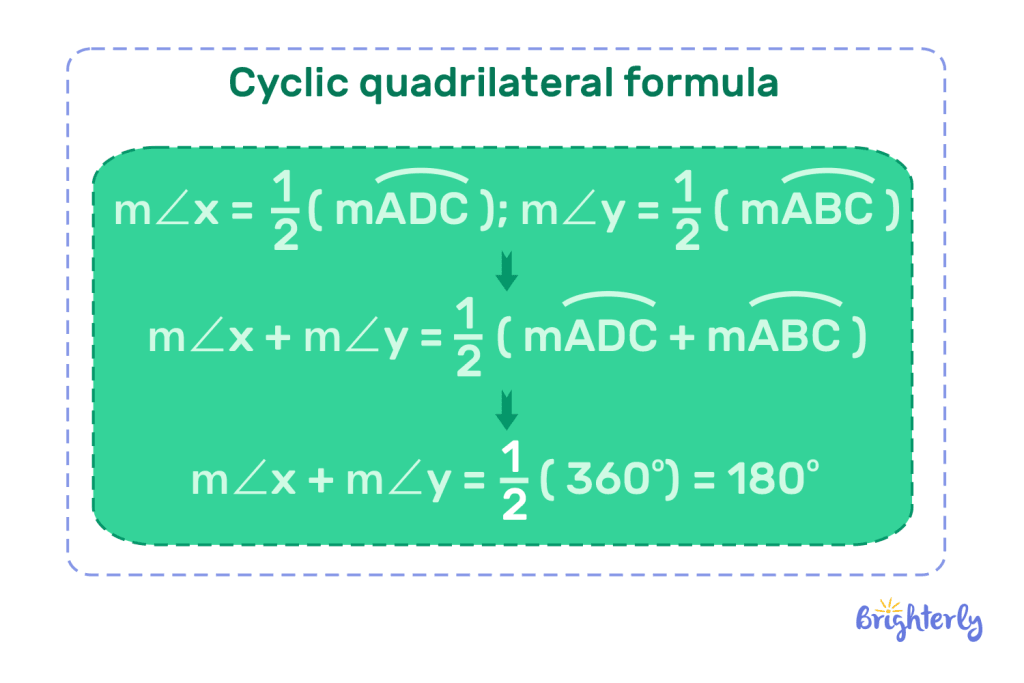
A cyclic quadrilateral is a four-sided shape whose vertices all lie on a circle. In any cyclic quadrilateral, opposite angles add up to 180°, and all four interior angles still total 360°.
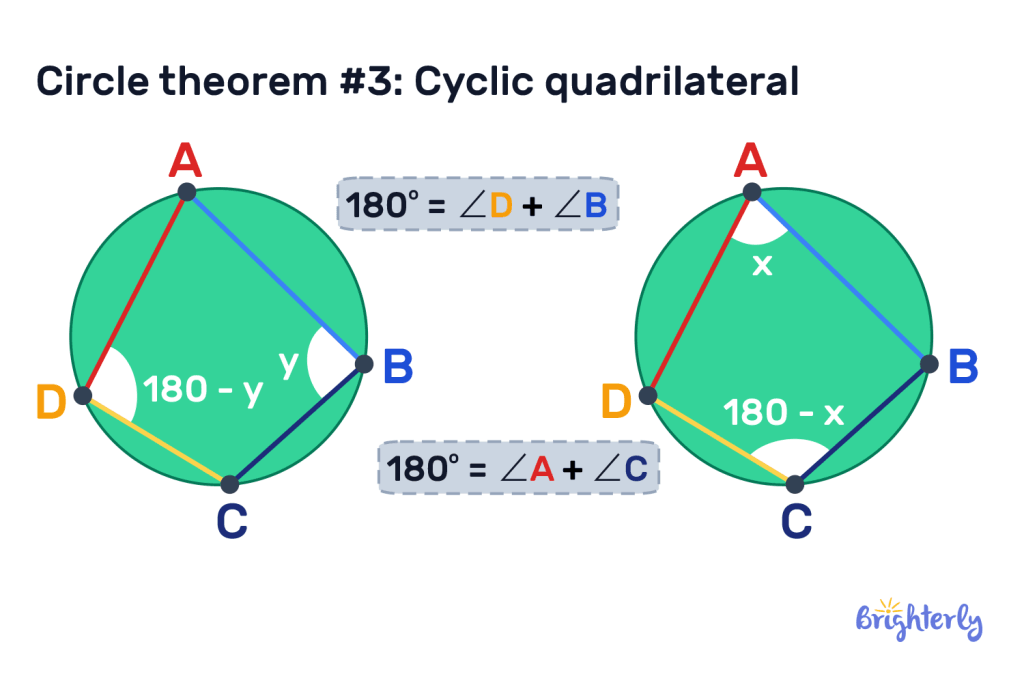
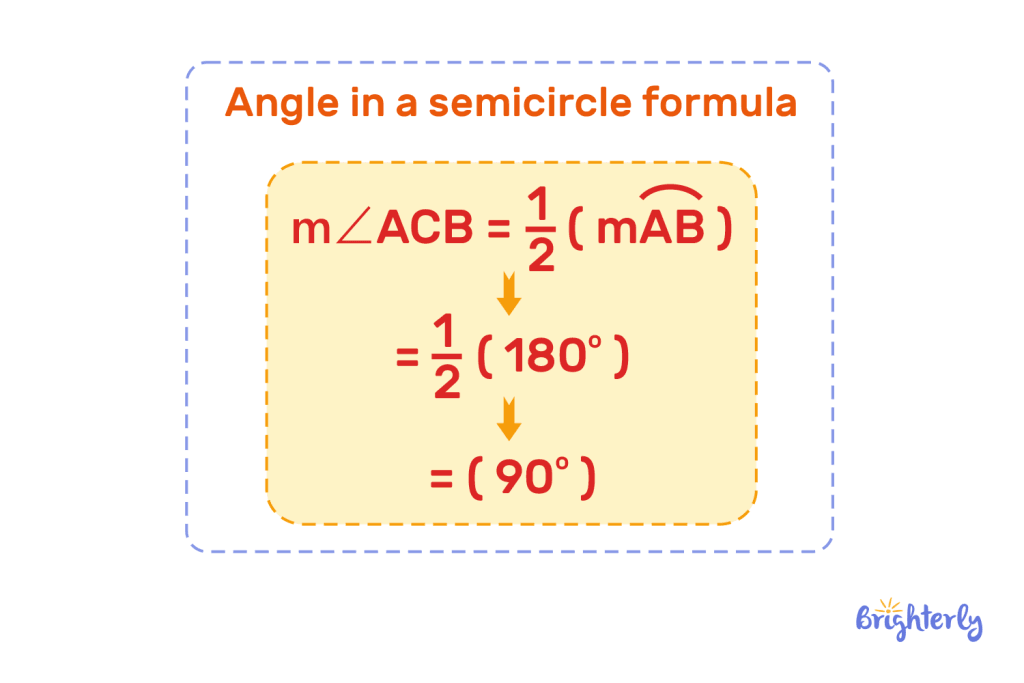
4. Angle in a Semicircle
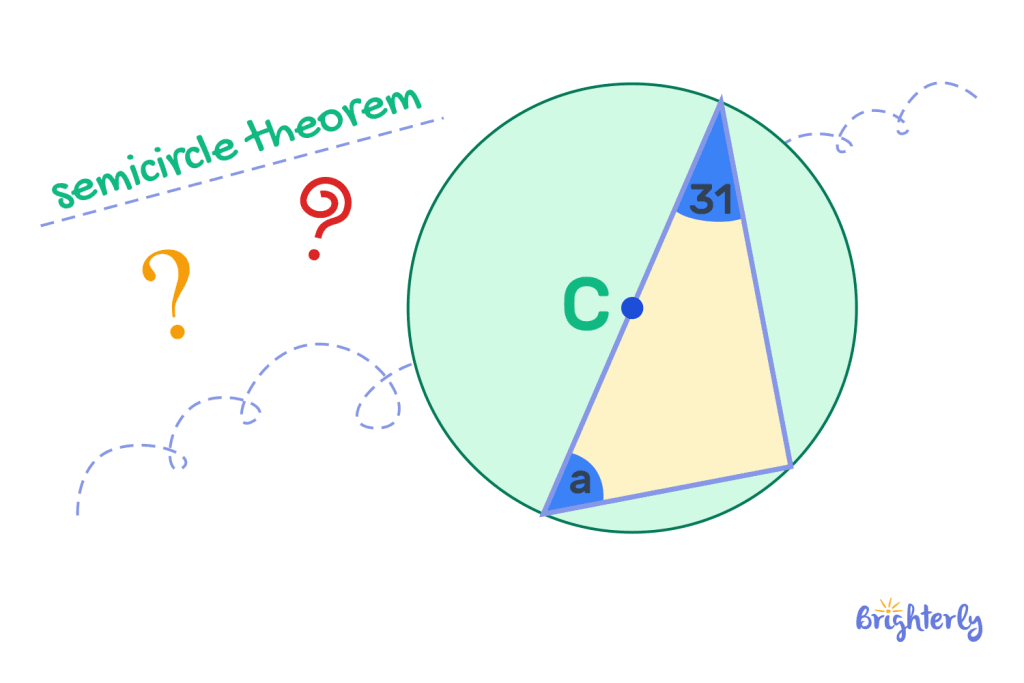
An angle drawn in a semicircle from the two ends of the diameter to a point on the circumference is always 90°. This holds no matter where on the semicircle’s arc you place that point.
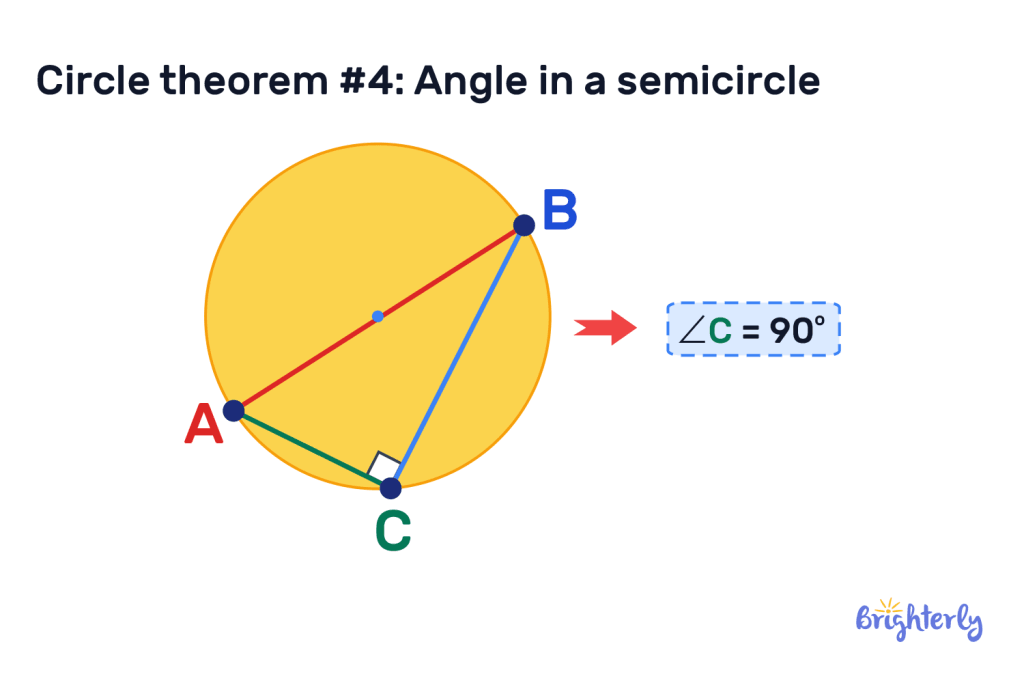
5. Tangent–Radius Theorem
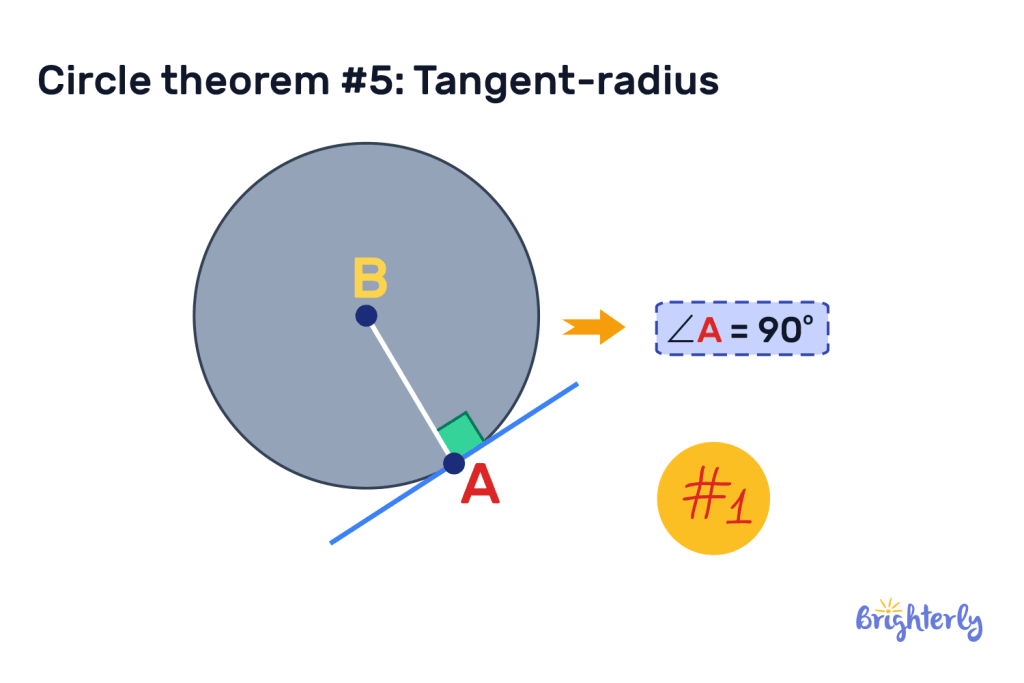
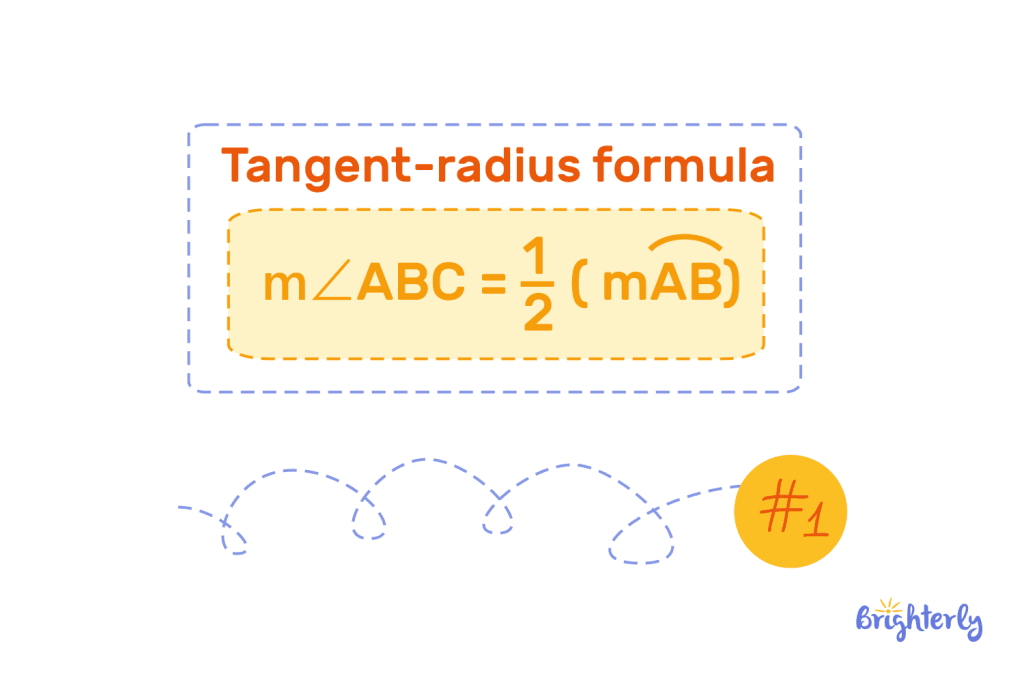
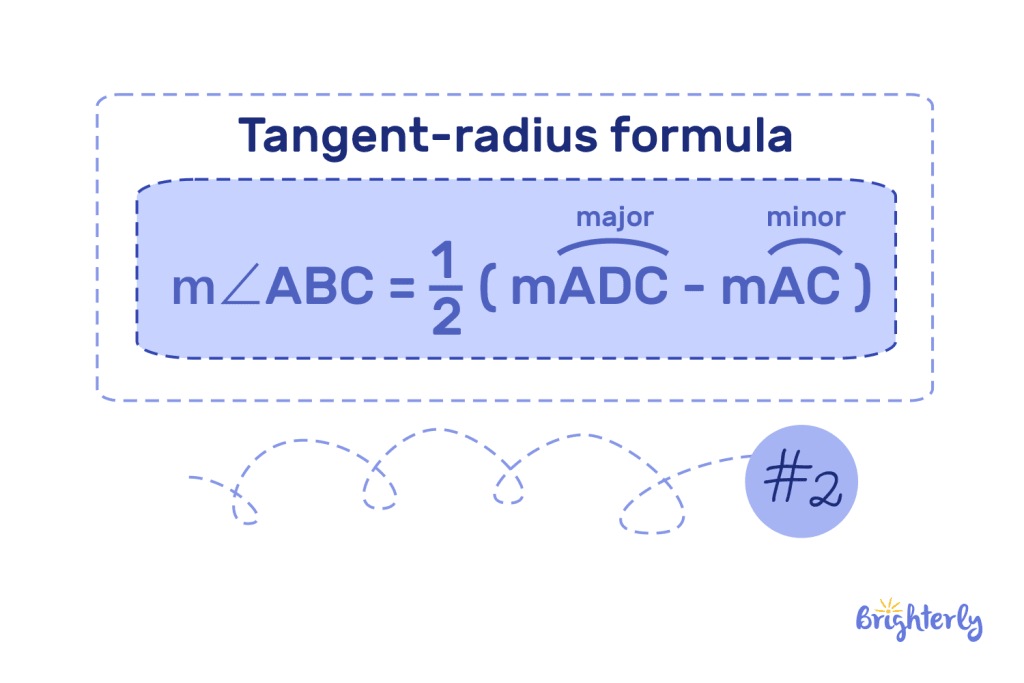
The angle between a radius and a tangent at the point where they meet is always 90°. In addition, two tangents drawn to a circle from the same external point are always equal in length.
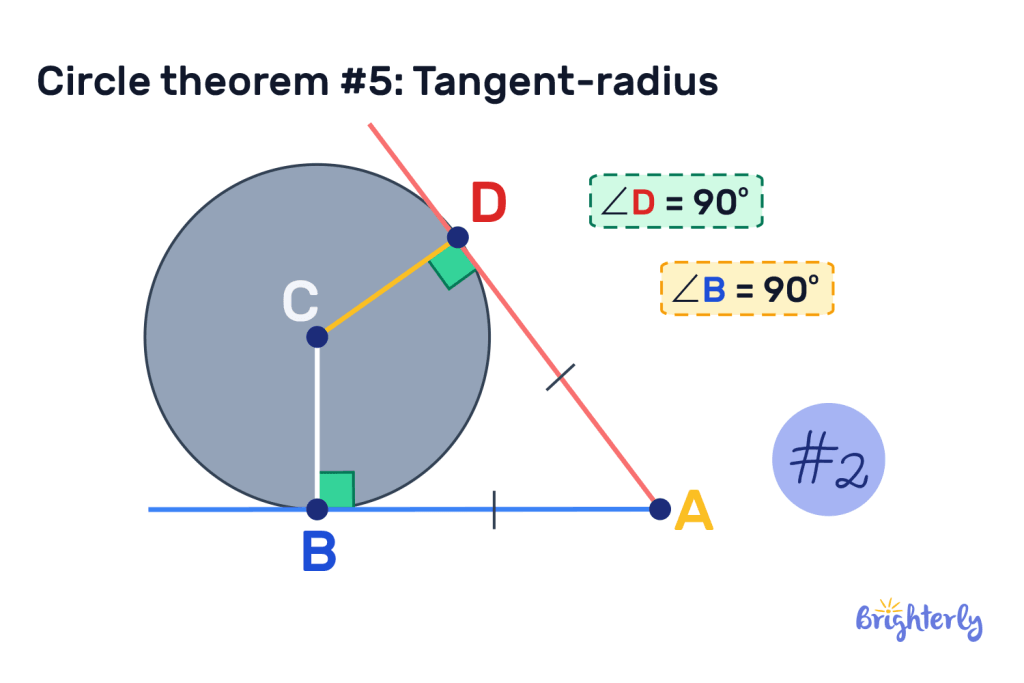
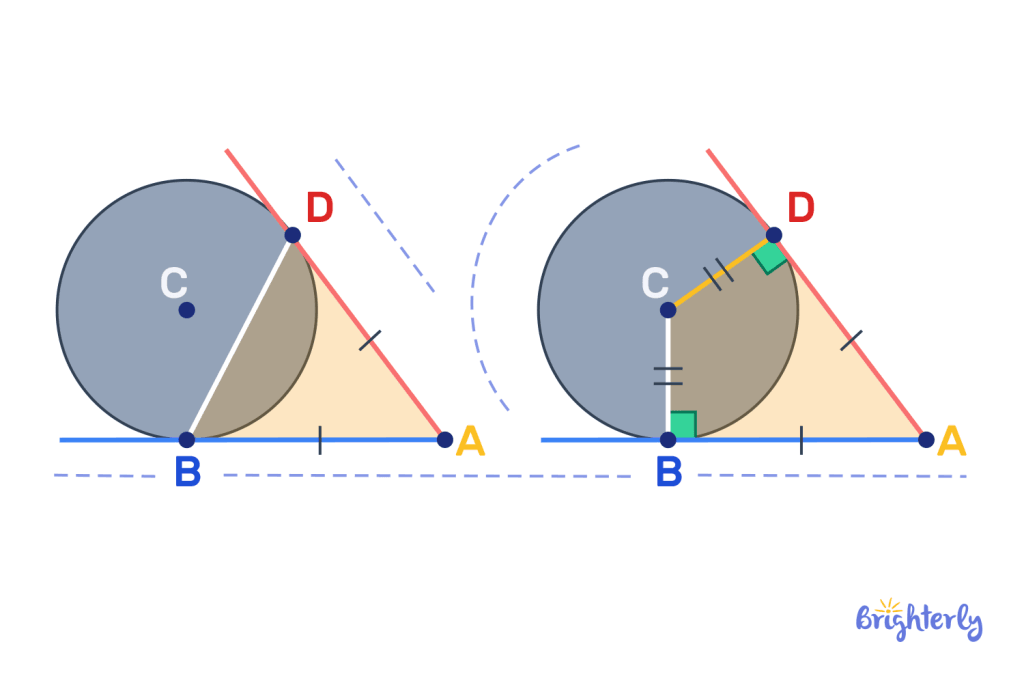
Using those two equal tangents, you can form an isosceles triangle by joining the points of contact with a chord, or a kite by joining them to the center with two radii.
6. Chord of a Circle Theorem
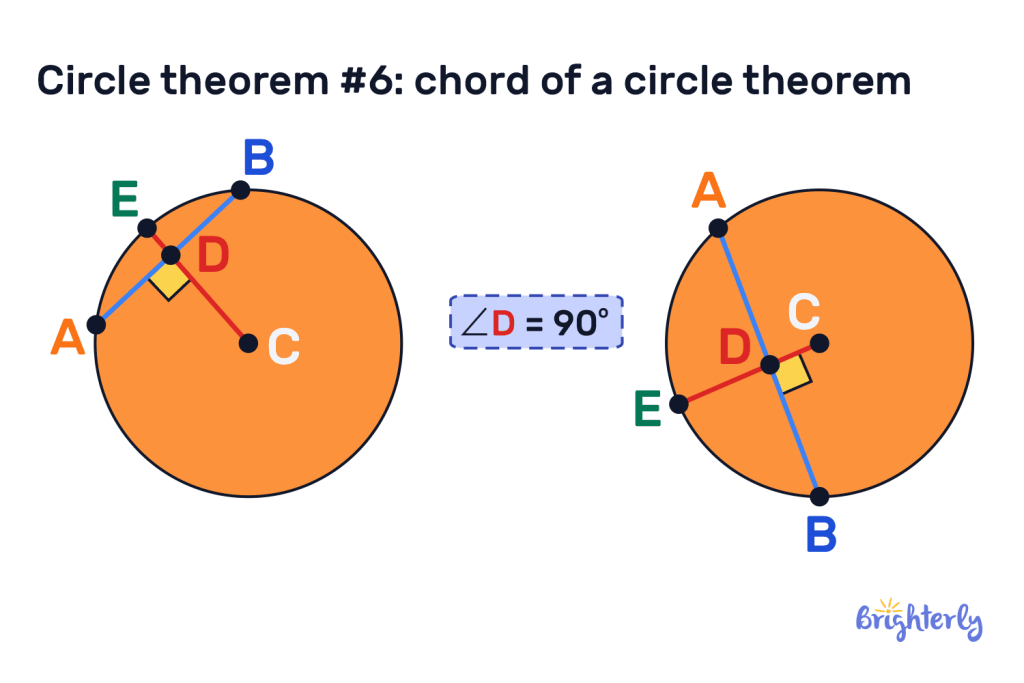
When a radius bisects a chord of a circle, it meets that chord at right angles. This is true wherever the intersecting radius and chord are placed inside the circle.
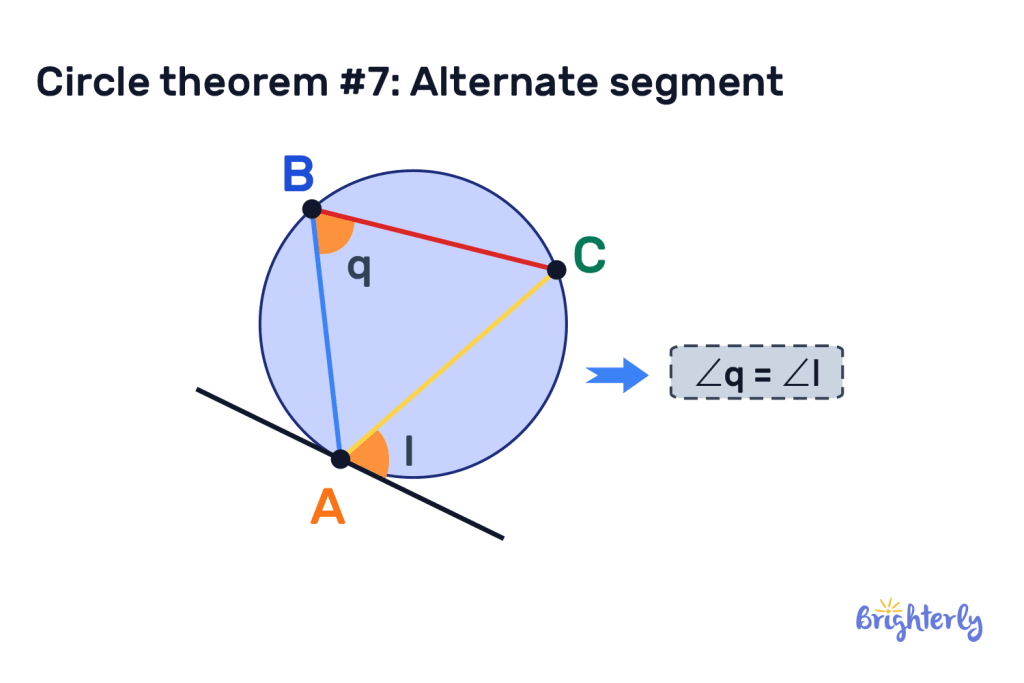
7. Alternate Segment Theorem
The angle between a tangent and a chord equals the angle in the alternate segment — the angle subtended by that same chord on the far side of the circle. It links a tangent-chord angle to an inscribed angle.
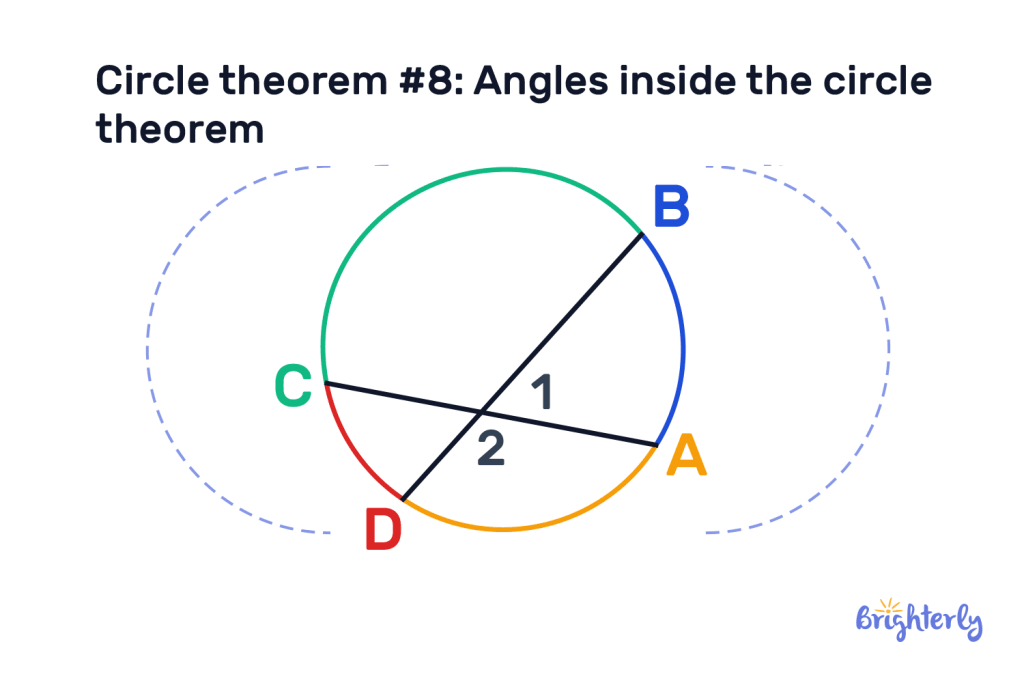
8. Angles Inside the Circle Theorem
When two chords intersect inside a circle, the angle formed equals half the sum of the two arcs intercepted by that angle and its vertical angle. It connects intersecting chords to the arcs they cut off.
Circle Theorems Formulas
Alongside the angle rules, a few standard circle formulas help you work with arcs, sectors, and angles: circumference = 2 × π × radius, area = π × radius², arc length = (central angle ÷ 360°) × 2π × radius, and sector area = (central angle ÷ 360°) × π × radius².
Central Angle Formula
The central angle can be found as θ = arc length ÷ radius (in radians), or θ = (arc length × 360°) ÷ (2π × radius) in degrees.
Solved Examples on Circle Theorems
Example 1. Using the angle-in-a-semicircle theorem, the angle at the circumference is 90°. If another angle is 31°, the missing angle is 180° − 90° − 31° = 59°.
Example 2. Using the angle-at-the-center theorem, the center angle is twice the circumference angle. If the circumference angle is 18°, the center angle is 18° × 2 = 36°.
A Brighterly high school math tutor can walk your teen through multi-step circle problems.
Circle Theorems: Practice Math Problems
Circle Theorems Worksheets
Put this into practice with related Brighterly worksheets:
Frequently Asked Questions About Circle Theorems
What Are Circle Theorems?
Circle theorems are geometry rules that describe how angles, chords, tangents, and radii relate within a circle. They let you calculate unknown angles using known ones instead of measuring. There are eight main circle theorems, covering angles at the center and circumference, cyclic quadrilaterals, semicircles, tangents, and intersecting chords.
How Many Circle Theorems Are There?
There are eight main circle theorems commonly taught: the angle at the center, angles in the same segment, cyclic quadrilaterals, the angle in a semicircle, the tangent–radius theorem, the chord of a circle theorem, the alternate segment theorem, and the angles-inside-the-circle theorem. Each states a fixed relationship you can use to find missing angles.
What Is the Angle in a Semicircle Theorem?
The angle in a semicircle theorem states that any angle drawn from the two ends of a diameter to a point on the circumference is exactly 90°. It is a special case of the angle at the center theorem, since the diameter creates a straight (180°) angle at the center, and half of that is 90°.
Why Do Opposite Angles in a Cyclic Quadrilateral Add to 180°?
In a cyclic quadrilateral, all four vertices lie on the circle. Each pair of opposite angles is subtended by arcs that together make up the whole circle. Because the inscribed-angle relationship links each angle to its arc, the two opposite angles must sum to half of 360°, which is 180°.
What Grade Level Are Circle Theorems?
Circle theorems are usually taught in high school geometry, typically around grades 9–10, once students are comfortable with angles, triangles, and basic circle vocabulary such as radius, chord, and tangent. They are a core topic in many high-school and international exam syllabuses.


Math & reading from 1st to 12th grade
Looking for homework support for your child?

Choose kid's grade

Math & Reading for Grades 1–12
Build real confidence for your child with a Brighterly math or reading tutor.