Circumference to Diameter: Conversion, Formula, Meaning, Example
reviewed by Jo-ann Caballes
Updated on July 29, 2026
To convert a circle’s circumference to its diameter, divide the circumference by π (pi ≈ 3.14): diameter = circumference ÷ π. This works because a circle’s circumference is always π times its diameter, so reversing that relationship recovers the diameter from the distance around the circle.
Circumference and diameter are among the first circle measurements students meet, and the constant that links them — pi — is identical for every circle, no matter its size. It’s a relationship many kids solidify with a geometry tutor.
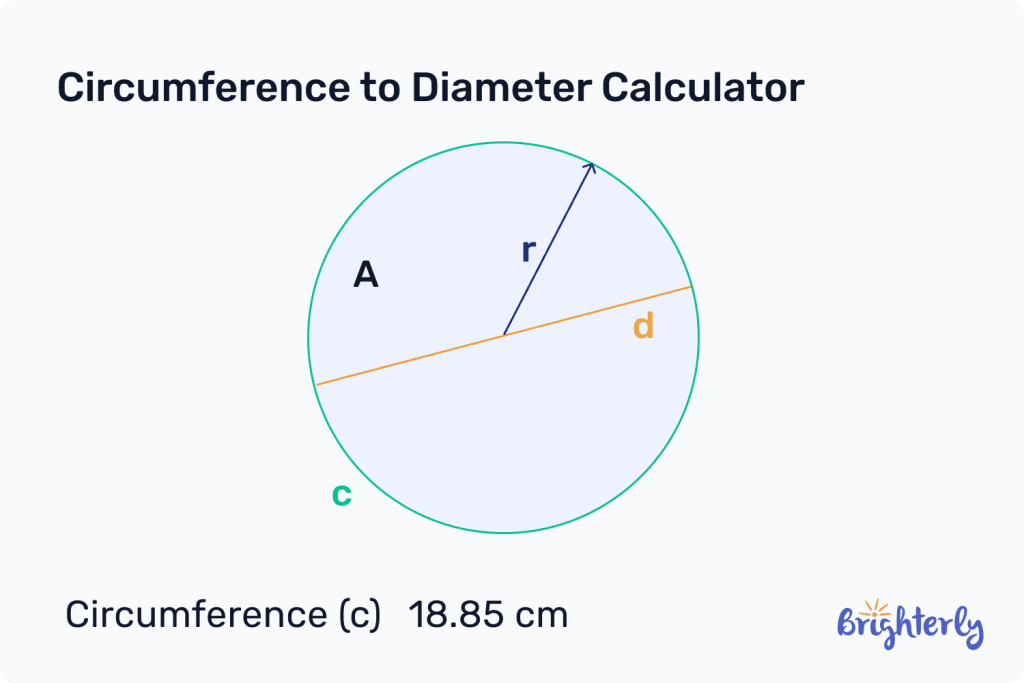
What Is the Circumference-to-Diameter Relationship?
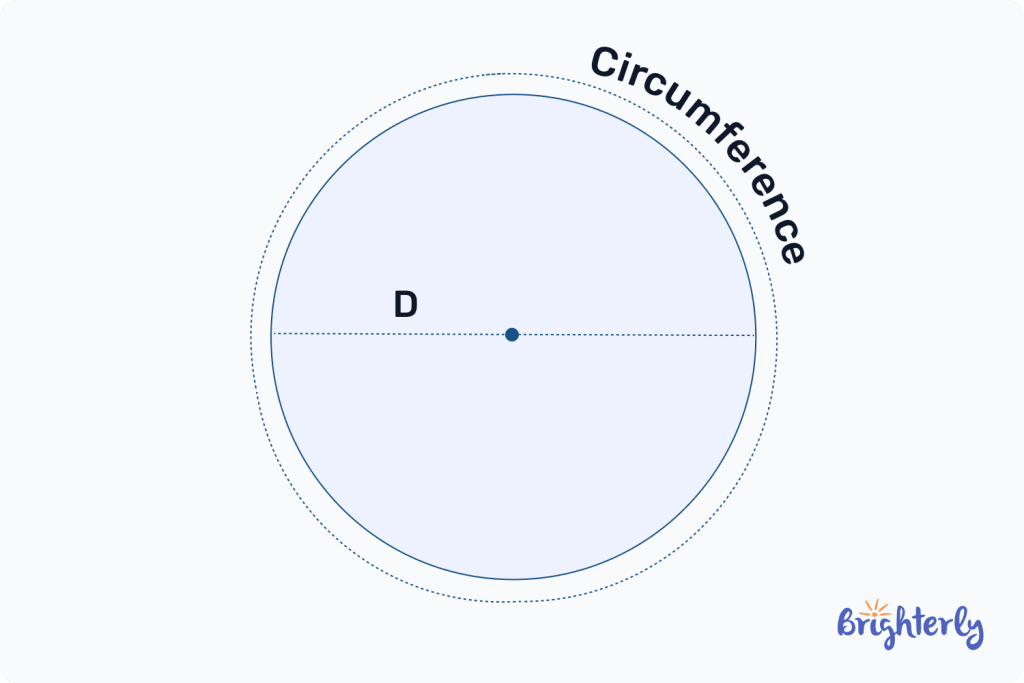
The circumference-to-diameter relationship says that dividing any circle’s circumference by its diameter always gives the same number: π (pi), about 3.14. In other words, the circumference of a circle is a little more than three times its diameter, every time. To find the diameter from the circumference, you simply divide by π.
This is why π is so important: it captures a fixed truth about every circle. Whether a circle is the size of a coin or a stadium, its circumference divided by its diameter is always π.
Expert Math Tutors for Every Level
Connect with professional and certified educators who provide specialized support for every grade level, from elementary school basics to advanced algebra
Circumference to Diameter Formula
The formula to convert circumference to diameter is: diameter = circumference ÷ π. The related formula for going the other way is: circumference = π × diameter. In both, pi (π) is approximately 3.14.
So if you know the diameter, multiply by π to get the circumference; if you know the circumference, divide by π to get the diameter.
Quick Reference: Circumference to Diameter
This table converts several common circumferences to their diameters using π ≈ 3.14. Notice that each diameter is the circumference divided by pi:
| Circumference | Diameter (C ÷ π) |
| 3.14 in | 1 in |
| 6.28 in | 2 in |
| 9.42 in | 3 in |
| 12.56 in | 4 in |
| 15.70 in | 5 in |
| 31.40 in | 10 in |
How to Find Diameter From Circumference
To find a circle’s diameter when you know its circumference, follow these three steps:
- Note the circumference — the distance all the way around the circle.
- Use π ≈ 3.14.
- Divide the circumference by π. The result is the diameter, the distance straight across through the center.
Example: a circle with a circumference of 12.56 inches has a diameter of 12.56 ÷ 3.14 = 4 inches.
Solved Examples
Example 1. A circle has a circumference of 9.42 inches. Find its diameter. Using diameter = circumference ÷ π: 9.42 ÷ 3.14 = 3 inches.
Example 2. A circle has a radius of 4.5 inches. Find its circumference. Using circumference = 2 × π × radius: 2 × 3.14 × 4.5 = 28.26 inches.
Example 3. A circular garden has an area of 28.26 square meters. Find its circumference. First find the radius from area = π × radius²: radius² = 28.26 ÷ 3.14 = 9, so radius = 3 m. Then circumference = 2 × 3.14 × 3 = 18.84 meters.
Is the Diameter Half of the Circumference?
No, the diameter is not half of the circumference. The circumference is π (about 3.14) times the diameter, so the diameter is the circumference divided by π, which is roughly one-third of it, not one-half. The diameter is the distance straight across the circle through its center, while the circumference is the distance all the way around.
Circumference to Diameter Worksheets
Put this into practice with related Brighterly worksheets:
- Circumference of a circle worksheet
- Parts of a circle worksheets
- Circle worksheets
- Circles curriculum worksheets
Frequently Asked Questions About Circumference to Diameter
How Do You Convert Circumference to Diameter?
To convert circumference to diameter, divide the circumference by π (about 3.14). The formula is diameter = circumference ÷ π. For example, a circle with a circumference of 12.56 inches has a diameter of 12.56 ÷ 3.14 = 4 inches. This works for any circle because the circumference is always π times the diameter.
What Is the Formula for Circumference From Diameter?
The formula for circumference from diameter is circumference = π × diameter, where π is about 3.14. So a circle with a diameter of 5 inches has a circumference of 3.14 × 5 = 15.7 inches. This is the reverse of the circumference-to-diameter formula, in which you divide by π instead of multiplying.
Why Do You Divide by Pi to Get the Diameter?
You divide by pi because circumference and diameter are linked by the equation circumference = π × diameter. To isolate the diameter, you undo the multiplication by π — and the opposite of multiplying is dividing. So diameter = circumference ÷ π. Pi is the fixed ratio between the two measurements for every circle.
Is the Diameter Half the Circumference?
No. This is a common misconception. The diameter is the circumference divided by π (about 3.14), which is roughly one-third of the circumference — not one-half. The ‘half’ relationship instead links the diameter and the radius: the radius is exactly half the diameter.
What Value of Pi Should I Use?
For most school problems, using π ≈ 3.14 is accurate enough and keeps the arithmetic simple. If a question asks for more precision, use 3.14159, or the π button on a calculator. Always check whether the problem specifies a value of pi to use, since answers can differ slightly depending on the rounding.
What Is the Difference Between Diameter and Radius?
The diameter is the distance straight across a circle through its center, while the radius is the distance from the center to the edge. The diameter is always exactly twice the radius (diameter = 2 × radius). So if you find a diameter of 4 inches, the radius is 2 inches.


Math & reading from 1st to 12th grade
Looking for homework support for your child?

Choose kid's grade

Math & Reading for Grades 1–12
Build real confidence for your child with a Brighterly math or reading tutor.