Critical Value – Formula, Definition With Examples
reviewed by Jo-ann Caballes
Updated on August 4, 2026
A critical value is the cutoff point in a hypothesis test that separates the region where you reject the null hypothesis from the region where you don’t. If your test statistic is more extreme than the critical value, the result is statistically significant. Critical values are a core idea in high school and AP Statistics and in introductory college statistics.
What Is a Critical Value?
A critical value is a numerical threshold used in hypothesis testing. In a test, you compare two numbers: a test statistic calculated from your data and a critical value set in advance. If the test statistic is more extreme than the critical value, you reject the null hypothesis. For example, if Brighterly tutors tested whether a new teaching method raises math scores, the critical value would mark how large the score improvement must be before you can call it a real effect rather than chance.
Expert Math Tutors for Every Level
Connect with professional and certified educators who provide specialized support for every grade level, from elementary school basics to advanced algebra
Critical Value and Confidence Intervals
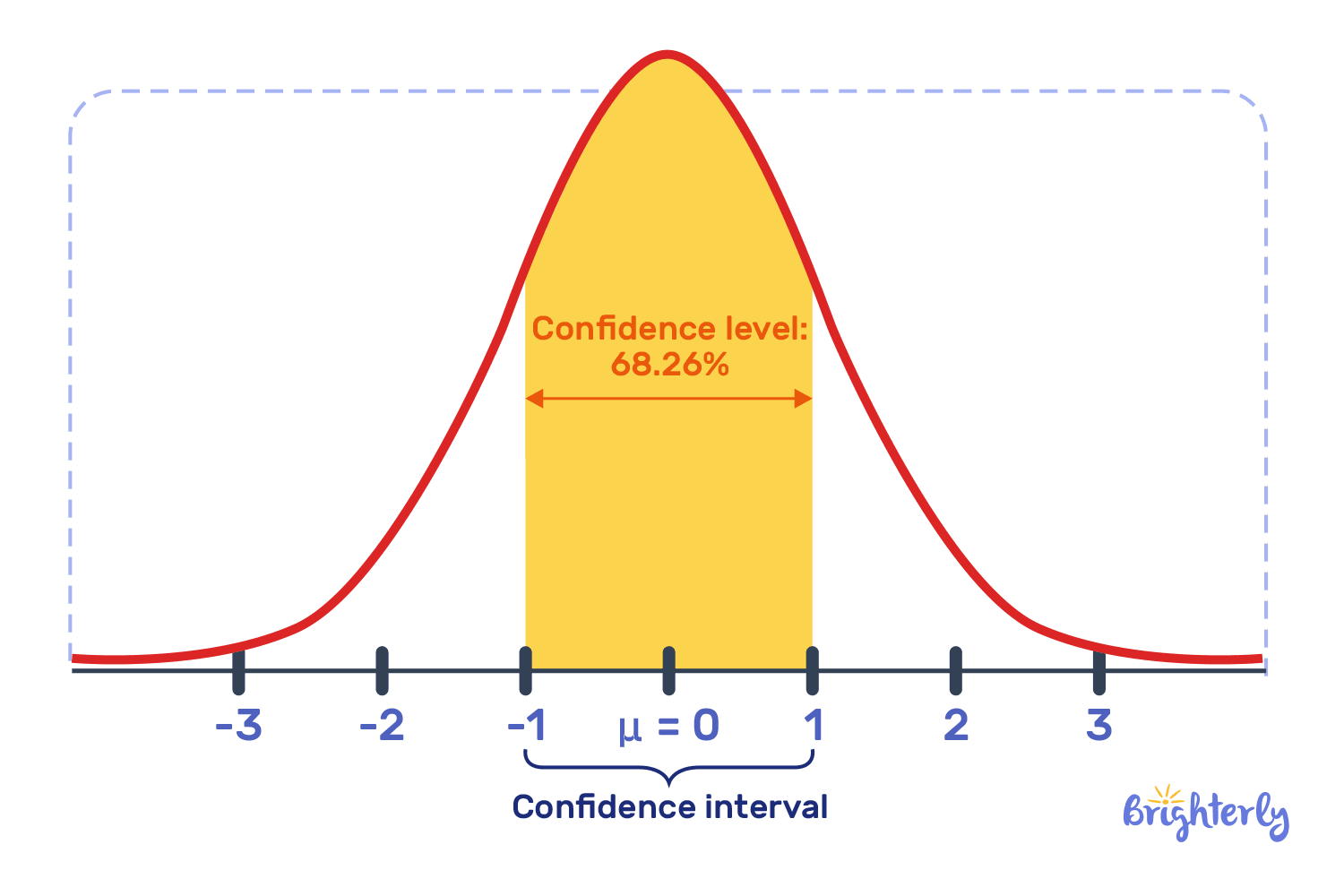
A confidence interval is the range in which you expect a population mean or proportion to fall. You pick the confidence level first — say 95% — and the critical value then sets the width of the interval around your estimate. A 95% confidence interval means you are 95% confident the true value lies within that range.
Types of Critical Values
The critical value you use depends on the distribution behind your test. The three most common are the Z, T, and F critical values, each suited to a different situation.
Z Critical Value
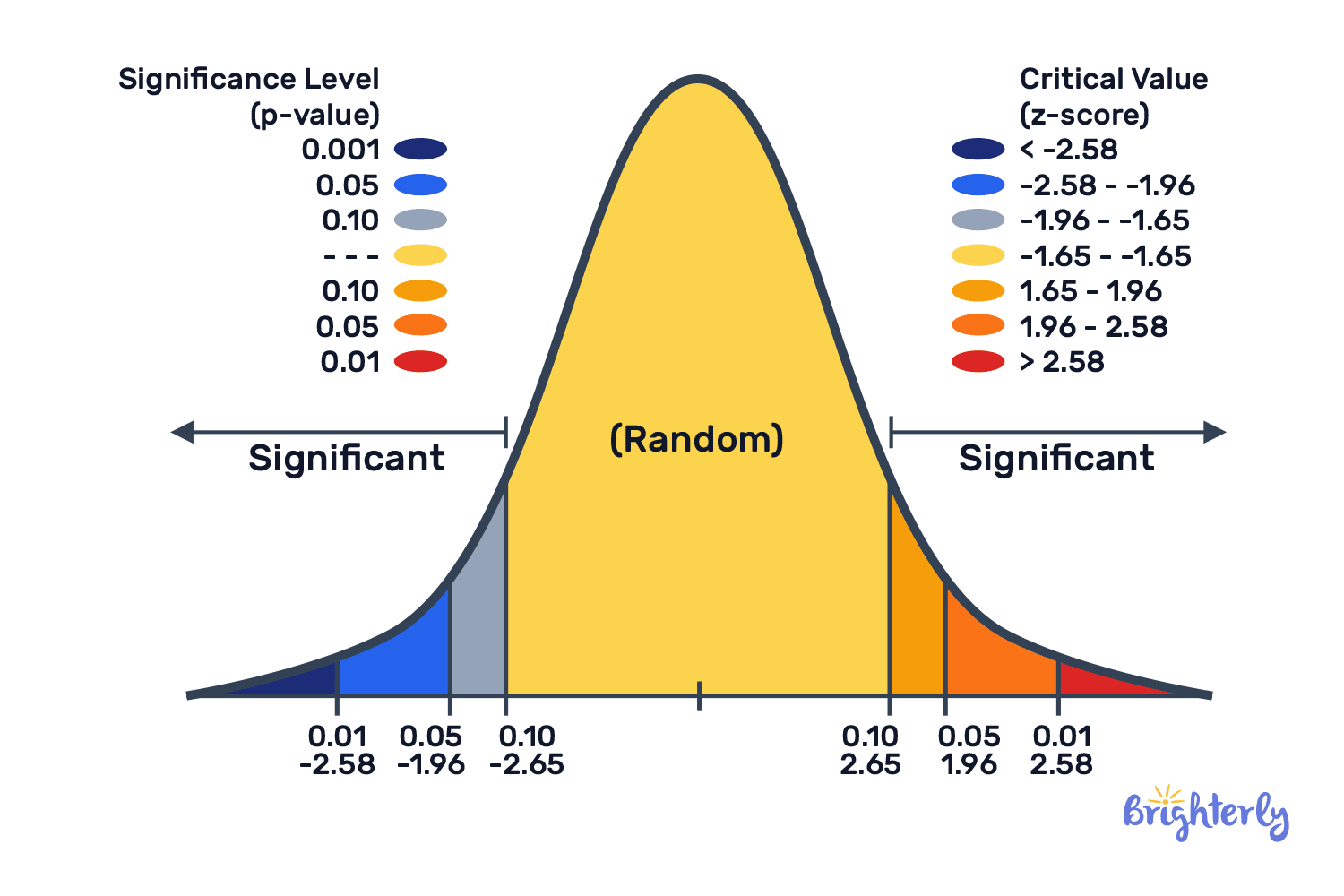
Z critical values are used for large samples or when the population standard deviation is known. They come from the standard normal distribution — the symmetric bell curve. For a 95% confidence level, the two-tailed Z critical value is 1.96, a number you can read from a Z table.
T Critical Value
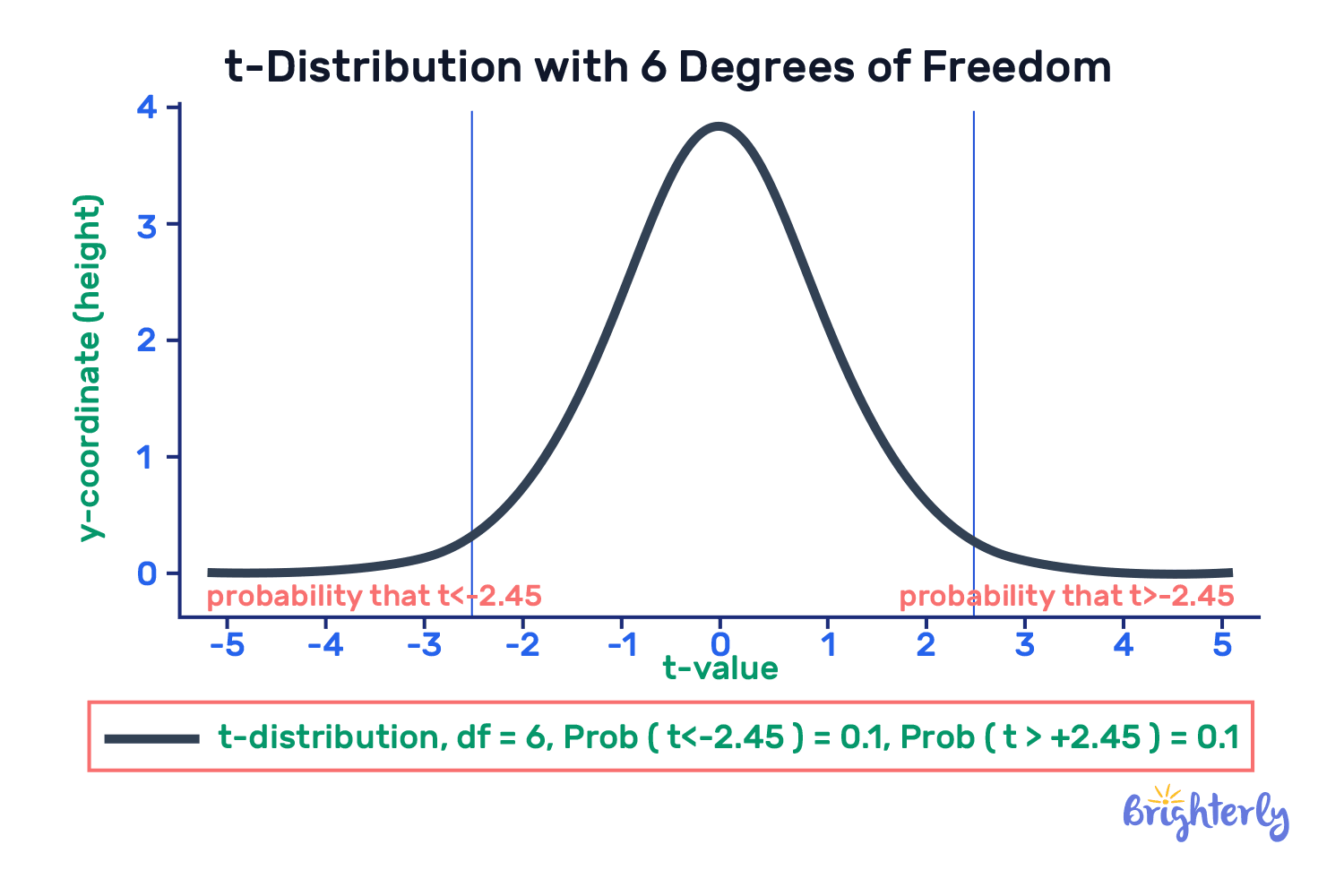
T critical values are used when the sample is small or the population standard deviation is unknown. They come from the t-distribution, which resembles the normal curve but has thicker tails to reflect the extra uncertainty of small samples. The exact T value depends on the degrees of freedom (sample size minus one).
F Critical Value
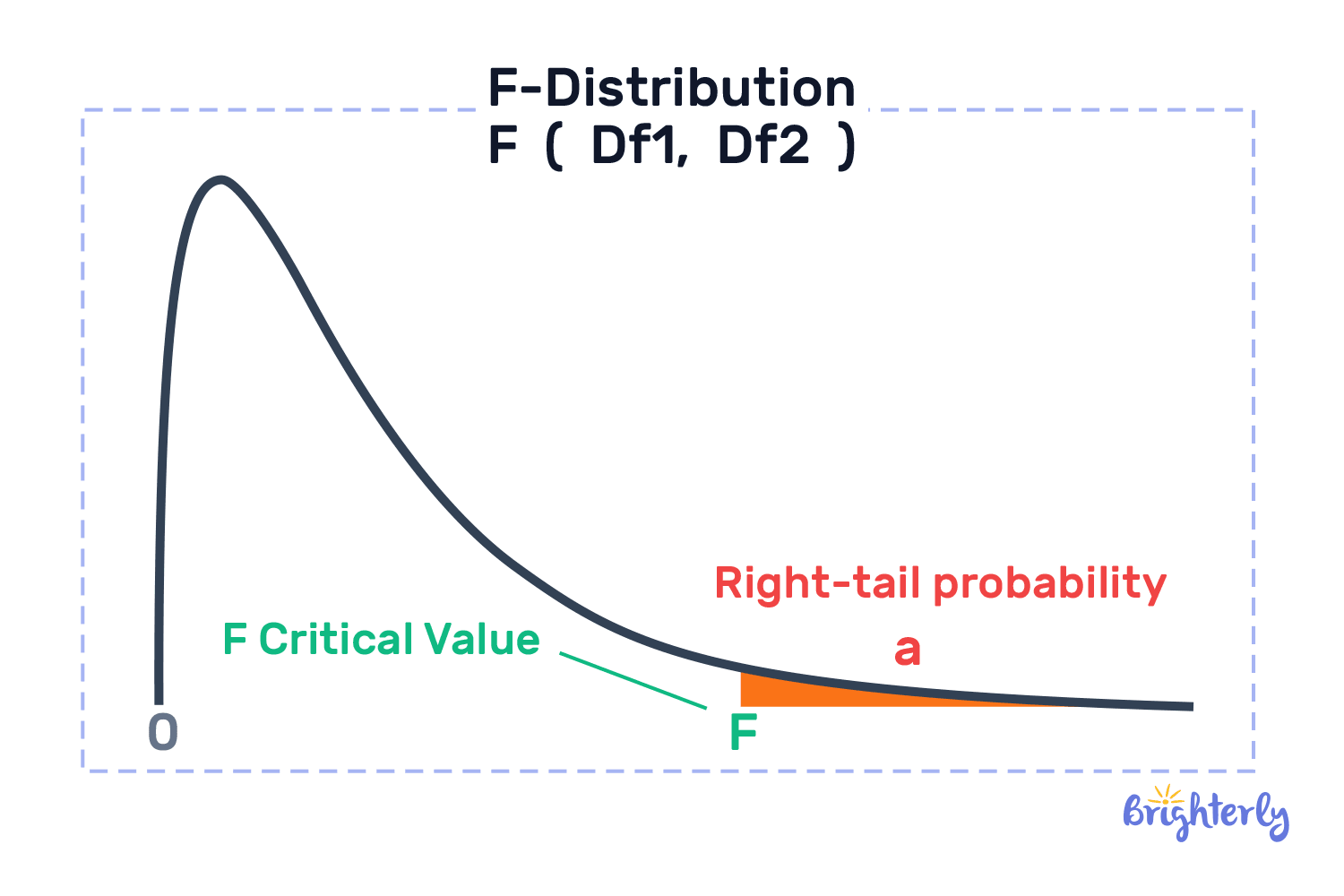
F critical values are used in tests such as ANOVA to compare the variability among several groups. Rather than looking at a single average, the F test checks whether the differences across multiple data sets are statistically significant, which makes it useful in problems involving many groups and connects closely to ideas in probability.
Common Critical Values (Z-Table Reference)
For a two-tailed test using the standard normal distribution, these are the critical values for the most common confidence levels:
| Confidence level | Significance level (α) | Two-tailed Z critical value |
| 90% | 0.10 | ±1.645 |
| 95% | 0.05 | ±1.96 |
| 99% | 0.01 | ±2.576 |
Test Statistic vs. Critical Value
The test statistic and the critical value are two sides of the same coin. The test statistic is calculated from your sample data — z-scores, t-scores, and F-statistics are all test statistics that measure how far your results sit from what the null hypothesis predicts. The critical value is a fixed threshold chosen before you look at the data, based on your significance level. At the end of the test, you compare the two: if the absolute value of the test statistic exceeds the critical value, you reject the null hypothesis; if it is smaller, you fail to reject it.
Critical Value Formulas
There is no single formula for every critical value — the right one depends on your distribution and sample size.
- For a large sample (Z), a one-tailed test uses Zc = Z(1 − α); a two-tailed test uses Zc = Z(1 − α/2), splitting the risk between both tails.
- For a small sample (T), the value depends on degrees of freedom: T = T(df, 1 − α/2).
If you want a quick check, an online critical value calculator returns left-tailed, right-tailed, and two-tailed values in one step.
How to Find a Critical Value
To find a critical value, work through these steps:
- Choose your significance level, usually α = 0.05.
- Identify the distribution your data follows: Z, T, or F.
- For a T or F test, calculate the degrees of freedom from your sample size.
- Look up the value where your significance level and degrees of freedom meet in the matching table (or use a calculator).
Solved Examples
Example 1
You need a 95% confidence interval for a population mean using a sample of 50, with a known population standard deviation of 10. Find the Z critical value.
Answer: 1.96. For a 95% confidence level, the two-tailed Z critical value is 1.96.
Example 2
You test whether 25 apples have an average weight of 150 grams, with a standard deviation of 20 grams. Find the T critical value for a 95% confidence level, two-tailed.
Answer: about 2.064. With 24 degrees of freedom (25 − 1) at a 95% two-tailed level, the T critical value is approximately 2.064.
Critical Value: Practice Math Problems
Critical Value Worksheets
Put this into practice with related Brighterly worksheets:
Frequently Asked Questions About Critical Values
What Is a Critical Value?
A critical value is the threshold in a hypothesis test that sets the boundary of the rejection region. It marks the point at which a result stops being ordinary and becomes statistically significant. If your test statistic is more extreme than the critical value, you reject the null hypothesis in favor of the alternative.
What Is the Critical Value for a 95% Confidence Level?
For a two-tailed test using the standard normal distribution, the Z critical value at a 95% confidence level is 1.96. This is one of the most widely used values in statistics. For a 90% level it is 1.645, and for a 99% level it is 2.576. Small-sample T tests use slightly larger values.
How Do You Find a T Critical Value?
Identify your significance level (α) and calculate the degrees of freedom, which equal the sample size minus one. Then find where those two values meet in a t-distribution table, or use an online calculator. The T value grows as the sample gets smaller, reflecting the greater uncertainty in small data sets.
How Do You Find a Z Critical Value?
Decide on your significance level and whether the test is one-tailed or two-tailed. Then look up the corresponding area under the standard normal curve in a Z table to find the Z-score that marks the rejection boundary. For a common 95% two-tailed test, that value is 1.96.
What’s the Difference Between a Critical Value and a P-Value?
Both help you decide whether a result is significant, but from opposite directions. A critical value is a fixed cutoff you compare your test statistic against. A p-value is the probability of getting a result as extreme as yours if the null hypothesis were true. You reject the null when the test statistic exceeds the critical value — or, equivalently, when the p-value is below α.
What Is a Critical Value Used For?
A critical value is used to make the accept-or-reject decision in a hypothesis test and to set the width of a confidence interval. It gives researchers an objective line: results beyond it count as statistically significant, while results within it do not. This keeps conclusions from resting on guesswork about whether an effect is real.


Math & reading from 1st to 12th grade
Looking for homework support for your child?

Choose kid's grade

Math & Reading for Grades 1–12
Build real confidence for your child with a Brighterly math or reading tutor.