Milligram: Definition, Examples, and Practice Problems
reviewed by Jo-ann Caballes
Updated on August 4, 2026
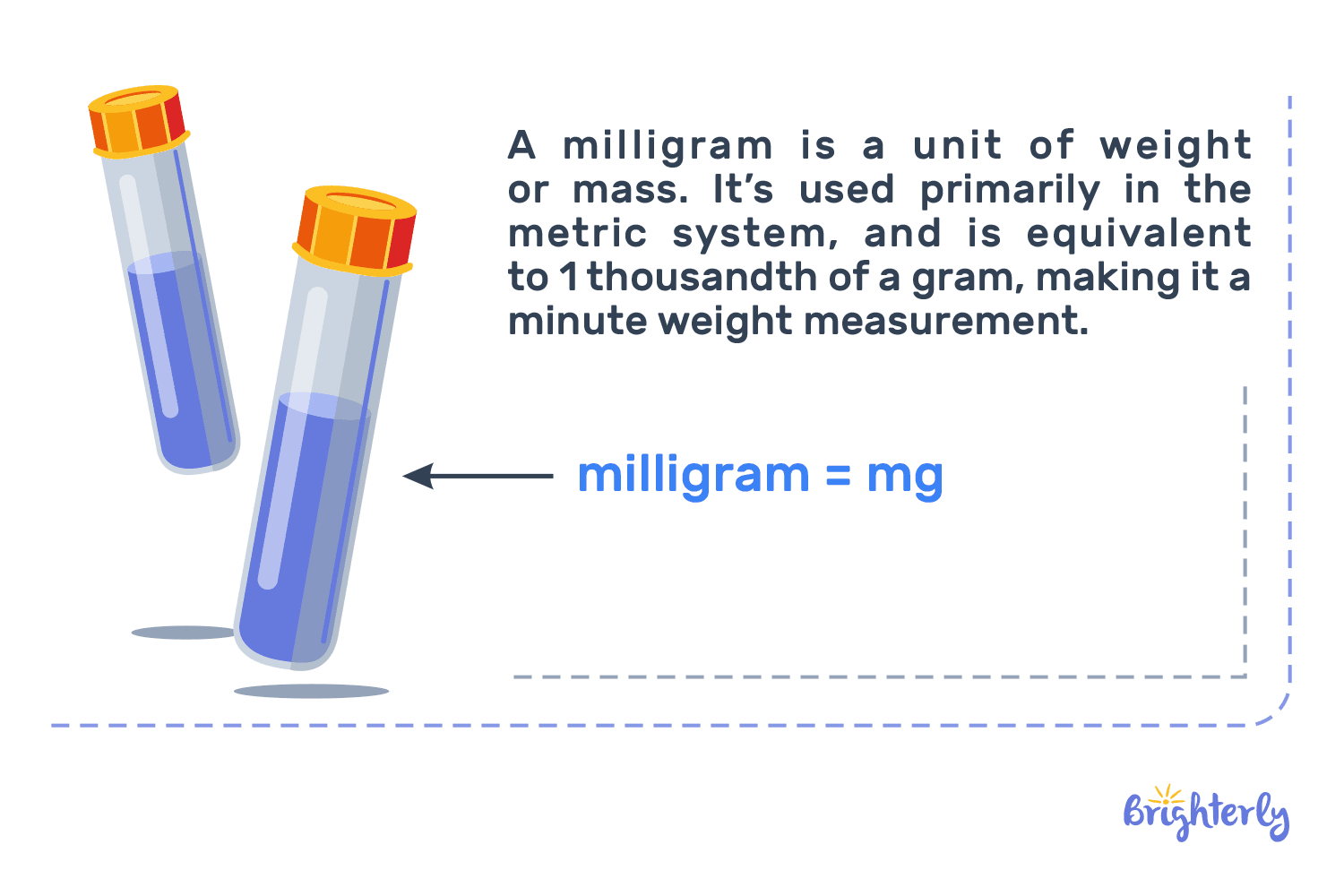
A milligram (mg) is a unit of mass equal to one-thousandth of a gram — there are 1,000 milligrams in 1 gram. It’s part of the metric system, and it’s used whenever a measurement needs to be extremely small and precise, like medication dosages.
What Is a Milligram?
A milligram is one of the smallest commonly used units for measuring mass, written with the symbol “mg.” Because it’s so small, it shows up wherever precision matters at a tiny scale — nutrition labels, medicine dosages, and lab measurements.
Expert Math Tutors for Every Level
Connect with professional and certified educators who provide specialized support for every grade level, from elementary school basics to advanced algebra
How Much Is a Milligram?
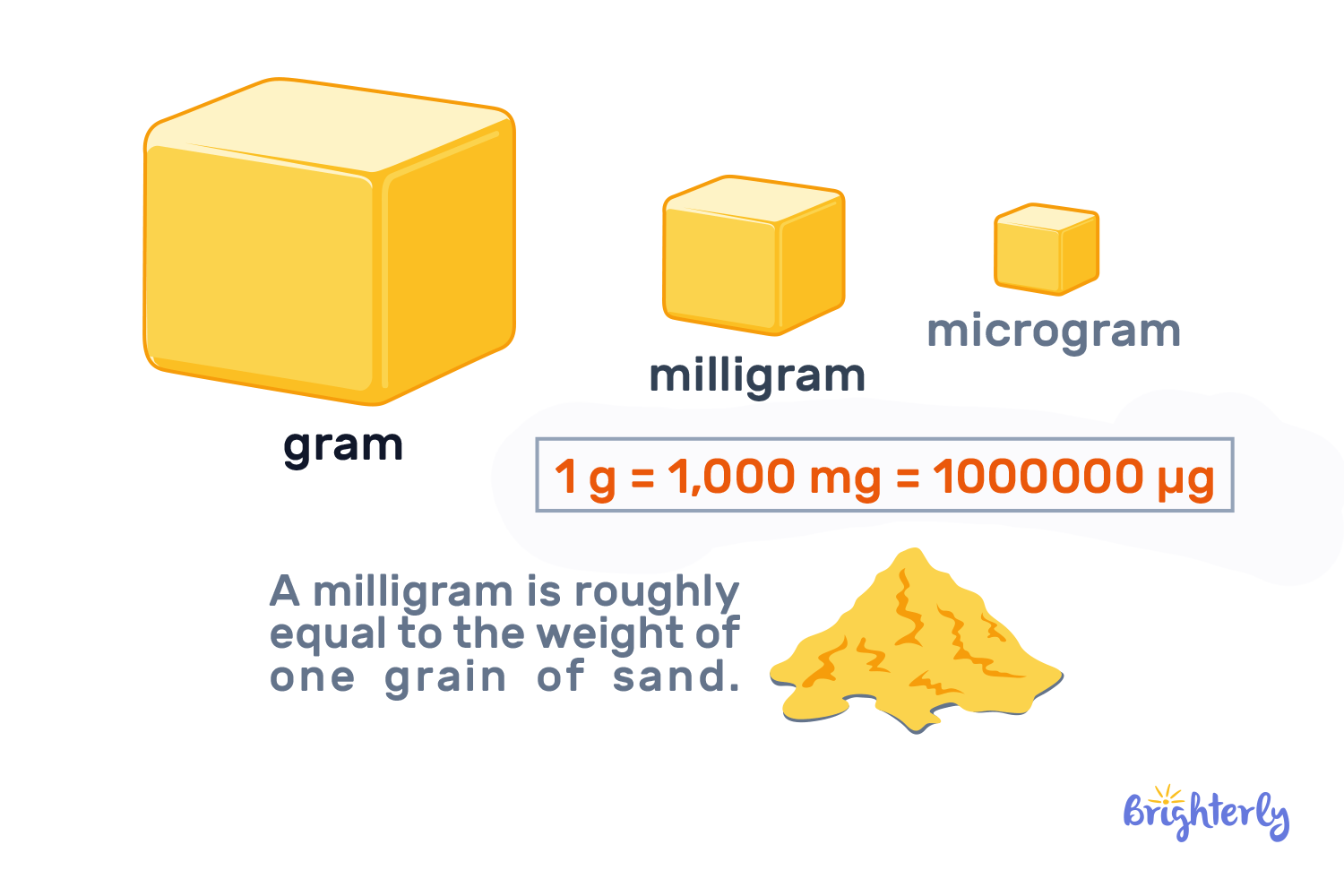
The prefix “milli-” always means one-thousandth (1/1000) in the metric system. So 1 milligram is one-thousandth of a gram — put differently, there are exactly 1,000 milligrams in 1 gram.
Grams vs. Milligrams
The gram is the base unit of mass in the metric system, while the milligram is a sub-unit 1,000 times smaller. Grams are used for everyday-sized objects, like food ingredients, while milligrams are reserved for tiny amounts, such as the active ingredient in a single pill.
Are Milligrams Bigger Than Grams?
No — a milligram is 1/1000th the size of a gram, making it significantly smaller. A simple way to remember this: “milli-” always signals something small.
Milligram Conversion Factor
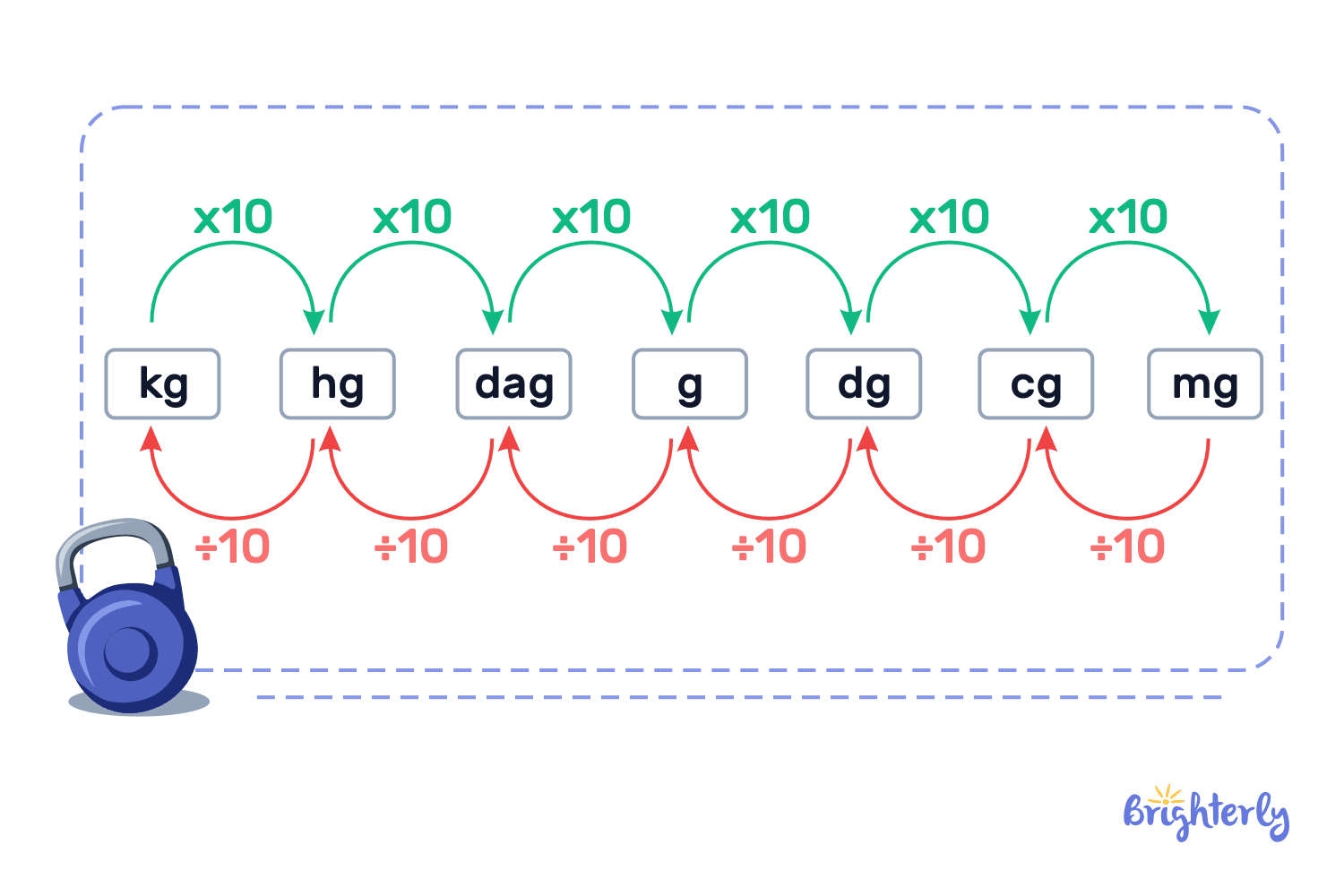
The number that links grams and milligrams is 1,000 — the same conversion factor used for every other metric mass unit at that scale.
- To convert grams to milligrams, multiply by 1,000 (1 g = 1,000 mg).
- To convert milligrams to grams, divide by 1,000 (1,000 mg ÷ 1,000 = 1 g).
Milligrams and Other Units of Mass
Milligrams, grams, and micrograms aren’t the only units of mass in common use. The table below shows how a milligram compares to several others.
|
Unit |
Conversion (1 mg =) |
| Gram (g) | 1/1,000 of a gram |
| Kilogram (kg) | 1/1,000,000 of a kilogram |
| Microgram (mcg) | 1,000 micrograms |
| Ounce (oz) | about 0.000035 ounces |
| Pound (lb) | about 0.0000022 pounds |
| Carat | 1 carat = 200 mg |
Common places you’ll see milligrams used include food ingredient labels, vitamin and medicine dosages, skincare and haircare ingredient lists, and gemstone mass measurements.
Why Medicine Uses Milligrams
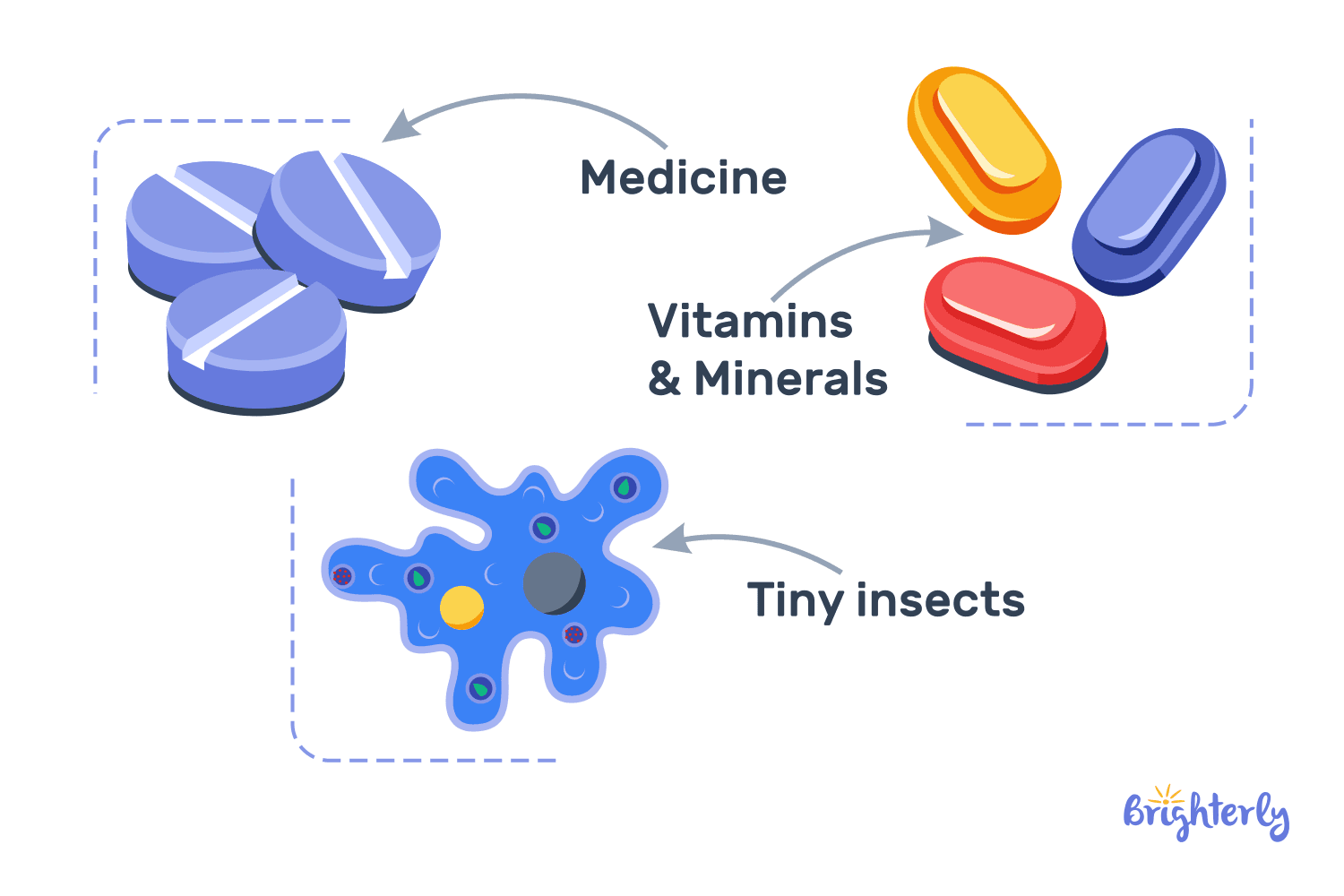
Medication doses are often measured in milligrams because the active ingredient in a pill or dose can be extremely small — far smaller than a gram, but still large enough to matter for how the medicine works. Measuring in milligrams instead of grams reduces rounding error: the difference between 5 mg and 6 mg of a medication is meaningful, but that same difference would round away to nothing if expressed in grams (0.005 g vs. 0.006 g).
Common Mistakes With Milligram Conversions
- Multiplying instead of dividing (or vice versa) — going from a smaller unit (mg) to a larger one (g) always means dividing by 1,000, not multiplying.
- Confusing milligrams with milliliters — mg measures mass, while mL measures volume, and the two can’t be converted directly without knowing a substance’s density.
- Losing track of decimal places — since the conversion factor is 1,000, a small slip in the decimal point can produce an answer that’s off by a factor of 10, 100, or more.
Solved Examples
Solved example 1
A recipe calls for 0.85 grams of salt. How many milligrams is that?
Answer: 0.85 × 1,000 = 850 mg.
Solved example 2
A small drop of liquid has a mass of 400 mg. What is that in grams?
Answer: 400 ÷ 1,000 = 0.4 grams.
Solved example 3
A container holds 0.0001 kilograms of flour. Express that mass in milligrams.
Answer: 0.0001 kg × 1,000,000 mg/kg = 100 mg.
Solved example 4
How many kilograms are in 6,500,000 milligrams?
Answer: 6,500,000 ÷ 1,000,000 = 6.5 kg.
Practice Problems
Milligram Worksheets
Put this into practice with related Brighterly worksheets:
For the base unit this whole topic builds on, see our gram guide.
For the bigger picture, our metric system overview shows how milligrams, grams, and kilograms all relate to one another.
Metric mass conversions like these are a core part of Brighterly’s elementary math tutors curriculum, typically introduced around 4th and 5th grade.
Frequently Asked Questions on Milligrams
How Big Is a Milligram?
A milligram is an extremely small unit of mass, defined as 1/1000th of a gram. In practice, it’s used to weigh things like a single grain of salt or the active ingredient in a pill — amounts too small to measure usefully in whole grams.
How Do You Calculate Milligrams From Grams?
Multiply the mass in grams by 1,000, since 1 gram equals 1,000 milligrams. For example, 0.4 grams × 1,000 = 400 milligrams. To go the other direction, divide the milligram amount by 1,000.
How Many mg Is 1 mL?
There’s no direct, universal conversion between mg and mL, since mg measures mass and mL measures volume. The relationship depends on the substance’s density — water is close to 1,000 mg per mL, but other liquids differ.
How Many Micrograms Are in a Milligram?
There are 1,000 micrograms in a milligram — the same 1,000-to-1 relationship that exists between milligrams and grams, just one metric step further down in scale.
Is a Milligram Bigger Than a Microgram?
Yes. A milligram is 1,000 times larger than a microgram. The prefix “micro-” means one-millionth, while “milli-” means one-thousandth, so a microgram sits one full metric step below a milligram.
Why Are Medications Measured in Milligrams?
Milligrams give a precise way to measure very small, potent amounts — many active ingredients are effective in quantities far too small to measure conveniently in grams. Measuring in milligrams reduces rounding error for doses where even small differences matter.


Math & reading from 1st to 12th grade
Looking for homework support for your child?

Choose kid's grade

Math & Reading for Grades 1–12
Build real confidence for your child with a Brighterly math or reading tutor.