Connotation and Denotation Worksheets
Updated on August 31, 2026
Every word carries two layers of meaning: its denotation, the literal dictionary definition, and its connotation, the emotions and associations it stirs. Connotation and denotation worksheets help tenth graders read that second layer, so they can explain why a writer chose thrifty over cheap or determined over stubborn. A vocabulary tutor can model this kind of word-by-word thinking, helping students feel the emotional weight behind a writer’s choices.
Connotation and Denotation Worksheets: Examples
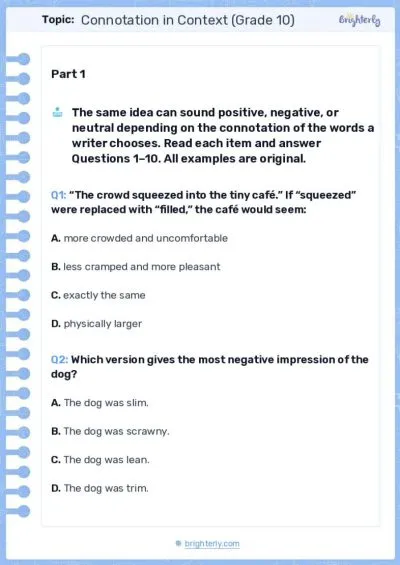
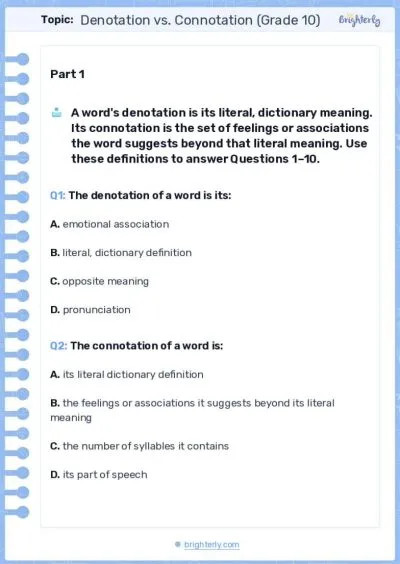
Download Connotation and Denotation Worksheet PDFs
These free, printable PDFs ask students to match words to their literal meanings, sort near-synonyms by the feelings they carry, and explain how a single word choice shades a sentence.
More vocabulary worksheets
Build word knowledge further with printables on context clues, idioms, and commonly confused words—plus tone and figurative language, where connotation does much of the work.
commonly confused words worksheet
figurative language worksheets


Help your child reach their full potential!
Answer a few quick questions about your child’s learning, and we’ll recommend next steps.
Benefits of Connotation and Denotation Worksheets
Practicing with connotation and denotation worksheets pushes students past literal definitions to the emotional weight of word choice, the layer that reveals a writer’s attitude and intent.
That awareness sharpens reading and writing at once: students catch bias and tone shifts in what they read, and choose more precise, deliberate words in their own essays.
For instructors and parents, each set highlights whether a student can distinguish a word’s definition from its associations—a gap that often hides behind otherwise strong comprehension.


Math & reading from 1st to 12th grade
Looking for homework support for your child?

Choose kid's grade

Math & Reading for Grades 1–12
Build real confidence for your child with a Brighterly math or reading tutor.