Tone and Mood Worksheets (10 Grade)
Updated on August 31, 2026
Tone and mood are easy to blur, yet keeping them apart is central to strong literary analysis: tone is the author’s attitude toward the subject, while mood is the feeling the writing creates in the reader. Tone and mood worksheets give tenth graders concrete practice naming both and pointing to the word choices and details that produce each one. A literature tutor can read passages aloud with a student, making it easier to hear where an author’s attitude ends and the reader’s response begins.
Download Tone and Mood Worksheet PDFs
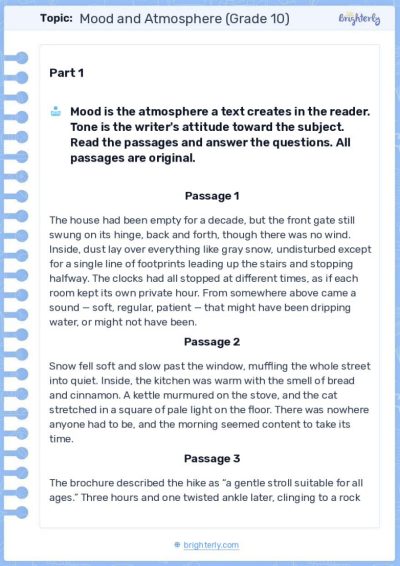
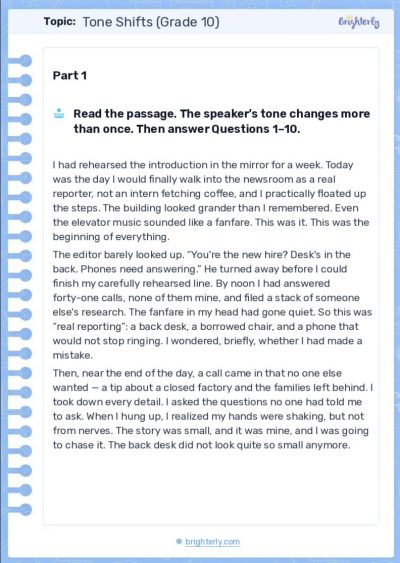
These free, printable PDFs ask students to read short passages, label the tone and the mood separately, and highlight the diction, imagery, and detail that signal each.
More literary analysis worksheets
Deepen the same close-reading skills with related printables on tone, mood, figurative language, and authorial intent—each one built around how word choice shapes meaning.
figurative language 9th grade worksheets


Help your child reach their full potential!
Answer a few quick questions about your child’s learning, and we’ll recommend next steps.
Benefits of Tone and Mood Worksheets
Regular practice with tone and mood worksheets helps students read beyond plot, learning to name an author’s attitude and the atmosphere a passage creates—and to back each label with specific words from the text.
Working through varied selections trains learners to notice how diction and imagery shift the feeling of a scene, a skill that carries into essays, poetry, and persuasive nonfiction alike.
For teachers and homeschooling parents, each sheet quickly shows whether a student can tell tone from mood or is still treating the two as the same thing.


Math & reading from 1st to 12th grade
Looking for homework support for your child?

Choose kid's grade

Math & Reading for Grades 1–12
Build real confidence for your child with a Brighterly math or reading tutor.