Key Points
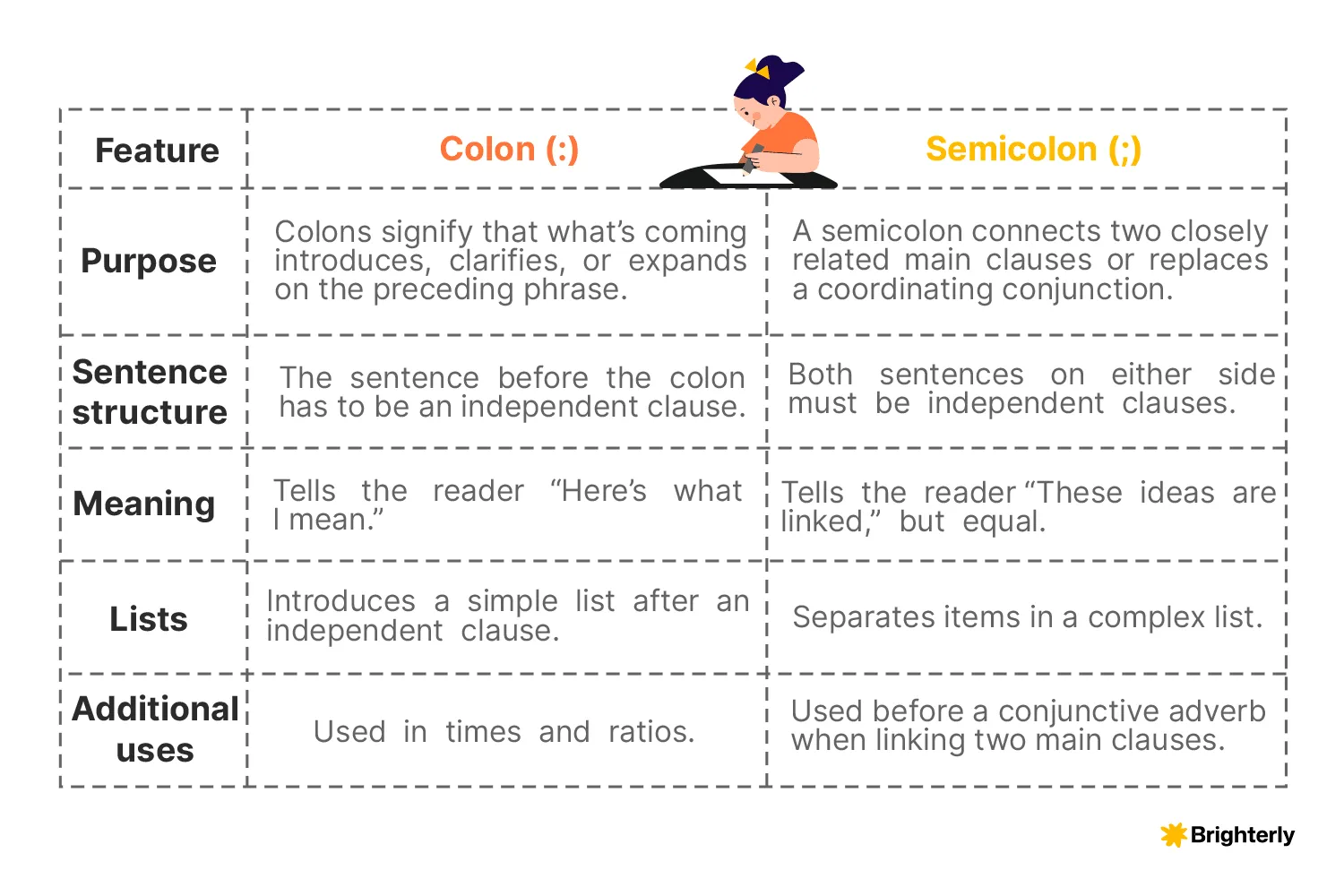
- A colon (:) introduces a list, an explanation, or a quotation, and it always follows a complete sentence.
A semicolon (;) joins two complete sentences that are closely related and equal in weight, or separates list items that already contain commas.
The fastest colon vs semicolon check: if the words before the mark can’t stand alone as a sentence, neither mark belongs there.
Three habits cause most errors: a colon after a verb, a semicolon before a list, and a semicolon after an opening phrase such as “Because it rained.