10 Effective Study Methods for Kids and Students (2026)
reviewed by Franz Jerby Delos Santos
Updated on July 13, 2026

Key points: Spot your kid spending hours studying and still forgetting everything by exam day? Don’t worry, they might be practicing the wrong way. This article will help you discover the most effective study methods tailored to your kid’s individual needs. These top 10 evidence-based study methods for students not only help in fast learning but also enable concept clearing and long-term knowledge retention. The most effective study methods include retrieval practice or active recall, spaced repetition, the Feynman Technique, and the Pomodoro Technique. These methods focus on clearing the student’s concepts, learning the topic, and analyzing what they understood in easy ways instead of memorizing it.
Searching for expert online tutors you can trust?
Take a free demo to learn more about your child’s study needs and solutions.
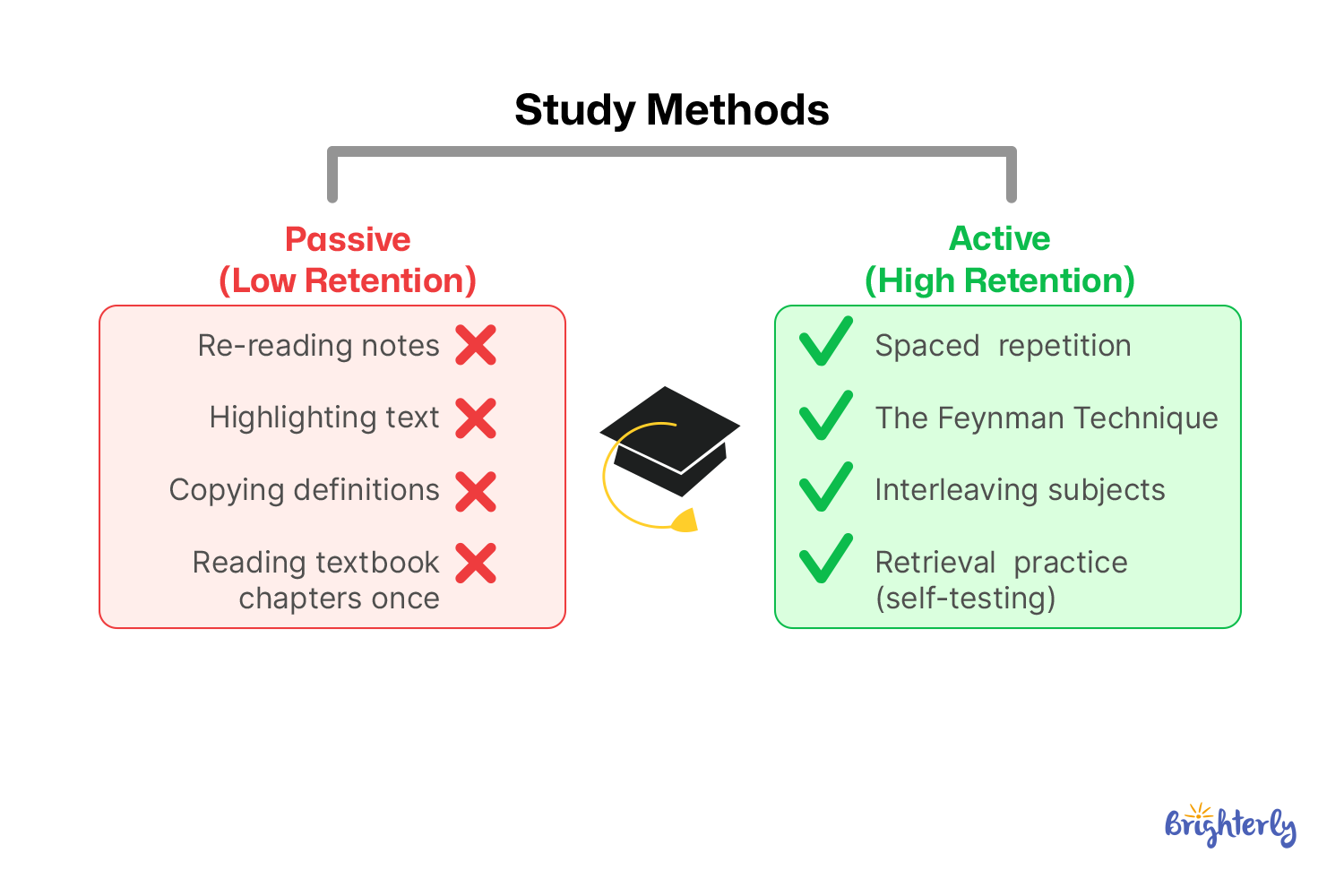
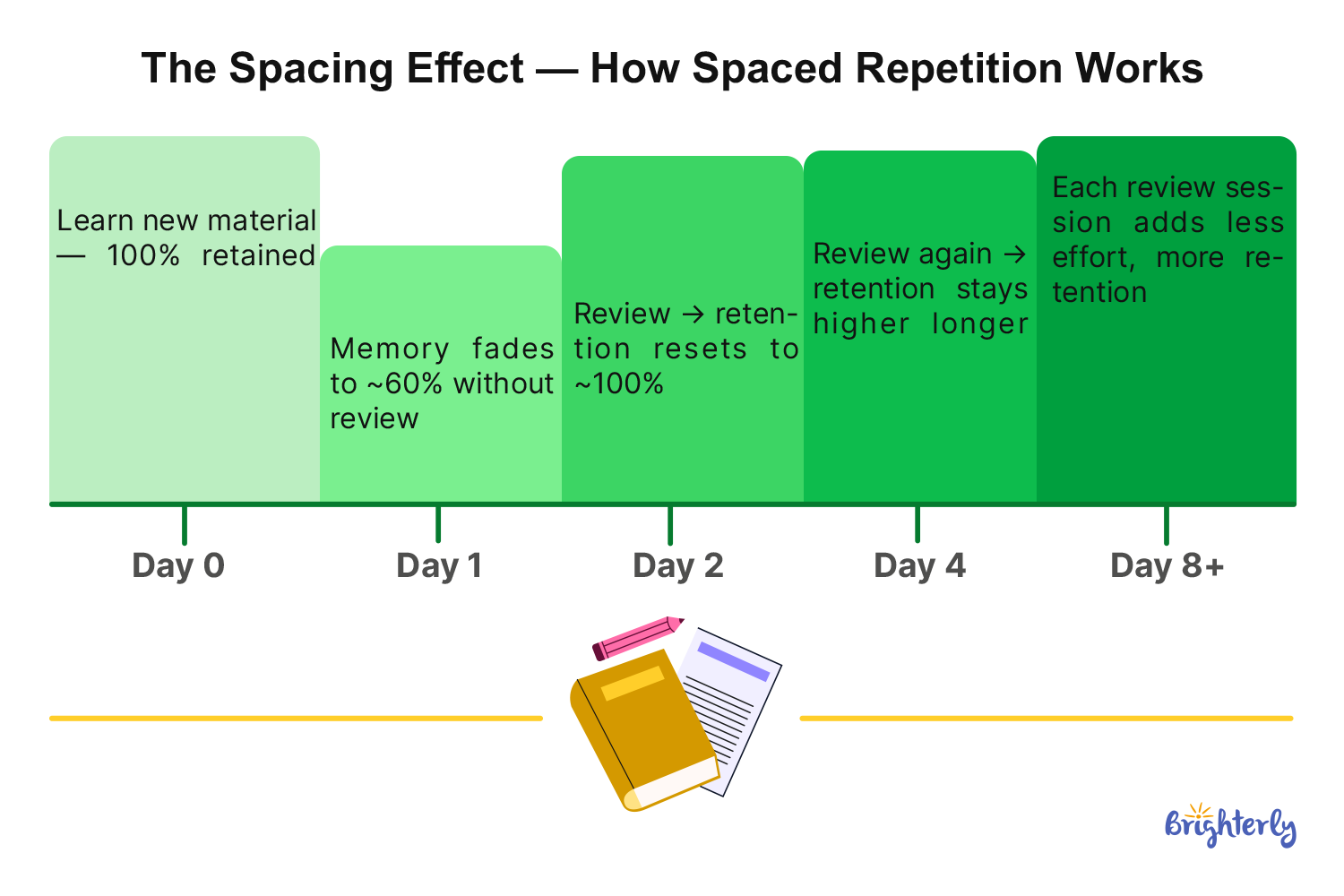
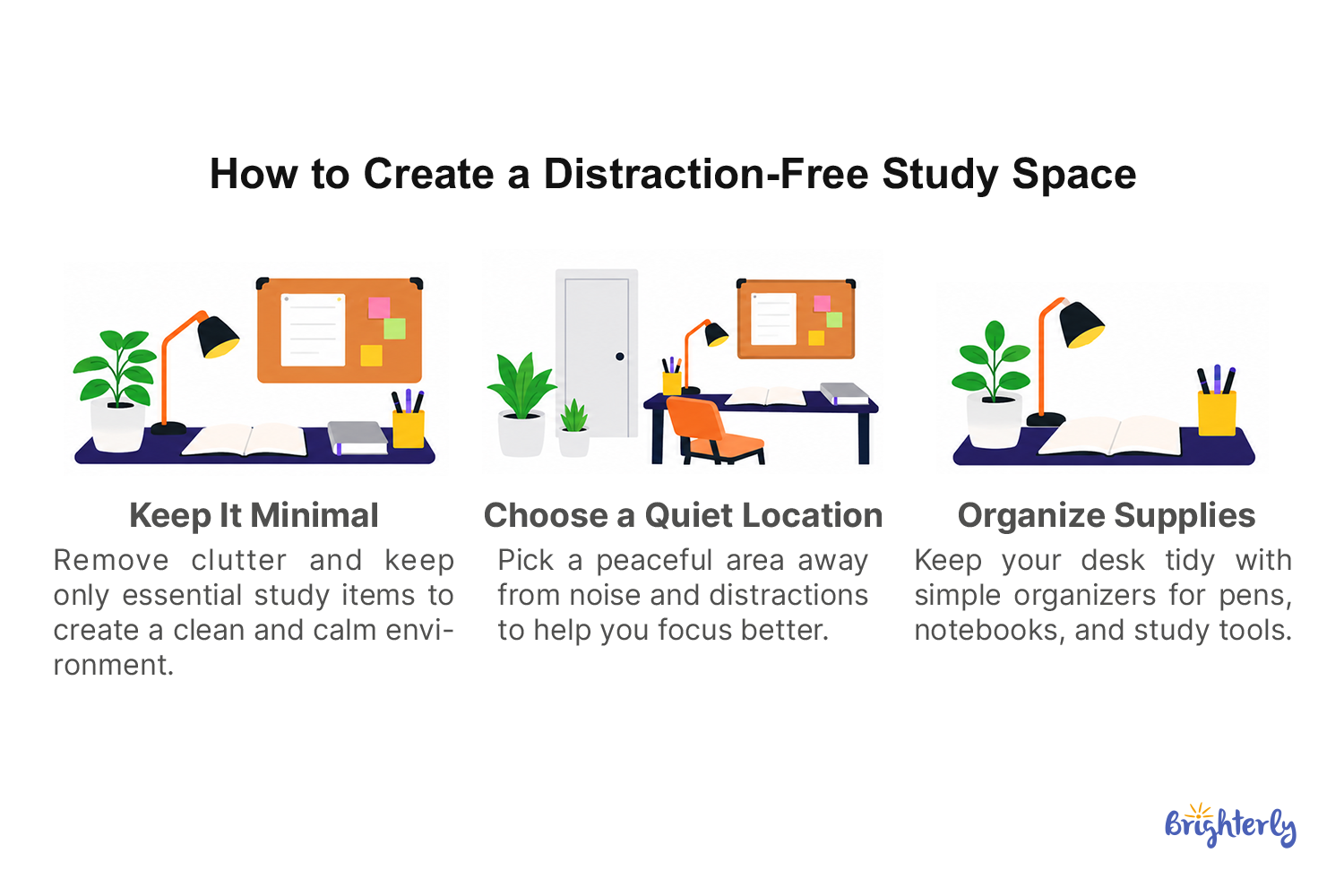
Explore Brighterly Learning Experience Learn exactly how Brighterly helps students thrive through expert sessions, online tools, and proven feedback from thousands of satisfied parents Passive studying, like memorizing, rereading your lecture multiple times, highlighting notes, and rewriting pages, may look productive, but they are often boring, tough, ineffective for retaining information, and easier to forget if you don’t revise frequently. On the other hand, active study methods, like retrieval practice, spaced repetition or distributed practice, Pomodoro and Feynman techniques, enable hands-on learning through flashcards, quizzes, videos, audios, and more. Study Methods Learning Goals Best Ways to Study Retrieval Practice Recall what you remember after studying a new topic without looking at it. Quiz games, self-testing, and Anki-style flashcards. Spaced Repetition Revising or recalling a topic after learning it at specific intervals, like on day 1, day 3, and day 7. Self-testing, note-taking, mapping or charting, physical or digital flashcards. Pomodoro Technique Setting clear schedules for studying and taking breaks. 25-minutes of focused work followed by a 5-minute break. Feynman Technique Explaining or teaching a topic after learning it. Teaching a learned topic to your siblings. Interleaving Studying by mixing multiple topics in one study lesson. Combining different math sums from each chapter and then learning or solving them. Dual Coding Learning by breaking down lectures into text or speech and visuals. Diagrams, charts, maps, or listening to video or audio lectures. Creating a Distraction-Free Study Environment Setting up a proper and comfortable study space and eliminating distractions. Cleaning and setting the study space, making it well-lit and equipped with studying accessories and free from unnecessary items. Establishing a Daily Study Routine Establishing a consistent study routine, getting enough sleep, setting screen time boundaries, and engaging in daily physical activity. Write down your daily timetable. Group Study and Teaching Others Doing group study with friends or class fellows, sharing ideas and concepts, and teaching others. — Getting Expert Support at Home Getting study help with expert 1:1 tutors. Trying Brighterly tutors. The idea of active recall is simple: after studying a new topic, keep aside all the material and ask your child to tell you what they remember without looking at the material, mark what they missed, and then plan the next learning session on the gaps that need more focus. It is called the Blank Page technique. This activates the brain and helps the child see what they still need to learn. Some effective study techniques of retrieval practice include utilizing quiz games and Anki-style flashcards to break a chunk of information into short, easy, and understandable question/answers. Anki-style flashcards is a free online app that helps students automatically create question/answers from lengthy lectures and notes with questions at the front and their answers at the back of the card. Note: You can use these techniques during the lesson, right after, or a few days later. It is helpful for your child’s overall development. Spaced repetition, also known as distributed practice, is a type of active learning study strategy that focuses on revising a topic after learning it at certain, increasing intervals to build long-term retention. For example, you can schedule reviewing your lectures on day 1, day 3, day 7, and then gradually increase it to day 14. Spaced repetition can be done through self-testing or note-taking by mapping or charting key points of lessons or through practical tools, like physical or digital flashcards, the active recall method, or interactive apps and websites. Flashcards, quizzes, and short practice tests are simple tools that support long-term learning, according to the Association for the Study of Medical Education (Maye & Hurley, 2026). Teachers and researchers strongly recommend studying in a structured way. Don’t sit down with your child and go through material for three hours straight. Instead, set clear times: a fixed time for the lesson and a set time for taking breaks. Also, set realistic goals for each session: don’t try to finish all the homework in one go; focus on one exercise at a time. Note: You can adjust the length of work and breaks for your child. The older they get, the longer they can focus, so experiment and find what works best. The Feynman technique is a simple method that helps a child understand the material and teach it to someone instead of simply memorizing it. It is one of the best study methods for retrieval practice. Here’s how it works: after learning a topic, ask your child to explain it in their own words. This immediately focuses their attention and shows you where they might be struggling. If they can explain it clearly, congratulations, they will remember it for a long time. However, if your child is forgetting something in between, you can also help them with hints, code words, or repeating what they already explained and linking it with what comes next. Small help or facilitation can boost your child’s confidence and improve their concepts, academic performance, and memory consolidation. Note: If you have two or more children, ask one to explain the topic to the other. If your child is learning alone, have them explain it to you. This really strengthens their understanding. Interleaving, also known as mixing or combining, is a study method that involves learning by mixing multiple topics instead of focusing solely on learning one topic at a time for hours. It helps in comparing different or similar lessons and their pros and cons, analyzing which works best and where, and understanding the basic concepts of multiple topics at a time. For example, you can mix different math problems or physics numerical problems in one study lesson. Similarly, you can mix science questions from a few different chapters and then learn or solve them. An interleaving learning approach can help students during exams where questions from different topics are mixed (according to the Academic Resource Center). It helps in long-term retention and transfer. Dual coding is another active learning study method that breaks down lectures and combines them with text or speech and visuals, like diagrams, charts, and maps, helping reduce cognitive load for students. This creates two memory pathways simultaneously, enhancing and strengthening retention. Dual coding helps students process the information better and improve learning and recall. To help your child stay focused and in the mood to study, make sure their study space is set up properly. They should have their own place to do tasks, and it should be pleasant, well-lit, and free of unnecessary items on the desk. And this way, it becomes the best way to study as your child feels comfortable. Think about it yourself: if your desk is messy, with toys scattered around, clothes lying about, or piles of textbooks, could you focus? Absolutely not! With children, it works even more, and keeping a tidy space is one of the most important ways to study effectively, Effective learning starts with a solid daily system of habits. Make sure your child isn’t studying late at night and has screen-time boundaries. They should have a consistent schedule with time management, take practice tests daily, eat well, get enough sleep of at least 7-9 hours for school-aged children, and include physical activity in their day. Group study creates a learning environment where students can share and discuss concepts and teach others about their understanding. Studies indicate that teaching others helps in knowledge and learning retention, improves understanding, and boosts confidence as described in Feynman’s technique (Kondo, Takahashi, Aomatsu, & Nishigori, 2024). Note: However, some students prefer individual study methods where they get the chance to focus better without distractions and study independently and comfortably at their own pace. Trying both methods is also an approach to enhance learning and student success. Getting expert tutoring at home is one of the most effective study methods for students who require support and one-on-one learning to thrive. When a child struggles with homework or learning retention despite good habits, a 1:1 tutor can identify which methods fit their learning style. Platforms, like Brighterly, create a fully personalized and friendly learning environment for each student, demonstrating how to study smarter, not harder. Each lesson is different to keep kids interested – teachers include games, discussions, and animated videos. Every time, there’s something new. Above all, you can book tutors for all or individual subjects, based on your child’s needs. For example, if your child struggles in math, you can book Brighterly online math tutor for 1:1 lessons or Brighterly ELA tutors for 1:1 online reading and writing help.
Not sure where to start?
Take a quick quiz to find the right study plan for your child. Utilizing these 10 effective studying tips not only helps clear your child’s basic concepts, improve concentration, and promote long-term knowledge retention but also eliminates boredom and long hours of repetition of every lesson. It develops an interest in your child to understand each topic thoroughly instead of memorizing it. Overall, studies suggest that a 25-minute study session followed by a 5-10-minute break works best for most students as it helps lower fatigue, improve distractibility and increase motivation (Ogut, 2025). Retrieval practice and spaced repetition are the most common and scientifically proven study methods. Research shows that combining both study strategies produces the strongest results (Carpenter, Pan, & Butler, 2022). Parents can ask children to explain what they understood aloud after teaching a topic, quiz them with digital or physical flashcard questions/answers, have them take practice tests, set a consistent homework routine, and eliminate phone/screen distractions. They can also get help with Brighterly online 1:1 tutors if their child consistently struggles despite good study habits at home. Yes. Studies show that flashcards are highly effective and improve students’ cognitive learning outcomes when used in active learning, especially in understanding, remembering, and applying concepts or retrieving an answer from memory (Kenya, Degeng, & Aulia, 2026). Simple and short learning habits, like reading, writing, and short focused sessions, can start as early as kindergarten or Grade 1. More advanced study techniques, like active recall, spaced repetition, worksheets, and the Pomodoro technique, can be introduced from Grade 3 to Grade 5. By middle school, students can start utilizing all 10 study methods for learning. The 1,3,5,7 Rule is a spaced repetition technique in which you learn something new and then test yourself or recall it on day 1, day 3, day 5, and day 7 instead of simply rereading (Hassan, A., & Barber, S. J, 2021). Average Score: 7.4/10. As the average score across 5 categories based on Lindamood Bell reviews by real users, the total rating reveals a proven program that can help kids with dyslexia and hyperlexia improve their skills through an imagery-based approach. The score is less than ideal because the program is expensive for some families and […] Feb 19, 2026 Miacademy is better for families who want a flexible, gamified K–8 homeschool curriculum they can manage themselves, while Acellus Academy is better for families who want an accredited K–12 online school that can issue official credits, transcripts, and a high school diploma. Brighterly is a better fit for students who need live 1:1 help in […] Feb 22, 2026
What Are the Most Effective Study Methods?


Why Passive Study Methods Don’t Work
10 Effective Study Methods for Students
Retrieval Practice (Active Recall)
Spaced Repetition
The Pomodoro Technique
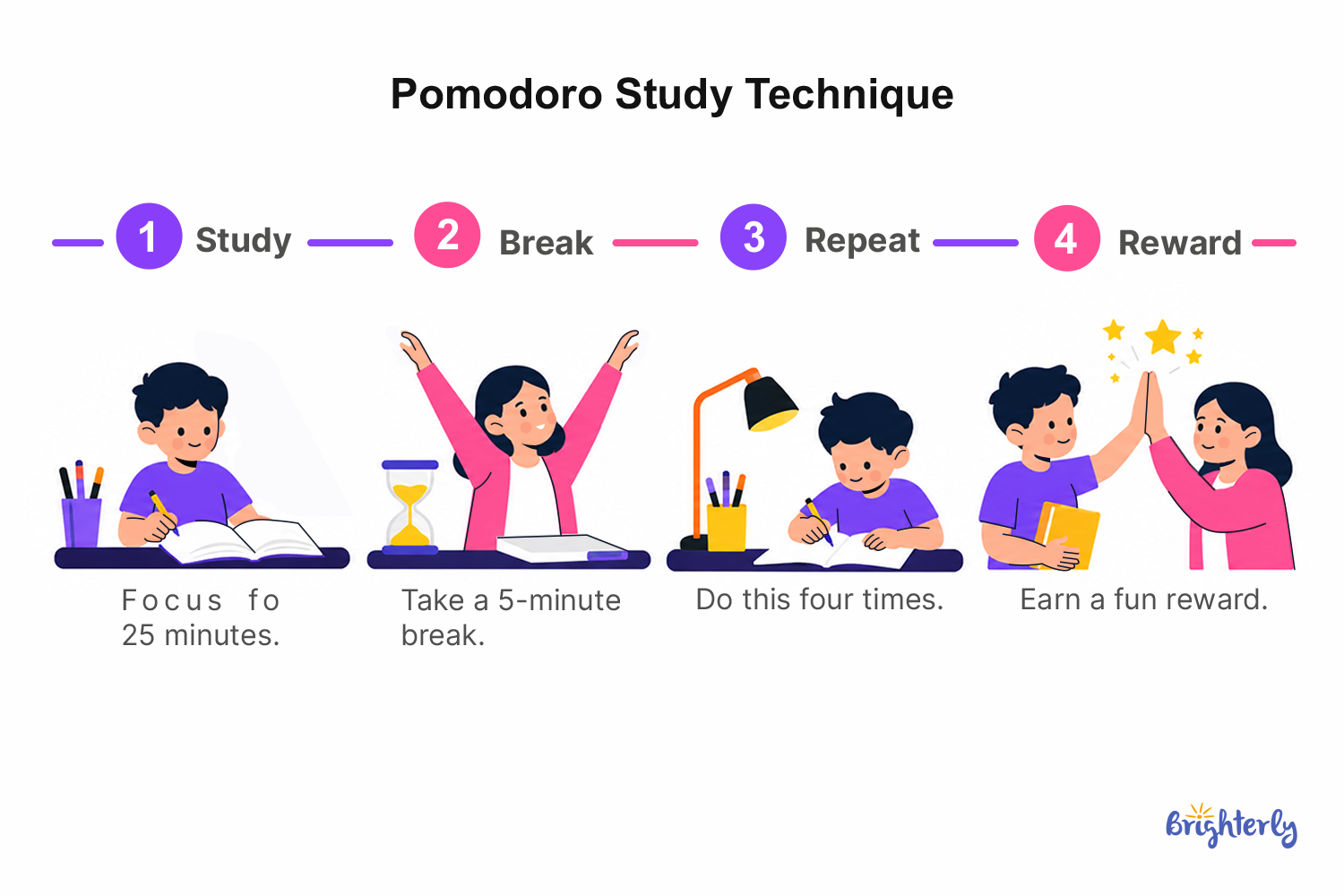 In practice, set a timer for 25 minutes for focused work, followed by a 5-minute break. You can also find free online Pomodoro timers and play relaxing music in the background. It helps manage time.
The Feynman Technique
Interleaving
Dual Coding (Visual + Text)
Creating a Distraction-Free Study Environment
Establishing a Daily Study Routine
Group Study and Teaching Others
Getting Expert Support at Home
Conclusion
Frequently Asked Questions
How Long Should a Study Session Be for a Child?
What Is the Most Scientifically Proven Study Method?
How Can Parents Help Their Kids Study More Effectively?
Do Flashcards Work As A Study Tool?
At What Age Should Children Start Learning Proper Study Skills?
What Is the 1 3 5 7 Rule in Studying?





Math & reading from 1st to 12th grade
Looking for homework support for your child?

Choose kid's grade

Math & Reading for Grades 1–12
Build real confidence for your child with a Brighterly math or reading tutor.