Game Based Learning: What It Is & Why It’s Important?
reviewed by Franz Jerby Delos Santos
Updated on March 31, 2026
Game based learning is an effective approach to learning that uses games to improve students’ motivation, interest, and learning outcomes. In this guide, you can learn the definition of game based learning, its benefits, and different types, as well as explore some example exercises to give you a well-rounded view of this important educational approach.
Key points:
- Game based learning is an approach to learning that uses games designed to improve children’s knowledge and skills
- It’s available in many different formats, including online and digital, with different types of games that include strategy, puzzle, and role-play activities
- The benefits of game based learning in education include increased student motivation, better engagement in education, and improved knowledge and learning outcomes
- It differs from gamification because it uses actual games to enhance student understanding, while gamification takes elements from games, like rewards
What is game based learning?
The game based learning definition refers to the use of games as tools to improve learning outcomes and increase learners’ motivation. It involves structured play through games with defined rules and regulations related to specific learning outcomes. Through this experience, children learn by doing, which is also known as experiential learning.
Note: Learning by doing has been shown in many studies to benefit children, according to a 2024 evidence review in The Curriculum Journal.
There’s a lot of evidence that game-based learning works too. For example, a Frontiers in Psychology study conducted in 2024 found that game based learning boosts cognitive, emotional, and social development.
Explore Brighterly Learning Experience
Learn exactly how Brighterly helps students thrive through expert sessions, online tools, and proven feedback from thousands of satisfied parents
Benefits of game based learning
- Improved motivation
- Boosted subject knowledge
- Makes the most of screen time and hobbies
- Instant feedback
- Opportunities for teamwork and collaboration
Improved motivation
Game based learning has been shown to improve students’ intrinsic motivation to study, due to a 2024 year study which is published in Educational Technology Research and Development. This is because it makes learning more fun and interactive. When learning is related to students’ existing interests and hobbies, they’re more likely to fully engage in it.
This is especially important in a world where children are experiencing anxiety and worry around certain subjects like math. The 2025 study on math anxiety published in the EdWeek Research Center revealed that 67% of teachers say math anxiety is a problem in their classroom, so approaches like games based learning can lower these worries for students.
Get kids interested in learning
Boost motivation through game based learning delivered by highly qualified tutors.
Boosted subject knowledge
Game based learning improves children’s specific subject knowledge, but it isn’t limited to one subject. This mode of learning works well because it brings learning to life. Instead of theoretical learning, students can immerse themselves in a subject, which helps with their understanding.
Makes the most of screen time and hobbies
It’s highly likely your child has a favorite digital device they’re constantly glued to. Often, kids don’t get much value out of screen time, but by giving them digital games to play during blocked-out screen time, you can turn it into an educational activity that still feels like a pastime. Blend this with online writing classes or tutoring in other key subjects to ensure your child’s screen time is well spent.
Be sure to keep your child’s screen time limited. While you can make it more useful and educational, spending too much time on digital devices still comes with risks.
Instant feedback
In both physical and digital games, children can get instant feedback on their performance. Let’s look at some game based learning examples. In the game Penguin Jump, which we’ve covered in our list of 25 math games for 4th graders, kids can see when they get multiplication sums right or wrong.
Equally, if you play Connect 4 to help your young child with pattern recognition, their instant feedback comes in, whether or not they win the game. Instant feedback is key in childhood and helps children with independence.
Opportunities for teamwork and collaboration
A lot of digital and analog games can be played alone, but many games that enhance learning can be played with others, too. Board games like Monopoly are a great example; families or groups of friends need to come together for this strategy-based board game.
Other games, like vocabulary bingo, which we explored in list of the 18 best vocabulary games, require kids to compete against one another. Meanwhile, they may also play games that require teamwork, like escape rooms or building challenges, like building strong structures using paper and other light materials.
Note: Set aside some weekly time to play collaborative learning games with your child at home. Not only will this improve their learning, but it’s also a great opportunity for family bonding!
Brighterly’s approach to game based learning
Since game based learning solutions have been proven effective by numeric studies, numeric teaching venues like the Brighterly learning platform continue to extensively adopt their benefits.
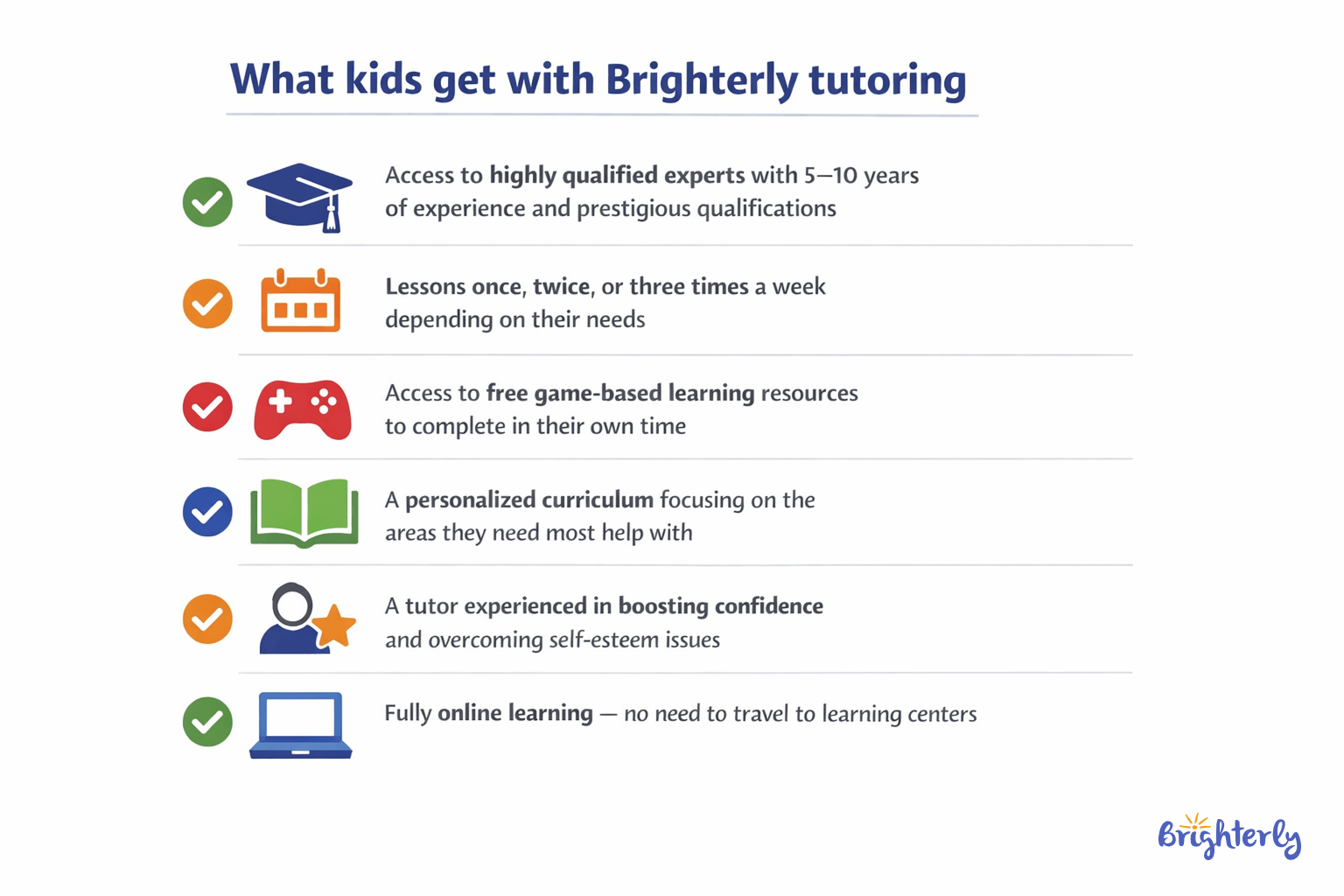
But this site goes a step further, ensuring that each game and every class is tailored exactly to children’s needs by first conducting a thorough diagnostic test. This test highlights your child’s strengths and weaknesses, allowing educators to create a personalized curriculum that fills in their knowledge gaps.
In addition to high-quality game based tutoring, Brighterly platform also offers various free math worksheets and reading worksheets that feature a range of games and puzzles for children to complete in their free time. These resources can be completed digitally or on paper and offer kids another game based form of education.
Types of game based learning
Role-play or simulation games
Role-play and simulation games simulate real-world activities, much like many younger children’s free play. For example, early-years children could play shop, with one acting as a shopkeeper and another (or a parent) as a customer. By ‘paying’ for goods with fake or real money, children can understand how currency works and practice key addition and subtraction skills.
Digital games
Digital games are those played on a games console, tablet, computer, or mobile phone. They can be designed for education, like King of Math, or children can play games they already love that improve learning, like Wordle, which can improve vocabulary.
Equally, popular console games like Minecraft can help children build skills in coding and geometry. Digital games can form part of a homeschool math online curriculum and allow you to mix up your child’s learning activities.
Puzzle games
Puzzles are a specific type of game based learning education that requires kids to find a solution to a problem. Puzzles are widespread and can be found both online and in analog form. For example, a Rubik’s Cube is a puzzle; kids must solve it and ensure each face of the cube is the same color. Puzzle games are a great way to test children’s problem-solving skills.
Strategy games
Strategy games are another type of game that can be both digital and analog, and they are widespread. In these games, children must use logical planning and a step-by-step process to reach a goal. They must react to changing situations, which encourages them to think on their feet.
Battleship is a classic example of an analog strategy game that has stood the test of time, while kids can also play games like Civilization online and build a city while fending off emerging problems.
Memory-based games
Memory is a key element of children’s learning; if they don’t remember the information they’ve taken in, they cannot progress. Memory-based games can take the form of flashcard quizzes designed to test reading comprehension or long-standing games like Simon Says.
By strengthening children’s memories through games, we can strengthen their overall ability to retain knowledge they’re learning in class.
Learning tailored to your child’s needs
Brighterly’s game based approach perfectly adjusts to what your kid requires.
Conclusion
Game based learning is a proven pedagogy that has numerous benefits, which range from increased motivation to learn and better participation in education to improved knowledge and better grades.
It’s important that game based learning is integrated into a wider approach to learning. It’s one of many impactful methods of teaching, but it isn’t the only one. Game based learning should be incorporated alongside theoretical, visual, kinesthetic, and project-based learning to give children a well-rounded education.
FAQ
What is the difference between gamification and game based learning?
The difference between gamification and game based learning theory is in the way games and game elements are incorporated. Gamification incorporates elements of games into traditional learning, like scores, leaderboards, and rewards. Game based learning, meanwhile, builds learning around games and game principles.
A trivia math quiz with a leaderboard is an example of gamification, while playing Monopoly to enhance understanding of money is an example of game based learning.
What are the four Cs of game-based learning?
The four Cs of game-based learning are critical thinking, creativity, collaboration, and communication. They are actually considered the four Cs of education, but it is widely accepted that they apply to game based learning too.
What is an example of game-based learning?
An example of game based learning education is playing a game like Dominoes Fraction Wars, which involves opponents selecting dominoes and playing them against one another. Whoever’s domino has the highest-value fraction wins. This is an example of game based learning because the learning activity is carried out via a game; children will improve their fraction knowledge by playing this game.
Is game-based learning a pedagogy?
Yes, game based learning is widely considered an educational pedagogy. A pedagogy is defined as a method and practice of teaching, and game based learning has its own method — using games to enhance learning.
Is game-based learning just for kids?
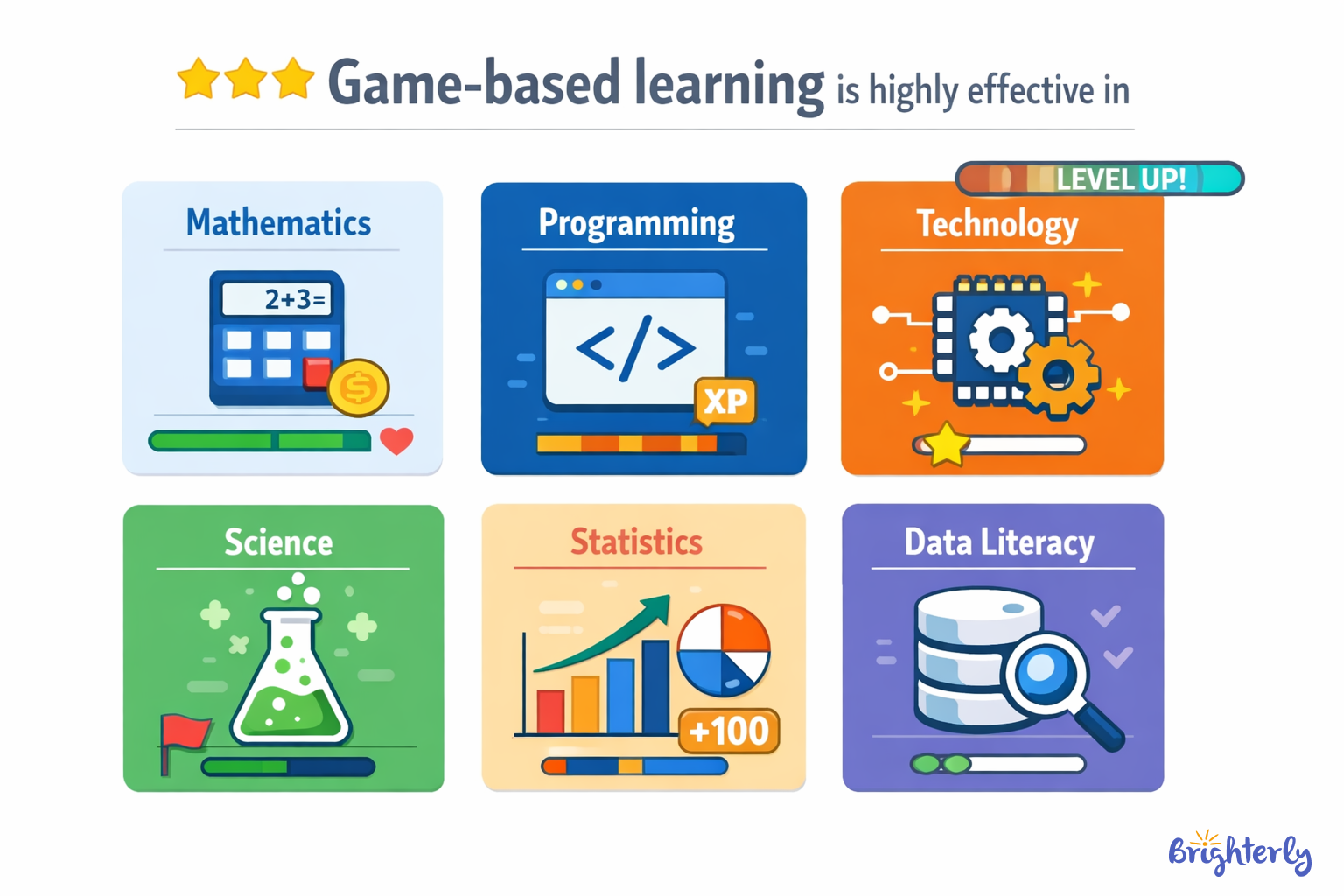
No, game based learning is not just for children. In fact, a 2026 study in the Studies in Continuing Education journal found that game based learning is effective for building data literacy skills.
How to create game based learning?
To create game based learning education, you could either enlist an existing game based learning activity, like playing a board game or a physical math game, or create your own learning system for your child or student to study.
For the latter, think about your child’s learning goal and how games can help them achieve it. Create the rules of your game and be sure to relate them to your subject, like multiplication, and your child’s learning goals. You can also incorporate gamified elements like points and leaderboards.


Project-based learning (PBL) is loved by many teachers and educators, as it teaches students to actively engage in real-world, hands-on, and personally meaningful projects. If you want to adopt the project-based learning approach for your kid, it’s a good idea, and today, we’ll dig into 10 project-based learning examples and explore how you can make […]

May 20, 2022

Wondering what is BODMAS in math? In the world of arithmetic, it’s a mnemonic your child can use to learn the correct order of operations in a mathematical expression. As they follow BODMAS, they can navigate through addition, subtraction, multiplication, and division more easily and find the correct answer every time. In this article, I’ll […]

May 20, 2022
Math & reading from 1st to 12th grade
Looking for homework support for your child?
Choose kid's grade

Math & Reading for Grades 1–12
Build real confidence for your child with a Brighterly math or reading tutor.