Best 12 Mathnasium Competitors & Alternatives in 2026
reviewed by Jo-ann Caballes
Updated on December 25, 2025
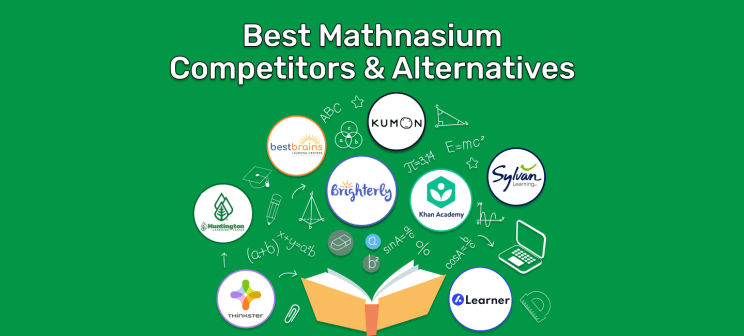
If you’re seeking a platform for your kid’s learning, discovering Mathnasium competitors may be just right for you. In this article, I review 12 alternative resources from my tutoring experience while highlighting their strong and weak sides.
Key Points
- Mathnasium schedules have several distinct drawbacks, which make parents seek alternatives.
- Brighterly provides tailored math schedules adjusted to individual needs.
- Sites like Sylvan, Cuemath, and Thinkster prioritize interactive learning.
- Kumon, Zearn, Best Brains, and Khan Academy are suitable as supplementary learning resources.
- Learner, Huntington Learning Center, Russian Math, and Wiingy are my strong recommendations for exam preparation.
Exploring alternatives?

What are the reasons to consider Mathnasium competitors?
Mathnasium is differentiated in a few ways:
▶️ It teaches kids to love math while adjusting the program to individual needs.
▶️ Its programs help kids understand math rather than memorize concepts blindly.
▶️ Mathnasium is flexible regarding scheduling options, allowing kids to take classes at any convenient time.

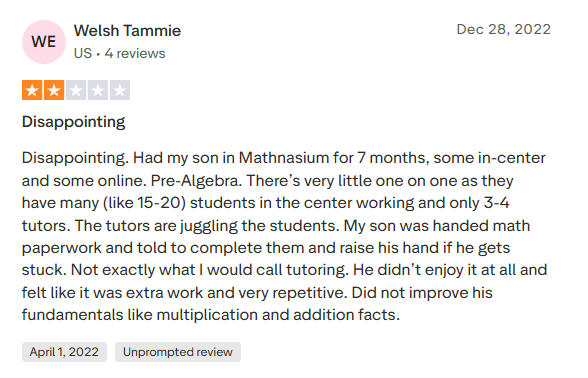
The downsides, however, outweigh the benefits, as parents commonly complain about the lack of tutor attention. They also criticize rigid performance testing primarily based on how well kids deal with Mathnasium worksheets.
Allie, Trustpilot: Very expensive and not worth what you pay. They give you a booklet and watch you do the same problems repeatedly. They don’t teach the material or the concepts. Repetition rarely works, especially when you’re not taught why the answers are correct or incorrect.
Reasons to choose Mathnasium alternatives
Lack of academic success
Worksheets are a core element of Mathnasium’s learning programs. They serve to introduce the material, learn, and review it. This approach eats into personalization, making Mathnasium cling to a more standardized learning approach.
Unfortunately, with worksheet-reliant plans, some students may experience a lack of academic progression. At the same time, most alternatives to Mathnasium include school progress as their key strength.

A no-refund policy
Even though Mathnasium is a relatively costly service, it still doesn’t offer refund opportunities. The situation may vary by location, but most centers will require an early cancellation notice so that you can get at least some of your funds back. In other cases, they will likely refuse your refund request.
If you’re now wondering, “Is Mathnasium worth it?” I have to tell you that prices will generally vary by location. Still, as parent reviews show, monthly prices can range from $200 to $400. Plus, the average cost per hour of studies at this service fluctuates from $25 to $75.
Unprofessional tutors
Studying at Mathnasium happens primarily in small groups, so tutors sometimes fail to devote enough attention to a specific student. Similarly, some of the staff here lack the qualifications for high-quality tutoring.
Now that you know all the potential cons, let’s move on and answer that popular question of “Who are the competitors of Mathnasium?”
What are the best Mathnasium competitors?
- Brighterly
- Kumon
- Sylvan
- Learner
- Thinkster
- Huntington Learning Center
- Best Brains
- Khan Academy
- Russian Math
- Wiingy
- Cuemath
- Zearn
Mathnasium alternative #1: Brighterly
Best for: kids seeking personalized learning help
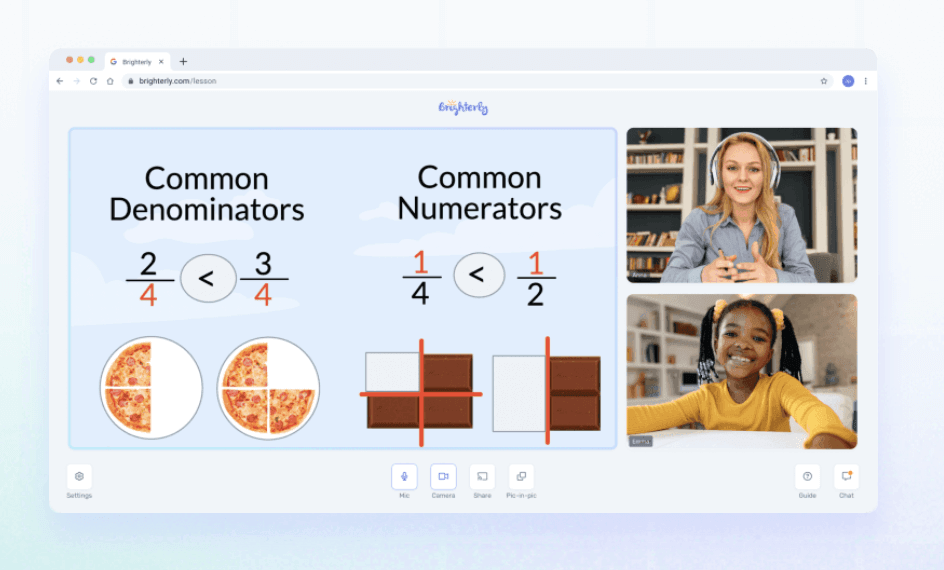
The Brighterly math and reading platform is the top Mathnasium competitor, providing 1:1 personalized lessons tailored to each child’s needs. Simultaneously, its learning content tightly aligns with the US-adopted educational standards, making it fitting for homework help, homeschooling, and as a resource for better academic performance.
Brighterly features
Professional tutors
Brighterly reading and math tutors are the most complimented element of the learning process on this platform. Skilled in their subject and psychological practices, they can teach every kid using the right words, helping them fall in love with the subject.

But what makes their approach so unique?
- Brighterly math tutors won’t push your child to memorize lengthy formulas without knowing their logic.
- 1:1 classes guarantee a friendly and cooperative environment where kids are encouraged to ask questions.
- Personalized learning plans that evolve around your kid’s needs guarantee maximum efficiency.
Services provided by Brighterly math tutors
With an increased focus on personal needs, this Mathnasium competitor provides lessons for kids in grades 1 to 9. Their services include:
- Game-based learning for elementary learners to guarantee easy and fast grasp of basic math topics.
- Detailed explanations for kids in middle school. Tutors here always strive to provide a real-world context and show the practical application of theory.
Focus on personalization

When we talk about Brighterly, we unavoidably talk about personalization. Immediately after registration, your kid will have to complete a free diagnostic test. Based on the results, they will be matched with the best-fitting tutor, who will build a personalized math program tailored to their current level and requirements. Such a curriculum will also be aligned with:
- STEM principles, meaning a predominant focus on bringing practical value and the ability to apply theoretical knowledge in practice.
- The US state requirements for education, so that studying plans could match the academic programs adopted in schools across America. As shown by Brighterly reviews, this approach helps to increase academic performance and is suitable for college exam preparation.
A wealth of free materials
This alternative to Mathnasium is more than just a paid resource. It also offers a bunch of charge-free services parents favor for home-based learning:
- The theoretical knowledge base provides in-depth knowledge of math topics for grades 1 to 9. They are handy when learning new material or for repetition.
- Math tests will help you see how well your child matches the requirements for the current grade and also get immediate feedback on the topics to improve.

- Brighterly math worksheets contain colorful and non-trivial collections of tasks and are meant to give your kid some extra practice. Worksheets will suit literally any parent as they can be used on both your device and as printed sheets. They usually contain solutions at the back, which adds to their convenience!
Brighterly: Pricing packages
The Brighterly price is quite flexible and transparent, as listed in clear pricing plans. Suppose you want to book 3 weekly lessons. In this case, you can expect to following costs:
- $17.3 with an annual study plan
- $19.4 with a 6-month study plan
- $20.2 with a 3-month study plan
- $20.7 with a monthly study plan
Plus, Brighterly offers a trial version, which means you can test it during a free lesson without commitments.
How does Brighterly compare to Mathnasium?
Mathnasium is a good choice if you prioritize small-group learning and also like repetition and drill-based tasks. On the other hand, Brighterly can be better for personalized learning and a 1:1 approach.
Plus, Brighterly is completely transparent about its pricing options — something I cannot say about Mathnasium, given its individual estimates. So, it’s worth saying that the affordable alternative to Mathnasium is Brighterly.
Brighterly math and reading platform: Pros & cons
Pros |
Cons |
| ✅ Learning during individual 1:1 classes | ❌ Only for kids in grades 1 to 9 |
| ✅ Personalized program for each child | ❌ Tech glitches can happen |
| ✅ Lots of free resources for additional training |
That said, Brighterly is a Mathnasium competitor with a completely different teaching philosophy, cherishing a more student-centric approach.


Check the basics behind this term
Take our quick quiz to discover the perfect learning solution based on your child’s needs.
Alternative to Mathnasium #2: Kumon
Kumon is a tutoring platform that offers online and offline study options based on a sequence of rigid worksheets that help students develop self-organization. The e-source is the perfect Mathnasium alternative for after-school studying.
Best for: enhancing independent learning and better problem-solving skills
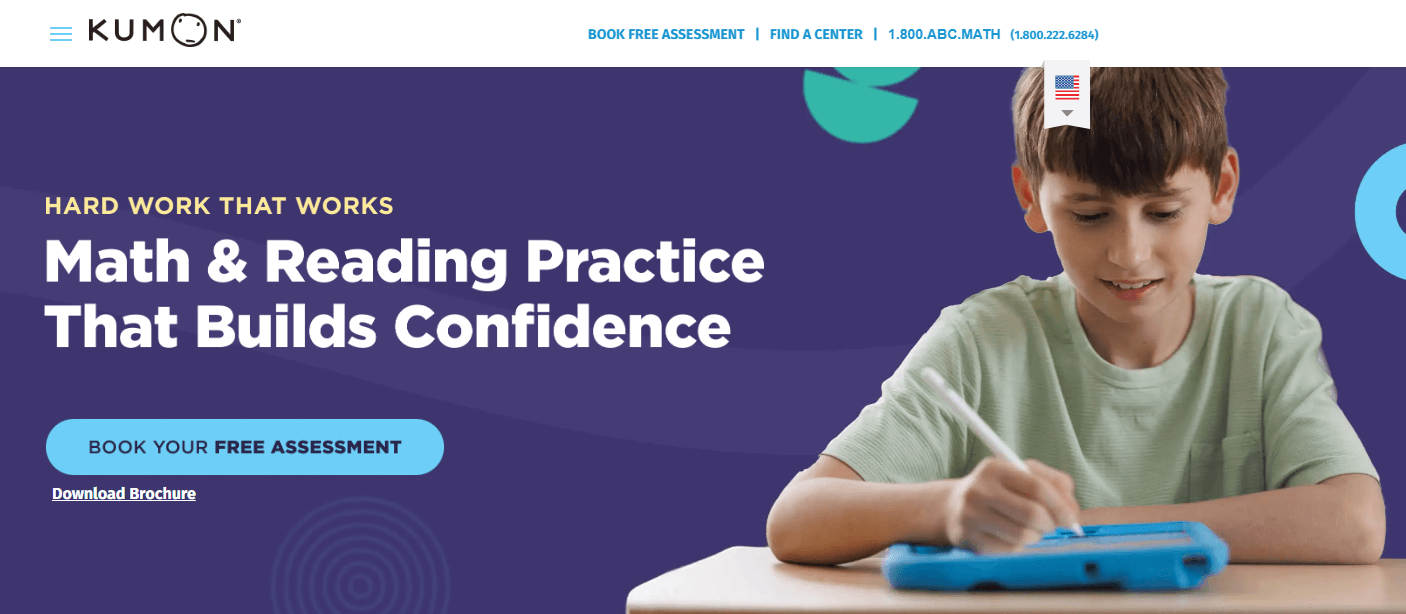
So, is Mathnasium better than Kumon? Eventually, the main difference between the two is that studying in Kumon is purely worksheet-based. While both services offer tutor guidance, Kumon still puts more stress on individual work.
Who is it for?
Grades: Preschool to 12th grade
Kumon top features

- Kumon introduces math material and practice in the form of worksheets
- While a child works on worksheets, a tutor carefully monitors their progress and can guide them whenever needed
- With 23,000+ Kumon offline learning centers, you can definitely find the most convenient location
How much is Kumon?
Kumon doesn’t offer a single pricing option, as the final charge will depend on your chosen location. It will usually be fixed at about $165 per month, which includes 1-2 weekly sessions, each 30 minutes long. But mind the extra prices:
- $80 registration fee
- $30 fee for the materials
Wondering which to choose: Mathnasium or Kumon? Even considering the hidden fees, the latter is still more cost-effective. For a further in-depth look into its pricing, please check this guide.
Is Kumon good or bad for kids: Pros and cons
Is Kumon good for kids? |
What are the disadvantages of Kumon? |
| ✅ Proves to be effective as a supplementary learning resource | ❌ Lacks personalized approach |
| ✅ Suits determined learners who know how to set and achieve their goals | ❌ May seem overburdening at times |
| ✅ Can be used for exam preparation | ❌ Is heavily result-oriented and focuses less on the learning process |
How does Kumon compare to Mathnasium?
Kumon is primarily worksheet-based, with lots of supplementary work implied, while Mathnasium is more tutor-led, with the focus on helping kids understand rather than perform drills only.
If you’re doubting whether Mathnasium or Kumon is better for you, this guide is a good source to help you solve the dilemma.
Check the basics behind this term
Take our quick quiz to discover the perfect learning solution based on your child’s needs.
Mathnasium alternative #3: Sylvan
Just like Mathnasium, Sylvan allows studying in both online and offline settings. It provides personalized learning in small groups to guarantee maximum teacher and student cooperation. Its regular reassessment and testing enable the creation of the most accurate learning roadmap.
Best for: students who need positive reinforcement in a variety of subjects
Unlike Mathnasium, Sylvan uses a combination of learning resources, including close teacher-student work, interactive technology called SylvanSync™, hands-on activities, and traditional worksheets. Plus, it’s not explicitly tied to math and lists several other subjects, like reading and writing.
Who is it for?
Grades: Pre-K to 12
Sylvan top features
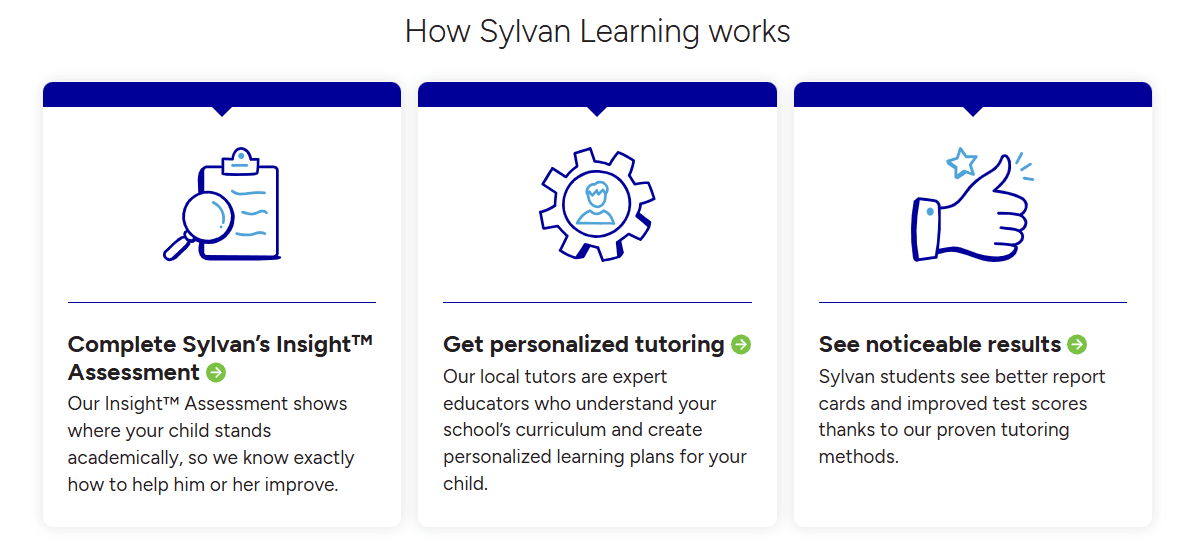
- Each student goes through an individual assessment, so lessons are carefully customized to their needs
- A merged learning approach that combines tutor instructions with interactive systems
- Wide subject coverage and test prep opportunities (SAT/ACT/AP)
How much is Sylvan tutoring?
Each Sylvan Center is managed separately, so the prices can vary. However, these are some general clues:
- Personalized tutoring is worth about $50/session
- Classes for exam preparation will cost you about $900/class
- STEM & academic camps will be priced at about $200+/camp
If you ask, “Which is better, Sylvan or Mathnasium?” you’ll probably have to rely on your preferred learning style, as prices at the two are at the same level.
Is Sylvan Learning Center worth it: Pros and cons
Is Sylvan Learning Center good? |
Disadvantages of Sylvan |
| ✅ Personalized learning options | ❌ Can be expensive |
| ✅ Blended learning approach for maximum effectiveness | ❌ Not the best option for learning math |
| ✅ Great for test preparation | ❌ Limited tutor attention when in a small group setting |
How does Sylvan compare to Mathnasium?
Mathnasium is a math-only learning platform focused on group lessons, while Sylvan covers a range of subjects and more eagerly mixes technologies and learning styles, such as small-group and 1:1 practices.
Note: Choose between Mathnasium vs Sylvan easily with this guide.
Alternative to Mathnasium #4: Learner
Learner service is known for its high requirements for tutors. Only a few can pass rigorous testing and prove their preparation to work with kids. Individual lessons at Learner are recorded so your child can later use them to revise the material.
Best for: students seeking the highest qualified instructors

The Learner platform is all about personalization — it conducts lessons in 1:1 settings, carefully picks a tutor for each kid, and provides fully customized plans. While still effective, Mathnasium is more about template-like worksheets and group cooperation.

Who is it for?
Grades: K-12
Learner top features

- 1:1 learning, which allows for a customized approach
- Hand-picked, world-class team of tutors
- Online sessions held in a convenient format
How much is Learner tutoring?
Regarding this Mathnasium alternative cost, expect to pay between $20 and $100 per session, depending on a tutor’s qualification and experience.
While the minimum price is about the same level as Mathnasium’s, the max cap is far beyond its pricing. It also exceeds the industry average, making the Learner service quite pricey.
Is Learner worth it: Pros and cons
Advantages of Learner |
Disadvantages of Learner |
| ✅ Detailed diagnostic assessment | ❌ Is limited to math |
| ✅ The team of first-class tutors | ❌ Final price depends on multiple factors |
| ✅ 1:1 learning | ❌ Hefty price tags |
Mathnasium alternative #5: Thinkster
Thinkster is a math-only tutoring platform that prioritizes 1:1 teaching and also heavily relies on artificial intelligence for processes like initial skills testing. Its lessons are primarily interactivity-based, yet also integrate worksheet-based drills for repetition.
Best for: those who prioritize one-on-one tuition, yet trust in the power of AI
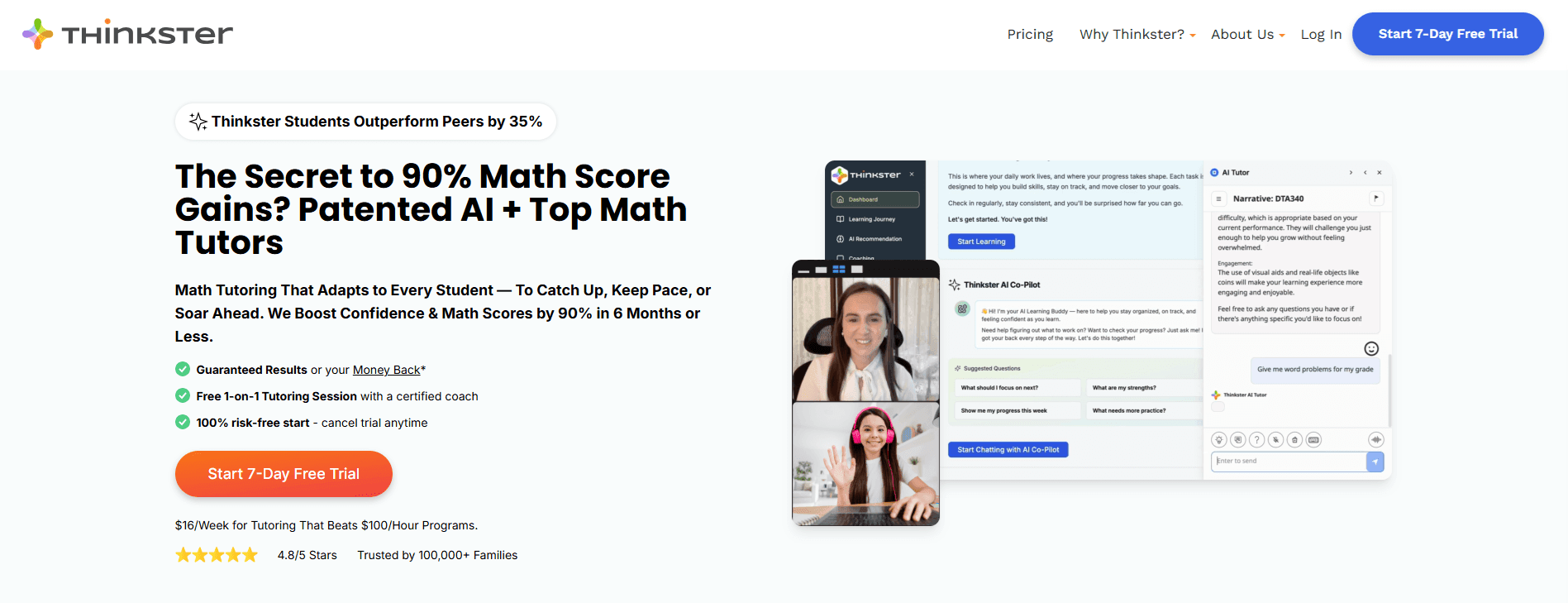
The most appealing thing about Thinkster is its reliance on state-of-the-art digital resources. In essence, this approach will be favored by most kids. Then, when comparing this platform to Mathnasium, the latter may not stand the test due to its more old-school, traditional method of teaching.

Who is it for?
Grades: K-12
Thinkster top features
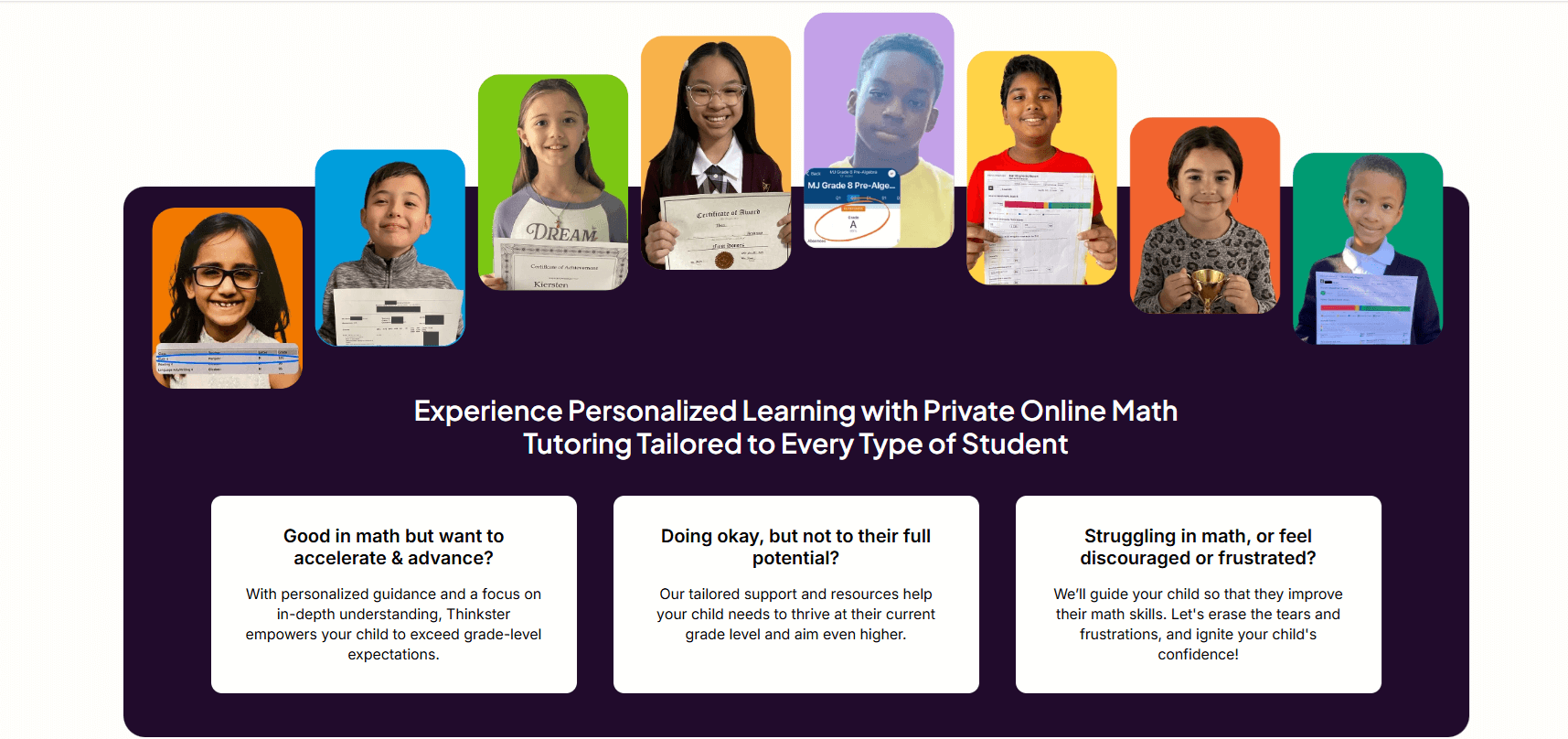
- 1:1 learning fueled by AI
- Interactivity-first approach
- Timely feedback and progress reports
How much is Thinkster math?
This platform is widely known for its affordability when compared to other Mathnasium competitors. So, you can expect to pay $100-$150 on average for the month of studying, which is definitely below Mathnasium.
Is Thinkster worth it: Pros and cons
Advantages of Thinkster |
Disadvantages of Thinkster |
| ✅ Focus on individual student needs | ❌ Requires strong self-motivation |
| ✅ Personalized tutoring | ❌ Intense, screen-relied lessons |
| ✅ Constant progress tracking and reporting | ❌ Primarily AI-driven approach |
Alternative to Mathnasium #6: Huntington Learning Center
One of the oldest learning providers, Huntington Learning Center, offers studying in both online and offline settings. Currently, it owns 300+ locations across the US. The variety of subjects to study is quite wide, including math, science, writing, reading, and exam preparation.
Best for: students who need a structured approach in both in-person and online formats.
Now, what is the difference between Mathnasium and Huntington? The latter offers personalized tutoring across multiple subjects with small group options. Thus, it will best suit students who need broader academic support.
Who is it for?
Grades: Kindergarten to 12th grade
Huntington Learning Center top features

- Each student learns according to a customized plan
- Specialized test prep for exams like the SAT, ACT, and state standardized tests
- Both in-person and online tutoring
How much does Huntington Learning Center cost?
Huntington Learning Center doesn’t list its prices explicitly. However, I could find some insights in user reviews — most of which highlight hefty price tags here. For example, one user mentioned the yearly cost of $3000-$4000, which is definitely constraining for many families.
Is Huntington Learning Center worth it: Pros and cons
Advantages of Huntington Learning Center |
Disadvantages of Huntington Learning Center |
| ✅ Paying attention to individual strengths and weaknesses | ❌ Hefty price tags estimated individually |
| ✅ Comprehensive subject coverage | ❌ Poor average customer reviews |
| ✅ Flexible learning formats | ❌ May be unsuitable for elementary learners |
Note: Comparing Huntington to Mathnasium, one thing that stands out is that the former may be better suited for exam preparation, while the latter focuses on building academic progress. For more Huntington Learning Center reviews, reading this article can be a good option.
Mathnasium alternative #7: Best Brains
At Best Brains, lessons are held in small groups, where teachers pay close attention to each student. The materials are primarily repetition-based, aiming to build strong patterns and cause-and-effect pairs in kids’ brains.
Best for: learners who prefer to practice in small groups

Best Brains may be a bit limited in the grades it covers, as it spans preschool through middle school. Scrolling through the Mathnasium alternative reviews, I found that this platform skillfully combines drills with a tutor’s guidance, balancing individual and guided work.

Who is it for?
Grades: Preschool to grade 8
Best Brains top features
- Learning in a structured, step-by-step manner
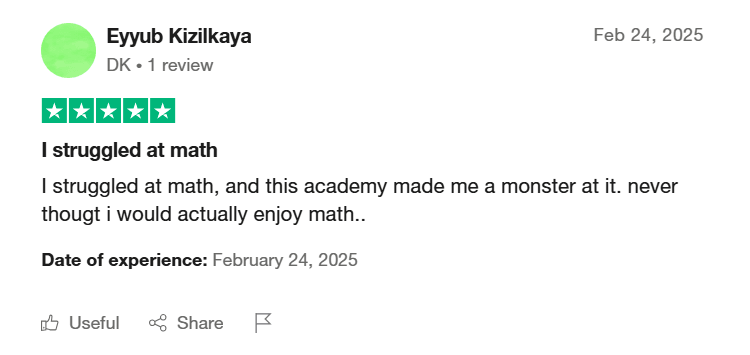
- Strongly emphasizes understanding of the theoretical material instead of simple memorization
- Learning in small groups, which strengthens communicative skills
How much does Best Brains cost?
As Best Brains offers a multitude of subjects, its pricing plans also depend on how many of them you choose to study. Generally, prepare to pay $159 per month if math is your sole focus.
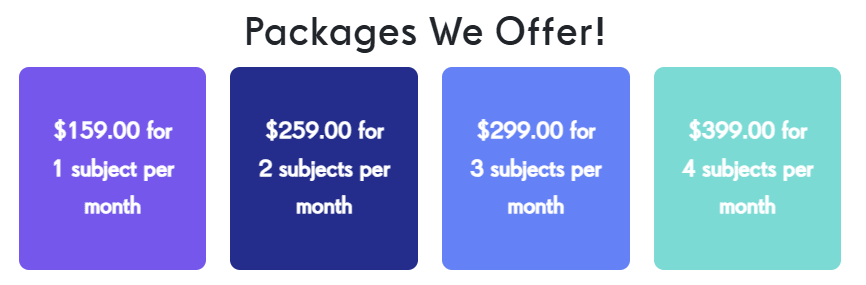
Note that even if you choose a single subject, Best Brains still remains more budget-friendly than Mathnasium. Also, keep in mind that these prices are averages and can fluctuate either way, depending on your location.
Is Best Brains worth it: Pros and cons
Advantages of Best Brains |
Disadvantages of Best Brains |
| ✅ Strong concept-based learning | ❌ Doesn’t cover high-graders |
| ✅ Reasonable pricing | ❌ No 1:1 learning |
| ✅ Available programs for preschool students | ❌ The process may get chaotic at times |
Note: The main difference between Best Brains and Mathnasium is that the first option is more versatile in terms of subjects, not limiting you to math only. Sounds interesting? Then, read these Best Brains reviews for even deeper knowledge.
Alternative to Mathnasium #8: Khan Academy
Khan Academy is an open-source online learning platform. If you prioritize cost-free learning, this platform is an excellent choice. It covers various subjects and is perfect as an extra learning resource. With scrupulous testing and path-building options, it has fantastic opportunities for progress tracking.
Best for: anyone looking for a supplementary learning resource

Khan Academy is great for strengthening a specific math topic or getting extra practice. It’s charge-free, so anyone can join.
Who is it for?
Grades: Kindergarten to college
Khan Academy top features

- Personalized learning plans available for free
- Trusted content in 10+ subjects tailored for all levels
- Theoretical sections followed instantly by practical tasks
How much is Khan Academy tutoring?
Good news — Khan Academy is completely free, even though optional donations are welcome.
Is Khan Academy worth it: Pros and cons
Advantages of Khan Academy |
Disadvantages of Khan Academy |
| ✅ Vast pool of learning materials | ❌ Won’t suit as an autonomous learning resource |
| ✅ Ability to study at a convenient pace | ❌ No support from teachers |
| ✅Suitable for all levels | ❌ May require some time to get accustomed to |
Note: Khan Academy is a noteworthy option for supplementary learning; however, Mathnasium is better if you seek tailored guidance and tutor support. Choose whether it’s right in your case by exploring these Khan Academy reviews.
Mathnasium alternative #9: Russian Math
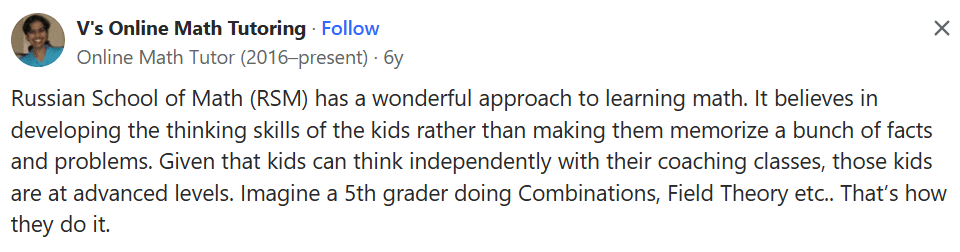
The Russian School of Mathematics offers a rigorous K-12 after-school math program to enhance math fluency, intellect, and character. Core features are a personalized curriculum, math competitions, online and in-person options, and a focus on building critical thinking and problem-solving skills.
Best for: schoolers looking to enhance their logical thinking and reasoning

Which is better, RSM or Mathnasium? Well, Russian Math focuses on a rigorous, advanced curriculum to foster critical thinking and prepare students to excel in math competitions. It is structured around deep problem-solving. Mathnasium, in turn, emphasizes concept mastery and helps students improve math fluency through a fun, visual method.
Who is it for?
Grades: Elementary to high school
Russian Math top features

- Rigorous curriculum that focuses on deep solving of math problems
- Preparation for national and international competitions
- High-level courses extending beyond school curricula
How much does the Russian School of Math cost?
With RSM, you’ll have to pay around $1512 to $2520 per year, which makes $168 up to $444 per month. Also, note that the average price per lesson is around $50, which makes Russian math slightly more costly than Mathnasium.
That said, many wonder, “Is Russian math worth it?” I’d say you’ll need to clarify whether this rigid approach suits you before you make the final decision.
Is Russian Math worth it: Pros and cons
Advantages of Russian Math |
Disadvantages of Russian Math |
| ✅ Learning plan that promotes critical thinking | ❌ Intensive learning path may be overwhelming for some |
| ✅ In-depth competition preparation | ❌ Best suited for older students |
| ✅ Advanced math courses | ❌ More expensive than Mathnasium |
How does Mathnasium compare to RSM?
Mathnasium compares to RSM in that it provides more flexible and personalized learning, while Russian Math is more focused on advancement, logic, and learning beyond the current level.
Choosing between the two can be difficult due to overlaps, such as group-based learning and the roles instructors play. If that’s the case, check the article Mathnasium vs Russian Math for more clues.
Alternative to Mathnasium #10: Wiingy
Wiingy stands out among other Mathnasium alternatives reviews as it’s an advanced tutoring marketplace that connects school students and college learners with experienced tutors. The platform is known for its intense hiring process, which allows the creation of a team of senior-level experts in line with the top industry standards.
Best for: students of all ages and professionals seeking a strong tutoring resource

Wiingy offers an immense selection of subjects to learn. Even though it caters to all ages, its primary audience includes high schoolers and older individuals.
Who is it for?
Grades: Kindergarten to college students and adult learners
Wiingy top features

- 350+ subjects covered
- 1:1 personalized learning format
- Only the highest-qualified tutors on board
How much is Wiingy tutoring?
The price for Wiingy tuition is estimated individually depending on the tutors’ hourly rate. As stated by the platform, fees start from $28/hour. I did some digging, and the highest-paying tutor I could find had a rate of $50, but prices can probably climb above the mark.
Overall, these options are slightly higher than what you will find at Mathnasium.
Is Wiingy worth it: Pros and cons
Advantages of Wiingy |
Disadvantages of Wiingy |
| ✅ Intense focus on STEM approach | ❌ No progress reports |
| ✅ Detailed programs for exam preparation | ❌ No long-term subscription |
| ✅ Ability to shift tutors if needed | ❌ Poor ongoing support from tutors |
Mathnasium alternative #11: Cuemath
Cuemath is all about personalized learning with a tutor, designed to build core skills. The approach works well for most learners as it adapts to requirements and also provides immediate feedback in the live mode, helping target current mistakes.
Best for: learners who need targeted support at all stages
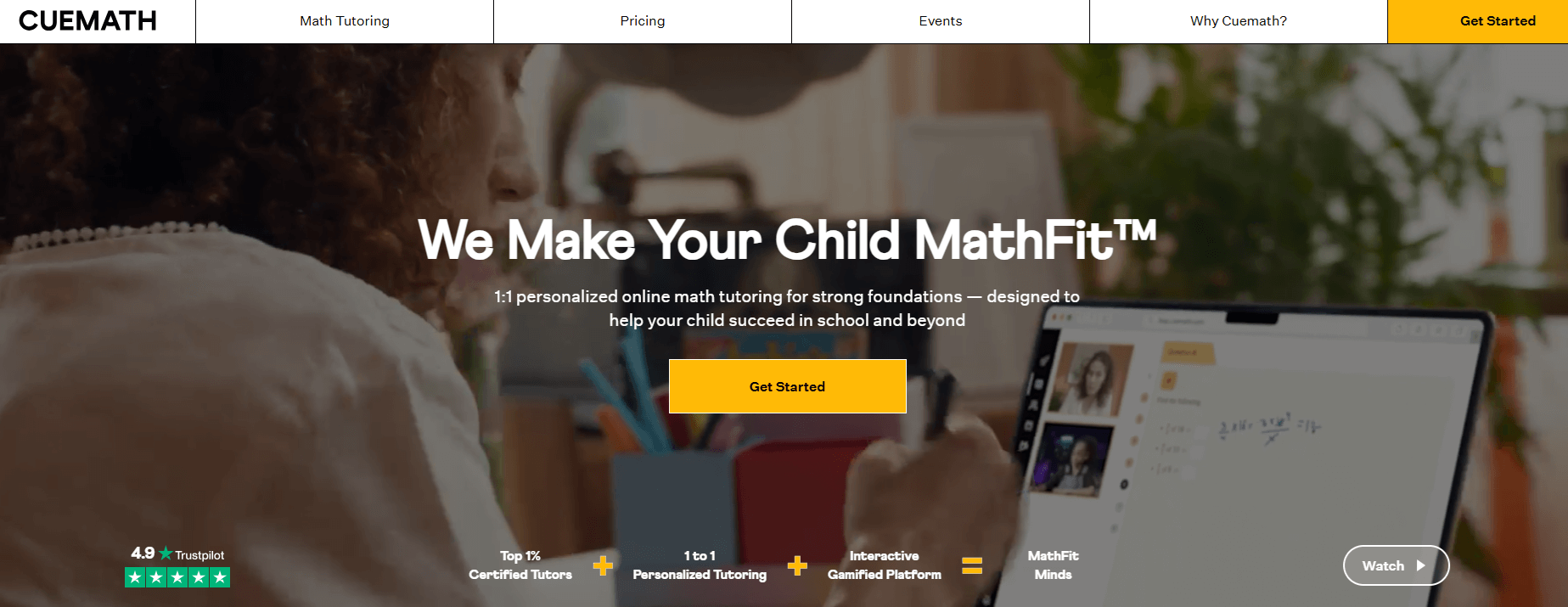
Studying at Cuemath happens through a combination of various interactive elements like puzzles, games, and videos — that’s to keep kids motivated and concentrated.
Doubting the effectiveness? Check these Cuemath reviews — they have all the nuances covered.
Who is it for?
Grades: Kindergarten — 12th grade
Cuemath top features
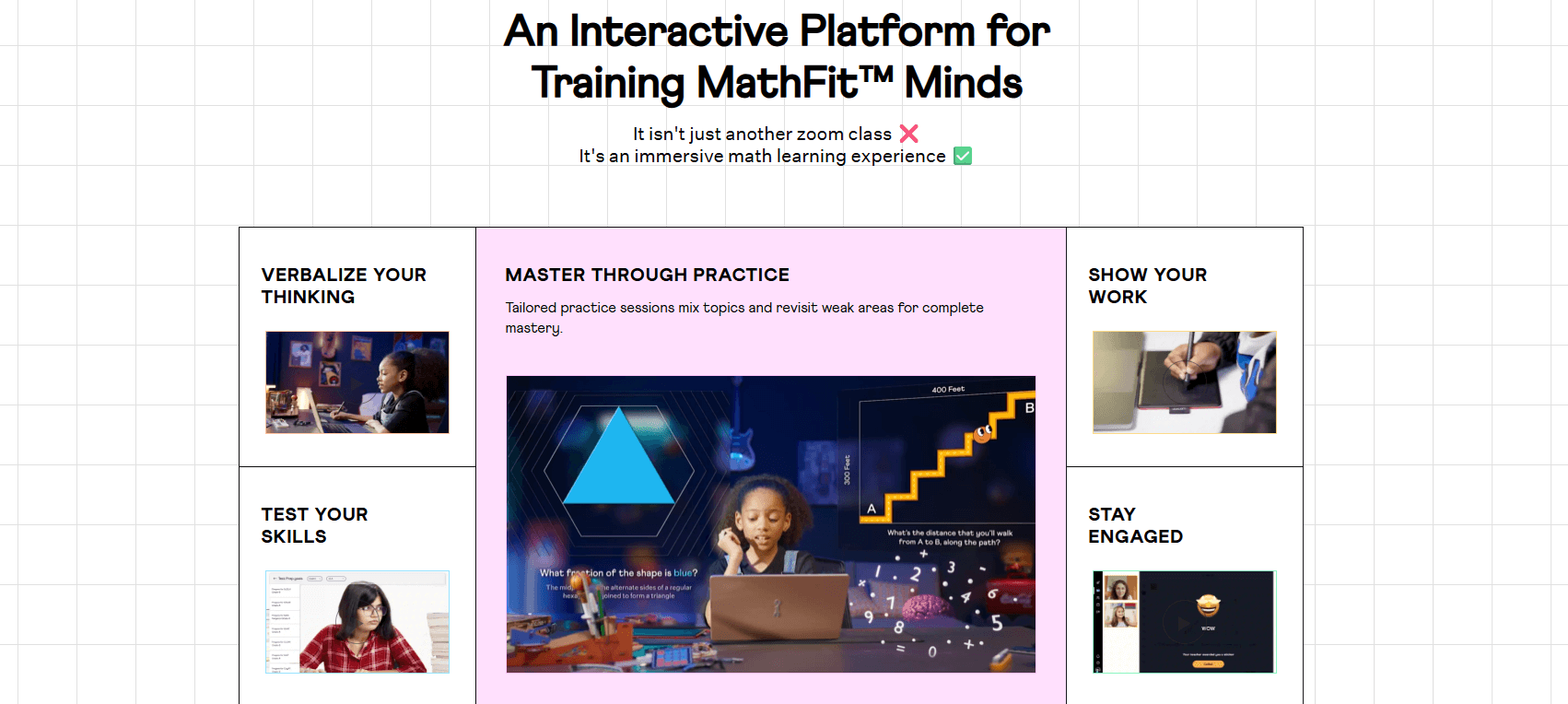
- Live sessions led by tutors
- Matching the school curriculum
- Parent app available for progress monitoring
How much is Cuemath?
Cuemath pricing is quite transparent, with options starting at $20/class for kindergarten — grade 7 and $24/class for upper grades. The trick is that the minimum billing period you can choose at this Mathnasium alternative is 6 months, resulting in $1200 and $1536 for the total study period.
Is Cuemath worth it: Pros and cons
Advantages of Cuemath |
Disadvantages of Cuemath |
| ✅ Expert tutors on board | ❌ Pricing plans for 6 months minimum |
| ✅ Adaptive schedule | ❌ Math only |
| ✅ Homework support | ❌ Relies on student self-motivation |
Alternative to Mathnasium #12: Zearn
Zearn offers kids to work on math through adaptive learning paths, including pre-recorded lessons and a variety of interactive tasks. The platform strongly encourages a concrete-to-pictorial-to-abstract approach, helping kids get value from the theory and understand how to apply real-world concepts.
Best for: organized students who prefer self-paced learning
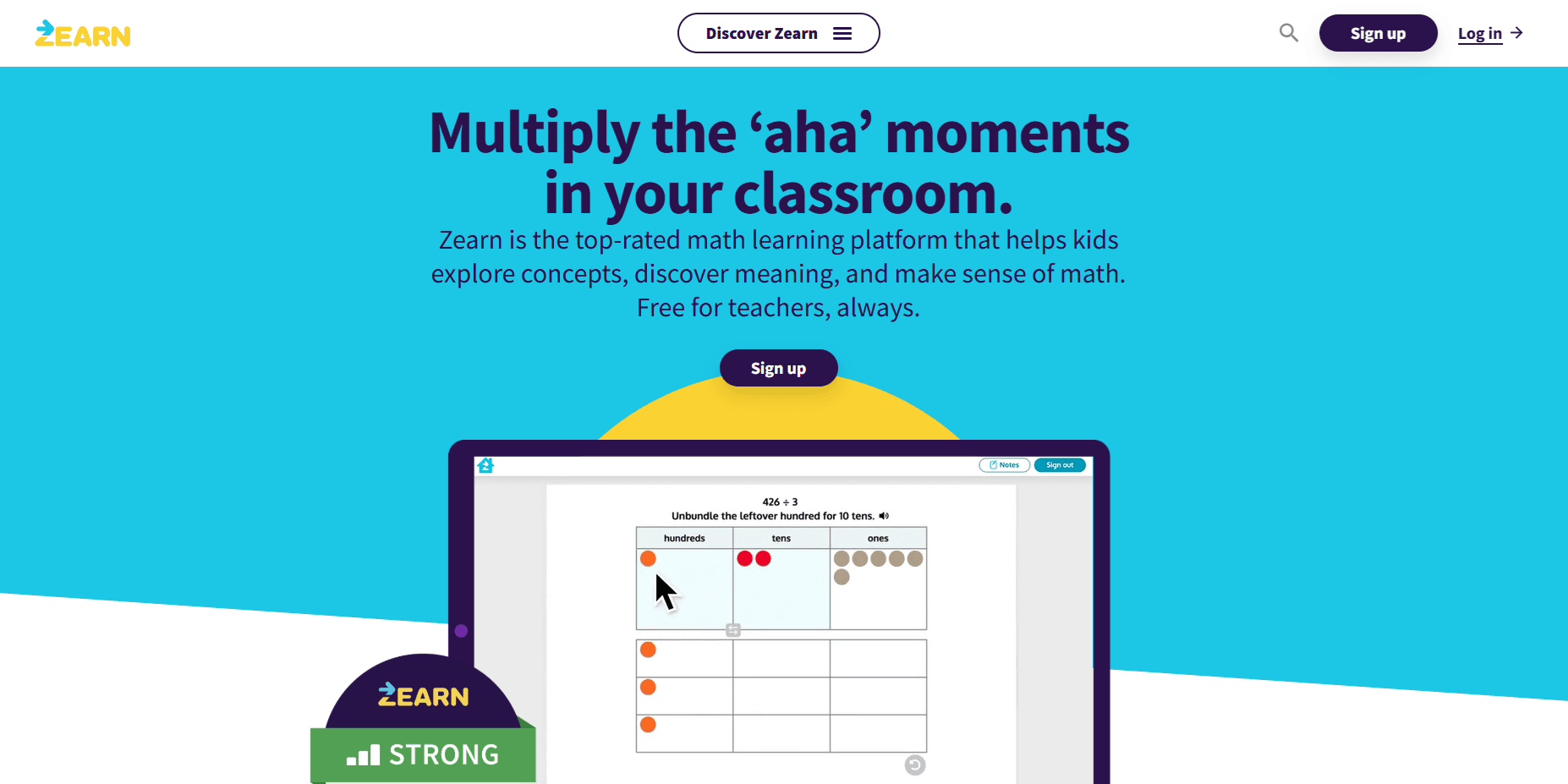
The great feature of this Mathnasium competitor is that one can study at any time and at any pace they need, making it great for supplementary learning, as according to the school curriculum.
While primarily aimed at classrooms, it can also be a good supplement for home practice, as it turns learning into engaging fun.

Who is it for?
Grades: K-8
Zearn top features
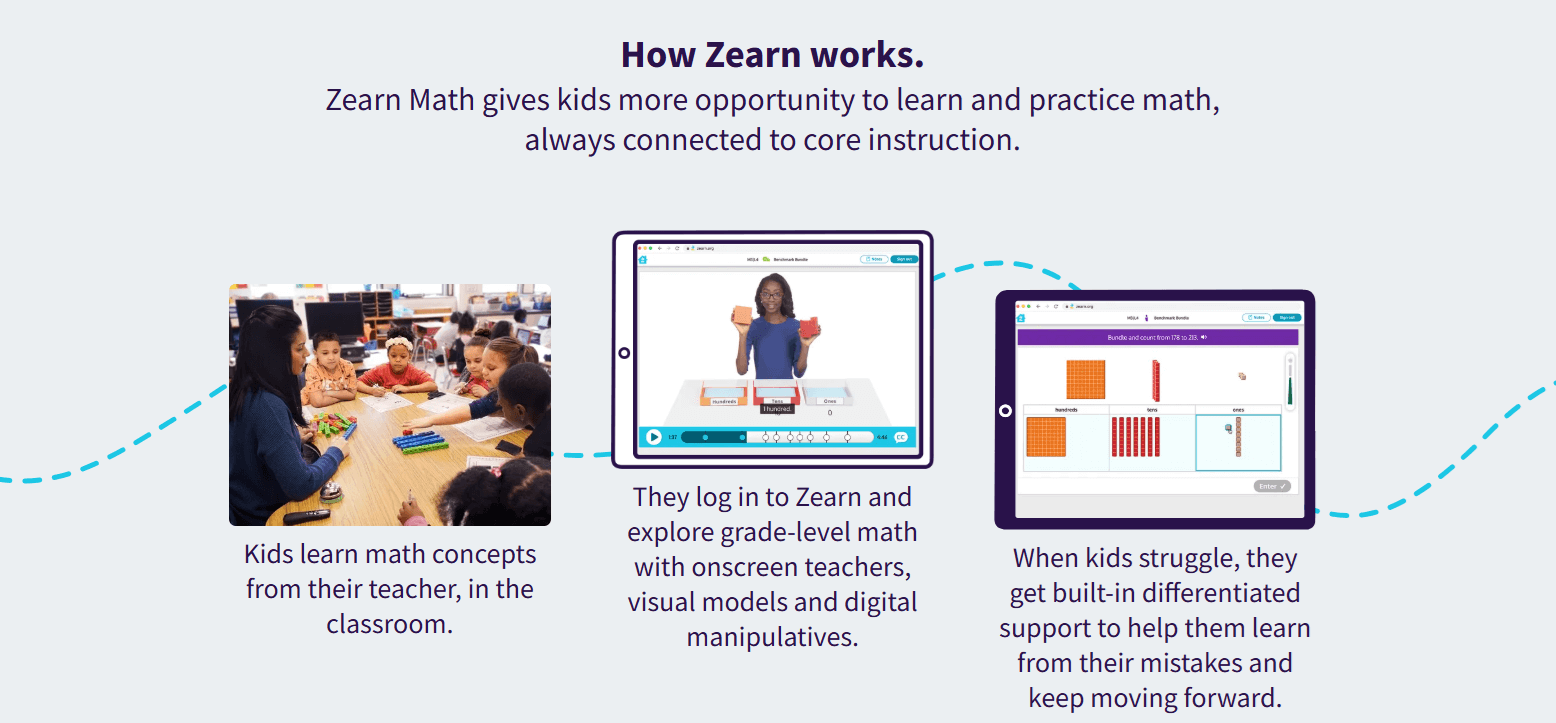
- Engaging practice to reinforce classroom materials
- Round-the-clock access
- Interactive visuals
How much is Zearn?
One strong pro about Zearn is that it’s completely free for teachers and individual students.
Is Zearn worth it: Pros and cons
Advantages of Zearn |
Disadvantages of Zearn |
| ✅ Charge-free option | ❌ Not a complete learning resource |
| ✅ Great for practice | ❌ Can turn boring |
| ✅ Visually engaging | ❌ Is more focused on practice, not explanations |
What’s next: Choose the best Mathnasium competitors
Now you know all the options to substitute Mathnasium, each with a unique approach to math education. Undisputably, any alternative on my list has its strong and weak points, so if you’re still hesitating with the final decision, let me remind you that Mathnasium’s competitors include:
- Kumon, Thinkster, Huntington Learning Center, Zearn, Best Brains, and Khan Academy for those seeking ideal resource for elementary or middle school practice.
- Sylvan, Learner, Russian Math, Cuemath, and Wiingy for those striving for extra practice for your high schooler.
- But if you want your kid to study under tutor supervision and according to a personalized schedule, the Brighterly math and reading platform is definitely a must-try.
Book free lesson now and see how those lessons work in practice!
Other platforms comparison
Ready to do some extra research to find your ideal learning resource? Check out these articles of mine:



Understanding percentages is crucial for everyday activities such as calculating discounts and interest, managing money, and understanding statistics. If teaching percentages to your kid feels like a low point, I’m here to share the 10 best easy ways to learn percentages at home and school. Key points A personalized approach, gamified learning, and real-world applications […]

Mar 04, 2025
This guide compares the top features, prices, and benefits of Eye Level vs Kumon vs Brighterly as of 2026. Given that all these platforms offer decent support in math and reading, the overview will help make an informed decision about which one to choose for your kid. Key points Eye Level is suitable for students […]

Mar 11, 2025
Math & reading from 1st to 9th grade
Exploring alternatives?
Take a short quiz!

Choose kid's grade