Mathnasium vs Kumon: Which One Is Better for 2026?
reviewed by Jo-ann Caballes
Updated on November 3, 2026
Key Points:
Comparing Mathnasium vs Kumon reveals differences in their learning approaches and in the results they bring to K-12 students. The guide compares both platforms based on their cost, teaching methods, learning format, and focus to explain why each is the best fit for different learners.
Mathnasium vs Kumon: Comparison
Mathnasium Kumon Learning Method Online & offline classes in a small-group format with 1:1 attention Online & offline classes based on worksheet learning Alignment with US State Standards ✅ ✅ Subjects Available Only math Math & reading Grade Range K-12 PreK-12 Personalized Learning Plan ✅ ✅ Class Size 3-4 students sit together, but each gets personal attention 10-30 students in the same center, but each works individually Knowledge Diagnostics ✅ ✅ Student Progress Tracking ✅ ✅ Free Trial ✅ ❌ Trustpilot Score 4.1 (90+ reviews) 4.4 (530+ reviews)
*Information verified as of October 2026.
Based on a quick comparison between Kumon vs Mathnasium, both programs offer reliable support to K-12 students aligned with US state standards. The platforms incorporate a strong math foundation, some personalization, and progress monitoring.
Both Mathnasium and Kumon also let you choose between online and in-person learning, where students work individually in a group setting with certified tutors.
Still, the programs have different approaches to class size, suit different age groups, and differ in the specifics of their learning method. Unlike Mathnasium, Kumon also offers a reading program in addition to math.
Exploring alternatives?

Explore Brighterly Learning Experience
Learn exactly how Brighterly helps students thrive through expert sessions, online tools, and proven feedback from thousands of satisfied parents
Mathnasium vs Kumon Cost per Lesson
Pricing (as of October 2026) Free Offerings Mathnasium Cost From $25 to $35 per 60-90 minute lesson (the exact price depends on the center location and the subject) 30-minute free trial Placement test Kumon Fees From $17.50 to $25 per 30-45-minute lesson (the exact price depends on the center location) Placement test
Mathnasium and Kumon prices vary by center location, but they’re the same for in-center and online learning within the same area. As of October 2026, Mathnasium costs between $25 and $35 per class, while Kumon charges $17.50-25 per session, but Mathnasium classes last an hour or an hour and a half, whereas Kumon lessons are twice as short (30-45 minutes).
Kumon vs Mathnasium: Monthly Tuition
Price (as of October 2026) Number of Lessons per Week Extra Fees Mathnasium Monthly Tuition Typically from $200 to $420 (depending on the location) 2-3 lessons (60-90 minutes each) Some centers charge a one-time enrollment or registration fee Kumon Monthly Tuition Typically from $140 to $200 per subject (depending on the location) 2 lessons (30-45 minutes each) Around an $80 registration fee Around $30 materials fee
*Pricing information mentioned above was verified based on official company websites.
When differentiating between Mathnasium vs Kumon cost per month, Mathnasium charges $200-$420 for 2 weekly lessons of 60-90 minutes, and Kumon fees are about $140-$200 for 2 weekly classes of 30-45 minutes. Note that the exact monthly pricing (including fees) at both Kumon and Mathnasium depends on the center location.
Get teacher instruction combined with gamified practice
Test 1:1 learning for free and see how it suits your needs 

Mathnasium vs Kumon: Learning Methods and Class Formats Compared
Mathnasium teaches based on a proprietary method that includes a customized learning plan that mostly encourages memorization and foundational understanding, while Kumon is more of a drill-based practice that teaches mastery through repetition.
Here is how these two teaching systems work:
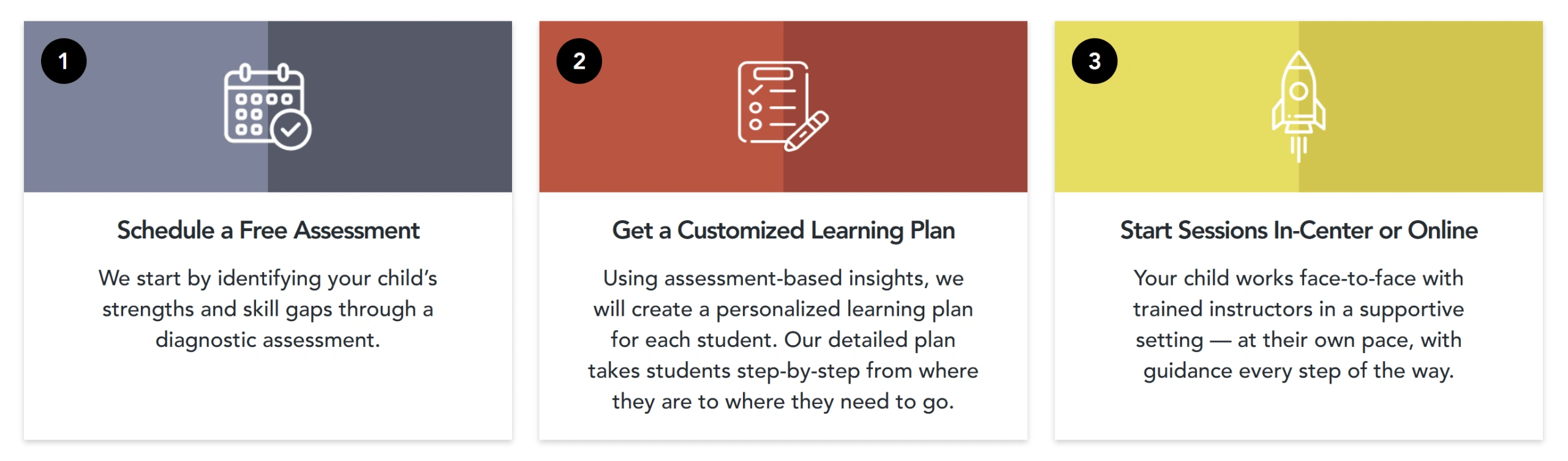
- Mathnasium: Prioritizes conceptual understanding over rote memorization. Your child should pass an initial assessment to get a personal learning plan. At the center, they will study in groups of 3-5 students, so they are motivated by peers yet still have time to work directly with a tutor.
- Kumon: Prioritizes repetition-based mastery. Children are expected to visit a physical center in a stable manner and complete drill-based pencil-and-paper worksheets independently in a big classroom (up to 30 students). The method encourages self-discipline, steadily building accuracy, and developing a habit
Due to this distinction, Mathnasium and Kumon suit different students best, so parents should make their choice based on the needs and the learning style of their child.
Note: If your child needs after-school in both reading and math, you should choose Kumon over Mathnasium (as only this platform offers two subjects).
Mathnasium vs Kumon: Homework, Practice, and Personalization
Due to the difference in teaching methods, Kumon and Mathnasium create completely different learning experiences for their students, with Mathnasium relying on guided, customized practice with no homework and Kumon expecting your kid to do a lot of repetition in a classroom and at home to steadily build confidence.
Mathansium Kumon Homework ❌ ✅ Personalization ✅ ❌ Practice Guided, small-group, focused on building math foundations rather than repetition Standardized drills, independent work, disciplined practice for mastery
If your child benefits from standardized learning and genuinely likes to progress steadily, they will like Kumon more than Mathnasium. In turn, Mathnasium suits best kids who want to build understanding and have no time or desire to do extra math homework.
What Is Mathnasium?
Mathnasium offers a supplemental math program that reinforces past knowledge, fills learning gaps, and builds subject competence. Founded in 2002, Mathnasium works as a network of math learning centers that also provides online classes for students who don’t have access to a center.
The math program works for K-12 students who are behind, at, or ahead of grade level. Small groups of students work in the same classroom, and the tutor gives individualized support to each learner. The group setting makes Mathnasium a good option for socialization.
Best for: K-12 students who prefer to study math in a small-group environment
Mathnasium Features
- Proprietary Mathnasium Method: The Mathnasium Method emphasizes concept understanding over memorization, helping children build number sense. The method relies on diversified instruction (incorporating mental math, verbal instruction, visual aids, and written techniques) and individualized learning plans. A major difference between Kumon and Mathnasium is that Kumon is more homogeneous, focusing on worksheet drills.
- Online and offline learning: With Mathnasium, you can choose whether to have your child study in a center to benefit from the social aspect or online for more comfort. Both options follow the same principles and programs and incur the same costs.
- Combination of independent and tutor-guided work: During biweekly sessions, students get some customized instruction from a teacher and some time to fill out worksheets independently. The mixed approach addresses the needs of different types of learners – both those who study better with guided instruction and those who do well with self-paced learning.
Mathnasium Pros and Cons
Pros Cons ✅Authoritative and personalized learning approach ❌Group setting might distract some kids ✅Strong social aspect ❌Limited 1:1 work ✅Ability to learn in-center or online ❌Restricted to math only
How Much Does Mathnasium Cost?
- ~$200-420 per month (prices outside this range are also possible)
- One-time registration fee in some centers (undisclosed amount)
As of October 2026, the Mathnasium cost for in-center and online learning is the same and depends on location. The monthly tuition covers the price of learning materials. Students typically have 2 sessions per week of 60-90 minutes each (depending on the subject), so the per-lesson fee adds up to between $25 and $35.
Before subscribing, you get a 30-minute free session to test the environment and the methodology. Your child also benefits from a free assessment to place them at the right level.
How Does Kumon Work?
The Kumon after school program operates through a web of learning centers that provide offline and online sessions. The program uses the Kumon Method, developed by the Japanese high school math teacher Toru Kumon in 1954.
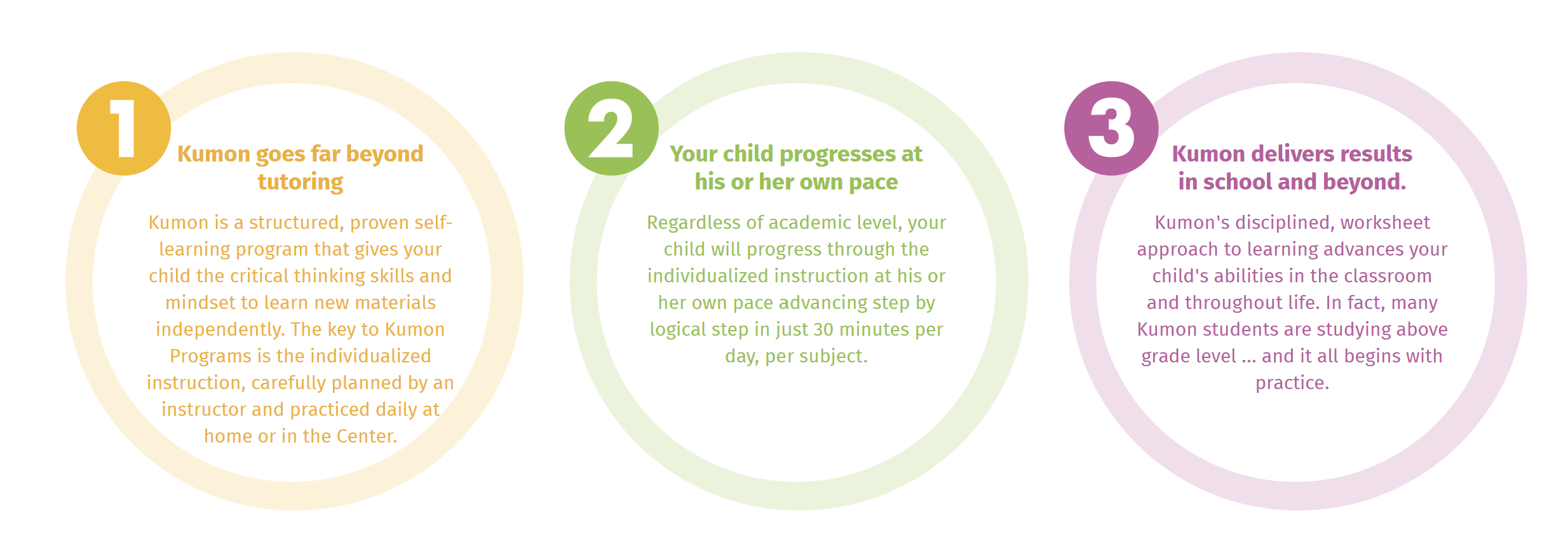
When choosing between Kumon or Mathnasium, keep in mind that Kumon focuses on repetition and drill-based practice to build math and reading skills. The program emphasizes mastery, so children progress according to their knowledge and capabilities, not grade level and age.
Best for: PreK-12 math and reading learning focused on mastery
Is Kumon Good for Kids & Teens?
Generally, the Kumon emphasis on a strict daily routine and self-discipline makes it a better option for middle school and high school students who already have strong learning habits and who don’t need gamification as much as younger kids. The after school program could also fit the needs of smaller children with good organizational skills who prefer a routine.
A meta-analysis published in Frontiers in Sports and Active Living in 2025 found a significant correlation between fine motor skills and math skills in preschool students. In this sense, the Kumon Method might have a positive impact on early math development, as the worksheet approach works on writing skills as part of fine motor skills.
Key Features of Kumon
- Daily worksheet-based learning: Based on the Kumon Method, your child needs to solve worksheets for 20 minutes every day: twice a week in a center (or online) and the other 5 days on their own. The repeated practice helps memorize things effectively and automate problem-solving.
- In-center and at-home options: A commonality between Kumon and Mathnasium is that both allow you to study in a center or at home. Offline education helps with socialization, while the online program offers more flexibility.
- Strong focus on soft skills: The focus Kumon places on worksheets helps develop independence, self-organization, and overall ability to manage your time. The program also supports the establishment of math confidence by turning problem-solving into a routine.
Kumon Pros and Cons
Pros Cons ✅Develops analytical and critical thinking skills ❌Challenging methodology for some children ✅Builds a solid routine ❌Repetitions don’t work for all ✅Drill-based approach helps remember patterns ❌Lack of game-based aspects
Kumon Pricing
- ~$140-200 per month per subject (math and reading), with the exact price depending on the center location
- ~$80 one-time registration fee
- ~$30 materials fee
As of July 2026, the Kumon price varies by location but is the same for the online and offline programs. Kumon holds 2 sessions per week of 30-45 minutes each, so the cost per class is about $17.50 to $25. The Kumon reading program cost is at the lower end of the average hourly tutoring rates in the US, which range from $ 25 to $ 80.
Note: The Kumon method relies on self-discipline and independent work, while 1:1 tutoring generally offers undivided teacher attention to your kid to help them overcome struggles.
While Kumon doesn’t have a free trial, your local center will provide a diagnostic test to evaluate your child’s skills and start at the right level.
Best Age & Grade Fit for Kumon & Mathnasium
Mathnasium Kumon Best Age Group ~6-14 years ~3-16 years Typically Best Grade Level 1-9 grade PreK-11 grade
Wondering what the best age for math tutoring with each of the two programs?
While the two math learning platforms target the same age group (K-12 grades), a careful comparison between Mathnasium or Kumon shows important nuances. Usually, kids in elementary and middle school find Mathnasium the most effective as it focuses on topics covered in school. Kumon typically works better for younger kids, too, as it helps them build a study routine.
Kumon vs Mathnasium: Reddit and Trustpilot
As of October 2026, happy parents in Mathnasium reviews highlight the good teachers who help children build foundational knowledge, but others report major differences between centers.
According to Kumon reviews, the main benefits are the ability to build knowledge and the regular progress tracking, while some students find the repetitions and worksheets boring and ineffective.
Mathnasium Reviews
Users like:
✅ Good for fundamentals
✅ Professional teachers
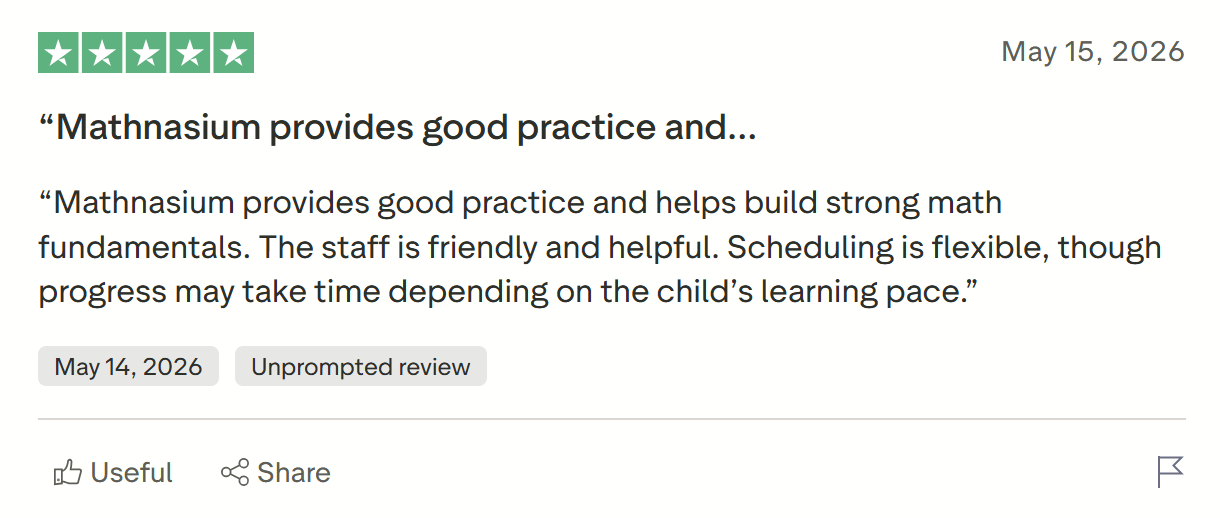
“Mathnasium provides good practice and helps build strong math fundamentals.” – Trustpilot, May 2026
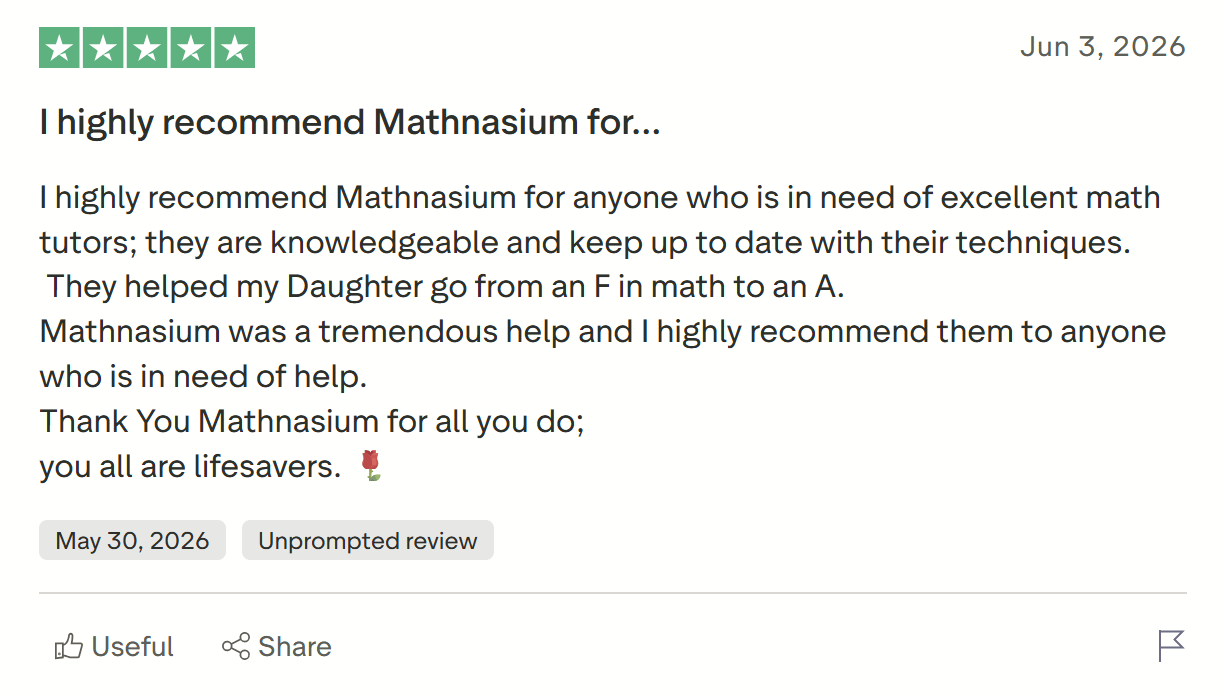
“They are knowledgeable and keep up to date with their techniques.” – Trustpilot, June 2026
Users don’t like:
❌ Experience depends on the local center
❌ Discrepancies between school curriculum and Mathnasium program
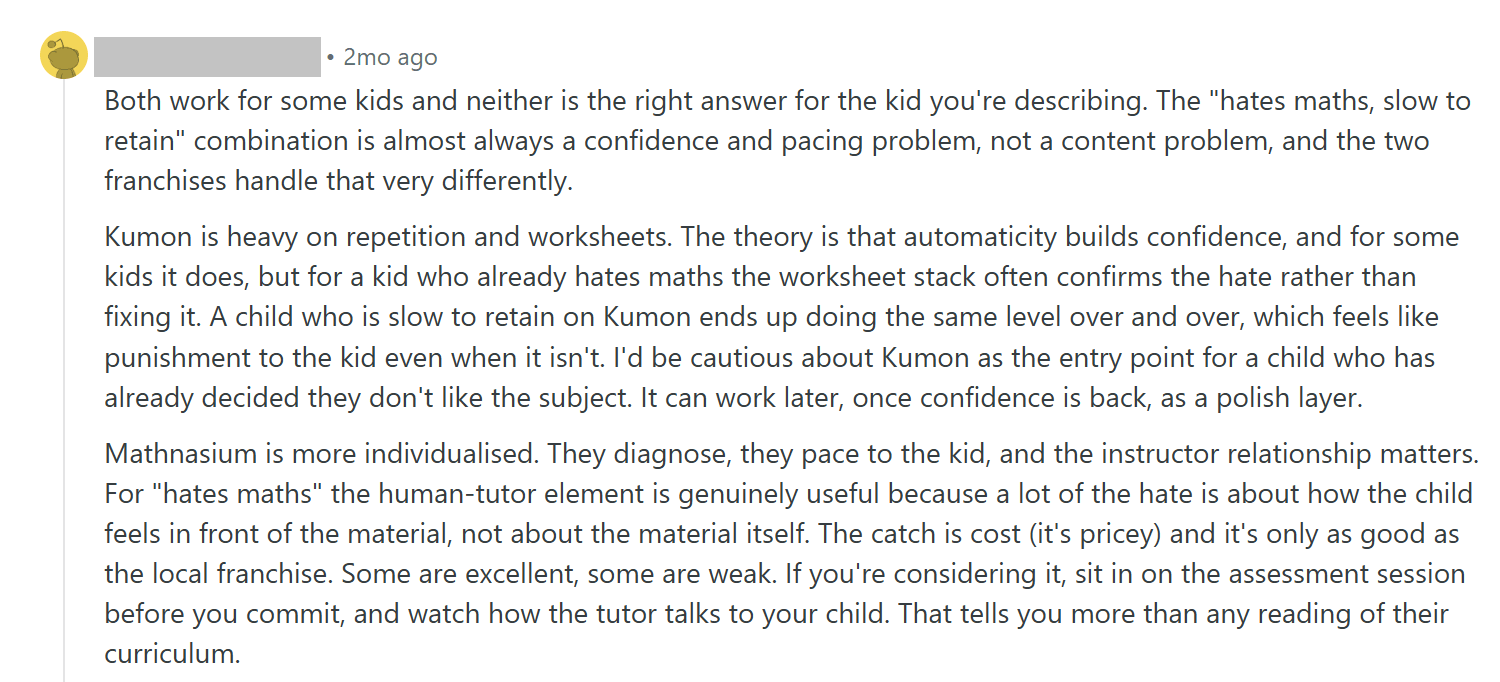
“It’s only as good as the local franchise. Some are excellent, some are weak.” – Reddit, May 2026 (approx)
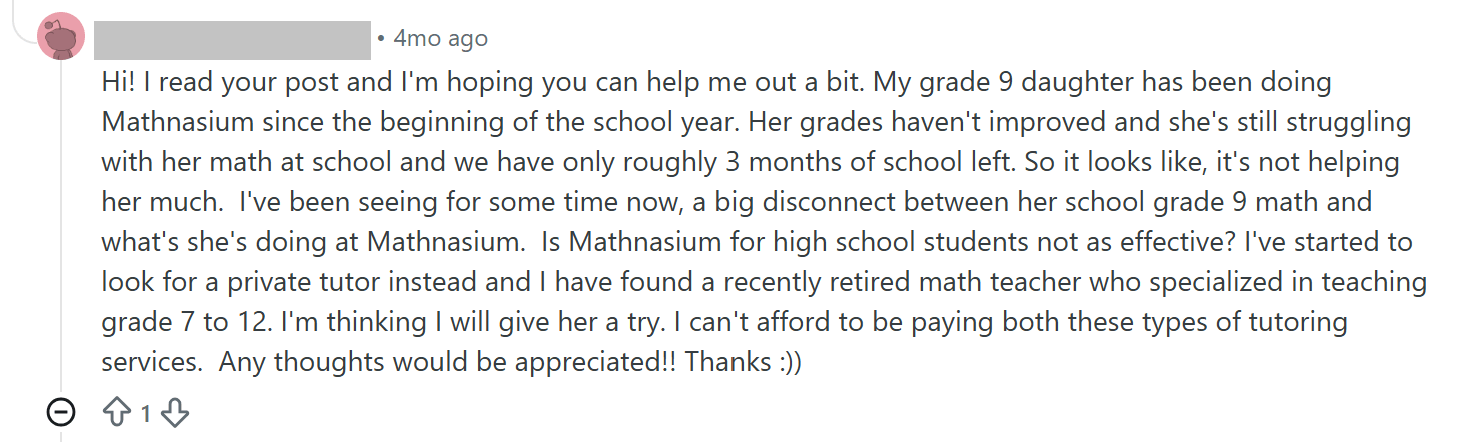
“Big disconnect between her school grade 9 math and what’s she’s doing at Mathnasium.” – Reddit, March 2026 (approx)
Kumon Reviews
Users like:
✅ Helps with both understanding and speed
✅ Continuous progress monitoring
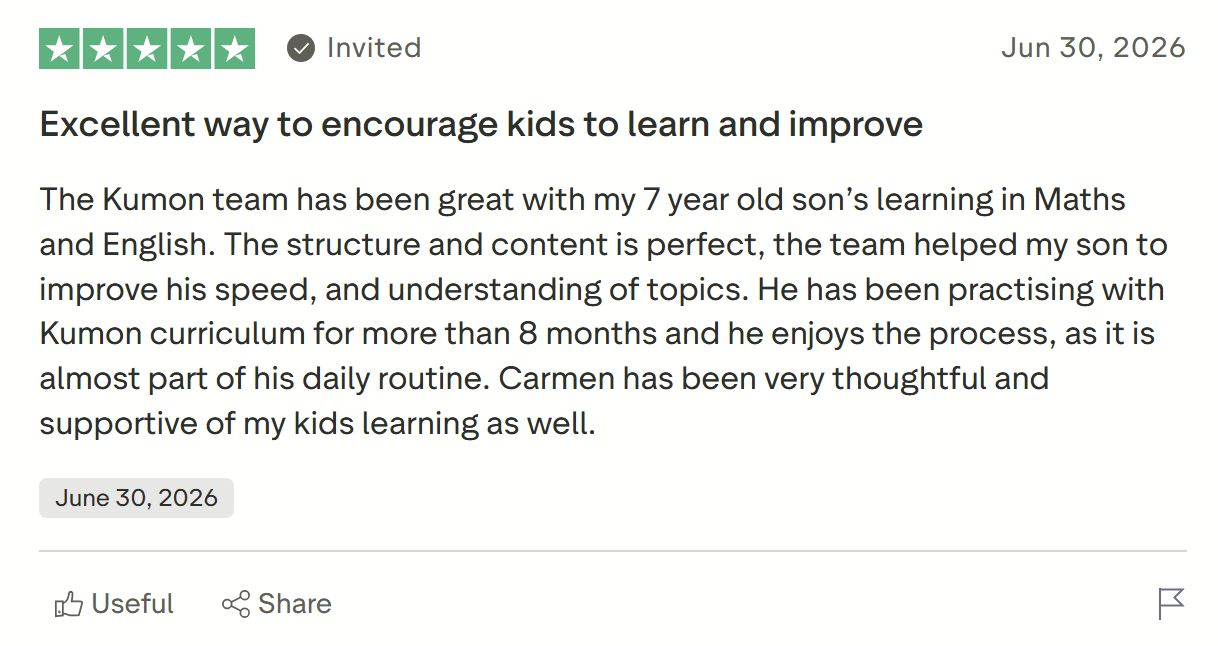
“The team helped my son to improve his speed, and understanding of topics.” – Trustpilot, June 2026
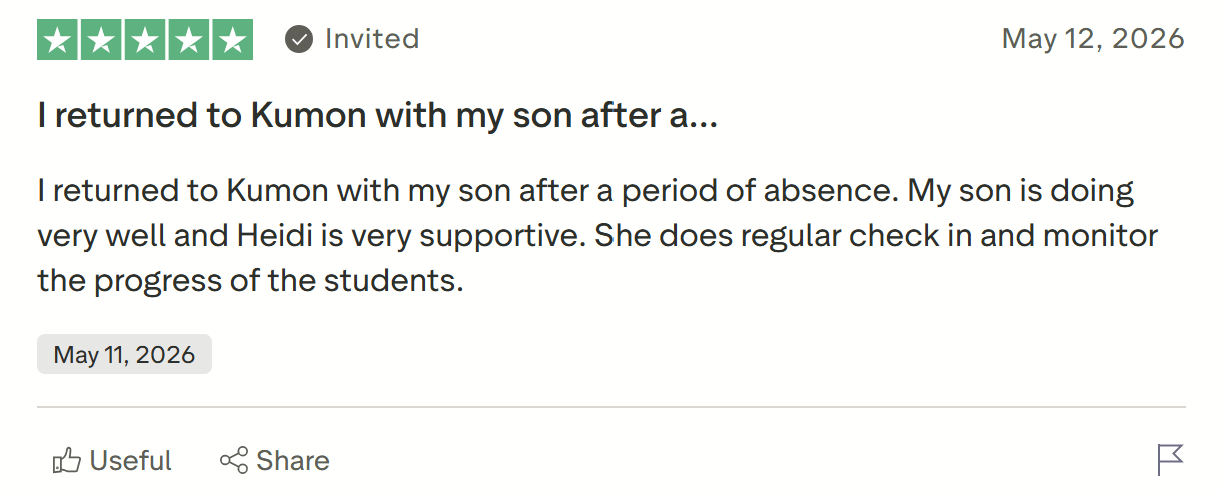
“She does regular check in and monitor the progress of the students.” – Trustpilot, May 2026
Users don’t like:
❌ Repetitive exercises
❌ Too much emphasis on memorization
“The big problem I’ve seen with Kumon is it’s a lot of repetition.” – Reddit, July 2026 (approx)

“The think i don’t like it more like memorization than learning a real knowledge.” – Trustpilot, May 2026

Is Mathnasium Better Than Kumon?
Neither Mathnasium nor Kumon is always better – it depends on your child’s preferred learning style. Mathnasium works better for learners who want to focus on conceptual comprehension, teacher instruction, and support with math homework. Kumon is the better fit for students who benefit from repetition, require computational speed, and enjoy daily worksheet practice.
Looking for an Alternative to Mathnasium and Kumon?
If you feel like small-group at neither Mathnasium nor Kumon suits the needs of your child, our educational platform can offer personalized 1:1 tutoring help in K-12 math and reading under a flexible schedule and a program that is fully customized to your child’s strengths and learning gaps.
At Brighterly, we offer:
- Professional online math tutors and online reading tutors, with at least a Bachelor’s degree and 5 years of experience teaching
- Reading and math classes, tailored to your precise needs
- 1:1, foundation-first, interactive learning format
- Teaching approach adapted to your child’s learning style
- Combination of live classes and a self-practice platform
Note: Check our detailed guides on Mathnasium vs Brighterly and Kumon vs Brighterly to see how these platforms compare directly.
You can test our platform for free with a demo lesson or check our free learning materials, including math worksheets, reading worksheets, and math tests and reading tests for grade-specific diagnostics.
1:1 personalized math & reading support!
Online tutoring fitted to the needs of your child, from $17.70/lesson.
Quick Verdict: Which Should You Choose?
Mathnasium and Kumon are well-respected learning programs for students K-12 that offer different methodologies. Follow these guidelines to select between Mathnasium vs Kumon, based on which is better for your child:
- Choose Mathnasium if your child learns well from direct, instructor-led concept explanations augmented with individual practice in a small-group setting.
- Choose Kumon if your kid needs an intense, structured program built on drills, repetitions, and practice worksheets to master skills regardless of age.
But if you feel your child needs more 1:1 support, a learning experience tailored to their specific needs, or gamified studying, then they can enjoy learning at Brighterly more. Book a free demo lesson now to test the style and see if it fits your kid’s preferences.
Other Platforms Comparison
In case you’d like to compare Mathnasium, Kumon, and Brighterly to more digital educational platforms, check out:
- The 12 Best Mathnasium Alternatives and Competitors in 2026
- 13 Kumon Alternatives in 2026
- Cuemath vs Kumon vs Brighterly: Which One Is Better in 2026?
- Gideon vs Kumon vs Brighterly: The Best Choice in 2026
- Mathnasium vs Sylvan vs Brighterly: Pros, Cons & Best Pick (2026)
Frequently Asked Questions
How Does Mathnasium Work?
Mathnasium works as a network of educational centers delivering offline and online math programs aligned with Common Core standards that help kids improve knowledge and skills through a personalized, flexible plan. For the best results, students usually attend the program 2-3 times per week.
Which Program Is Best for Elementary School Students?
Mathnasium helps young children build a strong learning foundation, while Kumon teaches kids how to learn math through in-depth practice and extensive memorization. Brighterly’s attracts young learners and helps them build foundational math and reading skills for future progress.
Which Program Is Best for Middle Schoolers?
Mathnasium supports middle schoolers by prioritizing the development of problem-solving and critical thinking skills to use academically and in life. Kumon covers all crucial math topics, like basic algebra, fractions, and decimals. As an alternative to both, Brighterly offers in-depth, individual learning that focuses on kids’ individual needs and helps them to understand the material instead of memorizing it.
Is Mathnasium Good for Gifted Kids?
With its individualized teaching approach and frequent sessions, Mathnasium can help gifted children improve skills at math. The program offers personalized math enrichment and advanced materials to reveal students’ talents beyond the limits of the school curriculum. However, gifted kids might work better in a 1:1 setting rather than the Mathnasium small-group instruction environment.
How Much Does Kumon Cost Per Month?
The Kumon monthly tuition differs between centers but usually ranges between $140 and $200 per subject, as of October 2026. In some locations, the price can be around $120 (like Hawaii), while in more expensive areas (like New York), it can reach up to $380-390. Note that extra charges apply in the first month for a registration fee ($60-$80, depending on location) and learning materials ($10-$30, depending on location).
Do Mathnasium and Kumon Offer Online Classes?
Both Mathnasium and Kumon offer their programs in an online format. Their online classes follow the same philosophy and structure as in-center sessions. So, when deciding which is better – Kumon or Mathnasium – for remote learning, know that both options are available, so it all depends on your child’s learning nature and preferences.



If you have ever tried to explain any subject to a kid (or a group of kids), you know that keeping their attention can be difficult. They’re looking the other way, distracted by their phones, and losing focus. For any educator (or a parent), basic classroom rules for kids are in order. This guide walks […]

Nov 06, 2023

Second grade math introduces a lifelong journey of counting and drawing math figures. And as a parent, you probably can’t keep yourself from googling: how to help your 2nd grader with math? I’m an experienced math tutor, and today I’m going to walk you through 2nd grade math skills, learning goals, and practical tips every […]

Apr 04, 2024
Math & reading from 1st to 12th grade
Exploring alternatives?
Take a short quiz!

Choose kid's grade