Use Letter Tiles for Phonics and Spelling
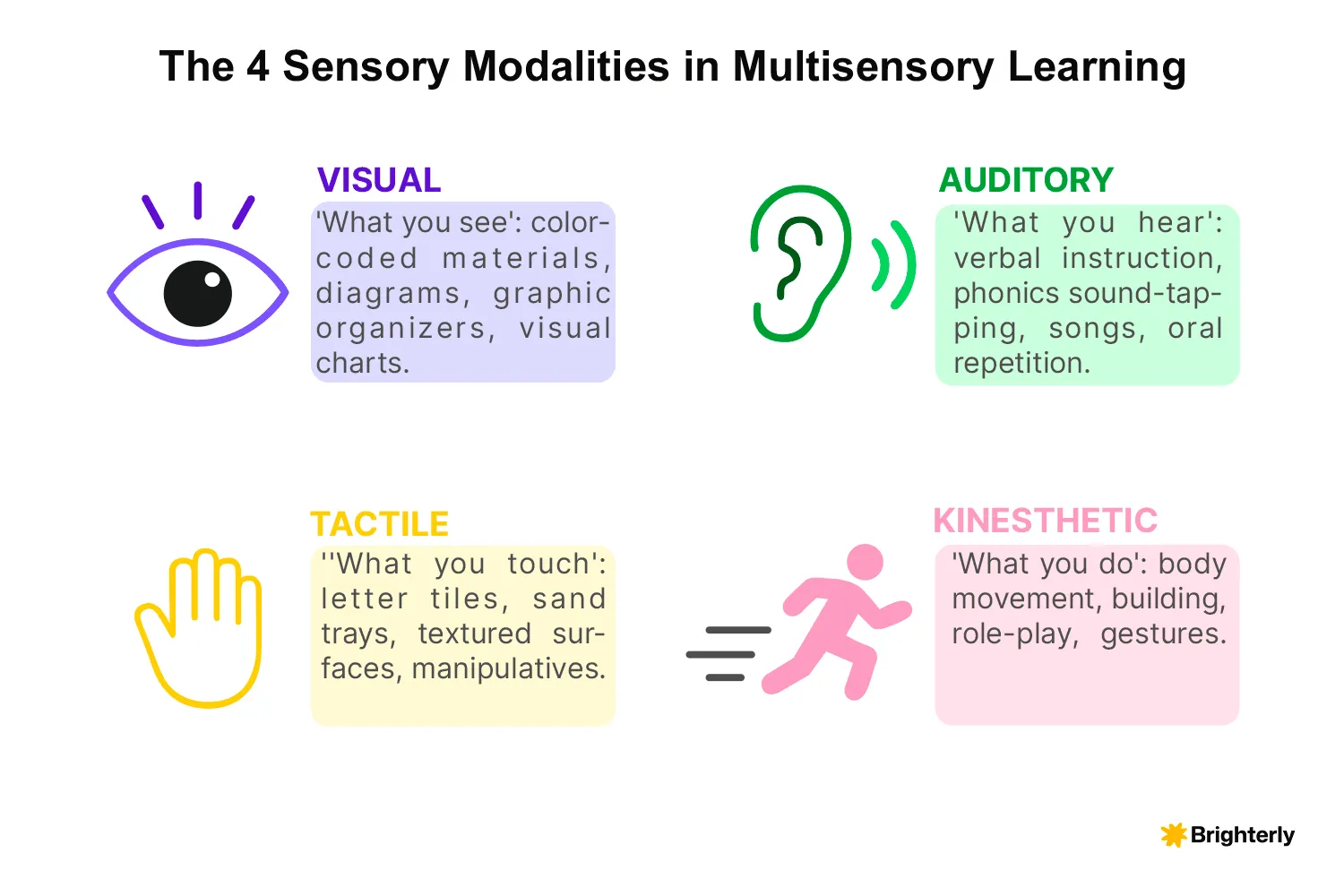
Give the child movable letters and say a simple word such as “ship.” Ask them to say each sound, select the matching letters, arrange them in order, and then read the completed word aloud. The activity connects sounds with visible letter patterns and physical manipulation.
Tap or Move for Each Sound
For a word like “cat,” children can tap once for /k/, once for /a/, and once for /t/. The movement helps separate the sounds, while saying them aloud keeps attention on phonemic awareness rather than simply memorizing the spelling.
The same idea can be used alongside systematic phonics practice. See the Brighterly guide to phonics-based reading programs for structured options.
Write and Say the Word
Ask the child to read a word, say the sounds, write the word, and then read what they wrote. Using handwriting alongside phonics provides another way to practice the same sound-symbol connections.
Draw the Meaning of New Vocabulary
For vocabulary or reading comprehension, have the child read a new word or sentence and create a quick drawing of its meaning. Then ask them to explain the drawing aloud. This connects written language, visual representation, and verbal explanation.
Children who need more direct literacy support can also work with a live tutor who can adjust explanations and practice in real time.
What Are the Best Multisensory Activities for Math?
Multisensory math activities make abstract ideas visible or tangible. Manipulatives, diagrams, gestures, spoken reasoning, and movement can be useful when each represents the math accurately.
Build Numbers With Manipulatives
Use counters, blocks, coins, or other small objects to represent quantities. A child solving 7 + 4 can build a group of 7, add 4 more, count the combined set, and then connect what they built to the written equation.
Walk a Number Line
Create a number line on paper or the floor. Children can move forward for addition and backward for subtraction while saying each step aloud. This connects movement with the direction and distance represented by the operation.
Model Fractions With Real Objects
Cut paper circles, divide a sandwich, or separate a set of objects into equal groups. Ask the child to name the fraction they created and explain what the numerator and denominator represent.
Draw the Problem Before Solving It
Bar models, arrays, number bonds, and simple sketches can help children turn a word problem into something visible. After drawing, ask the child to explain how the picture connects to the equation.
Hands-on and multisensory approaches can also help some children who struggle with attention and working memory. More targeted strategies are available in the guide to ADHD and math.
For students who need additional guided practice, Brighterly’s math program combines live 1:1 instruction with interactive practice adapted to each child’s current skill gaps.