Statistics About Social Media and Kids in 2026
reviewed by Marvi M. Andres
Updated on July 10, 2026
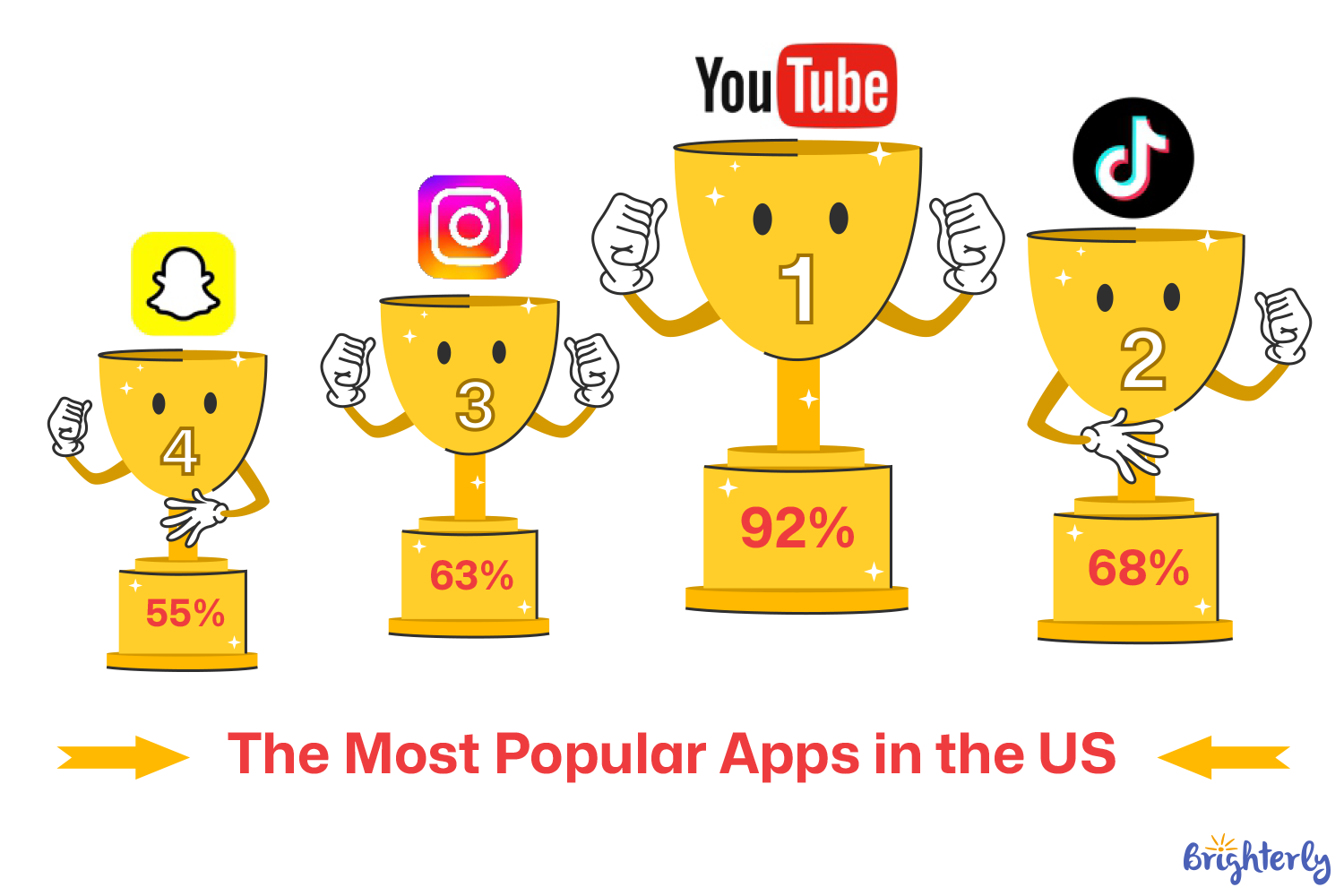
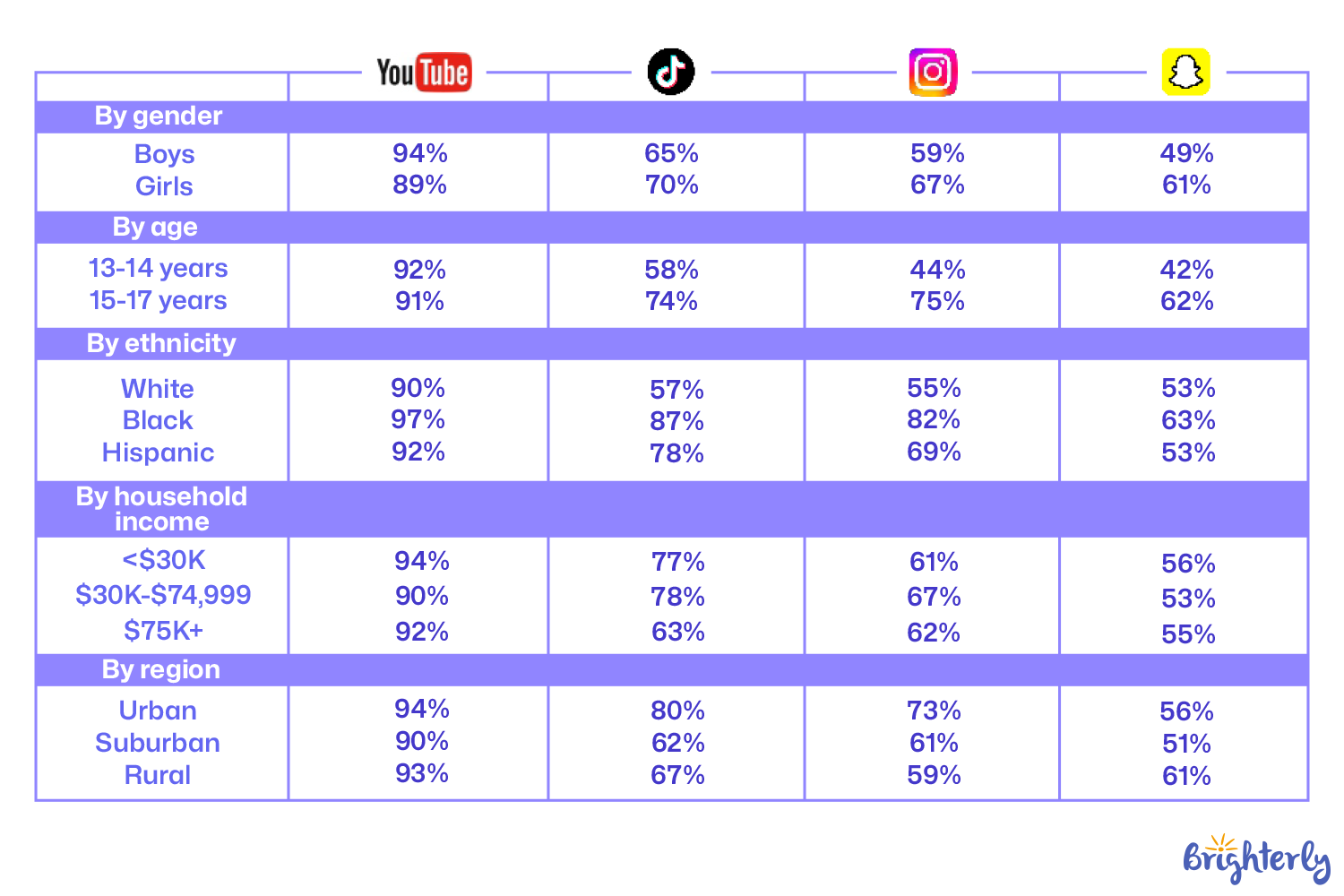
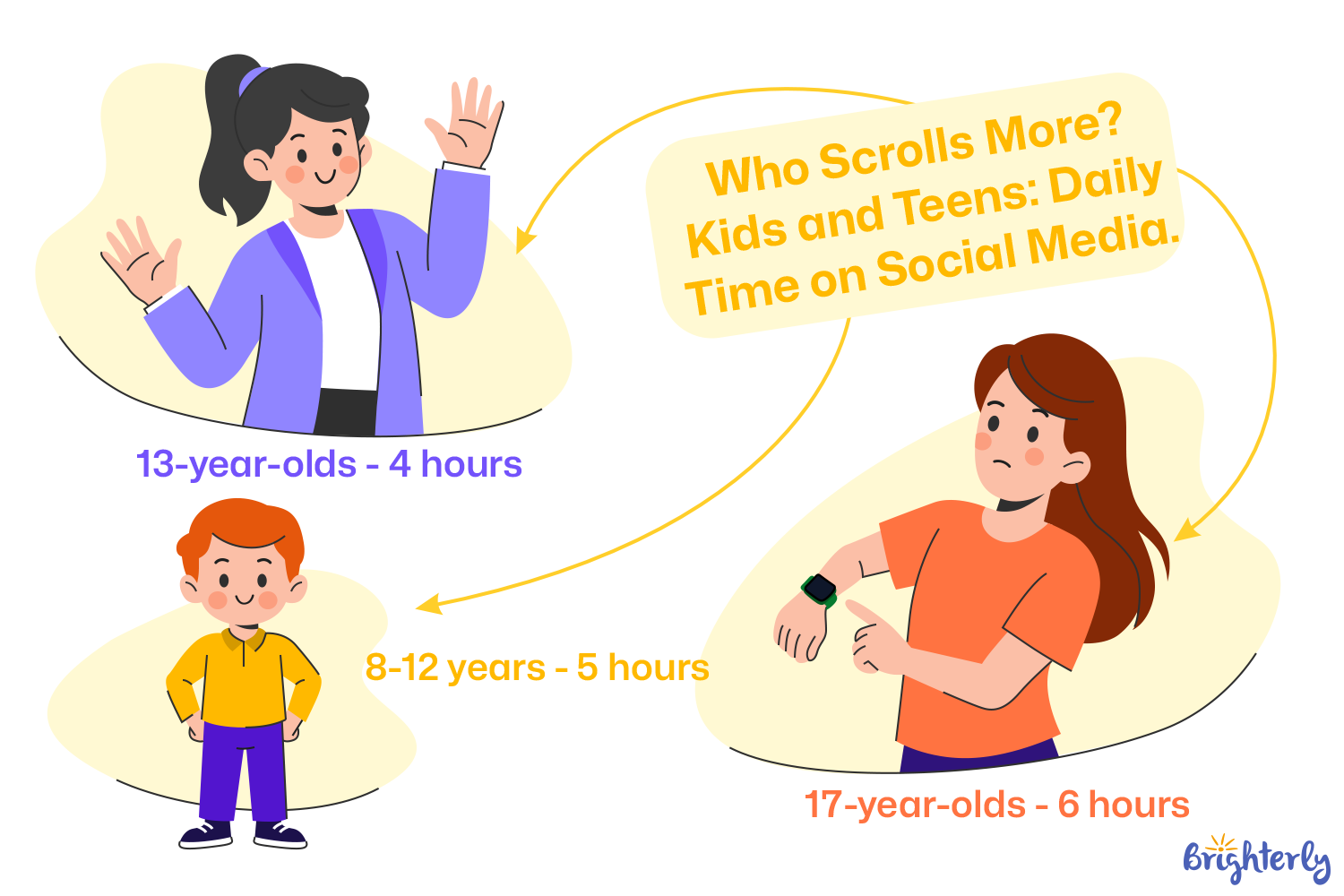
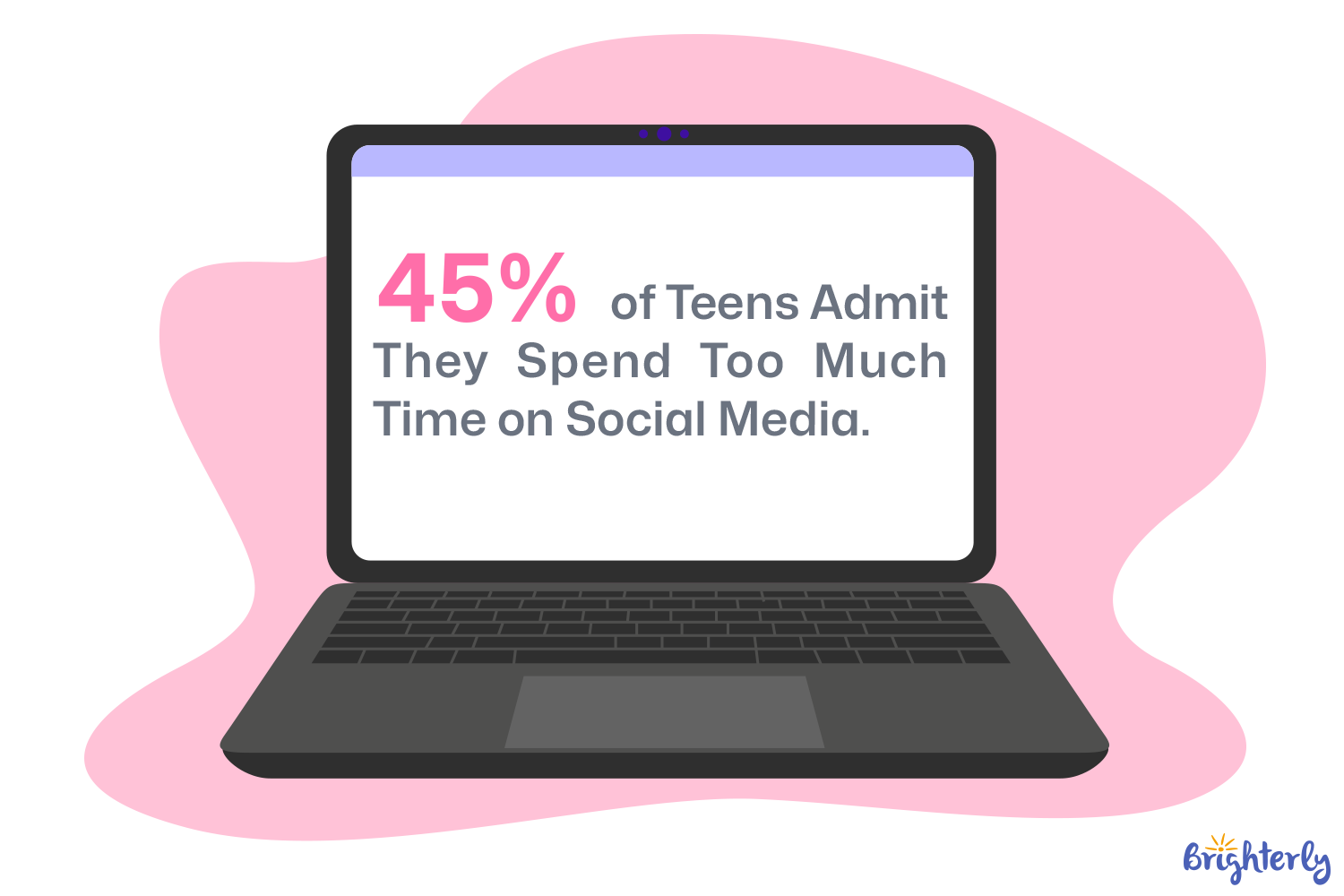
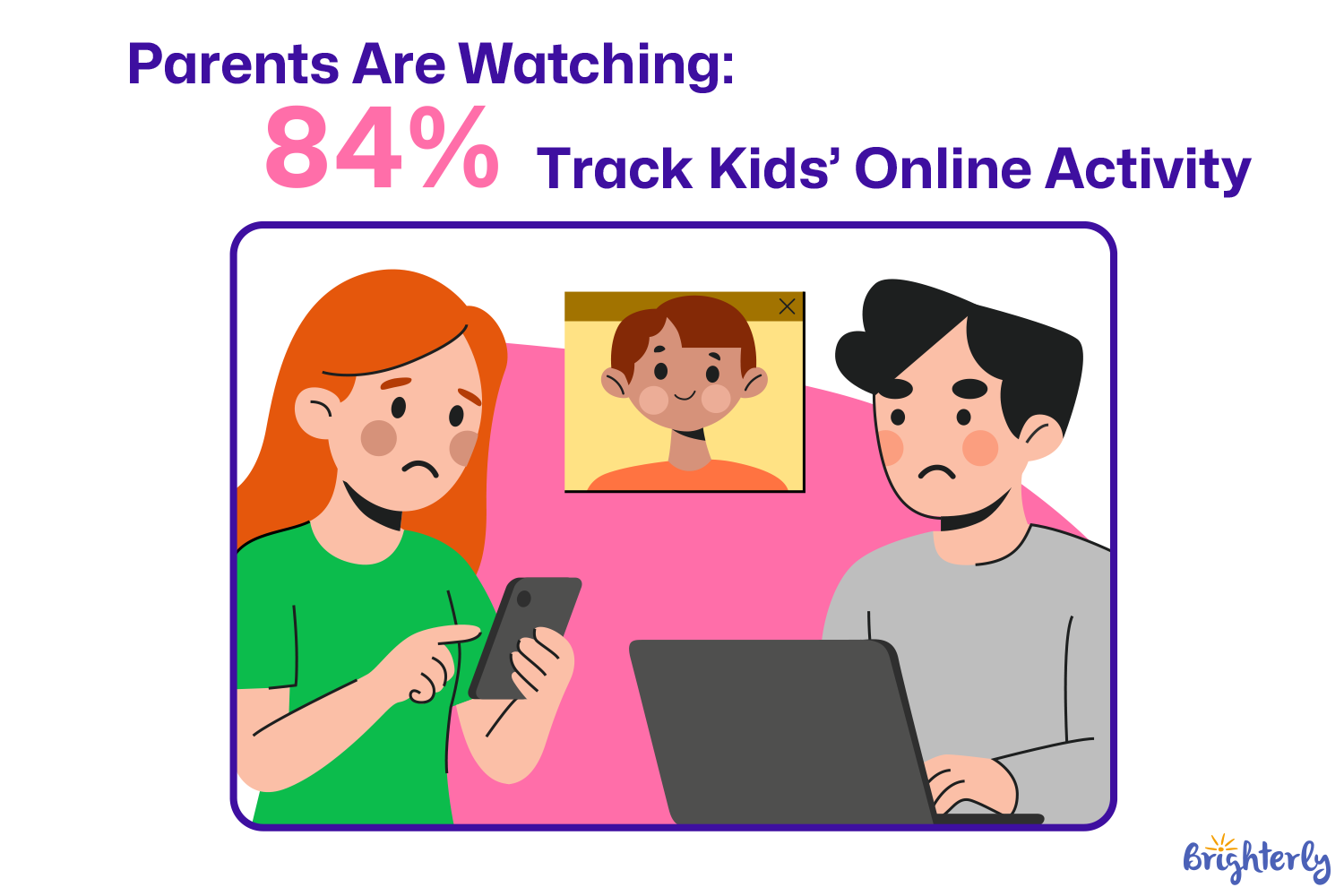
Key points Statistics about social media show that most teens use digital platforms, with YouTube being the most popular option, attracting as much as 92% of U.S. teenage users. See how much time teens usually spend online, which other apps they prefer, and how their digital habits vary by age and gender to understand how your kid relates to this data. According to the December 2025 report by Pew Research Center, roughly 9 in 10 of U.S. teenagers aged 13-17 use YouTube, which means almost all teens use at least this social media site. As for “How many kids use social media?”, the situation is very similar. According to a 2024 survey by the eSafety Commissioner (Australia), roughly 8 in 10 kids aged 8-12 admitted to having used at least one social media or messaging app already. According to the December 2025 report by Pew Research Center, over 90% of American teens (ages 13-17) use at least one social media app. For younger children, the 2024 survey by the eSafety Commissioner (Australia) found that 84% of kids (ages 8-12) have used at least one social media or messaging app. The latest 2021 Common Sense Media report on teen media use states that nearly 40% of children ages 8–12 use social media, even though 13 is the required minimum age for social media platform users in the U.S under COPPA regulations. As for even younger kids, a 2025 report by Common Sense Media on media use among kids 0-8 shows that 2% of kids aged 0 to 8 already use social media at least once a day. Social media statistics for teens by Pew Research Center, December 2025 report says that YouTube, TikTok, and Instagram remain the most popular apps among teens aged 13-17 over the last few years (2022-2025). YouTube stays on top with 92% of teens using it, even though it’s a slight decline from 95% in 2022. Then come TikTok (68%), Instagram (63%), and Snapchat (55%). Both TikTok and Instagram have seen a 1% increase in teenage users since 2022, while Snapchat has seen a 4% drop in its teen users percentage in the same period. According to CDC October 2024 data, screen time of at least four hours a day is an average for slightly over half of teens aged 12-17. And a 2025 report by Common Sense Media on media use among kids 0-8 shows that the average kid under 8 spends about 14 minutes a day watching videos on TikTok, Instagram Reels, and YouTube. As for daily social media use by platforms, according to the Pew Research Center’s December 2025 report, out of 92% of teens aged 13-17 who use YouTube, 76% use it every day at least once. Then follows TikTok, with a daily usage rate of 61% of teens, and Instagram, with 55% of teens opening it on a daily basis. Less than half of teens admit to using Snapchat daily (46%), while Facebook is used only by 20% of teens every day. Covering the use of all these 5 social media platforms, 36% of teens say they are on one of them almost constantly. Source: Pew Research Center Pew Research Center December 2025 report shows that teen girls tend to use Snapchat (61% vs. 49% of boys) and Instagram (67% vs. 59% of boys) more, while teen boys prefer YouTube (94% vs. 89%) and Reddit (21% vs. 12% of girls). In terms of race and ethnicity, black teens are more likely than their white or hispanic peers to use Instagram, TikTok, X, Snapchat, and YouTube. For example, 82% of black teens use Instagram, while this pool is 69% in hispanic teens and 55% in white teens. Platform usage also differs by household income. For example, 46% of teens in lower- and middle-income households (earning less than $30,000 a year) use Facebook, while the pool of teens using Facebook in households earning $75,000 or more is only 27%. Explore Brighterly Learning Experience Learn exactly how Brighterly helps students thrive through expert sessions, online tools, and proven feedback from thousands of satisfied parents A November 2023 screen-time review in Missouri Medicine reported that children aged 8-12 spend 4-6 hours a day on devices, while teens — up to 9 hours per day. Meanwhile, the Pew Research Center April 2025 report found that 45% of teens aged 13-17 say they spend too much time on social media. And that’s up from 36% in 2022. According to a Gallup October 2023 survey, 51% of teens (ages 13-19) reported spending at least four hours a day on social media apps, with the average time spent on such apps being 4.8 hours per day — 4 hours for 13-year-olds and nearly 6 hours for 17-year-olds. Interestingly, girls also seem to spend more time on social media, compared to boys —5.3 hours vs about 4.4 hours on average.
Balance social media and smart learning
Brighterly transforms everyday screen use into meaningful math and reading practice. Since the Pew Research Center April 2025 report states that 45% of teens say they’re on social media too much, it may reflect their own recognition of the issue and desire to change their digital habits. More so, only 49% of teens now think they spend the right amount of time on social media, and this number went down from 64% in 2023 and 55% in 2022. The report also found that the number of teens who say social media makes them feel supported has declined to 52% in 2024 from 67% in 2022. Note: Teen girls (48%) are more likely than boys (40%) to cut back on social media (Pew Research Center, 2025). Social media and mental health statistics by PRC, HHS, CRA, and other sources show that social media may be linked to a range of mental health risks in teens, including anxiety, depression, poor sleep, and negative body image. Besides, there is an issue of cyberbullying, which affects over 58% of school students according to 2025 data by the Cyberbullying Research Center. Mental health risk Statistics Double depression/anxiety risk Teens using social media for 3+ hours daily face double the risk of depression and anxiety symptoms (HHS, 2025) Problematic social media use 11% of teens show signs of problematic social media behavior, up from 7% in 2018 (WHO, 2024) Negative body image impact 46% of teens aged 13-17 say social media makes them feel worse about their body image (HHS, 2025) Sleep disruption 45% of teens say social media hurts their amount of sleep (PRC, 2025) Productivity loss 40% reported that using social media hurts their productivity (PRC, 2025) Mental health concerns 19% of teens say social media has a bad effect on their mental health (PRC, 2025) Gender differences: According to the Pew Research Center 2025 report, 34% of teen girls say social media makes them feel worse about their own lives, in contrast to 20% of boys. Can you help as parents? Sure. You can set balanced routines and encourage your kid to spend less time on their phone or tablet. Plus, you can find an online reading tutor or a personalized math program on Brighterly to make that balance even easier. For example, your kid can improve reading skills through playful, custom one-on-one lessons in our reading program, developed for K-12 students and aligned with U.S. standards. Besides, keeping their minds active without endless scrolling makes things much healthier. Note: Checking out Brighterly’s math and reading worksheets for kids is the first step to start balancing fun online activities with meaningful skill-building.
Looking for healthier screen habits?
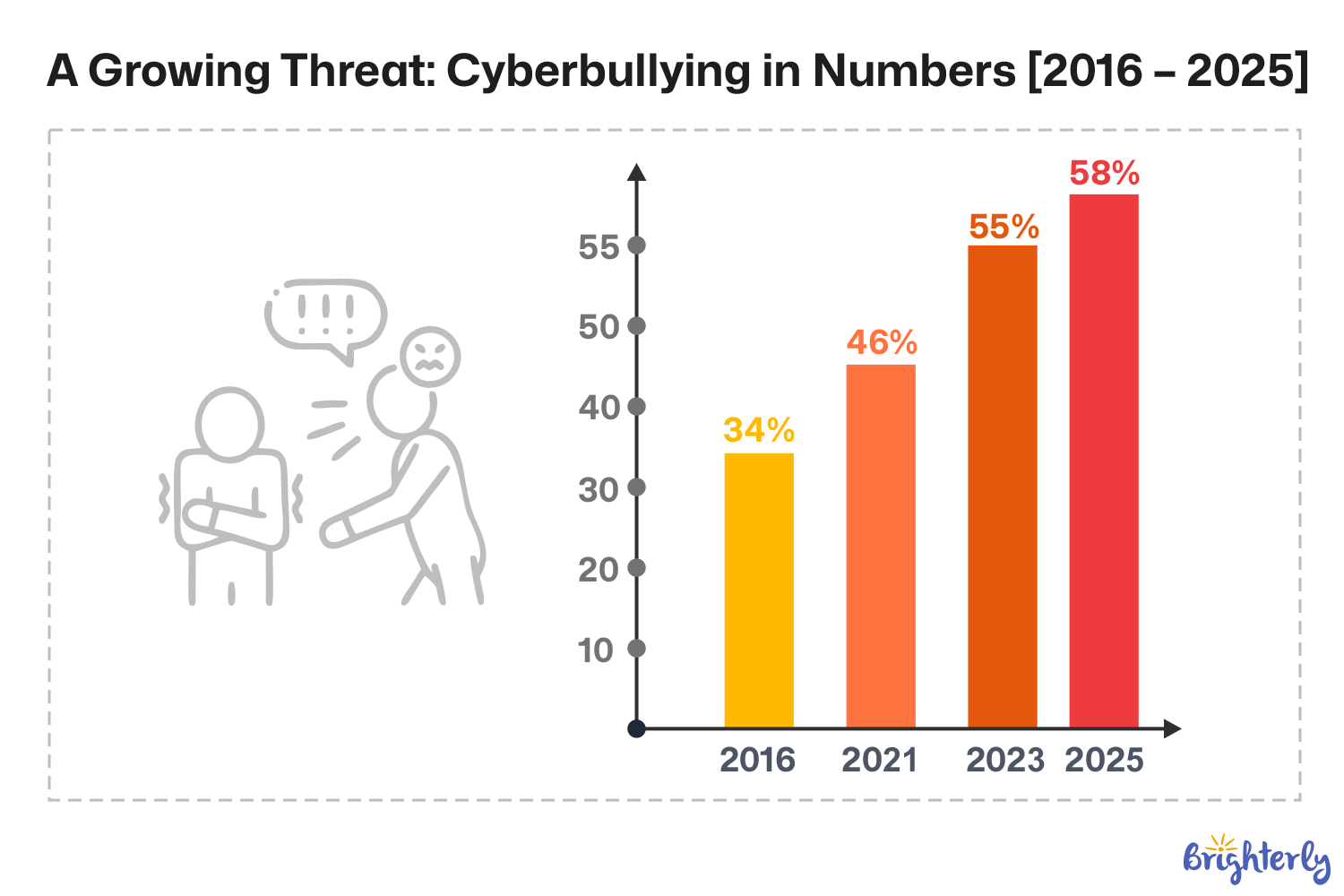
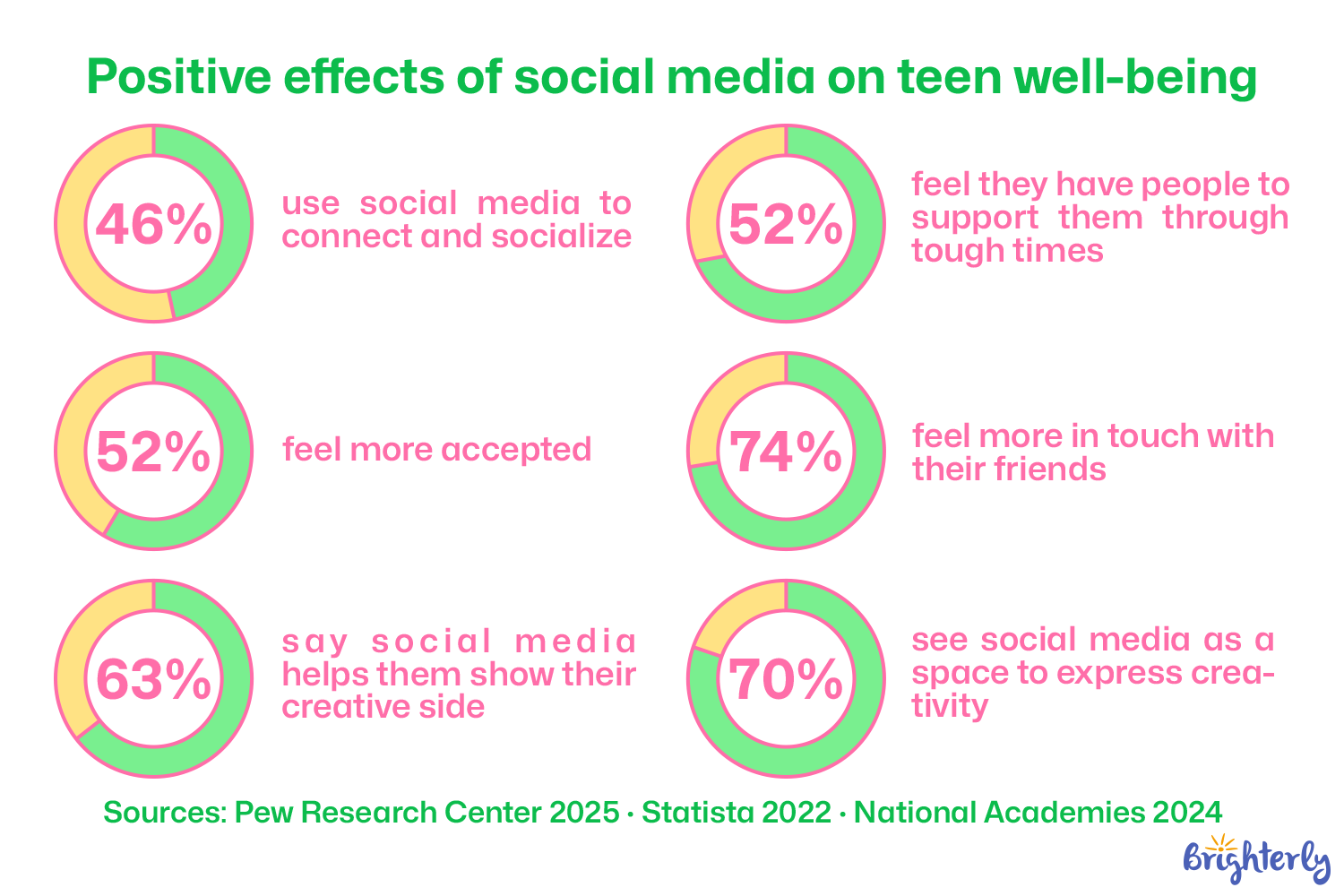
Brighterly helps kids swap passive scrolling for a fun learning experience. According to 2025 data by Cyberbullying Research Center, the percentage of teens on social media aged 13-17 who have experienced cyberbullying at some point in their lives has reached roughly 58%. To put it in perspective, this approximate percentage was 55% in 2023, 46% in 2021, and as low as 34% in 2016. Note:The percentages of those who experienced cyberbullying at some point in their lives more than doubled from 18.8% in 2007 to 54.6% in 2023 (National Bullying Prevention Center, 2025) National Bullying Prevention Center 2025 data states that the most common forms of cyberbullying are: The Cyberbullying Research Center 2025 data shows that in the percentage of teens on social media, boys are now more likely than girls to be the target of cyberbullying — 36.6% boys bullied against 28.6% girls bullied. For comparison, these numbers were 24.2% and 28.6% in 2023. Stat More details Mental health impacts Two-thirds of cyberbullying victims said that getting bullied online made them feel bad about themselves (Washington Post, 2025) It can make them feel insecure or worthless (Washington Post, 2025) 33% of females and 16.6% of males felt depressed after being harassed online (BMC Psychiatry, 2022) Cyberbullied teens are more than twice as likely to feel depressed than teens who weren’t bullied (CDC, 2024) Academic & behavioral consequences 19.2% of American teenagers reported missing days from school because of cyberbullying in 2023 (Cyberbullying Research Center, 2023) Nearly doubled from 10.3% in 2016 (Cyberbullying Research Center, 2023) 85% of participants in a Malaysian university study said cyberbullying hurt their schoolwork or grades (Heliyon,2019) Most of them said it affected their schoolwork (Heliyon,2019) Young adults who were bullied online were more likely to use drugs or alcohol (PLOS Ment Health, 2024) Adjusted odds ratio of 2.37 (PLOS Ment Health, 2024) To protect kids from cyberbullying and other negative consequences of social media, teach them digital literacy — a number of skills needed to use technology effectively. The Pew Research Center 2025 reports that about three-quarters of teens (74%) say what they see on social media helps them feel more in touch with their friends. However, reliance on social media is declining — the share of those who say social media platforms make them feel like they have someone to lean on when things get hard has declined to 52% in 2024 from 67% in 2022. Same Pew Reseasrch Center 2025 report also shares some facts about teens and social media that highlight its positive effects on teens social connections: Teens’ positive social experiences, along with reading statistics and facts, also show that mixing learning with social media really works. Note: 46% of teenagers in the United States said that social media had a positive impact on them personally due to being able to connect and socialize on such services (Statista, 2022). As for the benefits of social media for creativity, the Pew Research Center 2025 report shows 63% of teens say social media platforms are a place to show off their creative side. Another 2024 survey by the National Academies supports this finding, sharing that seven out of ten teenagers (70%) see social media as a place where they can express their creative side. As for learning benefits, a 15-country cross-sectional survey by the National Academies found that, in Western countries, social media use predicts a greater ability for reading and navigating information online among 15-year-olds. In addition, there are effective practices on how to use social media in education to benefit from it. Note: Social media has been used in programs to connect high school seniors from underrepresented backgrounds with mentors who help with school and careers (National Library of Medicine, 2024). Statista July 2024 data on social media usage by teens shows that 84% of US parents keep an eye on what their kids do online on websites and mobile apps (up from 78% in 2020). Over half of parents monitor their children’s chat apps frequently, and 51% monitor social media accounts and posts of their kids frequently. However, parents hardly use the built-in tools on specific apps. For example, according to a March 2024 article by NBC News, fewer than 1% of minors have parents using built-in parental monitoring tools on Discord and Snapchat. And by the end of 2022, fewer than 10% of teens on Instagram had turned on parental controls according to the Washington Post January 2024 article. Yet, 62.9% of parents still agree that parents should regularly check their kids’ social media, according to the JMIR Pediatr Parent November 2023 study. The Pew Research Center 2025 report claims that 55% of parents say they’re really worried about the mental health of teens, and that’s a lot more than teens themselves (35%). Interestingly, mothers are more likely than fathers to say they’re super concerned about teen mental health. Besides, parents of teen girls are more likely than those with teen boys to express high levels of concern. Aura June 2024 report states that only 46% of parents feel sure about which apps their kids use. However, their confidence drops as kids get older, with 60% of elementary school parents feeling more confident than just 24% of high school parents. Managing multiple accounts and ensuring login security can further complicate this oversight, making it helpful to utilize a family password manager to maintain visibility and security. Overall, 24% of parents are extremely concerned, and 26% are pretty worried about their kids’ online safety. Note: ADHD statistics reviewed by Brighterly in June of 2026 state that social media can have a negative impact on the child’s attention span. Karolinska Institutet December 2025 peer-reviewed report supports this data by showing that kids aged 10-14 experience increased inattention symptoms linked to the use of social media. Kids and social media statistics show that although digital platforms may help kids connect with peers and add to their creativity, they also may expose them to bullying, depression, and other negative consequences. If you notice your kid losing focus or falling behind in school because of social media, our devoted professionals provide structured but fun lessons to help your child concentrate and do better in school. Most social media platforms set a minimum age of use at 13 to align with COPPA regulations. However, the right decision on when to allow a child to use digital platforms depends on a child’s maturity, the specific platform, and whether parents can monitor the child’s activity on these platforms to avoid problematic social media behavior and negative mental health consequences. If teens are on social media three or more hours per day, they face the risk of depression and anxiety symptoms, according to the HHS 2025 data. Additionally, the Pew Research Center 2025 report shows 46% of teens report negative body image effects, 45% say it disrupts sleep, and 19% believe it harms their mental health in general. Parents can help kids build healthier screen habits by setting consistent, age-appropriate screen time limits and creating tech-free zones where the gadgets are not allowed. Parents can also try balancing device use with offline play, encouraging kids to do something they enjoy aside from being on social media. Social media age limits don’t always work. Although most platforms require users to be 13 or older, Common Sense Media 2021 report shows that nearly 40% of children aged 8–12 still use social media with the later report in 2025 revealing that kids aged 0 to 8 already got to use social media. No, screen time and social media time are different. Screen time covers all user activity while using a device, including time in apps, browsers, games, calls, messages, and social media. Social media time is the time a user spends specifically on social media platforms like TikTok, Instagram, YouTube, Snapchat, etc. Best reading comprehension apps include Brighterly for personalized, gamified learning, Read Along by Google for free fluency development, and I Read for engaging stories. This guide walks parents through the 10+ best reading comprehension apps that help children practice focus, vocabulary, fluency, and critical thinking. Paid Reading Comprehension Apps: Comparison Features (summary) Price (as […] Oct 30, 2025 Kids are natural scientists – they spot, question, and wonder about everything around them. These 130 fun science facts for kids deliver real “wow” moments across animals, space, the human body, and beyond. Read one fact, and your child will want to share it with everyone at the dinner table. What Are Science Facts for […] Oct 31, 2025
How Many Kids and Teens Use Social Media?
What Percentage of Kids and Teens Use Social Media?
At What Age Do Kids Start Using Social Media?
Which Apps Are Most Popular with Teens?
Daily Social Media Habits of Teens
Teen Social Media Use by Gender and Demographics
How Much Time Do Teens Spend on Social Media?
Average Daily Time by Age and Gender


Why Teens Are Trying to Cut Back on Social Media
How Does Social Media Affect Kids and Teens?
Social Media and Teen Mental Health
Cyberbullying Statistics (Teens) and Trends
Gender and Demographic Differences in Cyberbullying
Academic, Behavioral, and Mental Consequences of Bullying
Is Social Media Ever Good for Kids?
What Do Parents Think About Kids and Social Media?
Parental Concerns About Mental Health and Safety
Conclusion: Helping Kids Build Healthier Digital Habits
Frequently Asked Questions
At What Age Should a Child Be Allowed on Social Media?
How Does Social Media Affect Teens’ Mental Health?
How Can Parents Help Kids Build Healthier Screen Habits?
Do Social Media Age Limits Actually Work?
Is Screen Time the Same as Social Media Time?





Math & reading from 1st to 12th grade
Looking for homework support for your child?

Choose kid's grade

Math & Reading for Grades 1–12
Build real confidence for your child with a Brighterly math or reading tutor.