Student Mental Health Statistics 2026: Current Rates, Risks, and Trends
reviewed by Marvi M. Andres
Updated on February 2, 2026
Nowadays, mental health is not a topic that can be ignored. Stress, anxiety, and emotional exhaustion are part of young people’s lives, with almost 60% of teenagers experiencing mental health challenges. In this article, you can look at the latest statistics on student mental health in 2026. What should you expect, and how can you help your kid? As a teacher, it’s important for me to share this.
Key Points
- About 14-15% of teenagers worldwide have a diagnosed mental health disorder. Nearly half report intrusive anxious thoughts or stress.
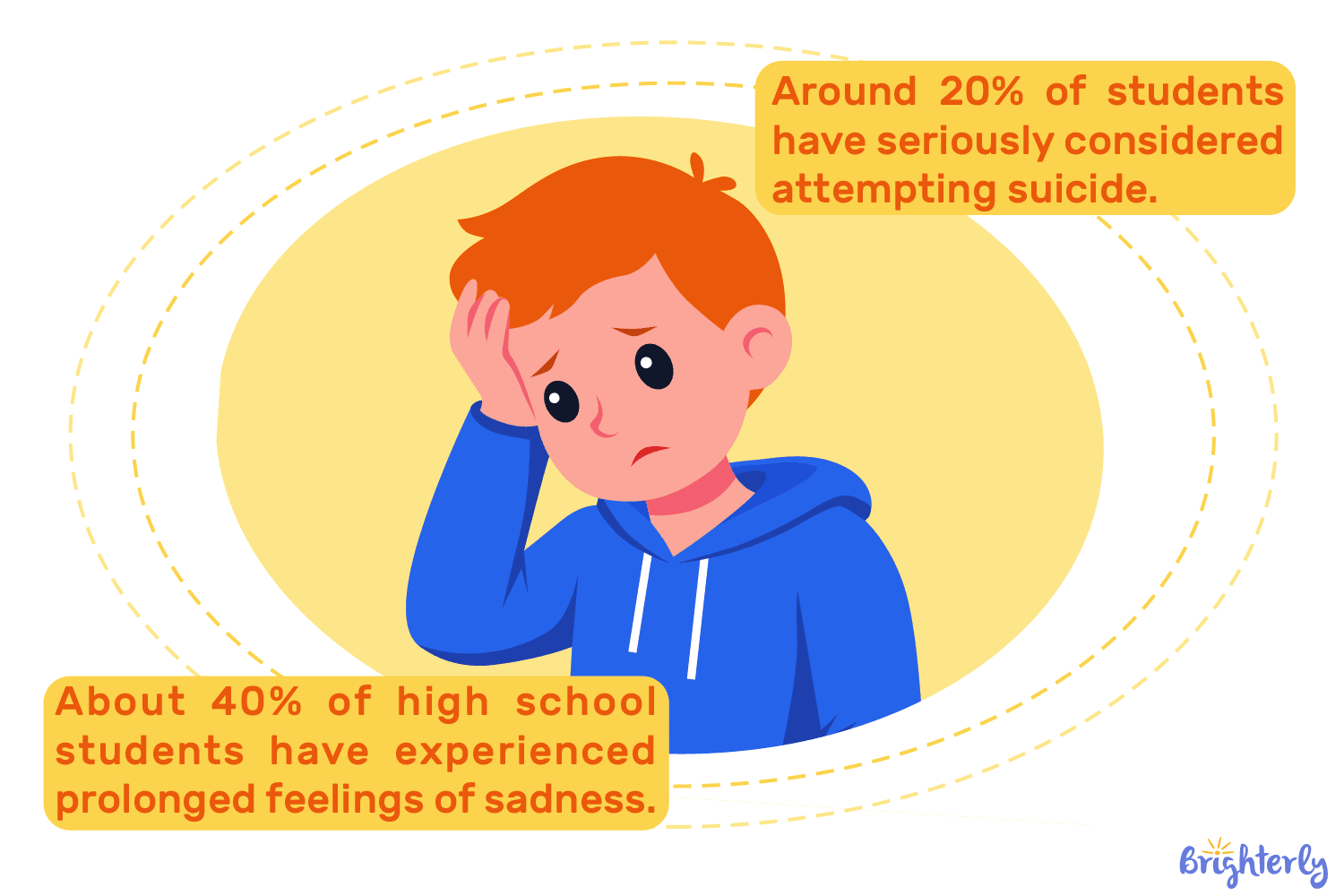
- In the United States, about 40% of high school students have experienced prolonged feelings of sadness or hopelessness, and roughly 20% have seriously considered attempting suicide.
- What are the mental students health issues? Due to the World Health Organization, the most common issues are anxiety (9.4%), depression (4.7%), and behavioral disorders (4.9%).
Student mental health statistics worldwide
I will start with general statistics. According to the World Health Organization, about one in seven teenagers aged 10 to 19 has a mental health disorder. I talk about a clinically diagnosed condition. That equals roughly 166 million children worldwide.
These disorders vary. Some teenagers struggle with obsessive and compulsive behaviors, which can be symptoms of a mental health illness like anxiety or depression, eating disorders, and other behavioral conditions. To make things easier to understand, I created a table that shows what percentage of children experience each of them:
To make this clearer, these are the common student mental health issues:
| Condition | Age | Prevalence | Short description |
| Anxiety disorders | 10–14 | 4,1% | The most common emotional disorders among younger teens. They include panic and excessive worry. |
| 15–19 | 5,3% | Learning and social interaction | |
| ADHD (behavioral disorder) | 10–14 | 2,7% | Attention difficulties, hyperactivity, and impulsive behavior. More common in younger teens. |
| 15–19 | 2,2% | Lower prevalence with age | |
| Depression | 10–14 | 1,3% | Main symptoms include low mood, loss of interest, fatigue, and changes in appetite and sleep. |
| 15–19 | 3,4% | Motivation to study and overall desire to live |
Source: World Health Organization
Why is student mental health important? Some of these disorders, such as depression, can seriously affect a child’s school performance, future work life, social connections, and overall interest in life if adults ignore them. Sadly, today, suicide stands as the third leading cause of death among young people, and mental health disorders are often linked to this risk.
What percentage of students struggle with mental health around the globe?
The global statistics on how many teens struggle with mental health are difficult to measure precisely. These numbers remain approximate because not all countries run regular studies or surveys. Different assessment methods and cultural factors also shape the results. Even in countries that do collect data, researchers do not run mental health assessments every year. So I want to stress this clearly: the data below shows only a general picture, not exact numbers.
Here are the teen mental health statistics I found:
In Europe, international surveys by Frontiersin show that, on average, about 20% of children report anxiety, depression, or emotional difficulties. The highest numbers appear in countries such as Estonia, Lithuania, and Romania, where 25–30% of children report these issues.
At the same time, Scandinavian countries like Iceland, Norway, and Finland show the lowest rates. In these states, only about 12–14% of students report increased anxiety. I believe these countries often have lower stress levels and stronger social support systems.
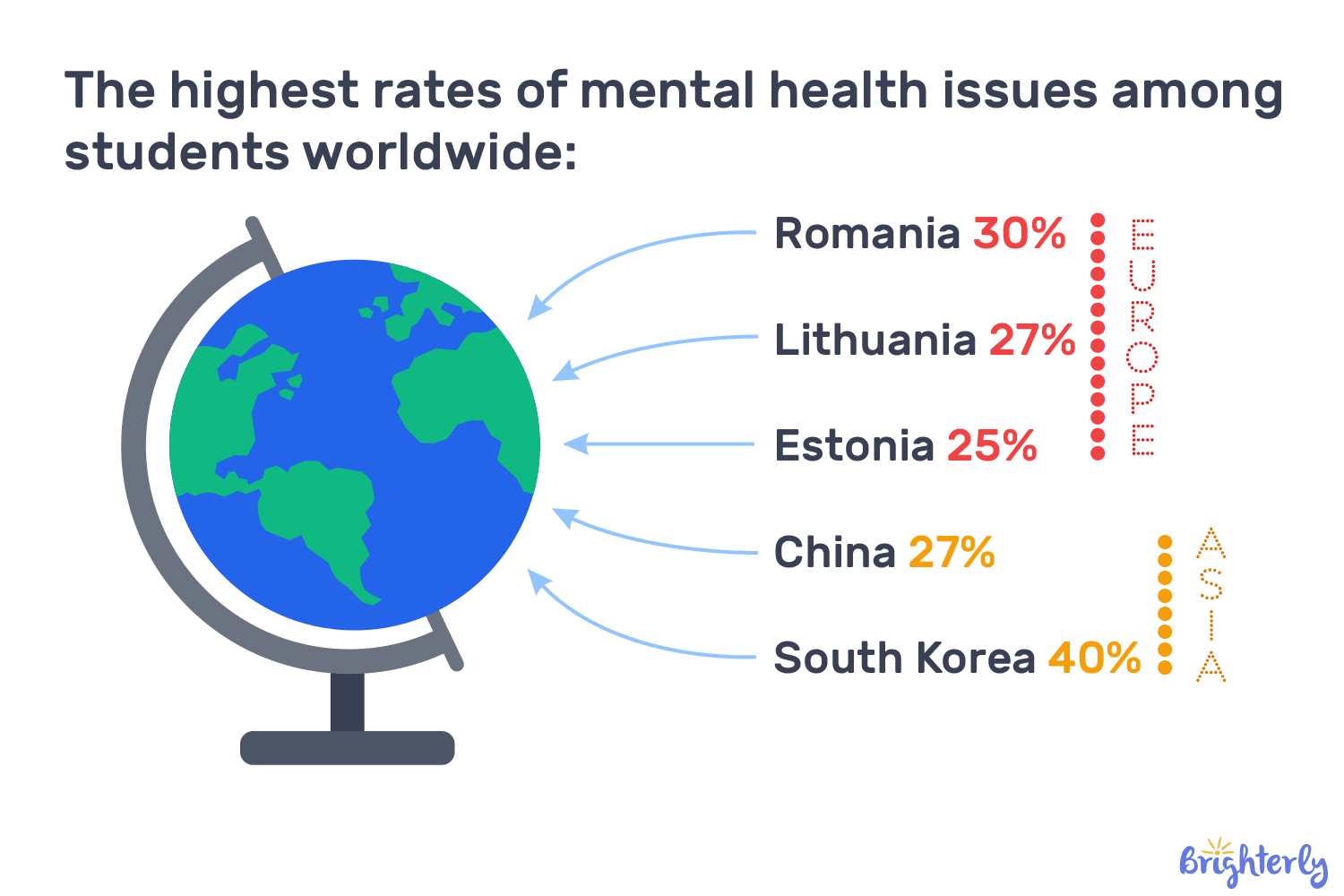
When I talk about Asia, China and South Korea stand out among the countries with the highest stress levels. Surveys show that 12–27% of school students in China report psychological stress. In South Korea, stress levels among teenagers reach almost 40%. This data refers to school-aged students.
For college and university students, global data shows that about one in four experience symptoms of both depression and anxiety at the same time. Around 12% face the risk of severe depression.
What are student mental health statistics in the US?
According to the Centers for Disease Control and Prevention (CDC), about 40% of high school American students have experienced prolonged feelings of sadness or hopelessness. Nearly 30% said their mental health felt “poor” during a certain period of time. In the same survey, around 20% reported suicidal ideation, and about 9–10% actually attempted suicide within one year.
Another CDC dataset shows similar mental health in teens statistics. About 29% of high school students reported that their mental health felt “poor” most of the time or all the time during the past 30 days prior to the research.
There is also data on college and university students. According to the Healthy Minds Study 2024–25, about 37% of students sought therapy or counseling during the past year. Many respondents also reported symptoms of depression and anxiety.
How can online schools/tutors support student mental health?
To support student mental health, students and tutors can create a supportive learning environment where a child can learn without constant pressure. If this doesn’t work, I recommend considering individual learning.
Mental health challenges need addressing because they are often linked to conflicts with classmates or teachers, as well as pressure around grades and academic performance. All of this can become a serious source of stress for a child. So, how to improve student mental health?
I believe platforms like Brighterly can help here. It is an online program that supports children with reading and math. Beyond academics, it offers a personalized approach. Teachers adjust lessons to each student’s level and pace, moving forward step by step. The mentors are professionals, but they also build warm, trusting connections with children and support them throughout the learning journey.
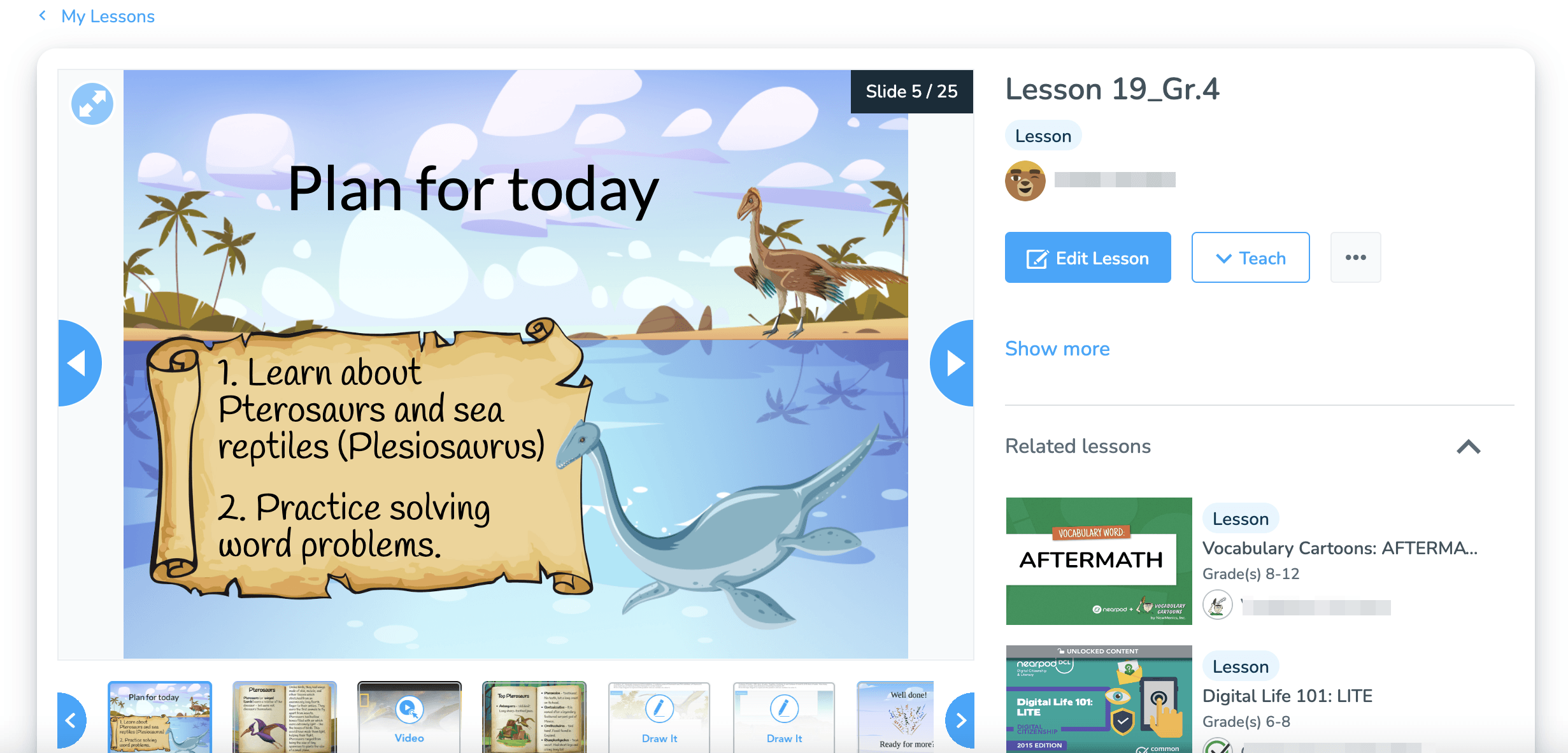
The lessons are interactive as well. You can read more about how effective this approach is in the article Interactive learning statistics.
With Brighterly, you also have a chance to download free math and reading worksheets — they are quite convenient for interactive practice at home.


Check the basics behind this term
Take our quick quiz to discover the perfect learning solution based on your child’s needs.
What are the student stress statistics by state?
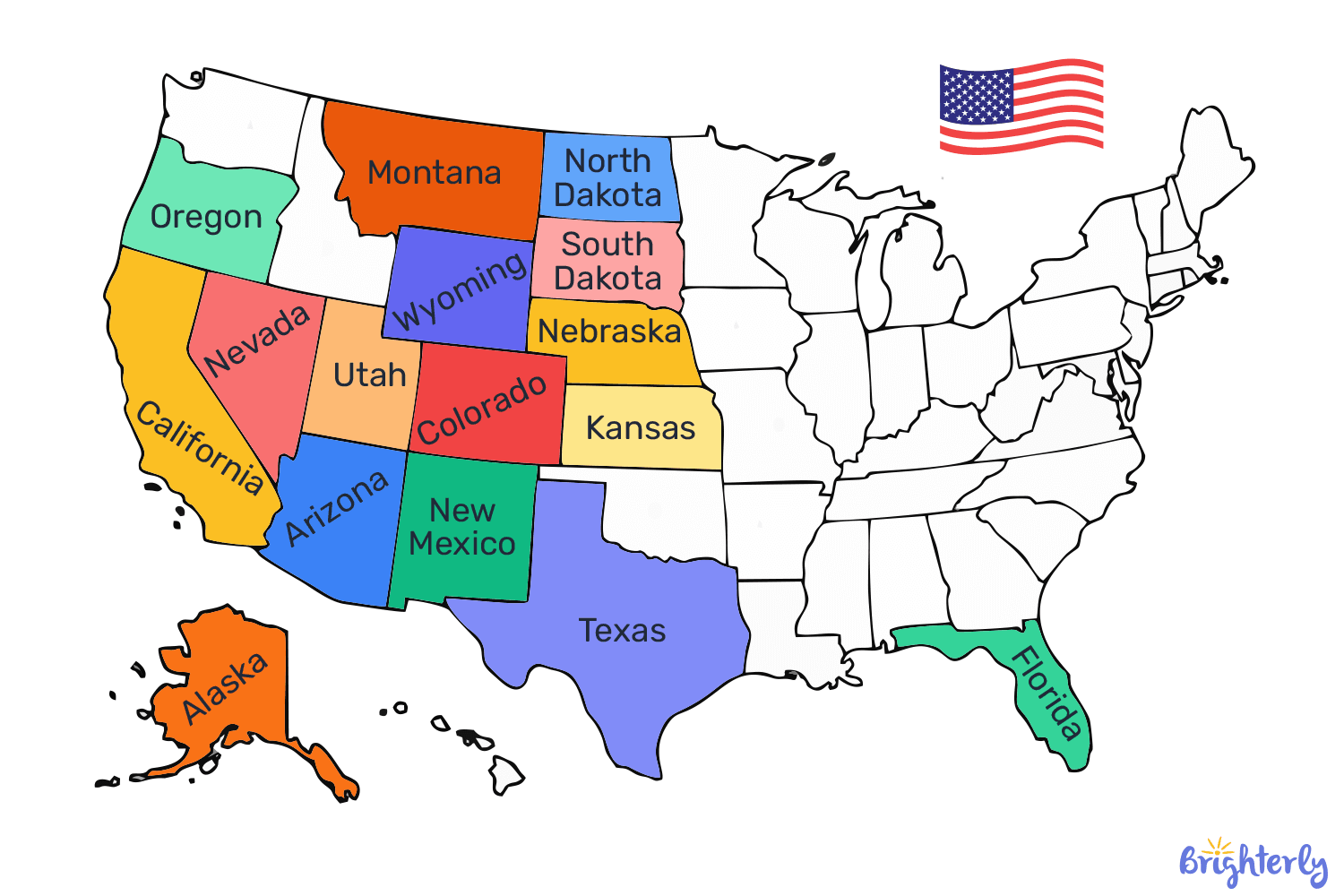
The Mental Health America map clearly shows how many school students aged 12–17 experienced at least one major depressive episode in the past year. According to the map, the states with the highest rates are Maryland, Nevada, and Colorado, ranging from 21.9% to 22.6%.
On the other hand, the states with the lowest rates are Alaska (17.27%), California, Indiana, New York, and Washington. In all of these states, student stress levels have dropped by 5% or more in recent years.
Student mental health statistics infographic
To help you quickly understand what are the statistics for stress in students across the US, here’s a chart. A quick guide: the lighter the state, the lower the prevalence of mental health issues and the better access to care for youth. The darker the state, the more challenging the situation.
Students mental health statistics by year
Student mental health statistics 2020
Even before the COVID‑19 pandemic, researchers began noticing increasing stress among children aged 10–14. According to YRBS data, depressive symptoms among teenagers have been gradually rising since the 2010s.
By early 2020, UNICEF observed that one in seven teenagers worldwide had a mental health disorder. That is roughly 89 million boys and 77 million girls.
What influenced this year? Social media and the start of the pandemic (stress from uncertainty).
Student mental health statistics 2021
In 2021, CDC YRBS reported that 42% of high school students experienced persistent sadness or hopelessness. About 29% said their mental health was poor during the previous 30 days.
What influenced this? Strict COVID‑19 lockdowns, remote learning, social isolation, and the broader crisis. Find more about the pandemic’s impact in the article Pandemic Learning Loss Statistics.
Student mental health statistics 2022
After 2021, there was a gradual decline, but stress remained high. About 21% of teenagers experienced anxiety symptoms, and around 17% had depression (CDC/Teen NHIS).
In many places, schools began reopening in person, which partly reduced isolation.
What influenced this? Mental health in schools statistics showed improved trends due to the decrease in social isolation.
Student mental health statistics 2023
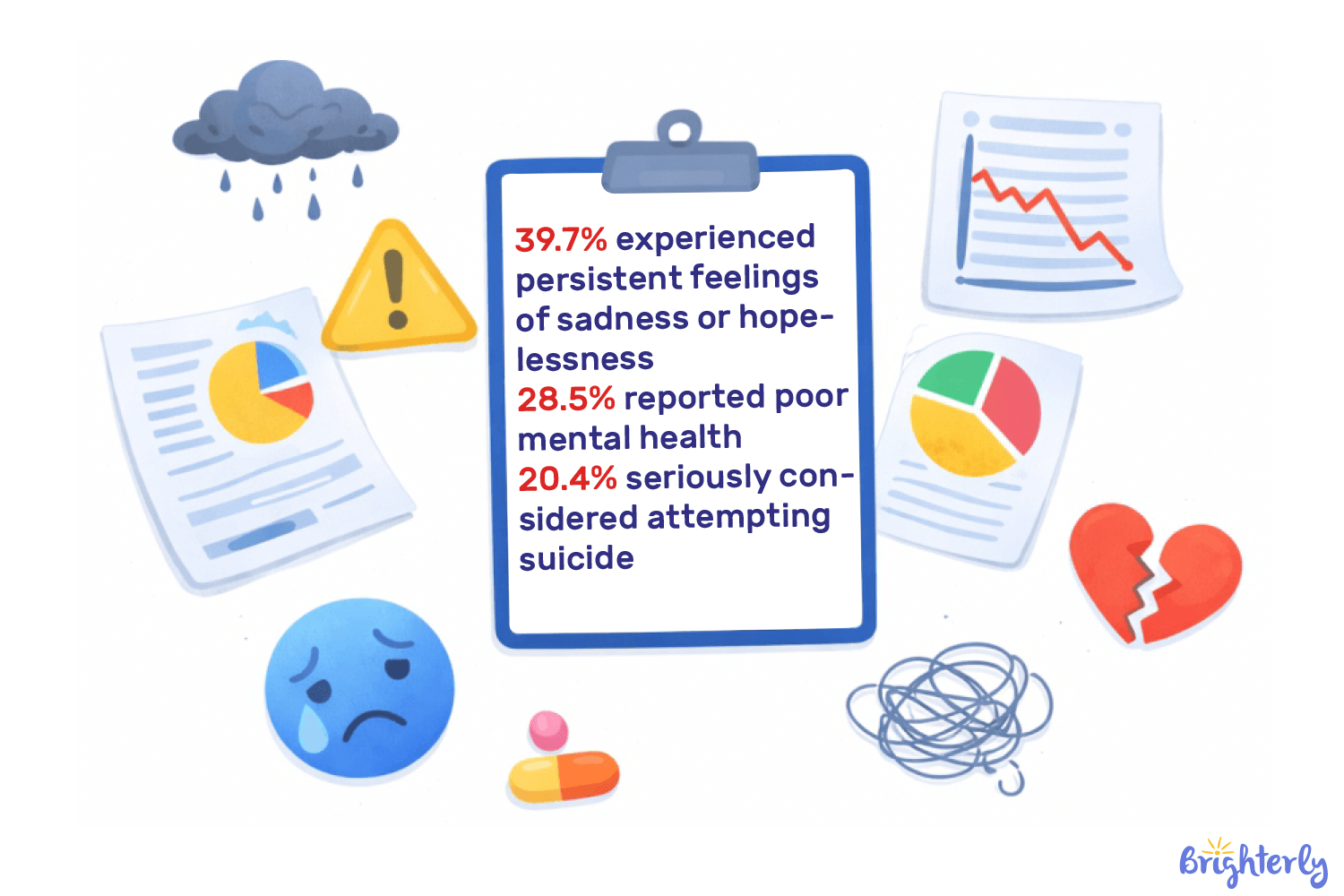
CDC survey data from 2023 show high levels of psychological distress among U.S. high school students:
- 39.7% experienced persistent feelings of sadness or hopelessness
- 28.5% reported poor mental health
- 20.4% seriously considered attempting suicide
This data remained pretty much the same, as per the student mental health statistics 2024.
What influenced this? Returning to in-person school after the pandemic, social factors such as social media, academic exams, economic and future uncertainty, and media coverage of the war.
Student mental health statistics 2026
Globally, according to the WHO 2026 Fact Sheet, about one in seven (~14%) teenagers has a mental health disorder (anxiety, depression, etc.).
There is a trend toward returning to pre-pandemic levels, but rates remain higher than before.
What influenced this year? Long-term effects of social isolation and the digital environment on youth, along with broader access to information about mental health.
Which country has the most stressed students?
New Zealand ranks lowest in terms of mental well-being among children and teenagers as according to the international child well-being ranking by UNICEF. Close behind are Japan and South Korea. In Ireland, 1 in 15 teenagers reports low life satisfaction.
IMPORTANT! This ranking only considered 43 of the wealthiest countries (out of 195 possible). Even among these, not all countries conducted the same studies, so the data vary. These numbers should be seen only as a general overview, not exact figures.
Mental health in schools statistics by age
Mental health issues can start early in life due to family problems, misunderstandings with peers, or personal setbacks. Usually, these disorders progress with age as children face more stressors. Below, I’ve provided a table from the CDC showing the middle school mental health statistics and explaining who faces mental health challenges at different ages, along with possible contributing factors.
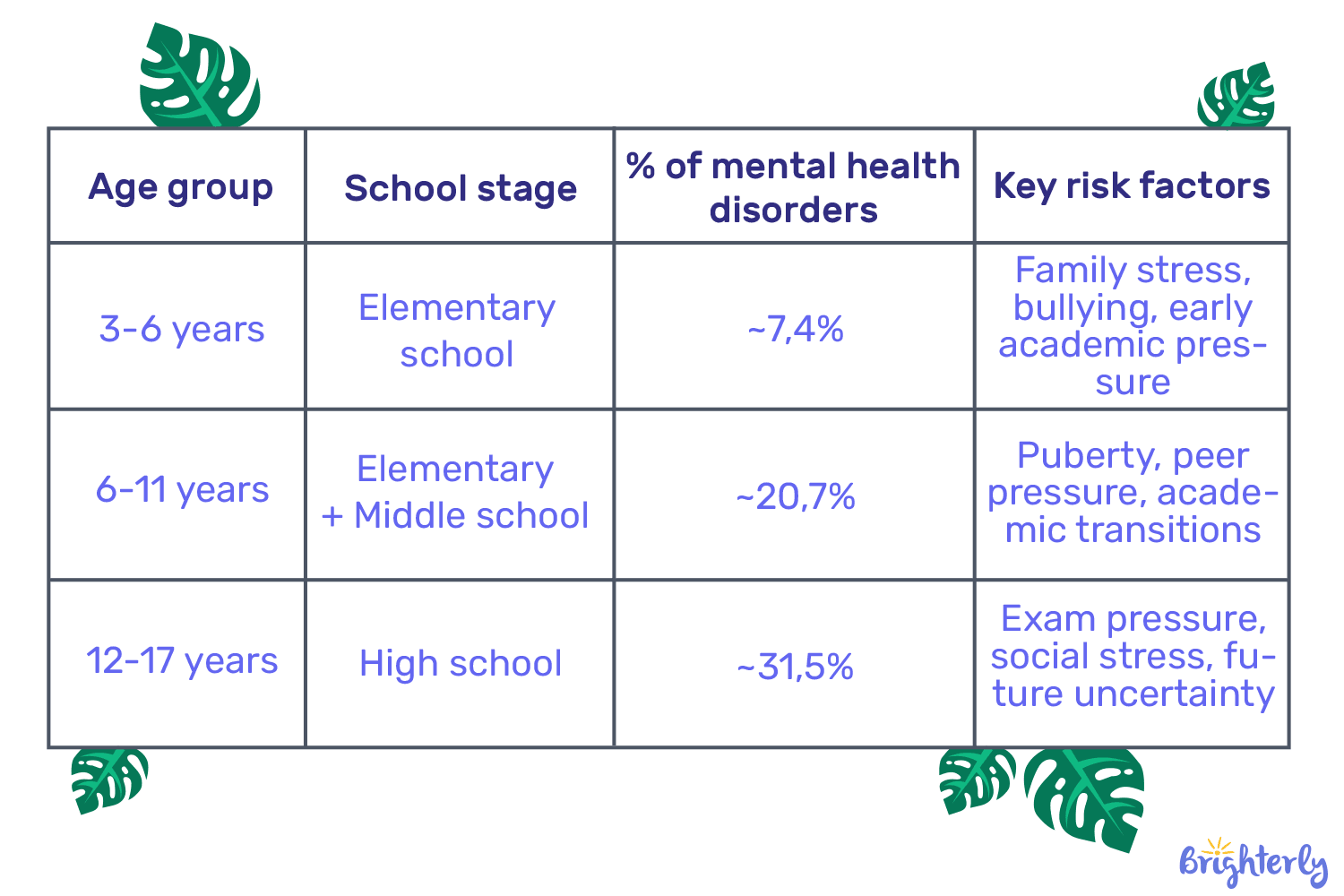
Additionally, CDC data show even higher rates among teenage girls with an LGBTQ+ identity. They experience higher levels of traumatic stress, anxiety, sadness, and suicidal thoughts compared to other gender and their heterosexual peers.
What are the statistics for mental health in teens?
According to the large 2023 NSCH federal report, about 20.3% of teenagers aged 12-17 had a diagnosed mental or behavioral health issue:
- 16.1% anxiety disorder
- 8.4% depression
- 6.3% behavioral/conduct problems
There is also more recent data for 2024–2026, which focuses on college and university students. In short, student depression statistics:
- 18% reported depression
- 32% experienced symptoms of anxiety
- 11% had suicidal thoughts
- Every second student reported feeling lonely
However, all these numbers are better than in 2022, showing a positive trend. Additionally, 36% of respondents in 2026 reported high levels of well-being.
What is the most common mental health problem in students?
According to the WHO, the most common mental health issue among students worldwide is anxiety, followed by depressive symptoms.
Why is anxiety so widespread among students? Teenagers face many new challenges, especially at school:
- Academic pressure: Constant assessments, exams, and competition increase stress levels.
- Impact of social media on student mental health: Active use of social networks can intensify fear of judgment and not meeting expectations.
- Age and social changes: Adolescence and the transition to college come with emotional instability and uncertainty.
- Uncertainty about the future: Choosing a career, education, and life path is a major source of anxiety.
How to help a teenager with mental health issues?
To help a teen with a mental health issue, you should provide a proper level of attention and open communication.
How can you help if you notice common problems?
Academic pressure and overload
Not all children can keep up with studying, social life, and hobbies at the same time. Help your child learn time-management skills, and consider letting go of some extracurricular activities to reduce their load. It’s also a good idea to talk with your child’s teachers to understand their performance and challenges, then calmly work together on how to improve things.
Family stressors
Problems at home can greatly affect a child. Review your family dynamics, try to resolve conflicts, and create a safe atmosphere at home. Make time for fun family evenings and avoid criticizing mistakes. Over time, your child will feel they can trust you.
Digital overload (high school mental health statistics)
Social media often encourages comparison, and there’s a risk of cyberbullying and information fatigue. You can read more about this in the article Statistics about social media and kids.
To help, psychologists recommend setting screen-free hours. I understand that taking away a teen’s phone isn’t realistic, but you can involve them in activities, hobbies, or family game nights – this works. Also, explain that not all images online are real, and not everyone on the internet is as successful or happy as they seem.
Stigma around mental health
Acknowledging a mental health issue isn’t easy. Kids may close off, fear judgment, and ignore the problem. Try to normalize conversations about mental health, its importance, and ways to improve it.
Note: If problems persist, seek professional help from a school counselor or a licensed specialist for assessment and treatment.
How can schools support student mental health?
Schools play an undeniable role in students’ mental health. Every year, new methods and programs are introduced to support students. Here are the 3-top approaches that lay the foundation for mental well-being:
- School psychologists and counselors: In the U.S., about 18% of students use school mental health services! Over 70% of schools have at least one specialist who can help a child. According to depression in high school students statistics, this approach helps identify early warning signs and can support students effectively.
- Social-emotional learning (SEL): Based on 22 studies, experts say programs that teach students to develop self-awareness and manage their emotions.
- Reducing academic pressure: More than 60 studies show that high academic pressure causes stress, worsens well-being, and lowers motivation in children. If this negatively affects students’ lives, it’s worth rethinking teaching methods to ensure learning doesn’t harm their health.
10 student mental health tips for parents
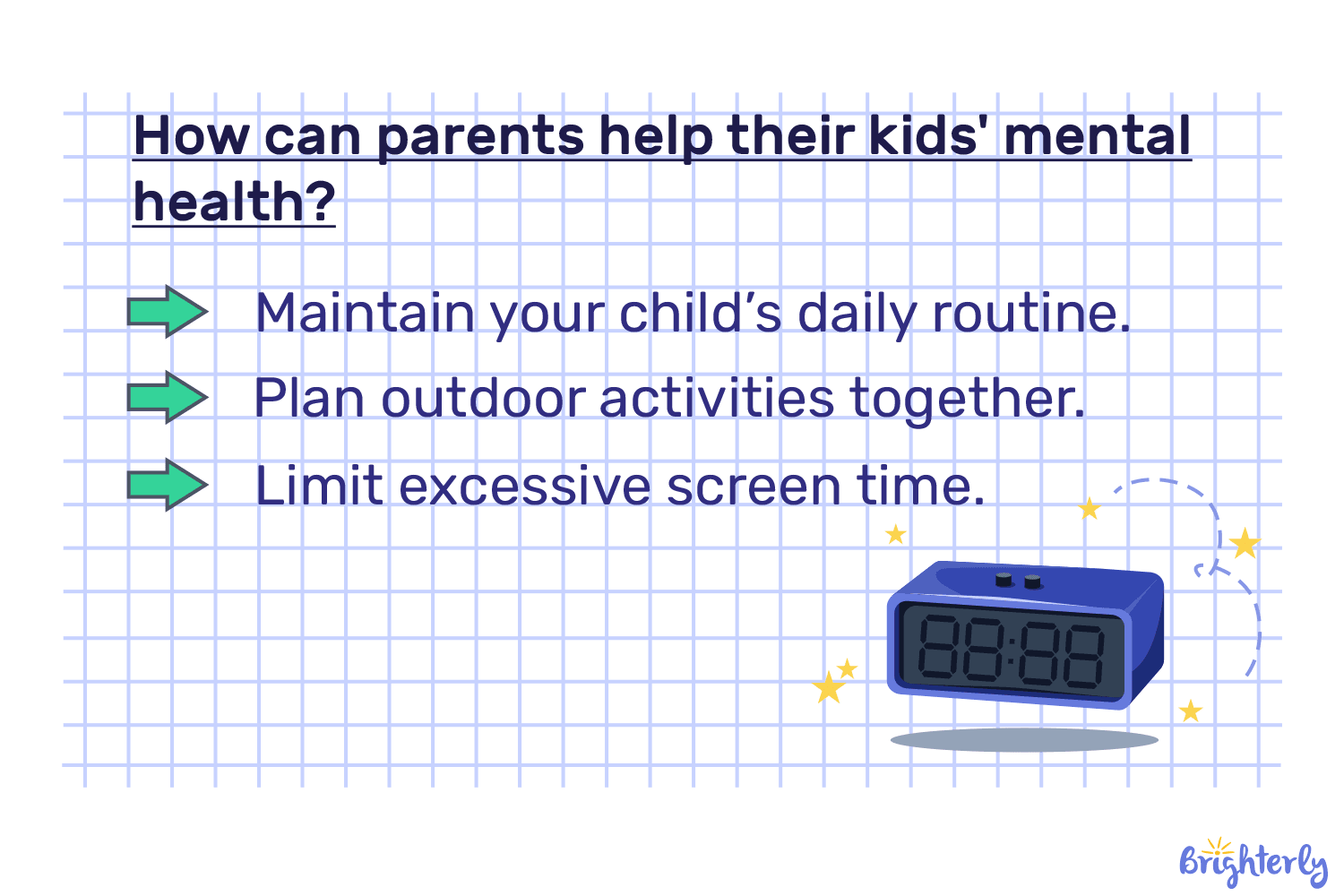
- Maintain your child’s daily routine.
- Plan outdoor activities together.
- Limit excessive screen time.
- Support healthy eating and encourage physical activity.
- Be available for open, honest conversations.
- To provide a non-judgmental space where teens can talk about their feelings.
- Watch for changes in mood and behavior.
- Encourage participation in a series of extracurricular activities.
- Check on academic progress and offer help if needed.
- Seek support from the school or professionals when necessary.
Mental health in students statistics: Conclusion
As you can see, statistics on teen mental health in recent years show that young people need mental health resources and support. Today, anxiety is the most common disorder among teenagers worldwide, and it is closely linked to academic stress, performance, and pressure.
At the same time, research confirms that both schools and you as parents can help your child overcome mental health challenges. Start by finding a safe learning environment for your child. If this isn’t available at school, consider additional platforms. My recommendation is the Brighterly math and reading platform. The company cares about its students, tailoring lesson pace, topics, and assignments to your child’s needs. They aim for your child to learn and enjoy, not feel stressed.
If you are looking for quality individual lessons for child in reading and math, you can book free lesson with Brighterly to see if it’s right for your child.



Googling for the most up-to-date Kahoot pricing feels overwhelming? Don’t go anywhere! This in-depth review is what you need to understand the pricing plans, cost per month and per year, and features you pay for. Whether you’re a parent, teacher, or tutor, we’ll discuss everything you need to know in 2026. Key points: Kahoot is […]

Jan 04, 2026

Wondering how to help your child write better and more clearly? As an experienced writing teacher, I’ve gathered the 9 best handwriting apps for kids and highlighted their main features, advantages, and disadvantages. My list includes both paid and free platforms with diverse functions to support learners with various needs. Key points iWriteWords and Dexteria […]

Jan 05, 2026
Math & reading from 1st to 9th grade
Looking for homework support for your child?

Choose kid's grade

Math & Reading for Grades 1–9
Build real confidence for your child with a Brighterly math or reading tutor.