Perpendicular Lines – Definition, Symbol, Properties, Examples
reviewed by Jo-ann Caballes
Updated on August 4, 2026
Perpendicular lines are two lines that intersect to form a right angle — an angle of exactly 90°. Their symbol is ⊥, so “AB ⊥ CD” reads as “line AB is perpendicular to line CD.” Perpendicularity appears throughout geometry, from the sides of squares and rectangles to the x- and y-axes of the coordinate plane.
What Does Perpendicular Mean?
In math, perpendicular means two lines meet at a precise 90° angle, also called a right angle. Perpendicularity is everywhere in geometry: squares and rectangles have four right angles, and a right triangle — the basis of the Pythagorean theorem — is built on two perpendicular sides. It is also central to calculating the area and perimeter of many shapes.
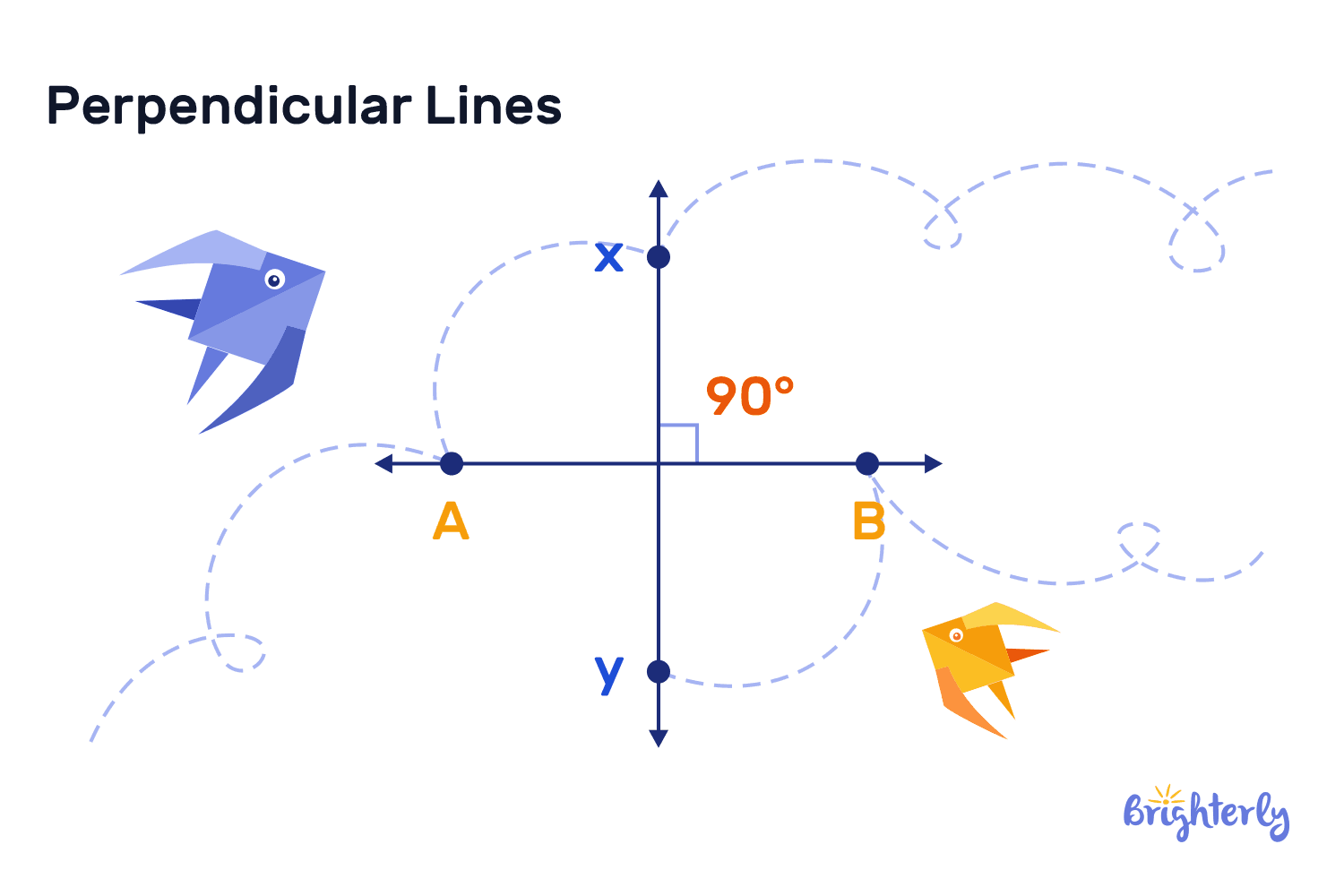
Perpendicular Lines Definition
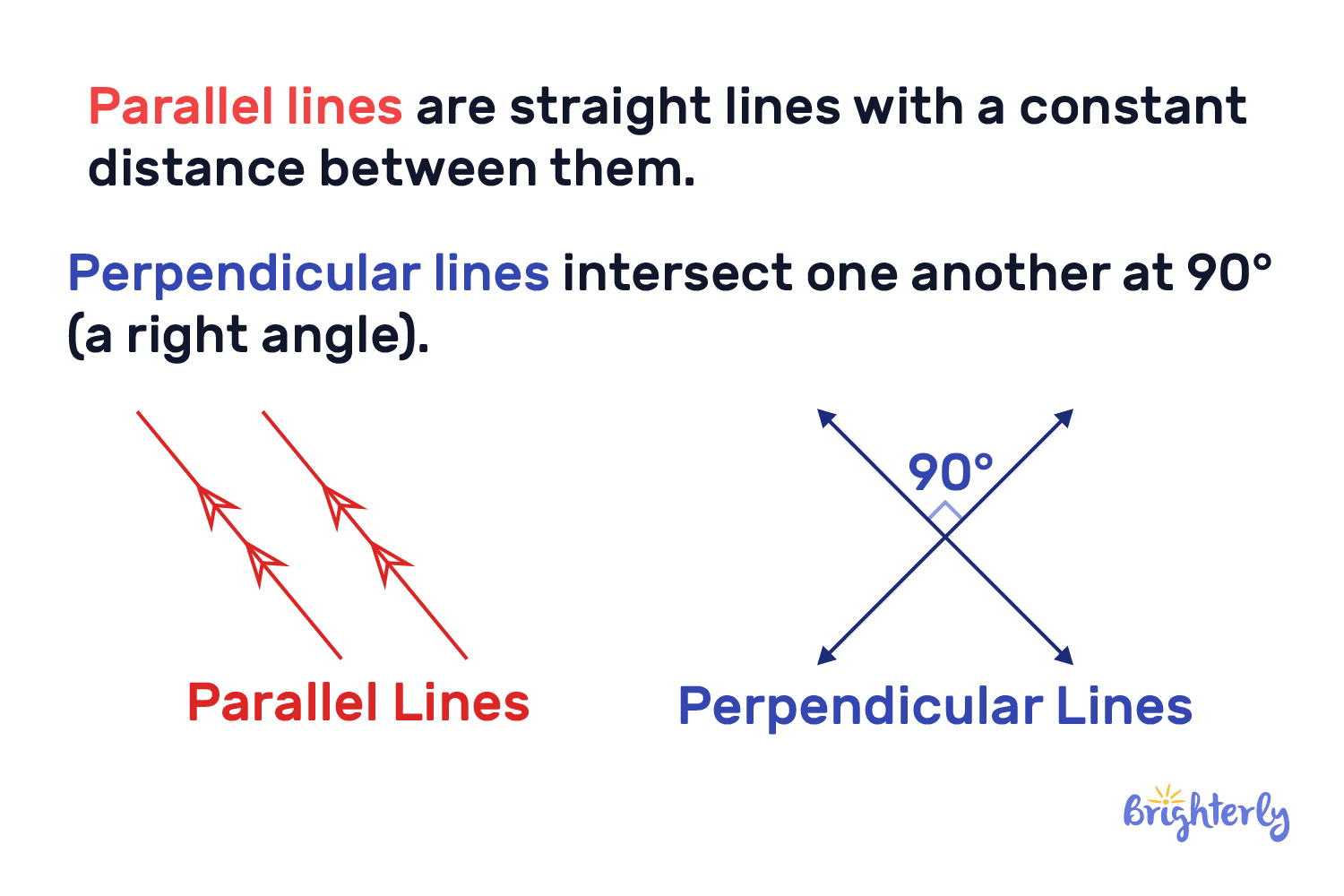
Perpendicular lines are two lines that cross each other to form an angle of exactly 90°, known as a right angle. When two lines are perpendicular, they meet at a single point of intersection and create four right angles around that point.
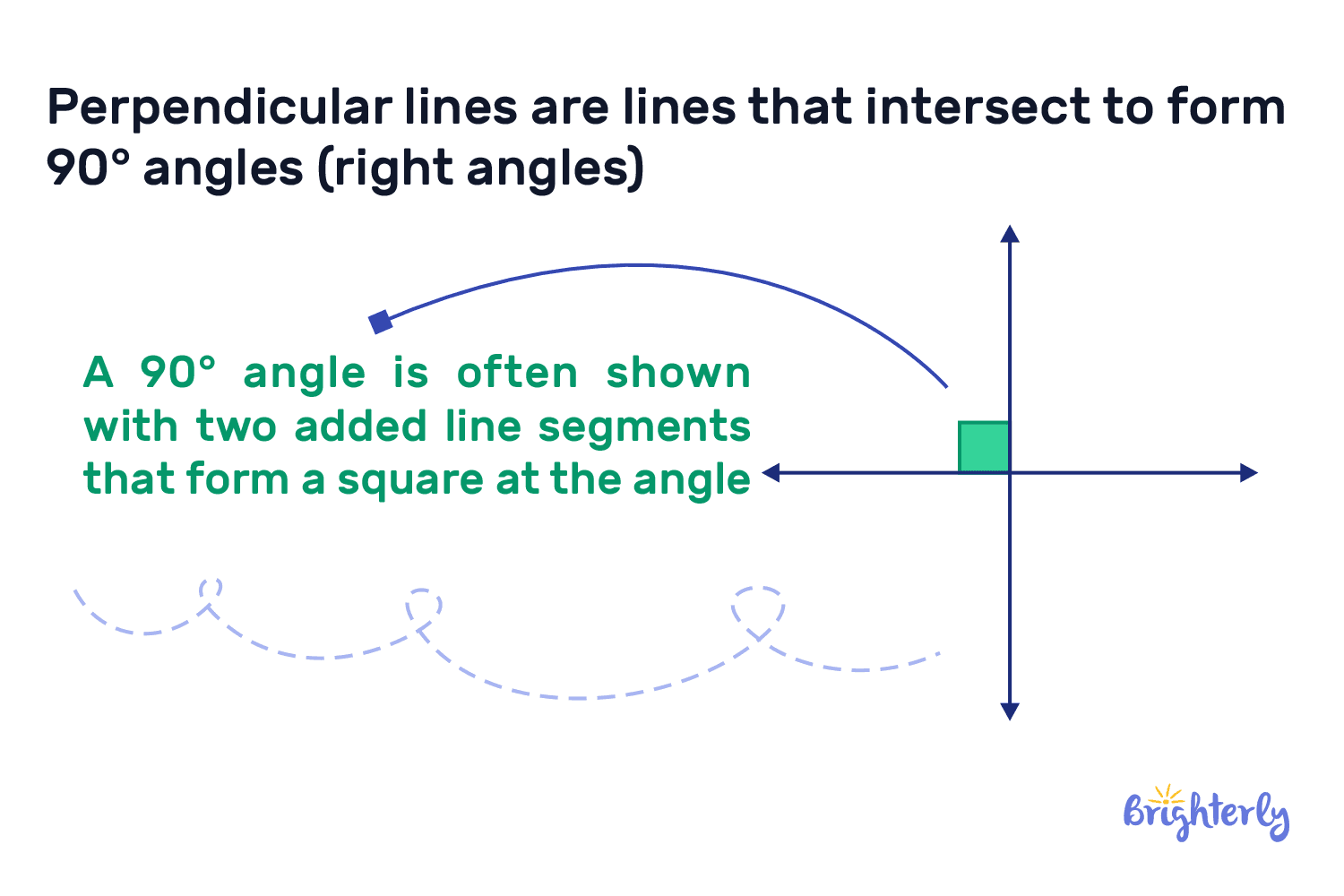
Perpendicular Lines Examples
Real-life perpendicular lines are all around you, because the right angles they form give structures stability. Common examples include:
- Architecture — where walls meet the floor and ceiling, and in window and door frames.
- Everyday objects — the corners of books, laptop and TV screens, boxes, and tennis courts.
- Math — the x-axis and y-axis of the coordinate plane, which are perpendicular to each other.

Expert Math Tutors for Every Level
Connect with professional and certified educators who provide specialized support for every grade level, from elementary school basics to advanced algebra
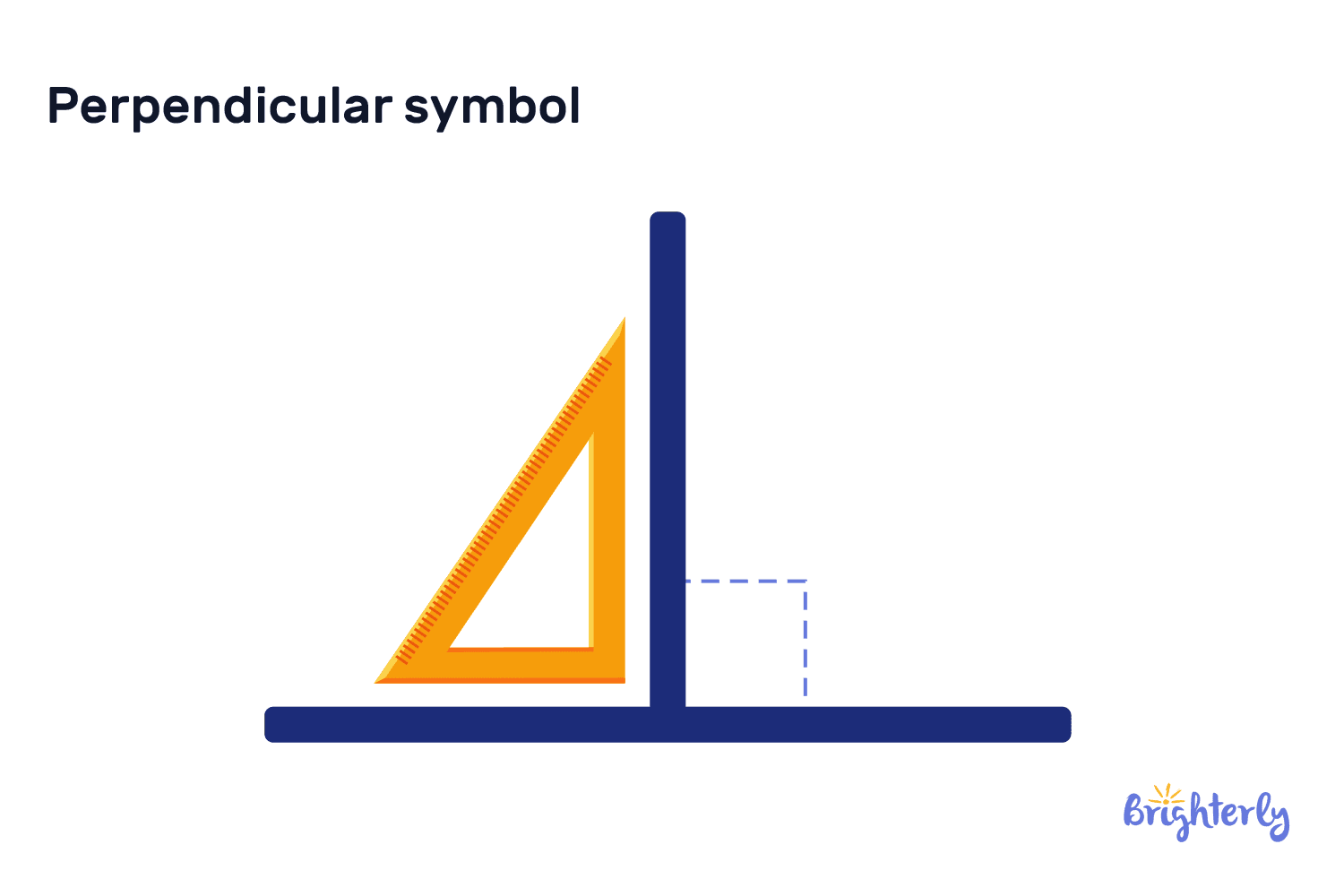
Perpendicular Symbol
The symbol for perpendicular lines is ⊥, which looks like an upside-down letter T — two lines meeting to form right angles. To state that two lines are perpendicular, you write AB ⊥ CD, read aloud as “AB is perpendicular to CD.”
Properties of Perpendicular Lines
Perpendicular lines have a few defining properties. First, they always form four right angles where they meet. Second, if two lines are each perpendicular to the same line, those two lines are parallel to each other. Third, through any given point, there is exactly one line perpendicular to a given line. Finally, the shortest distance from a point to a line is measured along the perpendicular from that point to the line.
Slope of Perpendicular Lines
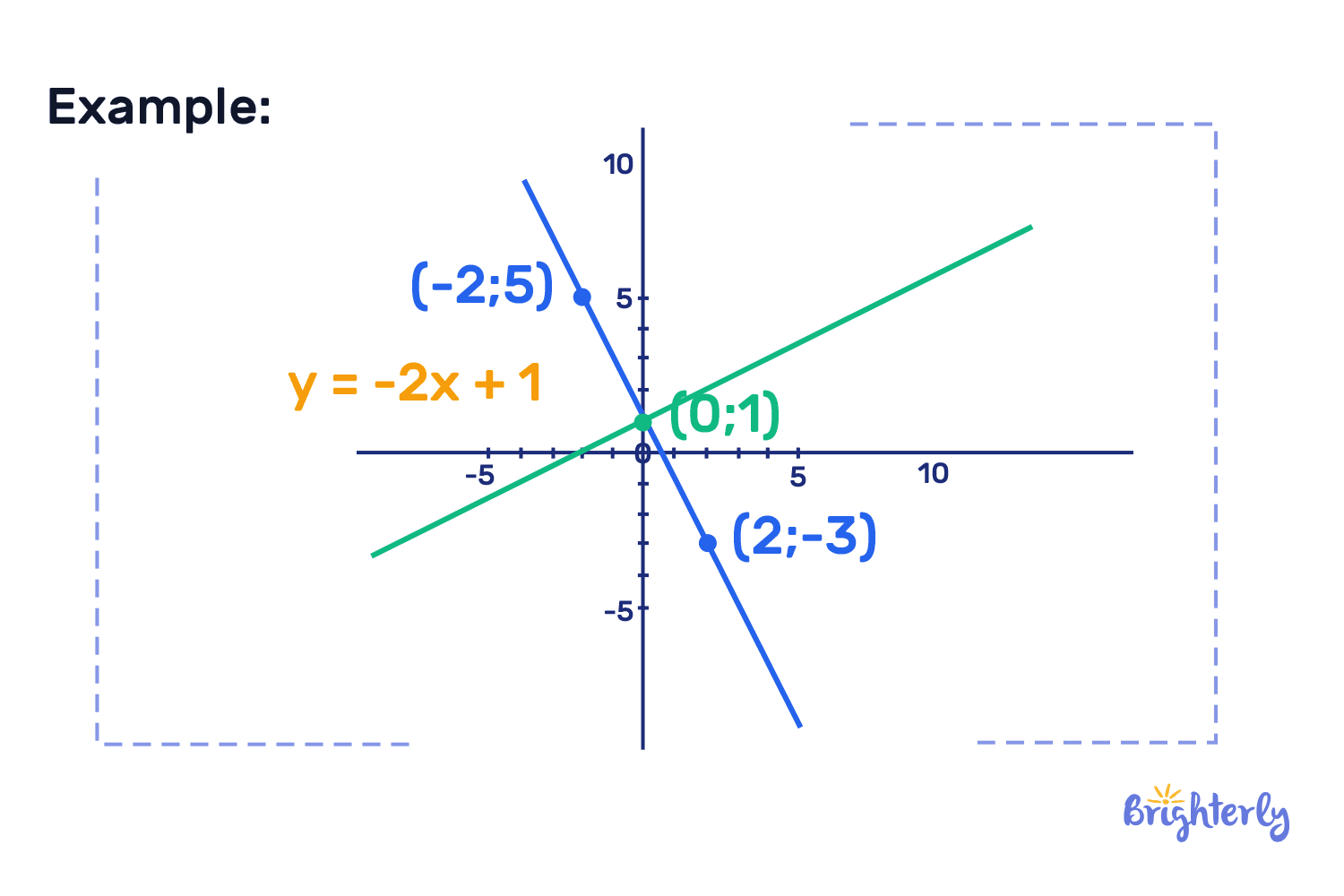
The slopes of two perpendicular lines are negative reciprocals: if one line has slope m₁, a line perpendicular to it has slope −1/m₁, so the two slopes multiply to −1. The one exception is a horizontal line (slope 0), whose perpendicular is vertical and has an undefined slope.
Perpendicular Lines vs. Parallel Lines: The Difference
The core difference is how the lines interact. Perpendicular lines must intersect at one point and form a right angle, while parallel lines never intersect and stay the same distance apart. Their slopes reflect this: perpendicular slopes are negative reciprocals (product −1), while parallel slopes are equal.
What Are Perpendicular Sides?
Perpendicular sides are two adjacent sides of a polygon that meet to form a right angle. You see them in many everyday shapes:
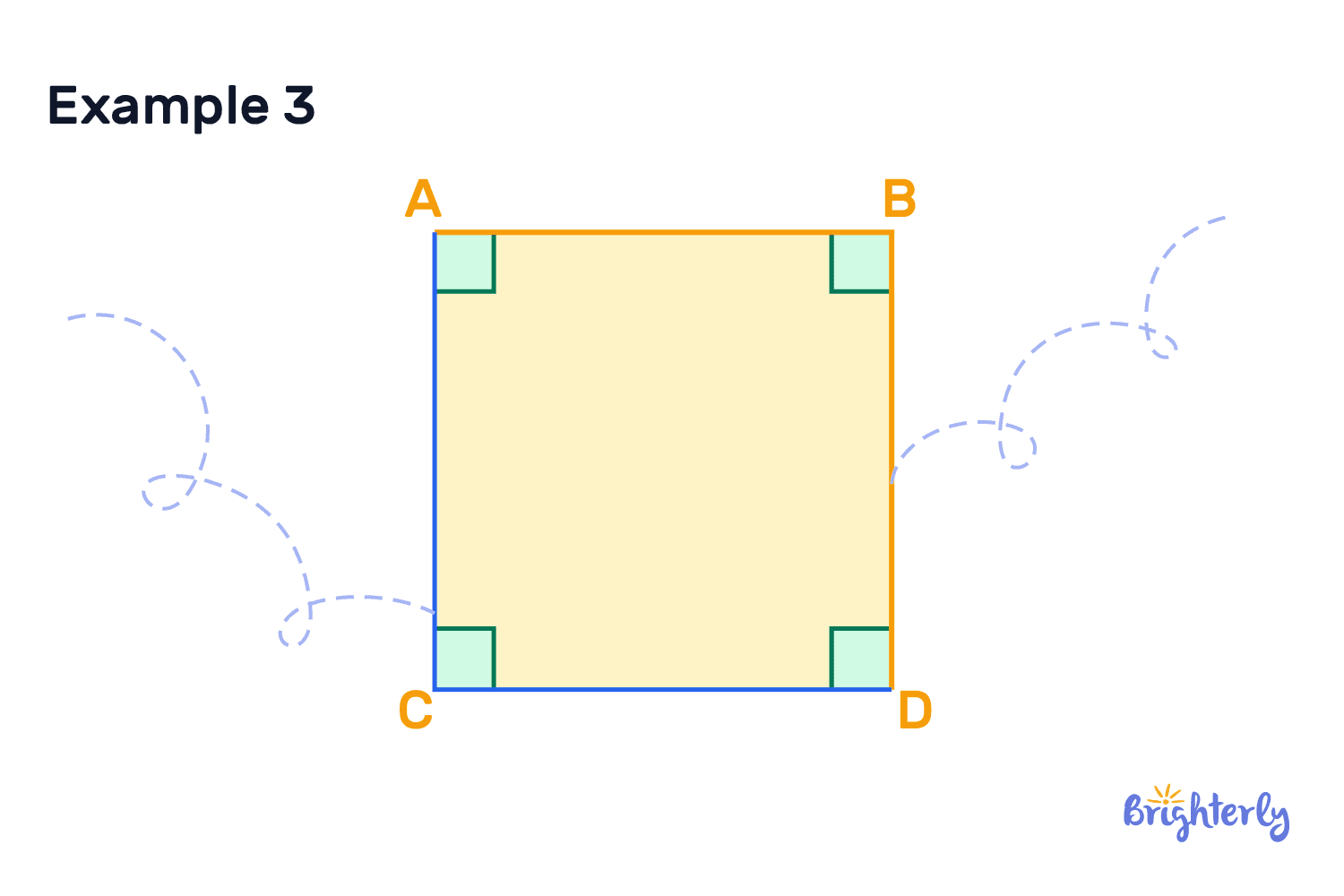
- Squares and rectangles (both quadrilaterals), which have four right angles.
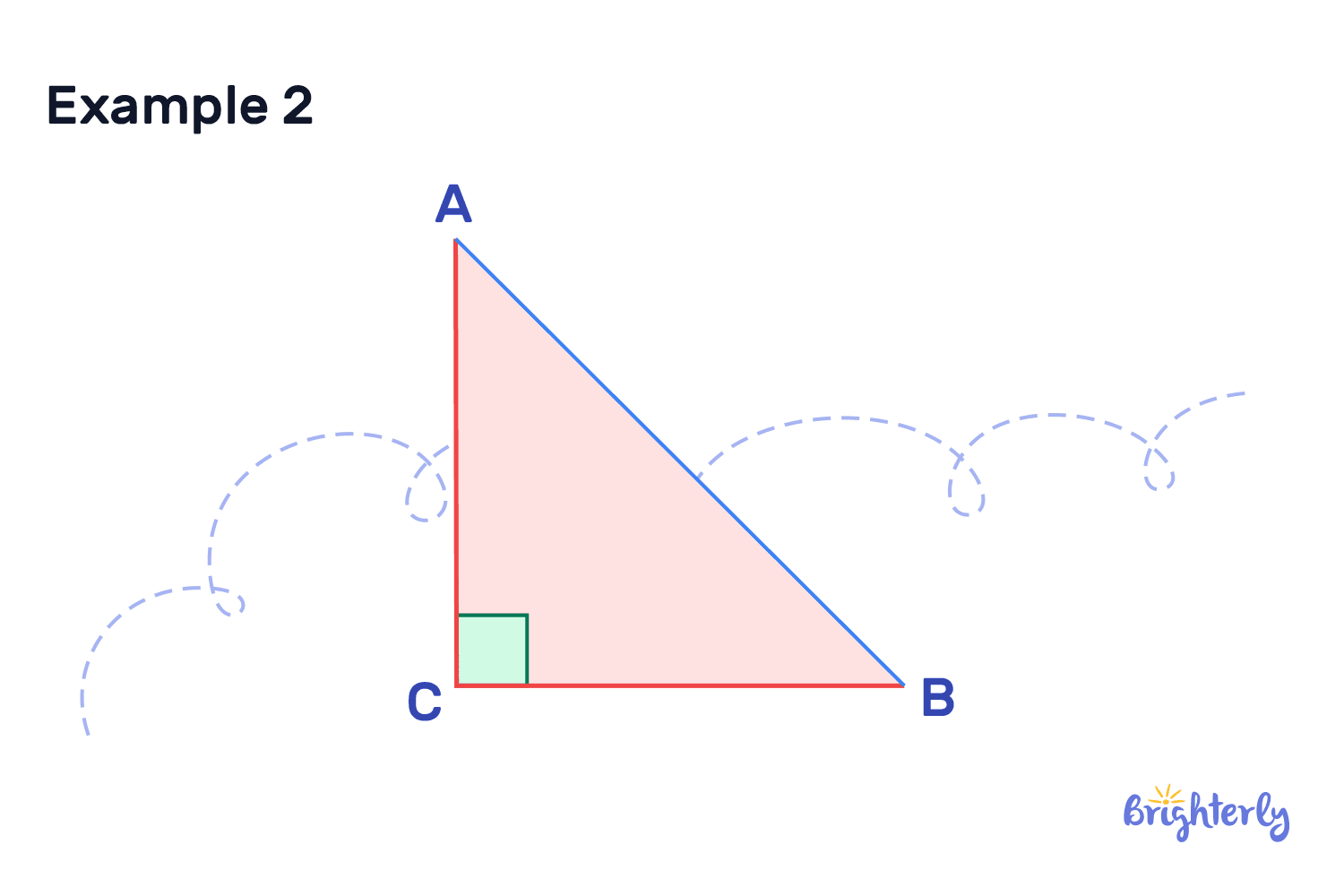
- Right triangles, whose two shorter sides meet at 90°.
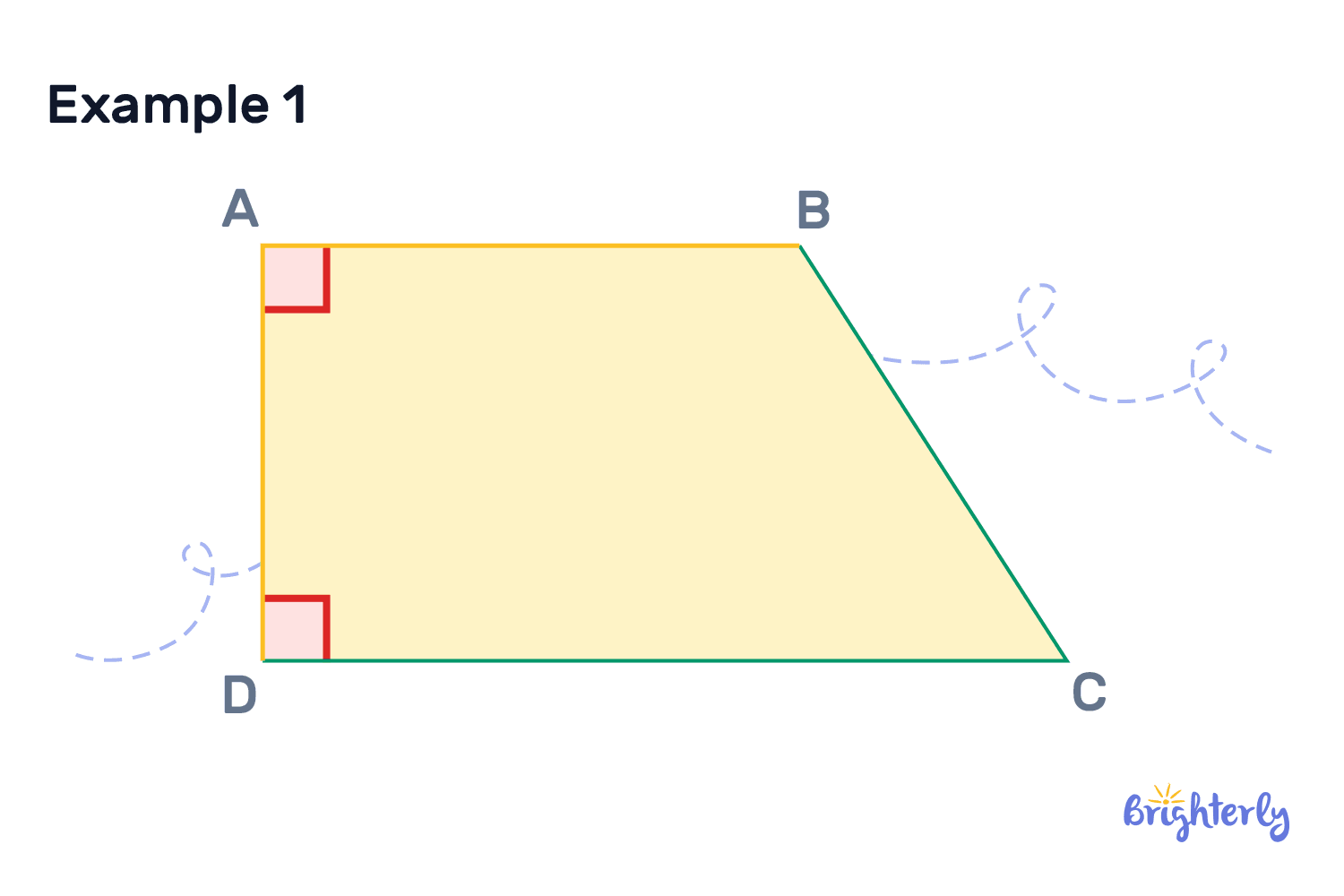
- Right trapezoids, which have two right angles.
What Is a Perpendicular Angle?
A “perpendicular angle” is another name for the exact 90° right angle that two perpendicular lines form where they intersect. If you come across the term, it simply refers to that right angle — there is nothing extra to it.
How to Construct Perpendicular Lines
There is more than one way to construct perpendicular lines, but every method has the same goal: to create a perfect 90° angle. The two most common approaches use a protractor or a compass.
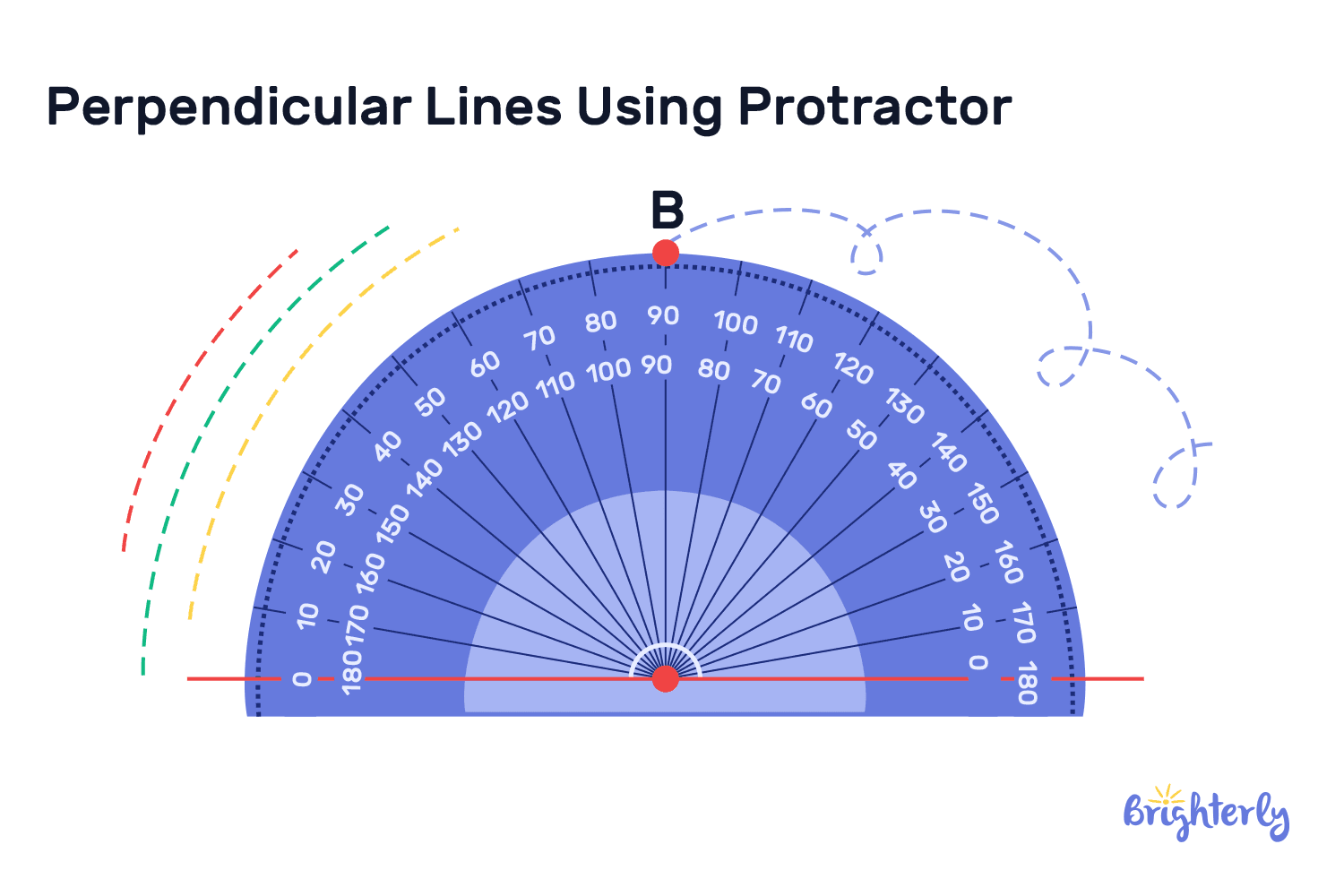
Drawing a Perpendicular Line Using a Protractor
The protractor method is the quickest way to draw perpendicular lines when small imprecisions are acceptable. Follow these steps:
- Draw a straight horizontal line on your paper.
- Mark the point where you want the second line to cross, and label it P.
- Place the protractor’s center on P with its baseline aligned to your line.
- Make a small mark next to the 90° reading on the protractor.
- Use a ruler to connect the 90° mark to point P.
Drawing a Perpendicular Line at a Given Point Using a Compass
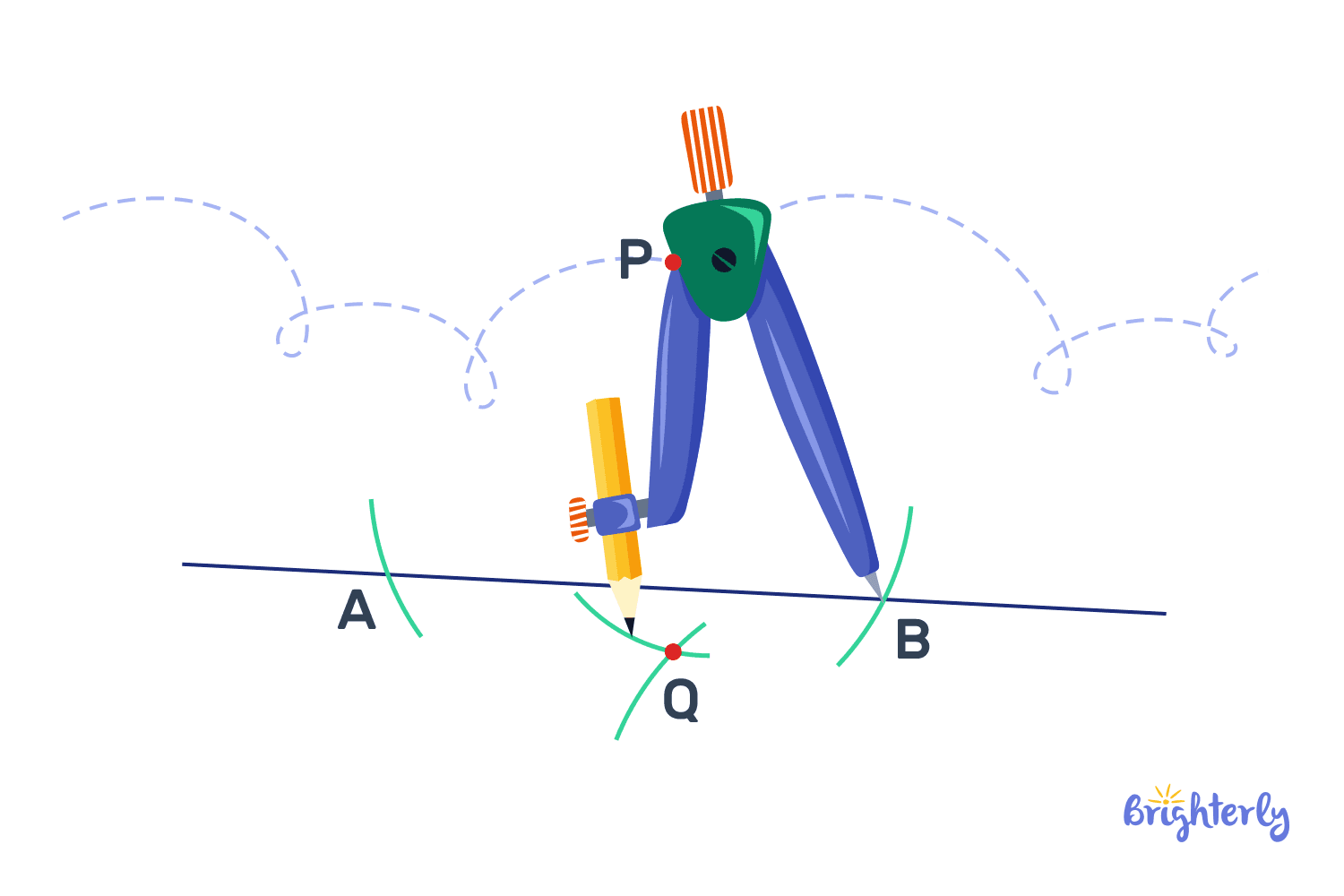
The compass method is the classic precision approach used in formal geometric construction. Start by drawing a straight line, then place the compass needle on point P and draw an arc that crosses the line on both sides, creating points A and B. Widen the compass, draw an arc from A and another from B, and mark where the two arcs meet as point C. Connect C to P with a ruler to get a line perpendicular to the original.
Perpendicular Lines in Real Life
Perpendicular lines are one of the most common relationships in the built world. Every clean right angle you see — from floor tiles to street intersections — relies on perpendicularity. Architects and engineers depend on it to keep structures square and sound, which is one reason it is a core topic in school geometry tutoring and hands-on lessons.
Facts About Perpendicular Lines
- The shortest distance from a point to a line runs along the perpendicular from the point to the line.
- Through any given point, exactly one perpendicular to a given line can be drawn.
- The slope rule (product of slopes = −1) fails only when one line is horizontal (slope 0).
- A radius drawn to the point where a line touches a circle (a tangent) is always perpendicular to that line.
Solved Examples of Perpendicular Lines
Example 1
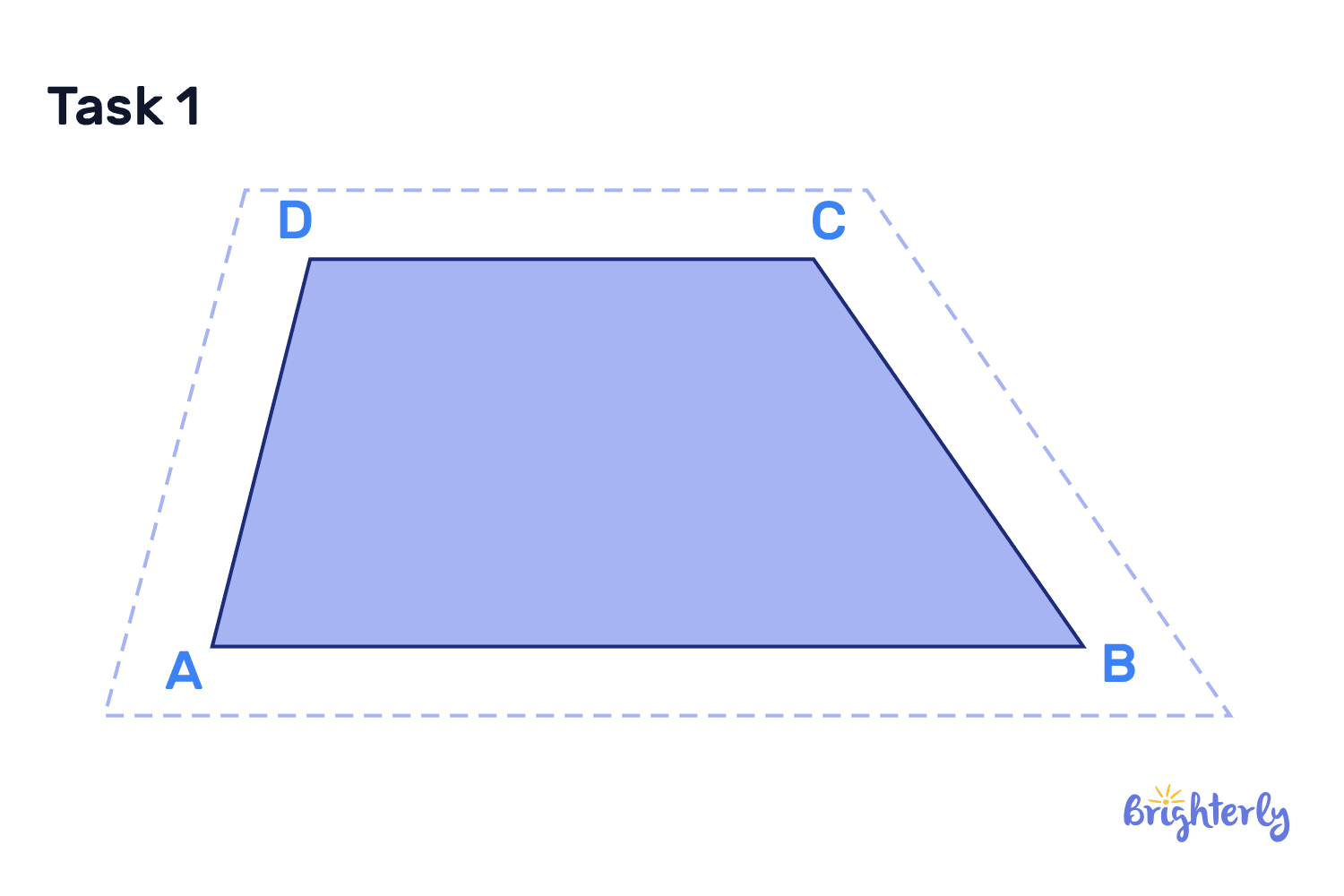
Does the trapezoid below have any perpendicular sides? Explain.
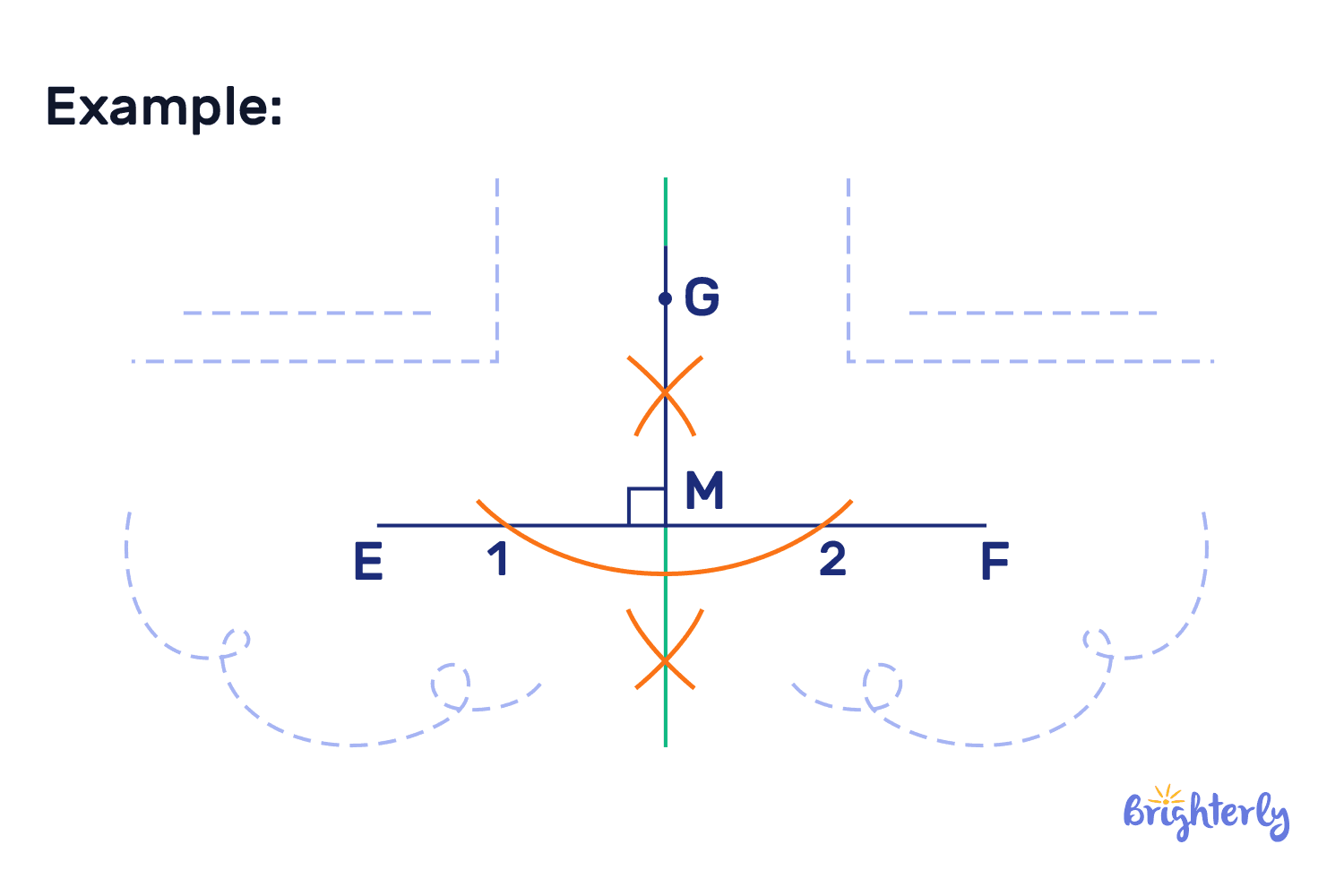
Answer: Use the compass construction method described above to drop a perpendicular through the given point.
Example 3
In the diagram, is OA perpendicular to AB, and what shape appears if you connect the lines?
Solved math task 3
Take a look at this diagram. Is OA perpendicular to AB? And what shape will this indicate if you connect the two lines?
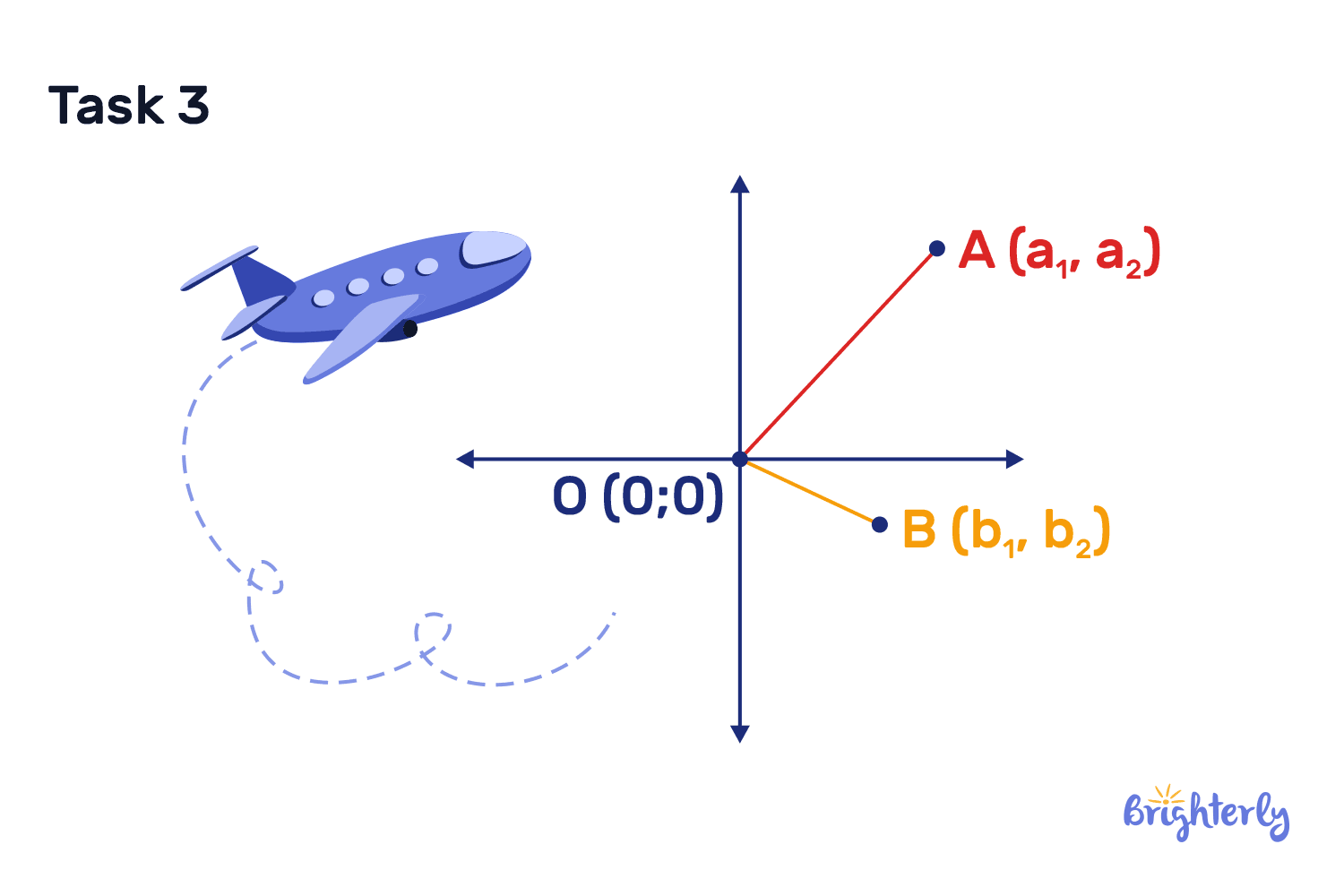
Answer: Yes. OA and AB form a right angle, so they are perpendicular; connecting the points produces a right triangle.
Perpendicular Lines: Practice Math Problems
Perpendicular Lines Worksheets
Put this into practice with related Brighterly worksheets:
Frequently Asked Questions About Perpendicular Lines
What Is a Perpendicular Line?
A perpendicular line is a line, ray, or segment that intersects another at exactly 90°. That 90° angle is called a right angle and is the defining feature of perpendicularity. In writing, the relationship is shown with the symbol ⊥, as in AB ⊥ CD.
What’s the Rule for Perpendicular Lines?
The main rule is that perpendicular lines meet to form a right angle. A second rule applies to their slopes: the slopes of two perpendicular lines are negative reciprocals, so multiplying them gives −1. Together, these two rules let you confirm perpendicularity either by measuring the angle or by checking the slopes.
What Shapes Have Perpendicular Sides?
Squares and rectangles are the best-known shapes with perpendicular sides — each has four pairs of sides meeting at right angles. Right triangles also have two sides that form a 90° angle, which is where the name “right” triangle comes from. Right trapezoids are another example.
How Do You Know if a Line Is Perpendicular?
There are two simple checks. First, measure the angle where the lines meet — if it is 90°, they are perpendicular. Second, calculate the slope of each line; if the slopes are negative reciprocals (their product equals −1), the lines are perpendicular even without measuring the angle.
Do Perpendicular Lines Intersect?
Yes. Perpendicular lines must intersect, because their defining feature is the right angle they form at their crossing point. If two lines never meet, they cannot be perpendicular. This is what sets them apart from parallel lines, which stay the same distance apart and never intersect.


Troubles with Geometry?

- Does your child need additional support with understanding geometry concepts?
- Start lessons with an online tutor.
Choose kid's grade

Is your child finding it challenging to master the basics of geometry? An online tutor could be the solution.
Book FREE lesson