10+ Best Addition Games for Kids: Free, No-Prep, and Printable
reviewed by Maila Caliao
Updated on May 20, 2026

Key Points:
- Addition games for kids can turn math drills into an interactive and engaging experience your child actually wants to do
- Offline and online addition games give children enough practice to master addition facts, develop mental math skills, and learn to add numbers faster and more accurately
- Every game in this guide (online, offline, and printable) covers K-2 addition skills, from single-digit sums to early two-digit addition
- Mixing online and offline formats gives the best results, as digital games build speed and offline games develop number sense
Interactive addition games for kids are among the best ways to make repetitive addition math drills fun and engaging. These games can help your kid understand addition better, learn to calculate quickly in fast-paced situations, and get more accurate answers, practice different types of problems like number facts and word problems, and much more.
Best Free Online Addition Games for Kids
The 6 best free online addition games include:
- Jet Ski Addition
- Alien Addition
- 4 in a Row Addition
- Fruit Splat Addition
- Paws & Pastries
- Run Potato Run
1. Jet Ski Addition
Best for: K-2
Skills: Mental math, quick addition, problem-solving
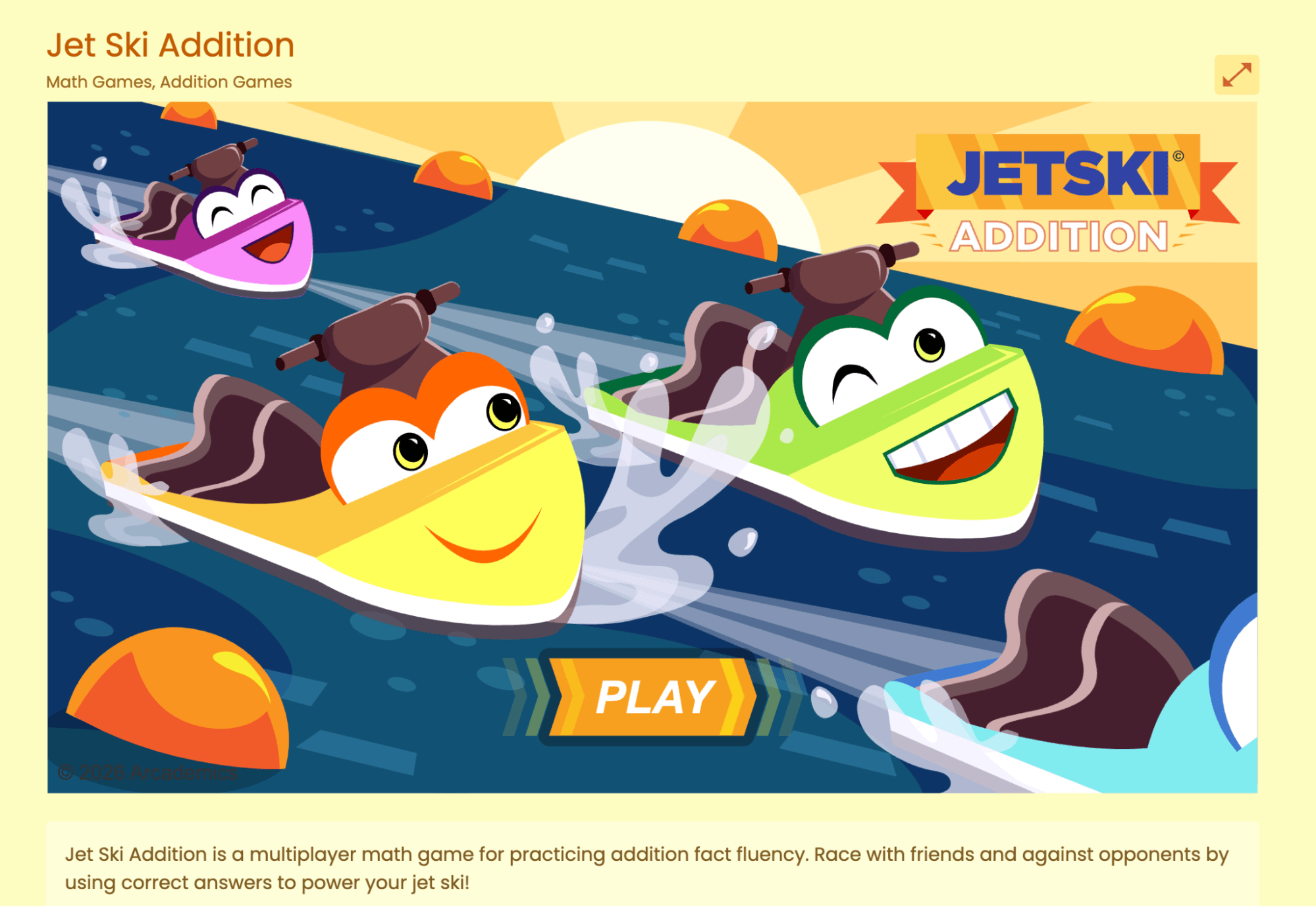
Jet Ski Addition is a free high-speed racing game, where your kid will compete with other players by quickly solving addition problems to power their jet ski. It’s a great mix of racing and math, and lets your child build multiplication and addition fluency, develop problem-solving skills, come up with addition shortcuts to add numbers faster, and get better at mental math in general.
2. Alien Addition
Best for: K-2
Skills: Addition, mental math
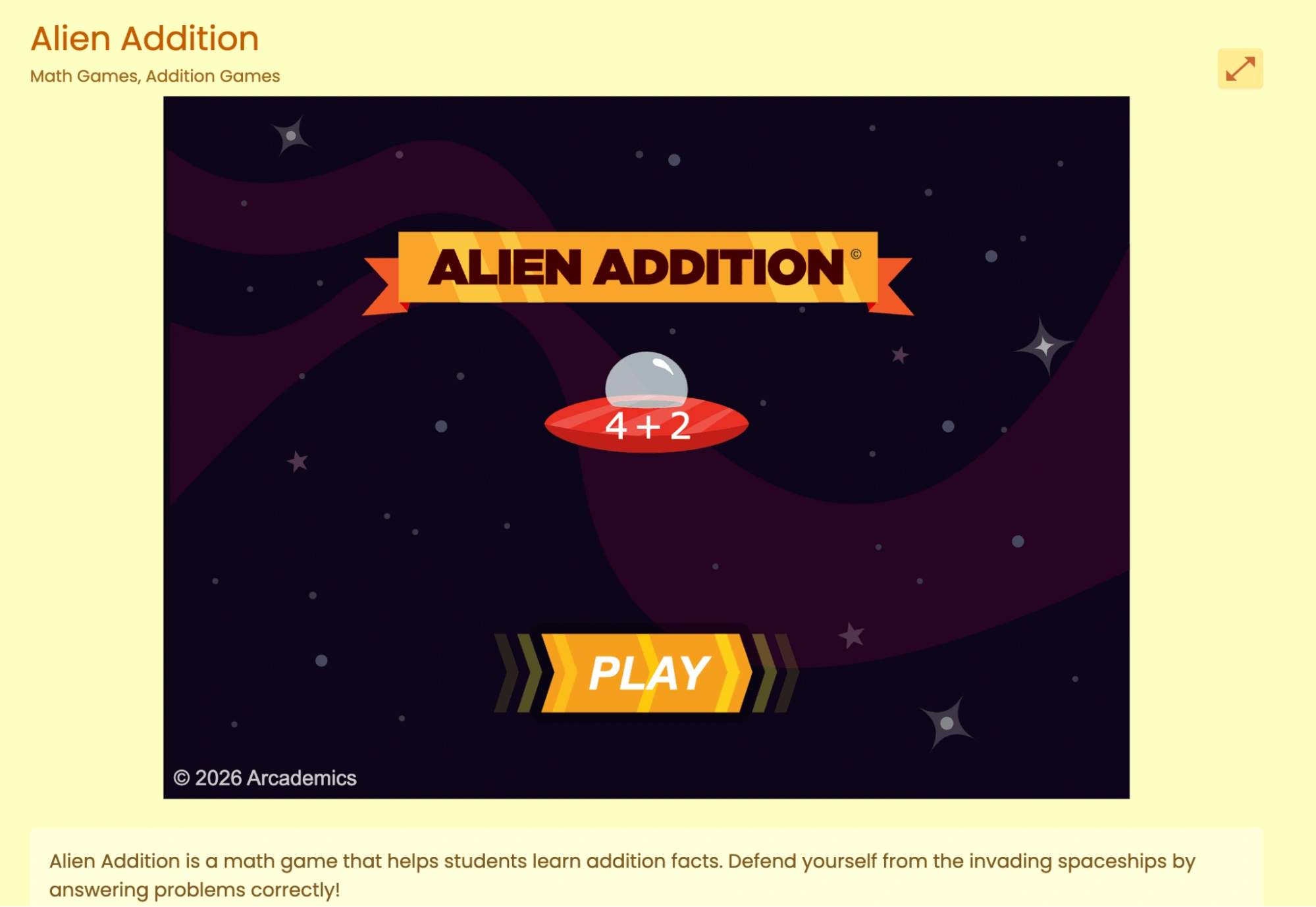
This addition game uses a space-themed “invader” format. Your child will need to shoot down alien ships by matching the sum on the ship to the correct equation. This is a great addition practice and mental math game, as it helps children practice addition math facts while also developing visual coordination.
3. 4 in a Row Addition

Best for: K-1
Skills: Addition, strategic thinking
This one is the digital version of a classic board game played in pairs. Your child needs to solve an addition problem before they can drop their token into a slot. The kids practice basic sums, but since they must block opponents while solving the problems, the game also teaches them to think strategically and several moves ahead.
4. Fruit Splat Addition
Best for: K-1
Skills: Simple addition, hand-eye coordination
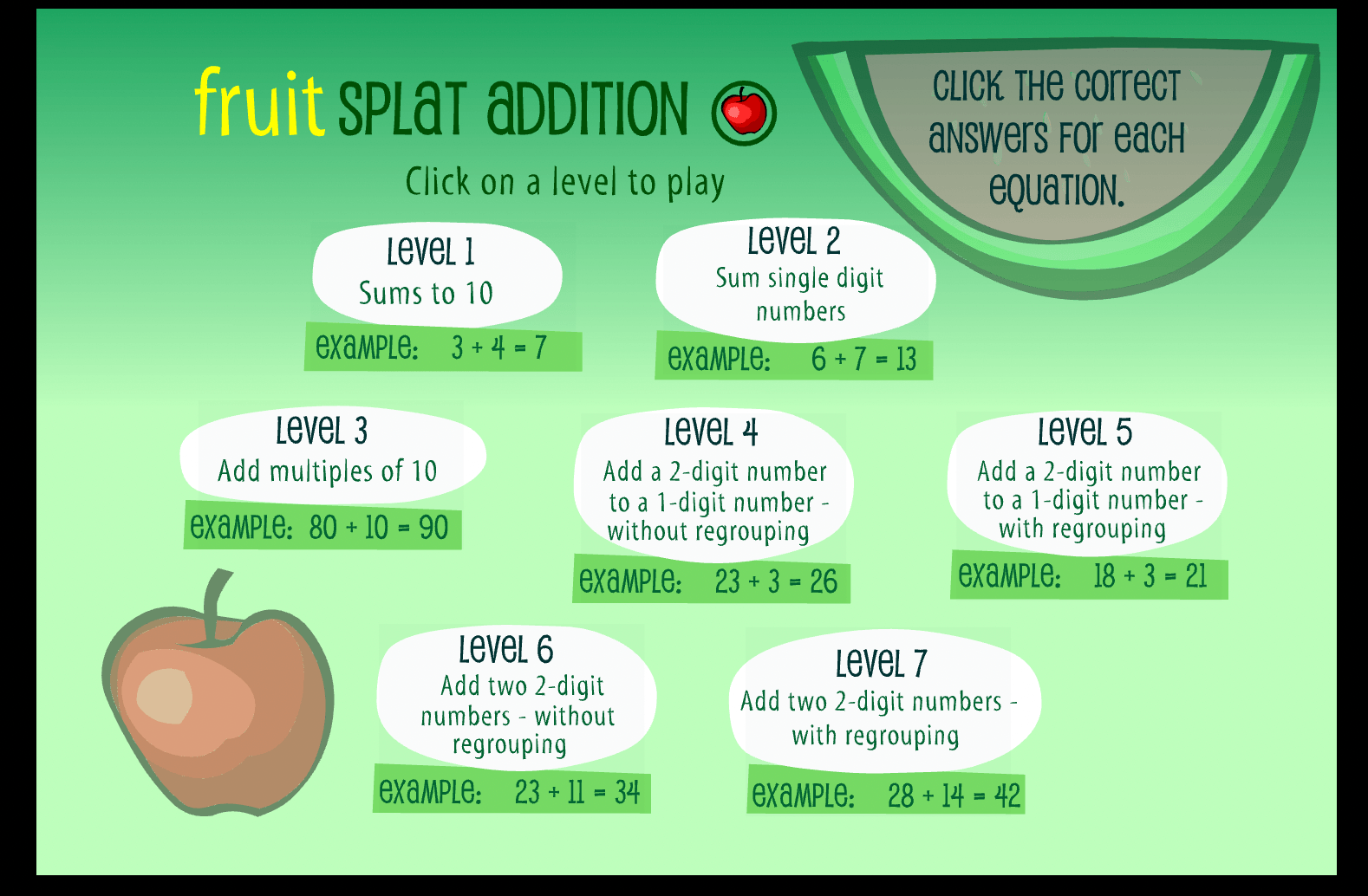
Next up in the list of addition games for kindergarten math is the Fruit Splat Addition. An addition problem is displayed, and your child needs to “splat” the fruit that contains the right answer to the problem. The game has multiple levels of difficulty, and can help your child develop fluency in simple addition, as well as improve hand-eye coordination.
5. Paws & Pastries

Best for: K-2
Skills: Multi-item addition
In this charming cafe-themed game, your child serves food and drinks to hungry pets by adding up the prices of different pastry orders to find the total. This is a great number and addition game, as it introduces multi-item addition (students need to add multiple numbers, not just one) and also brings forward the practical application of math in a real-world money context. The game is mobile-based.
Note: According to Kaya et al.(2023), published in the International Online Journal of Primary Education, when students connect math to real-life scenarios and see the potential applications, they are more motivated and engaged.
6. Run Potato Run
Best for: K-1
Skills: Single and multi-digit addition
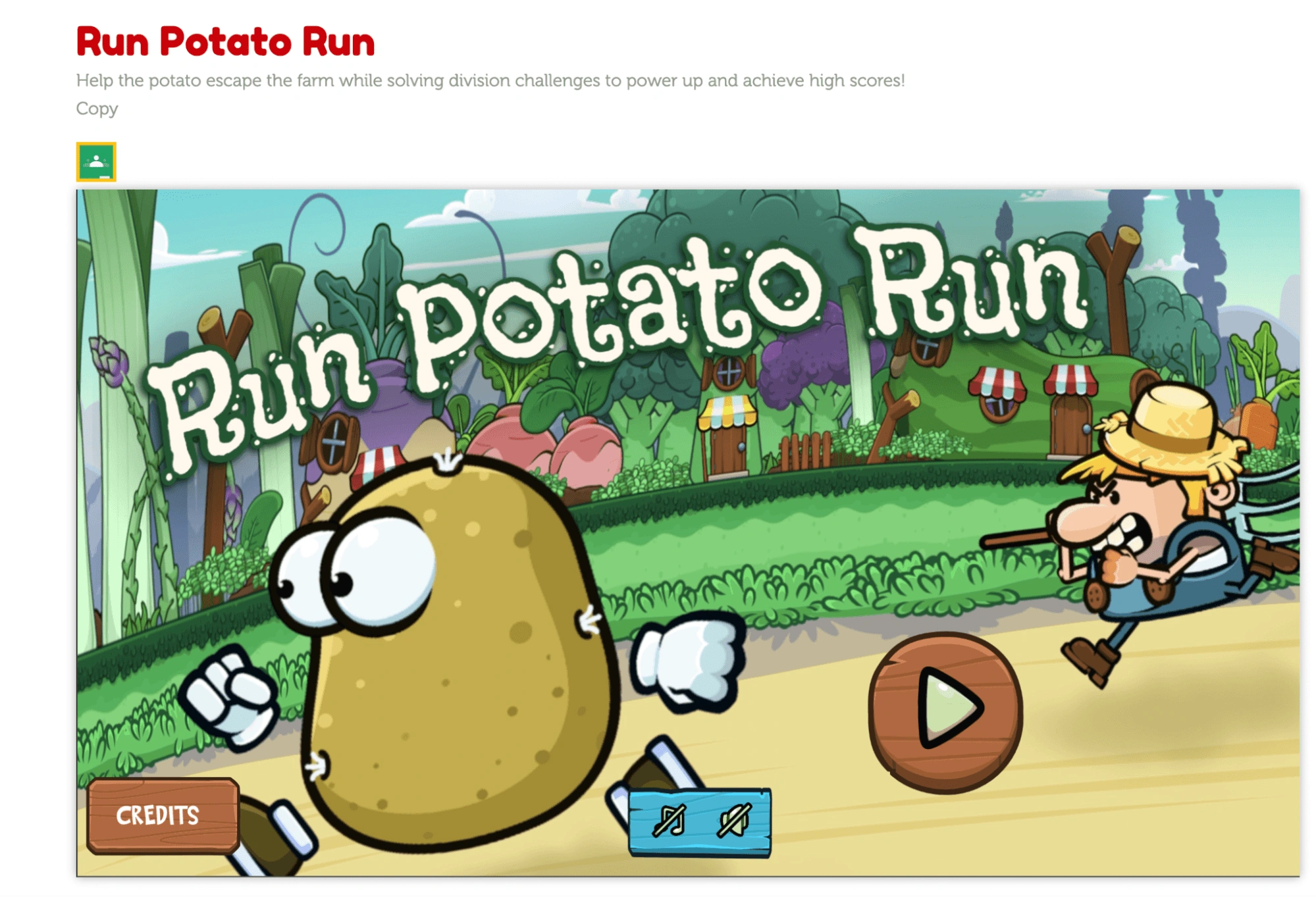
In this addition game, a potato (played by your kid) is on a quest, and to progress, they need to add correct sums to jump over obstacles. The speed of the potato is connected to the accuracy of the answer. The game covers single and two-digit addition, and the cheerful design makes it an easy sell even for children who are anxious about math.
Does Your Child Need More than Just Practice?
Help close their knowledge gaps with 1:1 lessons with experienced math tutors.


Explore Brighterly Learning Experience
Learn exactly how Brighterly helps students thrive through expert sessions, online tools, and proven feedback from thousands of satisfied parents
No-Prep Addition Games for the Classroom
Next up are some non-prep addition games you can use for the classroom and as part of a homeschool math program. These addition games use items that you can already find in most classrooms (and often at home), or nothing at all.
1. Roll and Race
Skills: Single-digit addition, number recognition, mental math
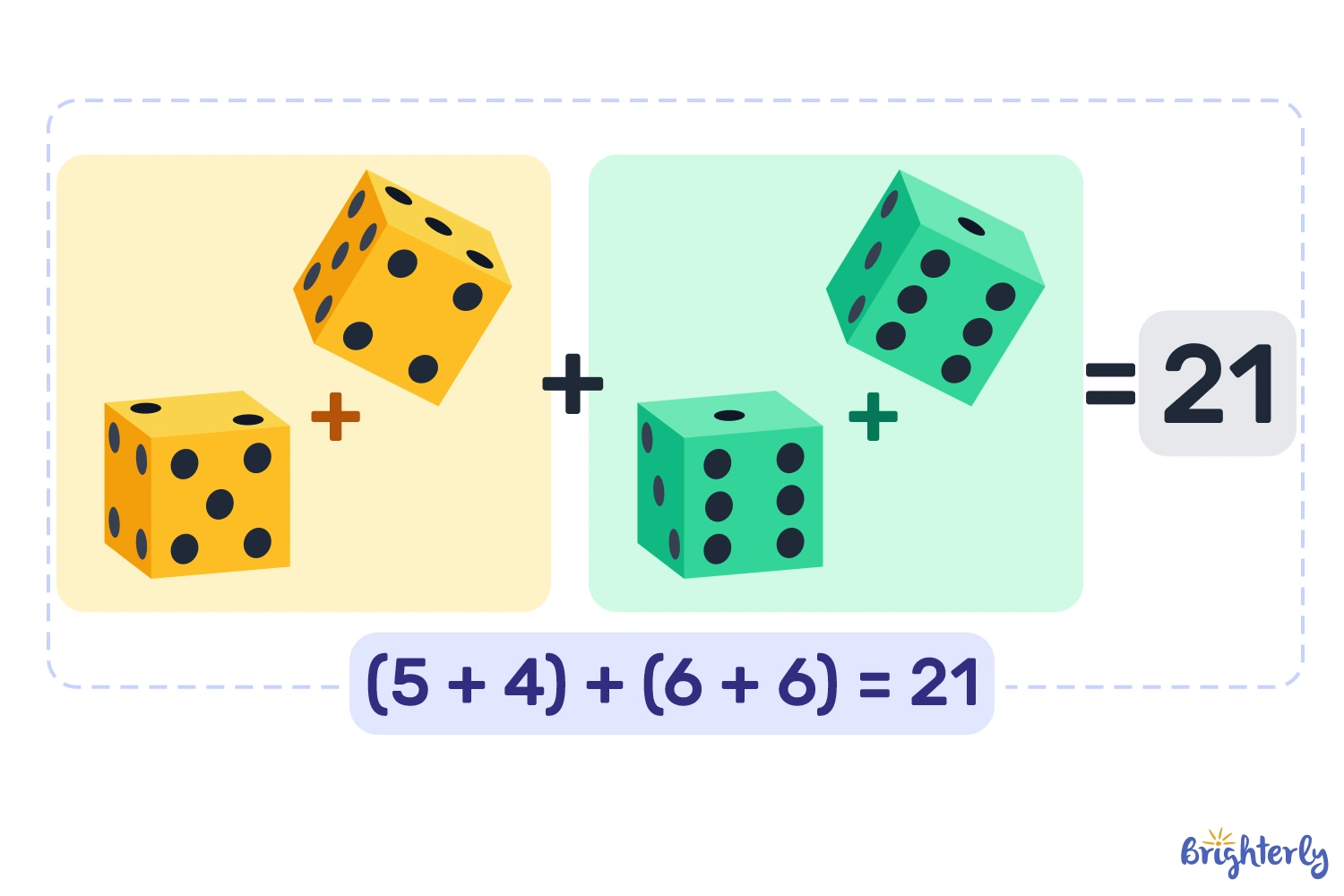
Students play in pairs, and each pair gets two dice. Children roll, say the addition problem out loud, and record the sum. First kid to reach 20 (or whichever number you choose) wins. You can also alter the number of dice based on level, for example, one die each for beginners, three dice for students working on larger sums. The game is simple and takes just a minute to explain.
2. Addition War
Skills: Addition, number comparison, fast recall
Next up in the list of addition math games is Addition War, and it’s also played in pairs or groups. You need a standard deck of cards. Remove the face cards or assign them values. Each player flips two cards and adds them. The higher sum wins all four cards. If there is a tie, each player flips two more and adds again. Students will get to practice addition facts at speed, with the draws making calculations even more challenging.
3. Number Bond Relay
Skills: Number bonds, part-part-whole relationships, addition fluency
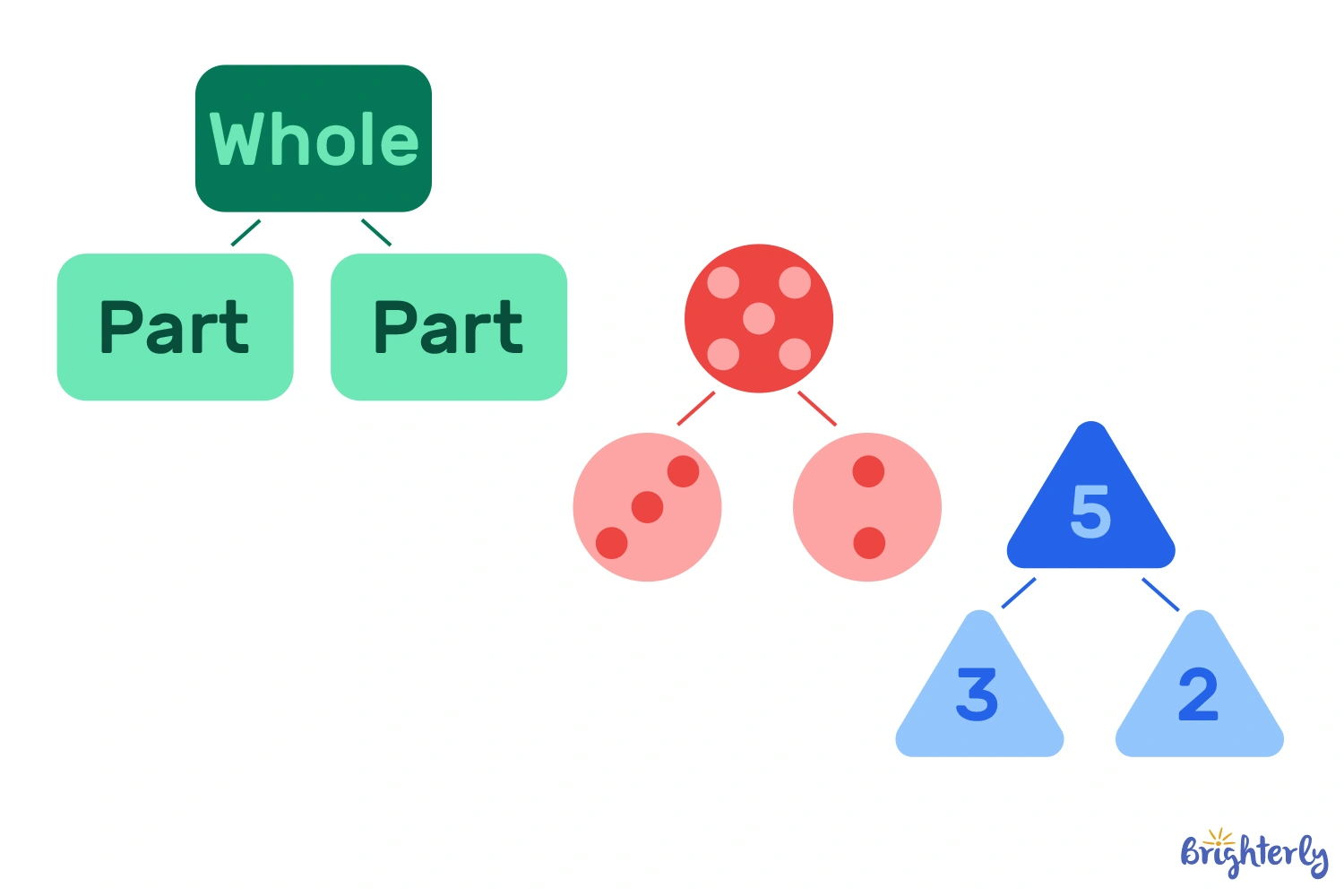
Write a target number on the board. 10 is a good starting point. Teams line up. The first player comes to the board, writes one correct number bond pair (3+7, for example). Teams keep going until they run out of pairs. The team which received the most correct number bonds wins. The game teaches kids that different numbers can have the same sum. If you don’t have a whiteboard, you can play the game on large paper, as well as at home in pairs.
4. Stand Up, Sit Down
Skills: Addition fact recall, listening, mental math
Every child gets a number, which you can write on a sticky note or just agree on. You then call out an addition problem like “Who has the answer to 6 + 4?” Children with the matching answer stand up and say it. This is a simple, quick, and effective game for fact fluency.
5. Human Number Line
Skills: Number relationships, place value, addition, teamwork
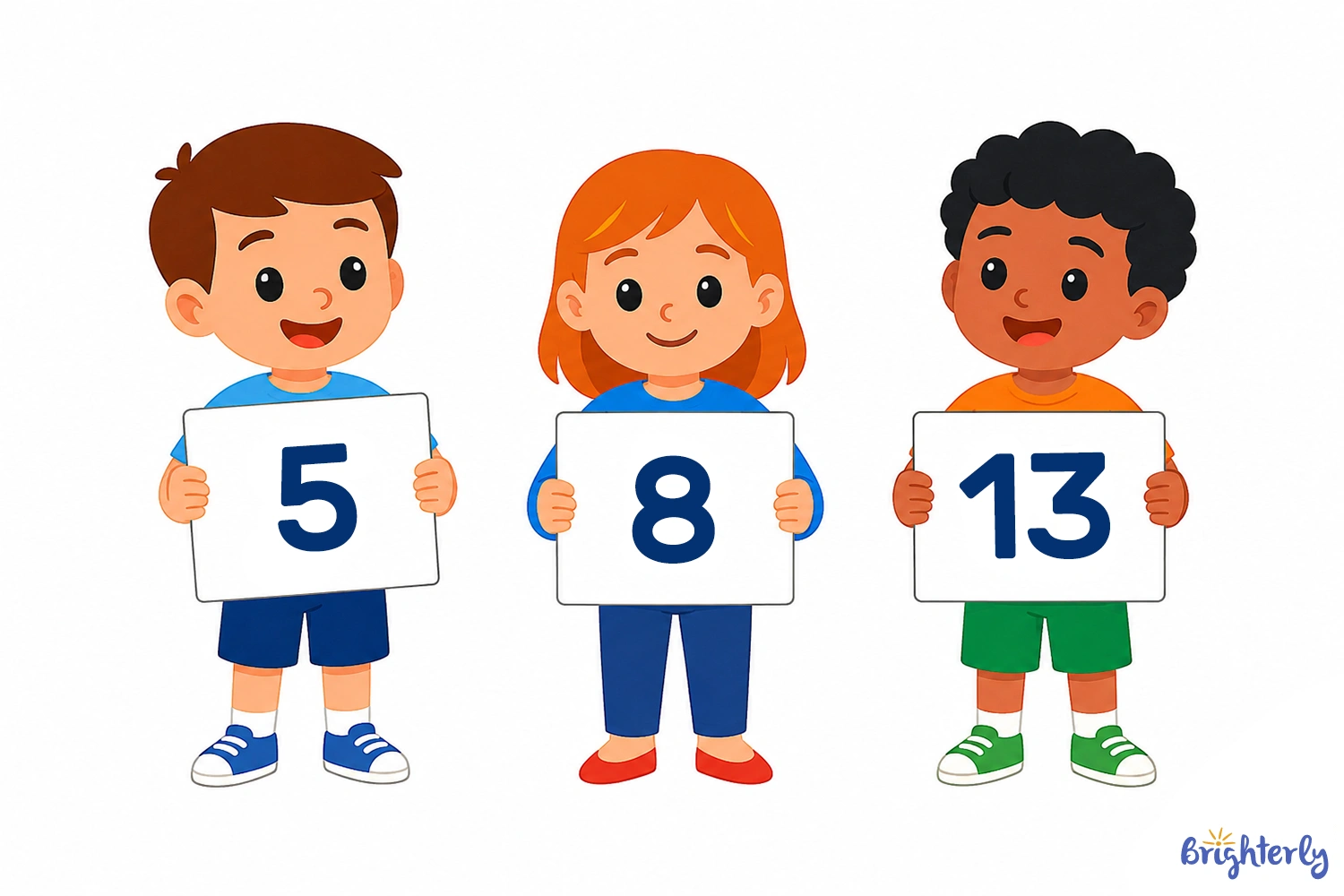
For this addition game, you need teams. Assign students a number. Then, they need to find a partner. Together, they must “add themselves up” and find the student who represents their sum to form a group of three. This is a great game for students to better understand number relationships and place value.
Printable Addition Games and Worksheets
There are also quite a few printable addition games you can look into if you want to give your child some quiet practice time away from the screen while keeping the learning process engaging and fun.
Printable Worksheets
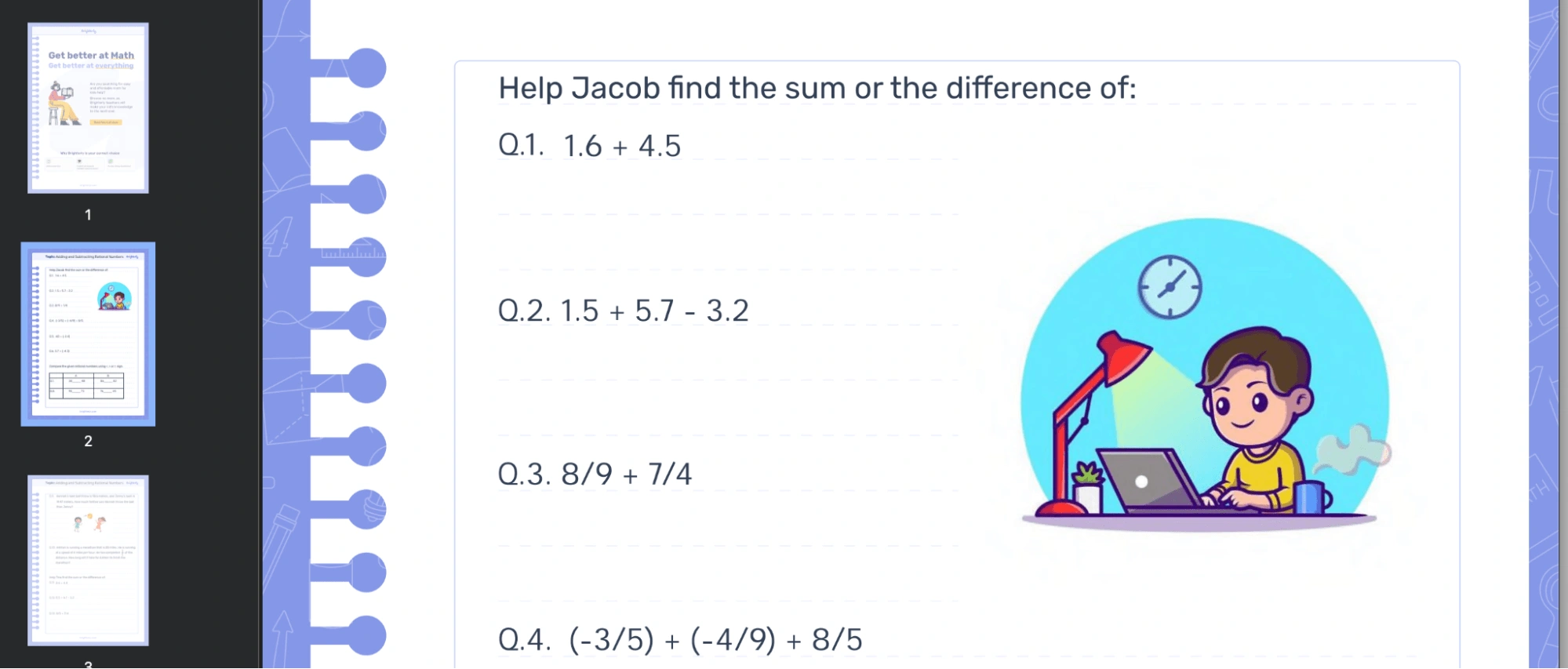
Our printable addition worksheets cover the full K-2 range, from simple single-digit sums to two-digit addition and subtraction with and without regrouping.
They are built to develop addition fact fluency progressively. The worksheets don’t just offer pages of random problems, but come as sequences that help your child notice patterns like number bonds to 10, doubles, and near-doubles along the way. Illustrations and different types of problems keep learning fun, and you can make them timed and solve them in groups to make them feel even more game-like.
Addition Facts Card Game
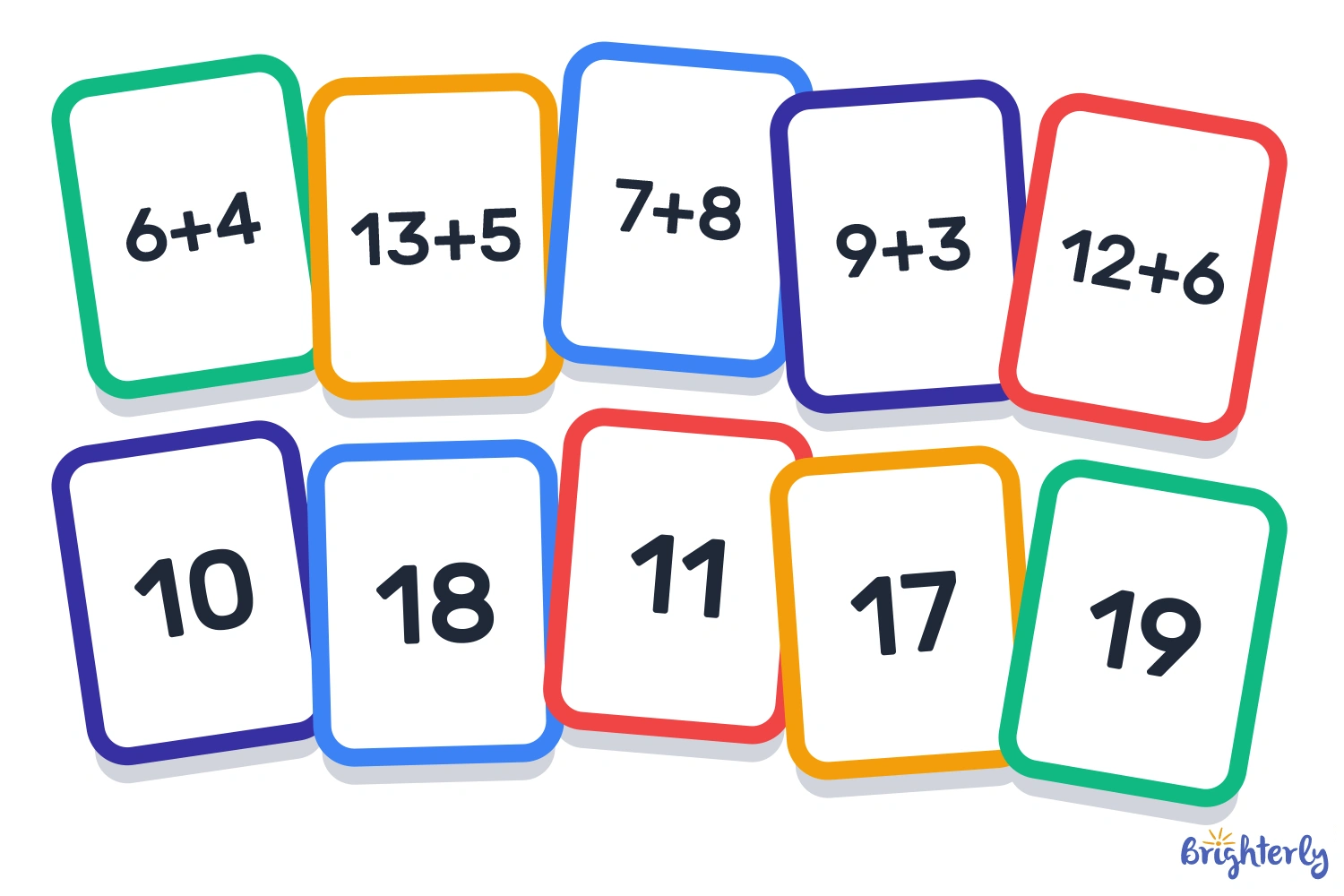
The next one from the list of printable addition games for kindergarteners is a game that works like a cross between flashcards and a matching game. You need to print out cards with addition problems and answers, and have kids pair each problem with its answer. Your child can play the game alone, in pairs, or in groups, with players racing to collect the most complete pairs.
Addition Maze
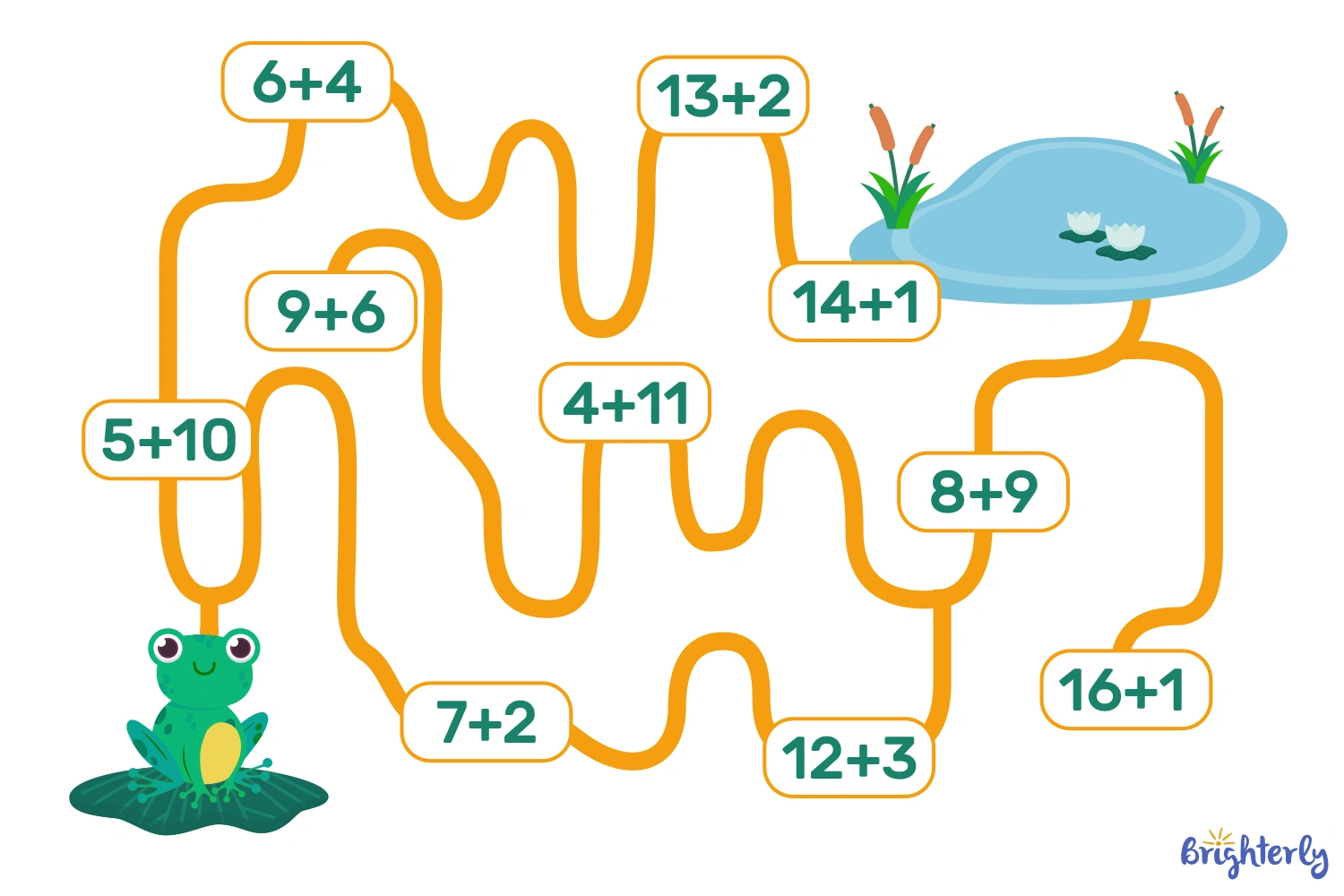
For this one, students navigate through a grid of equations, but they can only move through equations where the sum matches a specific target number. For example, they can only move through the areas where the sum of equations is 11 and 13 (or however many numbers you want). This is a fun process that builds fact recognition and a deeper understanding of numbers. For example, a maze can target the numbers in 10s, 20s, etc.
1:1 Math Lessons with Certified Tutors
Try one-on-one Brighterly tutoring starting at $17.70/lesson. A free trial lesson is available.
How to Pick the Right Addition Game for Your Child
To find the right offline and online addition games, you need to match them to the children’s skill levels and ages. Not every game will click with every child, and starting at the wrong level is the fastest way to kill enthusiasm.
The goal is to find what’s called the Goldilocks zone, the area where the game is still challenging enough, but not enough to frustrate your child. Here are a few ways you can do it.
Match the Game to the Skill Level
- Still building number sense (K-1): Start with Paws & Pastries or Fruit Splat Addition. Both of these addition games for kindergarteners and early learners use visual grouping, slower pacing, and, most importantly, a low-pressure format that works well for children still making sense of additions.
- Practicing single-digit addition facts (K1-2): Jet Ski Addition, Alien Addition, and Run Potato Run all work well at this stage. The games are quite fast-paced, but not so fast that your child gets overwhelmed. For the offline version, Roll and Race and Addition War are the natural equivalents.
- Moving into two-digit addition (K-2): At this age, you can move on to more complex games. The Row Addition, which layers strategy on top of the math, or number bonds with two-digit parts, is a good option. At this stage, you can also use printable worksheets covering regrouping for more in-depth practice.
Mix Online and Offline for Best Results
Digital addition games are a fantastic resource and can give your child the volume of practice they need to remember addition facts. Because the game mechanics keep your child engaged, they often work through far more addition facts per session than they would willingly do on paper.
However, addition facts are not all there is to math. And here is where the offline practice and games come into play. But offline games build something slightly different. With dice games, card games, and physical activities, your child works through math problems in a way that develops deeper number sense and the habit of working through a problem without prompts.
So, children who only play online addition games can develop quick recall without a solid understanding. Children who only do flashcards often grasp the concept, but don’t build the speed.
The combination of the two is what works best. A rough balance of a few different online 1st grade math and 2nd grade math classes per week, one or two offline games, and occasional printable math worksheets for elementary math will move the needle to addition fluency.
Note: If you are looking for a more individualized approach, make sure to book a free trial lesson with Brighterly and see how our math program works.
Frequently Asked Questions
What Are the Best Free Addition Games for Kindergarteners?
As kindergarten math games for the classroom and at home, Paws & Pastries and Fruit Splat Addition are the strongest starting points. All games are relatively slow-paced and focus on visual qualities. For the offline version, Roll and Race with a single die for each player is easy to set up and genuinely enjoyable for younger kids.
How Do You Make Addition Fun for Kids Who Dislike Math?
The most effective way is to make sure your child doesn’t feel they are being tested. Addition math games are great for this, as they serve as a means to a different end. Your child isn’t simply adding numbers; they are blasting an alien and feeding a pet. As they don’t have the pressure to get everything right all the time, addition becomes much more fun and enjoyable.
What Addition Games Work on a Tablet or Phone?
All six online games in this article (Jet Ski Addition, Alien Addition, 4 in a Row Addition, Fruit Splat Addition, Paws & Pastries, and Run Potato Run) are browser-based and work on tablets. This means that you can access them on any device without any additional downloads. Printable worksheets are also available on any device.
At What Age Should Kids Start Learning Addition?
Most children begin addition in kindergarten, around age 5-6. By first grade, the focus is already on the addition facts within 20, and by second grade, children typically start two-digit addition, including regrouping. What matters more is whether your child has a sense of numbers and quantities first, before moving to more complex additions.
Can Games Actually Improve Math Fact Fluency?
Yes. With games, your child can get more repetitions per session, as they will likely be more motivated to play than to solve textbook drills. That said, games are effective as part of a broader approach. While they help with math fluency, if your child doesn’t understand a topic, games won’t help them get there.



An ancient field of mathematics called geometry deals with shapes and their spaces as well as how they interact with one other in relation to each other. First-grade concepts are real-world concepts that students can see in their immediate surroundings, such as on furniture like chairs, sidewalks, beds, and tables. To put it another way, […]

Aug 17, 2022

Mathematics is compulsory for kindergarteners, so parents must help their kids have a swell time learning it. When introducing math to preschoolers, remember that they are still babies, so the learning process must be fun. Numerous math games, sites, and apps have revamped their strategies to focus on preschoolers. The youngest children will be more […]
Oct 21, 2022
Math & reading from 1st to 12th grade
Looking for homework support for your child?

Choose kid's grade

Math & Reading for Grades 1–12
Build real confidence for your child with a Brighterly math or reading tutor.