Student Mental Health Statistics 2026: Key Data & Trends
reviewed by Marvi M. Andres
Updated on May 26, 2026
Key Statistics at a Glance
- 40% of high school American students experience feelings of sadness or hopelessness (CDC June 2025 Data and Statistics on Children’s Mental Health).
- 1 in 3 of American high school students report not feeling good about their mental health most of the time or all the time (CDC June 2025 Data and Statistics on Children’s Mental Health).
- 29% of high school students in the US reported their mental health not being good most of the time or all the time (CDC, March 2026 Mental Health Data Channel)
- Arizona, Alabama, and Nevada are the top three US states with the highest prevalence of mental illness among youth (Mental Health America, 2025 Report).
About 1 in 3 (29%) of high school American students admit not feeling good about the state of their mental health most of the time or all the time, according to the Centers for Disease Control and Prevention (CDC) student mental health statistics. Find out more statistical data on youth mental health, most relevant as of May 2026, along with tips on how you can support your child’s mental well-being.
What Are Student Mental Health Statistics in the US?
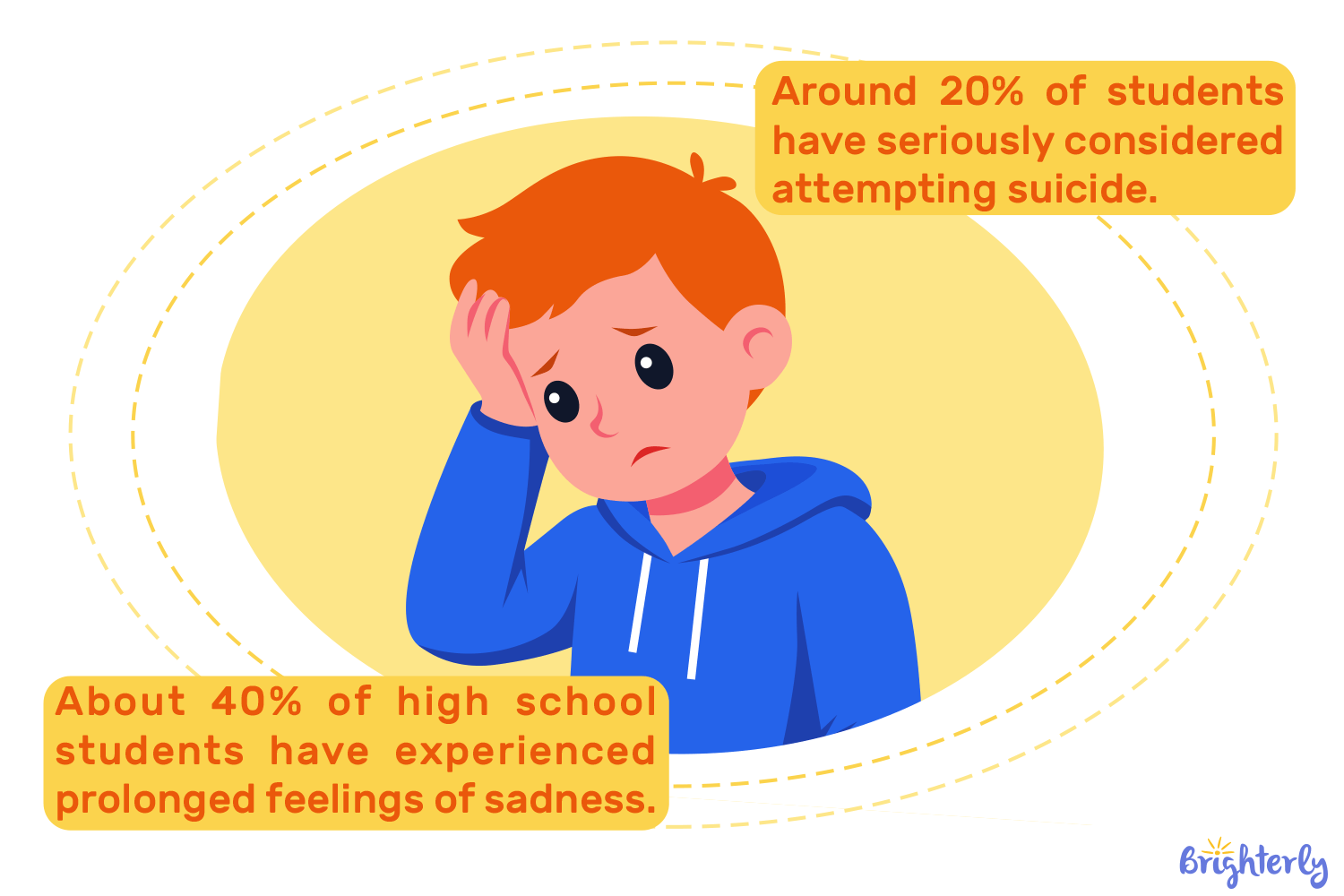
Statistics show that the mental health of US students is in crisis. According to June 2025 data by the Centers for Disease Control and Prevention (CDC), 40% of high school American students experience prolonged feelings of sadness or hopelessness, with around 20% admitting to considering a suicide attempt, and about 9% actually attempting it within one year.
*June 2025 data by CDC includes how many students struggle with mental health through the years 2021-2023, which remains the last available and relevant as of May 2026.
The same CDC data shows that among children (ages 3-17), 11% have diagnosed anxiety and 4% have diagnosed depression, with rates getting higher through adolescence. And another CDC dataset for March 2026 adds concerning statistics on this student mental health data, with about 29% of high school students (1 in 3) reporting that their mental health felt “poor” most of the time or all the time.


Does your child feel overwhelmed by schoolwork?
Brighterly tutors help kids build confidence in learning, reducing pressure before it builds into something bigger.
How Have US Rates Changed Since COVID-19?
Since the outbreak of COVID-19, the percentage of US students experiencing mental health issues remains at high levels. Even though the percentage of school students who reported feelings of sadness and hopelessness showed signs of stabilizing or slightly declining after COVID-19, the percentage of school students who were considering a suicide attempt kept growing after the pandemic.
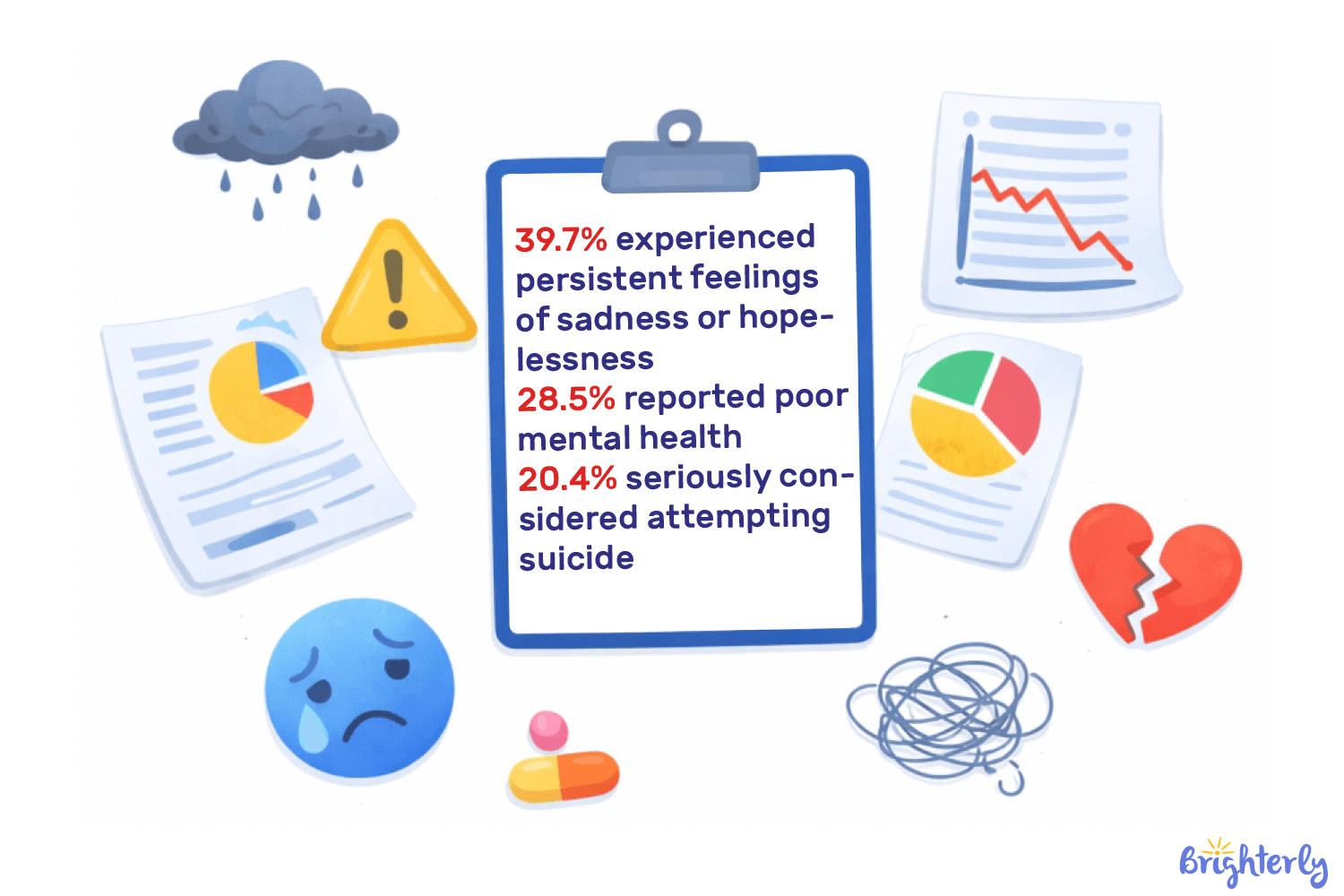
- Feelings of sadness and hopelessness: The percentage of high school students who reported feeling sad or hopeless surged from 36.7% in 2019 to 44.2% in 2021, showing a slight decline to 39.7% in 2023 (CDC 2023 Youth Risk Behavior Survey).
- Thoughts of suicide attempts: The percentage of students who seriously considered attempting suicide rose from 18.8% in 2019 to 20.4% in 2023. (CDC 2023 Youth Risk Behavior Survey).
- Suicide attempts: The percentage of students who reported actual suicide attempts increased from 8.9% in 2019 to 9.5% in 2023, following a peak of 10.2% during 2021 (CDC 2023 Youth Risk Behavior Survey; CDC 2021 Adolescent Behaviors and Experiences Survey).
Source: CDC
The pandemic learning loss statistics also show the COVID-19 learning impact, aside from its effects on kids’ mental health.
Explore Brighterly Learning Experience
Learn exactly how Brighterly helps students thrive through expert sessions, online tools, and proven feedback from thousands of satisfied parents
What Is the Most Common Mental Health Problem in Students?
Teen mental health statistics, mainly collected by the CDC, show that anxiety and depression are the most common issues children face. Among other mental health problems kids frequently struggle with are ADHD and attention disorders; eating disorders and body image issues; and suicide and self-harm attempts.
Anxiety Statistics in Students
June 2025 CDC data found out that among younger children, the rate of diagnosed anxiety is at 11% for ages 3–17, with girls being more affected than boys — 12% of girls have diagnosed anxiety compared with 9% of boys. Also, 20% of surveyed students reported symptoms of anxiety in the past two weeks prior to the research.
Depression Statistics in Students
June 2025 CDC data shows that 4% of children (ages 3-17) report a currently diagnosed depression (3% of boys and 6% of girls). Adding to this data, the Mental Health America 2025 Report found out that the percentage of youth (ages 12-17) who experienced a major depressive episode in the past year decreased by almost 3%, which shows a positive dynamic.
ADHD and Attention Disorders
According to the most relevant ADHD data by CDC, published in November 2024, 7 million (11.4%) of US students (ages 3-17) have ever been diagnosed with ADHD (attention-deficit/hyperactivity disorder), with the disorder being more common in boys than in girls — 15% of boys and 8% of girls diagnosed with ADHD. Additionally, the data clarifies that most (6 in 10) children had moderate or severe ADHD.
*Find out more: ADHD-related statistics.
Eating Disorders and Body Image Issues
August 2024 research published in General Psychiatry is the latest reliable data on eating disorders rates among American students. It shows that the prevalence of eating disorders is especially high among girls aged 13-18, having increased from the rate of 120 per 100,000 in 2017 to the rate of 916 per 100,000 in 2022.
Suicide Statistics
Suicide rates remain a serious concern in youth mental health statistics, with 20% of high school students seriously considering attempting suicide, according to CDC June 2025 data. The same data shows that 16% of students admit to planning suicide, and 9% to actually attempting it. In general, suicide is the second leading cause of death among US youth aged 10-14 and 15-24, according to 2024 WISQARS Leading Causes of Death data.
*Students in crisis can reach the 988 Suicide & Crisis Lifeline by calling or texting 988.
Mental Health in Schools Statistics by Age and School Level
Mental health in schools statistics by age and level collected by CDC, University of Michigan and United Healthcare, show that children’ s emotional well-being changes significantly as they move from being school pupils to being college students, with the latter being at a higher risk of having mental health issues.
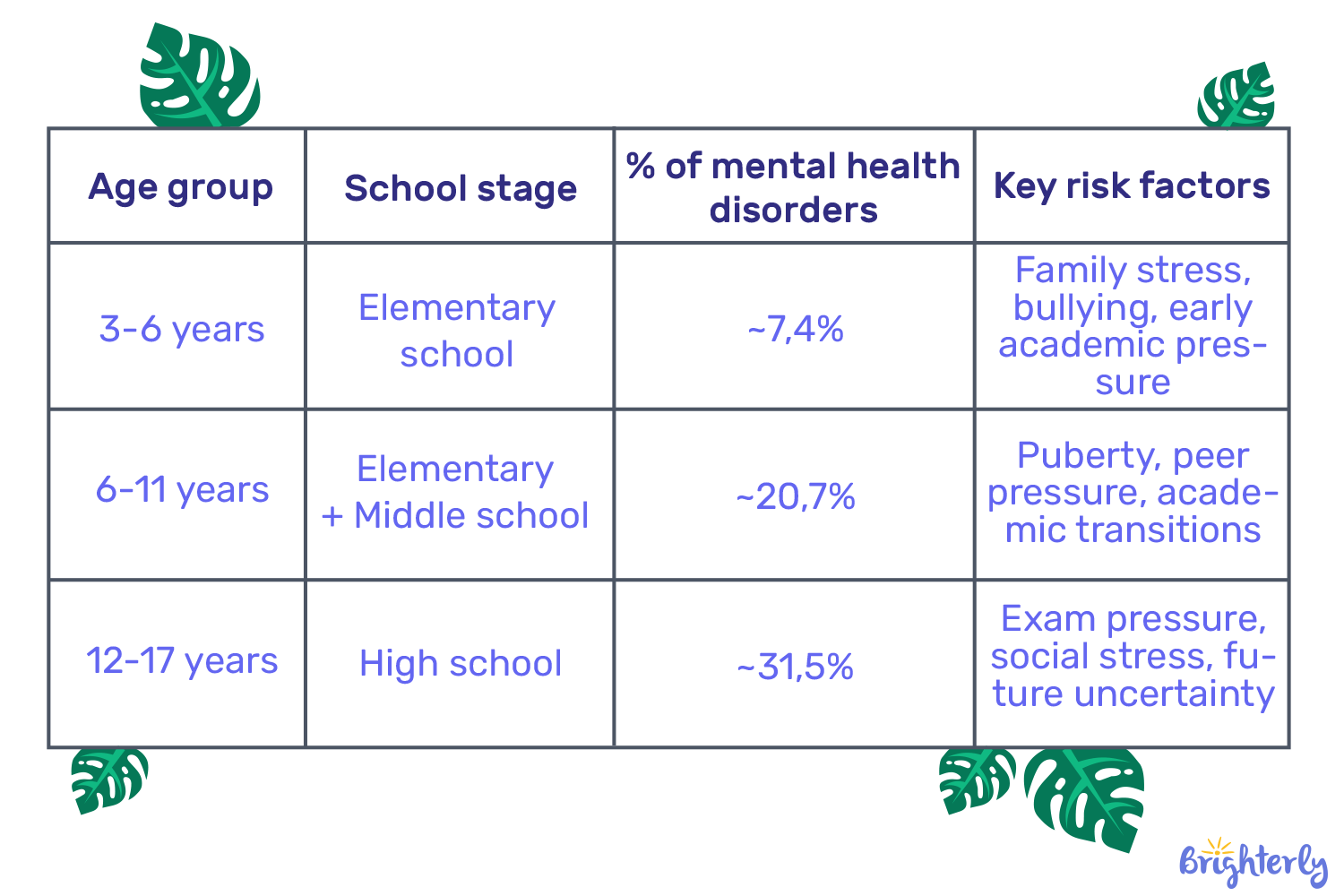
Source: CDC
What Are the Statistics for Mental Health in Teens?
Mental health in teens statistics represented in CDC NCHS data published in April of 2025 show that 19.2% of teens (ages 12-19) experienced depression in the period from August 2021 to August 2023, which is the highest rate among all age groups surveyed. This matches the CDC June 2025 data that shows 20% of school students are seriously considering suicide — depression is a major factor that can trigger suicide thoughts.
College Student Mental Health Statistics 2026
The United Healthcare (UHC) 2025 Adult Behavioral Health Report, published in April of 2026, found that over 60% of young adults and college students experienced a mental or behavioral health concern in the past year (2025), with the most common issues being anxiety, stress, depression, and ADD/ADHD. The report also claims this is the highest percentage of mental health issues in college students in four years surveyed (2022-2025).
What Are Student Stress Statistics by State?
Student stress rates vary considerably across US states, with Arizona, Alabama, and Nevada being the top three US states with the highest prevalence of mental illness among youth of ages 12 to 17, according to Mental Health America 2025 Report. In contrast, the District of Columbia, Vermont, and New York are the states where the prevalence of mental health illness is the lowest.
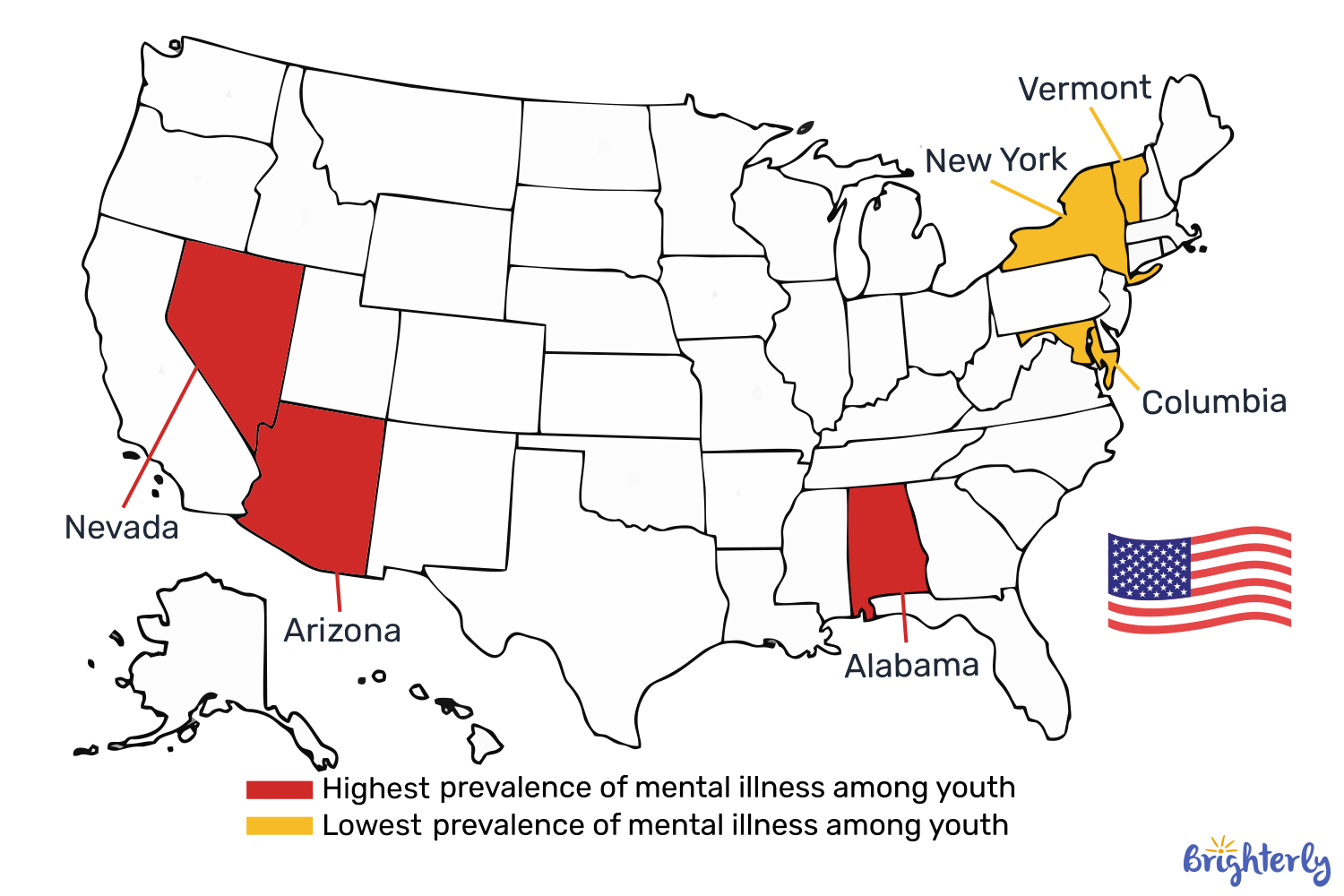 Other statistics on youth (ages 12-17) from the same report state:
- Hawaii has the lowest youth major depressive (MDE) episode rate at 16.06%, followed by Washington, D.C., at 16.10%, and South Dakota at 16.67%.
- New Hampshire has the highest youth MDE rate at 22.71%, followed by Nevada at 22.63% and Maryland at 22.30%.
- New York has the lowest rate of youth suicidal ideation at 11.30%, followed by Washington, D.C., at 11.60%, and Connecticut at 11.87%.
- Maine has the highest rate of youth suicidal ideation at 15.36%, followed by South Dakota at 14.98%, and New Mexico at 14.74%.
The Causes of Mental Health Issues in Students: How Parents Can Help
Mental health crisis among students results from many issues, which include academic pressure and overload, family stressors, digital and social media overload, and stigmatization of teen mental health issues. To help a child who faces these issues, you can focus on providing a proper level of attention and open communication.
Academic Pressure and Overload
Not all children can keep up with studying, social life, and hobbies at the same time, which can cause academic burnout. To avoid it, help your child learn time management skills, and consider letting go of some extracurricular activities to reduce their load. It’s also a good idea to talk with your child’s teachers to understand their performance and challenges, then calmly work together on how to improve things.
*Student burnout statistics 2026 collected in a December 2025 thesis called Factors Influencing Burnout Among University Students (currently the newest data on the subject) states that workload management, promotion of social support, and interventions to reduce digital distractions are essential to mitigate burnout and promote student well-being.
Family Stressors
Problems at home can greatly affect a child. Review your family dynamics, try to resolve conflicts, and create a safe atmosphere at home. Make time for fun family evenings and avoid criticizing mistakes. Over time, your child will feel they can trust you.
Digital Overload and Social Media
Social media often leads to cyberbullying and information fatigue. You can read more about this in the article “Statistics about social media and kids”. For example, the 2026 World Happiness Report supports the cyberbullying point by stating that social media causes direct harm (sextortion and cyberbullying) and indirect harm (depression and anxiety).
To help your child, you can set screen-free hours. Although taking away a teen’s phone might seem unrealistic, you can try doing it by involving a child in activities, hobbies, or family game nights. Also, explain that not all images online are real, and not everyone on the internet is as successful or happy as they seem.
Stigma Around Mental Health
Acknowledging a mental health issue isn’t easy. Kids may close off, fear judgment, and ignore the problem. Try to normalize conversations about mental health, its importance, and ways to improve it. If problems persist, seek professional help from a school counselor or a licensed specialist for assessment and treatment.
How Does Poor Mental Health Affect Academic Performance?
Poor mental health in teenagers is one of the main reasons for chronic absenteeism, according to October 2025 research by the Wisconsin Office of Children’s Mental Health. However, it also works the other way around — chronic absenteeism can result in mental health issues.
Impact on Grades and Attendance
The October 2025 research by the Wisconsin Office of Children’s Mental Health found that poor mental health is one of the main reasons for chronic absenteeism. However, the research also adds that mental health can be both a cause and an effect, meaning that a child skipping school can cause mental issues and mental issues can make a child unwilling to attend school. The research also discovered that anxiety and depression are the main causes of absenteeism related to mental health issues.
*The same research states that anxiety and depression can make it difficult for a student to concentrate, affecting their academic performance.
Support your child's mental well-being
One-on-one online tutoring takes away school-related risks, making a child less anxious during lessons.
How Can Schools Support Student Mental Health?
School support for students’ mental health can include therapy access, social-emotional learning, and reduced academic pressure. Here are some children mental health statistics that show the current state of schools’ capability to provide what’s needed to support adolescent mental health and why it’s important to do so.
- School psychologists and counseling: September 2025 KFF research shows that in the US, about 18% of students use school mental health services, while over 70% of schools have at least one specialist who can help a child. And the July 2025 Fact Sheet by LSI states that The American School Counselor Association recommends a ratio of 1 counselor per 250 students.
- Social-emotional learning (SEL): Based on a November 2025 research article, published in Mental Health Development under Contextual Adversity and Psychosocial Stress, SEL programs help students develop self-awareness and manage their emotions, positively affecting their academic performance.
- Reduced academic pressure: A Systematic Literature Review, issued in December 2025, covers more than 60 studies showing that high academic pressure causes stress, worsens well-being, and lowers motivation in children. For example, the homework statistics show that too much homework can lead to higher stress, less sleep, and worse academic performance.
Note. If your child struggles at school, you can also consider getting them an online tutor. Our educators teach a math program and writing classes to K-12 students, including those who face mental health issues.
10 Student Mental Health Tips for Parents
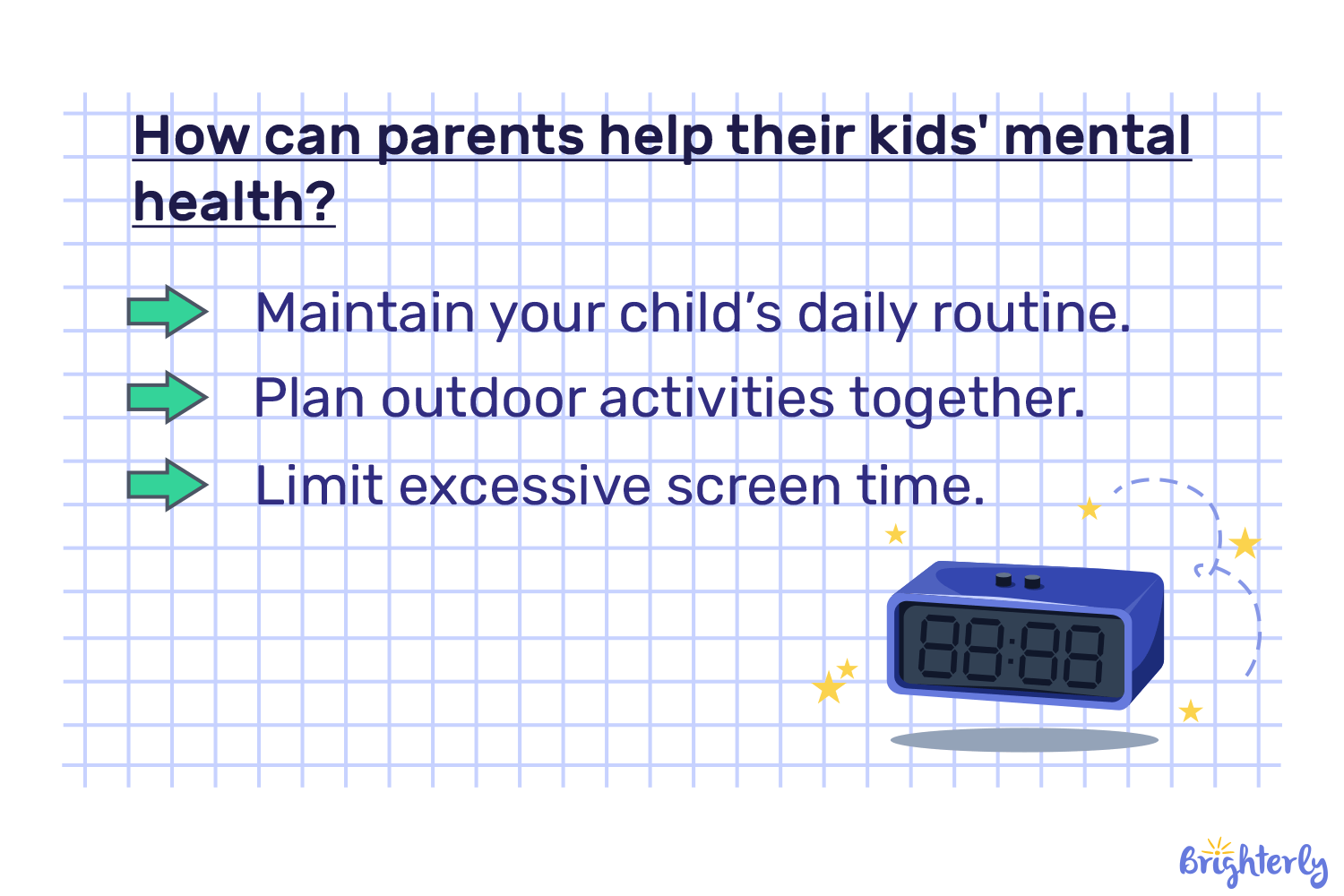
- Maintain your child’s daily routine.
- Plan outdoor activities together.
- Limit excessive screen time.
- Support healthy eating and encourage physical activity.
- Be available for open, honest conversations.
- Provide a non-judgmental space where teens can talk about their feelings.
- Watch for changes in mood and behavior.
- Encourage participation in a series of extracurricular activities.
- Check on academic progress and offer help if needed.
- Seek support from the school or professionals when necessary. For example, personalized one-on-one tutoring on the educational platform can help a child rebuild confidence in subjects that feel overwhelming without experiencing the pressure of a classroom setting.
Frequently Asked Questions
How Do You Recognize Early Signs of Mental Health Issues in Students?
To recognize early signs of mental health issues in students, watch out for noticeable and recurring changes in their mood, behavior, and academic performance. For example, if a child is sad or irritated for no reason, shows sleeping or eating changes, has low energy, or complains about physical symptoms for 2+ weeks, you can suspect mental health issues.
*Remember that only a professional doctor can diagnose a child.
At What Age Do Mental Health Problems Usually Begin?
A June 2021 study by Psychology Today states that 50% of mental health problems usually begin around the age of 14, however, it greatly depends on the problem. For example, neurodevelopmental disorders can develop as early as the age of 5.
*This research remains the most relevant data on mental health statistics 2026.
How Many Students Receive Treatment vs. Go Without Help?
According to CDC June 2025 data, 16% of adolescents reported receiving treatment in the form of prescribed medication to help with their emotions, concentration, behavior, or mental health, while 20% admitted to getting help in the form of therapy. As for going without help, 20% of adolescents reported their mental health care needs are not met.
What Are the Biggest Barriers to Mental Health Support for Students?
The biggest barriers to student mental health support for students are stigma around the issue, lack of awareness, high costs of treatment, and limited counselor availability. For example, the United Healthcare 2025 report found that for 31% of young adults and 19% of college students the high cost of professional help was the main reason they didn’t get treatment. For underserved students from low-income families and minorities, the price issue can be even bigger.
Is School Stress the Leading Cause of Student Mental Health Issues?
Yes, academic pressure, like stress due to a high workload, is a leading cause of student mental health issues, resulting in anxiety, depression, and burnout. For example, May 2022 Educational Psychology research found a statistically significant correlation between the academic stress of university students and their mental well-being.
*This research remains a relevant source of information on school stress as a a factor affecting teenage mental health statistics 2026.
How Can Online Tutoring Support Student Mental Health?
Online tutoring supports student mental health by reducing academic anxiety through personalized, flexible learning, which helps a child build confidence. Besides, there is no school setting and no peer pressure. Online classes mean a safe, comfortable learning environment, where kids can study at their own pace and according to their learning style.



Kahoot free version is usually enough for personal use. For those seeking an in-depth practice, paid plans start from $3/month. For further details, this in-depth review is what you need to understand the pricing plans, cost per month and per year, and features you pay for. How Much Does Kahoot Cost? Plan Typical monthly price […]

Jan 04, 2026

Wondering how to help your child write better and more clearly? As an experienced writing teacher, I’ve gathered the 9 best handwriting apps for kids and highlighted their main features, advantages, and disadvantages. My list includes both paid and free platforms with diverse functions to support learners with various needs. Key points iWriteWords and Dexteria […]

Jan 05, 2026
Math & reading from 1st to 12th grade
Looking for homework support for your child?

Choose kid's grade

Math & Reading for Grades 1–12
Build real confidence for your child with a Brighterly math or reading tutor.