Homework Statistics 2026: Trends, Time Spent, and Learning Impact
reviewed by Marvi M. Andres
Updated on September 4, 2026
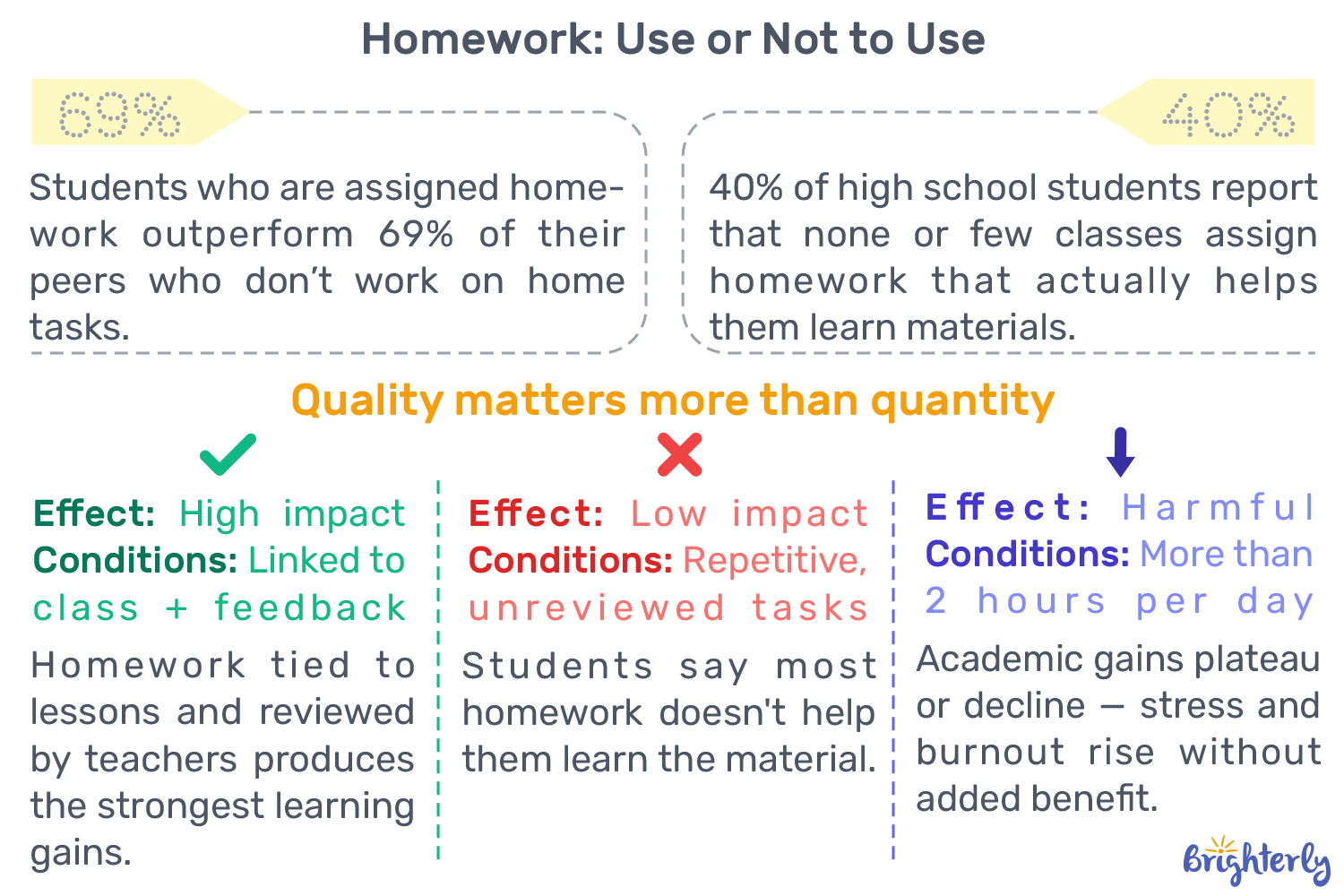
Key points: Homework stats prove that more homework does not mean better results. The cases from different countries show that even with a low homework load, the students can still succeed. At the same time, the national organizations and researchers underline that a heavy homework load can bring stress and decrease academic performance. Explore how many hours students spend on homework and under what conditions it may affect their academic results. Stats about homework Data Source (Year) The average time US high school students spend on homework 6.8 hours/week (or 1 hour a day) Global average for 15-year-old students to spend on homework 4.7 hrs/week Countries with the highest homework load China: around 14 hrs/week US students who see homework as the primary source of stress 56% of high schoolers The point at which extra homework seems to offer no academic gain 2 hrs/day Students (9-years old) with no homework in 2022 43% (compared to 23% in 2008) NAEP Homework Trends (2022) Explore Brighterly Learning Experience Learn exactly how Brighterly helps students thrive through expert sessions, online tools, and proven feedback from thousands of satisfied parents Recent global homework statistics reveal one surprising pattern. Even though parents associate heavier and longer homework with better educational outcomes, the results depend on the educational system and approaches used. The belief that more homework means better results may be the effect of the teaching method that traces back to traditional teaching: making students stay at the table until every assignment is finished. Moreover, the 2017 Teach post, analyzing the 2014 Pearson report and global data, challenges this common belief: Does this data imply that less homework leads to better educational outcomes? Not necessarily. Often, it’s a lighter but meaningful homework load, paired with effective teaching and supportive environments, that makes all the difference. But how to ensure homework effectiveness and help your kid with homework? For some parents, personalized tutoring, including Brighterly, becomes the tool that transforms learning into an interactive and fun experience. Our elementary math tutors and elementary reading tutors, as well as professionals teaching middle- and high-schoolers, focus on kids’ understanding, learning habits, and customizing learning plans to their needs, pace, and learning styles. That way, we keep homework balanced, and kids get enough support.
Make learning less frustrating for your kid
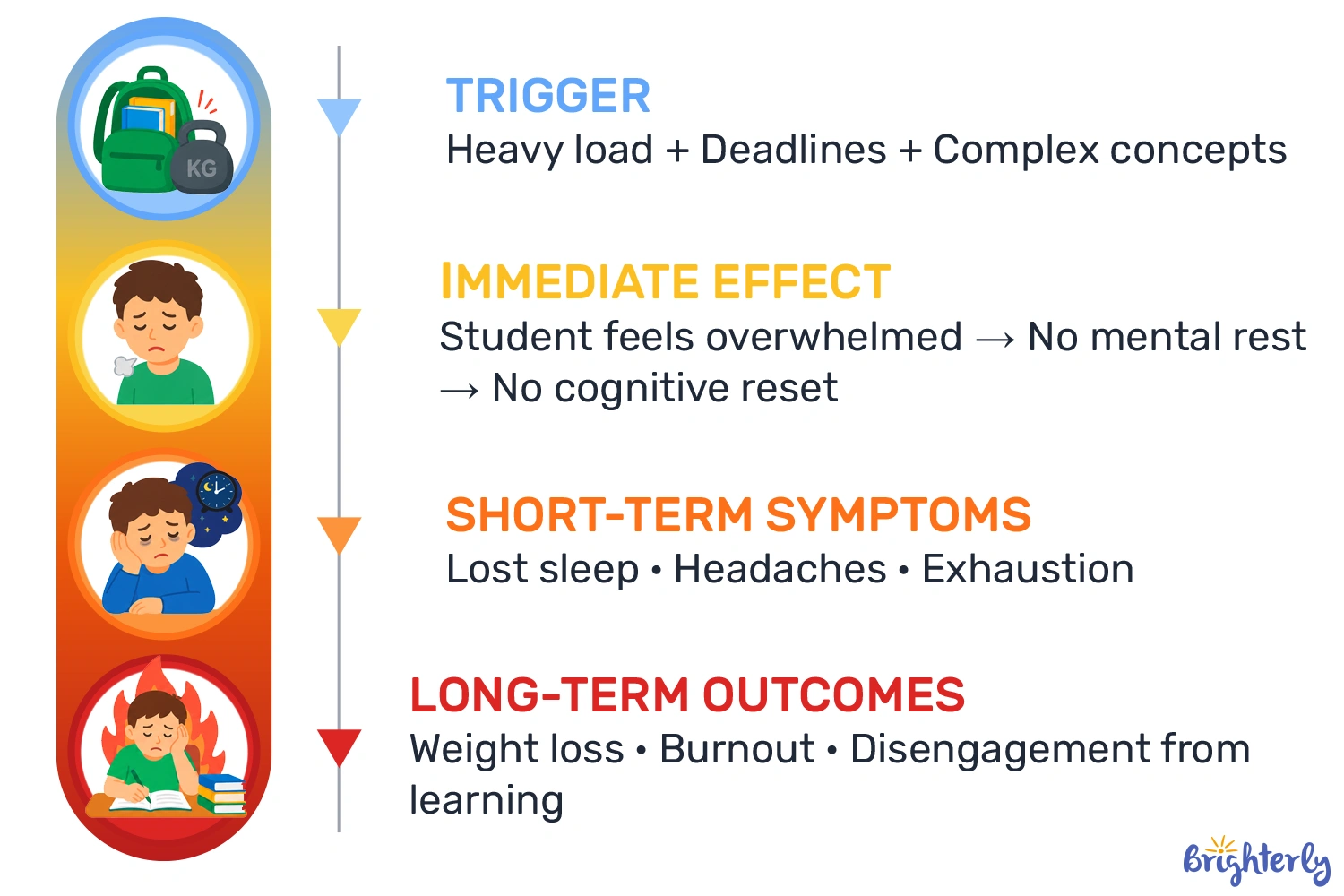
Brighterly tutors customize lessons according to kids’ needs and interests Homework affects students similarly around the world. As a 2018 BetterSleep Research suggests, 74% of students consider it a major source of stress, ranking it just below school grades. Even elementary school kids nowadays are being burdened with large amounts of homework. These and other studies that show homework is not beneficial prompted many countries to recognize homework’s counterproductivity and take steps to improve the health stance of the growing generation. If the homework is excessive, it can harm mental health, causing chronic stress, disrupting sleep, or triggering burnout. So, the connection between homework and student mental health is clear. Long hours of homework, if they are frequent, can bring physical symptoms like headaches and anxiety. Homework causes stress due to the heavy learning load, deadlines, and complex concepts that can overwhelm students. Such pressure prevents them from resting and impedes adequate cognitive resets. In the long run, the overwhelm and overload may result in lack of sleep, headaches, exhaustion, weight loss, and burnout. Note: Struggling with homework? Check out these homework help apps. According to the 2011 National Center for Education Statistics survey, on average, high school students spend about 6.8 hours per week on homework, or roughly one hour per school day. Taking into consideration the 2024 student-led analysis in Parker School Weekly, it’s possible to see whether the 10-minute rule actually works. Spoiler alert: there’s a big overload. 100 At Brighterly, a math and reading platform, we provide learning experiences tailored to each child’s needs, help develop learning habits, and increase kids’ confidence, not the amount of homework that triggers stress. Firstly, within our programs, your child gets continuous guidance from a professional reading or math tutor. As a bonus, you can use a well-developed collection of tasks for learning at home. These are interactive math worksheets and reading worksheets that should minimize the negative effects of homework on students.
Help your child reach their full potential!
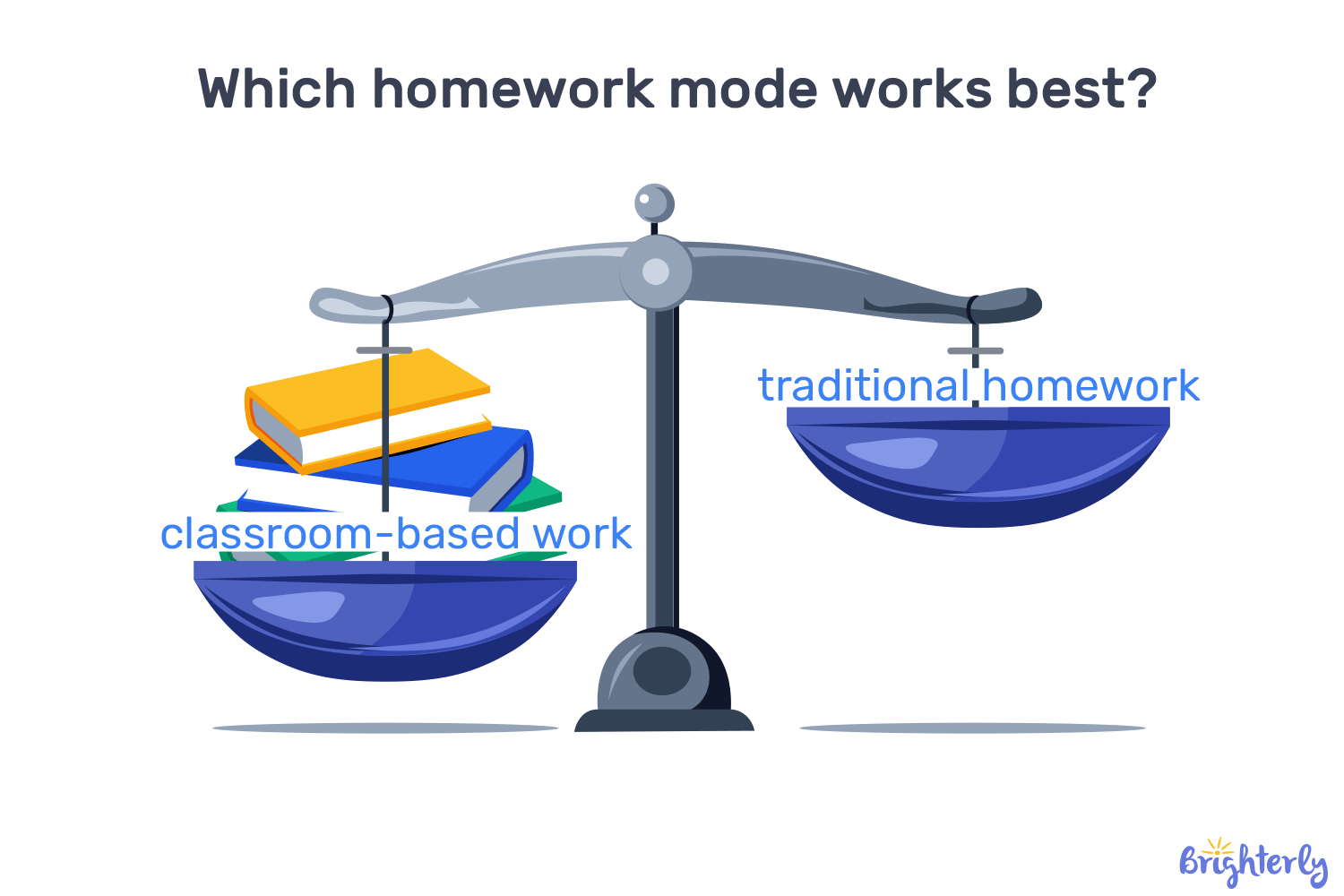
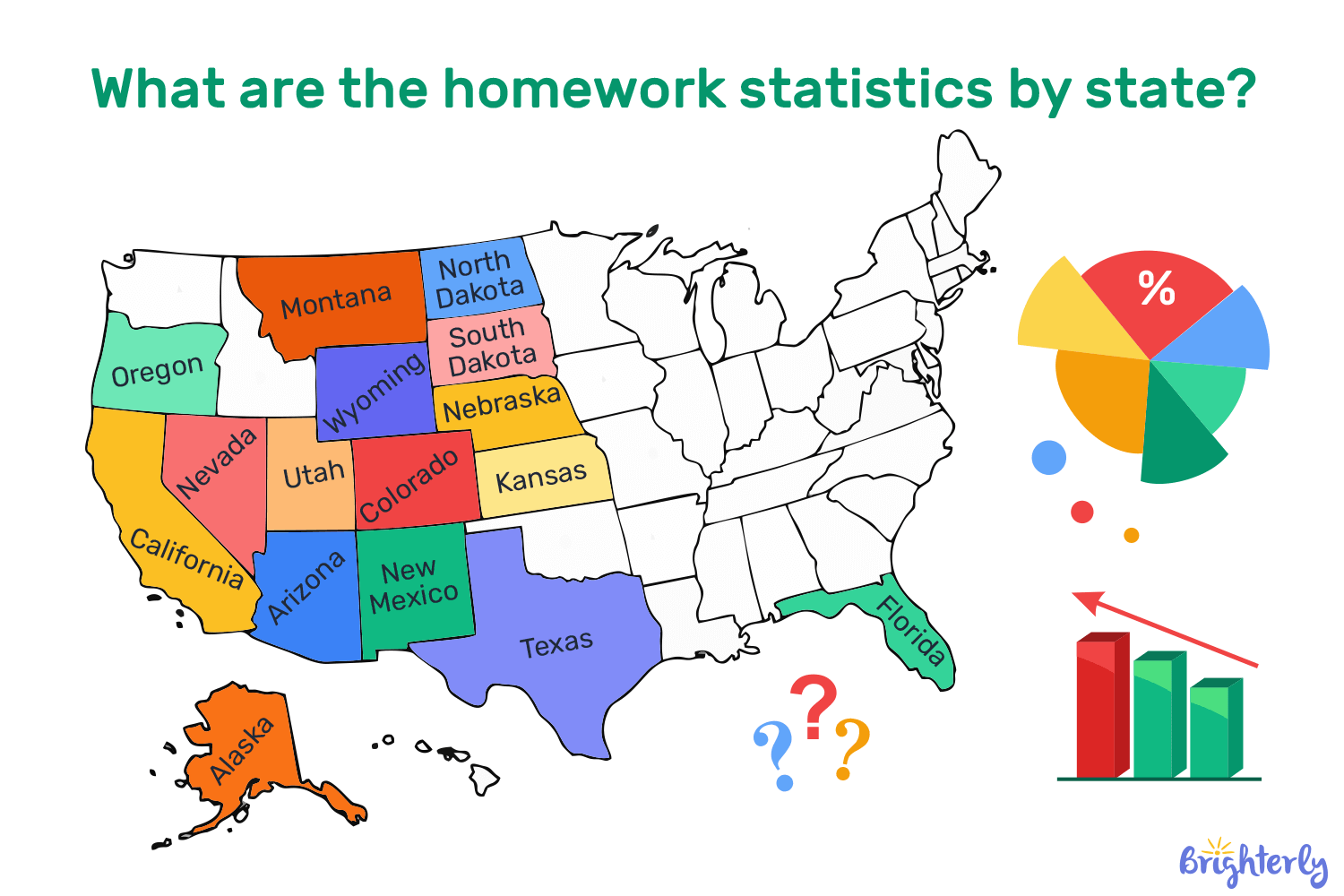
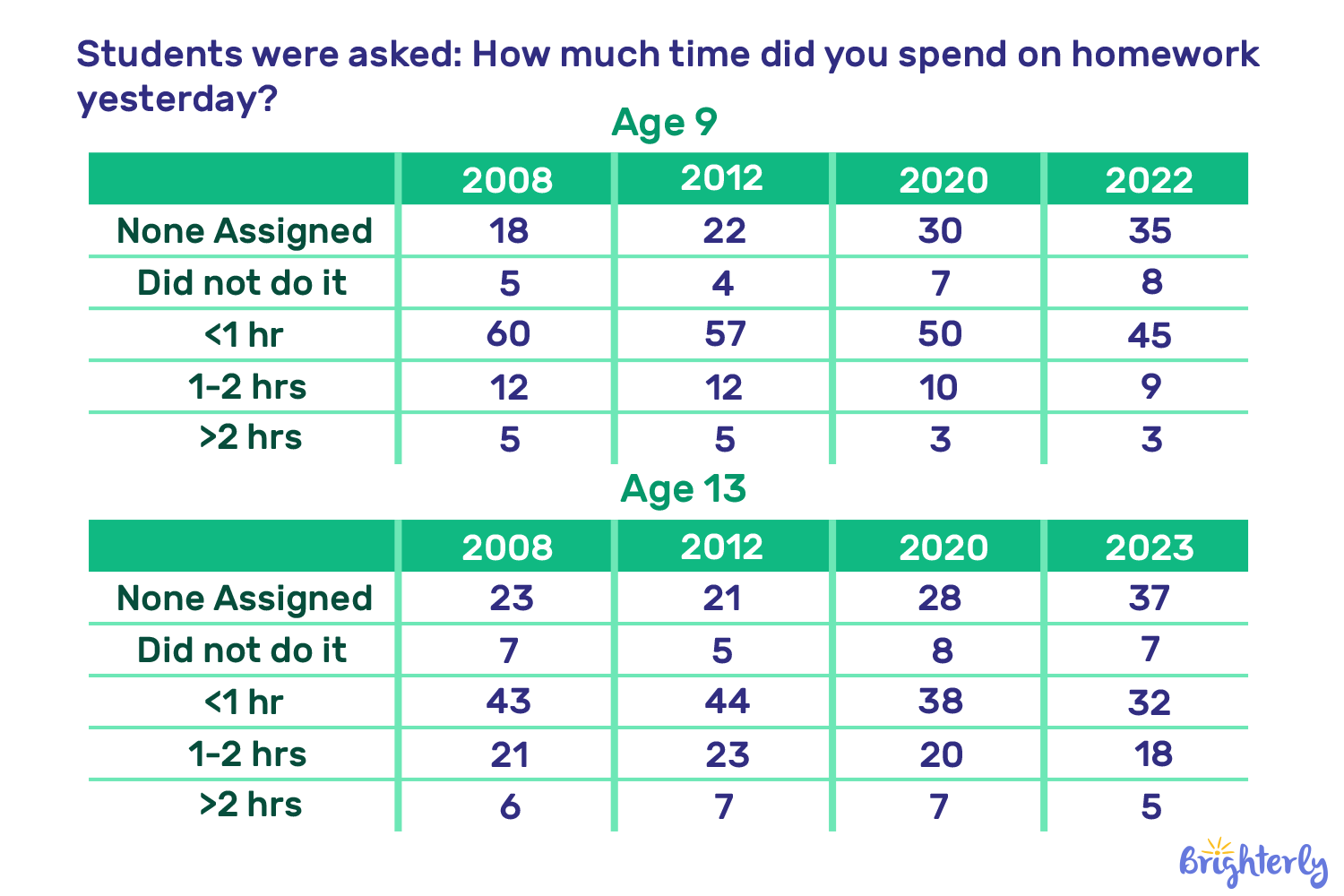
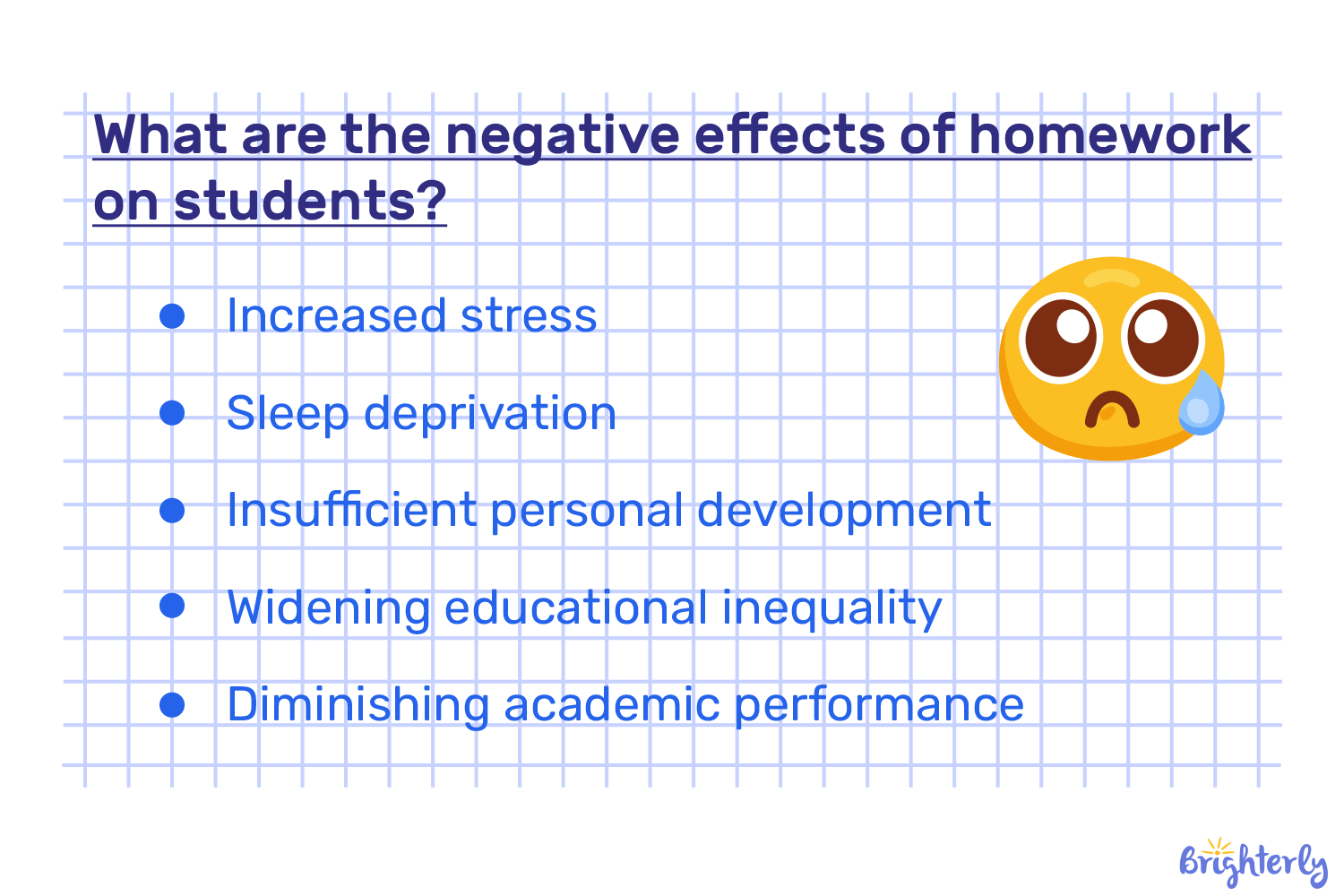
Get a personalized learning plan in several minutes Average homework time per week in the United States differs substantially by state. According to the 2021 study by PlaygroundEquipment, at the high school level, students in Northeast states such as Vermont, Maine, New Jersey, and Connecticut spend the most time on homework, averaging over 100 minutes per day, or nearly twice as much homework as some of their peers. In contrast, students in Florida report the lowest average homework time at the high school level, with about 44 minutes per day. Similarly, the Deep South states of Mississippi, Alabama, and South Carolina fall on the lower end of the spectrum, averaging under 50 minutes per day. At the elementary and middle school level, California, Washington, and Utah assign more homework than average, while Texas and North Dakota report the lightest workloads. National Assessment of Educational Progress data show U.S. students’ homework loads indeed have dropped over time. According to the 2023 analysis of data by Tom Loveless: Simultaneously, students reporting heavy homework loads remain rare. Across age groups, only about 3-5% of students report spending more than two hours daily on homework. The most comprehensive study on homework length by country is the 2014 OECD report on 15-year-olds, also covered by the World Atlas post. The study showed that the average time spent on homework across economically developed countries is almost 5 hours per week. However, country-by-country data varies significantly. Considering the data from the 2014 report on 15-year-olds, the time spent on homework significantly decreased from 2002 to 2012. Nevertheless, across countries, homework benefits statistics say that students spending less time on homework aren’t necessarily studying less. In South Korea, for example, students spend less than 3 hours on homework per week, but they spend an additional 1.4 hours per week with a personal tutor and 3.6 hours in extracurricular classes. It’s clear that the academic benefit of homework depends on the student’s age, even though there’s debate. Home assignment seems to have a strong or positive correlation with academic achievement, as the 2017 review by Gökhan Bas provides. Yet, the excessive hours can result in significant burnout and stress. Negative effects of homework on students refer to the increased stress, sleep deprivation, insufficient personal development, contributing to the education inequality, and diminishing academic performance. So, when homework becomes excessive, it stops bringing fruit and can bring harm instead. Homework stress statistics suggest that heavy homework loads are consistently linked to higher stress, anxiety, and depressive symptoms, especially among middle and high school students. Many students report homework as one of their main daily stressors, which can contribute to emotional exhaustion and burnout. Spending long hours on homework often cuts into sleep time, leading to chronic fatigue. Reduced sleep is associated with headaches, weakened concentration, lower mood, and poorer overall health, which can ultimately harm future homework and academic performance. Among other cons, excessive homework leaves students with less time for family interaction, socializing, sports, and hobbies. These activities are important for social skills, emotional growth, and physical health, particularly during adolescence. Homework can actually amplify socioeconomic differences. Students with quiet study spaces, parental help and income, and access to technology benefit more than peers who lack these resources. That creates unequal learning outcomes. Homework facts show that beyond a moderate amount, additional homework produces little to no academic benefit. Yes, but only under certain conditions, as the evidence across numerous studies provides. Dwelling on the previously mentioned 2017 study by Gökhan Bas et al., the homework may have a different impact on different grades. Therefore, light but appropriate and challenging homework actually helps children to develop discipline and succeed academically. Some other positive effects of homework include: More than half of people, in particular, children, struggle with homework, making it a widespread stressor among students. In particular, a 2018 BetterSleep study indicates that 74% of students report that homework causes stress, and 56% see it as a primary stressor. Homework load may be too much when the academic return decreases, and children are subject to significant stress. In this regard, NEA guidelines define the 10-minute homework rule per grade as a healthy portion. So, for high schoolers, any homework that is two hours a night is too much. For grades 1-3, 30 minutes per night would be too much, and for grades 4-6, more than 70 minutes would be a lot. Even though there’s an ongoing debate on this question, it shouldn’t be banned. The homework appears to be the primary strategy for improving skills, retaining knowledge, and developing self-discipline and autonomy. For parents, it’s a way to engage in the education of their kids. However, the arguments for banning homework derive from statistics on homework effectiveness for younger grades. The homework overload leads to stress and burnout. The National Education Association recommends using the “10-minute rule” to define homework load by grade level. So, for primary schoolers, 10-20 minutes per night is alright, for grades 4-6, 40-60 minutes is a decent amount of minutes, for middle schoolers, it’s 1.5 hours, and 2 hours per night for high school students. However, the number of minutes depends on the school, students, and learning pace and needs. Homework helps improve academic achievement starting from the middle school years, or 6th grade, when kids are 11-12 years old. For kids in middle school and high school, homework can bring tangible academic benefits. For children below this age, homework seems to have little effect on test scores or grades, and can even result in stress and academic burnout. Yet, for them, homework can help build non-academic skills and time management. Yes, homework works better when teachers provide quality feedback to the students. Quality is a crucial factor, meaning it should be timely, clear, and specific. If teachers review assignments and highlight areas to improve, it allows correcting mistakes or supporting motivation. Without the feedback, the assignments can be frustrating and counterproductive. Even though there may be a positive correlation in cases of some countries, generally, the amount of homework does not necessarily affect performance. Students from some countries, like South Korea and Finland, where teaching practice minimizes the provision of homework, have higher performance results than in China, where the load is higher. However, the performance often connects to the teaching approaches and classroom strategies. Homework has been proven moderately effective for academic success, yet its effect depends on the students’ age, assignments, and the time students spend. The most popular yearly subscription plan at Brilliant.org costs $20/month and $240/year. The platform also offers a family plan up to 6 members for $40/month and a monthly subscription worth $30/month. How Much Does Brilliant.org Cost? Brilliant.org cost includes a paid Premium subscription that provides full access after you’ve tried a free version with limitations. […] Jan 04, 2026 Kahoot free version is usually enough for personal use. For those seeking an in-depth practice, paid plans start from $3/month. For further details, this in-depth review is what you need to understand the pricing plans, cost per month and per year, and features you pay for. How Much Does Kahoot Cost? Plan Typical monthly price […] Jan 04, 2026
Homework Statistics at a Glance
Homework Statistics Worldwide


How Does Homework Affect Students Globally?
How Does Homework Affect Students’ Mental Health?
How Does Homework Cause Stress?
What Are the Statistics About Homework in the US?
Recommended vs. Actual Homework Time by Grade
Grade 1
Recommended (min)
Actual reported in Parker School (min)
Over guideline in %
Grade 9
90
Around 150
~67%
Grade 10
Around 174
~74%
Grade 11
110
Around 208
~89%
Grade 12
120
Around 180
~50%
What Percent of Students Are Stressed by Homework in the US?
How We Help Reduce Homework Stress
What Are The Homework Statistics by State?
Statistics on Homework by Year and Age
Homework Stats by Country
Homework vs No Homework Statistics
Statistics About Homework Being Good
Statistics About Homework Being Bad
What Are The Negative Effects of Homework on Students?
Increased Stress
Sleep Deprivation
Insufficient Personal Development
Widening Educational Inequality
Diminishing Academic Performance
Does Homework Help Students Learn?
10 Facts About Homework
Frequently Asked Questions
What Percentage of People Struggle with Homework?
How Much Homework Is Too Much?
Should Homework Be Banned?
How Many Minutes of Homework Should a Child Get by Grade Level?
At What Age Does Homework Start to Help Academically?
Does Homework Work Better When Teachers Provide Feedback?
Do Students in Countries With Less Homework Perform Better?
Has Homework Been Proven to Be Effective?






Math & reading from 1st to 12th grade
Looking for homework support for your child?

Choose kid's grade

Math & Reading for Grades 1–12
Build real confidence for your child with a Brighterly math or reading tutor.