110+ Life Skills Every Person Should Know (2026 List)
reviewed by Laila A. Lico
Updated on May 28, 2026
Key Points:
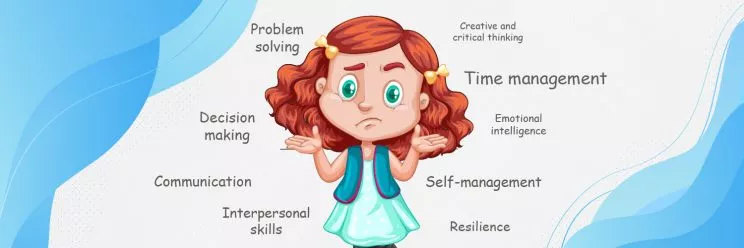
- According to the Harvard Center on the Developing Child, executive function skills such as planning, focus, and self-control directly affect learning, emotional regulation, and long-term decision-making.
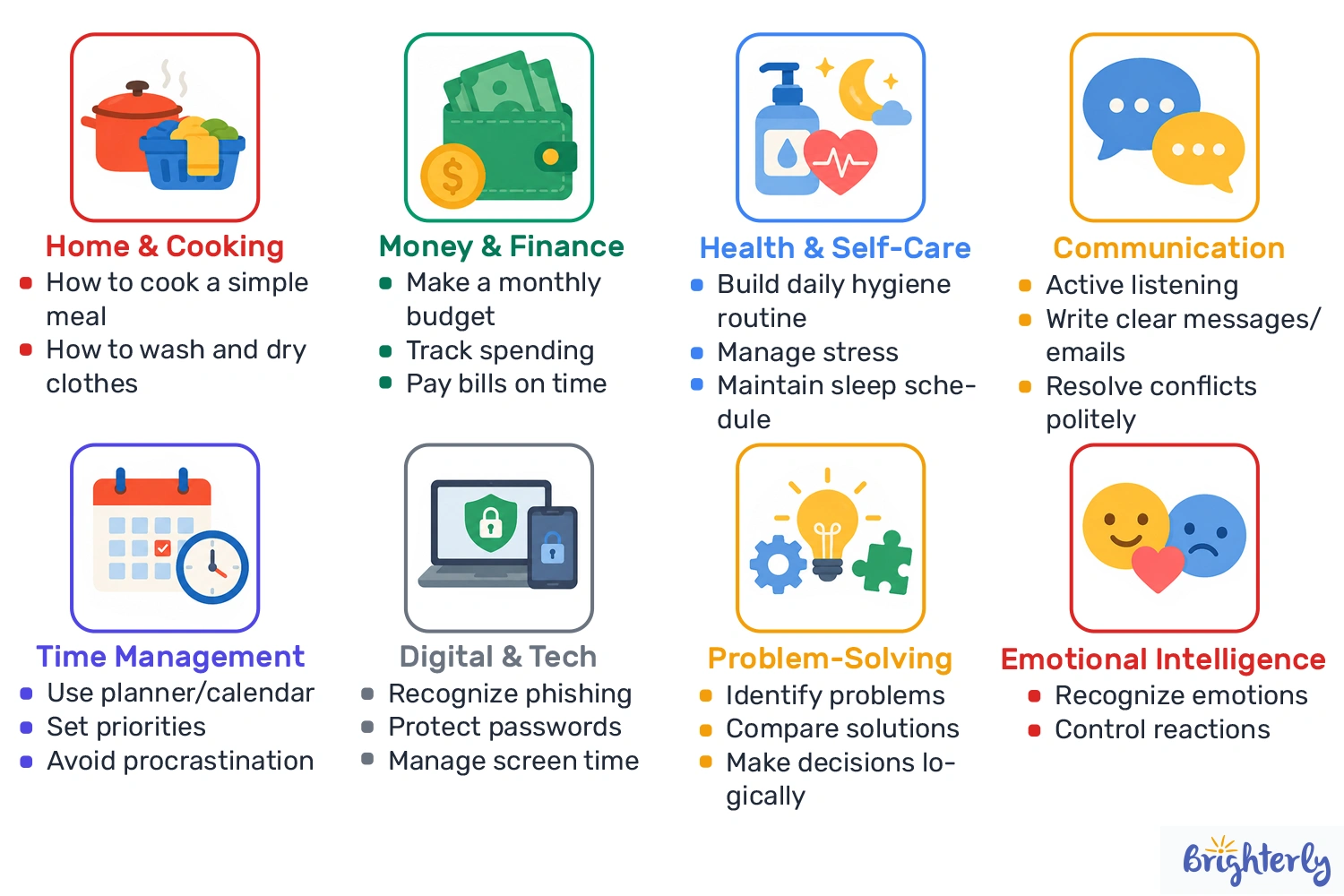
- Home care, financial management, health, communication, digital safety, and emotional intelligence are the eight primary categories of life skills to learn.
- The CDC notes (2024) stay for the fact that good communication skills between you and your child are important for developing a positive relationship. Good communication will make it easier to talk about difficult topics as your child gets older.
- Repetition, real responsibility, and consistent routines at home, school, and work help people strengthen everyday habits and independent decision-making over time.
Life skills affect everyday situations at school, work, home, and in social settings. In today’s world, success isn’t just about what you know — it’s about how you communicate, manage money, stay organized, control emotions, and stay safe online. The following is a comprehensive breakdown of 110+ life skills everyone should know across 8 categories.
What Are Life Skills?
Life skills are the essential abilities that allow people to handle daily responsibilities with more stability and less stress. Planning, communication, money management, and problem-solving abilities have an impact on relationships, work habits, and academic achievement. In regular life, people with better everyday life skills typically make more sensible choices and adjust to new circumstances more quickly.
Life skills examples appear in daily routine and serve as a basis for making daily decisions. The CDC explains that one of the most challenging tasks to learn is how to respond to behavior. Good communication will make it easier for you to talk about difficult topics as your child gets older.
Want to Check Your Child’s Skill Level?
See current academic skills through a guided learning assessment
Explore Brighterly Learning Experience
Learn exactly how Brighterly helps students thrive through expert sessions, online tools, and proven feedback from thousands of satisfied parents
Why Are Life Skills Important?
Life skills are important because they help people handle everyday responsibilities, make informed decisions, and adapt to challenges independently. Strong time management, communication, financial literacy, and problem-solving are practical life skills that improve academic performance, workplace readiness, and personal relationships. People with well-developed life skills are also more likely to manage stress effectively, stay organized, and make responsible choices in difficult situations.
The Harvard Center on the Developing Child reports that executive function skills affect learning outcomes, emotional control, and long-term decision quality. As well as academic success, these abilities are crucial to everyday stability. As the center explains: “Executive function and self-regulation skills act like an air traffic control system in the brain, helping us manage information, make decisions, and plan ahead.”
110+ Essential Life Skills Everyone Should Learn
Life skills link everyday activities to tangible results. They manifest in financial decisions, work situations, school assignments, and household routines. The most crucial life skills for kids, teens, and adults are categorized in this area. Every category represents real-world scenarios in which these abilities are applied.
1. Home & Household Skills
Cooking, cleaning, laundry, and grocery planning are basic life skills that affect daily comfort, so these household skills allow people to maintain their living spaces without constant help from others and build self-reliance in everyday routines:
- How to cook basic dishes
- How to wash and dry clothes
- How to clean up the kitchen after using it
- How to clean and mop floors
- Weekly tips for setting up one’s own area
- How to remove trash on time
- How to properly do a full load of laundry
- How to do unsupervised dishwashing
- How to store food in the refrigerator
- How to follow a basic grocery list
- How to recycle trash
- How to operate cleaning tools for the home
- How to replace bed linens
- How to resolve minor problems around the house
- How to organize a basic food store
2. Money & Financial Skills
Money problems often start with small mistakes, but financial skills help people manage income, avoid unnecessary debt, and make more stable decisions, which is a key part of adulting in real life.
- How to set a budget for a month
- How to keep tabs on daily spending
- How to open a bank account
- How to read a payment bill
- How to save money
- How to evaluate costs before making a purchase
- How to comprehend the fundamentals of credit scores
- How to stay away from needless loans
- How to make timely bill payments
- How to use debit and credit cards
- How to distinguish between necessities and wants
- How to set short-term savings objectives
- How to figure out interest rates
- How to submit simple tax returns
- How to create a basic emergency reserve
Note! Middle school math is the foundation for financial literacy. Specialized middle school math tutors help children learn basic economics, financial skills, and smart money management habits.
3. Health & Self-Care
Physical and mental health affect concentration, energy, and daily stability, so these life skills for adults and teens listed below support healthier habits and reduce burnout in school, work, and personal life:
- How to make doctor’s appointments
- How to take drugs properly
- How to adhere to daily hygiene practices
- How to prepare meals that are balanced
- How to get plenty of water each day
- How to maintain a regular sleep routine
- How to handle stress
- How to notice early indicators of burnout
- How to work out frequently
- How to limit screen time
- How to treat minor injuries
- How to keep posture straight
- How to adhere to a dental regimen
- How to recognize signs of mental exhaustion
- How to develop wholesome daily routines
4. Communication & Social Skills
Communication affects school performance, workplace relationships, and daily interactions, so the life skills examples listed below help to build respectful conversations and avoid writing mistakes:
- How to become an active listener
- How to create structured and clear emails
- How to communicate clearly and correctly (our grammar tutor is always ready to help)
- How to make phone calls properly
- How to settle disputes amicably
- How to participate in group conversations
- How to say “No” politely
- How to take criticism without becoming upset
- How to make a clear introduction
- How to formulate precise queries
- How to change the tone of a conversation
- How to get better at writing
- How to respectfully voice your opinions
- How to resolve conflicts
- How to promote polite conversation
- How to give brief explanations
- How to collaborate with others
- How to improve vocabulary
Note. Vocabulary affects how clearly a person expresses ideas and understands others, so working with a vocabulary tutor supports stronger word choice and better comprehension in real communication.
5. Time Management & Organization
Poor time management creates stress quickly: missed deadlines, unfinished tasks, and constant distractions make school and work harder to handle, so here are skills everyone should know to manage responsibilities more consistently:
- How to use a calendar or planner
- How to set daily priorities
- How to break tasks into steps
- How to meet deadlines
- How to avoid procrastination
- How to create to-do lists
- How to balance study and rest
- How to organize a workspace
- How to plan a weekly schedule
- How to monitor task progress
- How to establish reasonable objectives
- How to eliminate interruptions while working
- How to get things ready ahead of time
- How to modify plans when necessary
- How to evaluate a finished job
Check Skills With a Free Learning Session
Try guided lessons that build core academic and life skills
6. Digital & Technology Skills
Daily life now depends heavily on digital tools; that’s why online banking, communication and writing apps, and other digital skills help life skills for teens use digital spaces more safely and responsibly and strengthen digital self-sufficiency:
- How to recognize phishing emails
- How to safeguard private passwords
- How to spot phony websites
- How to handle digital files
- How to utilize tools for productivity
- How to correctly manage video calls
- How to routinely update software
- How to manage privacy settings
- How to stay away from internet fraud
- How to assess internet resources
- How to set up cloud storage
- How to be polite online
- How to resolve common device problems
- How to control your screen time
- How to establish a secure internet presence
7. Problem-Solving & Critical Thinking
Unexpected situations require calm decisions and logical thinking, and without problem-solving skills, small issues often become larger problems, so critical thinking becomes one of the most important life abilities to develop:
- How to properly identify the real issue
- How to do research before making choices
- How to evaluate the available choices
- How to achieve potential results
- How to gently deal with errors
- How to seek assistance when required
- How to modify choices based on outcomes
- How to divide issues into components
- How to start with basic solutions
- How not to make snap judgments
- How to draw on prior knowledge
- How to discern between opinion and facts
- How to make sensible decisions
- How to assess the repercussions
- How to keep flexible in planning
8. Emotional Intelligence & Mental Health
Emotional reactions affect relationships, school performance, and decision-making, so people who understand emotions usually handle stress and conflict more steadily and develop stronger social-emotional learning:
- How to recognize personal emotions
- How to express feelings
- How to handle frustration
- How to become more self-assured
- How to establish boundaries for oneself
- How to be sympathetic to other people
- How to remain composed in the face of rejection
- How to bounce back from failures
- How to recognize stress signals
- How to keep your emotions in check
- How to help people who are under stress
- How to accept differing viewpoints
- How to practice patience daily
- How to seek support when needed
- How to control impulsive reactions
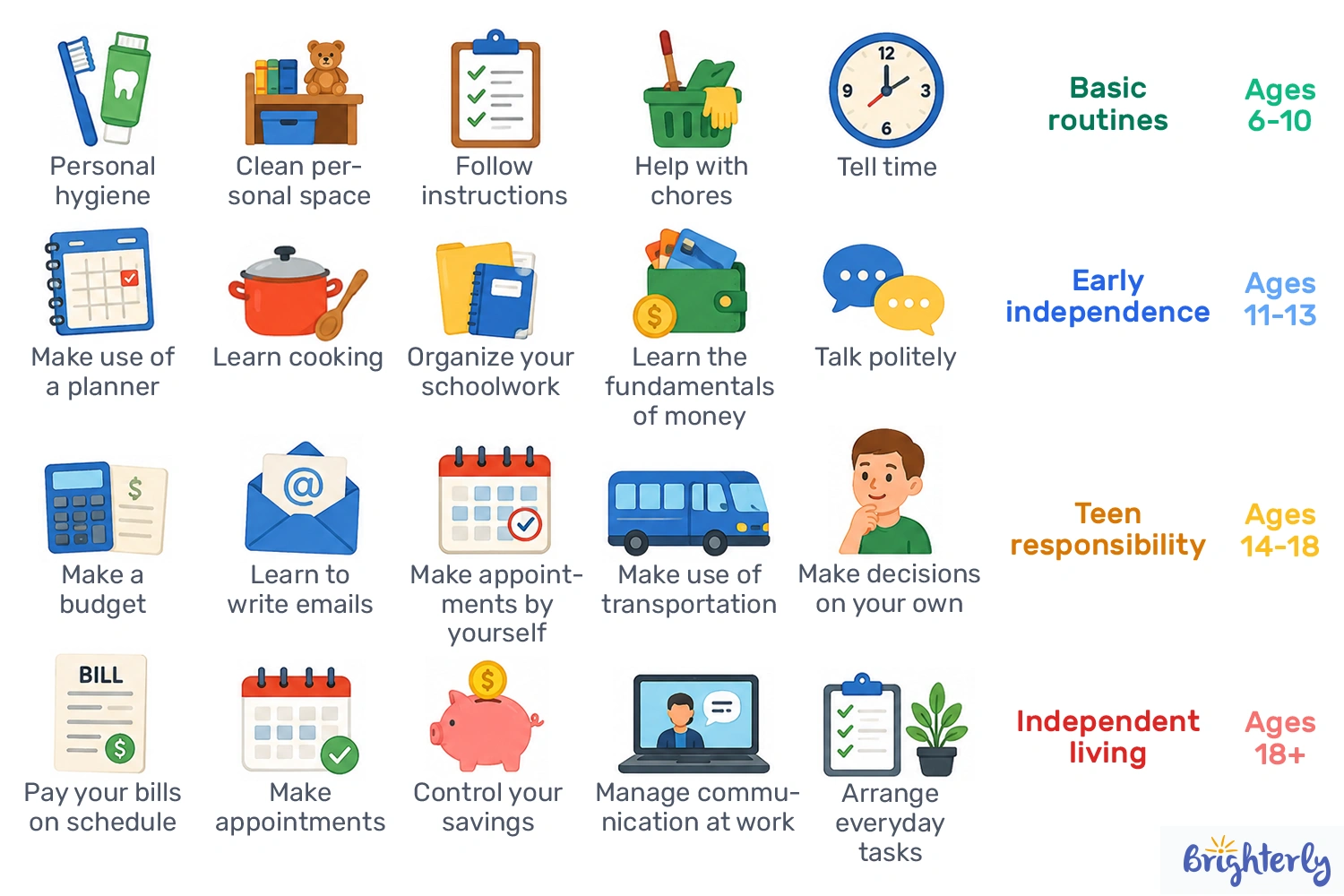
How to Build Life Skills at Any Age
Build your life skills by organizing your daily routine!
- Learn from others: Many people in your immediate vicinity, such as your parents, teachers, older siblings, and a reliable mentor, would be happy to assist you. Learn from them and let them teach you.
- Gain experience: Cooking microwaveable ramen solely won’t help you become a skilled chef, will it? Finding opportunities to practice a life skill is the first step in developing it further.
- Practice: Life skills list grow gradually, like muscles: the more you pump them, the stronger the skills. You won’t understand finances in a day, but with regular practice, you will master budgeting, build a financial cushion, and much more! An equally important skill is understanding (instructions, payments, contracts), and an online reading tutor can help create this foundation.
- Practice core learning skills: For academic skills like math and reading, the foundations that make everything else easier. You can explore the programs for elementary school math, middle school, and high school math tutoring based on your child’s current level. Brighterly helps build planning and logical steps in decision-making according to the US for grades K to 12. At the same time, the reading program strengthens understanding of instructions and communication clarity.
Frequently Asked Questions
What Life Skills Should Kids Learn First?
First, kids learn how to follow simple instructions, organize small tasks, and communicate with adults and peers. Through these actions, children learn early responsibility and become more confident in everyday situations. Basic self-care habits, time awareness, and problem-solving skills also help children become more independent in daily routines.
Are Life Skills Taught in School?
Yes, some skills are taught in schools. School directly builds life skills for students through daily routines. Collaborative projects and classroom deadlines teach vital habits like time management, professional communication, and teamwork.
How Many Life Skills Are There?
Over 100 skills are arranged across eight life skills categories. The list of life skills categories includes: communication skills, household skills, money management, health and self-care, time management, digital skills, problem-solving, and emotional intelligence. Together, these areas help people manage everyday responsibilities more independently and confidently.
What Are the Most Important Life Skills for Teenagers?
The most important life skills for teens include the ability to manage their increasing independence. When school, social media, public life, and activities start vying for attention, time management becomes crucial. Teens start making more decisions on their own, so basic financial habits, communication, and decision-making are also important.
Can You Teach Yourself Life Skills?
Yes, by organizing everyday routines, you can teach many skills. Hands-on experience makes budgeting, cooking, and planning intuitive because practical lessons always stick faster than theory. While self-teaching works, the right support speeds up the process. Support like a high school math tutor can also help build stronger planning and decision-making habits through structured practice.

Soft skills useful in adult life, such as teamwork, leadership, and initiative, cannot be simply “taught” at school. These are the skills to be built through extracurricular activities. This article discusses everything about such activities, what extracurriculars to choose for your child, and how those can affect college admission and kids’ future. What Are Extracurricular […]

Jun 14, 2022

If you feel drained by the daily commute and lack of freedom, or if you doubt whether or not you’re qualified enough to help students succeed, this guide on how to become an online tutor is your spot to start. Learn how to employ your existing expert knowledge and soft skills to land your first […]

Jun 27, 2022
Math & reading from 1st to 12th grade
Looking for homework support for your child?
Choose kid's grade

Math & Reading for Grades 1–12
Build real confidence for your child with a Brighterly math or reading tutor.