20 Math Tricks for Kids That Are Easy to Learn
reviewed by Jessica Kaminski
Updated on April 20, 2026

Math tricks for kids refer to mental workouts, like multiplying by 11 by adding digits. They can turn long calculations into quick mental shortcuts – and make numbers fun. This guide covers 20 easy math tricks, complete with step-by-step examples your child can try right now.
Key Points
- Tricks like “Make 10” or breaking numbers into tens and ones make addition and subtraction much easier and faster.
- The Japanese method can teach kids to multiply even in first grade. Moreover, working with two-digit number strategies helps them solve problems like 73 × 86 in their head without a calculator.
- The “Butterfly” trick makes fractions quick and easy, while Gauss’s famous puzzle can spark a child’s curiosity about math.
Number Magic Tricks
Number magic tricks are simple math tricks that lead to a surprising result. They’re often used in “mind-reading” games because it feels like the person somehow knows your answer. In reality, these tricks work because the steps are designed to cancel out the number you started with and lead to the same final answer every time. It looks like magic, but it’s just math.
Here are a few mind-blowing trick math questions that will wow kids and their classmates.
It Always Ends in 1089
Here’s the cool part: no matter which three-digit number you choose, this trick will always lead you to the mysterious number 1089.
How it works:
- Pick any three-digit number (for example, 532).
- Reverse it → 235
- Subtract the smaller number from the large one → 532 – 235 = 297
- Flip the result again → 792
- Add them together → 297 + 792 = 1089
Guess the Number Game (The Answer Is Always 2)
- Think of any number
- Multiply it by 3
- Add 6
- Divide by 3
- Subtract the original number
Boom – the answer is always 2.
This works like a bit of basic math magic: most of the numbers cancel out along the way, and in the end, we’re left with 6 ÷ 3.
Age Guessing Trick
With this trick, we can read someone’s age like a pro and surprise anyone who plays along.
- Ask them to think of their age
- Multiply it by 2
- Add 5
- Multiply the result by 50
- Add 1776
Now we can work it backward to reveal their exact age or use the same trick to keep your own age under wraps.
Many such mathematical curiosities are well-known to tutors at Brighterly educational platform. Our tutors work 1:1 with K-12 students, personalizing each lesson to the child’s skill level and U.S. state standards. Individual lessons are filled with various presentations, games, and engaging worksheets. We select tasks for each child and fully personalize the learning program. Parents regularly share how much their kids’ confidence has grown, as you can see in Brighterly reviews.

As a small bonus, our website offers a free math test to assess skills. You can use it to see which topics your student needs to work on.
Our tutors build real math skills through personalized 1:1 online lessons.


Spark Your Child's Love for Math
Explore Brighterly Learning Experience
Learn exactly how Brighterly helps students thrive through expert sessions, online tools, and proven feedback from thousands of satisfied parents
Easy Addition Tricks
Round up and Adjust
This trick helps us add big numbers much faster. Our brain handles “clean” round numbers more easily, so we first round numbers to tens or hundreds, then tweak the final result.
Example: 347 + 559
Round the numbers:
347 → 350
559 → 560
Add the rounded numbers:
350 + 560 = 910
Fine-tune the result:
350 – 347 = 3, 560 – 559 = 1 = 3 + 1 = 4
Take off the extra:
910 – 4 = 906
Make 10 First
The number 10 is super “friendly” for brain, so we can use it as a shortcut in addition. Instead of adding numbers straight away, we first complete a full 10, then add what’s left.
Example: 8 + 7
- We take 8 and see how much it needs to reach 10 → 2
- We “borrow” 2 from 7 → 5 is left
- Now we add: 10 + 5 = 15
Doubles Trick
Our brains easily remember doubles (2+2, 5+5), which makes them feel familiar and easy to recall. We can use them as a base to quickly solve nearby sums. For example, if we know a double like 6+6, we can figure out 6+7 by starting with 6+6 = 12 and then adding 1 more to get 13.
So the idea is simple: we use a double as an anchor, then adjust by the small difference.
Example: 8 + 9
8 + 8 = 16
9 – 8 = 1
So: 16 + 1 = 17
Adding Unit Fractions
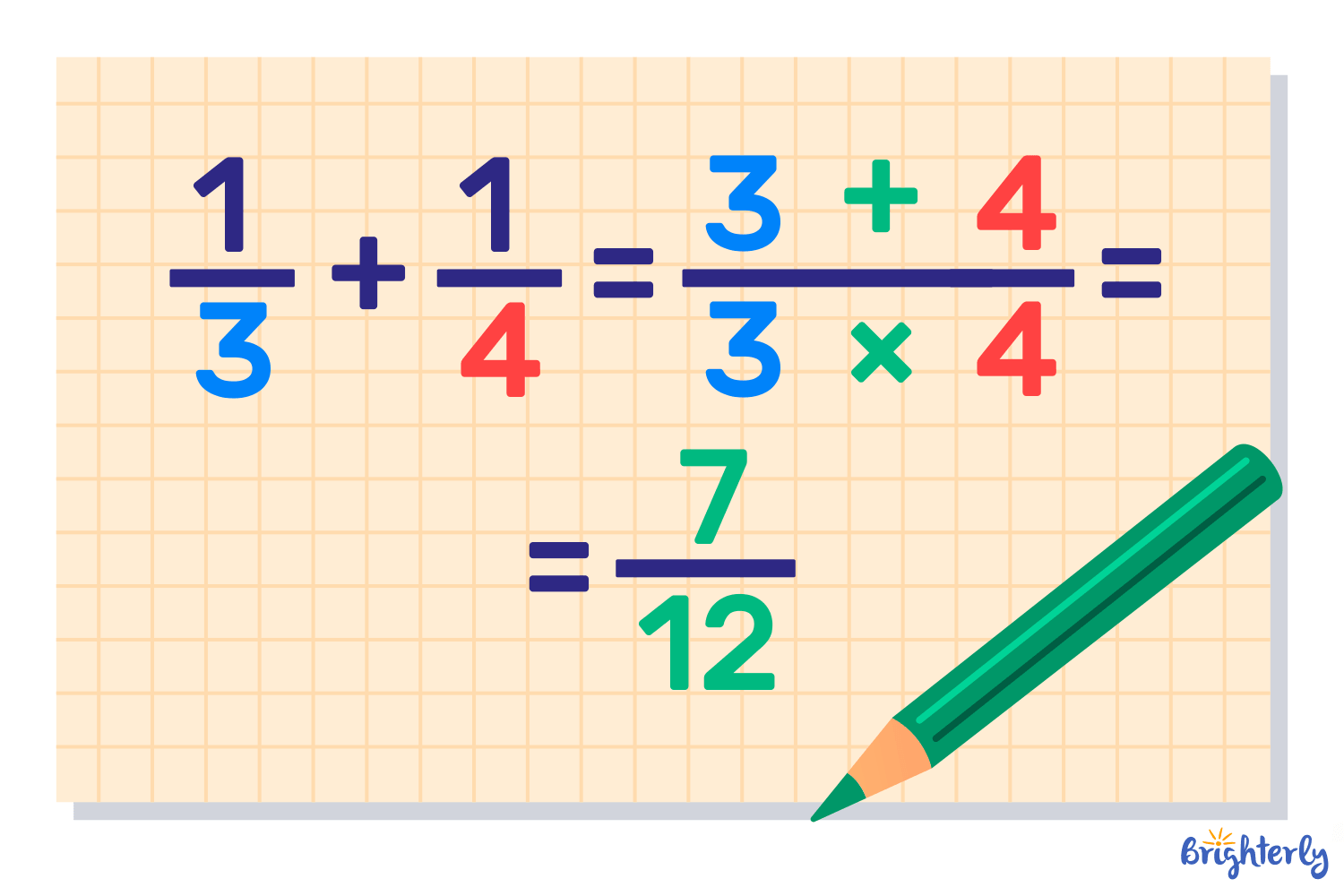
Let’s look at a quick trick for adding unit fractions. Instead of finding a common denominator, we use a simple shortcut: add the denominators to get the numerator, and multiply them to get the denominator.
Simple Subtraction Tricks
Multiplication Table in Subtraction
First, all the tricks that work for addition, like rounding or breaking numbers into tens and ones, work just as well for subtraction. But there’s one more shortcut: using multiplication facts. If the number we subtract relates to a multiplication fact, we can find the answer quickly by thinking in “times tables.”
Example: 56 – 7
We know: 7 × 8 = 56
So we step back one group: 7 × 7 = 49
Answer: 56 – 7 = 49
Fun Multiplication Tricks
Magic of the Number 9
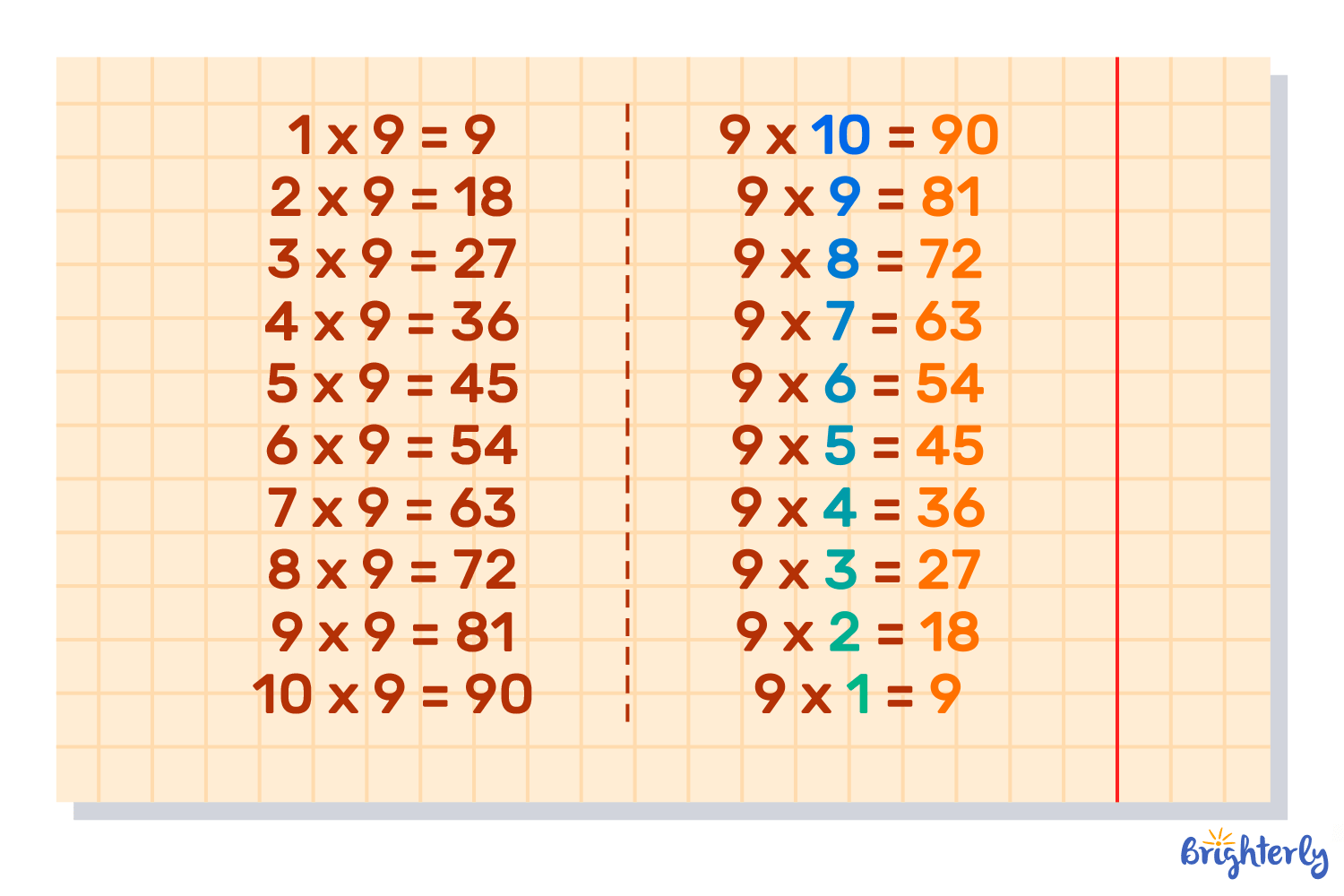
The 9 times table has a fun little trick that makes it super easy to remember. No memorizing needed – just recognize the pattern. Write numbers from 0 to 9 in a column. This is the first digit of each answer. Next to it, write numbers from 9 down to 0. This is the second digit. Each pair instantly gives the correct result for multiplying by 9. That’s the math magic tricks of 9.
How to Learn the 9 Times Table (Quick Trick)
Let’s take 9 × 4. Here’s an easy way to get the answer:
- First digit: take the number before 4 → 3
- Second digit: find what 4 needs to reach 10 → 6
- Put them together → 36
This trick works for any single-digit number × 9.
Japanese Multiplication Trick
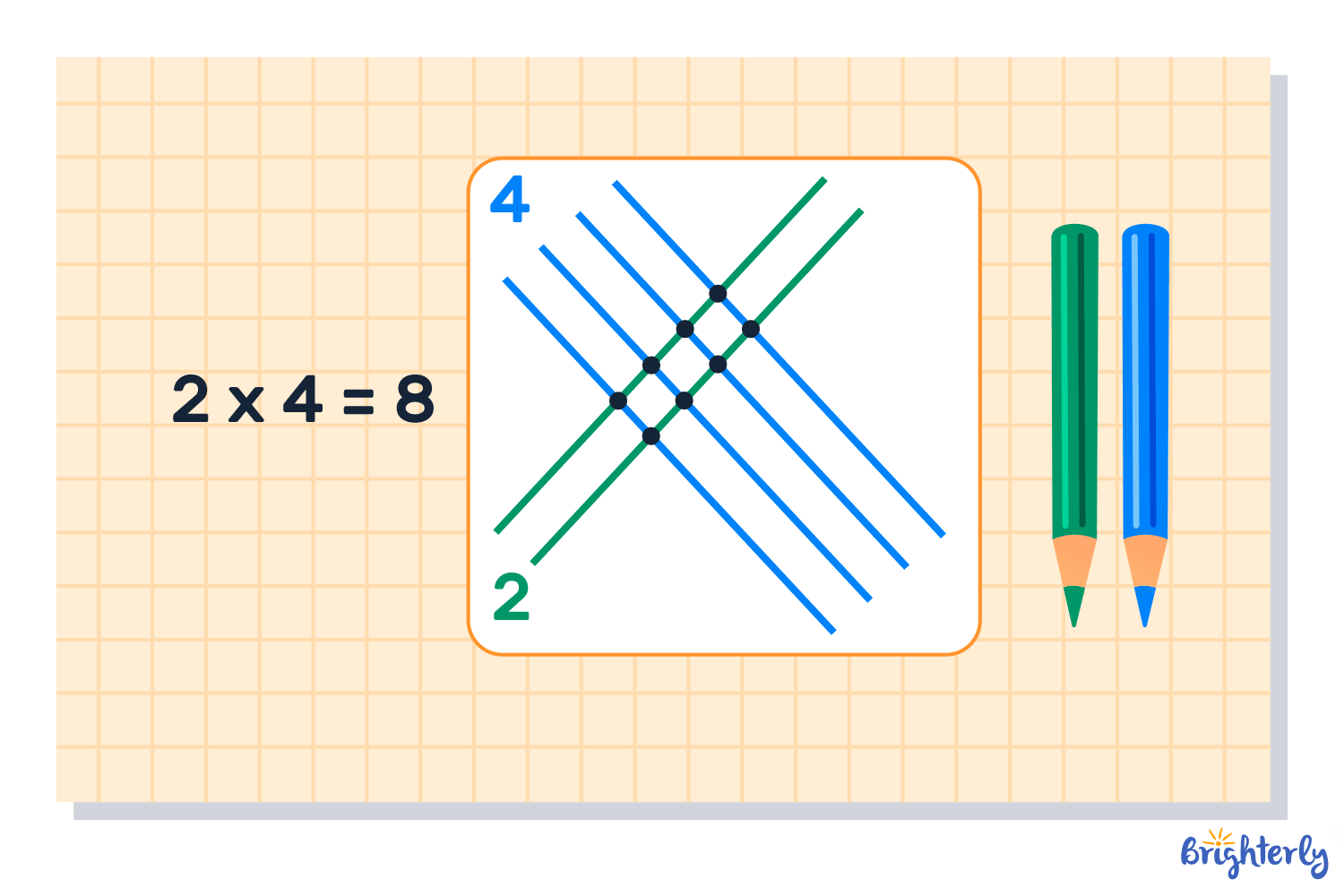
Kids usually learn multiplication tables in 3rd grade, but this visual trick can make it feel super easy – even for first graders. Grab a notebook, a pen, and let’s try 2 × 4.
- Draw 2 parallel lines in one direction. Then draw 4 lines crossing them from another direction.
- Now simply count the intersections. You’ll get 8 points where the lines meet.
- So, 2 × 4 = 8.
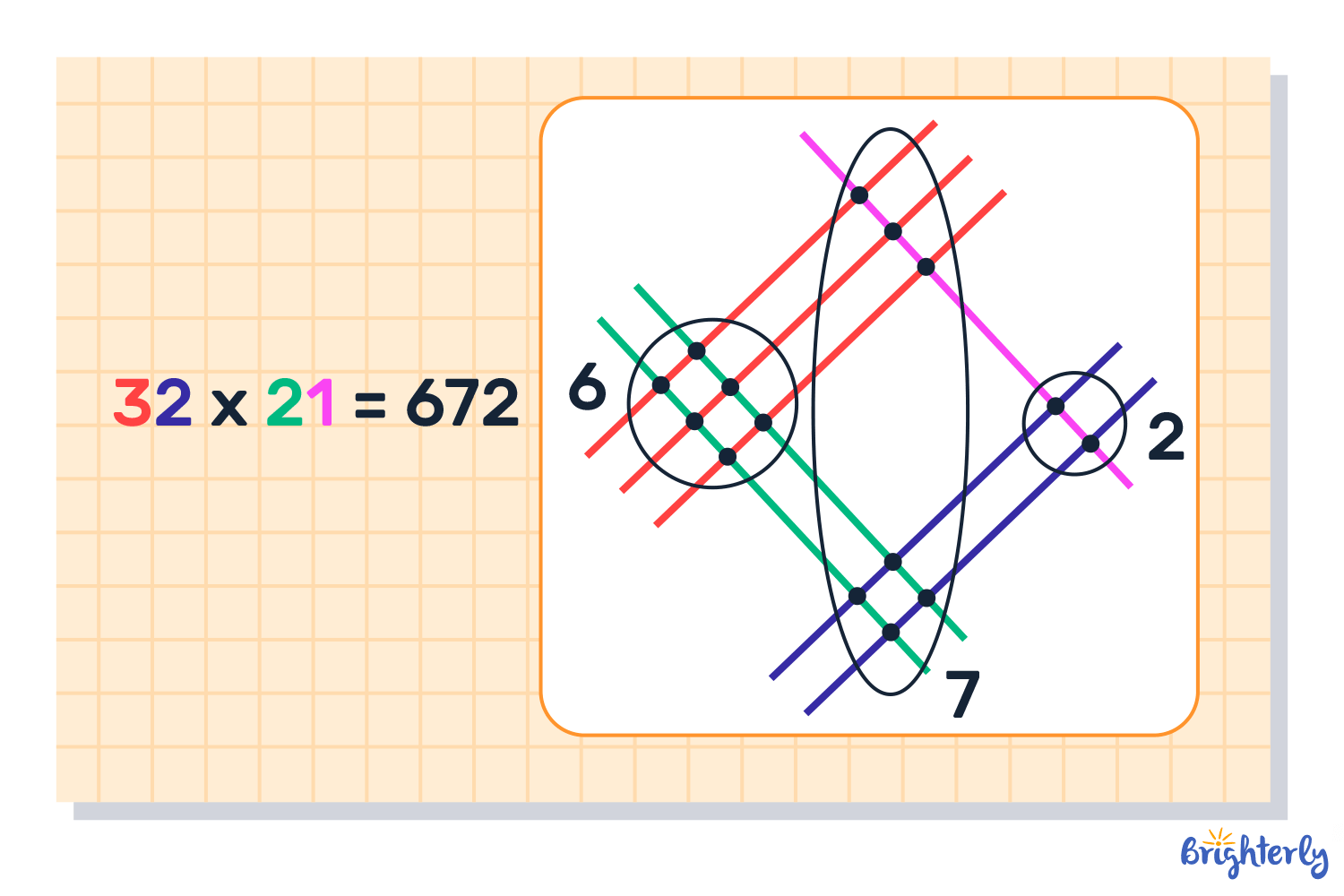
Using this method, we can multiply more complex numbers, too. Just draw a line one by one for each digit. Then, count the intersections along the diagonals. Finally, combine the counts by place value.
Multiplying Any Number by 11
You can easily surprise kids with a simple trick for multiplying by 11. Just keep the first and last digits, then place the sum of the digits in between. Let’s look at a few examples to make it clear:
Example 1:
23 × 11 =2(2 + 3 = 5)3 → 253
Example 2:
56х11 = 5(5+6=11)6 = 616.
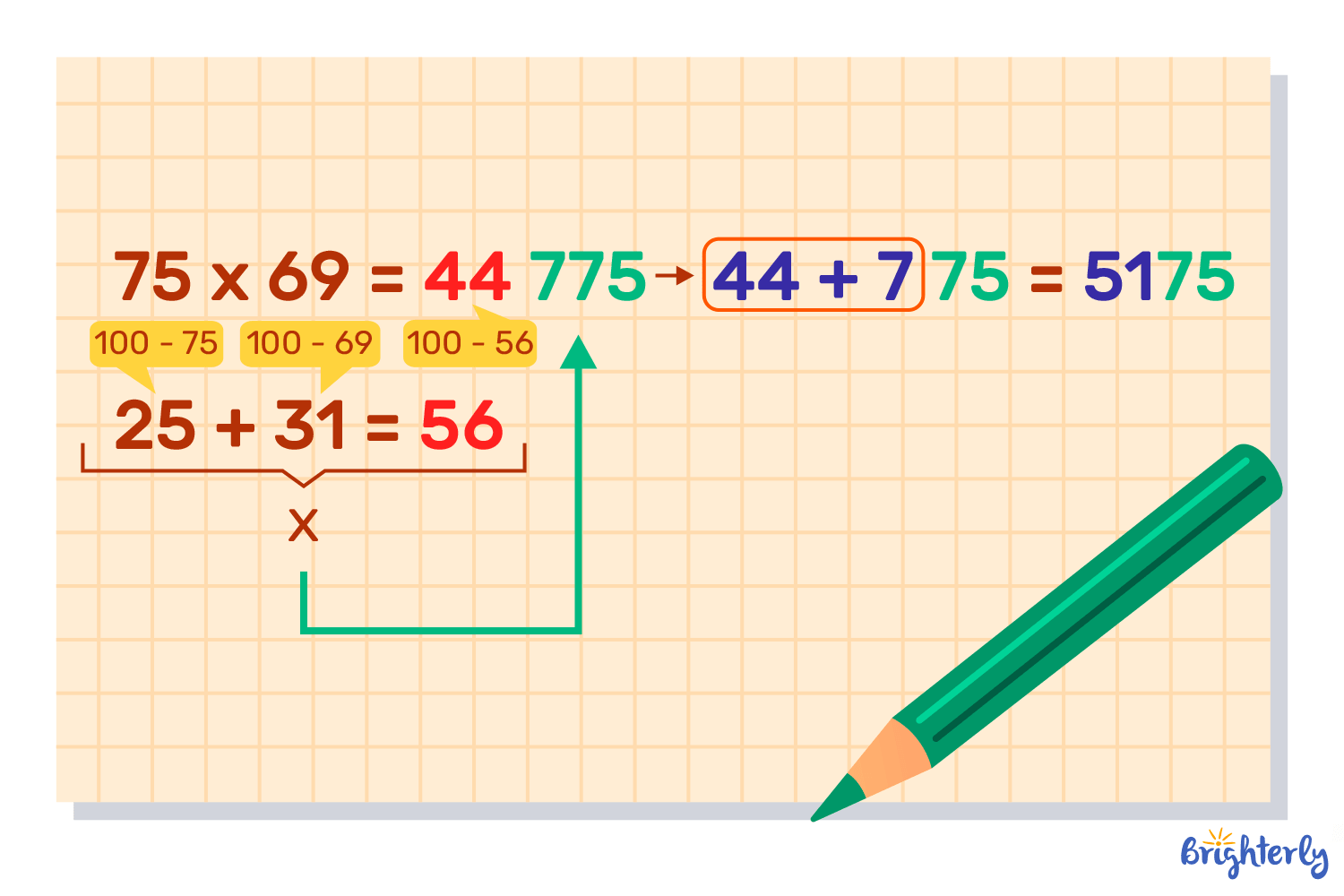
Multiplying Two-Digit Numbers
To multiply two-digit numbers like 73 × 86, use the visual line-crossing method – draw parallel lines for each digit, then count intersections by place value.
Easy Division Tricks
Checking the Last Digits
Division can feel much easier when you know a few simple tricks. For example, if you have a box of candies or some money and want to quickly check whether you can split it equally among friends, you can just look at the last digit(s).
- Divisible by 2 → last digit is even: 0, 2, 4, 6, 8
- Divisible by 4 → check the last 2 digits; if they form a number divisible by 4, the whole number works
- Divisible by 5 → number ends in 0 or 5
- Divisible by 8 → check the last 3 digits; if they’re divisible by 8, the whole number is too
- Divisible by 10 → number ends in 0
Checking the Sum of Digits
To check if a number is divisible by 3, 6, or 9, we can simply add all its digits. For example, 6390 → 6 + 3 + 9 + 0 = 18 → 18 is divisible by 9, so the whole number is too.
- Divisible by 3: 522 → 5 + 2 + 2 = 9 → works
- Divisible by 6: a number must be even and also divisible by 3 and 2 → 408 is even, and 4 + 0 + 8 = 12 → works
Our tutors help kids turn tricky math into clear, easy-to-understand skills.
Make Math Click for Your Child
Other Cool Math Tricks
Easy Percentage Calculation
Usually, we find percentages using proportions. But there’s a quicker way.
For example, find 40% of 250.
- First, divide both numbers by 10:
40 ÷ 10 = 4 / 250 ÷ 10 = 25 - Then multiply the results:
4 × 25 = 100 - So, 40% of 250 is 100.
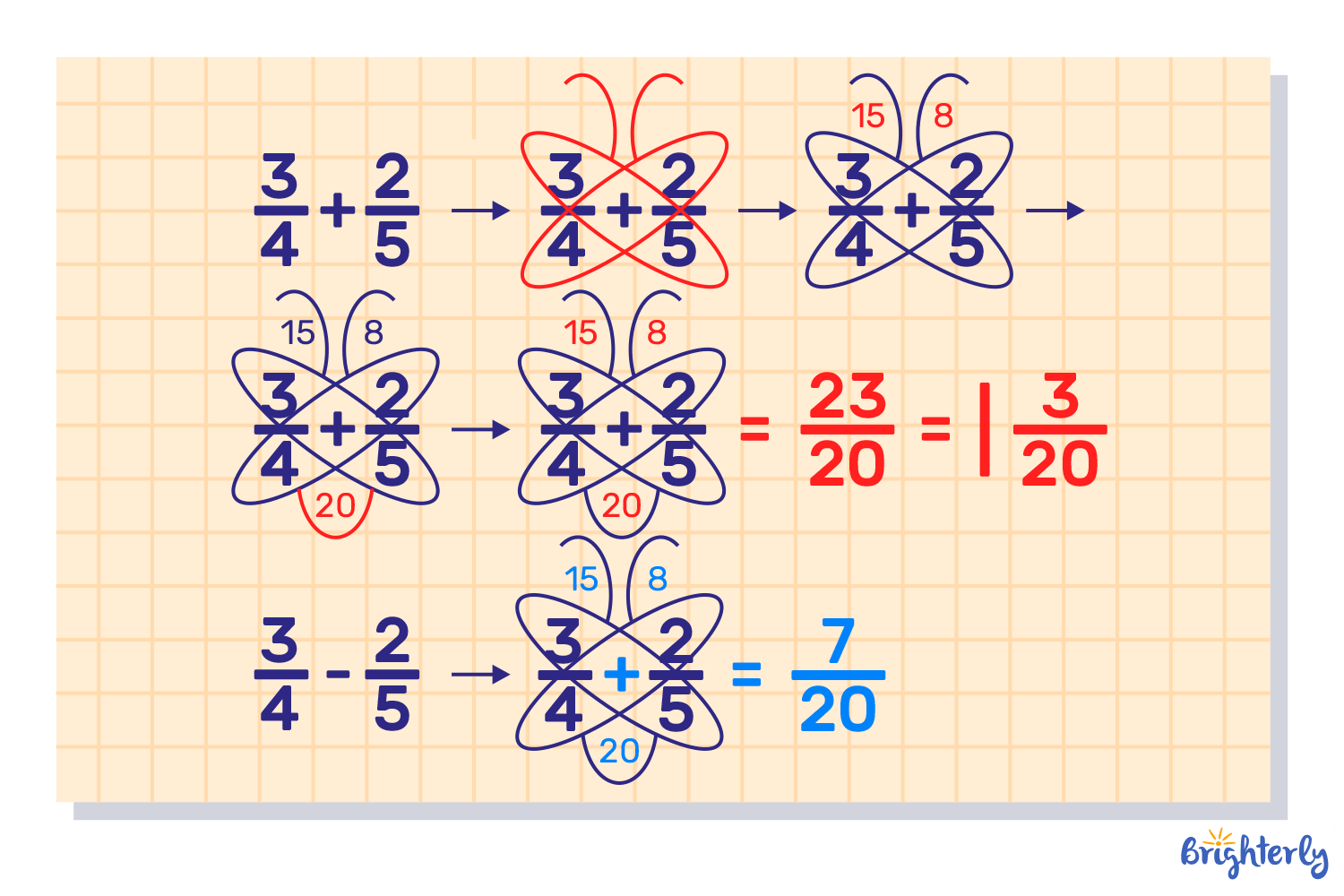
The Butterfly Method for Fractions
Fractions don’t always feel exciting for kids. But a simple visual trick can make them much easier to understand. Try using a “butterfly” method. This quick and visual approach helps students solve fraction problems step by step and makes the process much more engaging:
Surprising Pi Memory Trick
Of course, we can’t memorize all the digits of Pi because it goes on forever. And even the first 200 digits are not really necessary. But we can remember the first 7 digits with a simple trick. Just use this phrase: “I wish I could calculate Pi”. Now count the letters in each word, and you get: 3.141592
Note: To learn more about the digits of Pi, read through this Courtney Taylor 2025 review published at ThoughtCo.
Quick Fahrenheit to Celsius Conversion
This life hack can come in handy. To roughly convert Celsius to Fahrenheit, multiply the number by 2 and add 30 (more accurately: ×1.8 + 32). To convert Fahrenheit to Celsius, do the reverse: subtract 30 and divide by 2.
Trick for True Math Geniuses
To spark interest in math, we can give a classic puzzle once solved by the schoolboy Carl Gauss, who later became a famous mathematician: Add all numbers from 1 to 100 (1 + 2 + 3 + … + 100). And then you can explain to kids how Gauss found a clever shortcut.
- He paired numbers from the start and the end:
1 with 100, 2 with 99, 3 with 98, and so on. - Each pair always gives 101.
There are 50 such pairs.
So: 50 × 101 = 5050
Why Math Tricks Help Kids Learn Faster?
Mental math tricks and various interesting facts about mathematics make this subject more attractive for children because it becomes clearer how numbers work and behave. As a result, they help build stronger foundations.
Understanding different types of problems reduces math anxiety and builds confidence. Due to research from the National Council of Teachers of Mathematics, this helps turn calculations into a natural part of thinking
How To Help Kids Learn Math Tricks Easily
The best way to do math easy is to bring it to life through real-world examples and curious playful learning. Tricks like doubles, number patterns, and step-by-step “magic” calculations help kids solve problems faster and feel more confident with numbers. Using real-life examples, games, and visual tools makes these tricks easier to understand and remember. Over time, kids start to recognize patterns and apply these methods on their own in everyday math situations.
Extra math practice with experienced tutors can be a real game-changer. Our platform, Brighterly, offers playful, guided math support for kids.
Frequently Asked Questions (FAQ)
What Is the Easiest Math Trick for Kids?
Easy math tricks for kids are the “Make 10” strategy. It helps children add numbers quickly by first building a total of 10, which is much easier for the brain to work with. Once 10 is formed, the rest is added almost automatically. This simple step makes mental math faster and less confusing.
What Is the 15 Multiplication Trick?
The 15 multiplication trick is a simple way to calculate in your head without a calculator. The idea is to break 15 into easier parts – 10 and 5. First, multiply the number by 10, then add half of that number. This makes the calculation much faster and easier.
Example: 24 × 15
24 × 10 = 240
half of 24 = 12
240 + 12 = 252
What Is the 7 × 11 × 13 Math Trick?
The 7 × 11 × 13 trick is a fun math shortcut that shows how certain numbers create a “convenient” result when multiplied. You don’t need to multiply this combination step by step – it’s better to remember that they always add up to 1001. And when you multiply any number by 1001, it creates a repetition of that number.
Example:
456 × 7 × 11 × 13
456 × 1001 = 456456
Do Fun Math Tricks Really Help Kids Learn Faster?
Yes, math tips and tricks help kids learn faster by turning complex calculations into simple patterns. This makes numbers easier to understand, improves memory, and builds confidence. As a result, children stop guessing and start recognizing how math works.



Teaching kids about money doesn’t have to start with big lectures about bank accounts, debt, or investing. You can start teaching your kid about finances with simple daily moments like comparing costs in a supermarket and talking about why you buy one thing and wait for another. Here are 20 practical tips for teaching kids […]

Feb 22, 2022

You can improve children’s mathematical thinking by using books that fuse math principles with illustrations and narratives. These books teach kids to count and read simultaneously and help fan the flames of curiosity, sparking an interest in the subject. And the key to teaching kids is getting them to want to learn the concepts you […]
Mar 14, 2022
Math & reading from 1st to 12th grade
Looking for homework support for your child?

Choose kid's grade

Math & Reading for Grades 1–12
Build real confidence for your child with a Brighterly math or reading tutor.