What Motivates Your Child? 10 Ways to Find Their Drive in 2026
reviewed by Camille Ira B. Mendoza
Updated on May 1, 2026

Key points:
What motivates your child to learn – good grades, a tasty reward, or maybe nothing at all? In 2026, children are growing up in a world full of distractions: YouTube and TikTok. To motivate your child effectively, you first need to understand their individual drivers. Find other valuable tips in this article.
What Motivates Your Child?
A child’s motivation is driven by a mix of curiosity, emotions, and personal interest. Many parents notice that my child is motivated by praise or small rewards, while others engage more when they feel independent or achieve something on their own. Some children are also inspired by adults or role models. The key is to understand what exactly sparks your child’s interest and makes them want to learn.
Explore Brighterly Learning Experience
Learn exactly how Brighterly helps students thrive through expert sessions, online tools, and proven feedback from thousands of satisfied parents
What Motivates Children to Learn Most?
Children learn best when they feel a genuine interest in what they’re studying. At the same time, external factors are often needed to get things started and build early motivation. A parent’s role is to guide a child toward self-paced learning, where curiosity, not rewards, drives progress.
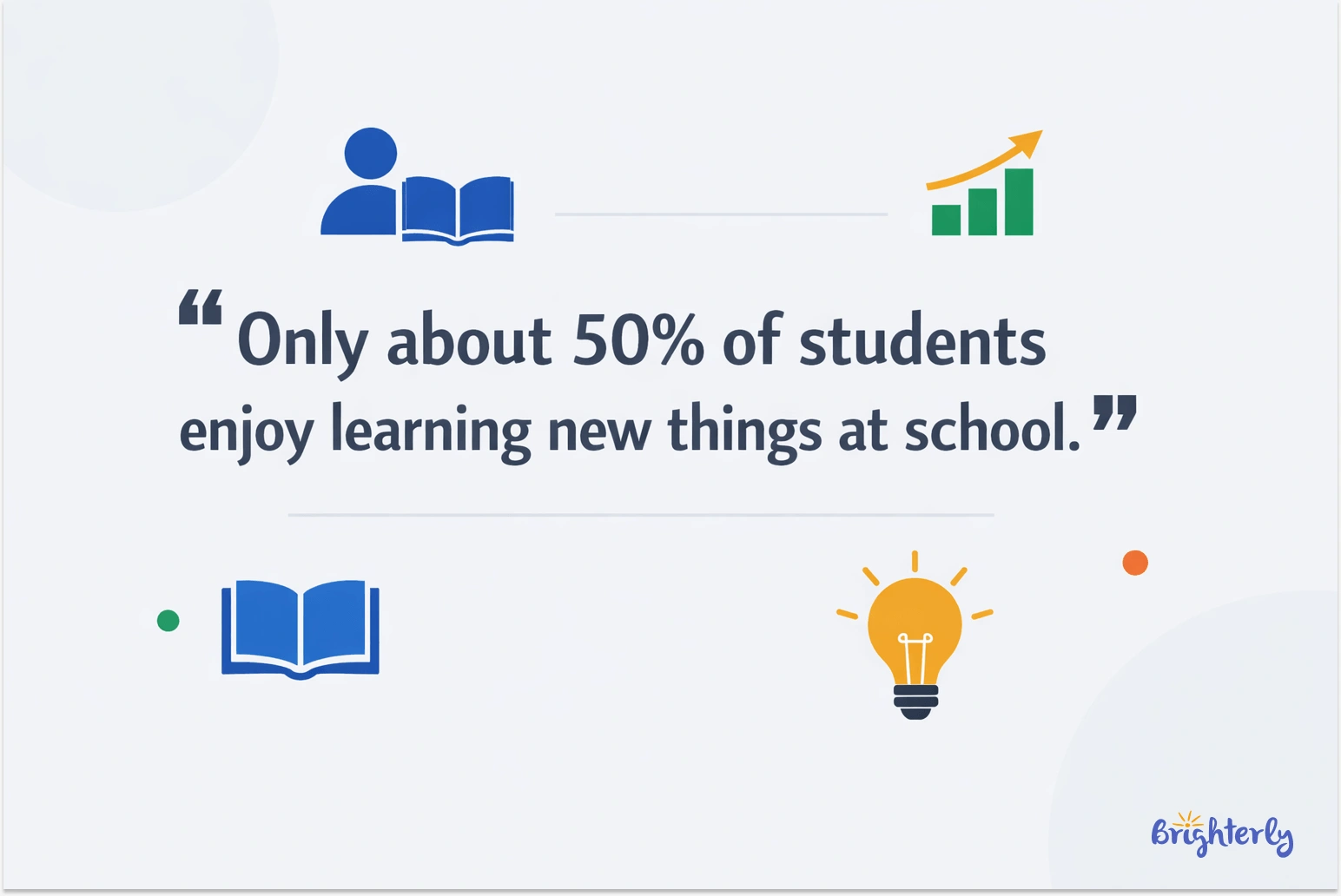
Source: OECD, PISA 2022 Results, 2023
Intrinsic Motivation
Research from OECD (including PISA 2022) shows that children who are genuinely interested in learning and enjoy the process tend to stay engaged longer and achieve better results. This kind of motivation grows when a child feels involved, sees their progress, and has the freedom to explore what truly interests them.
Extrinsic Motivation
Extrinsic motivation is when a child is driven by grades, praise, or rewards. Some see it as “wrong,” but it can actually be useful, especially when you need to get things started.
Extrinsic motivation works best when you:
- Use a small reward or praise to help your child start a new or difficult task for the first time.
- Set a concrete daily goal and celebrate each time your child meets it consistently.
- Apply incentives as temporary support, then gradually shift the focus toward the activity itself.
Both parents and teachers play a key role in motivating a child. Our tutors at Brighterly educational platform spark children’s interest in math and reading through engaging 1:1 lessons aligned with US state standards. Every session includes games, animated presentations, and worksheets – all designed to help children absorb material easily and enjoy the process.
What’s more, our entire program builds around each child’s individual needs. Our tutors are experienced professionals who know how to connect with every student, and their parents often highlight this in their reviews.
Looking for a tutor who can truly motivate your child to learn?
Brighterly tutors combine expertise with a personalized approach to make it happen.
What Motivates Your Child Examples
| Child behavior / situation | What it may mean | What actually motivates the child |
| Spends a lot of time drawing, building LEGO, or gaming | Strong interest and deep focus | Interest, freedom of choice |
| Reacts strongly to praise (“good job!”) | Sensitive to external validation | Praise, recognition |
| Avoids homework tasks | Fear of mistakes or boredom | Support, simpler steps |
| Talks a lot about YouTubers / role models | Strong identification with figures they admire | Identification, imitation |
| Gives up easily on difficult tasks | Low self-confidence | Small wins, encouragement |
| Gets fully “lost in time” while doing something | Deep engagement (flow state) | Intrinsic motivation |
Why Motivation Matters For Your Child’s Learning And Behavior
Motivation strongly affects how well students perform in school. This mental stimulus correlates strongly with academic performance, as students who are more driven tend to be more engaged and hard-working. For example, according to OECD findings from PISA 2022, only 58% of students feel confident about motivating themselves to do schoolwork. Motivated students consistently score higher in reading, math, and science.
Motivation contributed to better persistence because motivated and confident children are more likely to keep trying even when tasks become challenging. This virtuous circle is followed by improved confidence, as children who experience success after effort begin to believe in their abilities.
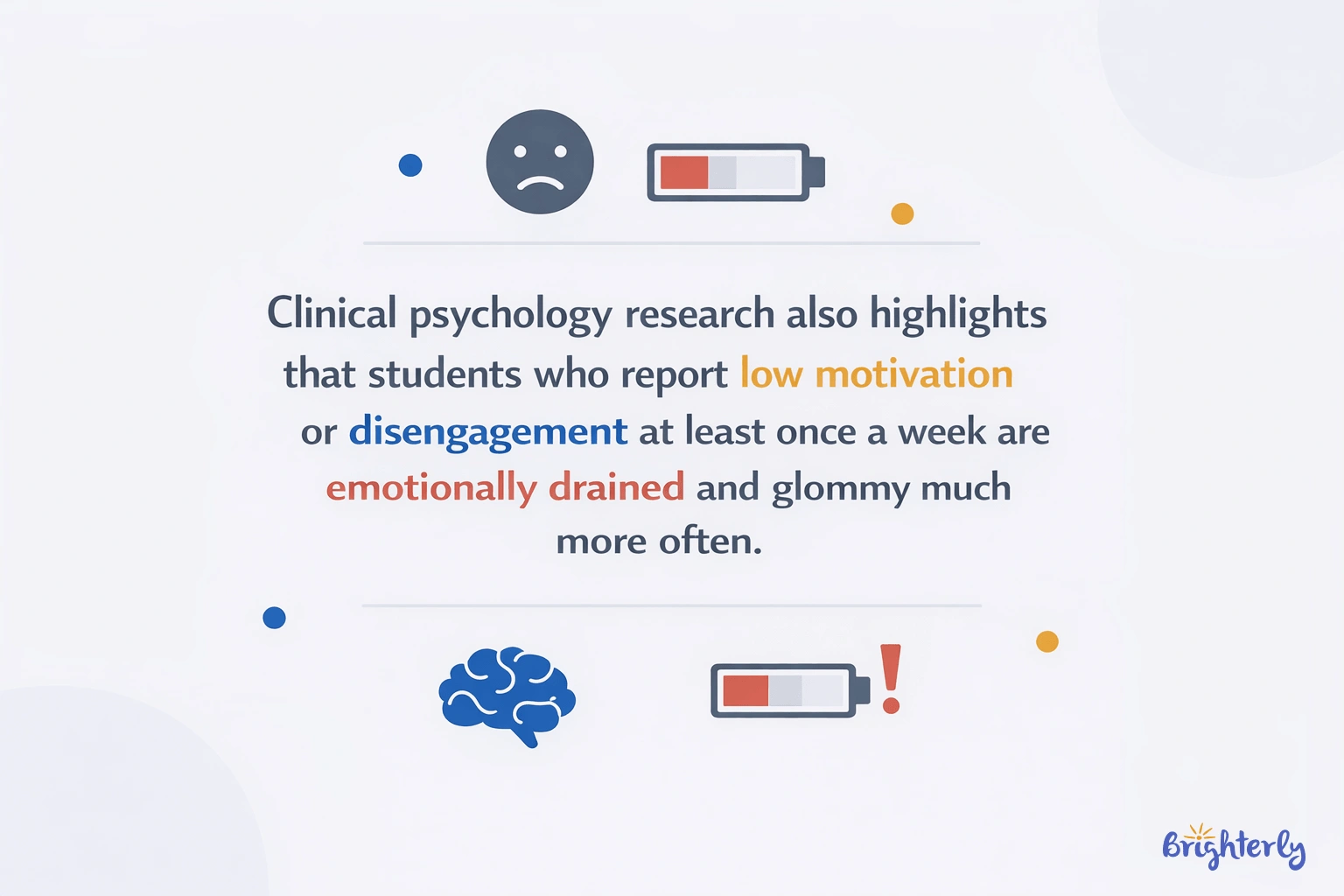
Unexpectedly, motivation can also support emotional regulation. When a kid feels engaged and busy, they are better able to manage frustration and setbacks.
Source: Frontiers in Psychology, 2024
10 Proven Ways to Discover What Motivates Your Child to Learn
This list is not about things that motivate your child, but rather about how to find their personal “hook” – what naturally sparks their interest. Most of the insights are supported by research.
Observe What Your Child Does in Their Free Time
To motivate your child to learn, start by observing how they spend their free time. Pay attention to what they return to without reminders, what they spend the most time on, and where they show initiative. This behavior often reveals a natural “hook” that can be used to spark learning and build strong motivation.
This observation is explained by Self-Determination Theory (developed by Edward Deci and Richard Ryan): when a child has autonomy – meaning they choose activities on their own, they engage more deeply and enjoy the process more. Whether it’s drawing, reading, building, or using a computer, these choices can reveal child’s natural learning style.
Notice What Truly Excites Your Child
Pay attention not only to what your child does, but also to how they do it. When they light up, start speaking faster, ask more questions, or become so absorbed that they lose track of time, it’s a strong sign of genuine internal interest.
Notice What Your Child Avoids
If a child constantly postpones certain tasks, feels anxious, or finds every possible reason not to do them, it’s not necessarily laziness. More often, avoidance points to something deeper: a fear of making mistakes, a sense of “I can’t do this,” boredom, or even overwhelm. That’s why it’s important not to apply pressure, but to try to understand the real reason behind it.
Listen To What Your Child Talks About Most
Children rarely return to the same topics in conversation by chance. If your child keeps talking about games, animals, bloggers, sports, or certain stories, it’s not just “chattiness”, it reflects what truly holds their attention. Instead of correcting or ignoring these conversations, you can use them as valuable clues.
Notice When Your Child Feels Proud
It’s great when you notice moments where your child says, “Look, I did it!” or clearly shows pride in what they’ve achieved. It might be a solved math problem, a built LEGO model, or a completed school task. Acknowledging these moments reinforces a sense of achievement, and this is where long-term motivation starts to grow.
Note: Psychologist Albert Bandura, known for his theory of self-efficacy, showed that children (and adults) who believe in their ability to handle tasks are much more likely to take on challenges and persist after setbacks.
Observe How Your Child Responds to Praise and Rewards
Some children light up when they hear praise, while others seem almost unaffected by it. This reaction is useful information, as it helps you understand whether external motivation works for your child or whether internal drive matters more.
Observe Your Child’s Level of Focus
There are moments when it’s almost impossible to pull a child away from what they’re doing – they don’t get distracted, barely react to what’s happening around them, and stay fully immersed in the activity. This is one of the clearest signs that the task naturally engages them and could become a strong source of lasting motivation.
Notice Your Child’s Role Models
Role models can strongly influence a child’s motivation. When someone they see as “cool” or authoritative talks about learning or growth in a positive way, it often resonates more than advice from parents, especially in the teenage years. At that point, children don’t just listen – they get inspired and start to imitate.
Be a Role Model Yourself
Children copy what they see far more than what they hear. Instead of only talking about how important learning is, it’s more effective to show it through your own behavior. When a child sees you learning new things, reading, growing, or achieving a goal, they naturally start to see this as normal. Over time, they understand that development is part of life, not an obligation.
Ask Open-Ended Questions
Sometimes the simplest way to understand a child is just to ask. But instead of “Did you like it?”, try something deeper like “What was the most interesting part of your day?” or “What would you like to try again?” The answers may surprise you, but they often give the clearest clues about what truly motivates them.
Want to boost your child’s motivation?
Try lessons with experienced tutors who know how to reveal love towards learning
How to Motivate Your Child Without Pressure
Once you understand what truly engages your child, their interests, reactions, fears, or even role models, motivation stops feeling like a struggle. Instead of forcing or controlling, you can align learning with what already feels natural to them.
For example:
- If your child enjoys a certain topic, bring it into their learning.
- If they respond to praise, reinforce their progress.
- If they feel overwhelmed by difficult tasks, break them into smaller, manageable steps.
Research in educational psychology, including Self-Determination Theory by Deci and Ryan, shows that children learn more effectively when they have autonomy and emotional support.
Signs Your Child Is Not Motivated
- Loss of interest in previously enjoyed activities. Have you noticed that your child is more apathetic when studying their favorite subject or completing tasks they liked previously? It might be occasional fatigue or the first sign that the kid is losing interest in it.
- Frequent procrastination. Logically, the child will follow with frequent avoidance of completing tasks or procrastination during the process. The child can imitate active studying, but will devote more time to gadgets.
- Giving up easily. A non-motivated child will have minimal effort and ask for help from parents or the Internet without even a bit of self-thinking.
- Emotional frustration or chronic boredom. Low-energy “burnt out” children can be easily irritated or vice versa, completely apathetic to virtually anything.
Common Mistakes Parents Make
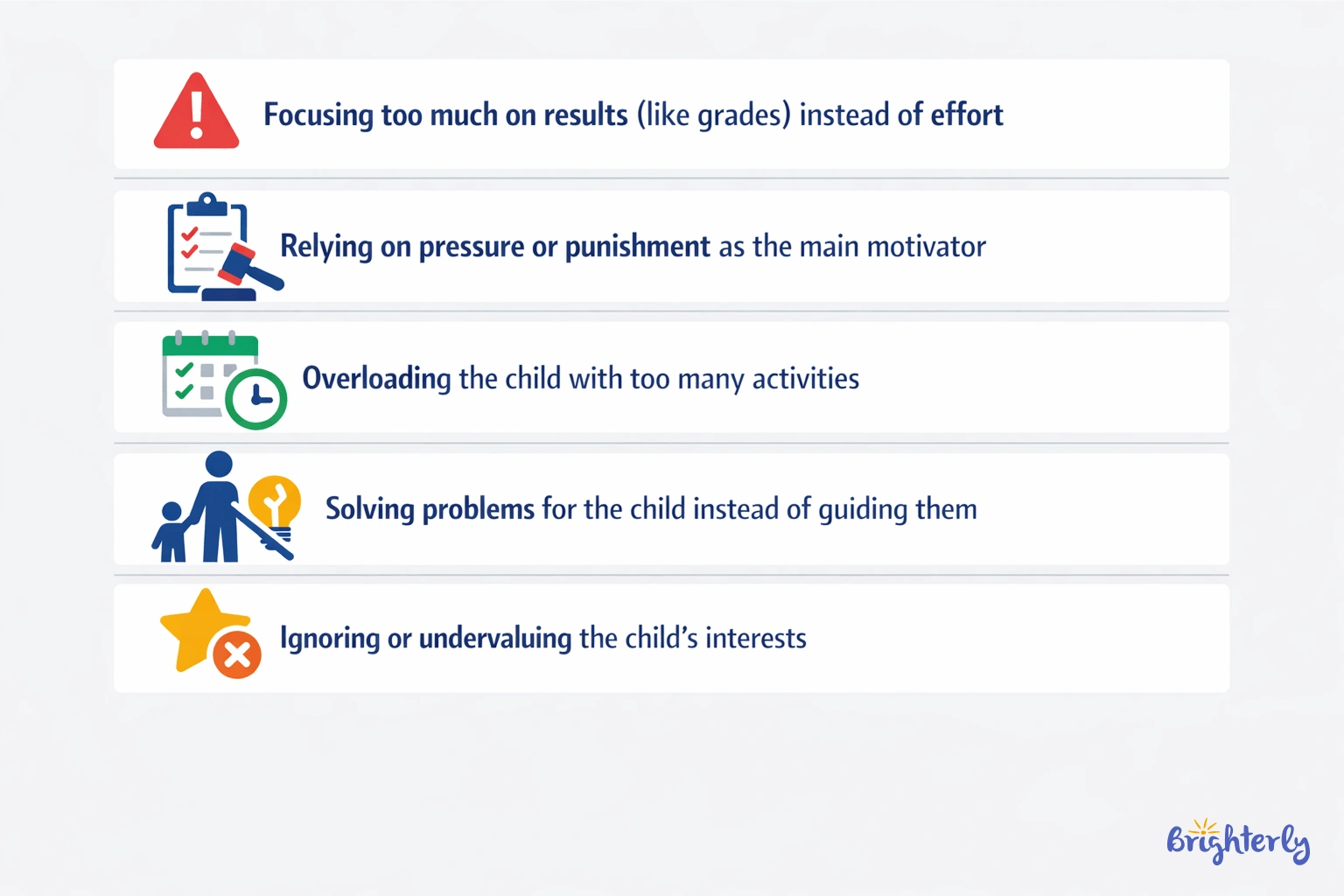
Many parents, often without noticing it, unintentionally make motivation harder instead of easier. It’s worth reflecting on a few common patterns:
- Focusing too much on results can lead children to believe that only outcomes matter. They might overlook the importance of the learning process. This may reduce their confidence over time.
- Using pressure or punishment as a motivator can backfire. It may make learning feel stressful instead of interesting.
- Too many activities can wear us out. This exhaustion leaves little room for curiosity and independent thinking.
- Helping a child too much can hold back their problem-solving skills and independence.
- Ignoring a child’s feelings can make them feel misunderstood. This may lower their motivation to learn.
How Motivation Changes By Age
How to motivate a child who is unmotivated? People are motivated by very different goals, but the sources of our motivation are fairly limited in fact! Those are well-correlated with age and could be broken down as follows:
Early Childhood (3-6 Y.O.)
Curiosity and play drive motivation at this stage. The child starts exploring the world with energy and enthusiasm, eager to engage in different activities – as long as they feel like a game.
Primary School (6-10 Y.O.)
What can motivate a child at this age? Praise from adults is often a big motivation. At this age, children begin to value approval from parents and teachers. Therefore, clear routines, encouragement, and small rewards become good motivators.
Pre-teens (10-13 Y.O.)
Willingness to be better than peers becomes the strongest motivator. Children aged above 10 y.o. are conscious about their strengths, already have the very first romantic feelings, and increasingly want to show off and outcompete peers.
Teenagers (13-18 Y.O.)
Conversely, teens often overestimate themselves and are motivated by quick independence and personal interests, while external pressure from adults often backfires.
What Motivates Your Child to Do Their Best?
Instead of pushing harder, focus on what excites your child, what holds them back, and when they feel most confident. When learning connects with their interests and emotions, motivation grows naturally.
If your child needs extra support, platforms like Brighterly can help turn learning into a positive and engaging experience.
Frequently Asked Questions (FAQ)
What Is a Child’s Motivation?
Simply put, a child’s motivation is what makes them want to do things – learn, play, or try something new. It can come from their own curiosity or from rewards and encouragement. Motivation is an all-around phenomenon that affects how much effort children put in and whether they keep going when something feels hard.
What Are the 4 R’s of Motivation?
The 4 R’s of motivation is a framework for driving engagement that consists of Rewards, Relationships, Responsibilities, and Reasons. It means that a child stays motivated when (1) their efforts are recognized, (2) they feel supported, (3) are given meaningful tasks, and (4) understand the purpose behind what they do.
What Are 5 Things That Motivate Kids?
Five core drivers tend to motivate children across different ages and learning stages:
- Curiosity: kids engage more deeply when a topic genuinely interests them or raises a question they want to answer.
- Praise and recognition: a specific compliment (“You figured that out yourself!”) builds confidence and encourages kids to keep going.
- Peer comparison: seeing classmates succeed can spark healthy competition and a desire to improve (but be careful).
- Sense of achievement: completing a challenge, no matter how small, releases a feeling of pride that motivates the next step.
- Purpose: when kids understand why something matters (“math helps you build things”), they connect effort to meaning.
What Motivates Your Child in School?
A child’s motivation at school comes from a mix of factors ranging from simple curiosity and desire to play to encouragement and praise from teachers or parents, and a sense of achievement. Friendships, feeling supported, and understanding why learning is useful are vital at this life period.



Are you getting concerned about the impact of technology on learning? Virtual learning tips for parents provide comprehensive guidelines for helping your child study effectively online. Notably, the internet is key in offering many resources for parents. This article brings you the best tips for distance learning for parents, as well as tricks and advice […]

May 20, 2022

Children today have lots of activities and games that help them be more creative, develop imagination, and keep them busy. However, these activities do not always work as they should. Brain games for kids can be a suitable option when the brain starts feeling overloaded with many stimuli. Such games challenge the brain in new […]
May 20, 2022
Math & reading from 1st to 12th grade
Looking for homework support for your child?

Choose kid's grade

Math & Reading for Grades 1–12
Build real confidence for your child with a Brighterly math or reading tutor.