10 Best Mental Math Apps For Daily Practice for Kids in 2026
reviewed by Camille Ira B. Mendoza
Updated on July 16, 2026
Key Points:
- The best mental math apps for kids improve speed, accuracy, and focus through short daily exercises.
- Apps for mental math combine arithmetic challenges, timed drills, adaptive difficulty, gamification, and short session lengths (5–10 minutes).
- Free options like Khan Academy and Microsoft Math Solver cover foundational math skills; paid apps like Mathemagics and Mental Math Master offer structured progression and speed training.
- The best apps for mental math can’t replace guided instruction and structured math programs. Kids who combine a daily math practice app with 1:1 math tutoring can close gaps faster.
With mental math apps, kids can improve their calculation speed, accuracy, and focus for 5-10 minutes a day. In 2026, the best mental math apps for daily practice combine timed drills, adaptive difficulty, and step-by-step explanations. Compare the 10 top apps by features, price, and grade level to choose the right one for your child.
Exploring alternatives?
What Are the Best Free Mental Math Apps for Kids?
Free mental math apps are a useful tool for building daily habits. Many offer core features like practice exercises, progress tracking, and gamified learning.
Here are the best mental math apps for daily practice free:
| App | Best for | Grade | Platform | Rating* |
| Khan Academy Kids | All-around math fluency | All grades, K–12 | iOS, Android, Web |
App Store: ⭐ 4.8 Google Play: ⭐ 4.8 |
| Microsoft Math Solver | Scanning & solving equations, step-by-step | Grades 5–12 | Android, Web |
Google Play: ⭐ 4.7 Microsoft Store: ⭐3.9 |
| Moose Math | Pre-K through K-2 counting and addition | Pre-K through Grade 2 | iOS, Android |
App Store: ⭐ 4.2 Google Play: ⭐ 4.3 |
| Prodigy Math | Gamified math | Grades 1–8 | iOS, Android, Web |
App Store: ⭐ 4.8 Google Play: ⭐ 4.2 |
| Mathical | Mental arithmetic challenges | Grades 3–8 | iOS | App Store: ⭐ 4.5 |
* The ratings are accurate as of April 2026 and may vary based on location and platform.
Explore Brighterly Learning Experience
Learn exactly how Brighterly helps students thrive through expert sessions, online tools, and proven feedback from thousands of satisfied parents
What Are the Best Paid Mental Math Apps for Kids?
Paid apps offer more structured mental math practice and advanced features like step-by-step explanations, adaptive difficulty, and a more tailored experience. They work best for consistent training and real math fluency beyond basic drills.
Here are the top paid math apps to choose from:
| App | Best for | Grade | Platform | Rating* | Price* |
| Mathway | Step-by-step problem solving | Grades 5–12 | iOS, Android, Web |
App Store: ⭐ 4.9 Google Play: ⭐ 3.4 |
$9.99 per month |
| Photomath | Camera-based equation scanning | Grades 4–12 | iOS, Android |
App Store: ⭐ 4.8 Google Play: ⭐ 4.7 |
$9.99 per month |
| Mathemagics | Speed arithmetic and mental tricks | Grades 5+ | iOS | App Store: ⭐ 4.8 | $5.99 one-time purchase |
| Mental Math Master | Daily arithmetic practice | Grades 4+ | iOS, Android |
App Store: ⭐ 4.5 Google Play: ⭐ 4.6 |
$3.99 one-time purchase |
| Elevate | Brain training, including math practice | Grade 6+ | iOS, Android |
App Store: ⭐ 4.7 Google Play: ⭐ 4.7 |
$9.99 per month |
* The prices and ratings are accurate as of April 2026 and may vary based on location and platform.
How to Use Mental Math Apps Effectively
According to a January 2026 study in Education Sciences, 608 million people worldwide now use K-12 math apps. It’s up 427% over the last ten years. A mental math practice app helps a child boost speed and repetition.
Try this learning approach with your child to make learning with the best math apps for kids really effective:
- Start with 5–10 minutes of app practice daily to build consistency.
- Pick one skill at a time to avoid overwhelming.
- Switch apps if engagement drops — different formats work for different kids.
- Add structured professional support when progress stalls: educational math videos, different math worksheets for kids, or live sessions with a tutor.
When daily app practice stops helping, your child may need more personal support. With 1:1 online math classes, your child gets instructions based on their level and learning gaps. A Brighterly tutor can explain tricky concepts in a way your child understands and build skills step by step. Because Brighterly’s math program aligns with U.S. state standards, your child’s lessons and app practice work toward the same goals.
Build Strong Math Foundations
Help your child improve math skills with personalized lessons with a tutor. 

What Are The 10 Best Mental Math Apps To Use Daily?
The 10 best apps for mental math for kids offer short daily sessions (5–15 minutes), step-by-step progression, instant feedback, math drills, and personalized flow:
- Khan Academy Kids
- Mathway
- Photomath
- Microsoft Math Solver
- Mathemagics: Mental Math
- Moose Math — Duck Duck Moose
- Prodigy Math
- Mathical
- Mental Math Master
- Elevate
#1 Khan Academy Kids
Availability: iOS, Android, Web
Grade: All grades, K–12
Cost: Free
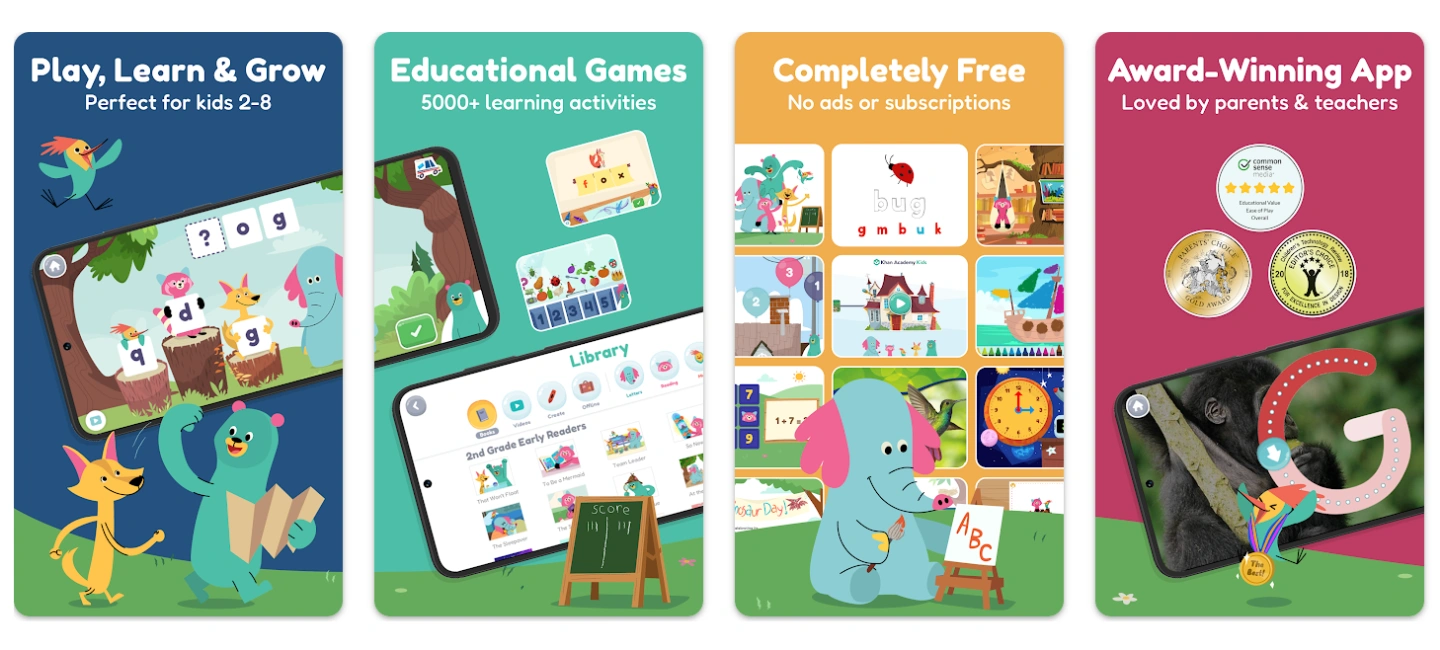
Khan Academy is one of the most widely used free math fluency apps. The platform offers video lessons followed by practice questions, covering arithmetic through calculus. Kids get immediate feedback on each answer, and a personal dashboard tracks mastery by skill.
Khan Academy’s math content aligns with Common Core standards, making it one of the most reliable free tools for US-based students. The app works across all devices and requires no paid subscription for full access.
Features:
- Adaptive practice questions that adjust to the student’s performance level.
- Skill mastery tracker with visual progress maps.
- Parent and teacher dashboard showing detailed skill-by-skill progress.
- Free, no ads — available for daily math practice at any time.
#2 Mathway
Availability: iOS, Android, Web
Grade: Middle school through high school (grades 5–12)
Cost: Free for final answers; step-by-step solutions: $9.99/month
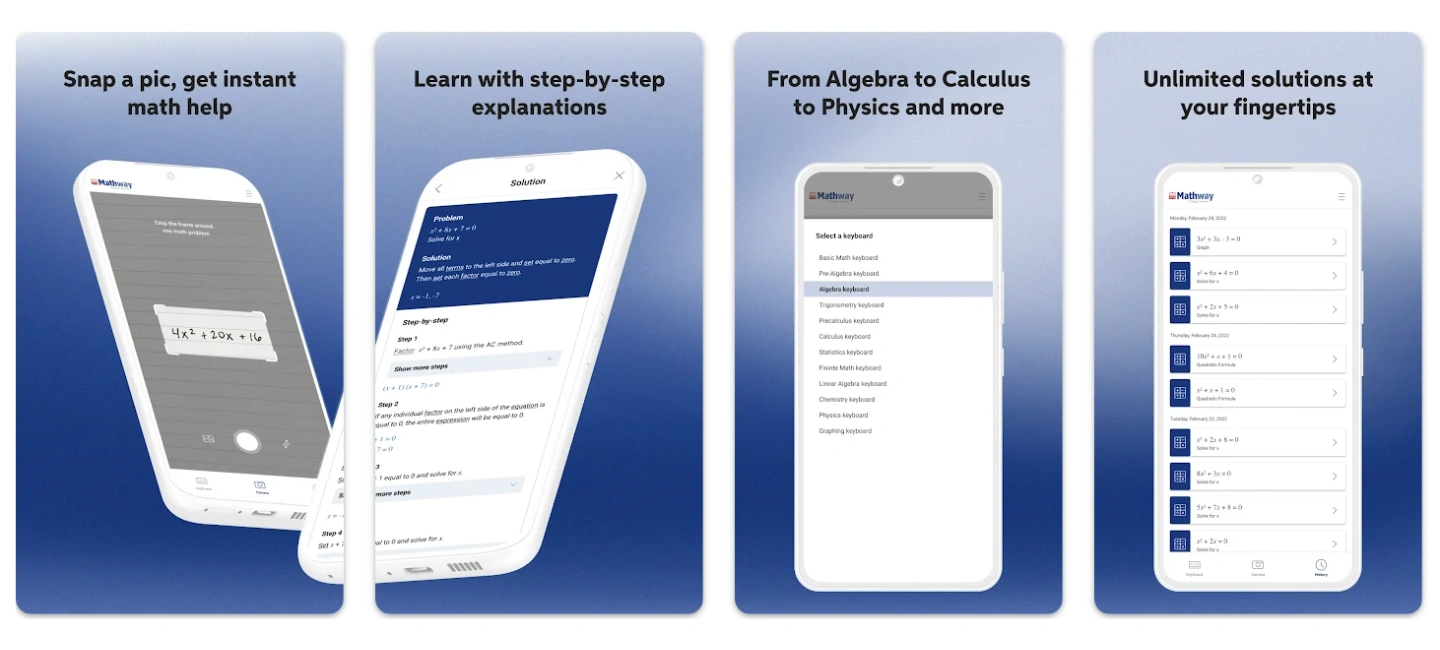
Mathway is an on-demand arithmetic practice app that solves typed or photographed math problems and returns step-by-step solutions.
Mathway is most useful for checking work and learning solution strategies, not for drilling mental-math speed. The free tier shows only final answers; step-by-step breakdowns require a subscription.
Features:
- Camera-based scanning for typed and handwritten equations.
- Coverage of 15+ math topics from arithmetic to calculus.
- Step-by-step solution walkthroughs (paid tier).
#3 Photomath
Availability: iOS, Android
Grade: Grades 4–12
Cost: Free for basic scanning; Photomath Plus: $9.99/month
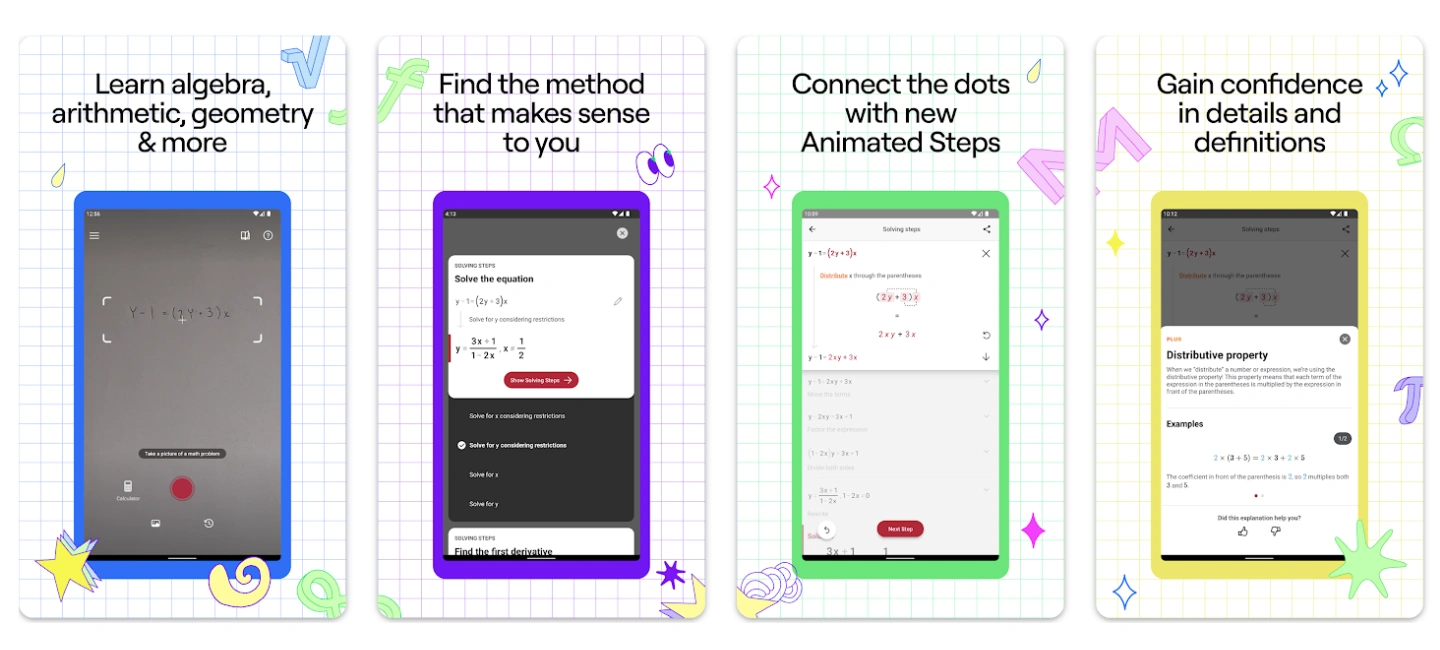
Photomath is a popular math drills app for scanning and solving equations in real time. The app uses the device camera to read a handwritten or printed problem and then displays multiple solution methods.
Photomath shows different ways to solve the same problem. The app helps kids build conceptual flexibility instead of memorizing one formula. It’s not a replacement for mental math drills, but it’s a strong homework support and self-check tool.
Features:
- Real-time camera scanning of printed and handwritten math.
- Multiple solution methods that a child can try side by side.
- Animated step-by-step solution breakdowns.
#4 Microsoft Math Solver
Availability: Android, Web
Grade: Grades 5–12
Cost: Free
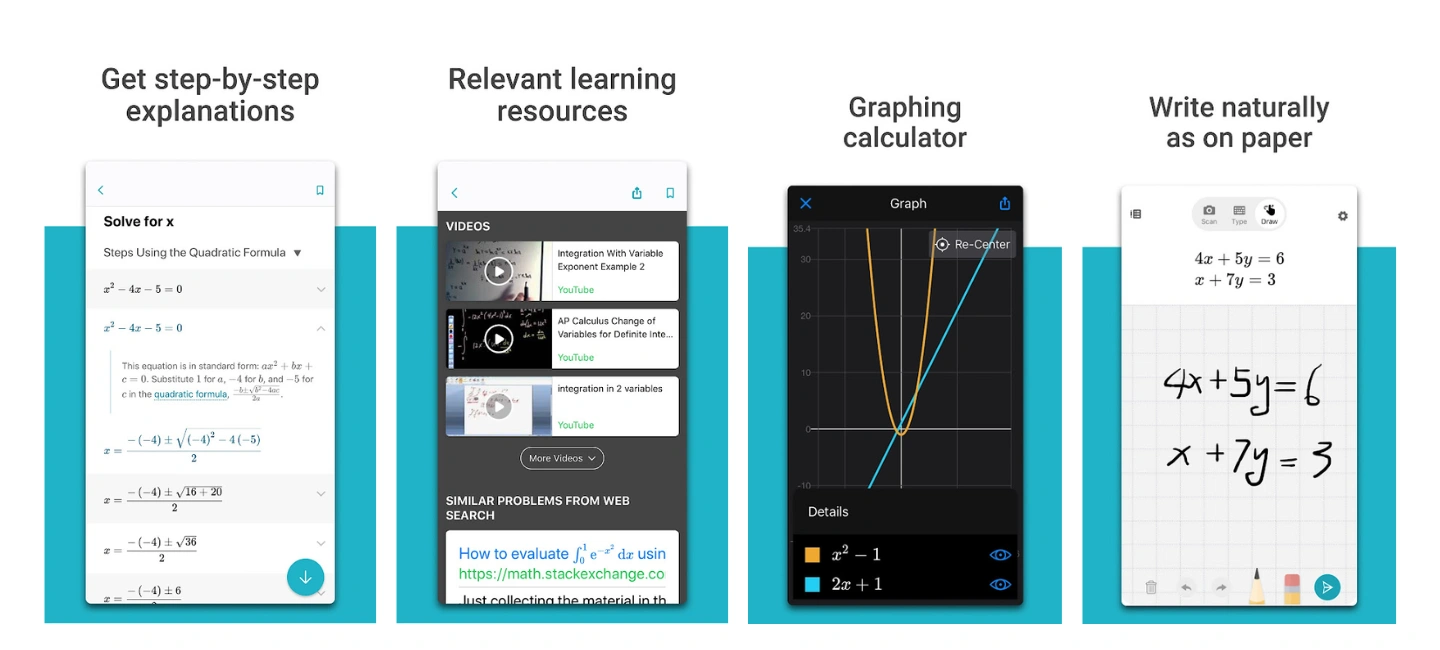
Microsoft Math Solver is a free tool that helps students improve calculation speed. It accepts typed, drawn, or scanned input and returns detailed solutions with graphs where relevant.
Microsoft Math Solver handles word problems and graphing especially well. The app is useful for middle and high school students. All features are free.
Features:
- Free step-by-step solutions for all problem types.
- Graphing tool for functions and equations.
- Practice quiz generator by topic area.
#5 Mathemagics: Mental Math
Availability: iOS
Grade: Grades 5+
Cost: $5.99 one-time purchase
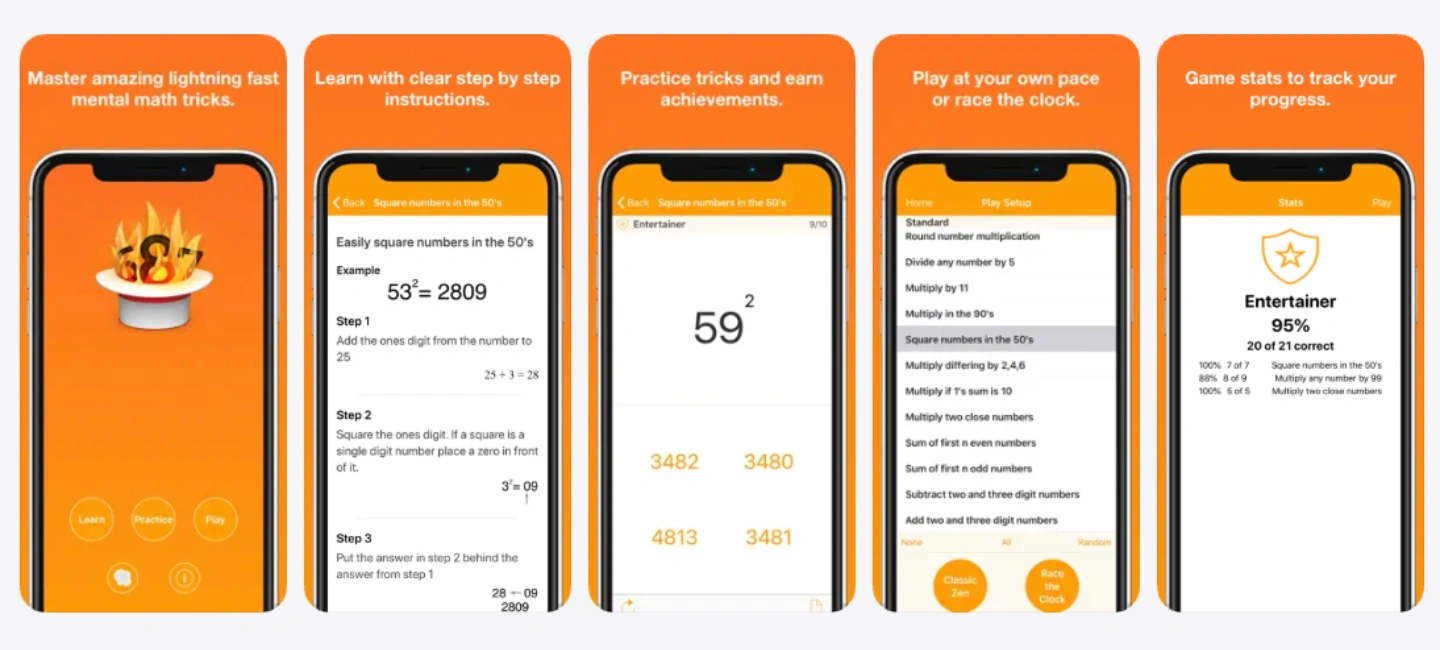
Mathemagics: Mental Math teaches speed calculation techniques. The app covers tricks for multiplying large numbers, squaring numbers quickly, and calculating percentages in seconds. It’s one of the few mental arithmetic training apps that teaches method, not just drills.
Mathemagics suits students who already have arithmetic fluency and want to push their calculation speed. It’s less suitable for beginners learning basic facts.
Features:
- 50+ mental math tricks with step-by-step explanations.
- Practice mode to apply each trick with timed feedback.
- Progress tracking by technique.
#6 Moose Math — Duck Duck Moose
Availability: iOS, Android
Grade: Pre-K through Grade 2
Cost: Free

Moose Math — Duck Duck Moose is a free brain training app math for young learners. The app offers five multi-level games that cover counting, addition, subtraction, sorting, and geometry. Each game adapts to the child’s current level, and parents receive a simple progress summary.
Moose Math offers reliable content and works well as a 5–10 minute daily warm-up.
Features:
- Five adaptive mini-games targeting early math skills.
- Automatically adjusts difficulty based on the child’s answers.
- Parent progress reports by skill area.
#7 Prodigy Math
Availability: iOS, Android, Web
Grade: Grades 1–8
Cost: Free for full curriculum access; parent membership — from $4.91/month
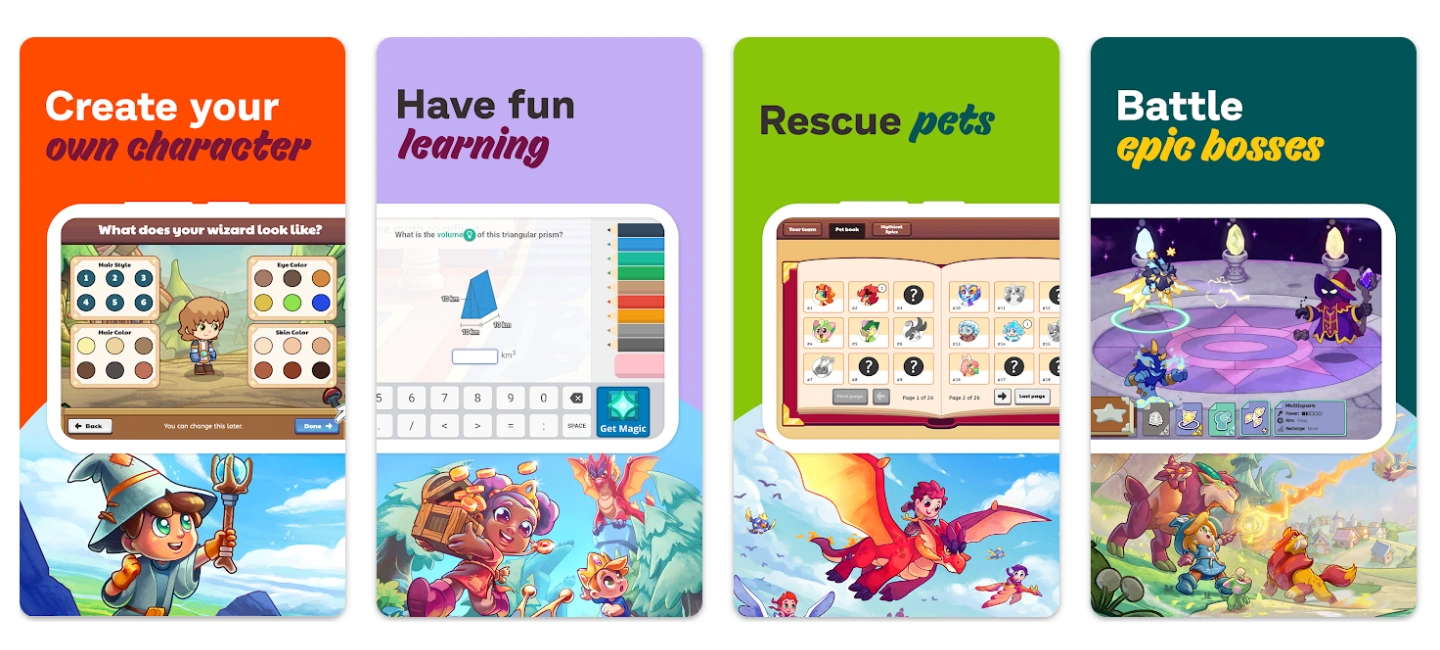
Prodigy Math is a fantasy-based game where students battle enemies by answering math questions correctly. The game covers 1,500+ skills across grades 1–8 and adapts the difficulty in real time. Prodigy’s math practice format keeps kids engaged through narrative progression rather than drill-and-repeat.
The free version is extensive — kids can access the game world and full curriculum without a subscription. The paid membership unlocks cosmetic rewards and parent reporting tools, but doesn’t gate academic content.
Features:
- 1,500+ math skills mapped to grade-level curriculum.
- Real-time adaptive difficulty adjustment.
- Teacher and parent dashboard with skill reports.
#8 Mathical
Availability: iOS
Grade: Grades 3–8
Cost: Free
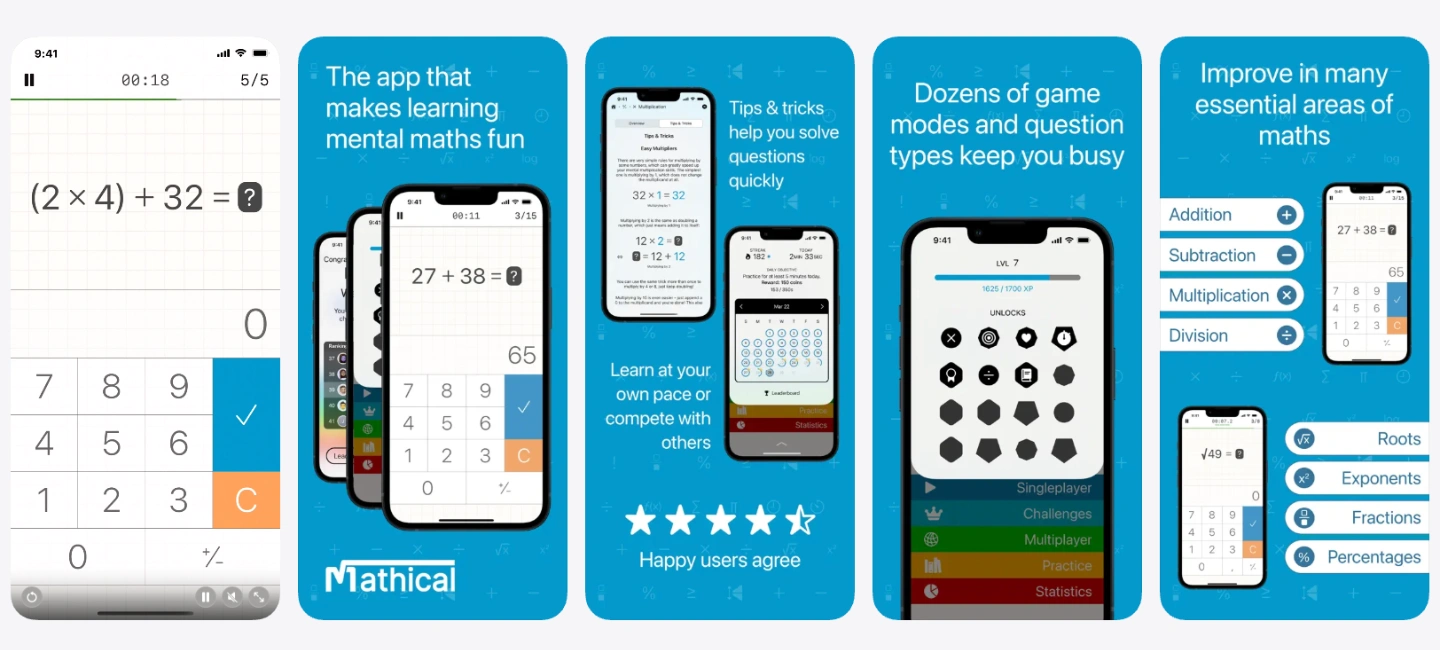
Mathical is a mental math apps free option that focuses on speed challenges for upper elementary and middle school students. Students complete timed rounds of arithmetic problems — addition, subtraction, multiplication, and division — and their scores show their calculation speed in real time.
Mathical has a clean, minimal interface. There’s no game story or character progression — just clean problem sets that let students see whether their speed is improving week over week.
Features:
- Timed arithmetic challenges across four operations.
- Speed score tracking per session.
- Clean, distraction-free interface.
#9 Mental Math Master
Availability: iOS, Android
Grade: Grades 4+
Cost: $3.99 one-time
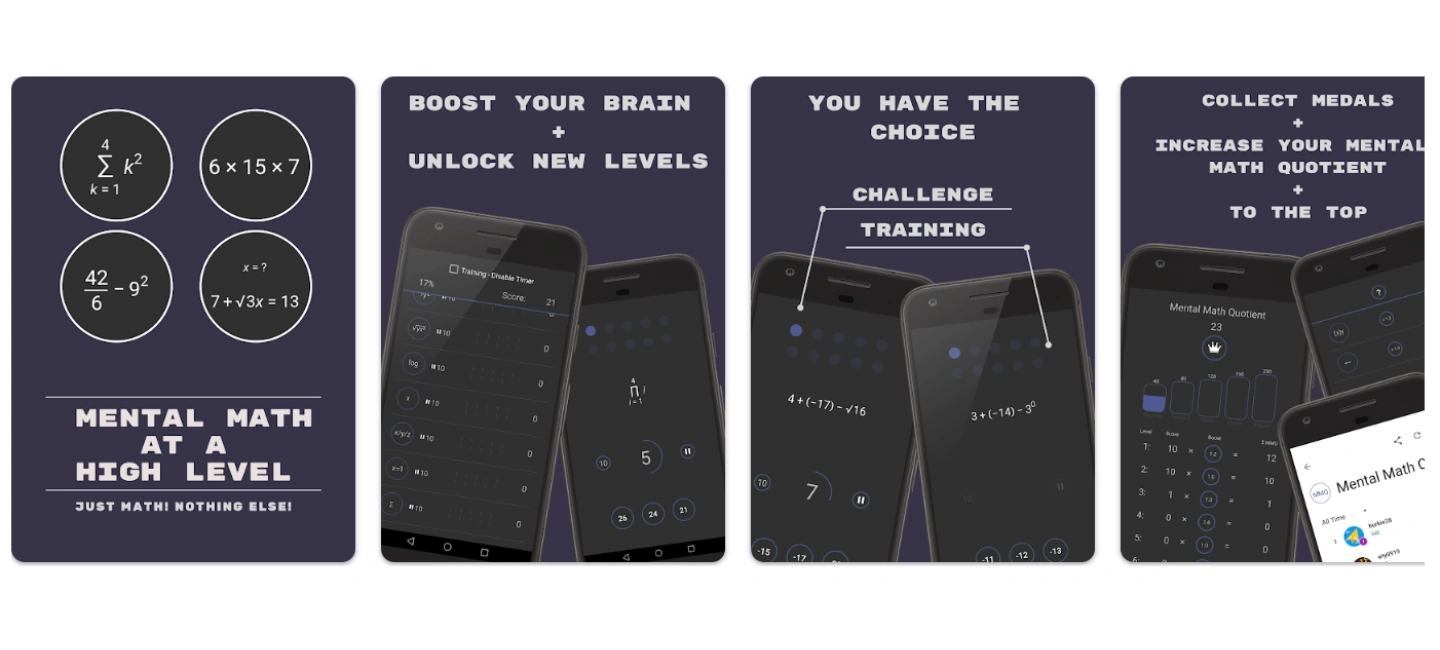
Mental Math Master is a structured apps to improve mental math tool designed around the Vedic math system and standard speed-calculation techniques. The app teaches methods for multiplying two-digit numbers mentally, quickly computing squares, and handling percentages — with graded practice after each technique.
Mental Math Master takes a more methodical approach than most apps on this list. Students learn a technique, see it explained, and then drill it specifically.
Features:
- Vedic math and standard speed-calculation method tutorials.
- Graded practice after each technique module.
- Session history to track speed improvements over time.
#10 Elevate
Availability: iOS, Android
Grade: Grade 6+
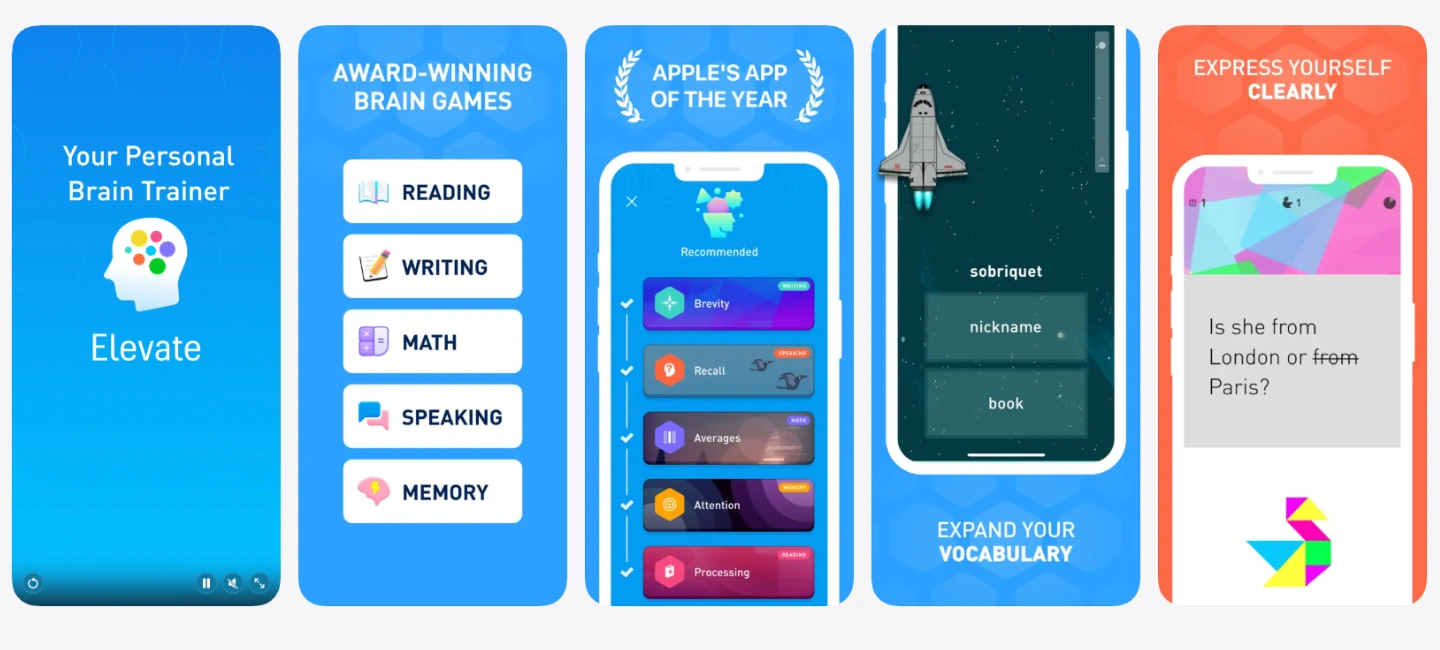
Elevate is a brain training apps math and language platform. The app provides math speed training alongside vocabulary, comprehension, and writing exercises. The math activities focus on calculation speed, estimation, and number pattern recognition through short, timed math games.
Elevate’s strength is its data. The app tracks performance across sessions and gives you a weekly report showing which skills improved and which need more work. The free tier includes rotating daily games; the Pro tier unlocks all 40+ games.
Features:
- Math fluency games targeting speed, estimation, and pattern recognition.
- Weekly performance report by skill area.
- Math with verbal and logic training for broader brain training.
Cost: Free daily games. Elevate Pro: from $9.99/month
How to Choose the Best Apps for Mental Math?
The best apps for mental math depend on three things:
- What is your child’s current grade level?
- What skills do they need to strengthen?
- How much time can they spend practicing?
Use the table below to narrow down options before downloading a mental math app for your kid.
| App feature | What to Look For |
| Customization | Apps that let kids select operation and difficulty, like Mental Math Master, prevent drilling skills already mastered. |
| Technique teaching | Mathemagics and Mental Math Master teach calculation strategies, not just drill answers. Kids learn faster when they understand the method. |
| Daily time commitment | A 5–10-minute daily session gives most kids enough practice. Mathical and Mental Math Master provide quick sessions. |
| Progress tracking | Khan Academy and Elevate show skill-by-skill progress. Useful for spotting where a child is stuck before the next report card. |
| User interface | Mathical uses a minimal, distraction-free layout. Microsoft Math Solver keeps navigation clean and straightforward. |
Daily Math Practice Feels Hard?
Brighterly tutors meet your child at their level and help them move forward.
Which Apps to Improve Mental Math Should You Choose
The 10 top apps to improve mental math cover every grade level, skill goal, and budget. Use this guide to choose:
- For young learners (K–2): Start with Moose Math or Khan Academy — both are free and curriculum-aligned.
- For fluency and speed (grades 3–8): Mathical and Mental Math Master focus specifically on calculation speed.
- For technique and strategy: Mathemagics teaches mental math methods, not just drills.
- For homework help and problem-solving: Mathway and Photomath walk through solutions step by step.
- For broad brain training: Elevate pairs math fluency with verbal and logic practice
- For free, no-setup practice: Microsoft Math Solver requires no account and works in any browser.
Any of these apps work best with 5–10 minutes of daily practice. When an app isn’t enough, Brighterly’s online math program for kids pairs your child with a tutor who finds the gap and fixes it.
FAQ
Are There Free Mental Math Apps Worth Using?
Yes. Khan Academy, Microsoft Math Solver, and Moose Math are all fully free and useful for daily practice. Khan Academy covers K–12 and aligns with Common Core. Microsoft Math Solver requires no subscription. Check whether the free tier covers your child’s grade level before committing to a paid upgrade.
How Can Kids Improve Mental Math Quickly Using Apps?
Short, consistent sessions beat occasional long ones. A child who practices for 7–10 minutes daily will see improvements in speed within 3–4 weeks. Apps with timed drills, like Mathical and Mental Math Master, build speed faster than open-ended practice. Pairing app practice with structured math lessons further accelerates progress.
Do Mental Math Apps Work?
Yes. Many kids build calculation speed and fact recall faster when they use a mental math app daily. Math apps work best as a daily supplement to classroom instruction — they’re less effective for teaching new concepts or fixing foundational gaps on their own.
How Long Should Kids Practice Mental Math Each Day?
From 5 to 10 minutes of focused daily practice is enough for most kids. Frequency matters more than duration — five short sessions a week outperform one long one. For students aiming for exam speed, 10–15 minutes per day is a reasonable goal.
Can a Mental Math App Help With Exams?
Yes, a good mental math app helps kids prepare for timed exams like the SAT vs. ACT. Faster mental calculation frees up time for harder problem-solving sections. Mathemagics is built specifically for speed calculation under pressure. Pair arithmetic practice apps with timed practice tests to simulate real exam conditions.


If you are a high school student looking for a test prep platform to boost your SAT or ACT score, Magoosh may be a decent choice. Yet, as Magoosh reviews show, it isn’t without flaws and isn’t ideal for those who need guidance. Explore this analysis that dwells upon multiple users’ experiences, core features, and […]

Apr 20, 2026

Social media in education shapes how students access information, communicate, and complete assignments. Schools now use platforms like YouTube, Google Classroom, and X (Twitter) as part of classroom technology. This guide covers 15 best practices for teachers and parents using social media in K–12 learning settings. What Is Social Media in Education? Social media in […]

Apr 28, 2026
Math & reading from 1st to 12th grade
Exploring alternatives?
Take a short quiz!
Choose kid's grade