Shapes Worksheets for Kindergarten
Updated on September 21, 2026
Shapes worksheets for kindergarten help children recognize, name, trace, and describe basic geometric shapes. Brighterly’s free printable worksheets introduce circles, triangles, squares, rectangles, and other familiar figures through visual activities. Kindergartners can practice identifying shapes, noticing their features, and drawing them while building foundational geometry skills.
Shapes Worksheets for Kindergarten PDF: Examples
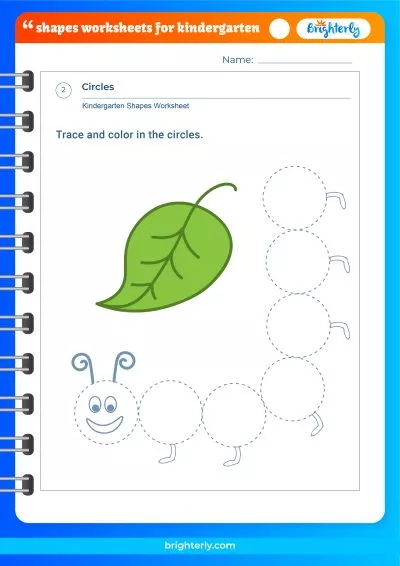
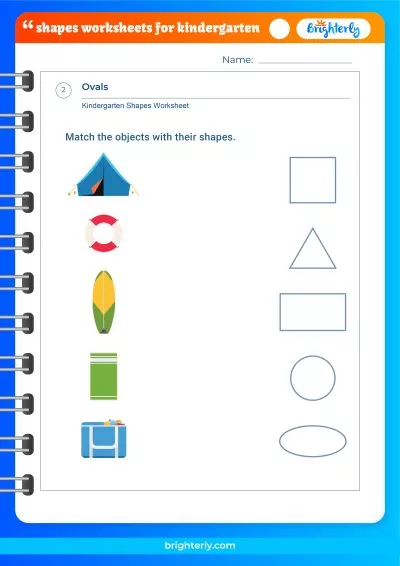
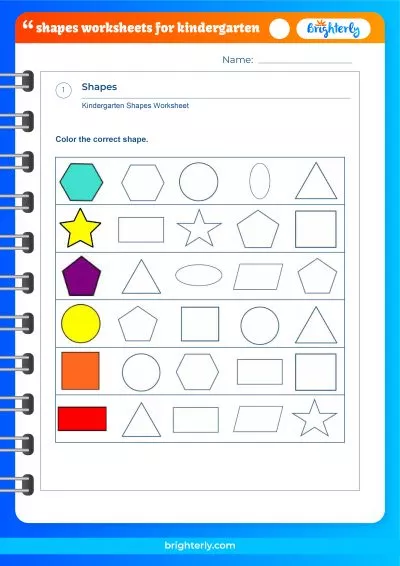
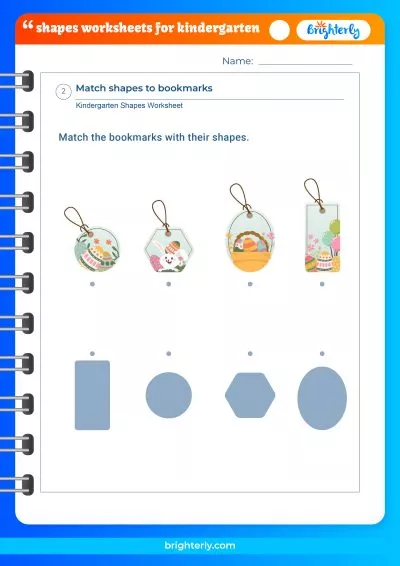
Brighterly’s kindergarten shapes worksheets combine recognition, tracing, matching, and coloring activities. Children practice distinguishing shapes by their outlines and features, such as straight or curved lines and the number of corners.
For example, a triangle has three straight sides and three corners, while a circle has a curved boundary and no corners. Looking at these differences helps children recognize shapes beyond their most familiar examples.
Shapes Worksheets for Kindergarten [Download for Free]
Download Brighterly’s free printable shapes worksheets for kindergarten to practice early geometry at home or in class. Use the printable activities for shape recognition, tracing, coloring, and matching. Children can complete them with pencils or crayons and then look for the same shapes in everyday objects.
If your child needs additional guidance with shapes and other foundational math concepts, Brighterly’s math program offers personalized lessons tailored to individual learning needs.


From shape spotting to shape understanding
1:1 lessons help your child recognize, describe, and draw shapes confidently
Children who are still learning the names of basic figures can begin with shapes worksheets for preschool. For more focused recognition and drawing practice, use identifying shapes worksheets or shape tracing worksheets.
Explore the full kindergarten math worksheets collection for additional practice with shapes, numbers, counting, patterns, and other early math skills.
Benefits of Preschool Shapes Worksheets for Kindergarten
- Recognize and name basic shapes
Kindergarten shapes worksheets help children identify familiar 2D figures, including circles, squares, triangles, and rectangles. Repeated recognition activities encourage learners to associate each shape’s name with its appearance and distinguish it from other figures.
Children who have difficulty identifying a specific figure can use focused resources, such as triangle worksheets, before returning to activities that mix different shapes.
- Describe shapes by their features
Recognizing a shape is only the beginning. Kindergarteners also learn to describe what makes each figure different. They can count a triangle’s three sides, notice a rectangle’s four corners, and explain that a circle has no straight sides.
Encourage your child to describe a shape rather than simply name it. Questions such as “How many corners does it have?” and “Are its lines straight or curved?” help children focus on defining characteristics.
- Practice tracing and drawing shapes
Tracing gives children a guide for drawing straight lines, curves, and closed figures. After following the outlines, they can try drawing the same shapes independently.
For additional pencil-and-paper practice, Brighterly’s shape tracing worksheets focus specifically on following outlines and practicing shape names.
- Identify shapes in different sizes and positions
A triangle remains a triangle when it is rotated, and a square remains a square when it appears in a different size. Worksheets help children focus on the features of a shape instead of relying only on one familiar picture.
Ask your child to find all the triangles on a page, including those that are larger, smaller, or pointing in different directions.
- Explore the difference between 2D and 3D shapes
Kindergarteners can begin distinguishing flat shapes, such as circles and squares, from solid shapes, such as spheres and cubes. Familiar objects make the difference easier to understand: a circle can be drawn on paper, while a ball is shaped like a sphere.
Once your child recognizes common 2D figures, continue with 3D shape worksheets for kindergarten to introduce solid figures through age-appropriate visual activities.
- Connect geometry with everyday objects
Shapes become easier to recognize when children encounter them outside a worksheet. A clock face can illustrate a circle, a window may resemble a rectangle, and a building block can demonstrate a cube.
Ask your child to find one example of each shape around the house. This gives them an opportunity to apply their new vocabulary to familiar objects.
How to Use Shapes Worksheets for Kindergarten
Begin by showing your child two or three familiar shapes and asking them to name each one. If they are unsure, point out the shape’s defining features before moving to the worksheet activities.
Next, let your child trace, match, or color the shapes. Ask them to describe what they notice, such as the number of corners or whether the outline is straight or curved. Finish by finding similar shapes in toys, household objects, or pictures.
For more hands-on ideas, explore Brighterly’s guide on how to teach shapes to kids. It covers activities such as sorting, drawing, building, and recognizing shapes in everyday life.
Children ready for more complex shape activities can continue with 1st grade shapes worksheets, which provide the next stage of geometry practice.
Frequently Asked Questions
What Skills Do Shapes Worksheets for Kindergarten Help Children Practice?
Shapes worksheets for kindergarten help children practice recognizing, naming, tracing, drawing, matching, and describing basic shapes. They also reinforce early geometry vocabulary and help learners identify features such as straight sides, curved lines, and corners.
What Shapes Are Included in Kindergarten Shapes Worksheets?
Kindergarten shape practice focuses on familiar 2D figures such as circles, squares, triangles, and rectangles. Depending on the activity, children may also encounter other shapes and begin exploring the difference between flat 2D figures and solid 3D objects.
Do Brighterly Shapes Worksheets for Kindergarten Include Tracing Activities?
Yes. Brighterly’s kindergarten shapes worksheets include tracing activities alongside recognition and matching exercises. Children can follow shape outlines to practice drawing familiar figures and then try identifying or drawing them independently.
How Should Parents Use Shapes Worksheets With Kindergarteners?
Start with a few familiar shapes and ask your child to name and describe them. Then introduce tracing, matching, and coloring activities. After completing the worksheet, look for the same shapes in household objects to reinforce recognition.
Are Brighterly Shapes Worksheets for Kindergarten Free to Download?
Yes. Brighterly offers free printable shapes worksheets for kindergarten in PDF format. Parents and teachers can download them for home practice, classroom geometry activities, shape recognition, tracing, and additional early math review.


Struggling with Geometry?
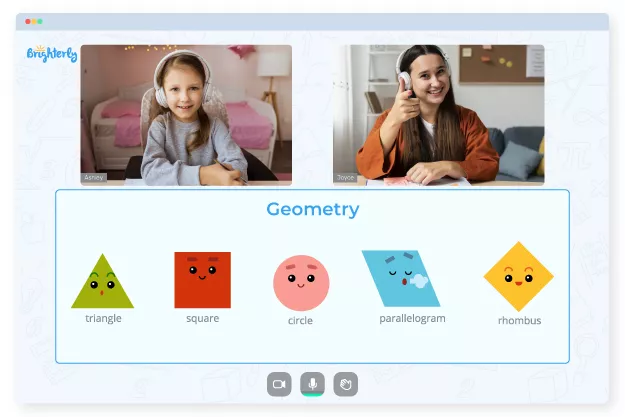
- Does your child need additional support with understanding the concept of geometry?
- Start lessons with an online tutor.
Choose kid's grade

Is your child having difficulties with the basics of geometry? An online tutor could provide the necessary assistance.
Book FREE lesson