ADHD and Reading: Why It’s Hard and How to Help Your Child (2026)
reviewed by Franz Jerby Delos Santos
Updated on July 10, 2026
Key points The reason children with ADHD struggle with reading is not because they lack intelligence, but because inattention symptoms interfere with working memory, and processing speed — cognitive functions a kid needs for reading. To help a neurodivergent child improve reading skills, you can use strategies that range from reading aloud together to getting a reading tutor. ADHD reading problems are most commonly linked to inattention symptoms affecting working memory, executive function, and processing speed function, according to the July 2025 article by Research on Child and Adolescent Psychopathology. This means that a child with ADHD can struggle with staying focused when reading, which in turn can lead to other issues, including with reading comprehension. Sharing thoughts on reading difficulties occurring in kids with ADHD, Clary Tepper, a licensed psychologist, also mentions that, unlike the common misconception, inattention is the main issue here, not hyperactivity or impulsivity. “Many people think that reading difficulties in ADHD are linked to symptoms of hyperactivity or impulsivity.” As for research on whether ADHD does affect reading, a July 2024 article in the Children journal cites research revealing that around 30% of children with ADHD are significantly behind their neurotypical peers in terms of reading proficiency, which suggests that reading difficulties are quite common in neurodivergent kids. The article also mentions that these difficulties are linked to such ADHD symptoms as inattention, executive function deficits, and phonological processing problems. Another study supporting inattention being the biggest cause of reading struggles in ADHD kids is the American Psychiatric Association October 2025 review, which states that children with inattentive ADHD type have trouble staying focused when reading.
Get your kid professional reading help
Our professional educators tailor the reading program according to your kid’s needs.
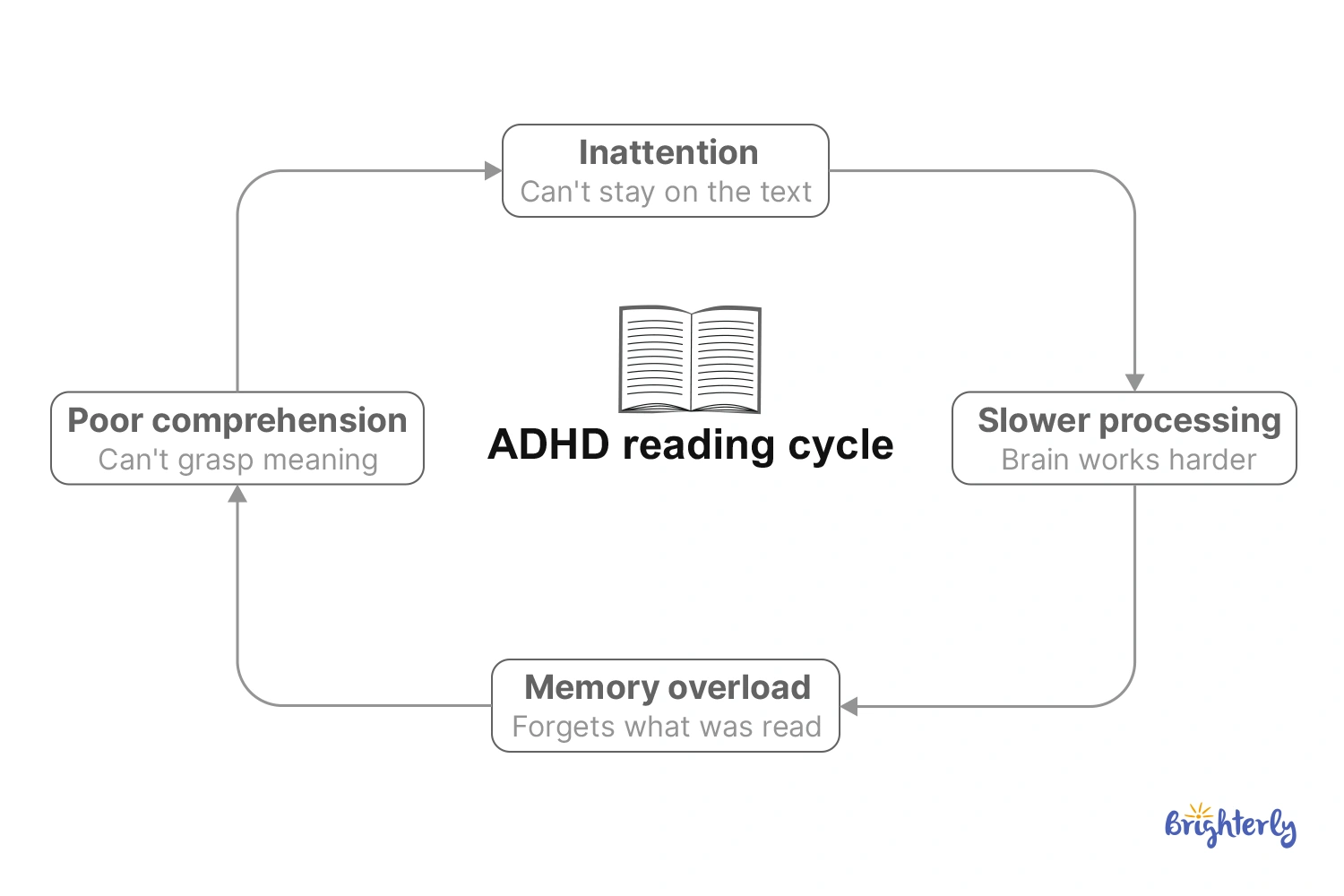
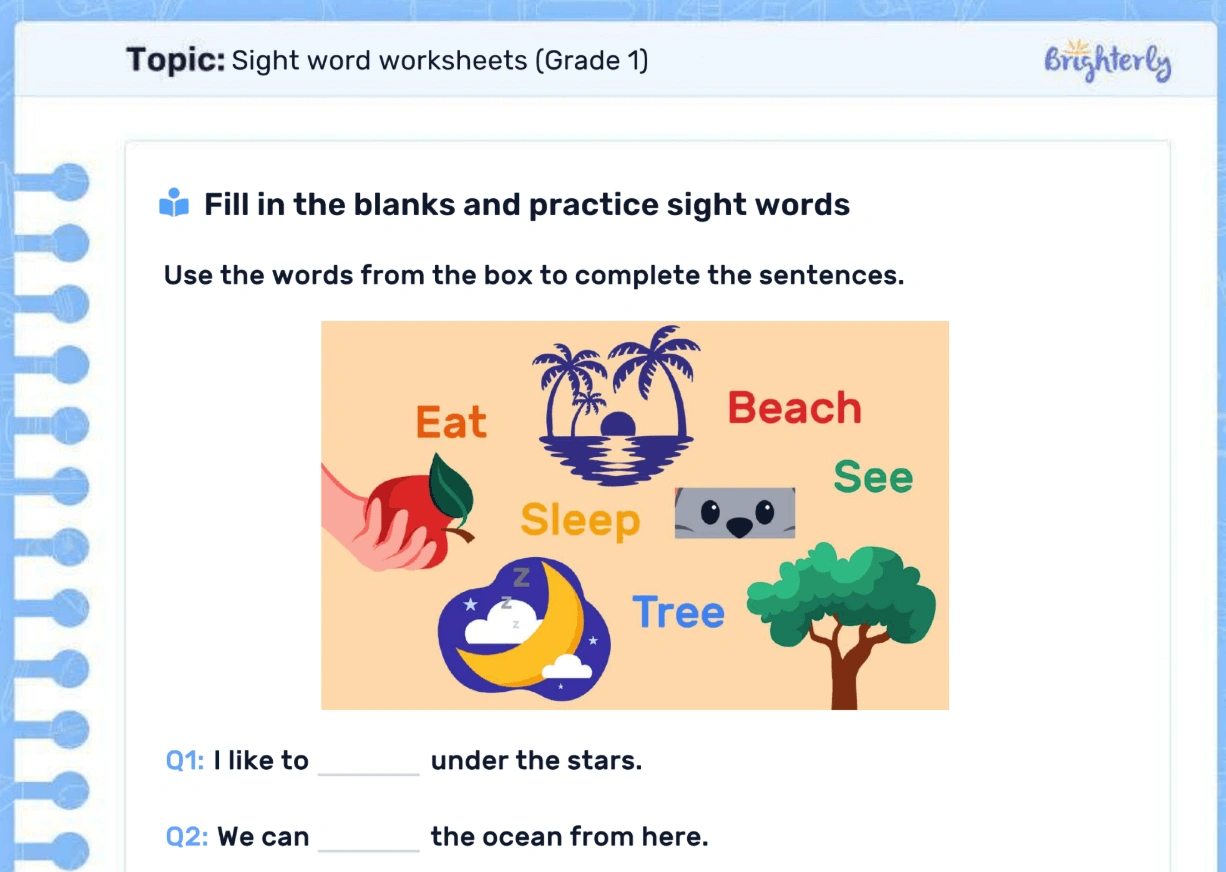
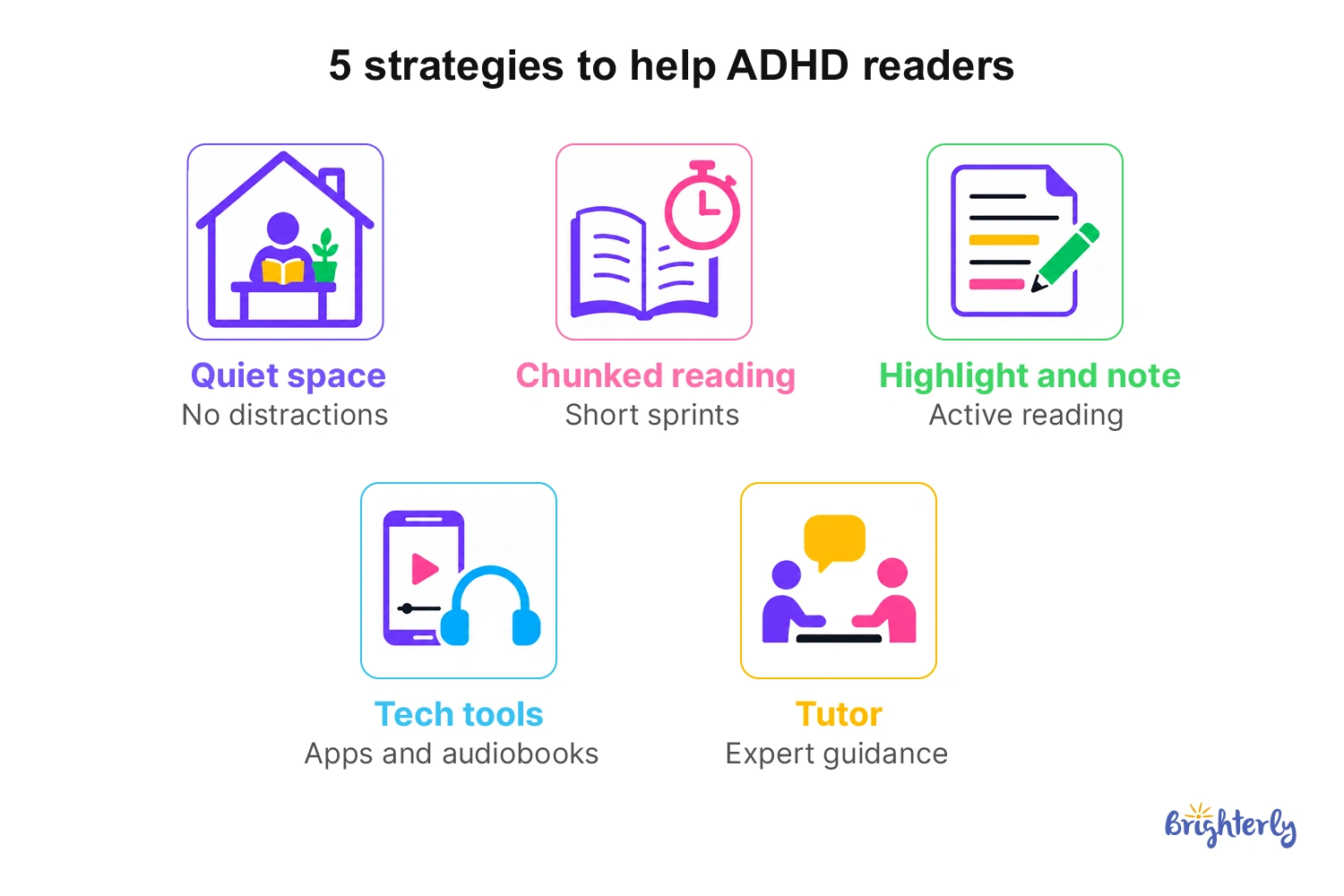
ADHD and reading comprehension challenges coexist in many kids, according to the CHADD April 2022 article, which states that children with ADHD frequently experience a specific reading comprehension deficit (S-RCD) — they have no problem reading the words accurately even aloud (decoding), but struggle with understanding what they’re reading. According to the article, the functions that have the biggest impact on reading comprehension deficit in kids with ADHD include self-regulation, cognitive flexibility, and working memory: Based on the ADDitude September 2025 article, the main difference in ADHD and dyslexia when it comes to causing reading struggles is that ADHD reading difficulties usually stem from inattention, while dyslexia-related reading challenges come from the inability to actually decode the words. Reading with ADHD Reading with Dyslexia Main challenge Staying focused Phonological processing Decoding skills Usually not affected Significantly affected Comprehension Breaks down due to inattention Breaks down due to decoding difficulties Reading speed Varies depending on attention and interest Consistently slow and labored Spelling Inconsistent errors Systematic, phonological errors Attention Frequently impaired Generally intact Source: ADDitude, 2024 In general, kids with ADHD struggle with how to focus while reading and remember what they’ve just read, but can usually decode words without much trouble, while when it comes to dyslexia and reading, kids have the opposite problem — they can pay attention, but decoding skills and phonological awareness (recognizing and sounding out words) are their weak areas. The ADDitude article also states that both conditions can co-occur in kids, with 25%-40% of individuals with ADHD also having dyslexia. However, the cases of such co-occurrence do not mean a kid with ADHD has dyslexia or vice versa. For example, Roseann Capanna-Hodge, a Regulation First Parenting expert, believes that dyslexia may frequently lead to attention problems that are commonly associated with ADHD because the brain becomes overwhelmed with decoding. “The biggest misconception is that all kids with reading difficulties, especially dyslexia, must also have ADHD.” Clary Tepper, a licensed psychologist, also warns that it’s important to distinguish ADHD and dyslexia properly — they affect different reading aspects and, thus, should be addressed differently. “ADHD affects reading through different brain pathways than dyslexia.” Note: Our tutors provide online dyslexia reading support to help a child recognize words, connect letters to sounds, and understand sentences to become more confident readers. A July 2025 study in Research on Child and Adolescent Psychopathology found that because ADHD slows the processing speed and contributes to working memory deficits, children with ADHD show poorer reading performance — their brain has to work harder and slower to get through text, which can mean slower reading speed. However, the CHADD April 2022 article says that ADHD symptoms can have an opposite effect on reading speed — kids rush through the text to prove they can read well. Overall, ADHD can affect reading speed in two ways: In practice, the lack of reading comprehension skill (reading but not processing with ADHD) is a more crucial problem for ADHD readers than speed. And to address this problem, Dr. Eleni Nicolaou, art therapist and creative wellness expert at Davincified, advises matching reading activities to a child’s thinking patterns. “Once a child's brain finds something steady to hold onto, they can then clearly understand the story.” A July 2025 study in Research on Child and Adolescent Psychopathology found that those kids with ADHD who show stronger inattention symptoms also process information more slowly. And a slower processing speed makes it harder for them to hold information in their working memory — the mental space we use to remember what we just read while moving on to the next sentence. A December 2025 study by Nationwide Children’s Hospital confirms the same pattern — when a child with ADHD processes information more slowly, their brain uses up more mental energy to get through the text, leaving less effort to spend on actually understanding and remembering what they’ve just read. Together, both studies point to the same conclusion — kids with ADHD tend to experience slower processing speed and poorer working memory, which makes reading feel much harder for such children. Explore Brighterly Learning Experience Learn exactly how Brighterly helps students thrive through expert sessions, online tools, and proven feedback from thousands of satisfied parents To help your child succeed in reading, you can use strategies that include creating a reading environment where kids can read comfortably, breaking text into chunks kids can read separately, highlighting and making notes while reading, using technology and visual support tools, and getting a professional reading tutor. Attention is a valuable asset for kids with ADHD, so try minimizing distractions for them. Make sure the kid has a reading environment where they are comfortable, and no extra items can grab their attention. This way, kids can stay focused on the reading process without shifting focus to something else. Note: Based on the November 2017 report from the American Public Health Association, ADHD symptoms overlap with vision-related problems, which means removing visual distractions can significantly help kids with ADHD. Chunk reading can be a great way to address ADHD difficulty reading. It limits the sessions to short, non-overwhelming sprints that help kids practice the reading skill gently, stick to their comfortable pace, and boost confidence with frequent successful completion of texts. Jessica Plonchak, an Executive Clinical Director at Choice Point Health also stresses that for kids with ADHD, it’s important to keep the practice small and controllable to help them proceed. “One of the most effective strategies for children with ADHD is converting reading tasks into short, clear, and structured lessons.” To start reading in chunks, begin with small, easy pieces of text — one paragraph is enough. Don’t rush your kid into completing a chunk of text. Instead, help them understand what they read and reward them when they make progress. If necessary, take a break to let the kid rest for a while and help them make notes. You can also time these breaks with the help of the Pomodoro technique — taking 5-minute breaks after every 25 minutes of studying. According to the June 2025 study in Behavioral Sciences, the Pomodoro technique is widely recommended for students who struggle with inattention — breaking learning sessions into 25-minute sprints can reduce cognitive overload and help maintain focus. Passive reading is just eyes moving across a page, while not actually doing anything, which can be hard for kids with ADHD due to attention deficit. To make reading a more active task, you can give your kid a simultaneous activity to perform while reading to improve attention and anchor working memory. Such activities are also part of reading comprehension strategies. Note: These activities can also be part of IEP accommodations since they align with the reading strategies for struggling readers. There are various easily doable and interactive visual support tools and technology to incorporate into the reading process and help your kid with low attention spans. For example, it can be a good idea to draw something connected to the reading or play a short active game before starting the reading practice. As for technology, you can try using audiobooks, text-to-speech apps, and reading tracker apps to make a child more involved and motivated. The goal of using visual tools and technology is to help lower the pressure on the kid’s nervous system, as Roseann Capanna-Hodge, Regulation First Parenting expert, also believes. “The best strategies to help kids with ADHD read better always start with regulating the nervous system first.” To start with visual tools, you can try reading worksheets with pictures and structured texts. For example, topics in our free reading worksheets are even grouped by specific skills they are aimed at. Frequently included in reading programs for struggling readers, worksheets help children develop reading skills gradually and avoid feeling overwhelmed. Children with ADHD often need extra help to stay focused when they read. Expert tutors can help keep students interested, adjust the content to their attention span, and give them immediate feedback. A private online reading tutor on our platform understands how the brain of a neurodivergent child works and chooses the approach to keep them interested and focused. Our reading program for kids with ADHD is focused on building an effective and gamified reading comprehension practice for kids in grades K-12 based on their current skills and learning style, while aligning with the U.S state standards.
Help your kid read better and enjoy it!
Our tutors are professionals in helping kids overcome their reading problems. Our educators combine entertainment with productivity to teach without overwhelming students, and this approach has earned us a 4.5/5 Trustpilot satisfaction score (as of July 2026). Apart from specific strategies, parents can also use effective tips to add to these strategies to help their kids who have ADHD and trouble reading feel more comfortable about reading in a home setting. The key with these tips is to provide support and encouragement to a kid to make them feel safe and motivated to do even better. It’s always easier to encourage kids to read with a little reward. Giving them a small gift, their favorite snack, or whatever you, as a parent, find appropriate, adds excitement to the reading process. You can also set up specific rules for getting the reward to motivate your kid to read, focus, and work harder. For example, you can agree that you will give a reward each time your kid finishes reading a paragraph faster or when the frequency of distractions when rereading a piece of text becomes lower. Also consider making the rewards useful rather than just pleasant, like toys that help concentrate, fidget spinners, stress balls, or a Rubik’s Cube. Note: Whatever the reward is, always appreciate and praise your kid for completing a milestone, even the smallest one. Verbal acknowledgment is just as motivating as gifts and sweets, so don’t neglect it. Reading together helps children with ADHD build focus, improve comprehension, and feel supported. Try taking turns reading with your kid, ask questions about the text, and gently guide them through the complicated text parts. Most importantly, stay patient and attentive — your encouragement makes the process easier and more enjoyable. When reading, it’s also helpful to talk openly with your kid about ADHD and how it works, so they know what troubles they’re experiencing and why. According to Roseann Capanna-Hodge, Regulation First Parenting expert, this self-awareness can be a big part of progress for such kids. “A powerful support for ADHD readers is teaching kids about their strengths and challenges, as well as how their brain works.” Apart from helping a kid, reading together also gives you a chance to track how your child is doing. Without reading together, it’s hard to understand whether the kid understood the text and remembered something from it. Talking about what you’ve just read helps you see if the kid struggles to comprehend the context, a specific word, or a phrase, and guide them. Yes, adults with ADHD can struggle with reading, too. ADHD symptoms don’t disappear as the person grows up, so the condition still affects cognitive functions and, hence, reading abilities even in adults. Based on community-reported experiences, adults with ADHD frequently report difficulty staying when reading, losing their place repeatedly, and needing to re-read text parts multiple times to remember what they’re reading. Tools and apps that help children with ADHD read better include text-to-speech, worksheets, audiobooks, and short, gamified lessons. However, the options can vary depending on your child’s needs. For example, choosing any of these ADHD writing tools can make a big difference in the study process. A child with ADHD usually needs 3 to 5 reading sessions per week to build and improve reading skills. However, this amount can change depending on your child’s needs. You can also encourage daily reading, but remember that it doesn’t have to be long — you can start with 5 minutes and slowly increase lesson time to 20 minutes. Yes, getting an evaluation from a specialist before starting reading support is a good decision. Only a professional can diagnose a child correctly to determine if the reason for reading problems is dyslexia, auditory processing issues, or ADHD, and guide you towards effective targeted support. To cancel your Outschool membership, sign into your account, head to the Transactions page, select Manage Plan, then choose Cancel Plan. This article describes the process in detail, explaining all the nuances you can encounter. Can You Cancel Outschool Class and Subscription? Yes, you can cancel both Outschool classes and your membership subscription. However, these […] Aug 26, 2025 Reading intervention programs are evidence-based instructional plans aimed at supporting students who struggle with reading or don’t yet meet grade-level literacy standards. The programs concentrate on phonemic awareness, phonics, fluency, vocabulary, and comprehension. The most widely used programs are compared in learning format, content features, types of practice, pricing options, and reported academic outcomes. What […] Aug 27, 2025
ADHD and Reading Difficulties




Reading Comprehension Challenges in Children with ADHD
ADHD vs Dyslexia: Key Differences in Reading

How ADHD Affects Reading Speed

Working Memory and Processing Speed in ADHD Reading
How to Help Children with ADHD Succeed with Reading
Create a Distraction-Free Reading Environment
Use Structured and Chunked Reading Techniques

Make Reading Active: Highlight, Note, and Visualize
Use Technology and Visual Support Tools
Work with a Reading Tutor
Tips for Parents: Supporting ADHD Readers at Home
Build a Reading Routine with Rewards and Encouragement
Read Together and Talk About the Text
Frequently Asked Questions
Can Adults with ADHD Struggle with Reading Too?
What Tools or Apps Help Children with ADHD Read Better?
How Many Reading Sessions per Week Does a Child with ADHD Need?
Should I Get My Child Evaluated Before Starting Reading Support?




Math & reading from 1st to 12th grade
Looking for homework support for your child?

Choose kid's grade

Math & Reading for Grades 1–12
Build real confidence for your child with a Brighterly math or reading tutor.