Reading Intervention Programs to Know About in 2026
reviewed by Franz Jerby Delos Santos
Updated on September 22, 2026
Key Points:
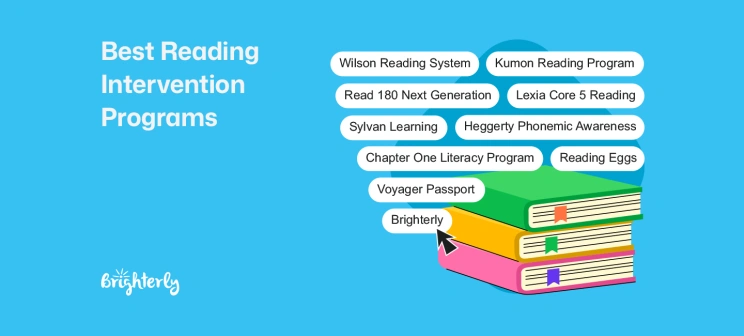
- Among reading intervention programs, Brighterly offers broad support for K-12 students with a range of reading needs, given its personalized and 1:1 online tutoring with reading experts that address any particular learning gap with custom-paced instruction.
- Reading Eggs and Lexia Core 5 offer self-paced online practice that relies on adaptive apps and gamified exercises to build early phonics and core literacy skills.
- Read 180 and Voyager Passport are structured school-based interventions, employing teacher-led software models developed for classrooms or small groups.
- Sylvan, Kumon, and Wilson Reading System are intensive center-based programs with specialized multi-sensory dyslexia interventions and in-person tutoring.
- Chapter One Literacy Program and Heggerty provide extra help with particular skills, focusing on foundational oral phonemic awareness and early letter recognition.
Reading intervention programs are evidence-based instructional plans aimed at supporting students who struggle with reading or don’t yet meet grade-level literacy standards. The programs concentrate on phonemic awareness, phonics, fluency, vocabulary, and comprehension. The most widely used programs are compared in learning format, content features, types of practice, pricing options, and reported academic outcomes.


Is your child falling behind in reading?
Take a quick quiz to find the right reading support for your child.
What Is Reading Intervention?
Reading intervention implies systematically providing specialized instruction to students who read below grade level or struggle with particular literacy skills. In intervention, specialists usually resort to Structured Literacy (shaped by the Science of Reading), which deals with phonology, sound-symbol association, syllable patterns, and morphology, or Orton-Gillingham – a multi-sensory approach, often used for students with dyslexia or serious decoding difficulties.
Reading intervention stands on:
- Explicit instruction – explained and practiced with step-by-step guidance,
- Systematic sequence – from simple foundational concepts to complex tasks,
- Small groups or 1-on-1 format – to maximize attention and feedback,
- Frequent progress monitoring – to adjust instructional strategies based on data.
What Are the 3 Tiers of Reading Intervention?
Shaped by the RTI (Response to Intervention) and MTSS (Multi-Tiered System of Supports) standards, the 3 tiers of reading intervention compose a structure to identify struggling readers early and provide increasingly intended academic support according to student needs: Tier 1 – universal core instruction, Tier 2 – targeted group interventions, and Tier 3 – intensive individualized support.
- Tier 1 applies to all students in the general education classroom and delivers preventive and evidence-based reading instruction aligned with grade-level standards. Teachers employ differentiated instruction to adjust to varying skill levels within the general curriculum, and all students undergo universal screening three times a year – fall, winter, and spring.
- Tier 2 provides supplemental instruction to students who show particular missing or underdeveloped skills during universal screening, so that they ultimately catch up to grade-level expectations. Teachers conduct progress monitoring biweekly or monthly using special assessments to determine whether the student is ready to exit the intervention.
- Tier 3 delivers the highest level of instructional intensity for students who show persistent and severe reading gaps or who haven’t made expected progress in Tier 2. Depending on the student’s needs, Tier 3 may supplement core instruction or be an intensive replacement of the core program.
|
Tier 1: Universal |
Tier 2: Targeted |
Tier 3: Intensive |
|
|
Instructional focus |
Grade-level core curriculum |
Particular skill deficits |
Comprehensive and individualized gap correction |
|
Group size |
Whole class and flexible small groups |
Small groups of 3-6 students |
Very small groups (1-3 students) or 1-on-1 |
|
Frequency and duration |
Daily during core block (60-90 min) |
3-5 days per week (20-40 min extra) |
Daily high-intensity sessions (45-60 min) |
|
Main instructors |
General education classroom teacher |
Classroom teacher, interventionist, or specialist |
Reading specialist, interventionist, or special educator |
|
Assessment schedule |
Universal screening 3 times per year |
Progress monitoring every 2-4 weeks |
Progress monitoring weekly |
Explore Brighterly Learning Experience
Learn exactly how Brighterly helps students thrive through expert sessions, online tools, and proven feedback from thousands of satisfied parents
Online Reading Intervention Programs: Comparison
|
Grade |
Pricing (as of September 2026, US) |
Pros (summary) |
|
|
Brighterly |
K-12 |
Flexible pricing starting at $17.70 per lesson / $141.60 per month (20% discount applied when choosing the 12-month plan of 2 lessons per week) + free introductory lesson |
✔️Live 1:1 instruction ✔️US state standards-aligned curriculum ✔️Strong focus on reading ✔️Flexible scheduling ✔️Free worksheets ✔️Custom-paced program ✔️Homework support ✔️Highly vetted tutors |
|
Reading Eggs |
Pre-K-8 |
$9.99/month reading only $13.99/month reading + math Annual $69.99 / $99.99 (up to 4 kids) + 30-day free test trial |
✔️Strong focus on phonics and grade-level skills ✔️Covers reading to 8th grade ✔️Lower cost for 4 kids |
|
Read 180 Next Generation |
K3-12 |
Pricing depends on the chosen book and starts from $29.95 per book. |
✔️Adaptive curriculum ✔️MAP Growth integration (AI-adaptive initial assessment) ✔️Integrates phonics with fluency and comprehension |
|
Sylvan Learning |
Pre-K-12 |
Starts at $50-100 per session (depends on the format, location, and subject) |
✔️Math, reading, test prep, and other subjects are available ✔️Common Core-aligned program ✔️Both in-center and online options are available |
|
Lexia Core 5 Reading |
Pre-K-5 |
The annual subscription price is $175 per student/year (around $14.5 per month) with price reductions for more children. |
✔️Adaptive blended learning ✔️Personalized instruction |
|
Wilson Reading System |
Pre-K-6 |
Starts at $250 per course (lasts a month or longer) + from $30 for learning materials. |
✔️Program based on Orton-Gillingham intensive intervention for dyslexia ✔️Structured literacy |
|
Kumon Reading Program |
K-12 |
$140-$225 per month (depending on the center location) |
✔️Emphasis on phonics and vocabulary development ✔️Independent learning focus ✔️Structured approach |
|
Chapter One Literacy Program |
K-2 |
$375-$500 per year (around $31-$41 per month) |
✔️1:1 tutoring ✔️Letter recognition training |
|
Voyager Passport |
K-5 |
Starts at $349 for a Teacher Resource Kit |
✔️Blended, teacher-led format ✔️Reading, language, and writing ✔️Access to an Online Teacher Center ✔️In-person or online lessons |
|
Heggerty Phonemic Awareness |
Pre-K-6 |
Starts at $89 for educational materials |
✔️Basic skills development and problem-solving ✔️Focus on phonemic awareness |
Brighterly
Age group: K-12
Best for: readers looking to improve foundational and advanced literacy skills at a transparent price.
Brighterly starts the list of evidence-based reading intervention programs for K-12 students in the 1:1 online tutoring format. Our learning plans are fully compliant with US state standards and highly personalized, helping kids build a reading foundation and tackle specific reading-related problems (like increasing reading speed).
Brighterly: Features
- Certified reading experts: We only collaborate with ELA professionals who are specifically trained to teach one-on-one. Reading tutors at Brighterly use gamified and interactive approaches, ensuring that the material is easy to digest and understandable.
- School-aligned reading curriculum: Our lessons are fully aligned with the school’s curriculum and offer a comprehensive reading program for elementary, middle, and high school students. Each lesson is structured and personalized to close learning gaps and build helpful reading habits.
- Free worksheets and tests: At Brighterly, we also offer free reading worksheets and reading tests as study resources to support children’s learning.
- Diagnostic-first and personalized approach: Every child begins with an initial assessment to define their particular academic strengths and learning gaps, enabling tutors to create a customized learning plan according to every kid’s current level and future goals.
Brighterly: Pricing
As of September 2026, we offer flexible pricing plans starting at $17.70 per lesson (20% discount applied when choosing the 12-month plan of 2 lessons per week). The exact price depends on the length of the subscription and the frequency of attendance. Below is an example of prices for taking 2 lessons per week:
- 1-month plan: starting at $21.90 per lesson
- 3-month plan: starting at $21.40 per lesson
- 6-month plan: starting at $20.20 per lesson
- 12-month plan: starting at $17.70 per lesson
The plans include 1:1 personalized learning paths, homework support, progress monitoring with regular reports, and learning resources.
From struggling to confident: Personalized reading that works
Brighterly helps kids discover the joy of reading and the confidence to proceed.
Reading Eggs
Age group: 2-13 y.o.
Best for: self-paced learners looking for a strong emphasis on phonics and an affordable price.
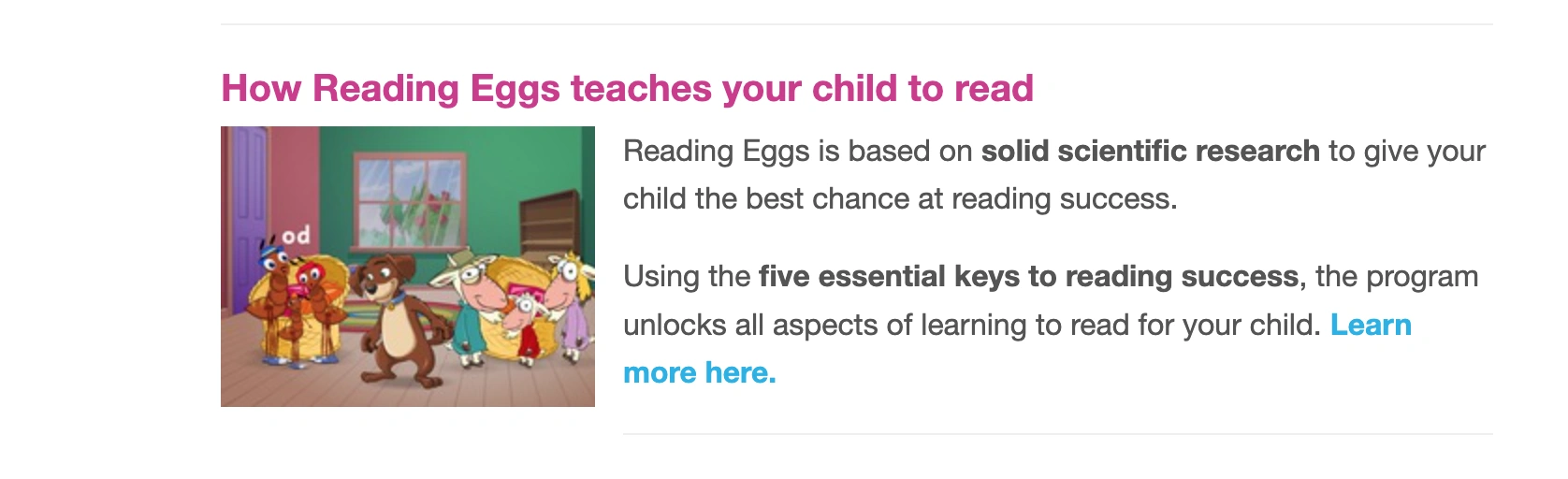
Reading Eggs is an early intervention reading program that you can download on your device or use the web version. It promotes interactive, gamified practices with a reward system to build reading confidence naturally.
Reading Eggs: Features
- Fun reward system: On Reading Eggs, kids can win golden eggs as avatars for successfully completing in-app quests.
- Focus on phonics and literacy: Reading Eggs offers phonics-based reading programs that contain over 120 lessons and over 4,000 digital books (see how it compares to Hooked on Phonics).
- Both a reading app and a web platform that you can use anywhere: Reading Eggs is one of the great tools to teach phonics at home, thanks to its structured plan with levels that are adjusted to the needs of kids upon completing the placement test.
Reading Eggs: Pricing
The detailed guides on how much Reading Eggs costs and what experiences parents share about it feature diverse nuances and impressions, yet in a nutshell, in September 2026, expect to pay:
- $9.99/mo reading only
- $13.99/mo reading + math
- $69.99 / $99.99 – annually, up to 4 kids
Note: Among all the literacy intervention programs in this list, Reading Eggs offers the most affordable monthly subscription prices. To justify this pricing, Reading Eggs doesn’t involve any live tutoring, which makes it a great tool to complement your child’s tutoring sessions rather than being a great reading homeschool curriculum.
If you’re not ready for a full commitment to the Reading Eggs subscription, it offers a 30-day free trial. Testing Reading Eggs for free is an optimal choice if you’re looking for budget-friendly or free reading intervention programs. And if you did commit to Reading Eggs and have cancellation problems, this guide should be of help.
Read 180 Next Generation
Age group: 8-18 y.o.
Best for: students of 3 or more grade levels in need of intensive tier 3 reading intervention programs.
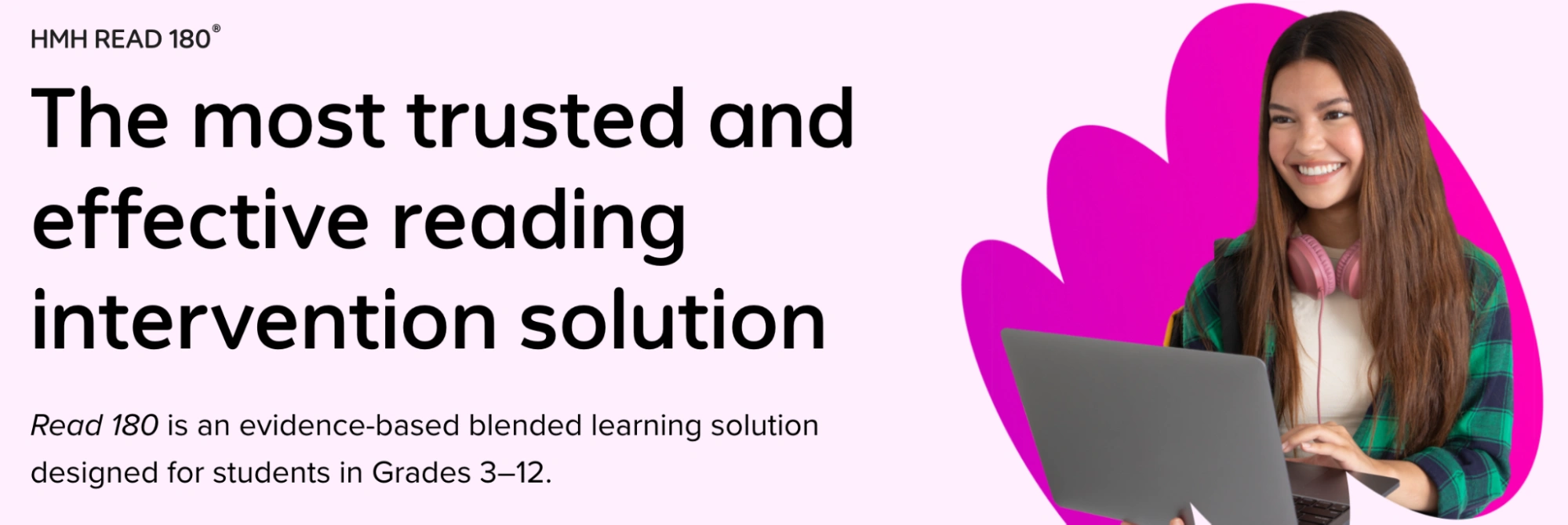
Read 180 Next Generation is a blended learning intervention for grades 3-12, featuring adaptive software, small-group instruction, and building independent reading skills. It’s especially helpful for intensive and accelerated literacy development, thanks to its science-based approach at the core of its personalized and instructional learning plans.
Read 180 Next Generation: Features
- Adaptive curriculum: Focused on helping kids who demonstrate reading results that are below the proficiency level, Read 180 applies various tools to personalize the learning and adapt it to the students’ needs. The data-driven learning plan at Read 180 Next Generation adjusts based on students’ results.
- MAP Growth integration: Read 180 uses an AI-adaptive initial assessment to measure academic achievement in reading.
- Comprehensive program: Read 180 Next Generation has two levels (K-6 and 6-12) and integrates the phonics intervention program with fluency and comprehension
Read 180 Next Generation: Pricing
Read 180 Next Generation operates on district/classroom licensing and offers different pricing bundles, depending on the choice of software and edition. Here are the prices of different versions of the same book (valid for September 2026):
- $29.95 (for rBook)
- $449.25 (for rBook pack with 15 rBooks)
- $475 (for rBook Teacher’s Edition).
The books for Read 180 Next Generation include Orange (Grades 3–5), Blue (Grades 6–8), Green (Grades 9–12), and Red and Purple editions as flexible options.
Sylvan
Age group: 2-17 y.o. (with a strong focus on elementary and middle school)
Best for: students needing highly personalized support.
At Sylvan, tutors teach in-center and online with individualized learning paths to build phonics, vocabulary, comprehension, and fluency skills. Based on parents’ reviews, thanks precisely to this approach, Sylvan Learning can cover the reading needs of various students, including catching up, advancing, or finding a unique teaching style for reading.
Sylvan: Features
- Reading struggles, test prep, and other reading tasks: Sylvan Learning focuses on individualized tutoring, meaning that its customized plans can help the different learning needs of students.
- Common Core-aligned program: Sylvan Learning is a structured K-12 curriculum that covers school-related tasks and SAT-specific challenges. Before the learning starts, students pass the Sylvan Insight™ Assessment to get the most personalized plan.
- Both in-center and online options are available: Sylvan is a network of franchise and corporate centers, and these resources allow it to offer various teaching formats.
Sylvan: Pricing
Every center evaluates its rates based on location, so it’s best to contact your local center for the exact Sylvan Learning Center cost.
|
Sylvan rates per service |
Pricing (on average, as of September 2026) |
|
Enrollment fees and assessment |
$50-$100 |
|
Cost per hour |
$45-$100+ |
|
Total monthly cost |
$300-$700 |
|
SAT/ACT preparation classes |
Starting at 900$ |
Lexia Core5 Reading
Age group: 3-12 y.o.
Best for: students’ systematic support in reading that doesn’t overwhelm them with tests.
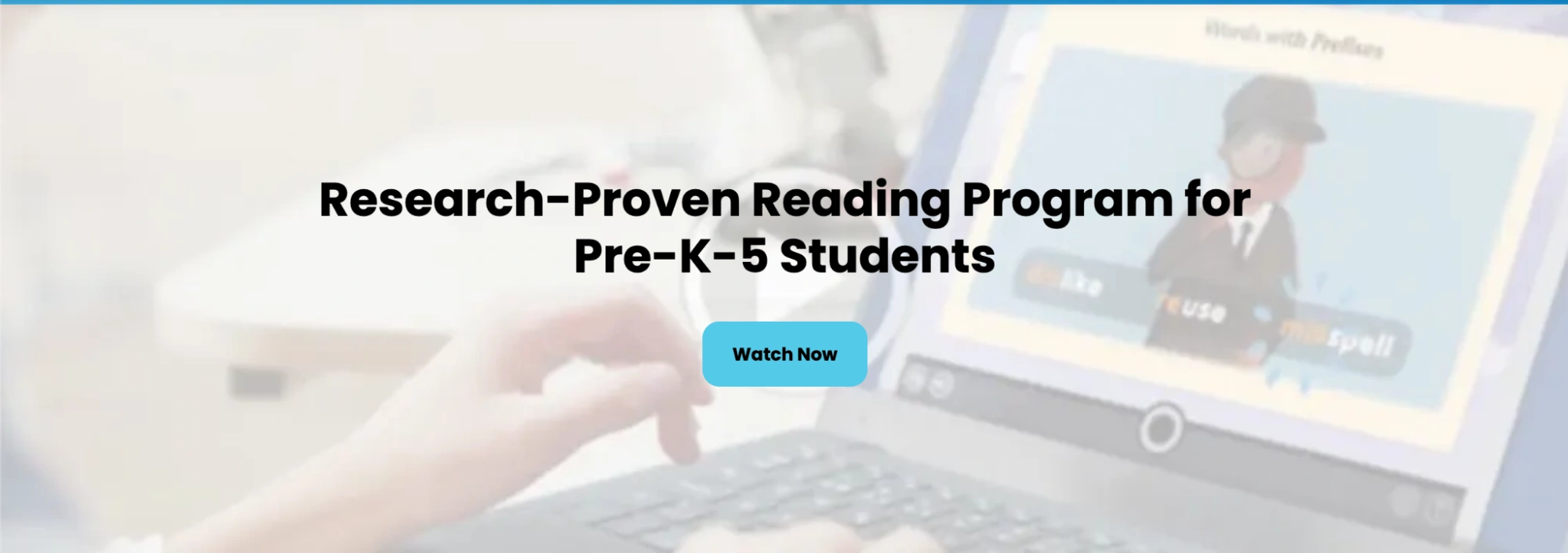
Lexia Core5 Reading is a tech-based company offering a research-based intervention reading program for elementary students. Its teaching method involves adaptive learning, taking into account students’ goals and pace. Lexia’s research-based approach and computer-assisted instruction have received a “Moderate” rating under the Every Student Succeeds Act, as of September 2026.
Lexia Core5 Reading: Features
- Adaptive blended learning: Lexia Core5 Reading builds personalized learning paths for students that carefully track their progress and provide instructional data for teachers.
- No testing for assessment: Lexia adopts special Assessment Without Testing technology that helps teachers track student progress and understanding in real time.
- Six areas of reading covered: Lexia Core5 Reading helps with phonological awareness, phonics, vocabulary, structural analysis, fluency (also titled as automaticity), and comprehension.
Lexia Core5 Reading: Pricing
In September 2026, Lexia offers annual subscription plans that cost $175 per year for the first student and $100 for additional children.
Wilson Reading System
Age group: 2-12+ y.o.
Best for: students with dyslexia needing targeted, structured support in reading.
Wilson Reading System is a multisensory reading program designed for students with dyslexia and reading difficulties. WRS approaches learning through teaching phonics step by step and building strong decoding skills in a fun and engaging manner (thus, they refer to reading foundations as “fundations” in their program).
Wilson Reading System: Features
- Dyslexia-friendly teaching approach: The WRS program employs the Orton-Gillingham intensive intervention for dyslexia that addresses this learning disability precisely. The K–3 “Fundations” program is aimed at preventing reading failure.
- Structured literacy intervention program: The science-based approach at Wilson Reading System is aimed at helping kids with reading difficulties master phonemic awareness, phonics and word recognition, fluency, vocabulary, listening and reading comprehension, and written expression.
- Several levels of reading mastery: In addition to the foundation program, WRS has a dedicated reading intervention curriculum for mild to moderate gaps in decoding and spelling, dyslexic adults, and professional reading development.
Wilson Reading System: Pricing
Prices for the Wilson Reading System depend on the program and learning format chosen.
As of September 2026, the General Education Classroom (Tier 1) Foundational Skills program at WSR costs $335. The main Wilson Reading System has different pricing, ranging from $250 for the Introductory Course to $335 for most of the other programs.
Additionally, Wilson Reading System offers different printed materials for independent learners, including the test kit for $370, the instructional kit for $550, and separate instructional materials for $124.
From struggling to confident: Personalized reading that works
Brighterly helps kids discover the joy of reading and the confidence to proceed.
Kumon
Age group: 3-18 y.o.
Best for: self-paced learners who are ready for independent learning.
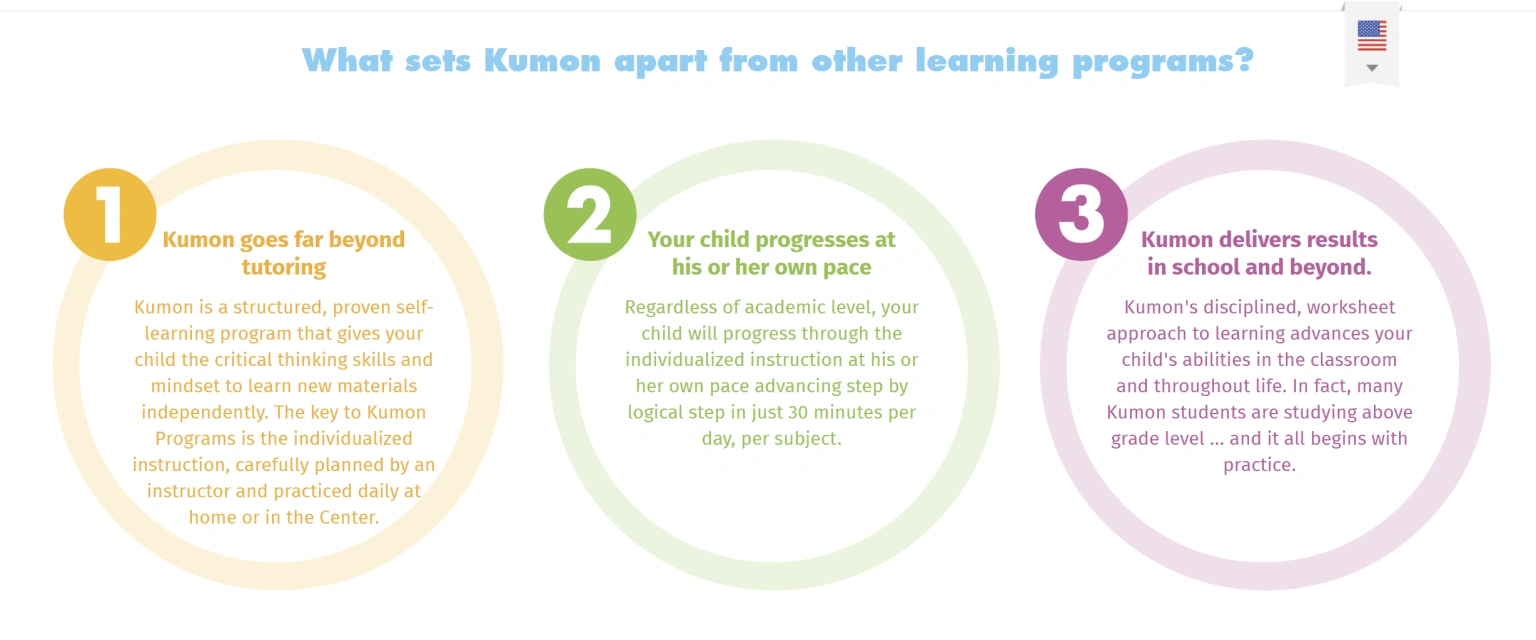
Kumon is a network of offline and online centers based on the Kumon Method, an authoritative approach that employs a series of worksheets designed for the student’s autonomy. While tutoring is available, most learning at Kumon is designed to be done independently and in a small group setting.
Kumon: Features
- Emphasis on phonics and vocabulary development: The reading program at Kumon is focused on helping kids master foundational phonemic and vocabulary skills. After covering these learning gaps, the plan will help build more advanced reading skills on top.
- Independent learning focus: Families who tried it share that the Kumon approach is most beneficial for kids who look for solutions independently and have enough self-discipline to practice foundational reading skills for as much time as needed.
- Structured progression: The Kumon program adopts small-step worksheets that compound with time into a structured curriculum that helps students reach reading mastery.
Note: If you strive for more details or need a bigger picture for consideration, check out how Kumon compares to Sylvan and what advantages (and drawbacks) Kumon features vs. Khan Academy.
Kumon: Pricing
The average Kumon cost for its reading program ranges from $140 to $225 per month (as of September 2026). Note that in the first month, they will ask you to also pay for a one-time registration fee (around $60-$80) and for learning materials (around $30-$40).
Chapter One Literacy Program
Age group: Kindergarten-12
Best for: improving foundational reading skills.
The list of reading intervention programs continues with the Chapter One Literacy Program – an early intervention with personalized 1:1 tutoring. In addition, the program offers a free digital library and online volunteer reading support, while most of its work still happens offline in schools across different countries.
Chapter One Literacy: Features
- 1:1 tutoring: Studying at the Chapter One Literacy Program is delivered by online reading volunteers who spend around 30 minutes weekly reading online with the same kid. In addition, online reading volunteer programs are available outside the US.
- Letter recognition training: Chapter One Literacy is an early intervention program that helps kids who struggle with phonics in their class.
- Free library: The global free library from the Chapter One Literacy Program has a wide collection of stories and study materials.
Chapter One Literacy: Pricing
As of September 2026, the Chapter One Literacy Program has a ‘Strong’ ESSA rating with a cost of $375 per student per school year.
Voyager Passport
Age group: 6-12 y.o.
Best for: students needing a comprehensive reading intervention.
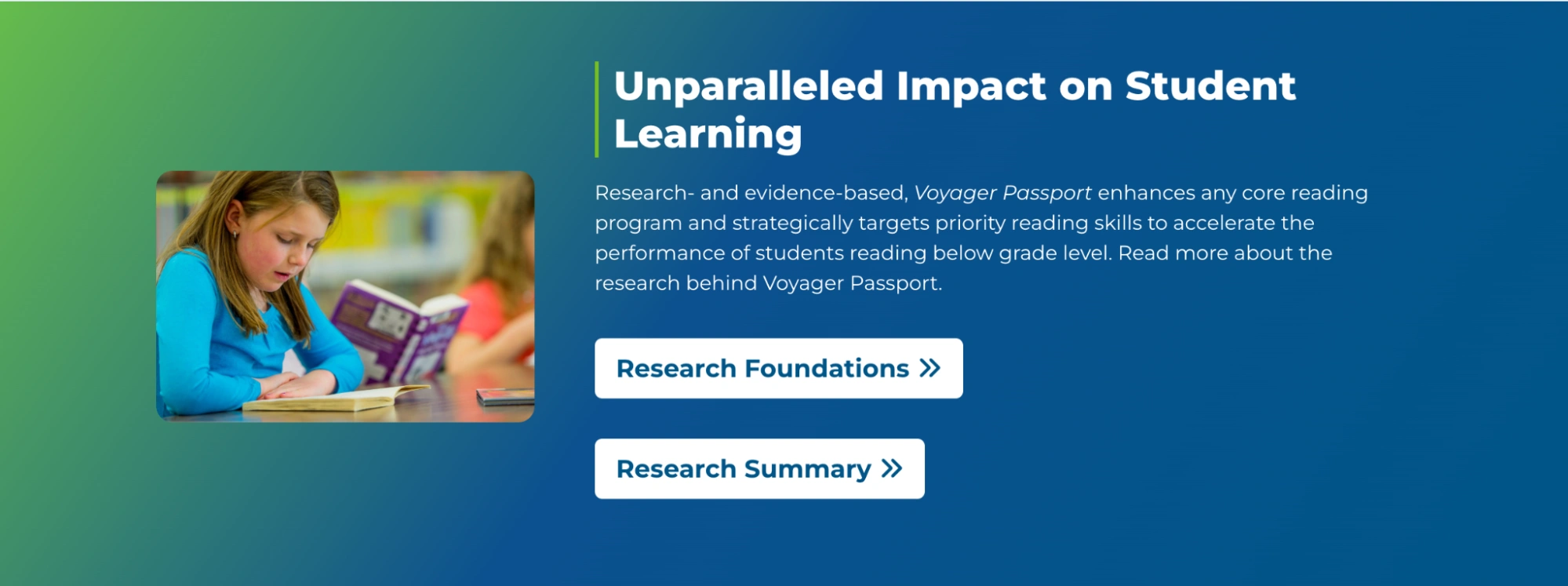
Voyager Passport is a research-based reading intervention that helps teachers lead student instruction with workbooks and digital tools. The Voyager Passport approach assists with five essential components of reading, language, and writing mastery.
Voyager Passport: Features
- Blended, teacher-led format: The program tackles critical skills to help kids advance under the structured program and with teacher assistance.
- Scientific approach: The Voyager Passport program addresses key elements of reading, including phonemic awareness, phonics, fluency, vocabulary, comprehension, and embedded language and writing.
- Access to an Online Teacher Center: At Voyager Passport, it’s possible to attend classes in-person or during online lessons.
Voyager Passport: Pricing
As of September 2026, Voyager has a ‘Strong’ ESSA rating and costs $349 for a Teacher Resource Kit. Additionally, expect to pay $48 for the Student Reading Pack and for training – $1,500 for 3 hours or $2,500 per day.
Heggerty Phonemic Awareness
Age group: 4-12 y.o.
Best for: students needing systematic instruction in phonics awareness.
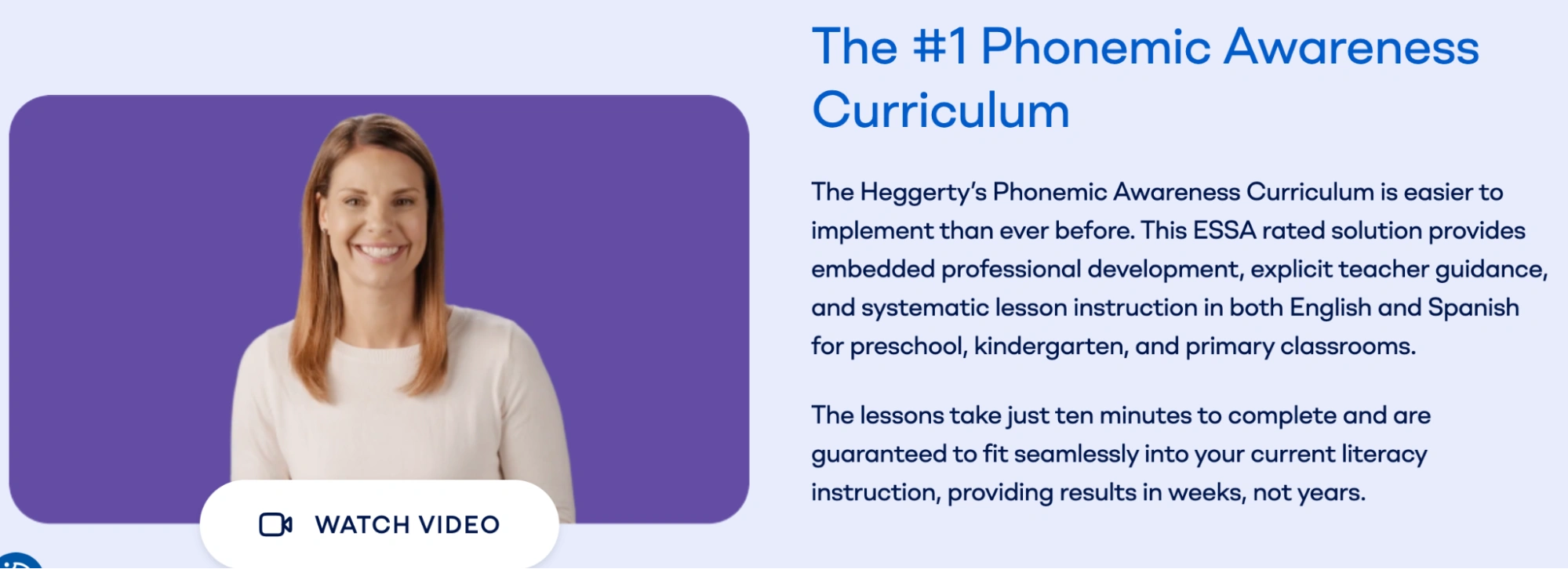
Heggerty Phonemic Awareness provides short, structured lessons for pre-K and elementary students to master phonics. The curriculum provides clear instructions and helpful guidance for teachers or parents of homeschooled children to help kids read better.
Heggerty Phonemic Awareness: Features
- Bit-sized learning: Heggerty lessons help to engage kids in basic skills development and problem-solving in an easy format of 10-minute lessons. This way, the curriculum doesn’t feel overwhelming, and reading can be perceived as a pleasant activity.
- Focus on phonemic awareness: Heggerty Phonemic Awareness is a structured program to master 8 phonological awareness skills and 3 early literacy awareness skills.
- Pre-recorded lessons: Heggerty Phonemic Awareness has daily lesson videos and a separate digital platform titled myHeggerty to assist teachers.
Heggerty Phonemic Awareness: Pricing
As of September 2026, Heggerty’s Primary Phonemic Awareness Curriculum costs $89, with other educational materials ranging from $49 to $947 (depending on the format).
What Is the Most Effective Reading Intervention Program?
- For personalized lessons: Brighterly.
- For school-based intervention: Read180 or Voyager Passport.
- For foundational skills: Heggerty or Lexia.
Choose a Reading Intervention Program for Your Kid
To select the best-suited intervention program, consider your kid’s age, goals, and specific challenges. Then weigh format options – whether personalized live tutoring, self-paced online practice, or structured center-based programs fit your child’s particular learning gaps, ensuring you opt for a structure that provides the right level of guidance and interaction.
For the reading remediation program that will be focused on your kid, go for Brighterly – book free reading class and see if it can work for your child.
Frequently Asked Questions
What Is The Best Reading Intervention Program?
Brighterly is the best reading intervention program because it combines personalized, one-on-one live instruction from certified reading experts with a diagnostic-first approach. The initial skill assessment enables Brighterly to first figure out the particular learning gaps and afterward develop a customized curriculum fully aligned with US state standards. Its interactive and gamified lessons maintain student engagement from phonemic awareness and decoding to vocabulary and comprehension. Add here the scheduling flexibility and free practice resources, and you’ll get the platform delivering purposeful instruction that adapts to each student’s pace and needs.
What Are the 5 Pillars of Reading Intervention?
The 5 pillars in the science of reading intervention programs are:
- Phonemic awareness – an entirely auditory skill: recognizing and manipulating individual sounds in spoken words.
- Phonics – connecting spoken sounds to written letters to decode printed text.
- Fluency – reading text accurately and with proper expression, connecting decoding and understanding.
- Vocabulary – recognizing words and understanding what words and word groups mean in context.
- Comprehension – analyzing and interpreting the overall meaning of written text.
What Are the Best Reading Intervention Programs for Elementary Students?
Brighterly is the best reading intervention program for elementary students because it pairs young learners with devoted tutors who use engaging and gamified strategies adjusted to early learning styles. Plus, Brighterly builds foundational skills with real-time feedback, weekly progress tracking, and structured lesson plans developed to reduce summer learning loss and close grade-level gaps at every kid’s comfortable yet productive learning speed.
What Are the Best Middle School Reading Intervention Programs?
Brighterly is the best middle school reading intervention program that provides a highly personalized 1:1 online tutoring format. Unlike digital applications or group setups, Brighterly supports middle schoolers with homework support and AI-powered personalized learning plans aligned with US state standards to build both advanced comprehension and individual academic confidence. Other remarkable platforms for middle school students are:
- Self-paced platforms – Reading Eggs and Lexia Core5 Reading;
- Teacher-led interventions – Read 180 Next Generation and Voyager Passport;
- Center-based and specialized programs – Sylvan Learning, Kumon, and Wilson Reading System;
- Extracurriculars focused on particular skills – Chapter One Literacy Program and Heggerty Phonemic Awareness.
What Are the Best Reading Intervention Programs for High School Students?
Reading intervention programs for high schoolers should address complex text comprehension, advanced vocabulary, critical thinking, and structured correction for serious reading difficulties.
- Brighterly provides personalized 1:1 instruction aligned with US state standards, helping older students increase reading speed, handle complex passages, improve text analysis, and prepare for exams with direct guidance from a professional tutor.
- Read 180 Next Generation is for intensive school-based Tier 3 intervention, combining adaptive software and AI-enabled assessments (MAP Growth).
- Wilson Reading System provides older students with dyslexia or ongoing difficulties with decoding with multi-sensory Orton-Gillingham-based instruction.

The reason children with ADHD struggle with reading is not because they lack intelligence, but because inattention symptoms interfere with working memory, and processing speed — cognitive functions a kid needs for reading. To help a neurodivergent child improve reading skills, you can use strategies that range from reading aloud together to getting a reading […]

Aug 27, 2025
IEP math goals target specific areas of improvement for children with certain learning disabilities, including problem-solving, computation, and conceptual understanding. Setting those goals in a clear and effective way is crucial in creating long-lasting success for kids in math. What Are Some IEP Goals for Math? Math IEP goals depend heavily on the student’s grade […]

Aug 27, 2025
Math & reading from 1st to 12th grade
Exploring alternatives?
Take a short quiz!
Choose kid's grade