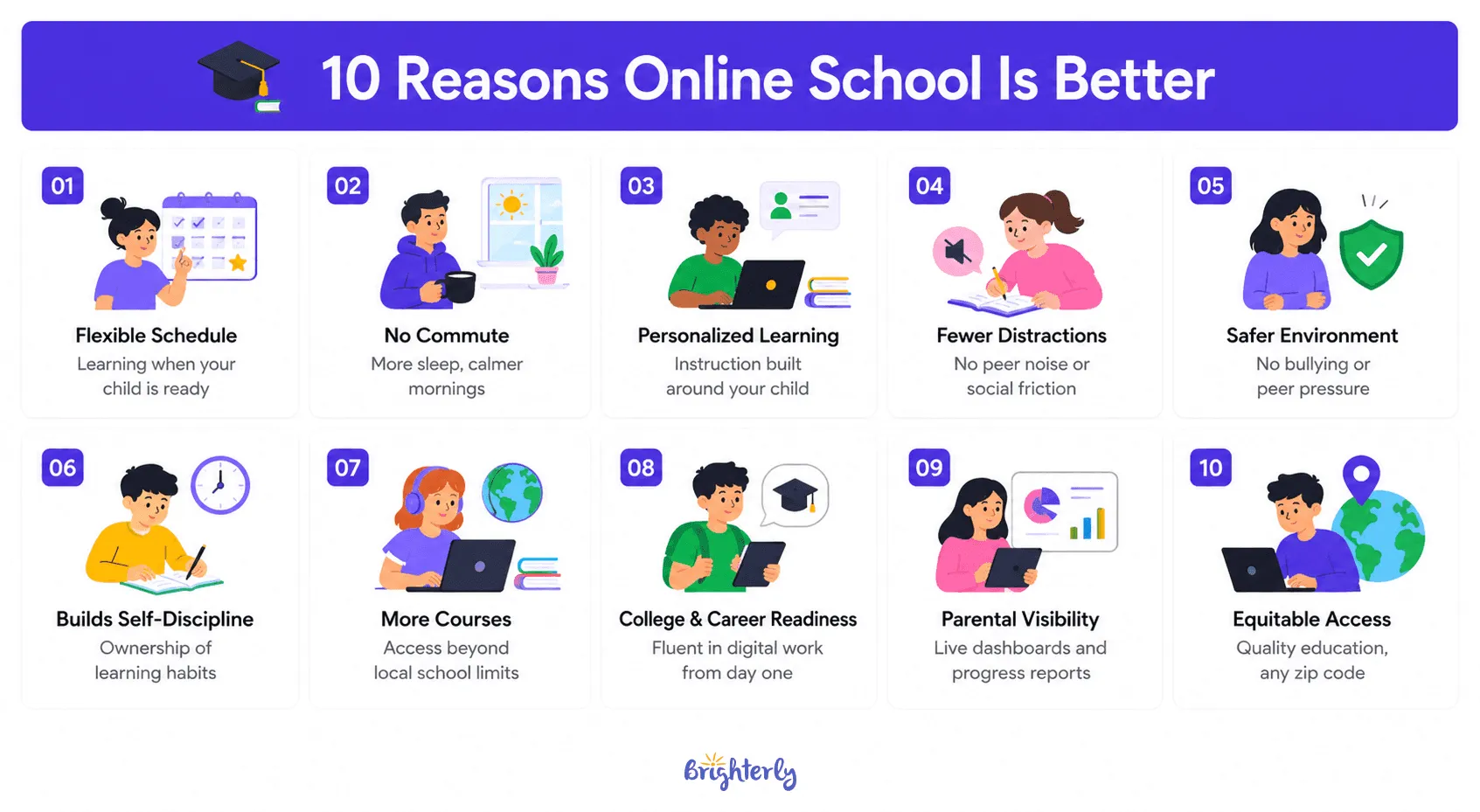
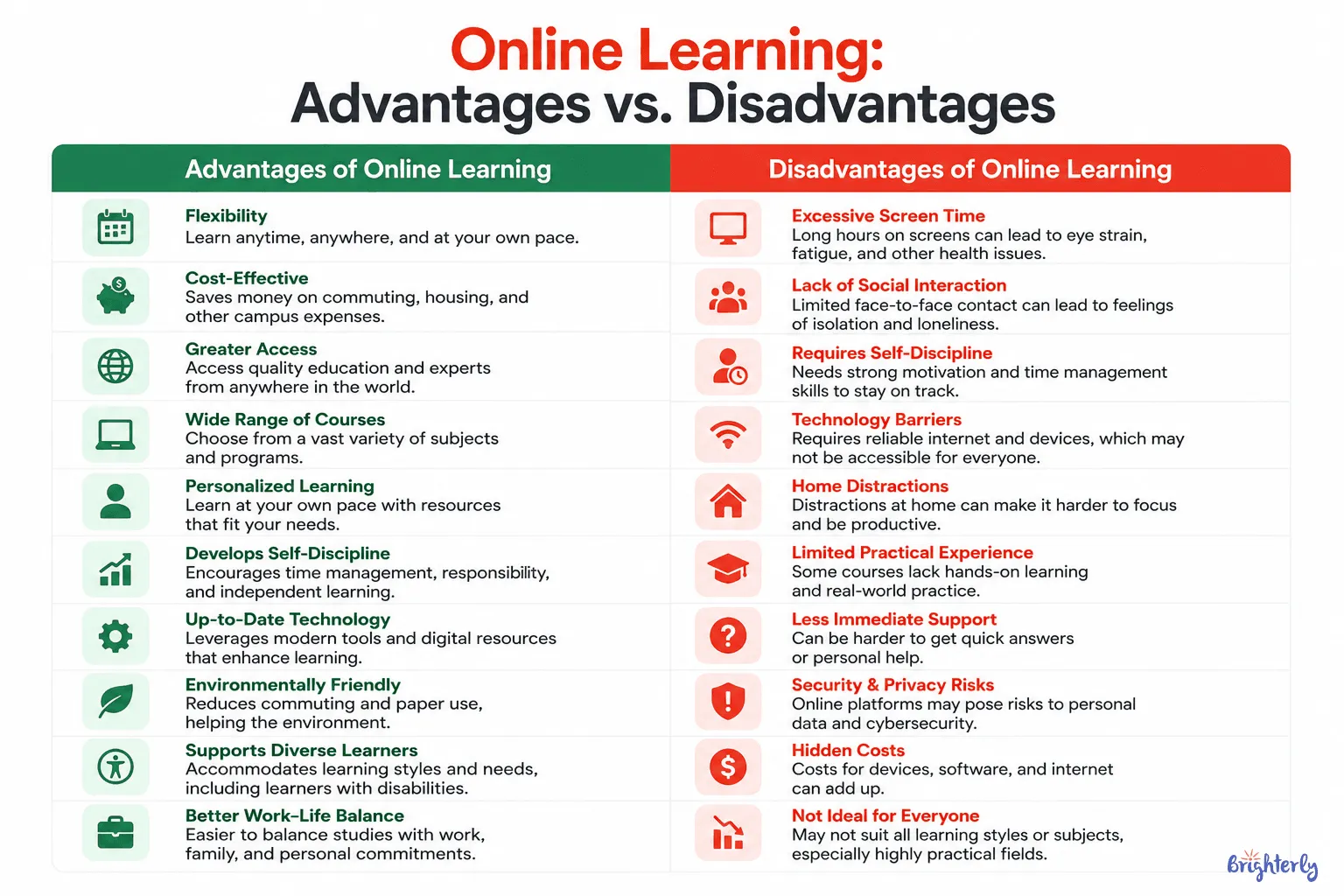
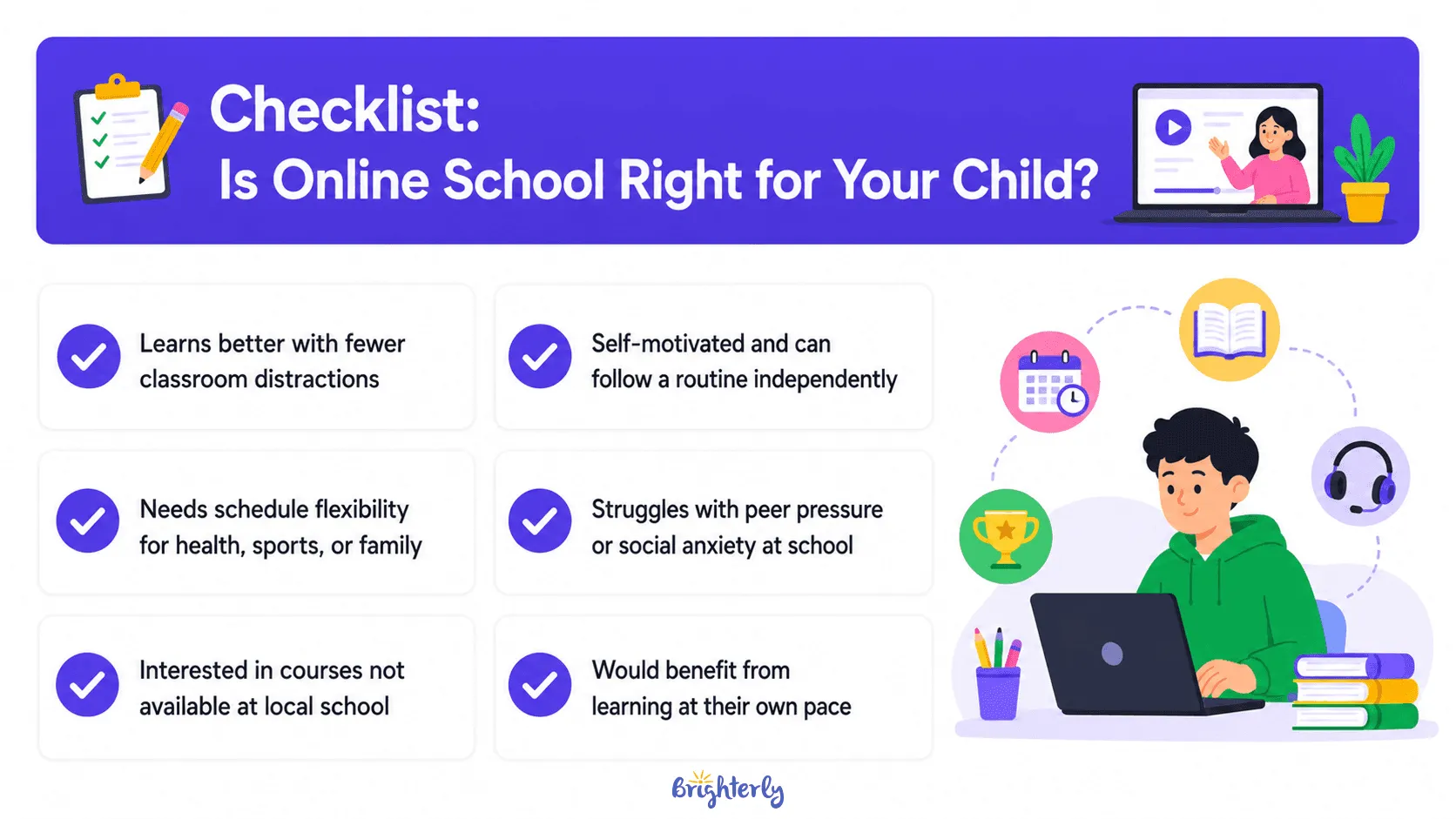
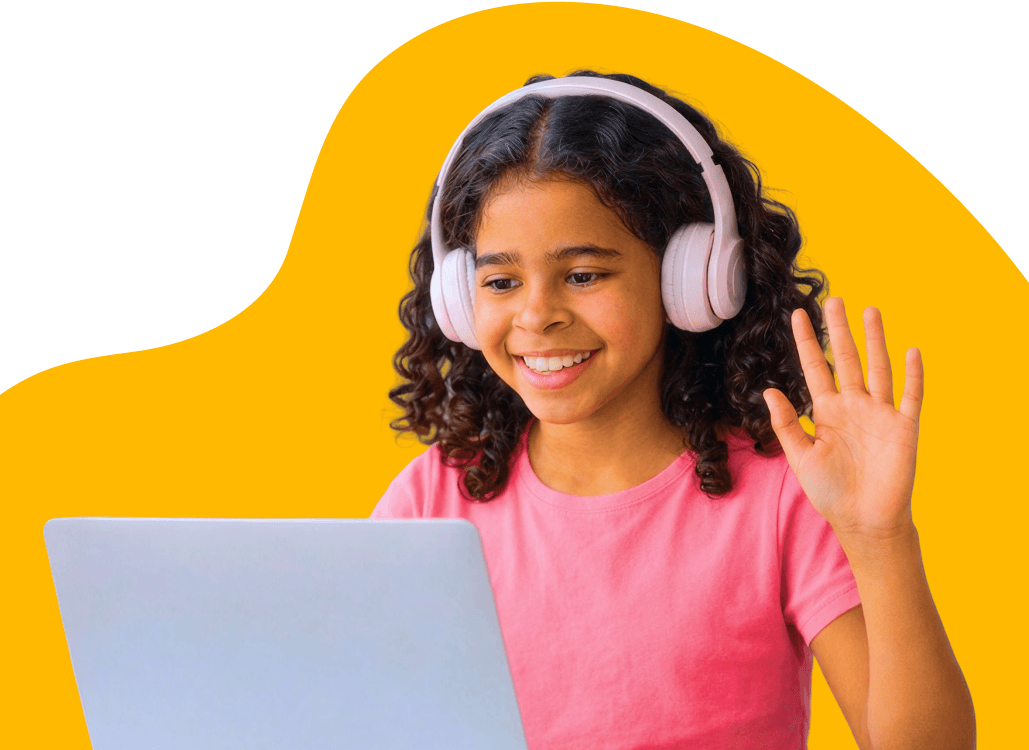
When it includes structure, interaction, feedback, and is age-appropriate, online learning can be effective. It works best when your child isn’t left to manage everything alone. The effectiveness will also vary based on your child’s age and learning preferences. For example, while a kindergartner may prefer more game-based learning, for a high-schooler studying algebra, a targeted 1:1 tutoring with a math teacher will be more effective.
Is Blended Learning a Good Middle Ground?
If neither fully online nor fully in-person school feels right, blended learning combines the two: your child keeps classroom time with teachers and peers and adds online learning for flexible, personalized practice. It often suits children who need the social side of school but also benefit from working at their own pace.
Blended learning can look different depending on your child’s age and situation:
- Inside the school day. Some elementary and middle schools already use blended models, such as a flipped classroom, where students watch a short lesson at home and practice in class, or station rotation, where they move between teacher-led, group, and online activities.
- A split school week. Some middle and high schools offer an enriched schedule: students attend school on set days for labs, tests, and discussions, and study online the rest of the week. This works best for older students who can manage their own time.
- School plus online support at home. Your child stays in regular school and adds live online tutoring or an online course for the subjects where they need extra help or a challenge.
For example, a child who keeps up socially at school but falls behind in math can stay in their class and add two weekly online math tutoring sessions with practice in between. This keeps the social benefits of school while giving the personalized support online learning is good at.
What Research Says About Online Learning Outcomes
The honest answer is that the research is mixed. And this is because online learning comes in many forms. Live tutoring and self-paced apps are not the same thing, although both belong to the online learning category.
When looking specifically at K-12 education, while there is not much research done yet on the effectiveness of online learning, there is some data worth considering. A 2021 study by Spitzer et al. in PubMed showed that for math, student performance improved during the lockdown, when they were taking online classes.
The University of Illinois Springfield's online education overview, on the other hand, mentions that online learning may not be the best source for very young children who are “dependent students.”
At the same time, the research by Robinson et al. (2024) suggests that 1:1 and small-group instruction, whether in-person or online, give stronger learning outcomes than large-group virtual learning.
All in all, the effectiveness of online learning depends on how well the program is planned and structured, if the material matches the child’s learning stage and goals, and how much parental support kids receive.