How to Homeschool: A Step-by-Step Guide For Parents
reviewed by Franz Jerby Delos Santos
Updated on May 28, 2026

Key Points
- The first and major step to take before homeschooling a child is to make sure you know and understand laws on homeschooling in your state.
- New York, Pennsylvania, and Massachusetts are the states with the most strict homeschooling regulation laws (HLSDA data)
- Most commonly required subjects across states include English/Language Arts, Math, and Science (HLSDA data).
Homeschooling is a practice that allows you to educate your child at home, tailoring the learning process to their needs. If you’re wondering how to homeschool your child, the steps most parents take include checking your state laws on homeschooling, setting learning goals, choosing a teaching method, selecting a curriculum, building a daily routine, and connecting with a homeschool community.
Step 1: Check Your State Homeschool Laws
Before picking a homeschooling approach or planning lessons, devote time to researching state homeschooling laws and taking appropriate actions. In the United States, the laws on homeschooling vary significantly by state, generally falling into three major types of regulation: no or low regulation, moderate regulation, and high regulation.
- No or low regulation. In states with this type of regulation, you may need either no or just little engagement with a state or local agency to start homeschooling. For instance, New Jersey and Texas require no notice of intent, while Arizona and Florida do request it.
- Moderate regulation. In some states, you’d need to do extra paperwork. In particular, Virginia and Minnesota request regular assessments for children as evidence of progress.
- High regulation. Lastly, several states like New York, Pennsylvania, and Massachusetts, have specific legal requirements that can make it hard for you to homeschool your child. The states and districts may ask for additional reports, assessments, or qualifications.
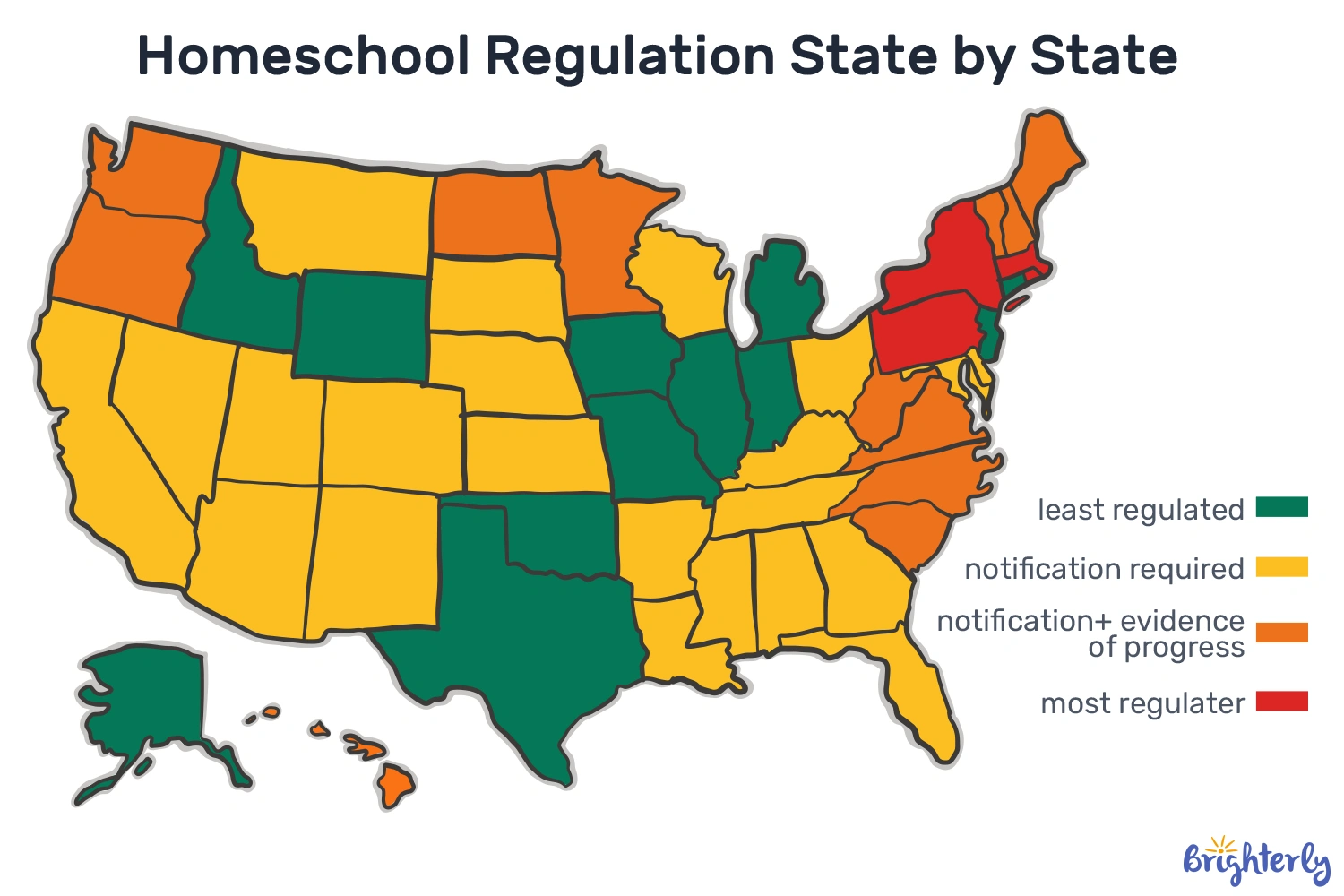
Source: HLSDA.
Note: Homeschooling statistics shows that Alaska, North Carolina, and South Dakota are the states with the highest number of homeschoolers.
Explore Brighterly Learning Experience
Learn exactly how Brighterly helps students thrive through expert sessions, online tools, and proven feedback from thousands of satisfied parents
Step 2: Determine Learning Goals to Start Homeschooling
To set the foundation of homeschooling, set clear learning goals for your kid. They will allow you to focus on important things and ensure you’re on the right track throughout the whole journey of homeschooling. To set these goals correctly, ask yourself the following questions:
- What is the aspiration behind homeschooling?
- How does it fit into the life of the family?
- Does homeschooling answer learning needs?
- What skills matter during the whole journey and each year?
- What role will I play as a parent?
These questions really help figure out where to start with homeschooling, as they help you set priorities not just for days, but months and years ahead. Also, they affect your choice of approach, resources, and curriculum.


Get math and reading homeschool programs
Our tutors teach math and reading during online classes, following the state-aligned curricula.
Step 3: Choose a Homeschooling Method that Fits Your Child
The more you know about your child, the more flexible and personalized their homeschooling approach can be. You can choose a traditional approach, classical approach, Montessori method, Waldorf method, Charlotte-Mason method, unit studies, or unschooling. Base your choice on what fits your child most.
Here is what each approach is best for:
- Traditional homeschooling to imitate a traditional classroom (great for starting homeschooling temporarily).
- Classical method to build the basic skills, focusing on reading, writing, thinking, and speaking, and later emphasizing logic and rhetoric.
- Montessori method to put creativity, hands-on experience, and play at the center of education (effective for kinesthetic learners).
- Waldorf method to develop the mind, body, and spirit of a child, not through textbooks but through play, art, and music.
- The Charlotte-Mason method to use “living books” to develop a child’s world and bring subjects to life.
- Unit studies to teach several subject areas under one theme.
- Unschooling to make learning meaningful for kids through real-life experience and interactions.
- Online learning to start homeschooling digitally, and using one of the most flexible options for specific learning needs.
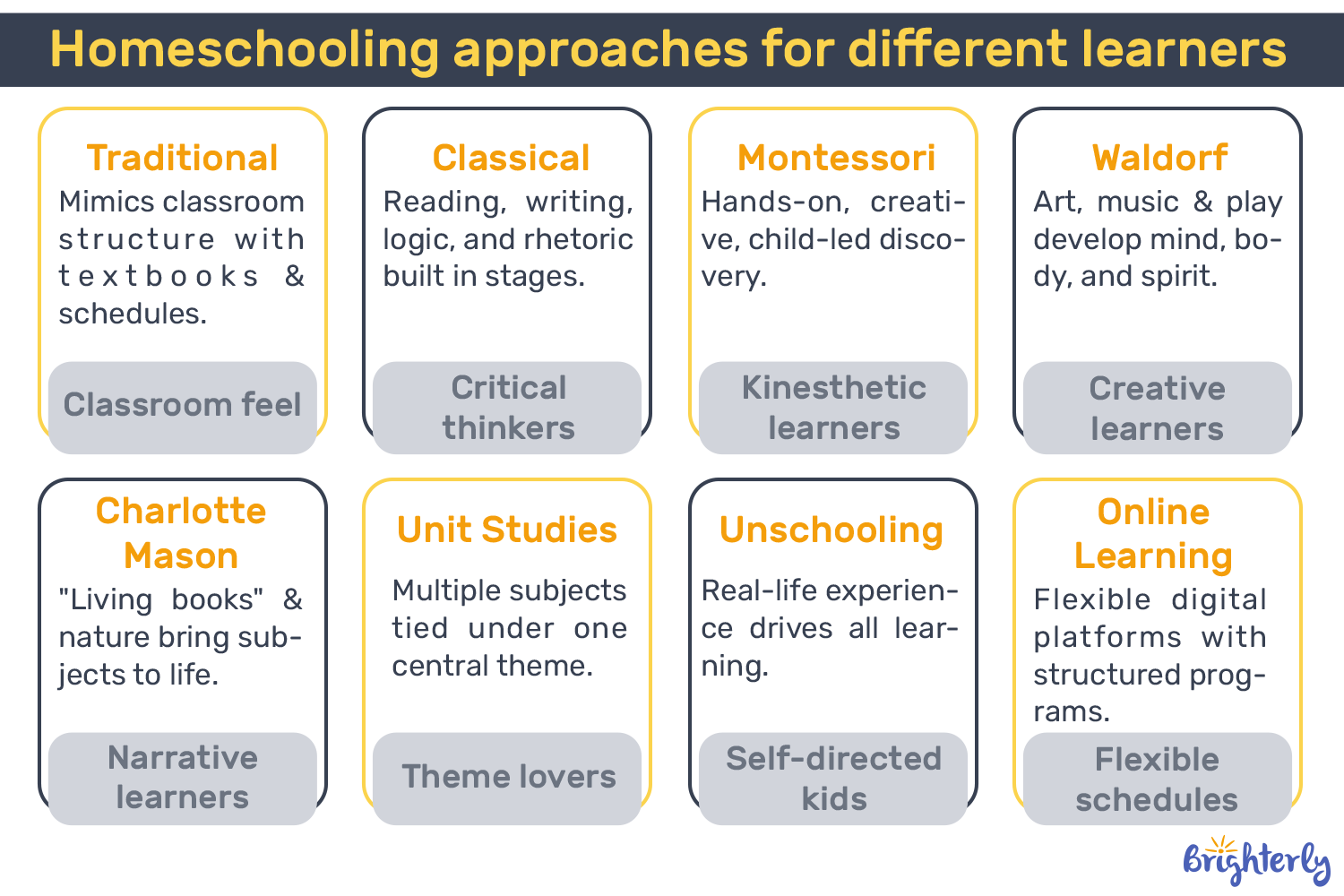
You can stick to a specific learning method or combine several ones to make learning diverse and engaging, but always put the kids’ needs and preferences at the center.
Note: The steps to homeschooling don’t need to happen in this particular order. Think of them as a flexible map, but remember that the first three steps determine your “how to do homeschooling” strategy.
Step 4: Find Resources for Getting Started with Homeschooling
Resources make a huge difference in how well homeschooling works. They shape the kids’ experience and their perception of information. Your goal is to find and match resources to your teaching approach or curriculum. These resources depend on the learning needs and styles of your child.
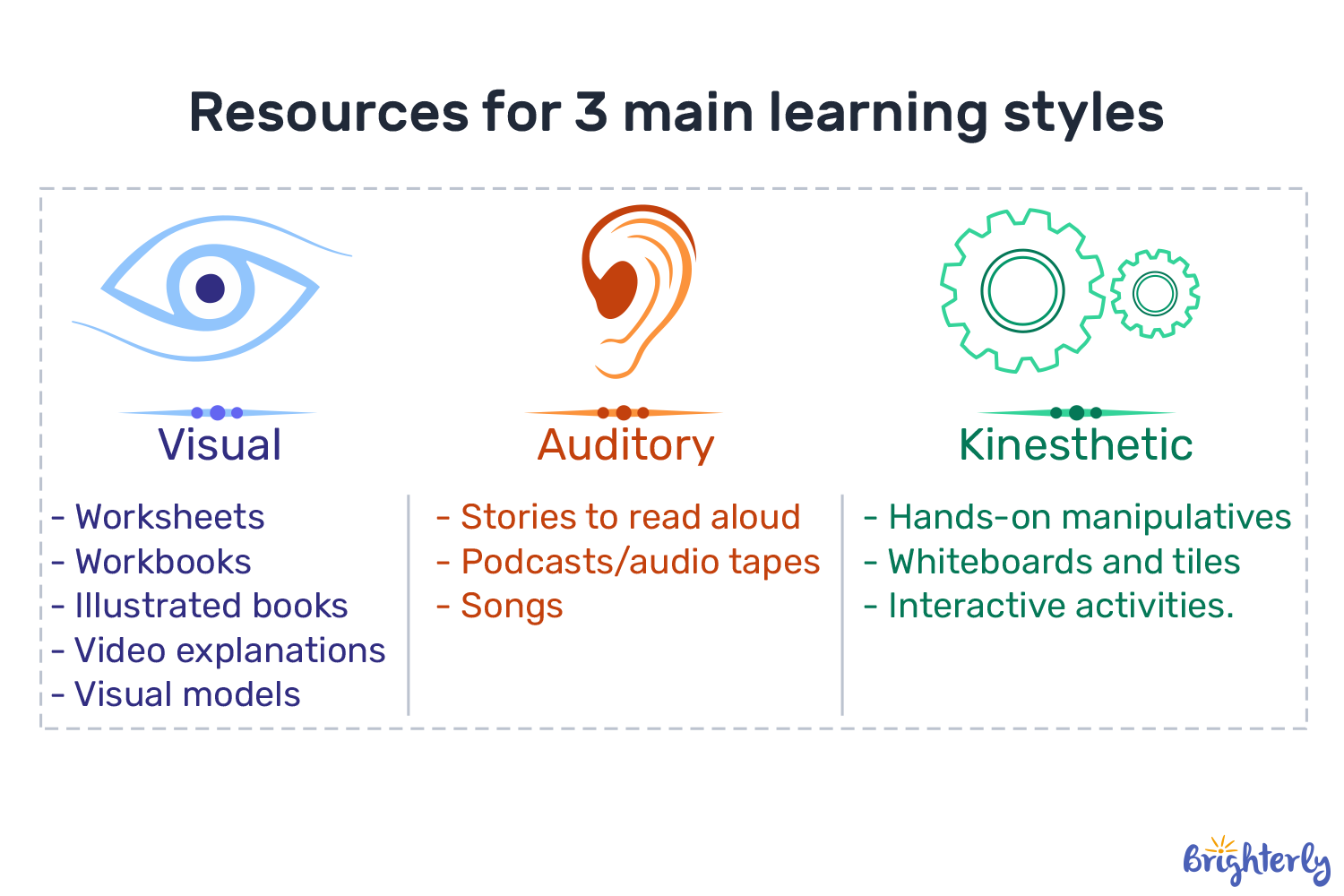
- For visual learners, prioritize worksheets and workbooks, illustrated books, video explanations, and visual models.
- For auditory learners, find the stories to read-aloud, use podcasts or audio tapes, and look for songs that help with knowledge retention.
- For independent learners, put priority on self-paced learning tools, knowledge-check tests, and worksheets.
- For kinesthetic students, create a reserve of hands-on manipulatives like blocks and counters, provide whiteboards and tiles to write and create words, and think of interactive activities.
Note: If you want to learn more, check out the article on types of learning styles.
5 Accessible Resources to Start Homeschooling
Worksheets
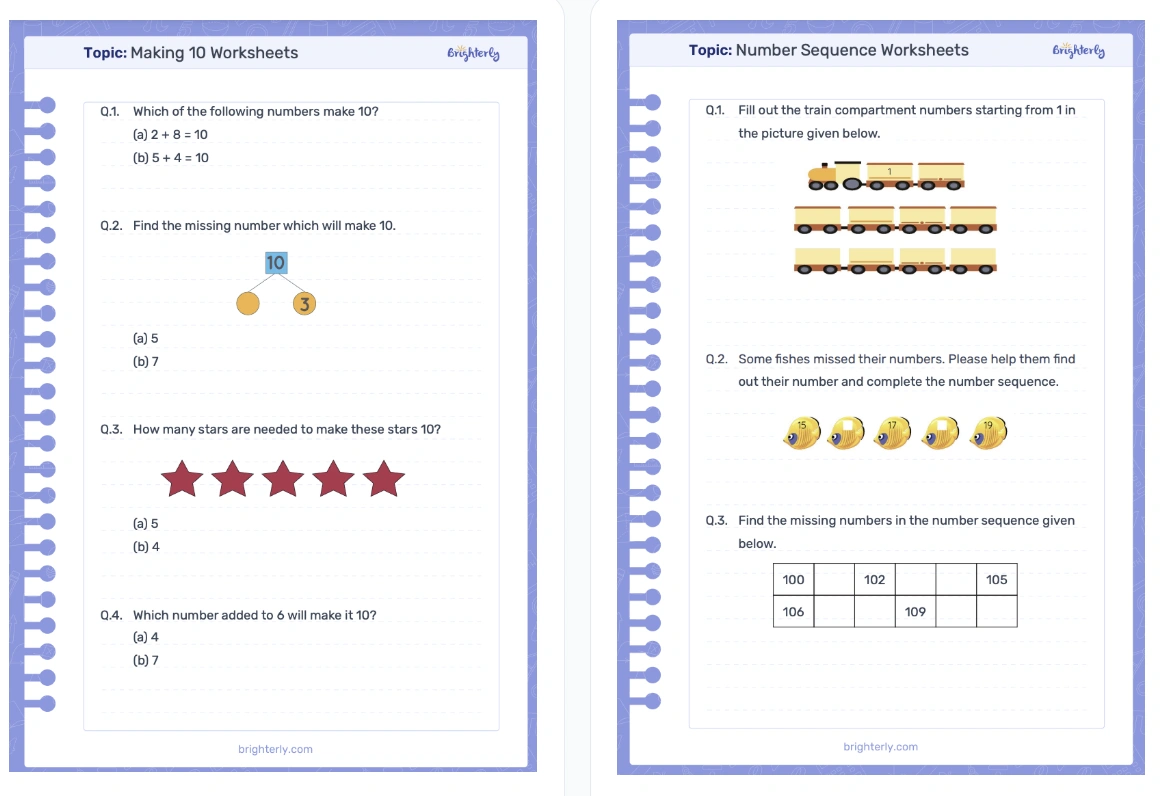
If you’re wondering how to begin homeschooling, you can start with worksheets. They are easy to find and are fit for most kids, but especially so if they are visual learners. For example, you can start with free reading worksheets and math worksheets available on our website.
Songs, stories, and rhymes
If your kid’s an auditory learner, they absorb information better through sound. Try using songs to teach multiplication facts, historical timelines, or grammar rules. Songs have rhymes which makes memorization easier.
As for stories, you can try reading different books out loud to your kid for them to pick up new words. Choose the stories that fit your child’s interest. You can also use podcasts on different subjects to help you child absorb new information through hearing.
Knowledge-checking tests
Regular short and structured assessments help you see what your child already knows and what they need more time to learn. You can use tests and quizzes for that. For example, our reading tests and math tests can help you identify your kid’s learning gaps before they pile up.
Hands-on manipulatives
Hands-on manipulatives are basically physical objects, like base-ten blocks, fraction tiles, measuring tools, and science kits, which help make abstract concepts more visible, hence easier to understand. Such objects are especially helpful when explaining math, since they allow kids to manipulate numbers with their hands.

Online platforms for practice
Digital educational platforms let children study at their own pace, offering learning materials in forms of e-books, video lessons, and more. Sometimes, such platforms also provide tutoring services and full learning journey’ support. If you want more than just learning materials for you kid, you may consider getting help from professional tutors who know how to identify a kid’s learning style and customize the program accordingly.
For example, we have a homeschool reading program where our reading and writing tutors teach vital subjects from phonics, word recognition, and vocabulary to help develop storytelling, writing, and critical thinking skills.
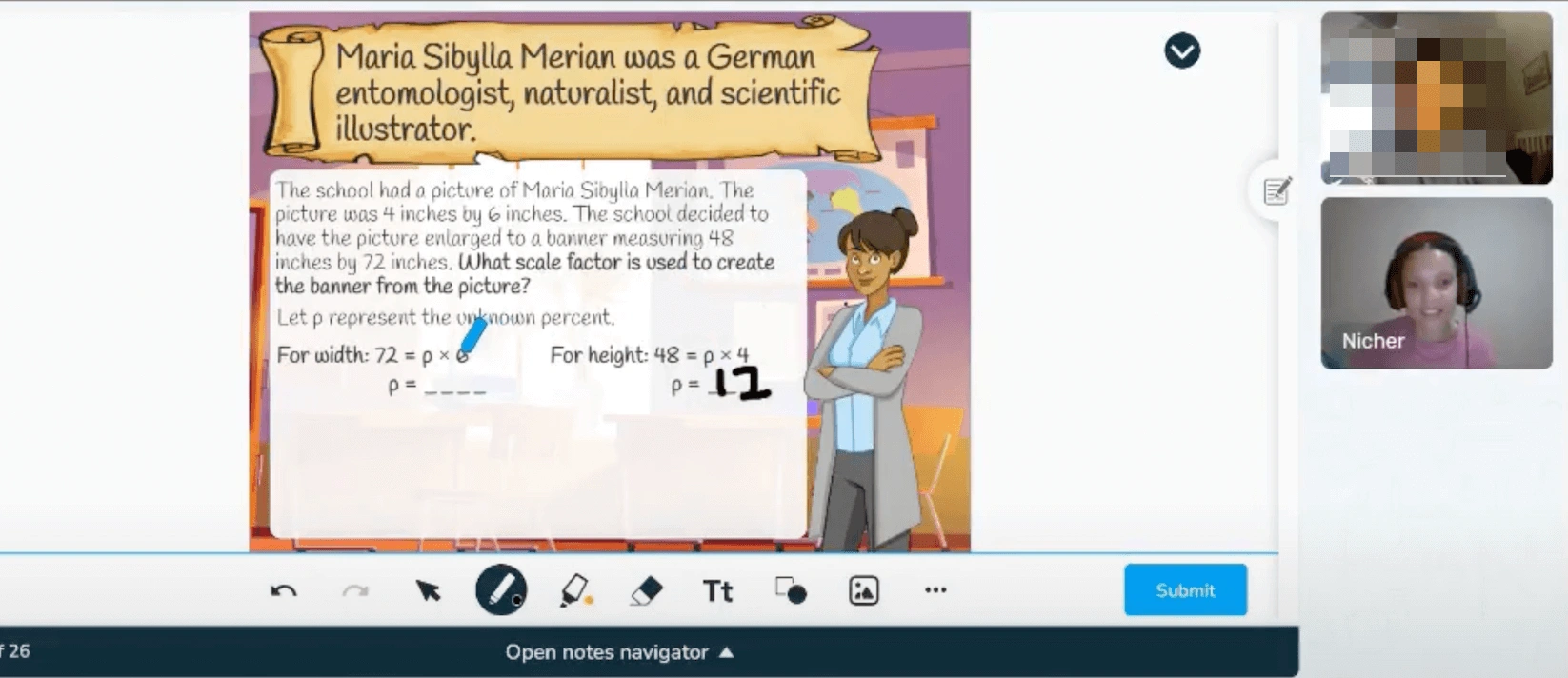
If you need a math tutor, we also have a homeschool math curriculum that includes math games and explanations for kids with different learning styles.
*Both programs are for kids in grades K-12 that align with U.S. state standards.
Math and reading tutors
Professional educators make sure your child learns according to their learning style.
Step 5: Choose a Curriculum and Core Subjects
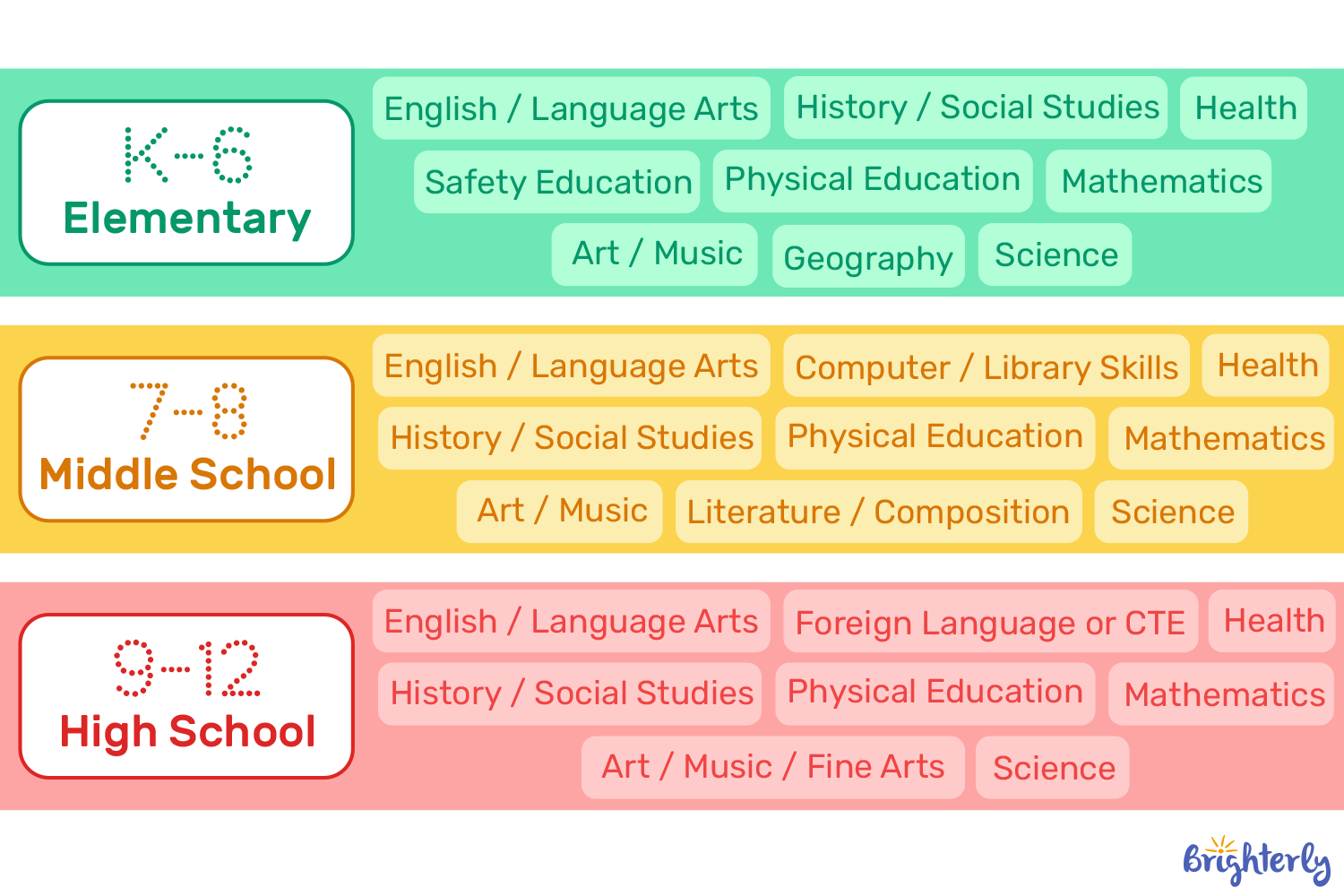
At the stage of choosing a homeschooling curriculum, it’s important to find out what subjects are required for homeschooling in your state. For example, according to HSLDA data, Texas requires basic subjects (Reading, Math, Grammar, Citizenship), while Pennsylvania mandates up to 12 subjects (including Health, Art, Music, and Fire Safety). Most commonly required subjects across states include English/Language Arts, Math, and Science.
*Mind that even states with low homeschooling regulation may require taking specific subjects.
The list of required core subjects differs not only by state but also by grade, so check what it is in your location for your kid’s grade before deciding on a homeschooling curriculum.
When you’re sure about the subjects, you can use these tips to choose a homeschooling program:
- Look for a curriculum that corresponds to your goals and customize it to the needs of your child, yet meet state standards and programs.
- Find a balance between practice and understanding, especially if it refers to math.
- Evaluate and compare curricula (for example, the Singapore Math and Saxon Math curricula contrast a lot).
* Among the best homeschool programs in 2026 that include core subjects are Miacademy, IXL Learning, ABCmouse, Power Homeschool, Acellus Academy, Bridgeway Academy, Connections Academy, and Northgate Academy.
Step 6: Look for a Community If You’re New to Homeschooling
Getting started with homeschooling comes with lots of stress, doubts, and challenges. That’s why parents new to homeschooling crave support. Don’t associate this educational practice with isolation. Make yourself feel like part of a community. For example, look for local homeschool co-op, online groups, and tutoring communities.

- Look for groups in social media and forums in your area. Simply googling “How to start homeschooling Reddit” can bring great insights to you.
- Cooperate with other parents who do homeschooling, they may share some outsourcing options.
- Approaches, values, and beliefs do vary from district to district, so try different communities to explore options.
Step 7: Set a Rhythm and Routine for Homeschooling Activities
You may forget about strict school bells, but you should keep in mind the role of routine and rhythm — they create predictability, reduce stress, and promote a feeling of safety for a kid. For parents, they help to build focus, decrease emotional energy used, and manage a homeschool schedule.
Here are some tips you can use to build consistency:
- Teach core subjects in the morning, when focus is higher.
- Use daily rhythm bundles.
- Try keeping lessons short (attention span is low nowadays).
- Schedule interactive breaks or quick games between one lesson and another to make kids more engaged.
Step 8: Build an Environment Before Beginning Homeschooling
Another step of homeschooling for beginners is creating a study space, since there is no traditional classroom. A designated place is more than enough. It can be a separate room or just a dining table. However, take into account that kids associate space with behavior. So, an environment can support the focus of a kid and prevent distractions.
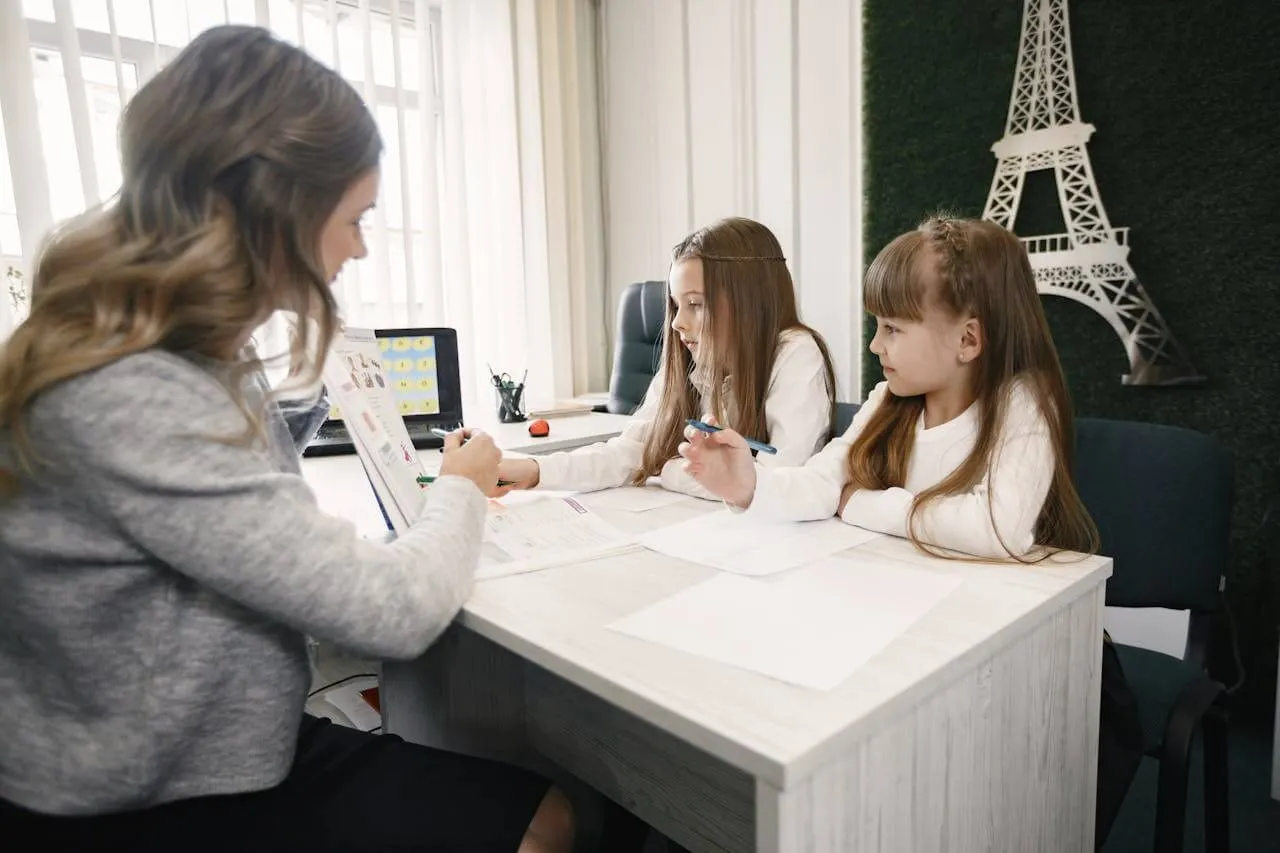
For this reason, think about how you can organize an environment to start homeschooling. For example, blend materials into decor and make the environment multi-functional so it can be used to teach multiple subjects. Also, ensure you have easy access to materials, keep a record of tasks, and arrange separate shelves for materials.
Step 9: Keep Learning Engaging and Prevent Burnout
Another important step of any homeschooling guide for beginners is concerned with making learning engaging and fun. Yes, plays and games are crucial, especially for K-5 learners. Include play in the learning process at home to make your kid excited about studying.
Note: An October 2023 Federation of American Scientists research provides cited evidence that playful learning has a significant impact on emerging literacy, executive functioning, and fine motor skills.
Here is how you can engage with kids to make learning fun and engaging:
- Use math games to build number sense.
- Support reading comprehension with fun stories and anecdotes.
- Build weird and quirky forms with blocks to develop spatial reasoning.
- Act out and role-play to improve language skills and comprehension.
As for academic burnout, it’s something that happens both to parents and kids. Tasks can be heavy, stress may build up, while motivation may drop. In this case, it’s important to keep the balance between tedious tasks, busy schedules, and things outside of the homeschooling curriculum to prevent homeschool burnout.

- Avoid overscheduling in a child’s calendar and provide room for exciting activities in your week.
- Do not compare your homeschool to others.
- Delegate and share responsibility using tutors, platforms, and family members.
- Take breaks if necessary.
Conclusion
Although figuring out how to start homeschool can be challenging, you can follow specific steps to make it easier. Start with researching your state’s law on homeschooling and move on with looking for the right curriculum.. Use worksheets for practice, manipulatives and storytelling for explanation, and online tools to support you with workload. If you need assistance or guidance, resort to communities.
Frequently Asked Questions
How to Begin Homeschooling?
First steps to homeschooling include checking the state laws, defining the learning goals, finding the right approach for your child’s learning needs to develop an adequate homeschool routine and environment for them to grow at home.
Yet, the process of at home learning is quite demanding. If we look at the pros and cons of homeschooling, the following three things will help you deal with time commitment and parental pressure:
- Consider what you need in terms of laws, resources, and knowledge.
- Focus on planning and organization of homeschooling curriculum and activities.
- Build a homeschooling curriculum around needs and fun.
Can Homeschooling Be Easy?
Yes, homeschooling can be easy. Learning at home can be much simpler than traditional schooling due to no long commutes, less homework-related stress, and more flexibility in subject choice and lesson schedule. Here are some more benefits of homeschooling that can make it easy:
- Kids can usually cover the same material faster at home than in traditional schools.
- A child can choose when to study, unlike traditional schools that require them to be present during particular study hours.
- There is no peer-pressure in homeschooling, which is especially critical for kids who have experienced bullying.
How Many Hours a Day Should a Child Be Homeschooled?
Exact times a child should spend on studying when homeschooled depends on what grade they are in and which learning goals they are pursuing. Getting started homeschooling, most children can complete their core academic studies in about 1 to 4 hours per day.
- Pre-K & Kindergarten: 20–60 minutes
- Early Elementary (Grades 1–3): 1–2 hours
- Upper Elementary (Grades 4–5): 2–3 hours
- Middle School (Grades 6–8): 2–4 hours
- High School (Grades 9–12): 4–6 hours
What is the Hardest Age to Homeschool?
There is no specific age that is the hardest to homeschool, as every stage can bring unique challenges for home studying. However, most parents identify middle school (ages 11–14) as the most difficult to homeschool. This is when the kids go through intense emotional and physiological changes, while the curriculum becomes way more complex, making it not the best combination.
What States Pay You for Homeschooling?
No state pays parents a salary to homeschool their kids. What exists are Education Savings Accounts (ESAs), tax credits, and voucher-style programs that differ by state and through which you can get public funds to cover approved homeschooling expenses like curriculum, tutoring, online courses, testing fees, and similar costs.



Involvement by parents in their child’s academic process is of great importance to the school. Why? For one, the relationship between teacher and parents can influence student achievement, emotional well-being, and personal development. But the advantages run deeper than that. This article aims to explore the significance of the relationship between teacher and parent for […]

May 31, 2022

For children and parents alike, enrolling in kindergarten may represent a significant step in their development and seem pretty scary. To make the process easier, I’ve arranged this kindergarten readiness checklist based on the most typical struggles I overcome with my youngest students, and I’m gladly sharing my insights with you. Key points Your child’s […]

May 31, 2022
Math & reading from 1st to 12th grade
Looking for homework support for your child?

Choose kid's grade

Math & Reading for Grades 1–12
Build real confidence for your child with a Brighterly math or reading tutor.