Fun Math Activities for Elementary, Middle & High School (2026)
reviewed by Jo-ann Caballes
Updated on September 21, 2026
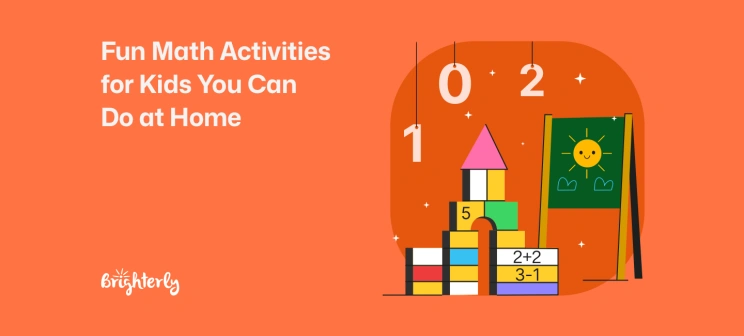
Key Points: Math activities for kids are educational strategies that make abstract math concepts practical and gamified, employing physical movement, everyday household objects, social interaction, and storytelling to teach numbers, geometry, logic, and problem-solving. Math play minimizes math anxiety, connects the abstract with the concrete, provides context and relevance, and altogether makes math less stressful and more memorable for kids at every grade level – here are 36 of the best, organized by age. Working on basic and challenging math concepts with a professional tutor, on the other hand, offers guided, interactive learning through instruction and games. A good private teacher can adapt activities to your child’s age, level, and interests for fun, personalized learning. With the Brighterly K-12 learning platform, your child benefits from our friendly, professional online math tutors. They adapt the online math program for kids to your child’s strengths, weaknesses, and preferences, as well as the US state standards. Our teachers implement fun games and challenges to keep studying engaging and enjoyable. Assign your child a diagnostic assessment to identify their exact needs.
Make math learning fun with professional teachers!
At Brighterly, your child gets a fully personalized 1:1 experience tailored to how they learn best.
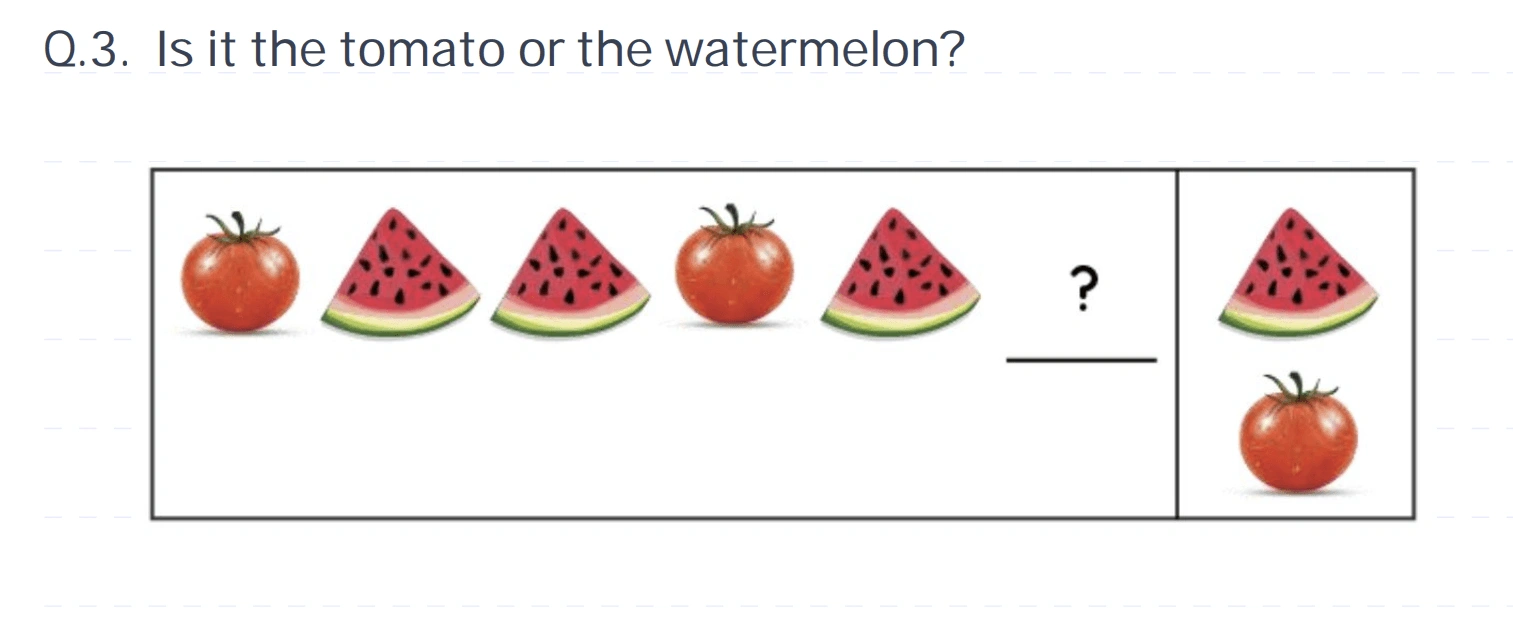
Explore Brighterly Learning Experience Learn exactly how Brighterly helps students thrive through expert sessions, online tools, and proven feedback from thousands of satisfied parents In Pre-K and kindergarten, kids build early numeracy, visual-spatial awareness, and foundational logical thinking, learning to connect abstract symbols (numbers) with real-world physical quantities – a concept known as one-to-one correspondence. Relying on tactile and sensory learning, children also build fine motor skills and memory with patterns and repetition. Best for: number recognition, ages 3-6 Using everyday objects to count helps kindergarten and preschool kids understand numbers through familiar things like toys or food items. This hands-on activity supports early number recognition and one-to-one correspondence naturally. Example: Ask your child to count 5 grapes for a snack. Best for: early geometry, visual awareness Hunting for shapes with your kid can turn early geometry into a fun exploration activity. Your child can identify circles, squares, and triangles in everyday objects. The hunting method helps recognize shapes in real-life contexts and build visual awareness. Example: Let your kid find 3 circular items in the kitchen. Best for: logical thinking, comparison skills When kids sort and classify objects, they develop early logical and math skills by grouping items based on color, shape, or size. This fun math activity establishes foundational thinking skills, such as comparison and organization. Example: Have your child sort buttons by color. Best for: counting, skip counting, memory Math songs help children remember math concepts through rhymes, rhythm, and repetition in a fun way. Songs make counting, skipping, and patterns easier to remember without feeling overwhelmed. Example: Sing a counting song together and clap to each number. Best for: number-color connection, fine motor + math Connecting coloring and math teaches numbers and counting through creative tasks. Your kindergartener can color specific quantities or numbers to reinforce counting skills, improve focus, and refine motor skills. Example: Ask your kid to color 3 stars yellow and 4 strawberries red. Best for: addition concept, tactile learners Practicing addition with snacks is another of the top fun math activities for kindergarten, as it makes math tangible and enjoyable. Kids can combine and count a small group of food items to learn addition visually. Example: Give your child 3 slices of apple, add 2 more, and ask about the total. Note: This article reveals all the details about high school math levels. Elementary school students shift from basic counting to core operational math – i.e., multi-digit addition, subtraction, fractions, and multiplication – you may want to pre-check their skills with our free printable math worksheets. Kids also develop geometric visualization and real-world application skills, like telling time and managing small amounts of money. Best for: visual learners, grades 1-3 Using pictures, children can visualize concepts like addition, subtraction, shapes, and even place value. The approach works by turning abstract ideas into concrete, visual representations that are easier to grasp. Example: Draw 5 pears, cross out 3, and ask how many are left. Best for: fractions, real-world math, grades 2-5 Calculating and measuring ingredients when cooking introduces counting, multiplying, and working with fractions in real-life tasks. These hands-on math activities for kids help make sense of quantities and proportions practically. Example: Have your child measure half a cup of sugar and ¾ cup of flour. Best for: counting, strategy, grades 1-5 Among all fun math activities for the 1st-5th grade, math board games reinforce foundational skills, such as counting, addition, and strategic thinking. These games make math practice feel like play, helping children build self-esteem as they learn without pressure. Example: Play Snakes and Ladders so that your kid adds numbers to move forward. Best for: problem-solving, movement learners Scavenger hunts around the house turn problem-solving into an active, engaging experience. Your child can search for numbers, shapes, or clues to solidify math concepts through movement and exploration. Example: Task your child with finding 3 household items with 4 sides. Best for: time concepts, grades 1-3 Making their own clock to tell time teaches children to understand hours and minutes through hands-on practice. Creating a clock makes time concepts more visual and interactive. Example: Have your kid set the clock to show quarter past 3. Best for: counting, subtraction, grades 2-5 Building a store to practice money operations helps learn counting, adding, and subtracting dollars and cents. This role-play activity makes math fun and meaningful through everyday applications. Example: Give your child play money to buy items from the living room and calculate the total cost. Best for: critical thinking, grades 3-5 Working on math riddles and math brain teasers encourages critical thinking and problem-solving skills. These short challenges of fun math activities for 3rd grade and older make kids think creatively to apply math concepts while having fun. Example: Ask your child a riddle: “What number becomes 0 when you subtract 5 from it 5 times?” Best for: multiplication foundations, grades 2-4 Using equal groups supports teaching multiplication and division facts through sharing and grouping. This common method makes abstract ideas more tangible by associating them with everyday situations. Example: Ask your child to divide 12 cookies among 4 people and say how much each one gets. Best for: number sense, addition/subtraction, grades 1-3 For turning abstract math problems into an interactive movement game, a simple physical number line can help. Kids will walk or jump along a numbered path and, therefore, physically grasp how numbers grow larger with addition and smaller with subtraction – that’s exactly how you can reinforce their spatial number sense. Example: With painter’s tape, create a straight line on the floor, marking and numbering intervals from 0 to 20. Give your child an equation – e.g., 7 + 5 – have them stand on the number 7, and physically jump ahead for 5 spots to land on the answer – 12. For subtraction, let them practice jumping backward. In middle school, math shifts from concrete arithmetic to abstract reasoning. Students, thus, build algebraic readiness, data literacy, statistical thinking, and spatial reasoning. Given that at this age, children often lose interest if they don’t understand why they’re learning something, fun middle school math activities can help them enhance estimation and independent logical deduction. Best for: algebra prep, grades 6-8 Pattern recognition worksheets help students identify sequences, relationships, and logical rules. This fun math activity strengthens critical thinking and prepares kids for advanced topics like algebra. Example: Use Brighterly’s free printable pattern worksheets and other math worksheets – all divided by grades and topics. Best for: mental math, probability, grades 5-8 When playing math card games, kids practice addition, subtraction, and probability in an entertaining way. These games contribute to quick thinking and practicing mental math. Example: Challenge your child to combine cards to reach the number 20. Best for: graphing, coordinates Drawing a life-sized coordinate plane or number line turns graphing into a physical, hands-on activity. Students can move along axes to make abstract coordinates visual and easy to remember. Example: Ask your child to step on the coordinate (2, 3). Best for: statistics intro, grades 6-8 Playing with dice and cards introduces children to probability concepts like chance and likelihood through hands-on experiments. These fun math activities for middle school students help them understand outcomes, patterns, and statistical reasoning. Example: Roll a dice 10 times and track how many times each number appears. Best for: algebraic reasoning, grades 6-8 Math word problems allow kids to utilize mathematical concepts and operations in context. These problems develop reasoning skills and improve the ability to transform real-world situations into equations. Example: Ask your child how long it will take to reach the store (5 miles away) if you drive at 30 miles/hour. Best for: Fibonacci, ratios, grades 6-8 Looking for math in nature allows children to connect math to the real world through observation. Patterns like symmetry, spirals, and repetition in nature make them more concrete and engaging. Example: Search for symmetry in plant leaves. Best for: estimation, measurement, grades 5-8 Using math to perform daily chores helps kids apply skills in real-world situations. Everyday tasks provide opportunities to practice measurement, organization, and logical thinking. Example: Have your child estimate how many toys can fit in a box while putting order in their room. Best for: geometry, measurement, grades 6-8 Analyzing the structural dimensions of students’ physical environment, hands on math activities for middle school enable them to study spatial relationships. When pre-teens apply formulas to three-dimensional objects, they master spatial reasoning and dimensional conversions. Example: Gather several cardboard packages and cylindrical containers. Ask your student to define the surface area by flattening a box to map its net, or calculate total storage volume by multiplying the base area by the height. They can also locate varying angles on furniture joints to test if intersecting lines form true perpendicular walls. In grades 9-12, students master advanced algebraic reasoning, geometric proofs, data analysis, and STEM-focused modeling. Fun math activities for high school students can also help develop adult financial literacy, teamwork, deductive logic under time constraints, and the ability to synthesize math with other academic disciplines. Best for: problem-solving, teamwork, grades 8-12 Creating a math escape room for your little one turns problem-solving into an interactive challenge that many children enjoy. Kids can solve a series of math puzzles to unlock steps, which encourages them to think critically and collaborate. Example: Create clues that require solving equations to reveal a code. Best for: test prep, review, grades 9-12 Math quizzes bring competitiveness and gamification to make learning exciting. Timed questions and healthy competition encourage fast thinking when applying math concepts. Example: Invite your kid’s friends to a Math Quiz Afternoon as warm ups. Best for: algebra, geometry review, grades 8-12 Online math games make screen time productive. Many cool math apps integrate math problems into challenges so that students can practice while avoiding stress and boredom. Example: Have your child play games to progress through levels by solving problems. Best for: engagement, relevance, grades 10-12 Drawing connections between math and your child’s dream career shows them how math relates to future goals. This can increase your kid’s motivation as they understand the practical application of math. Example: Explain how engineers use math to calculate proportions in buildings. Best for: cross-curricular learning, grades 9-12 When children combine math and their favorite subject, they see the connections between disciplines and why it’s important to learn math. This approach makes math more relevant in supporting things kids like. Example: Use history data to calculate timelines. Best for: data, measurement, STEM activities, grades 9-12 Using math in science experiments brings it to life through hands-on learning for high school students. Kids can measure and use data to calculate how real-world processes work. Example: Measure how quickly a plant grows and calculate the rate. Best for: reducing math anxiety, grades 9-12 Math jokes and puns make the educational process memorable and enjoyable. Humor helps improve memorization and engagement while simultaneously reducing anxiety. Example: Tell your child, “Why was the math book sad? Because it had too many problems.” Best for: financial literacy, grades 10-12 High school upperclassmen analyze the factual mechanics of money management, teaching them to decipher monetary agreements, evaluate long-term costs, and make informed choices before managing real earnings and debt. So, this activity can connect algebraic calculations outright to their personal independence and economic survival. Example: Give them a sample paycheck stub to calculate their total pay versus their take-home pay after taxes. You can also have them use the simple interest formula to compare two car loans over 3 and 5 years, or ask them to build a balanced monthly budget based on a starter career salary. Whether teacher or a parent, you can use math activities for classroom or small groups to help kids improve mental calculation speed and master the order of operations. Math play in groups also enhances important soft skills – healthy peer competition, active collaboration, effective communication, and emotional resilience. Best for: fact practice, any math topic, grades 3-8 Among fun math games for middle school, this one transforms a familiar childhood entertainment into focused practice of core arithmetic, fractions, or algebraic equations. You’ll need: How to Play Best for: review, vocabulary, grades 2-8 Math baseball is a gamified activity with a sports spirit yet on the classroom board that stimulates strategic risk-taking in deciding to either aim for a base-clearing hit or a safer run. You’ll need: How to Play Best for: order of operations, mental math, grades 3-12 Among fun math activities for 4th graders, in particular, the ‘24 card game’ helps kids practice quick mental math. Students look at cards and figure out how to mix them together using math rules to reach a score of 24. You’ll need: A standard deck of cards (remove jacks, queens, and kings). How to Play Best for: multiplication facts, quick recall, grades 2-6 Even though the game involves physical movement, it builds fast mental math in a friendly yet focused atmosphere of classroom activities. You’ll need: How to Play Best for: test review, any topic, grades 5-12 ‘Sticky points’ is one of the fun math review games that levels the playing field so that team strategy and a little bit of luck matter as much as getting the right academic answers. You’ll need: How to Play
Combine worksheets with 1:1 personalized tutoring!
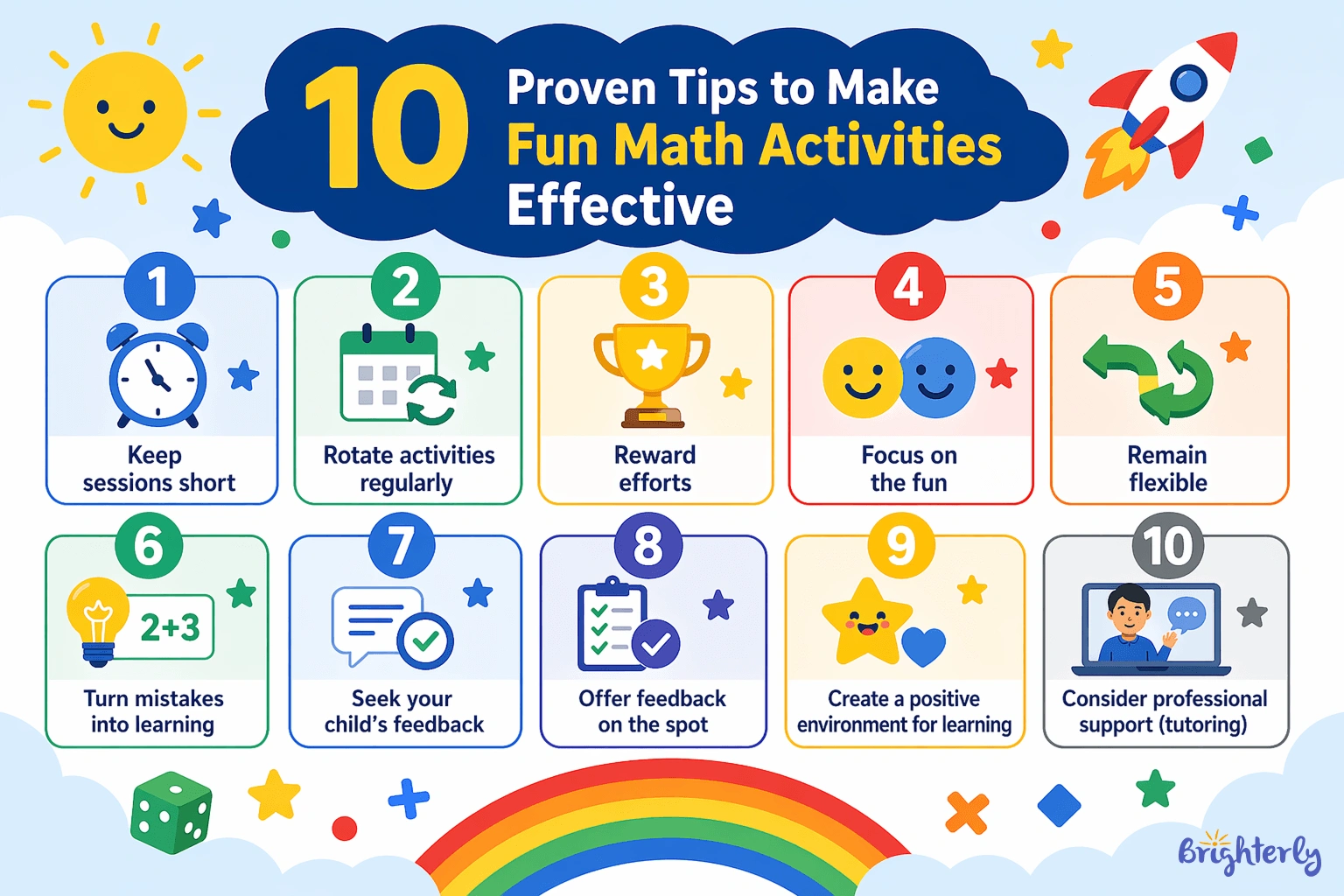
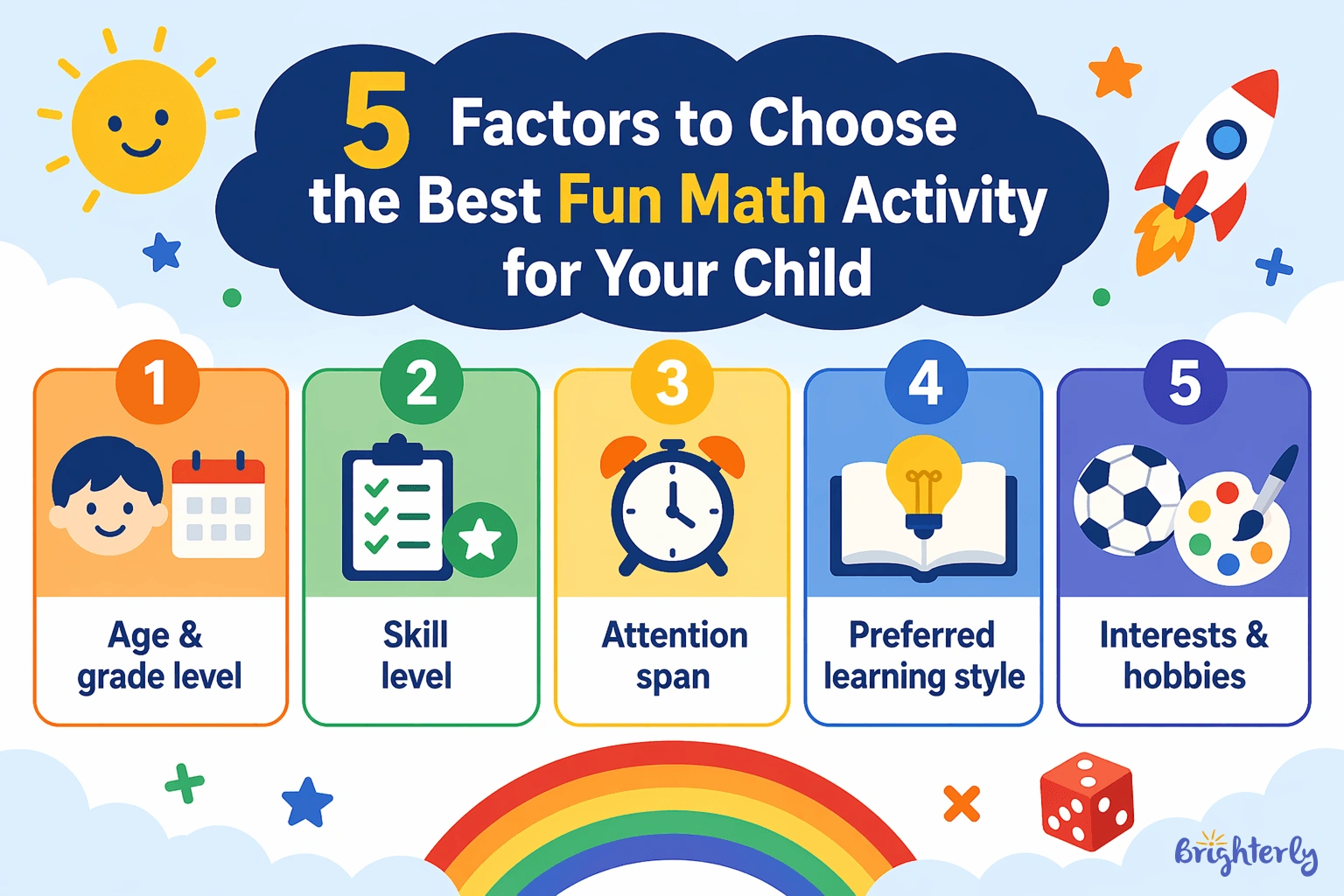
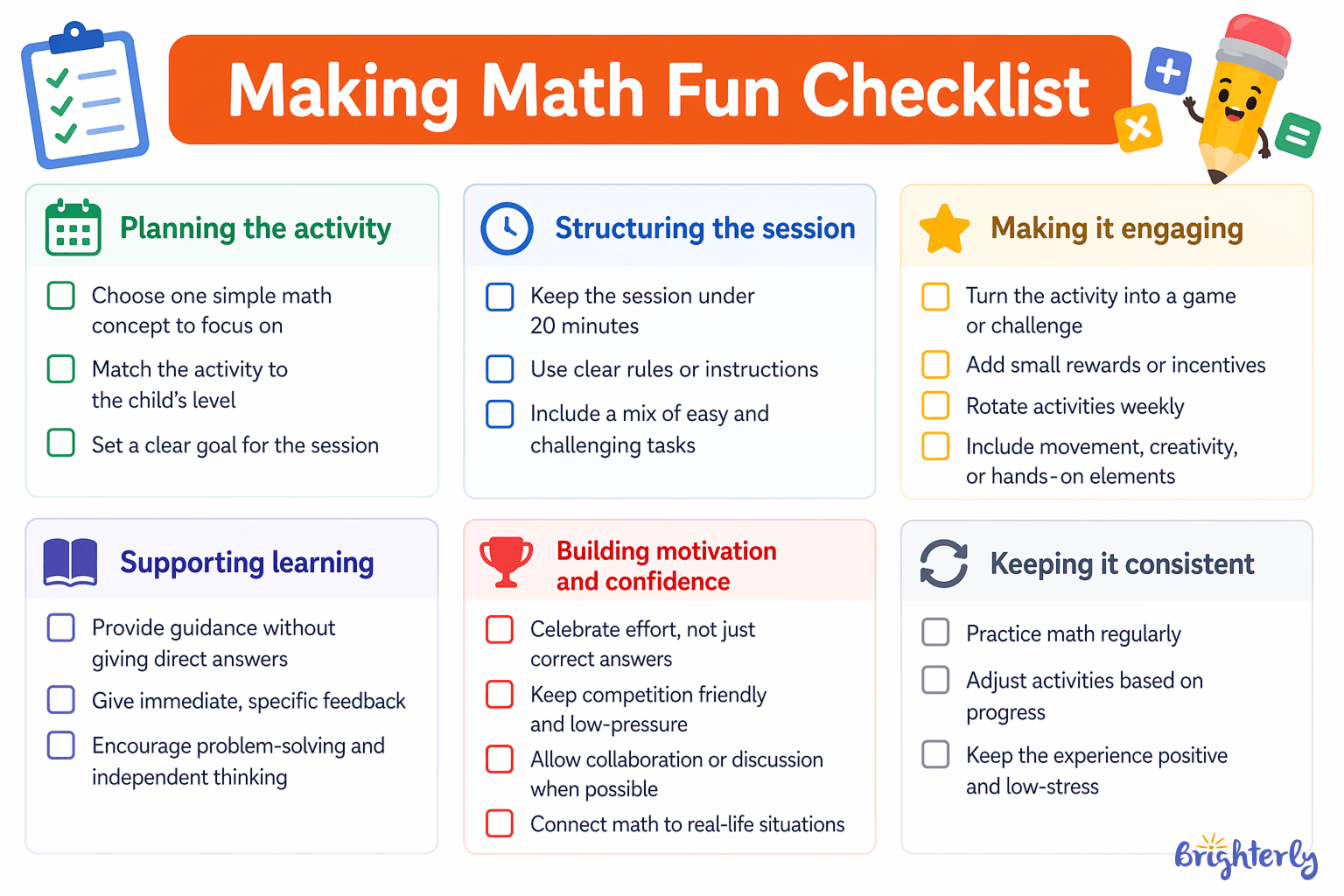
Brighterly tutors join instruction & games for building knowledge & confidence in a fun way! 1. Recognize their learning style. Kids process information best when you provide it in their preferred learning style: If your kid is more into… Choose ➡️ Visuals Games that employ colorful flashcards or drawings – seeing the problem helps them figure out the logic. Tactile Activities involving real physical items – counting food, measuring baking ingredients, etc. – make math palpable. Movements Active games (like Around the Block or Number Line) – physical movement helps active kids process thoughts and stay focused. 2. Adjust activities to your child’s focus level. If your kid gets exhausted fast, forcing them into a long game will only create negative associations with math. If your kid… Choose ➡️ Loses focus quickly Fast games with quick rounds (like the 24 Card Game) – keep sessions under 15 minutes. Enjoys puzzles and long-term focus Strategic board games or home escape rooms that involve focused problem-solving. 3. Use their hobbies to inspire learning. If you mix math with the things your child already loves to do in their free time, you can make math appealing: If your kid is… Choose games with ➡️ A sports fan Statistics, scoreboards, or simply play Math Baseball. A creative artist Geometric symmetry in drawing, color-by-number math pages, or musical rhythms and patterns. 4. Check age and development standards. Make sure the math operations align with what your child’s brain is naturally ready to handle based on their school grade: If your kid is in… Choose ➡️ Pre-K and kindergarten Focus on basic numbers, simple shapes, sorting items, and understanding physical quantities. Elementary (grades 1-5) Practicing core operations like addition, subtraction, fractions, and multiplication tables. Middle and high school (grades 6-12) Switching to abstract logic, algebra prep, probability experiments, and real-world budgeting challenges. 5. Define their skill level. If a game is too simple, kids get bored; if it’s too complicated, they get frustrated and give up. Therefore: If math play still doesn’t change things much for your kid, go for structured professional support from our 1:1 math tutor. To make math fun for children, focus on engaging activities, short lessons, and real-life examples that keep them interested and involved. Replace repetitive drills with interesting games, hands-on activities, and simple challenges matched to students’ level. When learning is interactive and achievable, kids stay concentrated, build confidence, and engage in the long term. To make lessons more engaging, use this fun math checklist: Kids who struggle with math frequently develop intense math anxiety, which blocks their working memory and makes standard tasks feel overwhelming. Due to engaging math activities, kids use their multiple senses to intuitively grasp how numbers work, and small yet frequent successes repair their academic confidence. However, if games still don’t help, consider a more structured approach and professional live guidance. Working 1-to-1 with our patient algebra tutor or geometry tutor for kids at Brighterly can naturally intensify fun learning strategies and give your child the customized attention they need to reach the expected level. For building durable and steady math skills, consistency is more important than intensity. One exhausting weekend session can result in frustration and burnout, but short and regular ones can support learning without overwhelming the brain. Consider 15-20 minutes of math play, about 3-5 days a week, integrating brief math sessions into your family’s normal routine. Yes, many of these activities are well-suited for students with learning differences or ADHD. Traditional schoolwork frequently demands long and stationary focus, which can cause mental fatigue faster for neurodivergent children. On the contrary, games featuring nonstop rounds, physical movement, tactile items, fast sensory feedback, and natural brain breaks are effective for addressing easily distracted behavior and keeping dopamine levels high. However, it’s still wise to consult with an educational specialist or behavioral therapist to fine-tune these methods for your child. No, math play can’t replace a tutor because it helps build a willingness to learn but can’t substitute for structured education. Educational games reaffirm understanding of existing concepts and enhance confidence, but they can’t systematically introduce complex new topics. If your kid finds math (or schoolwork altogether) too overwhelming, they need the addressed pedagogical intervention. Learn more about our math courses and math tutors who can provide customized and structured instruction adjusted precisely to your child’s particular learning needs. Your household is already full of mathematical opportunities. You can turn snack time into a lesson on fractions – ask your child to divide a pile of crackers evenly among family members. Have them calculate simple distance and time estimations during car rides to practice mental math. Your everyday routines offer good teaching moments as well: Let your kid count steps while walking, find symmetrical patterns on clothing and rugs, estimate total grocery costs with rounded numbers, etc. This guide covers how to learn math for students at any level — from learning math from scratch to figuring out how to get better at math you’re already working on. You’ll find practical strategies for building stronger foundations, practicing effectively, and getting help when you need it. How to Learn Math Effectively The most […] May 31, 2024 If your child is struggling with math at school or you want to help them develop extra skills, this article lists the 18 best math learning websites for students K-12. They include different educational features, teaching methods, and cost ranges to meet the exact requirements of your family. Key points Top websites for personalized online […] Jun 04, 2024
Why Fun Math Activities Help Kids Learn Better

Fun Math Activities for Pre-K and Kindergarten
Counting With Everyday Objects
Hunting for Shapes Around the House
Sorting and Classifying Objects
Singing Math Songs
Combining Coloring with Math
Practicing Simple Addition with Snacks
Fun Math Activities for Elementary School Students (Grades 1-5)
Using Drawings and Pictures for Math
Cooking and Measuring Ingredients
Playing Math-Based Board Games
Going on a Math Scavenger Hunt
Learning to Tell Time With a DIY Clock
Practicing Money Skills Through a Mini Store Game
Solving Math Riddles and Brain Teasers
Using Equal Groups to Understand Math Concepts
Creating a Hands-On Number Line
Fun Math Activities for Middle School (Grades 6-8)
Working on Pattern Recognition Worksheets
Playing Math Card Games
Creating a Life-Sized Coordinate Plane
Exploring Probability with Dice and Cards
Solving Math-Based Word Problems
Finding Math Patterns in Nature
Embedding Math Into Daily Chores
Hands-On Geometry With Everyday Objects
Fun Math Activities for High School (Grades 9-12)
Trying Out a Math Escape Room
Playing Competitive Math Quizzes
Combining Math Learning With Online Games
Connecting Math to Future Careers
Blending Math with Favorite School Subjects
Combining Math with Practical Science Experiments
Exploring Math Through Jokes and Puns
Real-World Financial Math Activities
Fun Math Games for the Classroom
Math Tic-Tac-Toe
Math Baseball
The 24 Card Game
Around the Block
Sticky Points Review Game
How to Choose the Right Math Activity for Your Child
Frequently Asked Questions
How to Make Math Fun?
What Makes Math Activities Effective for Kids Who Struggle With Math?
How Often Should My Child Do Fun Math Activities Outside of School?
Are These Activities Suitable for Kids With Learning Differences or ADHD?
Can Fun Math Activities for Kids Replace a Tutor?
What Free Math Activities Can I Do At Home With No Materials?
How Do I Keep My Child Motivated During Math Practice?



Math & reading from 1st to 12th grade
Looking for homework support for your child?

Choose kid's grade

Math & Reading for Grades 1–12
Build real confidence for your child with a Brighterly math or reading tutor.