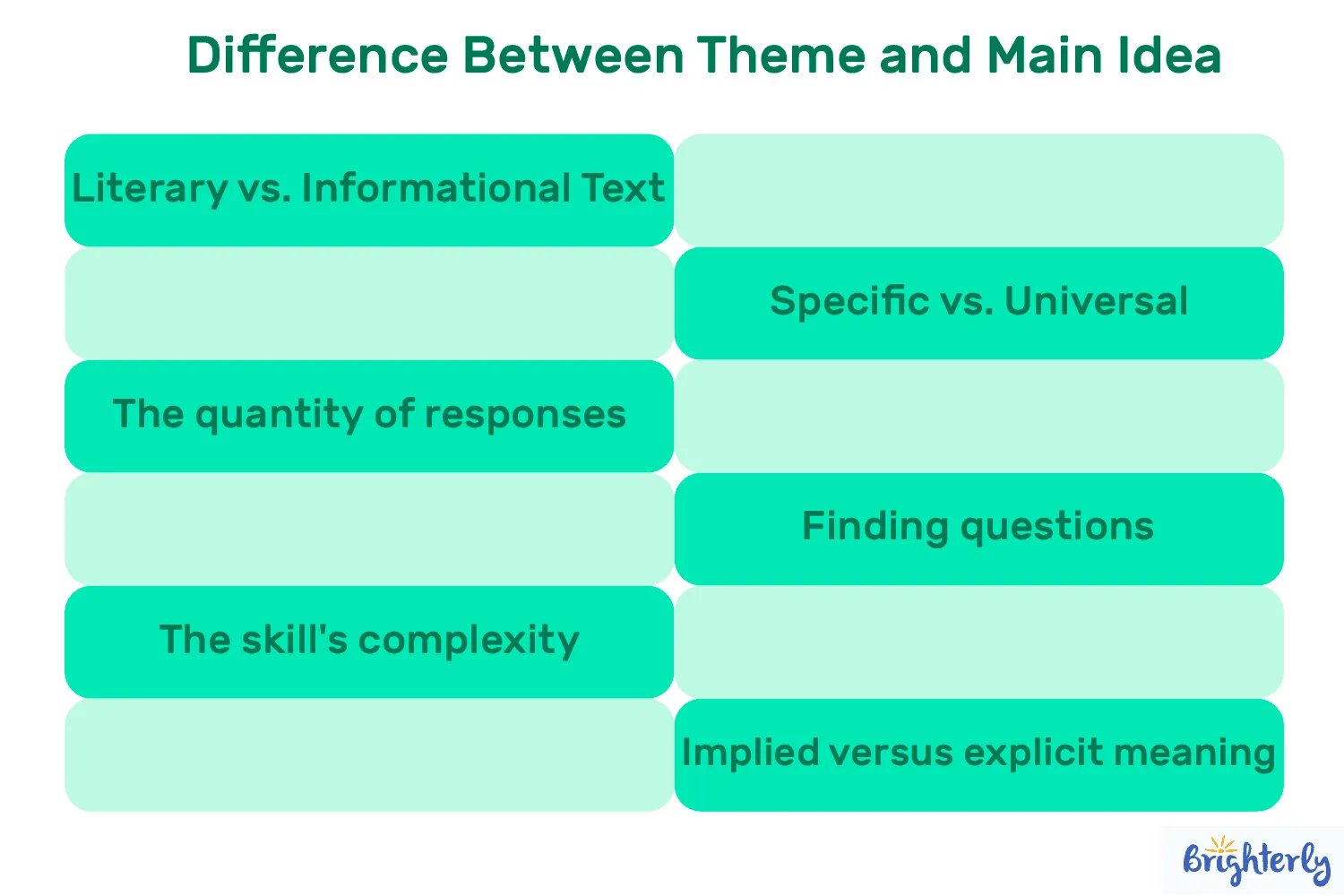
Literary vs. Informational Text
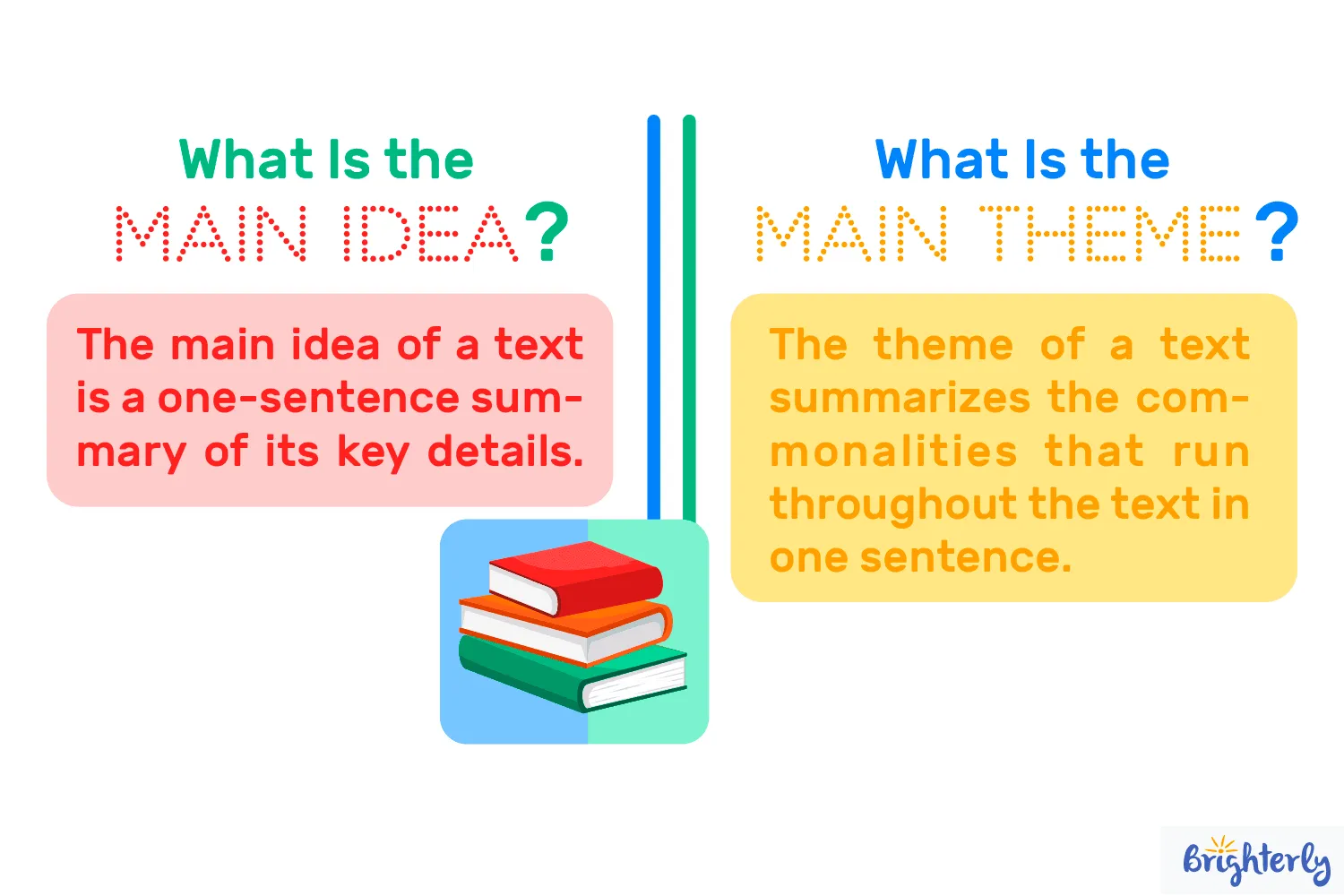
The term "theme" is mostly used in literature. It applies to works of fiction such as picture books, novels, and short tales. On the other hand, fiction and informational literature can utilize the word "primary idea." People are still discussing the same idea even when they refer to informational materials as essential ideas.
Specific vs. Universal
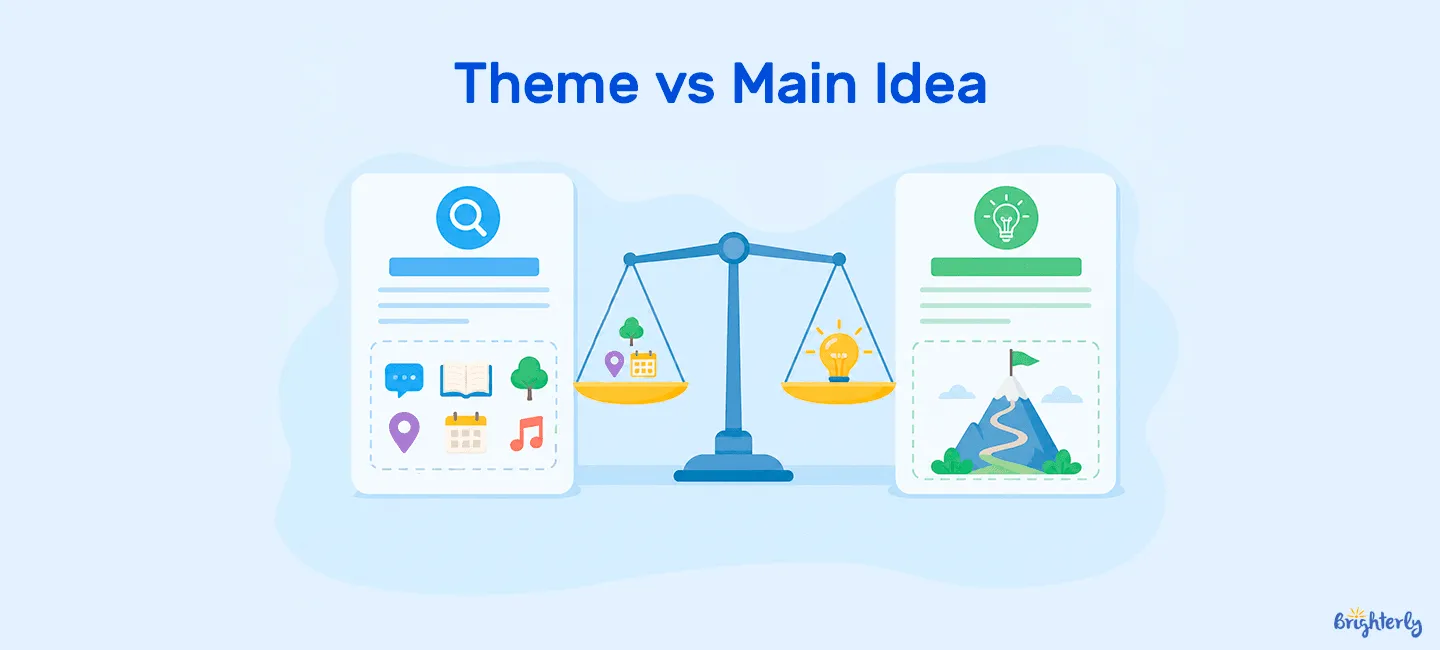
A story's theme and main idea difference lies in their scope. Encyclopedia Britannica explains that literary themes reflect “universal human experience,” which supports the idea that themes are broader and more universal than main ideas.
A story's main idea always shares specifics. There is only one specific text that uses the characters' or subjects' names and unique plot points. A theme is a general, universal statement. The same theme can appear in different books with entirely different characters or plots.
For example, the Disney and Pixar films “Toy Story,” “Frozen,” and “Finding Nemo” could all share a theme like “Growth often comes from stepping outside your comfort zone,” but each story would have its own main idea.
The Number of Entities in a Single Text
Every text has one major concept. Students may write or express it differently, but the concept will always be the same. On the other hand, a single text may contain several themes, particularly if it is lengthier. Throughout a book, some themes may be more evident or developed than others, but that doesn't mean they can't exist.
Finding Questions
To identify the difference between theme and main idea, students pose several questions.
To identify the main idea, ask the following questions:
- What is the text about?
- Can you tell me what happens in the story?
- What are the plot's most important details?
To identify the theme of the story, ask the following:
- What is/are the story's topic(s)?
- In what ways does the author imply that the topic is important?
- How did the characters overcome obstacles?
- Which decisions did the characters make that were important?
- Throughout the story elements, how have the characters changed or grown?
Implied Versus Explicit Meaning
Since most themes aren't explicit, identifying them requires higher order thinking. To locate them, students must read between the lines. The plot and the characters' words and deeds convey them.
The core theme is more obvious, especially in nonfiction or informational works. The topic sentence, a heading, or the text's title may help students identify the primary point.
The Complexity
Students need higher-order thinking to identify the topic. Since it teaches students to make connections between concepts and identify what is most important in a text, this is an essential component of building strong reading comprehension skills.