How to Get Better At Math: Study Tips and Tricks
reviewed by Jo-ann Caballes
Updated on July 24, 2026
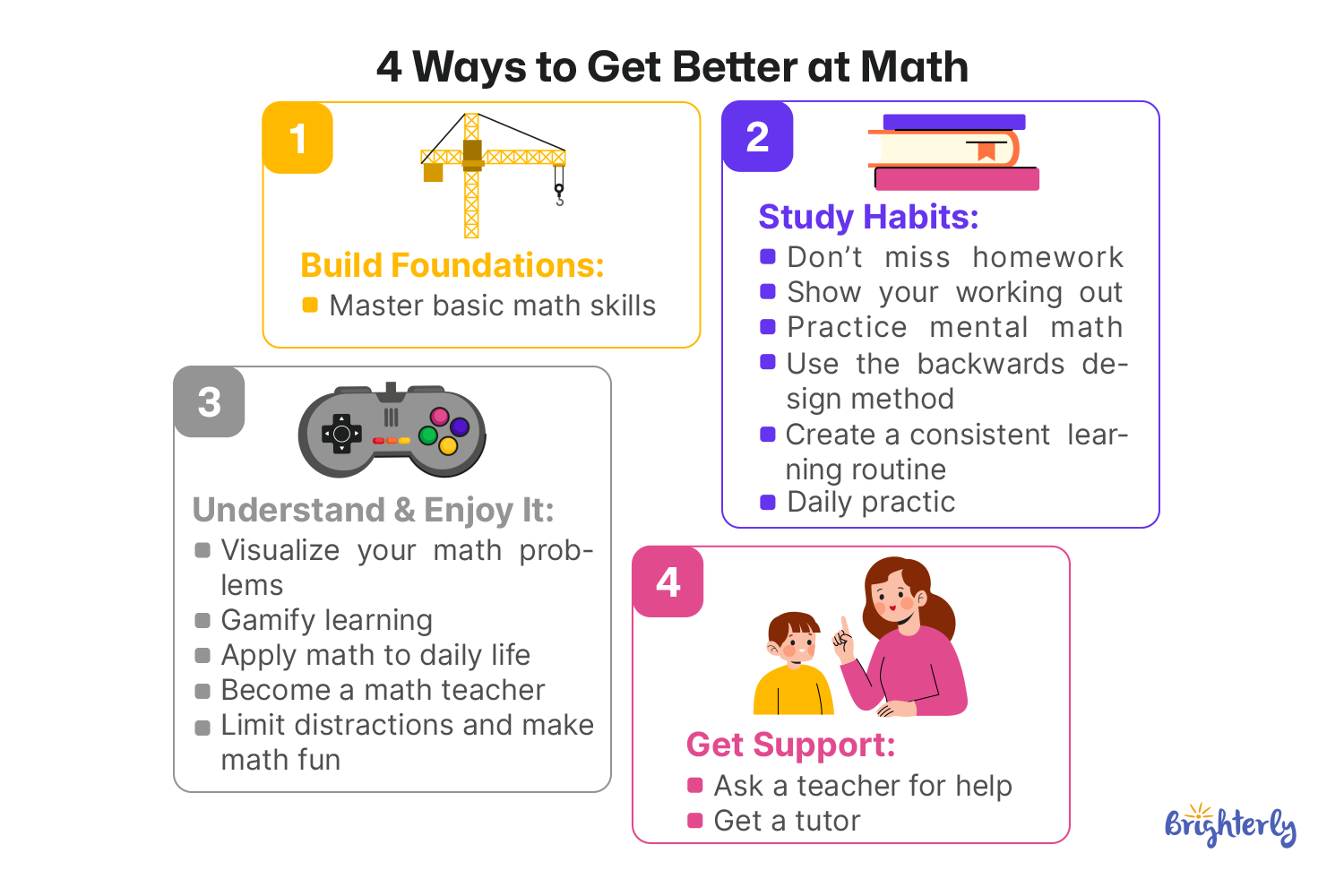
Key Points: Getting better at math takes daily practice, solid foundations, and the right strategies and any student, even the most humanities-oriented, can excel. From mastering the basics to building a study routine that sticks, these expert-backed tips have you covered. School-level math is not complicated and to get better at it, you don’t need talent as much as a competent approach to learning. There are four cornerstones that, if introduced into your routine, can make a difference: a strong knowledge base, good study habits, the ability to make math fun, and a willingness to ask for help. Formulas shouldn’t be blindly memorized, but the child needs to understand why formulas work. In fact, the true sign of math proficiency is the ability to derive any formulae, even not knowing it beforehand. Below you’ll find out how to work on each of the four cornerstones. Explore Brighterly Learning Experience Learn exactly how Brighterly helps students thrive through expert sessions, online tools, and proven feedback from thousands of satisfied parents Everyone can get better at math, because solving math is a skill that develops through practice, like most other things. But to achieve it, it is important not only to learn but also to help the child believe they can do it. A 2025 study in Frontiers in Psychology confirms: Learners with a growth mindset who sincerely believe they can improve through effort actually do improve. That is logical: the child believes in themselves, keeps working, and results follow. The main conclusion of science is simple: if you want to know how to get really good at math, it’s mostly accumulated practice, not talent. A child who seems naturally good at math simply had more practice or found a way to understand it earlier. How long it takes to get better at math depends on where your child is now and how much time they are willing to spend each day. But there are guidelines if you devote at least 20-60 minutes of daily practice to math, most students notice progress within a few months. The main thing to remember: math is cumulative. You can’t just skip a topic and move on, as gaps will always make themselves felt. The first step is always the same: find the earliest gap that your child doesn’t understand and close it.
Not sure where your child stands in math?
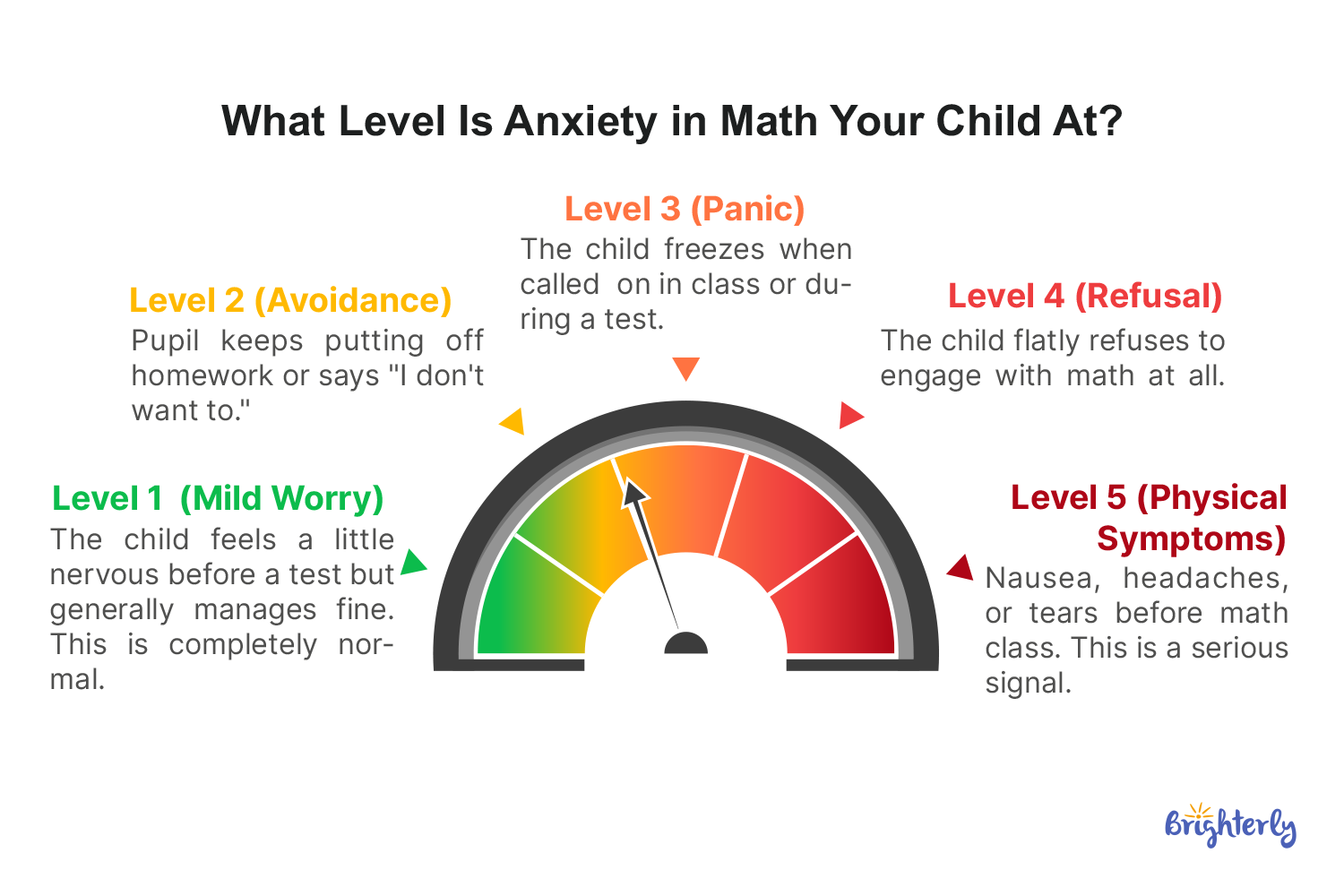
Brighterly’s professionals help identify the gaps and work to close them Math can feel difficult because it can often come across as abstract, particularly if you haven’t yet mastered the basics. In order to master math, you must understand foundational topics and build problem-solving skills, critical thinking, as well as abstract thinking. Here are some key reasons why math can feel difficult: Math anxiety is not laziness or a made-up excuse; it is a real feeling of discomfort that many children experience for specific reasons. Most are afraid to make a mistake, look foolish in front of the class, or be judged by the teacher. And if this is not addressed, the child simply begins to avoid math, which makes the situation worse. Here is how different types of anxiety look and manifest: Before moving on to tricks on how to get good at math, it is important to master the math fundamentals perfectly. It’s difficult to succeed in anything, including learning math, if you have missed the basics. Just like languages, biology, or music, math builds on itself, and each new topic relies on what has come before. Concept Skills Ways to Get Better at Math Arithmetic Geometry Algebra Statistics Trigonometry Precalculus and calculus Sashank Penmatsa, Math and Physics Teacher, explains exactly why fundamentals matter so much: “Unaddressed prerequisites from previous years continue to pile up” We know you may not enjoy it, but homework is the key to success in math. The information you learn in class must be reinforced at home. Many schools will not personally study every detail with you every time, so you need to put in the extra work at home to truly understand your math topics. How to be better at math by doing homework?
Math homework turning into a nightly battle?
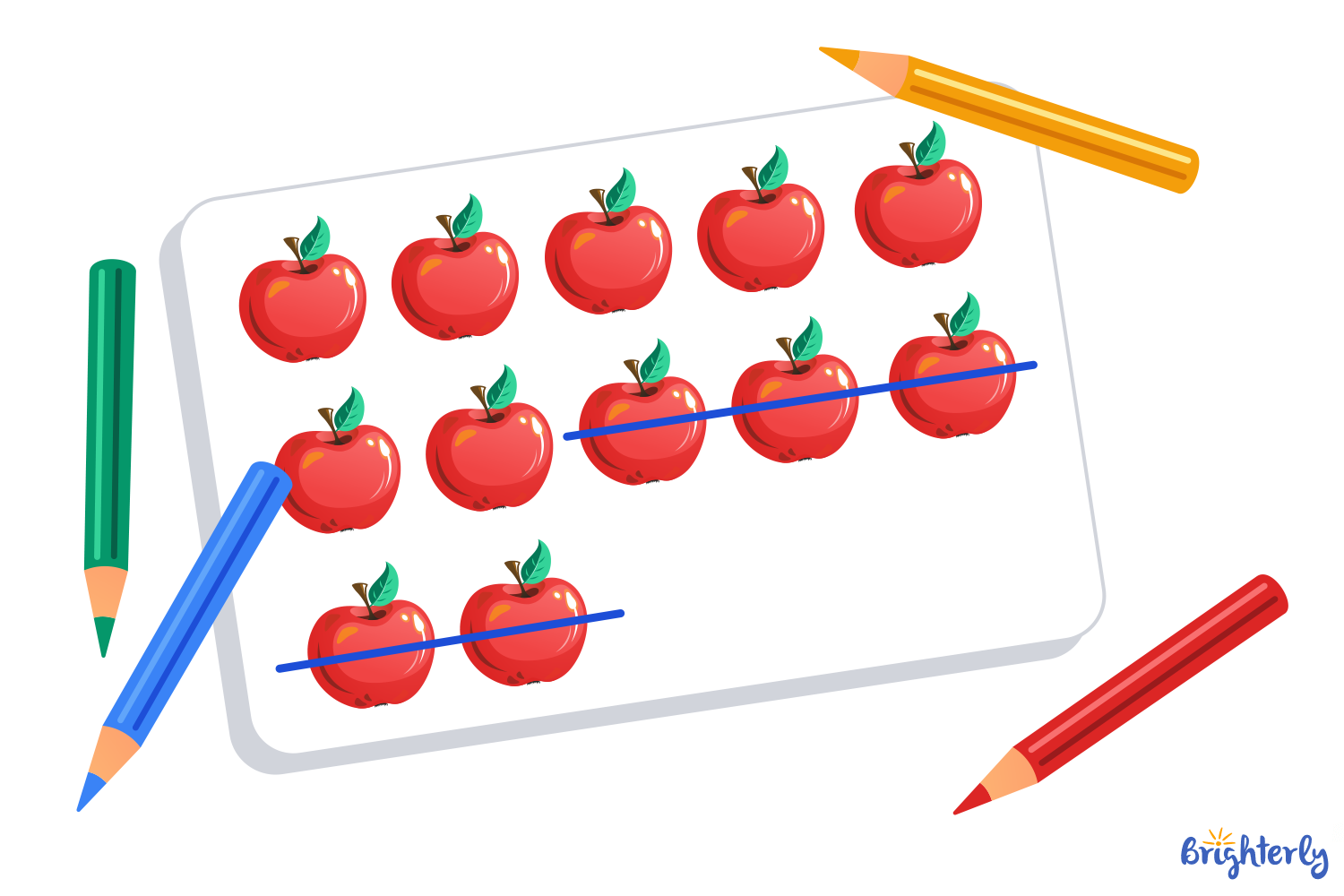
Brighterly's 1-on-1 tutors make homework feel manageable again. Ever wondered why tactics like long division are so effective? It’s because you’re working out your problem as you go, and you can see what you’ve done at every stage. With consistent practice, mental math becomes automatic, giving students an edge in class. While mental math practice is a key skill, especially for basic sums, not everything has to be done mentally. Solving problems in stages can also help you identify where you went wrong. Showing your work can also help you master more complex operations or sums. It’s a win-win! To boost math skills, it is helpful to practice mental math counting in your head without pencil, paper, or devices. It will have a positive impact on everyday life. You will be able to quickly answer questions like “When should I leave to arrive on time?” or “What change will be left after buying groceries?” Best ways to practice mental math: Kids often jump straight into calculations without thinking about how they’ll get the answer. The backward design method changes this: first, identify the result needed, then write down the steps to get there. This makes the process clearer and helps spot gaps before any calculations. Sean Ivester, founder of Pivot Tutors, confirms it works: “It may seem time-consuming, but having a roadmap of sorts actually helps students reduce errors and waste less time in the long run.” Time, place, and consistency — all of this matters when learning math. As Brighterly Educational Advisor Claire Smizer puts it, the right routine is half the battle: “Consistency matters far more than volume” So, it’s worth scheduling lessons with your homeschool math online tutor and writing down extra sessions on a whiteboard or setting a reminder on your phone. The most effective answer to how to improve math skills is deceptively simple: practice a little every day. Even without a math lesson at school, spend at least 15–30 minutes on math problems daily. Here are some hands-on ways to practice: Note: Also use practice tests to simulate real conditions, help identify weak spots, and show exactly which topics need more work. Not everyone is an analytical problem solver. Some people are visual learners, so if that’s you, use this to your advantage by visualizing math problems with sketches. Let’s say you’re working on a scenario-based problem, such as how many apples someone will have if they start with 12 and give away 5. Drawing those apples and manually crossing out or erasing the 5 can help you show the answer visually. You might be one of those learners who consider math boring. This can feel especially true when you feel like you need repetition to master math concepts. But by incorporating math games into learning, you will boost your math skills. Real-world math is everywhere from paying for groceries to weighing ingredients for cooking. So, why not teach your child math through everyday tasks? According to a 2023 IJCRD study, applying math to real-life situations prepares students for future success. Early childhood expert Tracee Perryman, PhD agrees: “Look for ways to incorporate recommended strategies from your child's school as well as online resources into your daily routines Mini ideas for practice: One of the best ways to reinforce math knowledge is to try explaining it to someone else. This approach is known as the protégé effect: when a child teaches someone else, they are forced to delve deeper into the topic, organize their thoughts, and notice their own gaps in understanding. Geillan Aly emphasizes that true mathematical understanding goes beyond memorizing rules. Students need to create example and explore why it works and why a similar one doesn’t: “The hard part is coming up with similar examples” To improve math grades, remove distractions from your learning environment. While it’s harder to control at school, you can create a distraction-free environment at home: phone away, quiet space, good lighting. Make the learning atmosphere engaging and interactive. Whatever your age, boring content is harder to absorb. Instead, when math feels interesting, you’ll stay more motivated and ready to tackle even complex concepts. Every student makes mistakes in math and most don’t even realize it. The most common ones: memorizing formulas instead of understanding them, skipping fundamentals, practicing too little, and giving up too early. Mistake Why it happens Fix Memorizing instead of understanding It seems faster at first. Learn the “why” behind every formula. Encourage your child to ask, “Why does this work?” Skipping fundamentals Topics may seem unrelated, so gaps go unnoticed. Review basic concepts regularly. Foundational gaps often cause problems later. Too little practice Math can feel overwhelming, leading children to avoid it. Short, consistent practice sessions are more effective than occasional cramming. Over-relying on the calculator Calculators provide answers instantly. Have your child work through the steps by hand first to understand the process. Quitting too early Progress in math can feel slow or difficult to notice. Encourage persistence. Meaningful improvement often takes weeks, not days. Not reviewing errors Mistakes can feel frustrating or embarrassing. Revisit incorrect answers and identify what went wrong. Doing math passively Reading solutions can feel like studying. Actively solve problems and explain the reasoning behind each step. You don’t have to be a mathematician to help your child get better at math. The main thing is proper support at home. A small summary of what actually helps: Sometimes home practice and parental advice are not sufficient. Here are signs that your child needs professional support: First of all, your child should reach out to their school teacher for help. But teach them to ask the questions in the right way. Claire Smizer, Brighterly Educational Advisor, shares how to do it effectively: “Can you show me the step where I got lost?” If the problem is deeper and the teacher doesn’t have enough time, individual lessons are worth considering. Our professional math teachers at Brighterly work with K-12 students. We have a great range of math lessons not only comprehensive but also filled with various game-based tools. To ensure high results, we first look for gaps in knowledge and then create an individual program for the child. And the most important thing all learning is 1-on-1 with a teacher. Getting better at math is not about talent, it’s about the right approach, consistent practice, and knowing when to ask for help. Now you know how to do better in math, put these tips into practice and build real progress in math. Looking for more support? Book a free lesson to see if personalized tutoring is right for you. To get better at math fast, you need to practice it frequently. Schedule daily sessions to go over concepts you’re struggling with, and focus on understanding rather than memorization. You can’t improve math skills overnight, but with consistent practice, parental and tutor support, you can do it quickly. To get better at SAT math, you should focus on taking mock SAT tests first. These tests give you an idea of what to expect on your real SAT exam. Then, once you know the subjects likely to come up, you can explore resources focused on those topics. Create a study routine that is consistent to ace your SAT. For more tips, read our blog on how to get a high SAT score. Yes, absolutely. No one has a mathematical brain, mathematics just requires the accumulation of knowledge, because each new topic builds on the previous one. So, if a student has missed a basic topic somewhere, the next ones will seem difficult to them. If there are difficulties with mathematics, you shouldn’t assume that the child has no abilities, a better idea is to find the gap and close it. ADHD can significantly affect math learning. After all, children with ADHD already have a hard time staying focused for the entire lesson, and monotonous rules and “boring” multi-step tasks further test their perseverance, memory, and concentration. However, math can become their favorite subject if you use the right approach: structured lessons, breaks, and individual support. Learn more about how ADHD affects writing and learning. There are four pillars of mathematics: arithmetic, algebra, geometry, and statistics. Together, they form complete mathematical thinking. Most children should practice math for up to two hours each day. Younger students in kindergarten and elementary school should keep sessions short at 15-30 minutes so it doesn’t become overwhelming. As you get to middle school, you can bump this up to 60 minutes as your focus improves. High schoolers and college students may study for 1.5-2 hours with breaks for intensive learning. A multiple is a number you get when you multiply one integer by another. All numbers have multiples — even the very largest numbers! A number multiplied by another number is called a factor of that number. Finding multiples of a number is a key skill kids will need to learn in math. So, in […] Aug 18, 2023 As students start learning, they have fun with shapes, angles, and puzzles about space. This helps them understand basic geometry. To make learning more fun, it is essential to spice it up with fun videos, games and other interactive activities to boost their understanding of the concept, whether through interactive activities or guidance from an […] Aug 18, 2023
How Do You Get Better at Math?
Can Anyone Get Better at Math?
How Long Does It Take to Get Better at Math?


Why Does Math Feel So Hard?
How Does Math Anxiety Look Like?
How should parents react to each of these anxiety stages?
Start With the Fundamentals


Study Habits that Improve Your Math Skills
Don’t Skip Homework
Show Your Working Out
Practice Mental Math
Use the Backward Design Method

Build a Consistent Study Routine

Practice a Little Every Day
Tricks to Understand and Enjoy Math
Visualize Your Math Problems
Play Math Games
Apply Math in Everyday Life

Teach Someone Else: The Protégé Effect

Limit Distractions and Stay Motivated
Common Math Mistakes to Avoid
How Parents Can Help Their Child Get Better at Math
When to Get Extra Math Support
Conclusion
Frequently Asked Questions
How to Become Better at Math Fast?
How to Get Better at SAT Math?
Is It Normal to Struggle with Math?
Does ADHD Affect Math Skills?
What Are the Four Pillars of Math?
How Much Math Practice Should Students Do Each Day?






Math & reading from 1st to 12th grade
Looking for homework support for your child?

Choose kid's grade

Math & Reading for Grades 1–12
Build real confidence for your child with a Brighterly math or reading tutor.