Encourage Kids to Learn Together
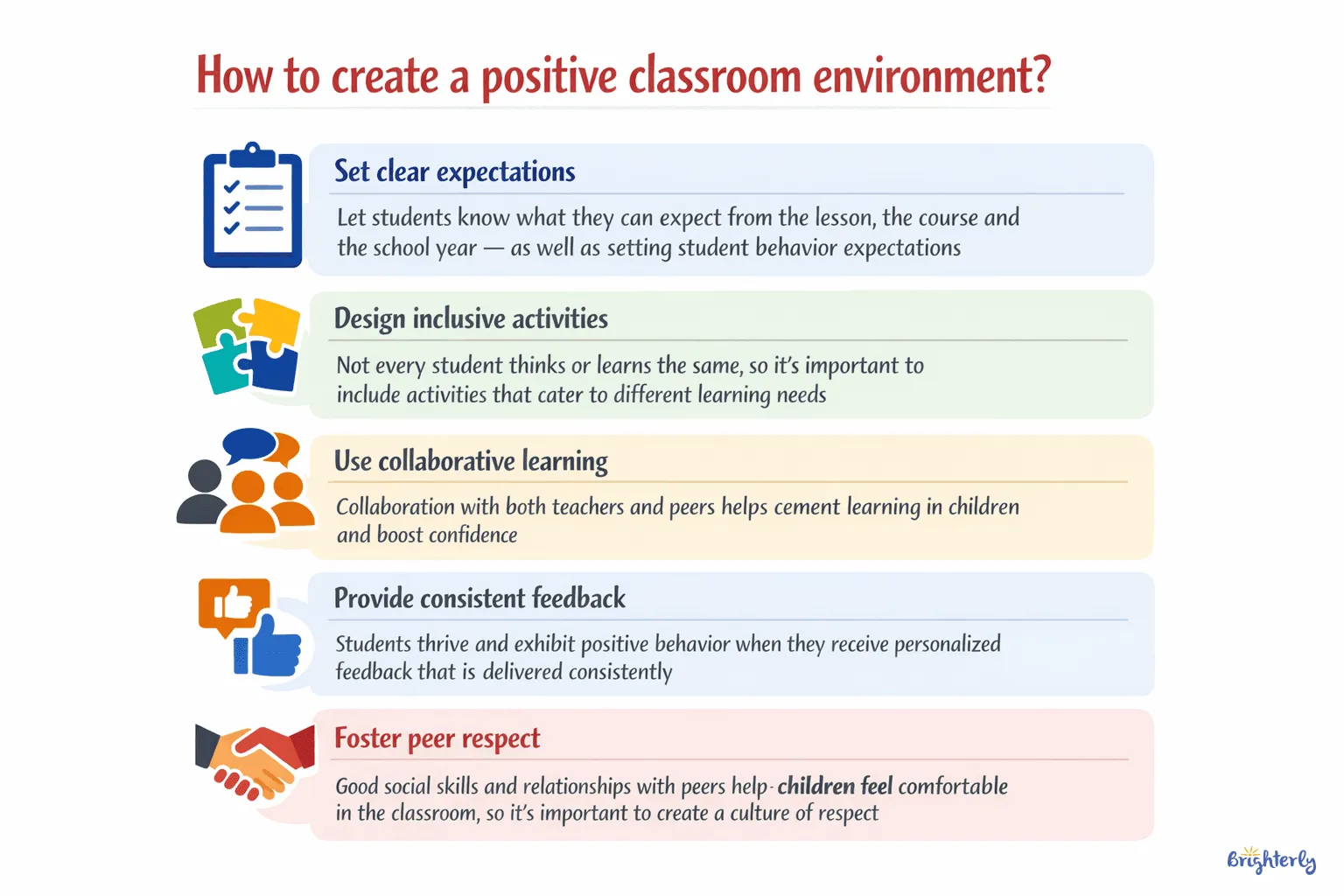
Collaboration with both teachers and peers helps cement learning in children and boost confidence.
- Assign rotating roles in structured groups, giving each student a particular responsibility (reader, timekeeper, recorder, presenter, etc.) – rotating roles ensures equal participation and prevents stronger students from dominating.
- Pair students to complete tasks like checking each other’s math steps or explaining a concept in their own words before submitting individual work.
- Keep groups small – 2-4 students – because smaller groups increase individual participation and reduce classroom noise levels.
- Teach collaboration skills, such as taking turns, active listening, and offering constructive feedback.
- To lower the pressure of whole-class participation, give students 30 seconds to think about a question individually, 1 minute to discuss their thoughts with a partner, and then invite pairs to share with the rest of the class.
Design Inclusive Activities for Different Learning Styles
Not every student thinks or learns the same, so it’s important to include activities that cater to different learning needs.
- Offer multiple paths to demonstrate knowledge, allowing students to present their understanding through written summaries, spoken presentations, visual diagrams, or practical models.
- Combine visual, auditory, and tactile elements, pairing spoken instructions with written steps on the board, simple graphic organizers, and physical materials (like blocks for math or story cards for reading) during main instruction.
- Provide leveled choices for independent practice, offering assignments at varying difficulty levels or lengths so students can practice skills at their current readiness level when striving for the same core objectives.
- Allow options for quiet individual work, partner discussion, as well as guided small-group instruction so students can work in the format that best supports their focus.
Positive Classroom Environment Examples
Elementary School
Elementary school, especially in kindergarten and grades 1 and 2, is where kids start to become familiar with formal education and make friendships. Confidence-building at this stage is essential, and you can do that with dedicated spaces in the classroom for social activities. You could label them “friendship corners” or something similar.
Ensuring you praise your students regularly during this stage is important too. These formative years can make a huge difference to their long-term educational outcomes, so praising them when they do well — both in terms of academic achievement and effort — helps keep their confidence stable.
Middle School
Kids’ learning progresses a lot in middle school, and they’ll be required to hone their teamwork skills. Setting up group projects not only allows students to build relationships with their peers, which can make them more comfortable in the classroom, but it also allows them to learn from one another.
Middle schoolers will also be entering adolescence, which comes with a host of new challenges. Setting aside time for personalized catch-ups can support students who are having a difficult time without the pressures of speaking in front of the class.
High School
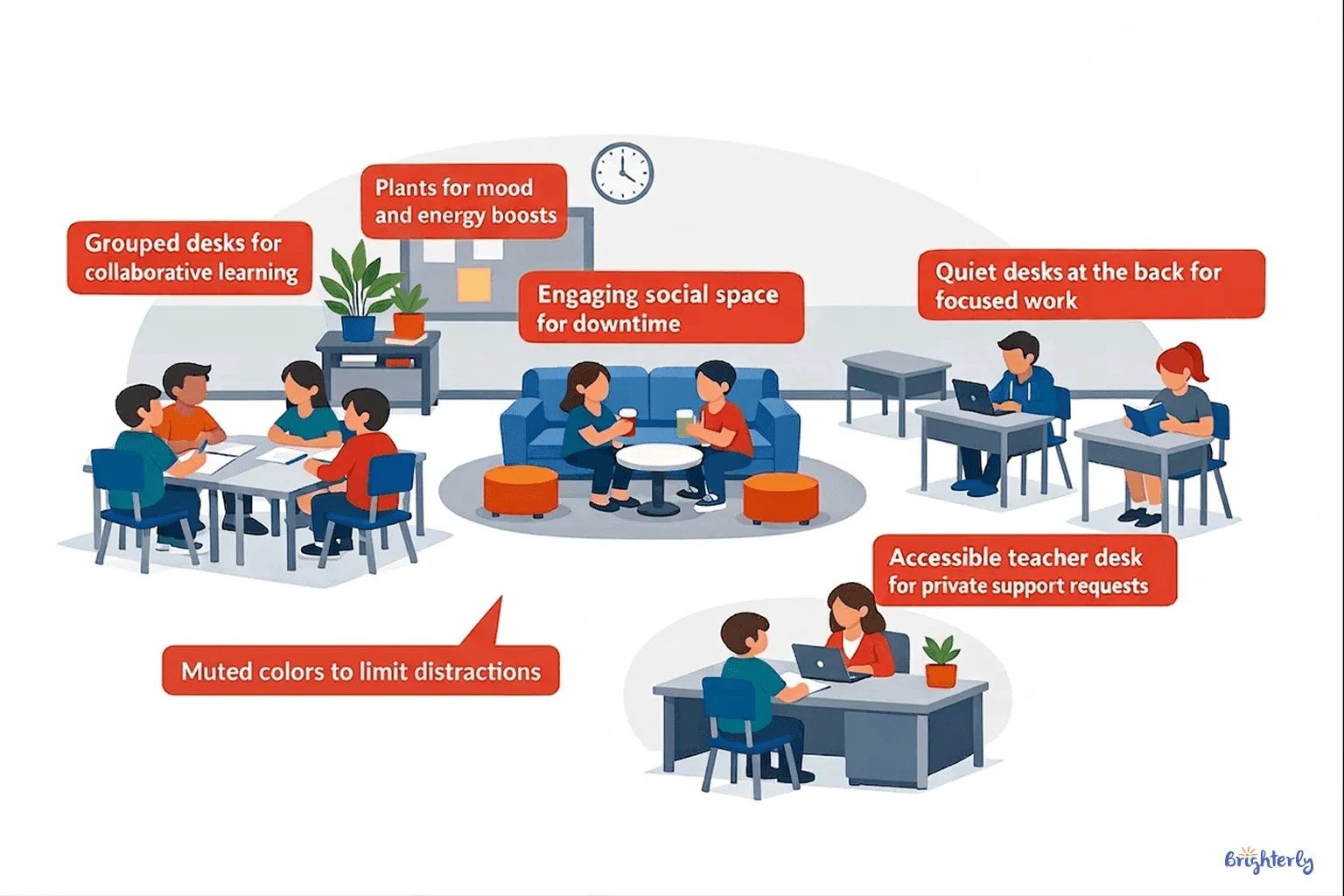
As kids move into the final stage of their compulsory education, maintaining a positive environment is key to help them prepare for their potential futures in college. Independent study time will be more important than ever, so it’s important that the physical classroom environment supports this, with low noise levels and lights and colors that aren’t overstimulating.
Positive reinforcement becomes all the more essential at this stage again. High school marks a time when confidence is key ahead of college, so don’t forget to praise your students when they put in the effort and achieve good results. It’s just as important in high school as it is in earlier grades.