Why Do These Problems in Schools Happen?
These problems in education mainly stem from crises involving school staff, and the global pandemic has affected how schools are dealing with them to this day. This data is based on several national research studies and reports, each highlighting a specific issue.
Teacher Shortages Mean Less Attention Paid to Each Child
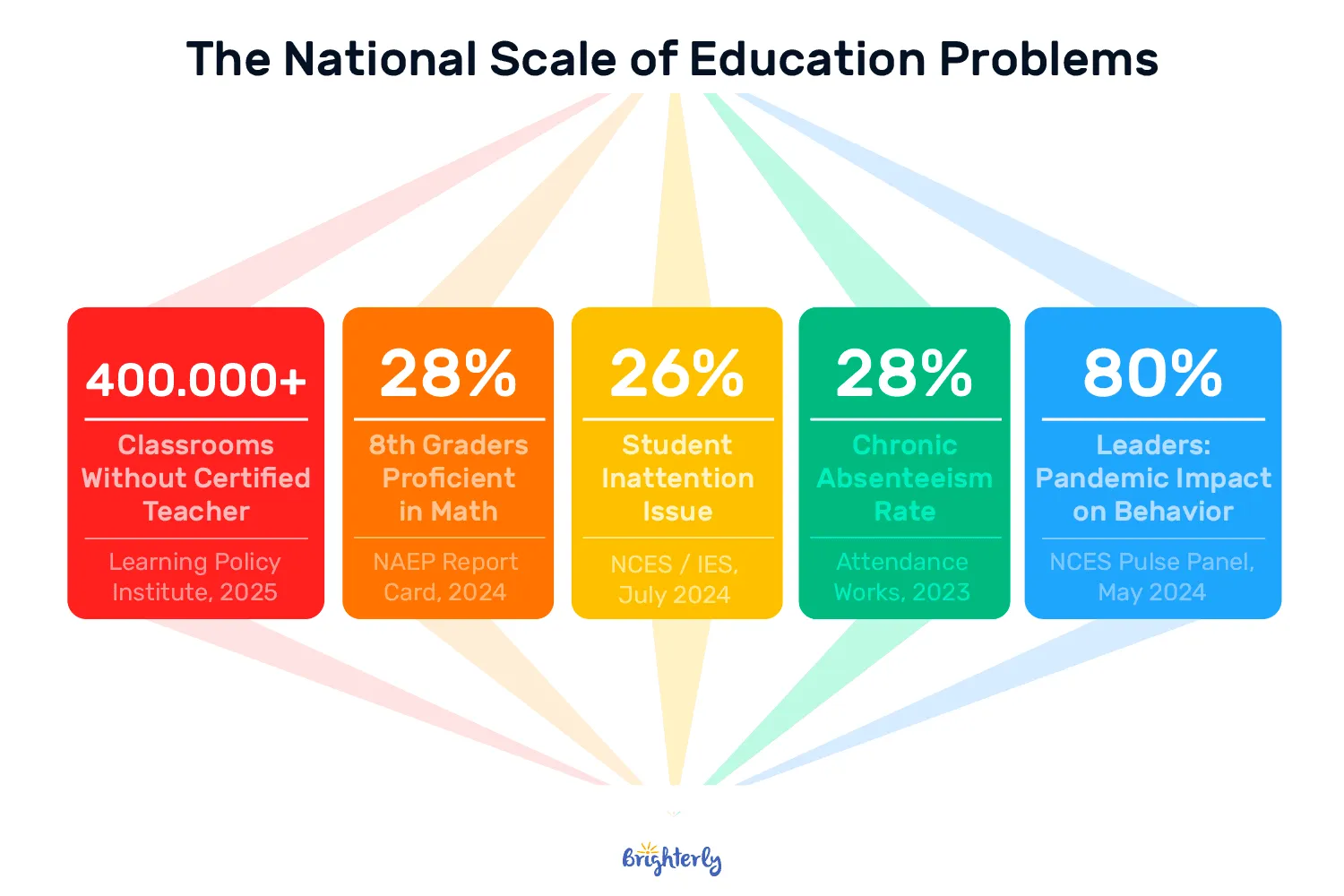
Research by the Learning Policy Institute, published in March 2025, found that over 400,000 teacher positions in the U.S. are either vacant or filled with uncertified staff, which means a huge professional teacher shortage in the country. The statistics on U.S educational trends proves this issue exists. The usual solution for a school is to increase the class size to compensate.
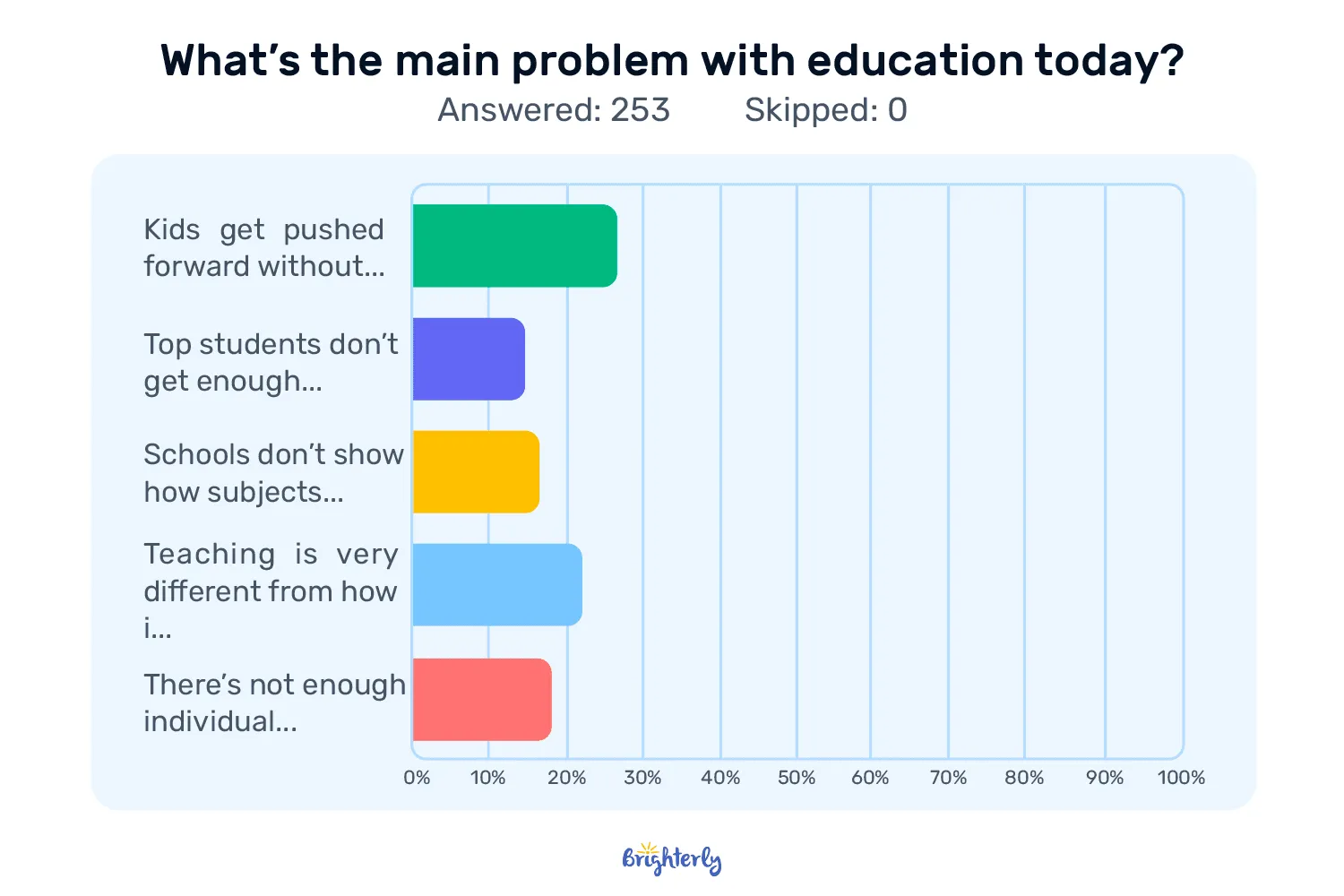
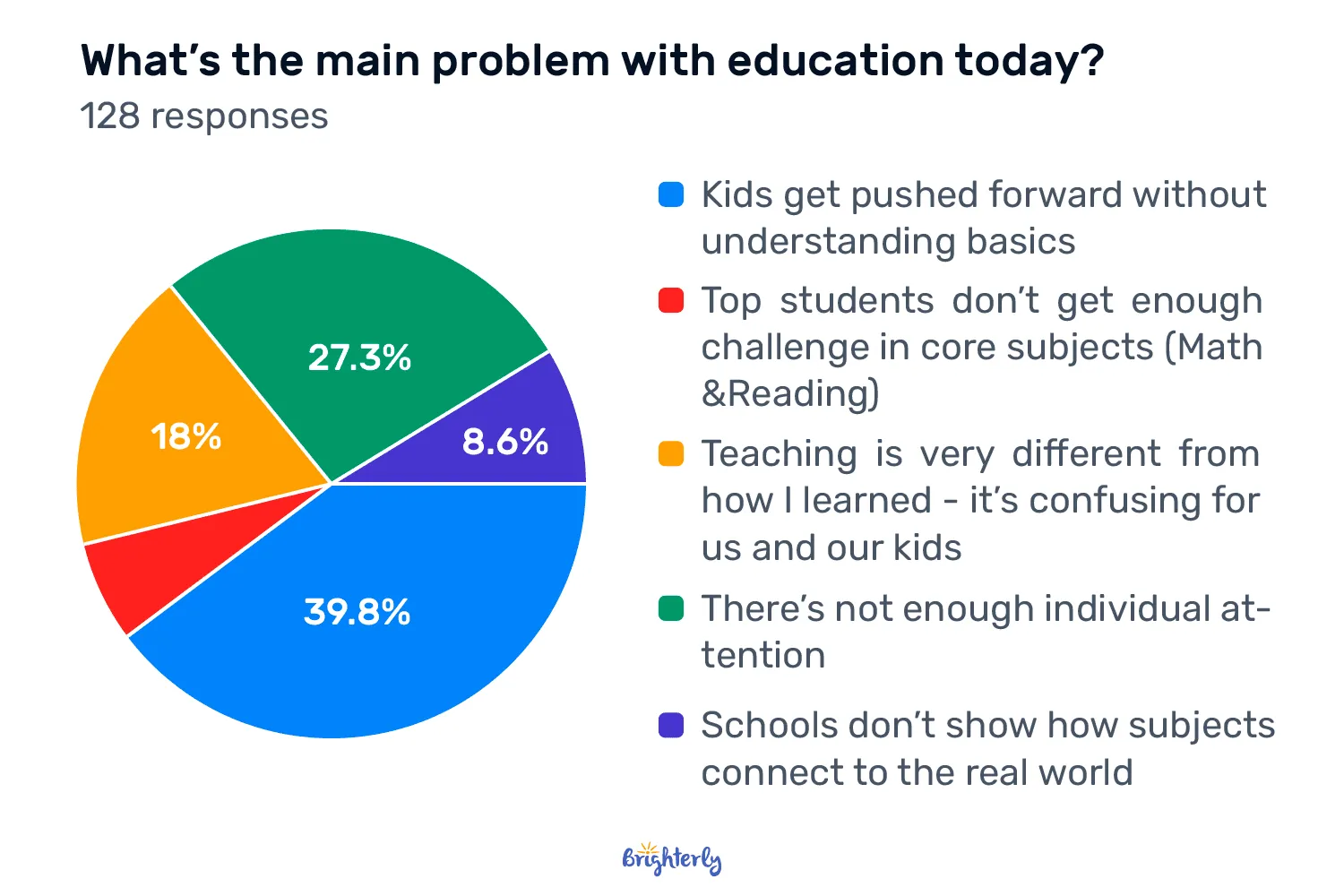
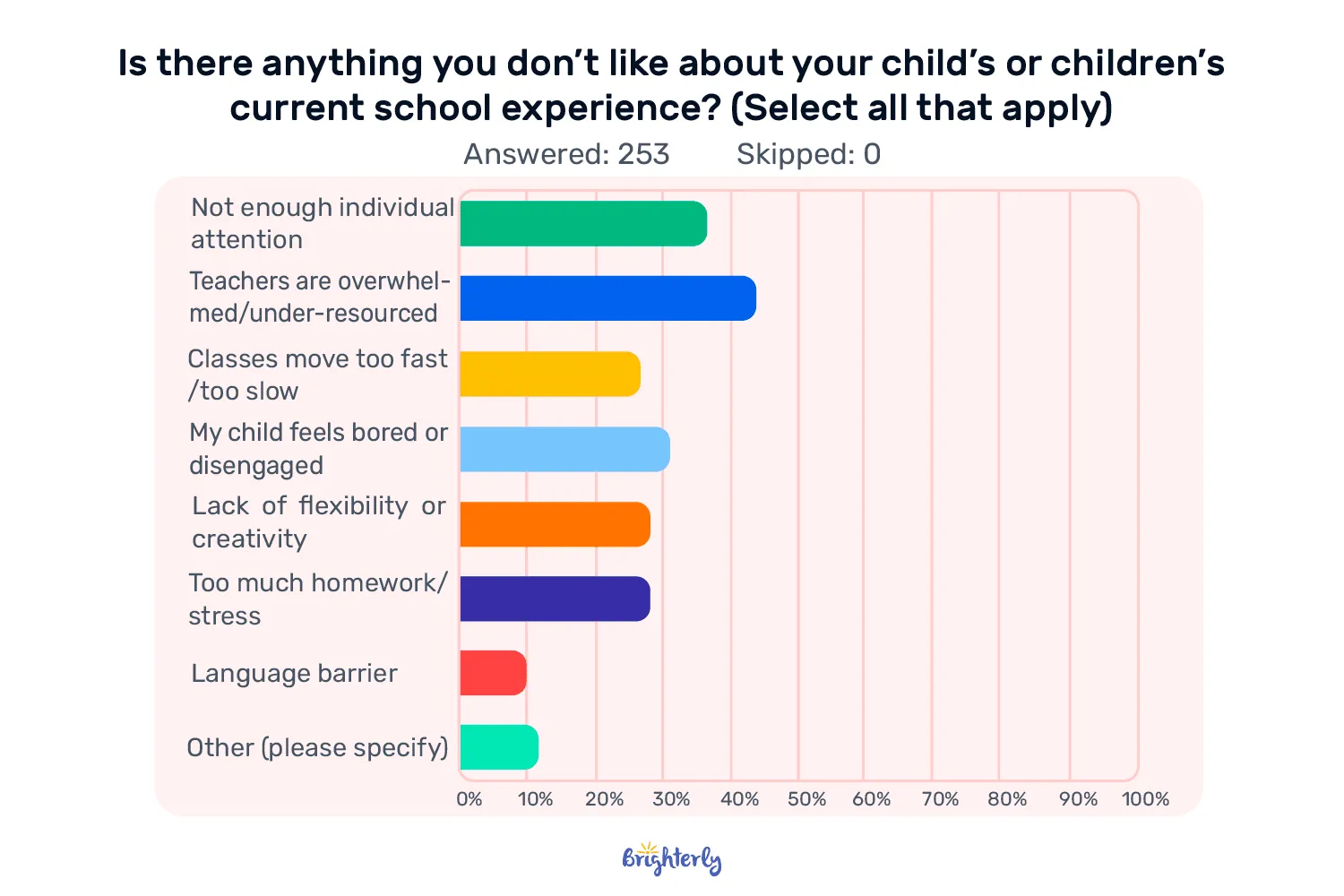
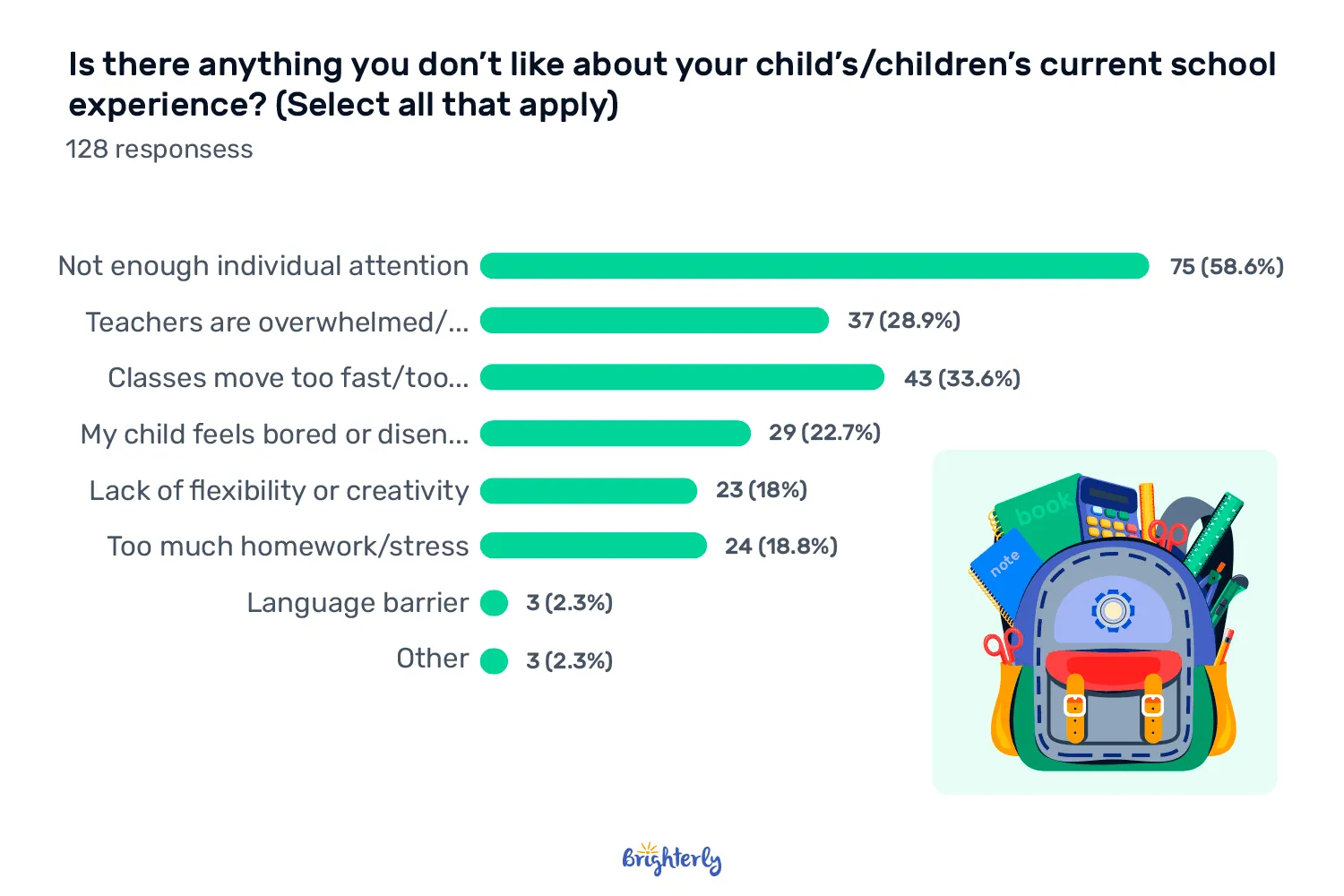
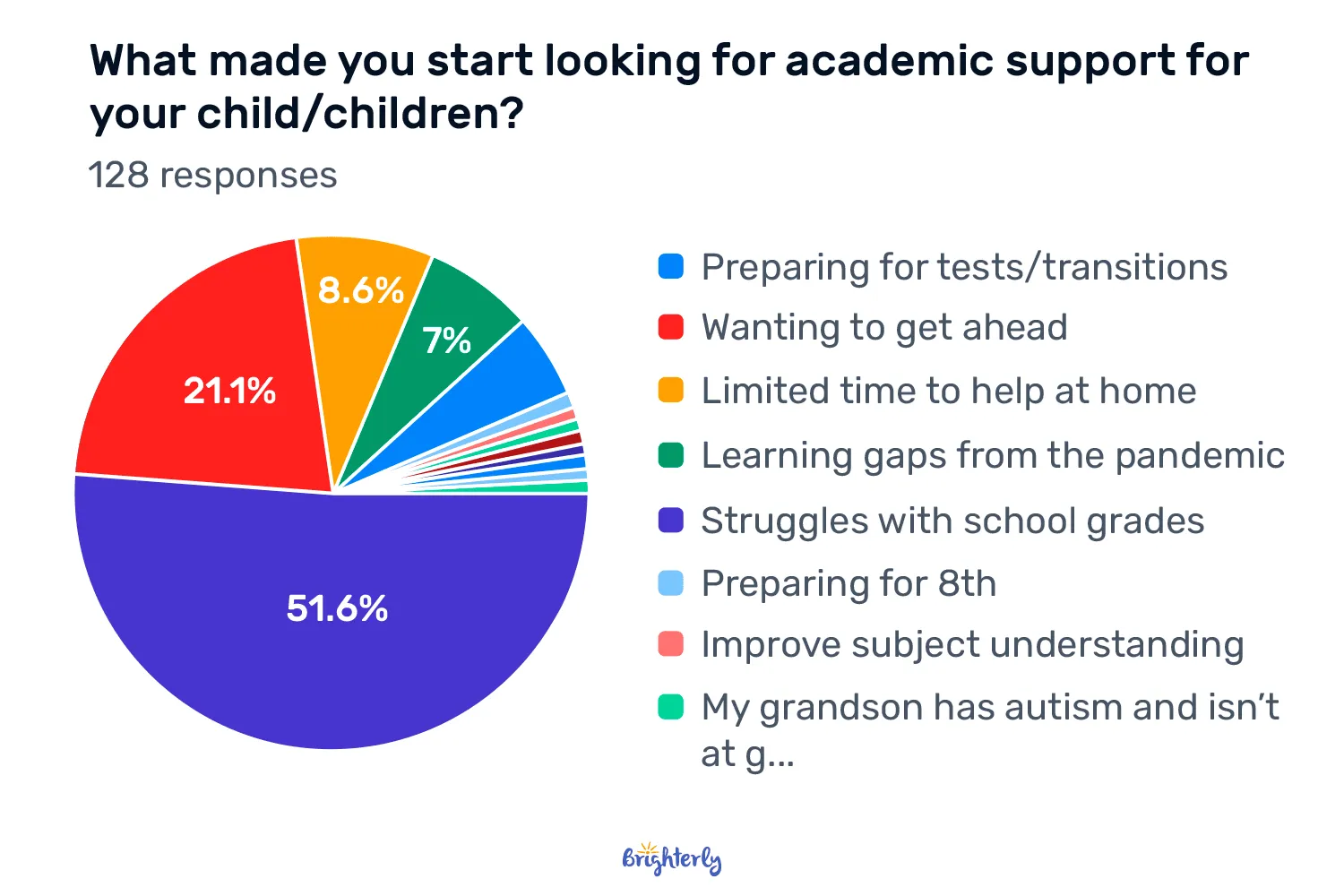
This data explains why 44.66% of parents in our external research feel that educators are overwhelmed, and why 58.6% in the internal study notice that their kids don’t get enough teacher attention in class.
The Pandemic Caused Issues the Schools Still Struggle With
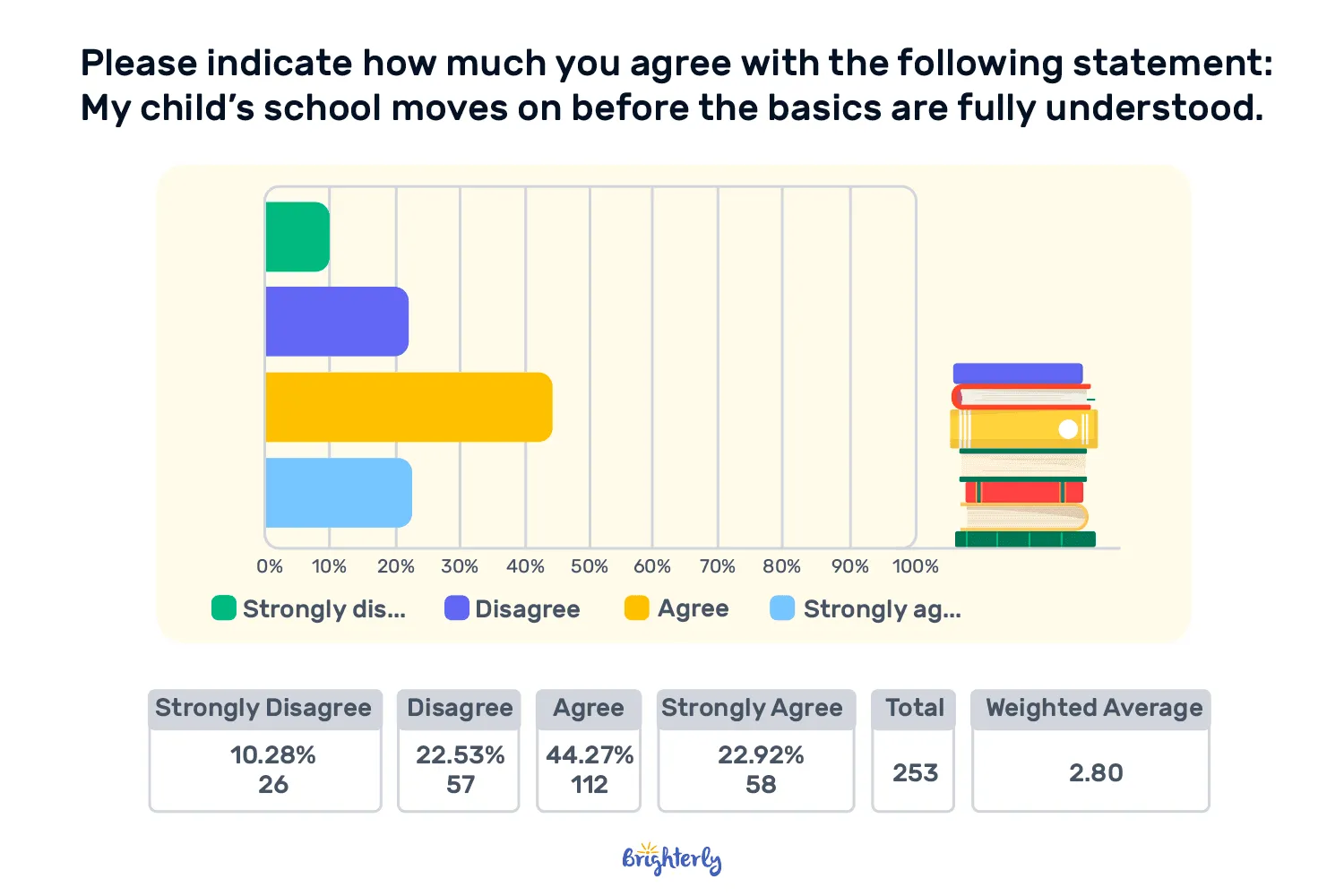
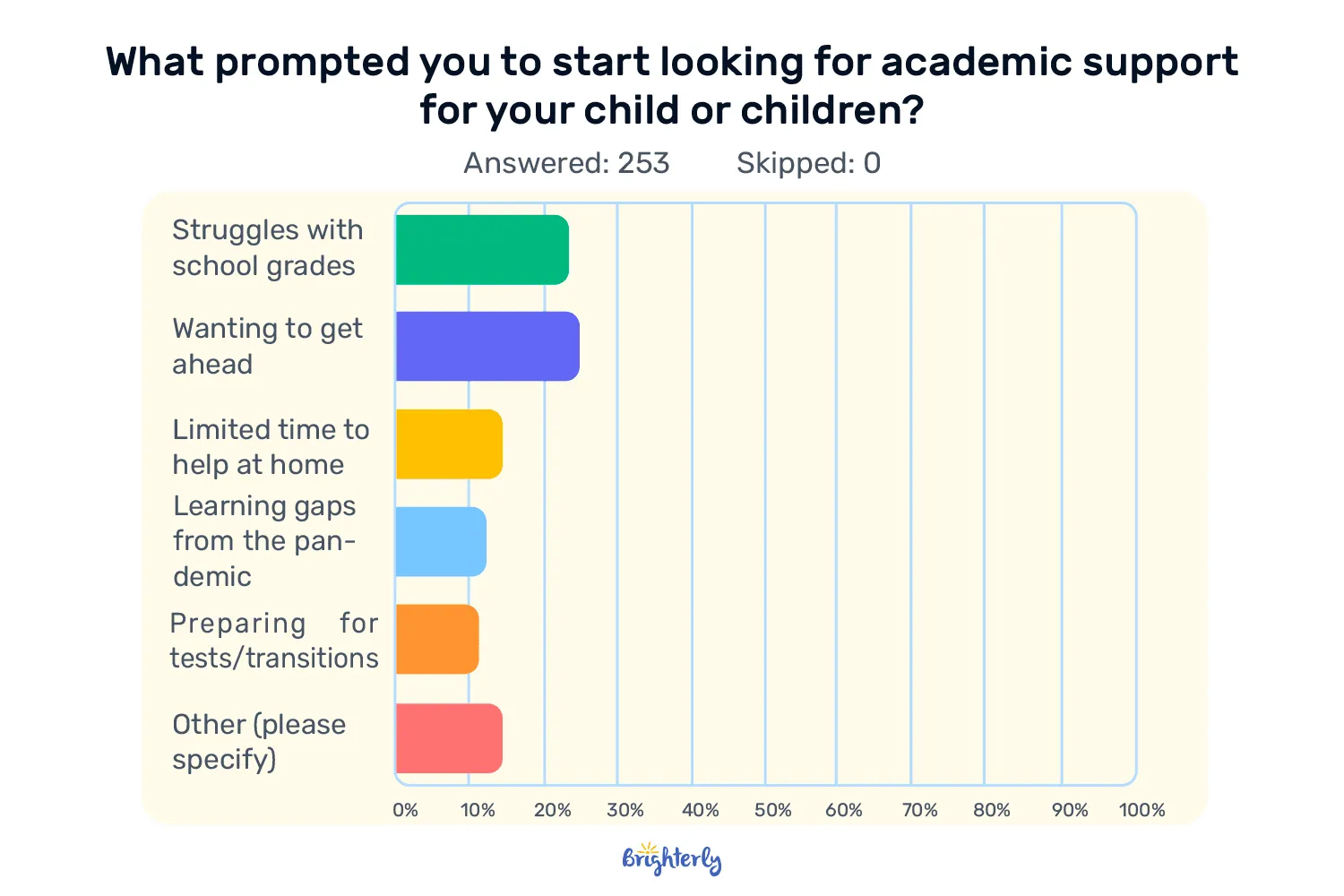
NAEP 2024 Report Card shows that only 28% of 8th graders are at or above Proficiency level in math. For contrast, it was 36% in 2019, when the pandemic started. This shows that when schools move on without closing the learning gaps, they don’t disappear, which is exactly what 67.19% of parents in our external survey noticed.
This also means that although years have passed since the start of the COVID-19 outbreak, the schools still feel the pandemic effects on education. For example, the NCES Commissioner Peggy G. Carr says: “Schools continue to grapple with the ongoing impact the pandemic had on their students”. And the NCES research, published in July of 2024, proves this statement. It found that 80% of public school leaders believe that the pandemic still has negative effects on students' behavioral development, with 26% agreeing student inattention is the worst among those effects.
Another pandemic-induced problem is an increase in chronic absenteeism rate. According to Attendance Works research, published in January of 2025, it was as high as 28% in 2022-2023 across all U.S schools, when before the pandemic only a quarter of schools had experienced such high rates of absence among students. Besides, the research adds that absenteeism also affects the teachers negatively, explaining that: “The churn from students in the classroom makes it harder for teachers to teach and set classroom norms while students must wait for their absent peers to catch up”.
Overall, research shows that the issues in today's education system are caused by different factors rather than one specific problem. Both teacher shortages and the effects of a global pandemic create a whole system of challenges that needs to be addressed so that schools can teach all students effectively.