How to Deal With Test Anxiety: 10 Proven Ways
reviewed by Jo-ann Caballes
Updated on June 3, 2026

Key Points:
- Test anxiety is a set of physical symptoms and emotional reactions that interfere with the ability to do well on a test (The University of North Carolina at Chapel Hill).
- Test anxiety symptoms can be physical, emotional, and cognitive, including muscle spasms, nausea, upset stomach, and sweating (The University of North Carolina at Chapel Hill; Health Psychology, April 2025).
- In Western society, it is estimated that around 25-40% of adolescents suffer from test anxiety in Western society (Health Psychology, April 2025).
- The strategies for fighting test-related anxiety differ based on timing — what a student does before, during, and after a test (Academic Resource Center at Harvard University)
Does your child feel stressed before, during, and after every school test? If yes, it could be test anxiety — a combination of physical and emotional reactions that hold a kid back from performing well on a test. Find out 10 proven test anxiety strategies that you can use to make your child feel more relaxed and confident.
What Is Test Anxiety?
Test anxiety is a combination of negative physical and emotional symptoms a student experiences before, during, and after a test, making them unable to pass this test successfully, according to The University of North Carolina at Chapel Hill.
Research published in Health Psychology in April of 2025 states that about 25-40% of adolescents experience this issue in Western countries.
Reduce Test Anxiety in Your Kid
Our tutors personalize each lesson so that your child feels relaxed and stress-free.


What Are the Signs of Test Anxiety?
The University of North Carolina at Chapel Hill divides the signs of test anxiety into three categories: physical, emotional, and behavioral/cognitive. Each category manifests itself through different symptoms.
- Physical anxiety symptoms include excessive sweating, nausea, headache, and rapid heartbeat.
- Emotional symptoms include stress, fear, helplessness, and disappointment.
- Finally, behavioral or cognitive symptoms include concentration difficulties, negative thoughts, and procrastination.
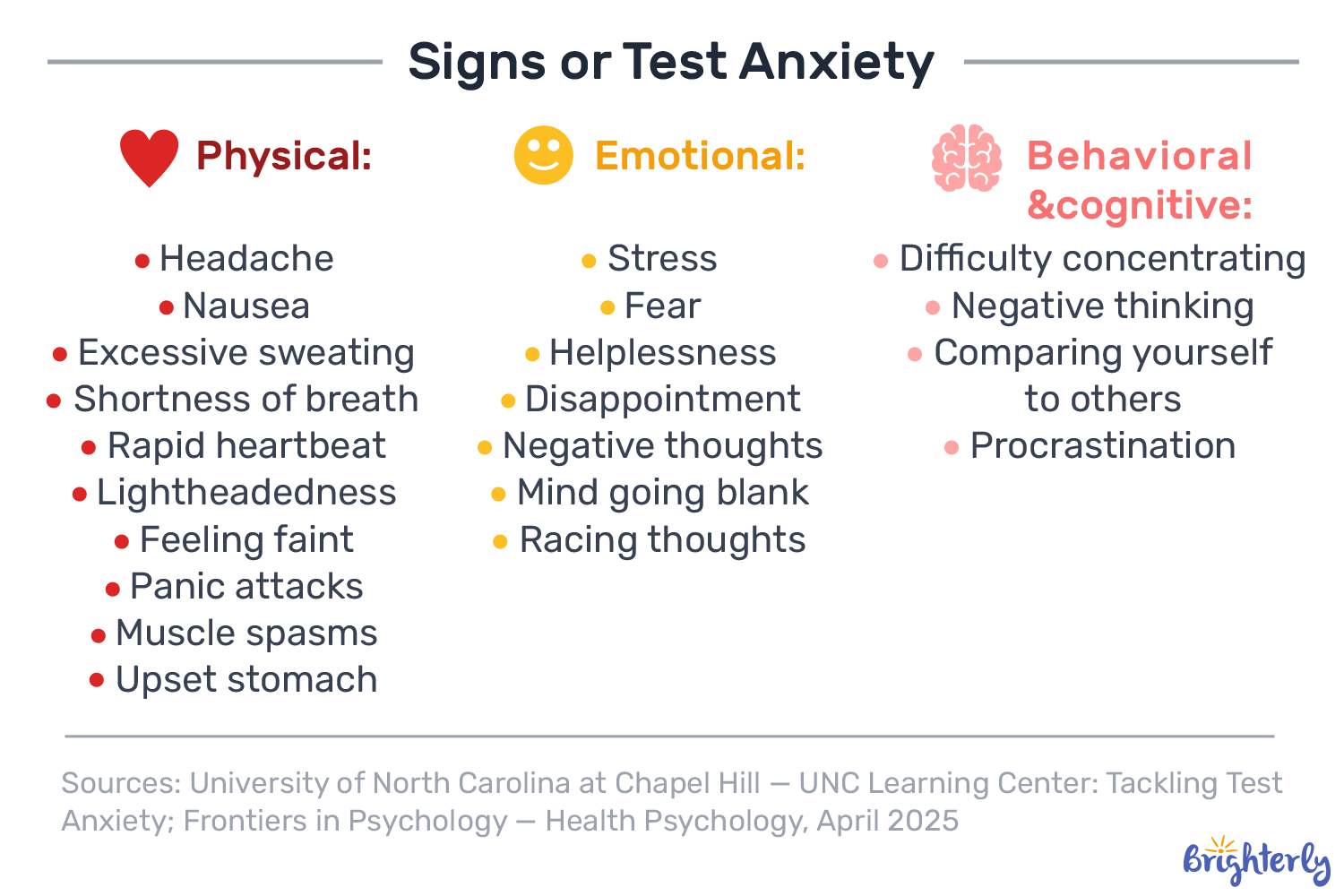
April 2025 research published in Health Psychology also adds that physical symptoms of test anxiety can include muscle spasms and upset stomach.
Note: If your child shows several of these symptoms, especially physical ones, before every test, it might be a sign that they need help with developing test anxiety coping skills.
What Causes Test Anxiety?
According to Niloufar Esmaeilpour, Founder and Clinical Counselor at Lotus Therapy & Counseling Center, the most common test anxiety causes are high expectations, fear of failing, not being prepared enough, perfectionism, catastrophization tendencies, negative past experiences, extreme pressure (from parents, teachers, or themselves), self-doubt, negative self-talk, and lack of time management.
Niloufar Esmaeilpour also adds that to avoid the factors that cause performance anxiety, it’s important to start acting way before the test, creating a study routine to help a child prepare for the upcoming test.
“A general strategy for reducing test anxiety is to have a consistent study routine that is started far in advance of test dates.”
Relaxation techniques are other cool ways to help with test anxiety. Mindfulness tricks help students to quiet their minds and bodies, thus making it easier to concentrate on the test.


Explore Brighterly Learning Experience
Learn exactly how Brighterly helps students thrive through expert sessions, online tools, and proven feedback from thousands of satisfied parents
10 Test Anxiety Strategies: Before, During, and After the Test
Due to the Academic Resource Center at Harvard University, test anxiety strategies before the test revolve around early preparation, while the strategies to battle anxiety during the test include breathing practices and positive affirmations. After the test, strategies include separating test results from identity and talking through what went wrong.
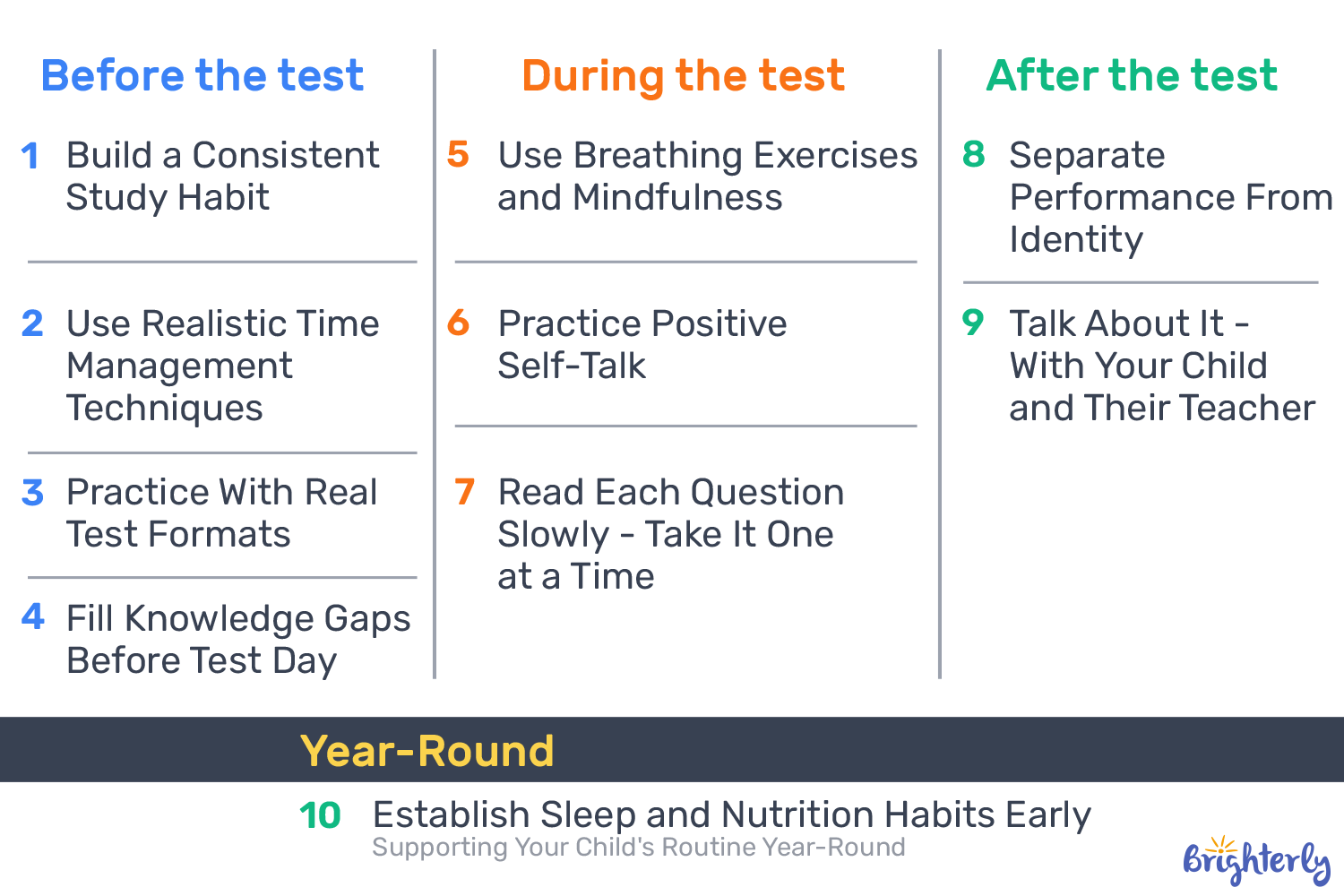
Before the Test: Building Confidence Early
- Build a Consistent Study Habit
Days before the test, help your kid set a fixed, regular study time, so that they don’t leave everything for the last day and have time to fill their learning gaps.
Besides, when a child studies the same material at the same time each day, they build reliable neural pathways around it, which means they will remember it easier when the test comes. In general, the more material the kid is familiar with, and the more times they’ve seen it, the less scared they are of facing it on a test, which means less test-taking anxiety.
Note: If your children struggle with building consistent study habits due to procrastination, you can apply different techniques that help to stop kids from procrastinating, like breaking big tasks into smaller ones and providing breaks.
- Use Realistic Time Management Technique
Effective and realistic time management is about balance, flexibility, and personal adaptation. Don’t set unrealistic deadlines and don’t push your child to do more than they can. You can use one of the common time management techniques, like Pomodoro (25 minutes of focused study, 5-minute break) or the Eisenhower matrix (prioritizing tasks based on urgency and importance).
- Practice With Real Test Formats
In some cases, your child may not know how to deal with test anxiety just because they don’t have much experience with the practice of taking tests/passing exams. So, naturally, they start to feel exam stress. You can boost their confidence by familiarizing them with different test formats.
For example, create a simulated test environment at home and ask the child to take different test formats, but preferably, choose the one that they are preparing for.
“Test anxiety is real and affects every age group, but especially kids.””

This is also one of the effective techniques that help students get a high SAT score.
- Fill Knowledge Gaps Before Test Day
Identifying and closing knowledge gaps before test day helps in overcoming test anxiety since the kid becomes more confident. But if home practice with parent support doesn’t help or isn’t enough, you might consider getting your kid a professional learning support.
For example, it can be an online math tutor who perform student progress monitoring, identify where the child falls behind, and build a personalized learning plan to help close the knowledge gaps.
At Brighterly, our tutors for K-12 students work one-on-one with kids, adapting to each child’s learning pace and learning style, making sure they are comfortable during lessons. We also have free math tests and reading skills tests on our website that you can use to see the current level of your kid’s knowledge.
During the Test: Staying Calm Under Pressure
- Use Breathing Exercises and Mindfulness
Mindfulness and breathing exercises are powerful in relieving test anxiety when the actual test is happening. These practices teach a child to focus on the present moment, help lower the overwhelm, and increase concentration.
As for breathing exercises, you can teach your child the box breathing technique: inhale for 4 counts, hold for 4, exhale for 4, hold for 4. This activates the parasympathetic nervous system and dials down the physical symptoms of test performance anxiety within minutes.
As for mindfulness exercises, you can try deep breathing, guided imagery with visualization of peaceful scenes, and listening to calming music.
Angel Gavilanes, LCSW, Psychotherapist, who was awarded Therapist of the Year in 2026 by St. Vincent Hospital in Harrison, confirms that mindfulness and breathing exercises do work as test anxiety coping strategies:
“High test anxiety comes from concern about a future outcome and often fear of failing.”
When high anxiety kicks in, your child may start to face bad thoughts that lower self-esteem and increase heart rate. Mindfulness and breath exercises help them to reduce anxiety. Teach your child a positive self-task, which empowers them to do their best.
These practices allow them to focus just on their current condition, lowering heart rate and reducing anxiety.

- Practice Positive Self-Talk
Negative thoughts make a kid start to actually believe that the test is too hard for them and that they’re going to fail. Such thoughts can make a kid lose confidence and, hence, feel more stressed. The trick to overcoming this is to convince a child that they’re going to be ok.
For example, encourage your kid to tell themselves phrases like “I prepared for this”, “I can do this”, “One question at a time” instead of phrases like “I don’t know anything” or “I’m going to fail”.
- Read Each Question Slowly — Take It One at a Time
Reading test questions slowly, one by one, is a test-taking anxiety strategy that teaches a kid it’s better to address one question at a time. It’s important because when the kids try to scan all the questions on a test, they start noticing what they don’t know and start getting stressed about it.
Teach your child to read each question fully, answer what they can, and move on if they don’t know something. Tell them it’s ok to skip a question and come back to it later, after they are done answering what they are sure about.
After the Test: Processing and Recovering
- Separate Performance From Identity
How your child processes the outcome of a test shapes how they approach the next one. When a test goes poorly, a child with high test anxiety often sees it as proof that they are not smart enough in general, instead of treating it like a one-time experience that doesn’t define them.
To help a child retain their confidence and recover after a test, you need to develop a growth mindset — the belief that you can learn and develop if you are dedicated to it. For example, ask questions like: “What was the hardest question on a test?” instead of “What score do you think you’ll get?”.
Note: Development of a growth mindset is also among the practical modern tips for helping kids with homework.
- Talk to Your Child and to Their Teacher
After-test conversations are one of the best strategies for test anxiety in a parent’s arsenal. It’s important to sit down with your child after an exam or a test, not just to review wrong answers, but to discuss the child’s emotional state. Such conversations help you build trust with your child, which is critical for them to feel safe when they feel anxious next time.
If test-taking anxiety is a recurring issue and keeps interfering with a child’s performance, a conversation with the kid’s teacher is the natural next step. A teacher can share some insight or take into account your perspective to help a child during the next test.
Help your child reach their full potential
Our tutors apply different strategies to help children overcome test anxiety.
Supporting Your Child’s Routine Year-Round
- Establish Sleep and Nutrition Habits Early
You should let your child sleep properly before the test, as it benefits their cognitive functions. During sleep, our brain regulates hormones that positively influence our mood and help us store information we learned during the day. So, help a child establish a healthy sleeping schedule at least a week before the test.
Note: According to homework statistics, average sleep hours for students have dropped 20% since the 1990s due to homework-related stress.
Nutrition is also a huge factor affecting our emotional well-being. According to the 2025 article at Sleep Doctor, one should avoid a heavy dinner before the test. Instead, give a child something light, like salad and chicken.
Also, remember that the brain needs glucose to function and proteins to keep stable glucose levels for hours. So, for breakfast before the test, give a child some healthy carbs like a whole-grain toast, pasta, pancakes, or crackers. And to add some protein, take a few eggs or some chicken breasts.
Note: If your family is vegetarian, try beans or tofu. If a child wants a sweet treat, give them that to elevate their mood.
“Proper care lowers stress, which helps you fight stress. It would be great if a kid ate a full breakfast before the exam. They also can take a small exercise session to calm their minds before the test.”

Speaking on how to overcome test anxiety in general, Jeanne Huybrechts, an Academic Officer at Spring Education Group, emphasizes the importance of effective learning strategies:
“In helping students enhance their study skills and test performance, my most valuable go-to resource was the book Make it Stick”

When to Seek Professional Help for Test Anxiety?
Most children who experience test-taking anxiety respond well to coping mechanisms we’ve covered above, especially with consistent parent involvement. But in case test anxiety tips for students don’t work, it might be time to consider getting professional help for your kid.
The first step can be contacting your child’s school counselor, who can assess how severe your kid’s anxiety is, get the teacher’s feedback, and refer you to any outside support if necessary.
Frequently Asked Questions (FAQ)
Is Test Anxiety a Learning Disability?
No, test anxiety is not a learning disability — it’s a condition that affects a student’s performance before, during, and after tests or exams. It doesn’t mean your child has neurological differences that affect how their brain receives, processes, stores, and responds to information.
How Do I Know if My Child Has Test Anxiety or Just Nerves?
If it’s just nerves, they tend to fade away once the test begins and don’t significantly interfere with the child’s performance. In contrast, anxiety doesn’t go away that easily, often causing physical symptoms, like nausea, increased heartbeat, excessive sweating, etc., and frequently leads to consistent underperformance.
If your child’s test scores are consistently lower than the grades they receive for homework tasks, test-taking anxiety may be the reason.
Can Test Anxiety Affect Grades Long-Term?
Yes, test anxiety can affect a child’s grades long-term. When a child consistently performs poorly on tests, their anxiety is high each time since they already expect lower scores. This creates a long-term cycle of low-graded tests.
At What Age Does Test Anxiety Typically Start?
A February 2015 article by the Children’s Hospital of Orange County reveals that test anxiety symptoms typically start during the school-age years, which is the time when kids start taking tests, including standardized tests, and realizing that their classroom performance is monitored. This remains relevant data that hasn’t been disproved by other research.
How Can Parents Help the Night Before a Big Test?
To help a child reduce anxiety before a big test, parents can help them review key material briefly, make sure the child eats a balanced dinner, limits screen time, and gets enough sleep. Also, parents can offer positive reinforcement — tell a child they are prepared enough and will be ok during the test.
Are There Test Anxiety Strategies Specifically for Math Tests?
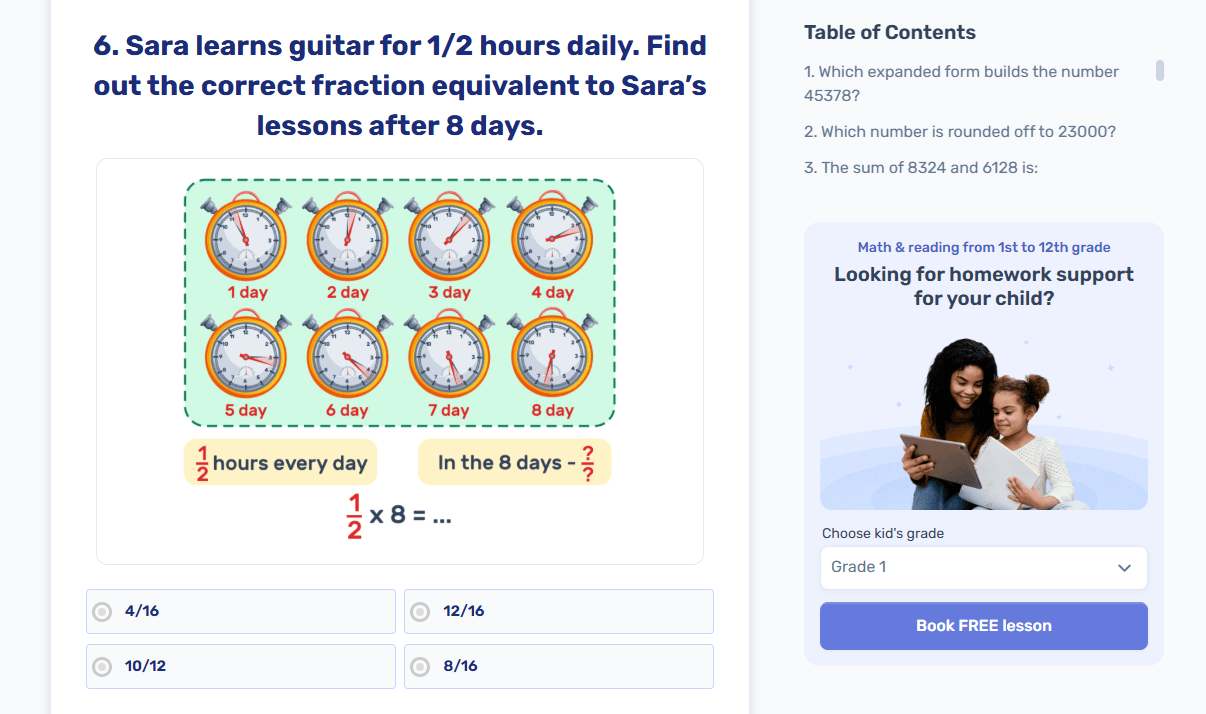
Yes, there are specific math test anxiety strategies, which include targeted practice with real math test formats (timed “dress rehearsals” to build familiarity or math practice that focuses on understanding the concept rather than on blind memorization), consistent review of problem areas, and support from a professional math tutor.



Drill Type Target Grades Core Focus Math drills addition K – 2 Single and double-digit sum automaticity Subtraction Facts K – 2 Inverse operations and basic difference recall Math drills multiplication 3 – 5 Factors 0-12 and skip-counting patterns Division Basics 3 – 5 Understanding quotients and remainders Fractions Review 4-6 Simplifying, ordering, and […]

Jun 10, 2022
If, in the classroom, your kid can’t collaborate on projects or resolve conflicts peacefully, it’s – yes – time for you to help them at home! This is how to teach kids social skills for long-term confidence, employing the simplest and most effective methods. Key Points Parental behavior is the most natural way for kids […]

Jun 10, 2022
Math & reading from 1st to 12th grade
Looking for homework support for your child?

Choose kid's grade

Math & Reading for Grades 1–12
Build real confidence for your child with a Brighterly math or reading tutor.